
Buying a recliner is exciting. A good recliner can become your favorite spot for relaxing after a long day, watching movies, reading, or even taking a quick nap. But one mistake many people make is choosing the wrong recliner size. A recliner that is too big can overcrowd your room, while one that is too small may feel uncomfortable.
Choosing the right recliner size requires understanding room dimensions, seat height, recline space, and body comfort. In this complete guide, we will explain everything you need to know about recliner sizes, include a helpful size chart, and share some personal experiences that can help you avoid common mistakes.
Why Recliner Size Matters
Recliners are different from regular chairs because they move and extend when reclining. This means they need extra space both in front and behind the chair.
If the recliner size is incorrect, you may experience:
Limited reclining space
Blocked walkways
Poor comfort and posture
A cramped living room layout
From personal experience, I once bought a recliner online without checking the full dimensions. It looked perfect in the product images, but once it arrived, I realized it needed almost 20 inches of extra space behind it to recline fully. The result? I had to move other furniture around just to make it fit.
That experience taught me an important lesson: always check the recliner size and required clearance before buying.
Standard Recliner Dimensions
Most recliners fall into standard size categories. However, dimensions may vary depending on the design, brand, and reclining mechanism.
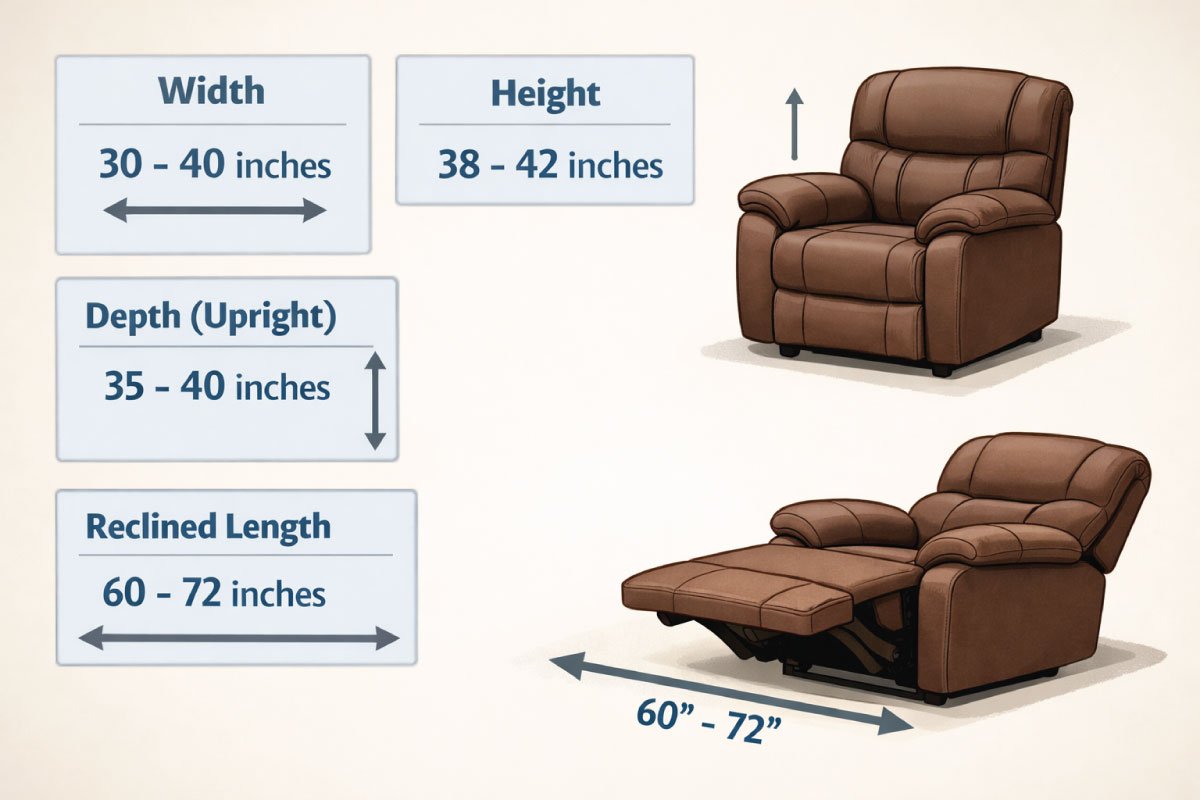
Here are typical recliner measurements:
Width: 30 – 40 inches
Depth (upright): 35 – 40 inches
Height: 38 – 42 inches
Reclined length: 60 – 72 inches
These measurements can help you determine whether a recliner will fit comfortably in your space.
Recliner Size Chart
Below is a helpful chart that shows the common recliner sizes and their recommended users.
| Recliner Size | Seat Width | Chair Width | Recommended Height | Ideal For |
|---|---|---|---|---|
| Small Recliner | 18–20 inches | 30–34 inches | 5’0″ – 5’5″ | Small spaces, apartments |
| Medium Recliner | 20–22 inches | 34–38 inches | 5’6″ – 6’0″ | Most average adults |
| Large Recliner | 22–25 inches | 38–44 inches | 6’0″ – 6’5″ | Taller individuals |
| Oversized Recliner | 25–30 inches | 44–50 inches | 6’0″+ | Extra comfort & space |
This chart is useful when you are selecting a recliner based on your body size and room layout.
How Much Space Does a Recliner Need?
One of the most overlooked factors when buying a recliner is the clearance space required for reclining.
Most recliners need:
12–24 inches behind the chair
30–40 inches in front of the chair
For example, if a recliner is 40 inches deep in the upright position and extends to 70 inches when fully reclined, you must ensure your room can accommodate that extra length.
From my own experience arranging furniture in a small living room, measuring the full recline length beforehand saved me from buying a recliner that would block the TV stand.
A good tip is to use masking tape on the floor to outline the recliner dimensions before buying it. This gives a visual idea of how much space it will take.
Types of Recliners and Their Size Differences
Different recliner styles come with different dimensions. Understanding these types can help you choose the right one for your home.
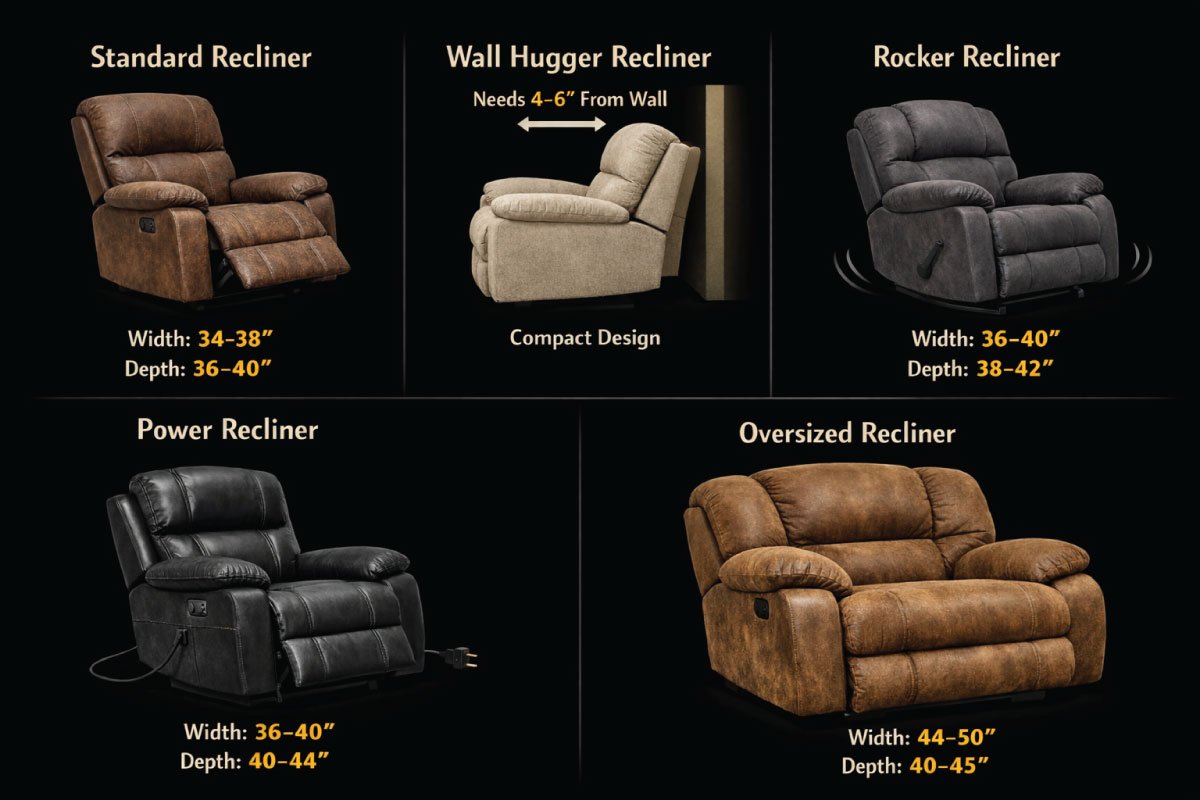
1. Standard Recliner
A standard recliner is the most common type.
Typical size:
Width: 34–38 inches
Depth: 36–40 inches
These recliners are suitable for most living rooms and provide good comfort without taking too much space.
2. Wall Hugger Recliner
Wall hugger recliners are designed for small spaces. They require less clearance behind the chair.
Typical features:
Needs only 4–6 inches from the wall
Slightly smaller footprint
This type is perfect for apartments or compact living rooms.
3. Rocker Recliner
Rocker recliners can both rock and recline.
Typical dimensions:
Width: 36–40 inches
Depth: 38–42 inches
These are popular for nurseries and relaxation areas.
4. Power Recliner
Power recliners use electric motors for reclining.
Typical dimensions:
Width: 36–40 inches
Depth: 40–44 inches
They may require additional space for power cables and extension during reclining.
5. Oversized Recliner
Oversized recliners are built for maximum comfort.
Typical dimensions:
Width: 44–50 inches
Depth: 40–45 inches
These are perfect if you want extra space to lounge or share the chair with a child or pet.
How to Measure for a Recliner
Before buying a recliner, measure both your room space and body comfort.
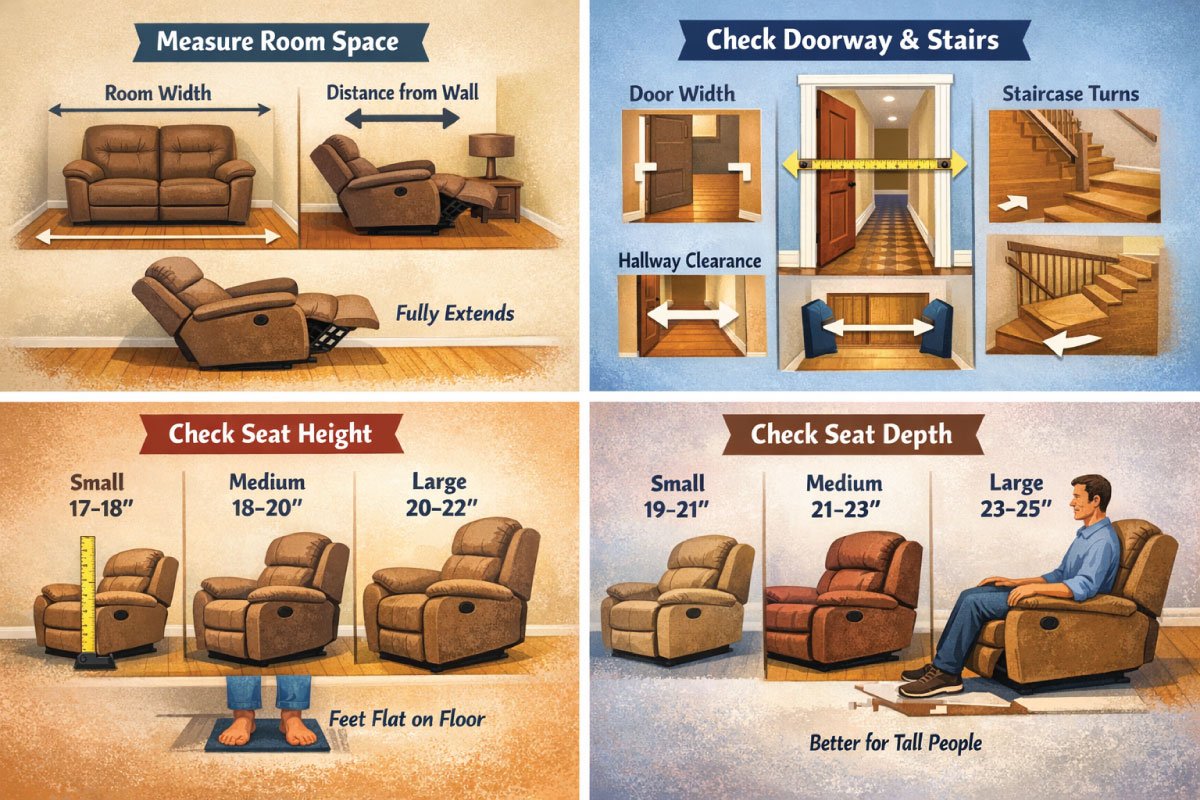
Step 1: Measure Room Space
Measure:
Room width
Distance from wall
Walking pathways
Make sure there is enough room for the recliner to fully extend.
Step 2: Check Doorway Width
Another mistake people often make is forgetting to measure the doorway.
Many recliners are large and may not fit through narrow doors or staircases.
Personally, I once helped a friend move a recliner into his apartment, and we realized it wouldn’t fit through the doorway. We had to partially disassemble it to get it inside.
So always check:
Door width
Hallway clearance
Staircase turns
Step 3: Check Seat Height
Seat height should allow your feet to touch the floor comfortably.
Typical seat heights:
Small: 17–18 inches
Medium: 18–20 inches
Large: 20–22 inches
Step 4: Check Seat Depth
Seat depth affects back support.
Typical seat depths:
Small: 19–21 inches
Medium: 21–23 inches
Large: 23–25 inches
A deeper seat is better for taller individuals.
Choosing the Right Recliner for Your Height
Your height plays a big role in recliner comfort.
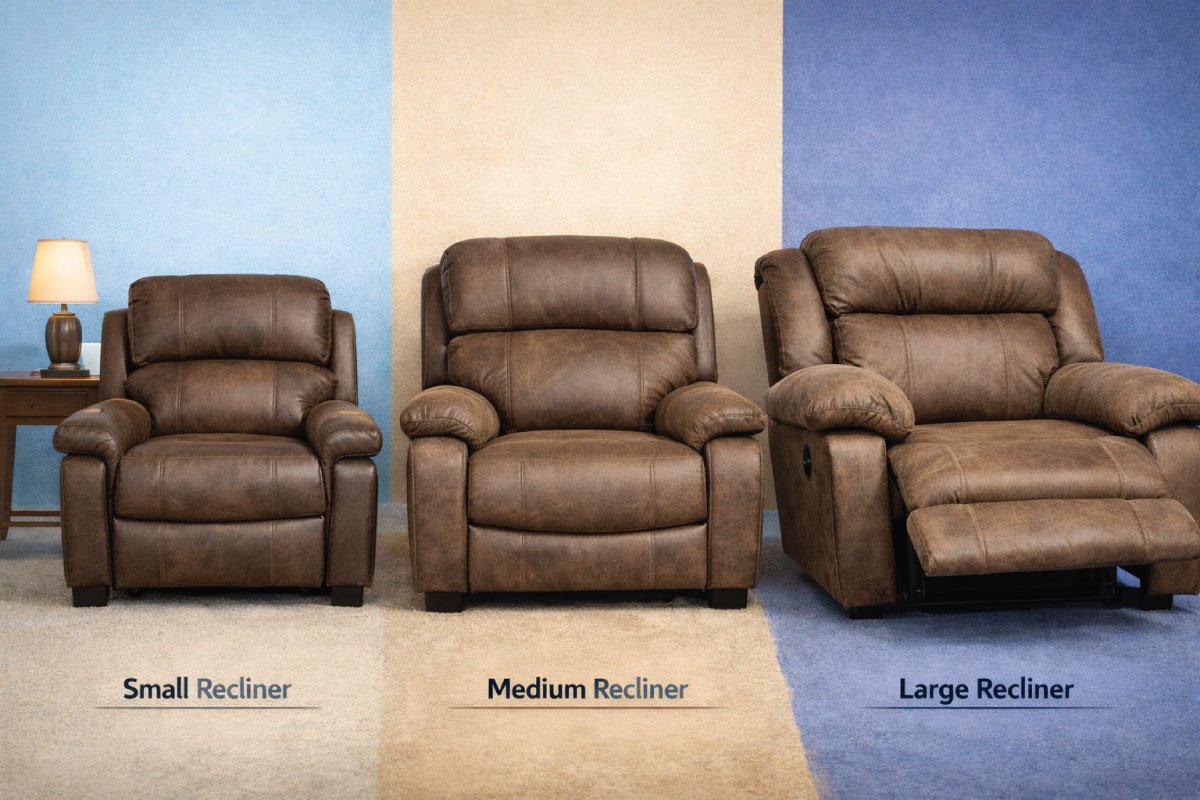
For people under 5’5″
Choose a small recliner with lower seat height and shorter seat depth.
For people between 5’6″ and 6’0″
A medium recliner usually provides the best balance of comfort and support.
For people over 6’0″
Choose a large or oversized recliner for proper leg and back support.
Recliner Placement Tips
Placing a recliner correctly improves both comfort and room aesthetics.
Some helpful placement tips:
Keep 18–24 inches of walking space
Avoid placing recliners directly in tight corners
Use wall hugger recliners for small rooms
Place recliners facing the TV or main focal point
In my living room setup, positioning the recliner slightly angled toward the TV made it feel much more comfortable than placing it straight against the wall.
Common Recliner Buying Mistakes
Many buyers make simple mistakes when choosing recliners.
1. Ignoring Full Recline Dimensions
Always check the fully extended length, not just upright dimensions.
2. Buying Without Measuring the Room
Room size determines whether the recliner will fit properly.
3. Choosing Style Over Comfort
A stylish recliner may not provide good back or neck support.
4. Ignoring Seat Height
Incorrect seat height can cause discomfort in long sitting sessions.
Recliner Materials and How They Affect Size and Comfort
Another important factor many people overlook when choosing a recliner is the material used in its construction. The upholstery, cushioning, and frame can slightly influence the overall size, feel, and durability of the recliner.
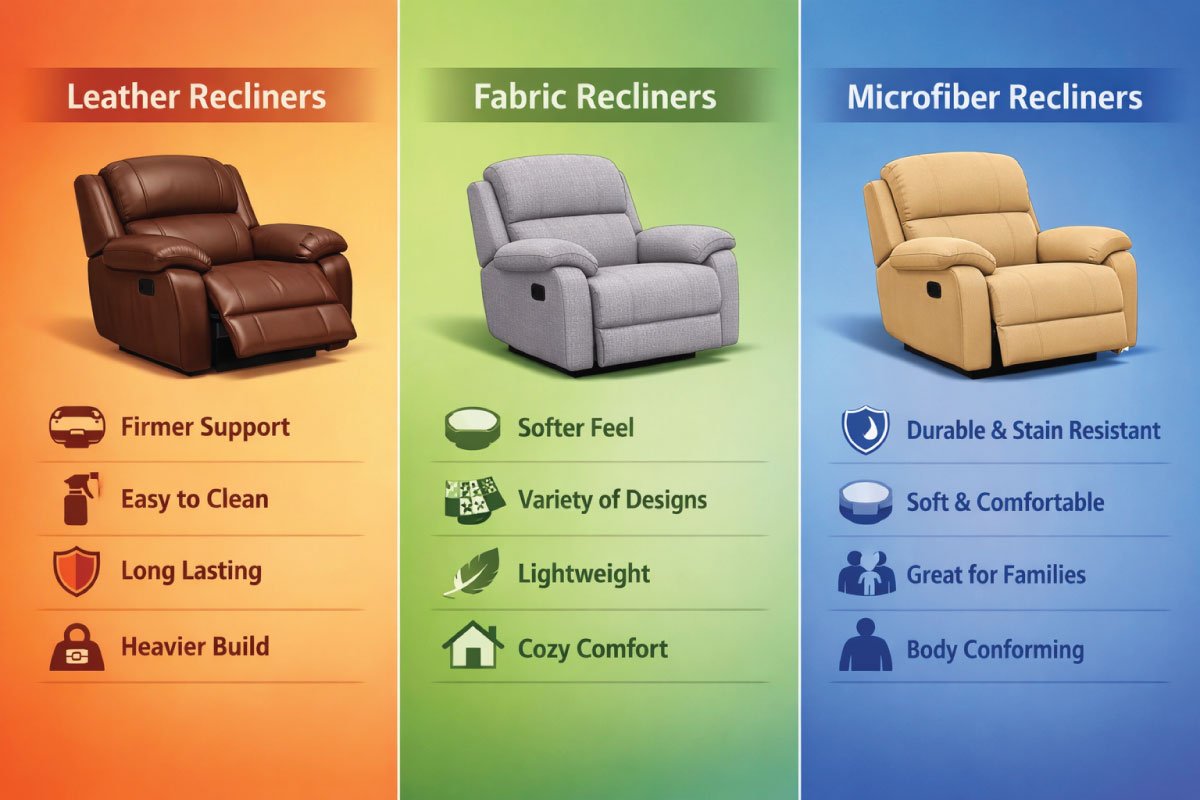
Leather Recliners
Leather recliners are known for their durability and premium appearance. They are commonly found in living rooms, offices, and home theaters.
Typical characteristics:
Slightly firmer seating
Easy to clean
Long lifespan
Often heavier than fabric recliners
From my personal experience, a leather recliner feels more structured and supportive compared to fabric. However, leather recliners sometimes appear slightly bulkier because of thicker padding and armrests. If your living room space is limited, make sure to check the exact width and depth before purchasing.
Fabric Recliners
Fabric recliners are among the most popular choices for families because they are comfortable and available in many colors and patterns.
Advantages include:
Softer seating experience
More design variety
Usually lighter than leather recliners
Often slightly smaller profiles
I once bought a fabric recliner for a reading corner in my home office. Because fabric recliners are often lighter and less bulky, it fit perfectly into a smaller space without overwhelming the room.
However, fabric can stain more easily than leather, so households with children or pets should consider stain-resistant materials.
Microfiber Recliners
Microfiber recliners are a great middle ground between leather and fabric. They provide durability while still offering a soft texture.
Benefits include:
Highly durable
Stain resistant
Comfortable for long sitting sessions
Ideal for family living rooms
Microfiber recliners often have a similar size to standard recliners but feel slightly more compact because the material conforms better to body shape.
Recliner Size Tips for Small Living Rooms
If you live in an apartment or a small home, choosing the right recliner size becomes even more important. A large recliner can quickly make a small room feel cramped.
Here are some practical tips for smaller spaces:
Choose Wall Hugger Recliners
Wall hugger recliners are specifically designed to save space. They move forward as they recline, allowing you to place them only a few inches away from the wall.
This design can save up to 12–18 inches of space compared to traditional recliners.
Look for Narrow Arm Designs
Some recliners have wide armrests, which increase the overall width. Narrow arm designs reduce the footprint while maintaining comfort.
Consider Compact Recliners
Many brands now offer compact recliners designed for apartments and condos.
Typical compact recliner dimensions:
Width: 28–32 inches
Depth: 34–36 inches
Height: 36–38 inches
These models provide comfort while fitting into smaller rooms.
Final Thought:
When shopping for a recliner, it’s always best to combine measurements, comfort testing, and style preferences before making a final decision.
If possible, try sitting in the recliner before buying it. Pay attention to how your back, neck, and legs feel while reclining. Everyone’s body is different, so the perfect recliner size may vary from person to person.
Also remember to measure your room, check doorway clearance, and review the full recline dimensions.
In my experience, the best recliner is not necessarily the biggest or the most expensive one. The best recliner is the one that fits your space perfectly and supports your body comfortably during everyday relaxation.
With the right measurements and a clear understanding of recliner sizes, you can confidently choose a recliner that transforms your living room into the ultimate comfort zone.
