
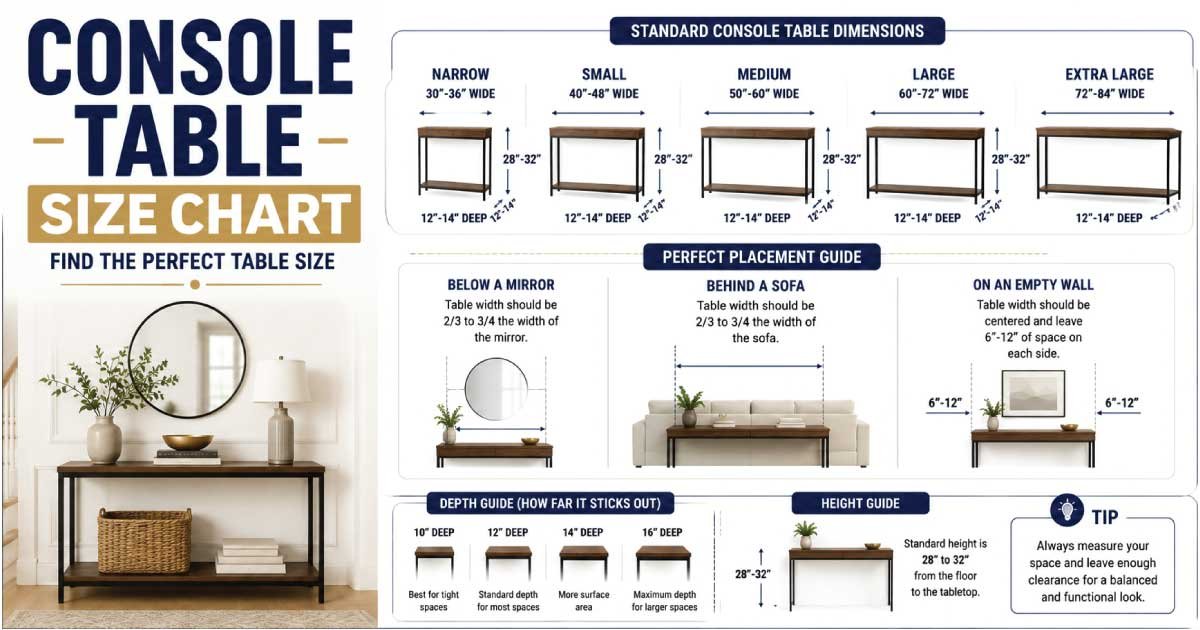
A console table is one of the most versatile furniture pieces you can add to your home. Whether you place it in an entryway, hallway, living room, dining room, or behind a sofa, the right console table provides both style and functionality. However, selecting the correct size is essential. A table that is too large can overwhelm a room, while one that is too small may look out of place.
This complete guide explains everything you need to know about console table dimensions, including standard sizes, measurement tips, placement recommendations, and buying advice. By the end, you’ll know exactly how to choose the perfect console table for your space.
Console Table Size Chart
The following chart shows the most common console table dimensions.
| Console Table Type | Width | Depth | Height | Best For |
|---|---|---|---|---|
| Small Console Table | 24–36 inches | 10–12 inches | 28–30 inches | Apartments, narrow hallways |
| Standard Console Table | 36–48 inches | 12–15 inches | 30–32 inches | Entryways, living rooms |
| Large Console Table | 48–72 inches | 15–18 inches | 30–34 inches | Large walls, spacious rooms |
| Extra Long Console Table | 72–96 inches | 15–20 inches | 30–34 inches | Open floor plans, oversized walls |
| Sofa Console Table | Same as sofa length or 6–12 inches shorter | 10–16 inches | 1–3 inches below sofa back | Behind sofas |
Why Console Table Size Matters
Choosing the correct console table size improves both appearance and functionality. The right dimensions create visual balance while leaving enough walking space around the furniture.
A properly sized console table can:
- Improve room organization
- Enhance interior design
- Display decorative items beautifully
- Provide additional storage
- Make narrow spaces feel more functional
- Prevent overcrowding
Proper measurements also ensure that doors, walkways, and furniture remain easy to use.
Standard Console Table Dimensions
Most console tables fall within a standard size range suitable for modern homes.
Standard Width
Console table width typically ranges from:
- 36 inches
- 40 inches
- 48 inches
- 60 inches
Large decorative walls often look best with wider console tables, while compact apartments benefit from shorter designs.
Standard Depth
Depth is usually between:
- 10 inches
- 12 inches
- 14 inches
- 15 inches
- 18 inches
Shallow tables are ideal for hallways because they leave more walking space.
Standard Height
Most console tables measure:
- 28 inches
- 30 inches
- 32 inches
- 34 inches
Thirty inches is considered the most common height for residential console tables.
Console Table Width Guide
The width should complement the available wall space without stretching from corner to corner.
General recommendations include:
- Small wall: 24–36 inches
- Medium wall: 36–48 inches
- Large wall: 48–72 inches
- Oversized wall: 72–96 inches
Leave several inches of empty wall on both sides for better visual balance.
Console Table Depth Guide
Depth affects both storage and traffic flow.
Common depth recommendations include:
- Narrow hallway: 10–12 inches
- Standard hallway: 12–15 inches
- Living room: 14–16 inches
- Decorative display: 15–18 inches
Avoid choosing deep tables for tight spaces.
Console Table Height Guide
Height depends on where the console table will be placed.
Typical recommendations include:
- Entryway: 30 inches
- Hallway: 30 inches
- Behind sofa: Slightly lower than sofa back
- Under mirror: Around 30–32 inches
Maintaining proportional height creates a balanced appearance.
Entryway Console Table Size
Entryways are among the most popular locations for console tables.
Recommended dimensions include:
- Width: 36–48 inches
- Depth: 12–15 inches
- Height: 30 inches
This provides enough surface area for keys, mail, decorative trays, and lamps without blocking the entrance.
Hallway Console Table Size
Hallways usually have limited walking space, making slim tables the best choice.
Recommended dimensions:
- Width: 24–48 inches
- Depth: 10–12 inches
- Height: 30 inches
Always leave at least 36 inches of walking clearance in the hallway.
Console Table Behind Sofa Size
Console tables behind sofas create additional storage and decorative display space.
General guidelines include:
- Width should be slightly shorter than the sofa.
- Height should be 1–3 inches lower than the sofa back.
- Depth should stay between 10 and 16 inches.
This arrangement creates a clean and intentional look.
Living Room Console Table Size
Living room console tables often support decorative accessories.
Recommended size:
- Width: 48–72 inches
- Depth: 14–18 inches
- Height: 30–32 inches
Larger living rooms can accommodate wider furniture without appearing crowded.
Dining Room Console Table Size
Dining rooms benefit from console tables used as serving stations or buffet storage.
Recommended dimensions:
- Width: 48–72 inches
- Depth: 15–18 inches
- Height: 32–34 inches
This height aligns well with many dining furniture pieces.
▶️ Related Size Guides 👉 Standard Wardrobe Size Chart: Complete Guide
Console Table Under a Mirror
One of the most popular decorating ideas is placing a mirror above the console table.
For the best proportions:
- Mirror width should be about two-thirds the width of the table.
- Leave 6–10 inches between the tabletop and mirror.
- Center the mirror above the table.
This creates a balanced focal point.
Console Table Under a TV
Some homeowners use console tables below wall-mounted televisions.
Recommended sizing:
- TV should be narrower than the table.
- Console width should exceed TV width by several inches on each side.
- Height generally ranges from 28–32 inches.
This provides visual stability.
How to Measure for a Console Table
Taking accurate measurements before shopping prevents costly mistakes.
Measure the following:
- Wall width
- Available depth
- Ceiling height
- Nearby furniture
- Walking pathways
- Door swing clearance
Record all measurements before making a purchase.
▶️ Related Size Guides 👉 Bed Size Chart: Complete Guide to Standard Bed Sizes
Console Table Clearance Guidelines
Proper spacing keeps rooms comfortable and functional.
Maintain:
- 36 inches for walkways
- 18–24 inches between furniture
- Several inches from walls if desired
- Enough clearance for doors and drawers
Adequate spacing improves both safety and appearance.
Materials and Their Impact on Size
Different materials create different visual effects.
Common options include:
- Solid wood
- Metal
- Glass
- Marble
- Engineered wood
Glass tables often appear lighter, making them suitable for smaller rooms, while solid wood creates a bold presence.
Choosing the Right Console Table Style
Style influences how large or small a table appears.
Popular styles include:
- Modern
- Farmhouse
- Rustic
- Industrial
- Mid-century modern
- Traditional
- Contemporary
Choose a style that complements your existing décor.
▶️ Related Size Guides 👉 Standard T-Shirt Size Chart: Complete Guide
Storage Options
Many console tables offer more than just a tabletop.
Storage features include:
- Drawers
- Cabinets
- Open shelves
- Lower storage racks
- Decorative baskets
Consider your storage needs before selecting a design.
Common Console Table Decorating Ideas
A console table can become an attractive focal point with thoughtful styling.
Popular decorations include:
- Table lamps
- Mirrors
- Artwork
- Decorative bowls
- Candles
- Indoor plants
- Family photos
- Books
- Vases
- Storage baskets
Avoid overcrowding the tabletop to maintain a clean look.
Common Console Table Size Mistakes
Many homeowners choose the wrong size because they overlook room proportions.
Avoid these mistakes:
- Buying a table that’s too wide
- Choosing excessive depth for narrow spaces
- Ignoring walkway clearance
- Selecting the wrong height
- Forgetting nearby door clearance
- Overloading a small table with décor
Proper planning prevents these common issues.
Tips for Choosing the Perfect Console Table
Keep these practical tips in mind before purchasing:
- Measure your room carefully.
- Match the table to the wall size.
- Maintain comfortable walking space.
- Coordinate with existing furniture.
- Consider future storage needs.
- Select durable materials.
- Balance style with functionality.
A well-chosen console table can serve your home for many years.
Conclusion
Selecting the right console table size is about balancing function, style, and available space. By understanding standard dimensions, measuring carefully, and considering the table’s purpose, you can choose a piece that enhances your home’s design while providing practical storage and display space.
Whether you’re furnishing an entryway, decorating a living room, styling a hallway, or adding functionality behind a sofa, following this console table size guide will help you find the perfect fit. A well-proportioned console table not only complements your décor but also makes everyday living more organized and visually appealing.
FAQs:
What is the standard size of a console table?
A standard console table typically measures 36 to 48 inches wide, 12 to 15 inches deep, and around 30 inches high. These dimensions make it suitable for entryways, hallways, living rooms, and other spaces where a slim yet functional furniture piece is needed.
How deep should a console table be?
Most console tables have a depth between 10 and 18 inches, depending on their purpose and location. Narrow hallways usually require shallower tables, while larger living rooms or entryways can accommodate deeper designs that provide additional display and storage space.
How tall should a console table be?
The average console table stands about 30 inches tall, although heights between 28 and 34 inches are also common. Choosing the right height depends on its intended use, whether placed behind a sofa, in an entryway, or beneath a wall mirror.
How wide should a console table be behind a sofa?
A console table placed behind a sofa should generally be 6 to 12 inches shorter than the sofa’s width. This proportion creates a balanced appearance, improves accessibility, and ensures the table complements the furniture without extending beyond the sofa edges.
Can a console table be used in small spaces?
Yes, console tables are ideal for small spaces because their slim design maximizes functionality without taking up much room. Models with a depth of 10 to 12 inches fit comfortably in apartments, narrow hallways, entryways, and other compact living areas.
