
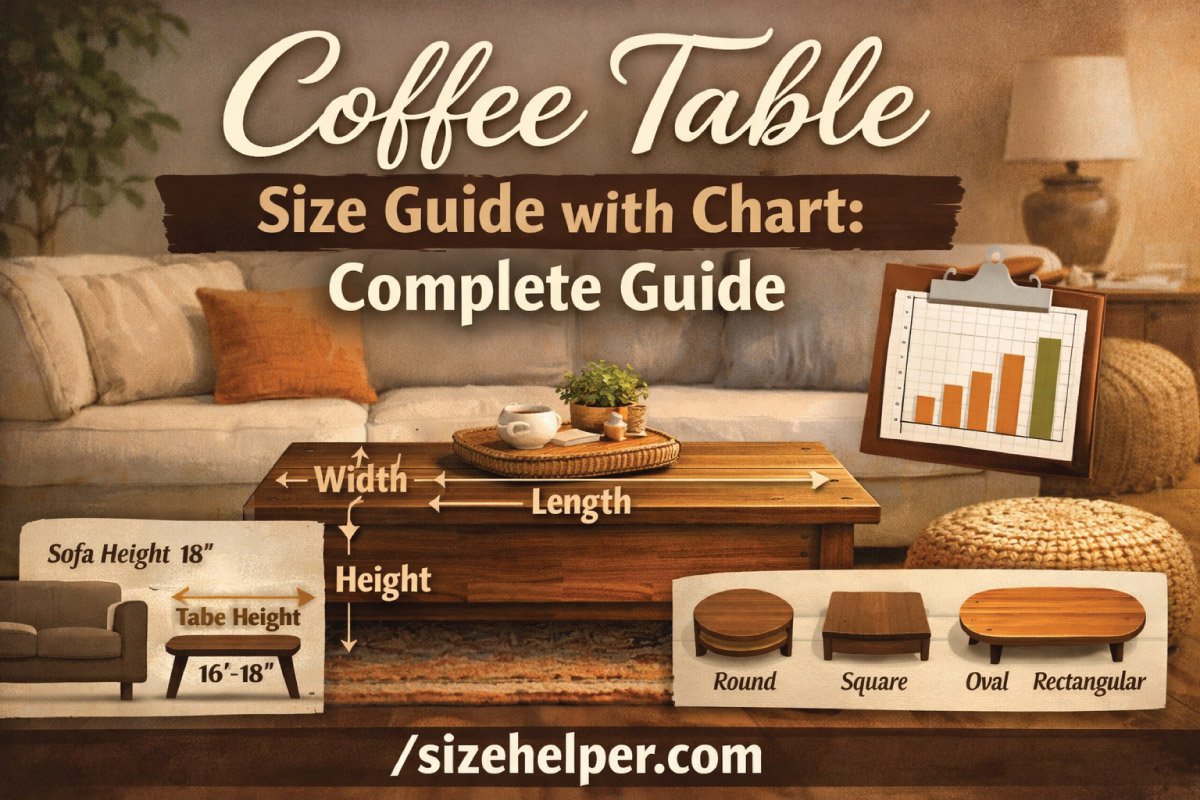
Choosing the right coffee table may seem simple, but in reality it plays a huge role in the comfort, functionality, and visual balance of your living room. A coffee table that is too large can make the space feel cramped, while one that is too small can look awkward and impractical. Understanding the correct coffee table size relative to your sofa, seating arrangement, and room layout can transform your living area into a well-designed and functional space.
In this complete coffee table size guide, we will explain how to choose the perfect coffee table dimensions, include a helpful size chart, and share practical insights based on real-life experience.
Why Coffee Table Size Matters
A coffee table is not just a decorative piece. It acts as the centerpiece of the seating area and supports everyday activities like placing drinks, books, remote controls, snacks, and décor items.
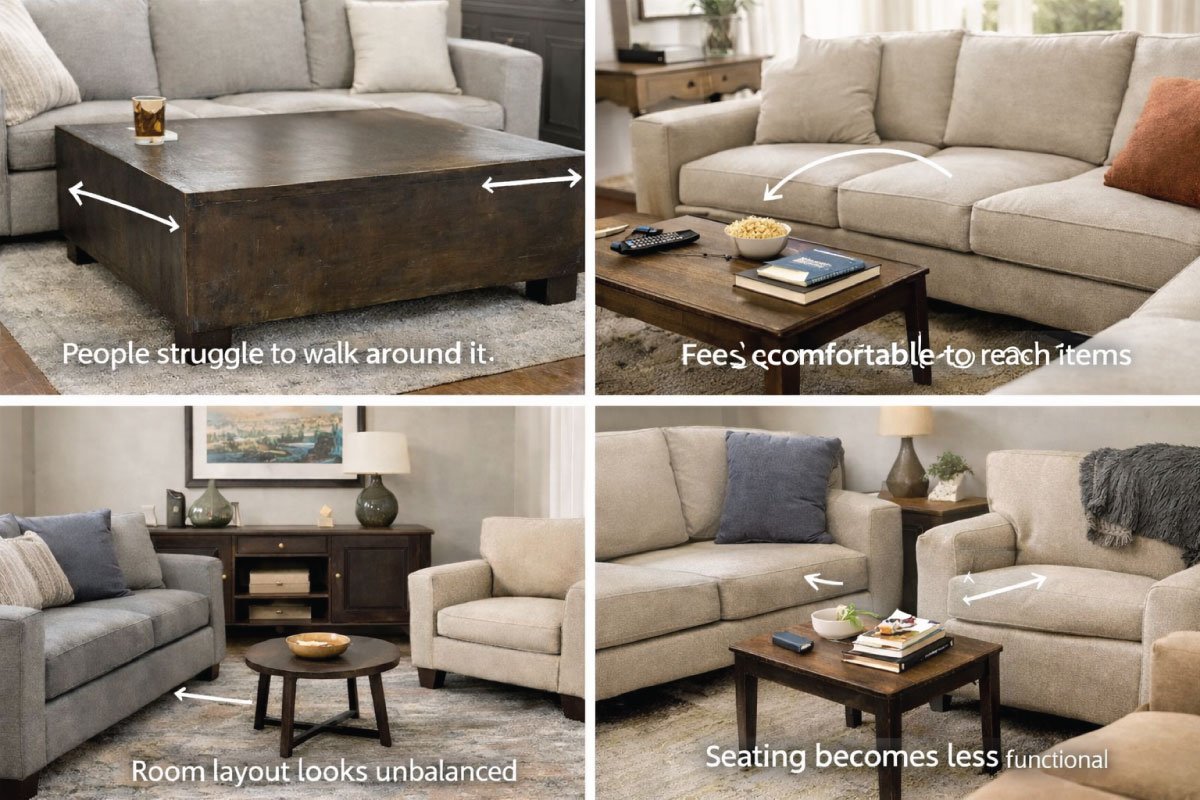
If the size is incorrect, several problems occur:
People struggle to walk around it
It feels uncomfortable reaching items
The room layout looks unbalanced
Seating becomes less functional
Interior designers often say that proportion is everything in furniture placement. A properly sized coffee table improves traffic flow, creates visual harmony, and enhances comfort.
Standard Coffee Table Dimensions
Before diving into the detailed guide, here are the typical dimensions for most coffee tables.
| Dimension | Standard Range |
|---|---|
| Height | 16 – 18 inches |
| Length | 36 – 48 inches |
| Width | 18 – 30 inches |
| Distance from Sofa | 14 – 18 inches |
These dimensions work well in most living rooms, but the ideal size depends on your sofa size, room layout, and seating arrangement.
Coffee Table Size Chart
Below is a helpful chart showing recommended coffee table sizes based on sofa length.
| Sofa Length | Recommended Coffee Table Length | Coffee Table Width | Coffee Table Height |
|---|---|---|---|
| 72 inches (6 ft) | 36 – 40 inches | 18 – 24 inches | 16 – 18 inches |
| 84 inches (7 ft) | 40 – 46 inches | 20 – 26 inches | 16 – 18 inches |
| 96 inches (8 ft) | 46 – 54 inches | 22 – 30 inches | 16 – 18 inches |
| Sectional Sofa | 48 – 60 inches | 24 – 36 inches | 16 – 18 inches |
Rule of Thumb:
Your coffee table should be about two-thirds the length of your sofa.
This rule keeps the room visually balanced and ensures the table doesn’t overwhelm the seating area.
Coffee Table Height Guide
The height of a coffee table is one of the most important factors for comfort.
Ideal Coffee Table Height
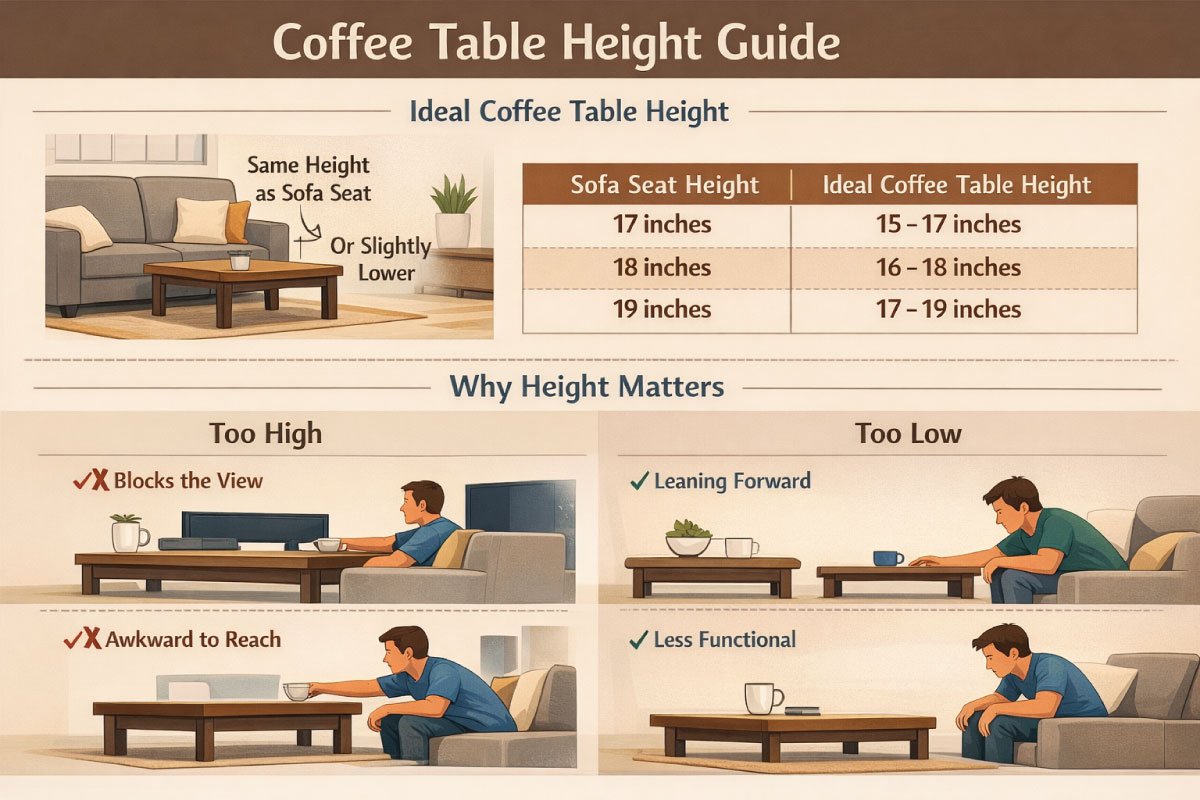
A coffee table should be the same height as your sofa seat or slightly lower.
Most sofa seat heights range between 17 and 19 inches, which is why coffee tables are usually 16 to 18 inches tall.
Height Guidelines
| Sofa Seat Height | Ideal Coffee Table Height |
|---|---|
| 17 inches | 15 – 17 inches |
| 18 inches | 16 – 18 inches |
| 19 inches | 17 – 19 inches |
Why Height Matters
If the table is too high:
It blocks the view
Feels awkward when reaching items
If it’s too low:
People must lean forward excessively
It becomes less functional
Ideal Distance Between Sofa and Coffee Table
Spacing is another crucial design factor.The recommended distance between your sofa and coffee table is:14 – 18 inchesThis distance allows people to walk comfortably while still keeping items within reach.
Spacing Guide
| Distance | Result |
|---|---|
| Less than 12 inches | Too cramped |
| 14 – 18 inches | Ideal spacing |
| More than 24 inches | Hard to reach items |
Good spacing improves both comfort and room traffic flow.
Choosing Coffee Table Width
Width determines how much walking space remains around the table.
Typical widths range from 18 to 30 inches.
For smaller living rooms:
Choose 18–22 inches
For large living rooms:
Choose 24–30 inches
Make sure to maintain at least 30 inches of walking space around the table if possible.
Coffee Table Shape Guide
Coffee tables come in different shapes, and the right shape depends on your room layout.
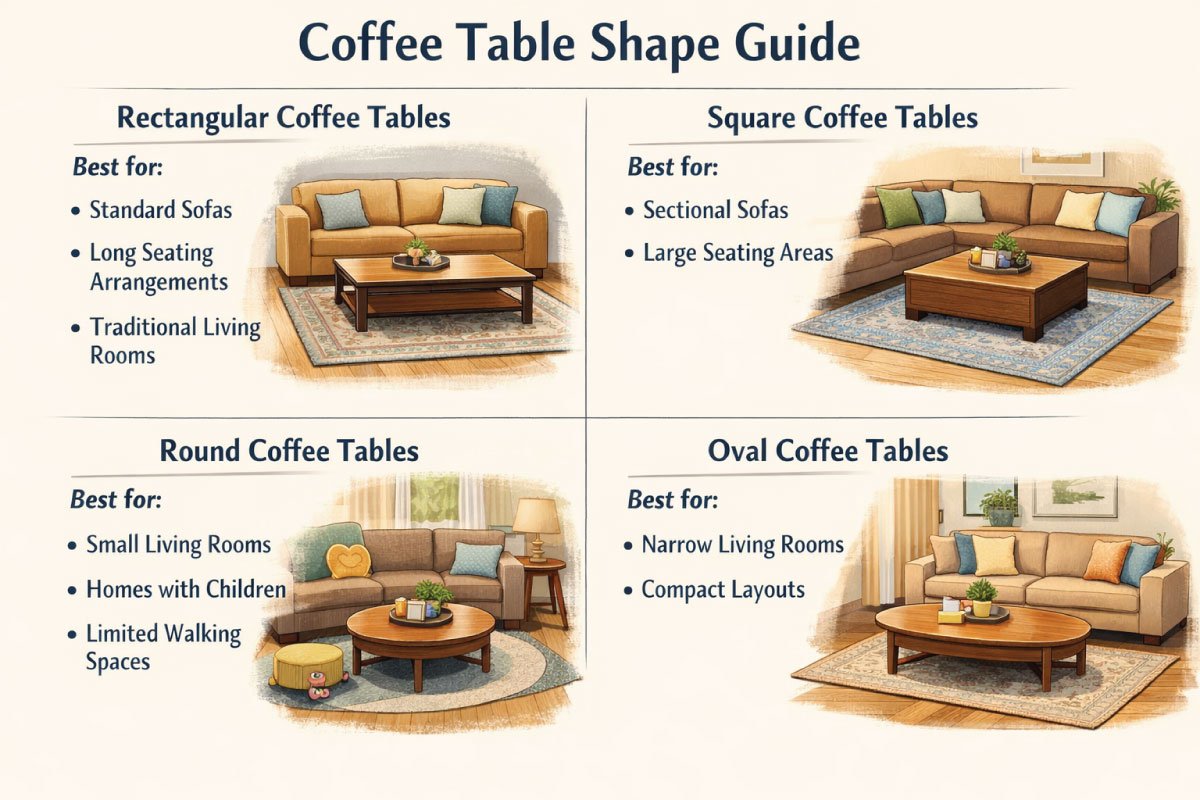
Rectangular Coffee Tables
Best for:
Standard sofas
Long seating arrangements
Traditional living rooms
These are the most common and versatile option.
Square Coffee Tables
Best for:
Sectional sofas
Large seating areas
Square tables create a balanced centerpiece in bigger rooms.
Round Coffee Tables
Best for:
Small living rooms
Homes with children
Spaces with limited walking room
Rounded edges improve movement and safety.
Oval Coffee Tables
Best for:
Narrow living rooms
Compact layouts
They combine the length of rectangular tables with softer edges.
Coffee Table for Sectional Sofas
Sectional sofas require a slightly different approach.
Since sectionals wrap around the seating area, the coffee table should be large enough to serve everyone.
Recommended sizes:
| Sectional Size | Coffee Table Size |
|---|---|
| Small Sectional | 36 – 40 inches |
| Medium Sectional | 40 – 48 inches |
| Large Sectional | 48 – 60 inches |
Square or round coffee tables often work best with sectionals.
Personal Experience: What I Learned Choosing My Coffee Table
When I first decorated my living room, I made the mistake many homeowners make — I bought a coffee table purely based on style.
It looked beautiful online, but when I placed it in front of my sofa, it felt completely wrong.
The table was too large, leaving almost no walking space between the sofa and the TV console. Guests had to squeeze past it, and reaching for items felt awkward.
After researching proper furniture proportions, I realized the table should be about two-thirds the length of my sofa and 14–18 inches away from the seating.
I replaced the oversized table with a smaller rectangular one that matched the sofa proportions.
The difference was incredible:
The living room felt larger
Walking around the seating area became easier
The room looked more balanced
This experience taught me that size and proportion matter far more than style alone when choosing furniture.
Tips for Choosing the Perfect Coffee Table
Here are some expert tips to help you choose the right coffee table.
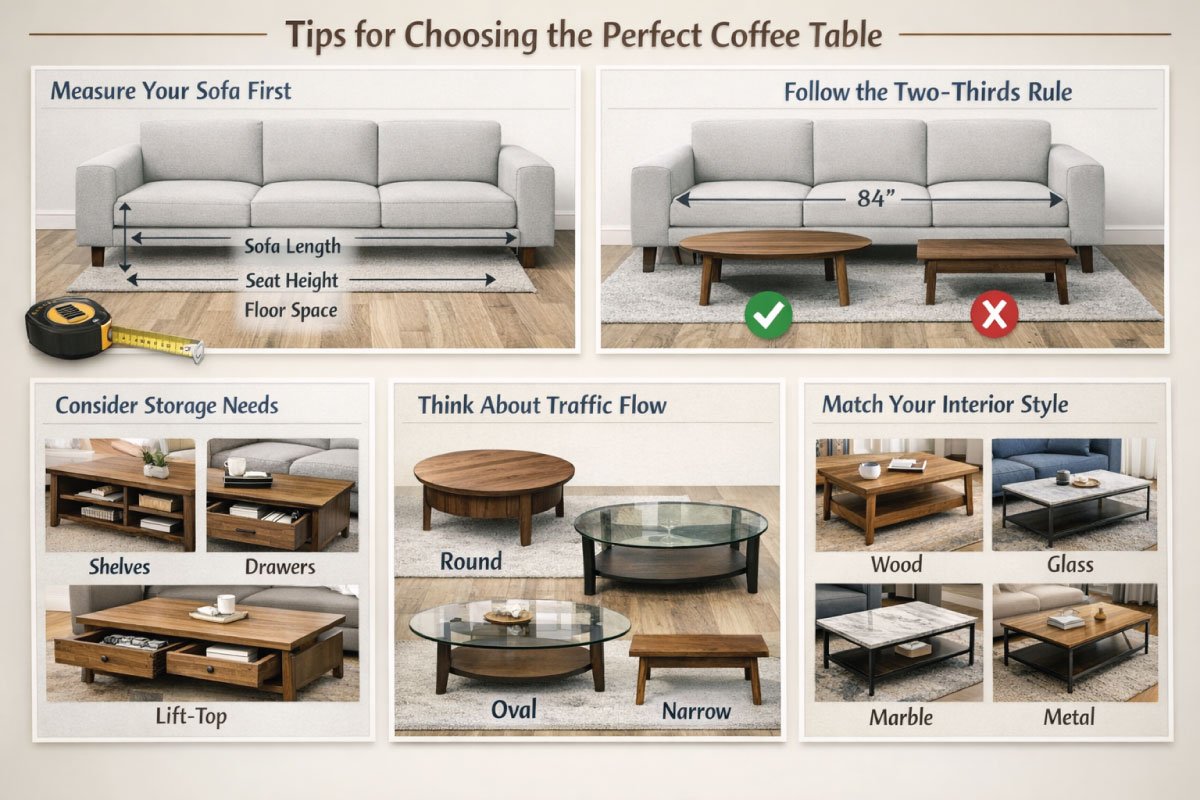
1. Measure Your Sofa First
Always measure:
Sofa length
Sofa seat height
Available floor space
These measurements guide your coffee table choice.
2. Follow the Two-Thirds Rule
Your coffee table should be roughly two-thirds the length of your sofa.
Example:
| Sofa Length | Ideal Coffee Table |
|---|---|
| 84 inches | 56 inches |
| 72 inches | 48 inches |
3. Consider Storage Needs
Some coffee tables include:
Shelves
Drawers
Lift-top storage
These are great for small living rooms where extra storage is needed.
4. Think About Traffic Flow
If people frequently walk through the seating area, choose:
Round tables
Oval tables
Narrow tables
These shapes improve movement.
5. Match Your Interior Style
Popular coffee table materials include:
| Material | Style |
|---|---|
| Wood | Traditional, rustic |
| Glass | Modern, minimalist |
| Marble | Luxury interiors |
| Metal | Industrial style |
Choose materials that complement your existing décor.
Common Coffee Table Mistakes
Avoid these common errors.
Buying Too Large
Oversized tables make the room feel crowded.
Ignoring Sofa Height
A coffee table taller than the sofa seat looks awkward.
Blocking Walkways
Poor placement disrupts room flow.
Choosing Style Over Function
A table should be practical, not just decorative.
How Room Size Affects Coffee Table Selection
While sofa dimensions are a major factor in choosing the right coffee table, your living room size also plays an equally important role. Even if a coffee table matches your sofa perfectly, it may still feel too large or too small depending on the available floor space.
Interior designers usually recommend planning the coffee table placement based on the entire seating area, not just the sofa. This includes armchairs, ottomans, and walking paths around the furniture.

Coffee Tables for Small Living Rooms
In smaller living rooms, space efficiency becomes essential. Large coffee tables can easily overwhelm the room and make it feel cramped.
For compact spaces, consider these tips:
Choose round or oval coffee tables to improve traffic flow
Use narrow tables (18–20 inches wide)
Consider nesting tables that can expand when needed
Opt for glass coffee tables to create a sense of openness
Round coffee tables are particularly useful in small apartments because they eliminate sharp corners and allow easier movement around the seating area.
Another trick designers often use in small rooms is choosing coffee tables with open bases or thin legs, which visually reduce the bulk of the furniture.
Coffee Tables for Large Living Rooms
Large living rooms provide more flexibility, but they also require careful furniture proportions. A small coffee table in a large seating area can look lost and ineffective.
For larger rooms:
Choose larger coffee tables (48–60 inches long)
Consider square coffee tables for wide seating arrangements
Use multiple coffee tables or paired tables for balance
For example, in a large sectional layout, a single small coffee table might not be accessible to everyone. In such cases, designers sometimes use two smaller tables placed side by side or a large square table in the center.
This approach creates better accessibility and fills the space more effectively.
Multi-Functional Coffee Tables
Modern homes often require furniture that serves multiple purposes. Coffee tables today are designed with several functional features that improve usability.
Some popular multifunctional coffee table types include:
Lift-Top Coffee Tables
These tables have a top surface that lifts upward, allowing you to work, eat, or use a laptop comfortably while sitting on the sofa. They are especially useful in small apartments where the living room may double as a workspace.
Storage Coffee Tables
These tables include hidden compartments, shelves, or drawers that can store:
Remote controls
Books and magazines
Blankets and cushions
Board games
Storage coffee tables help keep the living room organized while maximizing space efficiency.
Nesting Coffee Tables
Nesting tables consist of two or three smaller tables stacked together. They can be separated when extra surface space is needed and tucked away when not in use.
This option works well for people who frequently entertain guests.
Styling Your Coffee Table
Once you have chosen the correct size and shape, styling the coffee table can enhance the overall look of your living room.
A simple rule designers follow is the Rule of Three — grouping decorative objects in sets of three to create visual balance.
Common coffee table styling elements include:
A decorative tray
A small plant or flowers
A stack of books
Candles or sculptures
However, avoid overcrowding the table. A coffee table should remain functional with enough space for everyday use.
With the right size, shape, and styling, a coffee table can become the perfect centerpiece that ties your entire living room together while maintaining both beauty and practicality.
Final Thoughts
Selecting the right coffee table size is essential for creating a comfortable and well-balanced living room. The key factors to consider are height, length, width, spacing, and shape.
Remember these simple rules:
Coffee table height should match sofa height
Length should be two-thirds of sofa length
Maintain 14–18 inches of space from the sofa
Choose shapes that suit your room layout
By following these guidelines and using the coffee table size chart, you can confidently choose a table that fits both your space and lifestyle.
A well-proportioned coffee table not only improves the look of your living room but also makes everyday living more comfortable and enjoyable.
