
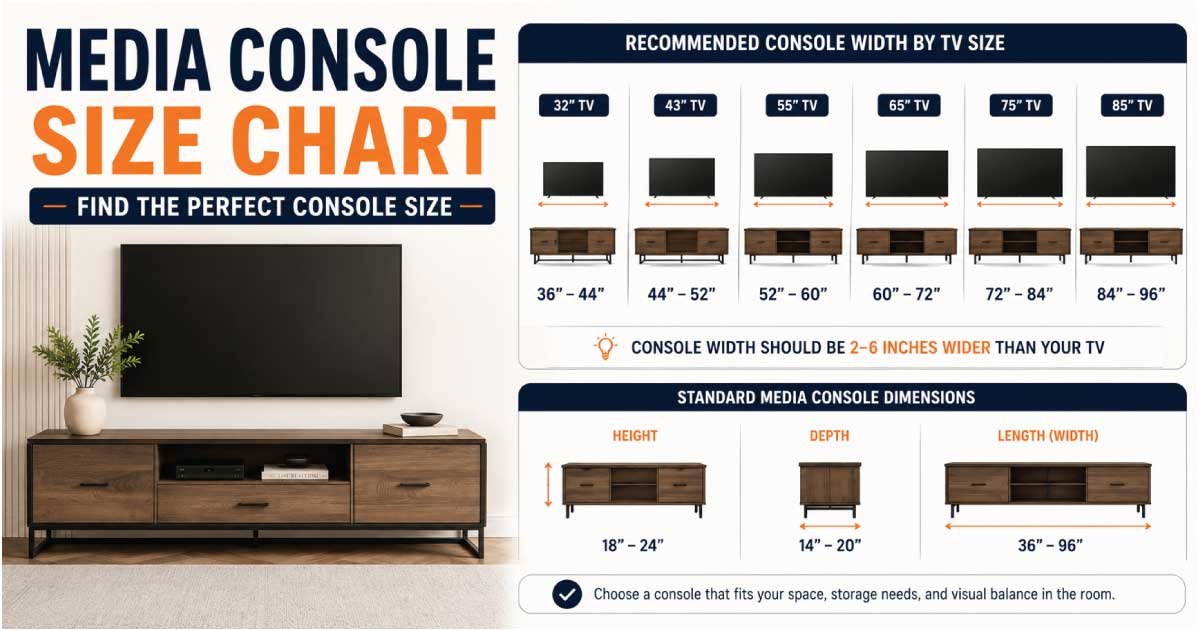
A media console is more than just a place to hold your television. It serves as the centerpiece of your entertainment area while providing valuable storage for gaming consoles, streaming devices, speakers, books, and decorative accessories. Choosing the right size media console ensures a balanced look, proper TV support, and comfortable viewing.
This comprehensive guide covers standard media console sizes, dimension charts, measurement tips, TV compatibility, buying considerations, and frequently asked questions to help you find the perfect media console for your living room, bedroom, or entertainment space.
Media Console Size Chart
The following chart provides the most common media console dimensions.
| Media Console Size | Width | Depth | Height | Recommended TV Size |
|---|---|---|---|---|
| Small | 30–48 in (76–122 cm) | 14–18 in (36–46 cm) | 18–24 in (46–61 cm) | 32–43 inches |
| Medium | 50–60 in (127–152 cm) | 15–20 in (38–51 cm) | 20–26 in (51–66 cm) | 50–60 inches |
| Large | 61–72 in (155–183 cm) | 16–22 in (41–56 cm) | 22–28 in (56–71 cm) | 65–75 inches |
| Extra Large | 73–90 in (185–229 cm) | 18–24 in (46–61 cm) | 24–30 in (61–76 cm) | 75–90 inches |
| Oversized | 91–120 in (231–305 cm) | 20–26 in (51–66 cm) | 24–32 in (61–81 cm) | 90 inches and larger |
Why Media Console Size Matters
Selecting the correct media console size affects both the appearance and functionality of your room. A console that is too small can make a large television look unstable, while an oversized console may dominate the space and reduce walking clearance. The ideal console provides enough support for your TV while leaving room for décor and electronic devices.
A properly sized media console also improves cable organization, increases storage capacity, and enhances the overall visual balance of your entertainment setup.
Understanding Standard Media Console Dimensions
Width
Width is the most important measurement when selecting a media console. Ideally, the console should be 6–12 inches wider than your television. This creates a balanced appearance and offers extra space for decorative accessories, speakers, or storage.
Typical widths include:
- 30–48 inches
- 50–60 inches
- 61–72 inches
- 73–90 inches
- Over 90 inches
Depth
Depth determines how much equipment the console can hold. Most streaming devices, gaming consoles, Blu-ray players, and cable boxes require at least 14 inches of usable depth.
Standard depths include:
- 14 inches
- 16 inches
- 18 inches
- 20 inches
- 24 inches
Deeper consoles provide additional storage but require more floor space.
Height
The height affects viewing comfort. Most media consoles range from 18 to 30 inches tall, placing the TV at an ergonomic eye level when seated.
Typical heights include:
- 18 inches
- 20 inches
- 22 inches
- 24 inches
- 28 inches
- 30 inches
Media Console Size by TV Size
Choosing a console according to television size helps create the best visual balance.
| TV Size | Minimum Console Width | Ideal Console Width |
|---|---|---|
| 32 inches | 36 inches | 40–48 inches |
| 40 inches | 44 inches | 48–54 inches |
| 43 inches | 48 inches | 50–55 inches |
| 50 inches | 54 inches | 56–60 inches |
| 55 inches | 60 inches | 62–66 inches |
| 65 inches | 70 inches | 72–78 inches |
| 75 inches | 80 inches | 82–90 inches |
| 85 inches | 90 inches | 92–100 inches |
| 98 inches | 100 inches | 105–120 inches |
How to Measure for a Media Console
Measure Your Television
Start by measuring the full width of your television from edge to edge rather than relying solely on the screen size. The actual width determines the minimum console width needed for proper support and visual balance.
Measure Available Wall Space
Record the total width of the wall where the media console will be placed. Leave enough clearance on both sides for comfortable movement, nearby furniture, and a balanced room layout.
Measure Room Depth
Ensure the console does not block walkways or make the room feel cramped. In smaller spaces, choose a shallower design that still accommodates your media equipment.
Determine Viewing Height
When seated, the center of the television should be close to eye level. Selecting the right console height helps reduce neck strain and improves overall viewing comfort.
Small Media Consoles
Small media consoles are perfect for apartments, bedrooms, offices, and compact living rooms.
Typical dimensions include:
- Width: 30–48 inches
- Depth: 14–18 inches
- Height: 18–24 inches
Ideal for:
- 32-inch TVs
- 40-inch TVs
- 43-inch TVs
Advantages include:
- Space-saving
- Lightweight
- Easy to move
- Affordable
Medium Media Consoles
Medium consoles are the most popular option because they accommodate the majority of modern televisions.
Typical dimensions:
- Width: 50–60 inches
- Depth: 15–20 inches
- Height: 20–26 inches
Suitable for:
- 50-inch TVs
- 55-inch TVs
- 60-inch TVs
These consoles provide an excellent balance between storage and room efficiency.
Large Media Consoles
Large media consoles create a luxurious entertainment center for spacious living rooms.
Typical dimensions:
- Width: 61–72 inches
- Depth: 16–22 inches
- Height: 22–28 inches
Recommended for:
- 65-inch TVs
- 70-inch TVs
- 75-inch TVs
Large consoles usually feature multiple cabinets, shelves, and cable management systems.
▶️ Related Size Guides 👉 TV Wall Mount Size Chart: Complete Guide to Standard Sizes
Extra-Large Media Consoles
For home theaters and oversized televisions, extra-large consoles provide maximum storage and visual balance.
Typical dimensions:
- Width: 73–90 inches
- Depth: 18–24 inches
- Height: 24–30 inches
Compatible with:
- 75-inch TVs
- 85-inch TVs
- 90-inch TVs
These units often include adjustable shelving, hidden storage, and premium finishes.
Media Console Materials
Solid Wood
Solid wood media consoles offer exceptional durability and timeless appeal. They are ideal for traditional, farmhouse, and luxury interiors and can last for decades with proper care.
Engineered Wood
Engineered wood provides an affordable alternative while maintaining an attractive appearance. It is commonly used in modern furniture and is available in many finishes.
Metal
Metal consoles provide a sleek industrial style and excellent structural strength. They are often combined with wood shelves for a contemporary appearance.
Glass
Glass media consoles create an open, modern look. Tempered glass shelves support media equipment while making smaller rooms appear larger.
▶️ Related Size Guides 👉 Perfect Bookshelf Size Guide With Chart
Storage Features to Consider
A quality media console should provide enough storage for your entertainment equipment.
Popular storage options include:
- Open shelves
- Cabinets
- Drawers
- Adjustable shelving
- Cable management holes
- Hidden compartments
- Ventilated electronics storage
The right storage layout keeps your entertainment area organized and clutter-free.
Choosing the Right Media Console Style
Modern
Modern consoles feature clean lines, glossy finishes, and minimalist designs that complement contemporary homes.
Rustic
Rustic styles emphasize natural wood textures, distressed finishes, and warm tones for a cozy atmosphere.
Industrial
Industrial media consoles combine wood and metal to create a bold urban appearance suitable for loft-style interiors.
Farmhouse
Farmhouse consoles include sliding barn doors, natural finishes, and spacious storage, making them popular in family living rooms.
Mid-Century Modern
These designs feature tapered legs, simple geometric shapes, and warm wood finishes that remain timeless and versatile.
▶️ Related Size Guides 👉 Standard Rug Size Chart and Rug Measurement Guide
Common Mistakes When Buying a Media Console
Many homeowners choose the wrong media console because they overlook important measurements.
Avoid these common mistakes:
- Buying a console narrower than the television
- Ignoring room dimensions
- Choosing insufficient storage
- Forgetting cable management
- Selecting the wrong height
- Blocking walkways
- Overlooking weight capacity
Proper planning prevents costly mistakes and ensures long-term satisfaction.
Tips for Choosing the Perfect Media Console
Consider these recommendations before making your purchase:
- Measure your TV accurately.
- Measure your available wall space.
- Leave at least 3–6 inches of clearance around the console.
- Match the console width to your TV size.
- Choose durable materials.
- Plan for future electronics.
- Prioritize cable management.
- Select a style that complements your home décor.
These simple steps help you invest in a media console that looks great and functions well for years.
Media Console vs TV Stand
Although the terms are often used interchangeably, there are notable differences.
| Feature | Media Console | TV Stand |
|---|---|---|
| Storage | Extensive | Limited |
| Width | Larger | Smaller |
| Cabinets | Yes | Sometimes |
| Decorative Value | High | Moderate |
| Home Theater Support | Excellent | Basic |
| Cable Management | Usually Included | May Be Limited |
Media consoles are generally better suited for complete entertainment systems, while TV stands are ideal for compact setups.
Conclusion
A well-sized media console enhances both the functionality and appearance of your entertainment space. By considering your television dimensions, room layout, storage needs, and preferred style, you can choose a console that offers lasting support and organization. Use the size charts and measurement tips in this guide to confidently select a media console that fits your home and creates a comfortable, visually balanced entertainment center.
FAQs:
How wide should a media console be?
A media console should generally be 6 to 12 inches wider than your television for the best appearance and stability. This extra width creates balanced proportions, provides space for speakers or decorative items, and helps safely support TVs placed directly on the console.
Can a media console be smaller than the TV?
Using a media console that is smaller than the television is generally not recommended. A narrower console can appear unbalanced, reduce stability, and leave less room for media devices or accessories, especially when supporting larger TVs on the tabletop.
What is the standard height of a media console?
Most media consoles are between 18 and 30 inches tall. This height positions the television at a comfortable viewing level when seated, helping reduce neck strain while creating an attractive entertainment setup in living rooms, family rooms, or bedrooms.
What depth should a media console have?
A media console should typically have a depth of 14 to 24 inches to accommodate streaming devices, gaming consoles, cable boxes, and other electronics. This depth also allows proper cable management and ventilation, helping electronic equipment operate efficiently and safely.
How much weight can a media console support?
The weight capacity of a media console depends on its design, materials, and construction quality. Most standard models support between 100 and 250 pounds, while heavy-duty solid wood consoles can hold even more when assembled and used according to the manufacturer’s guidelines.
