
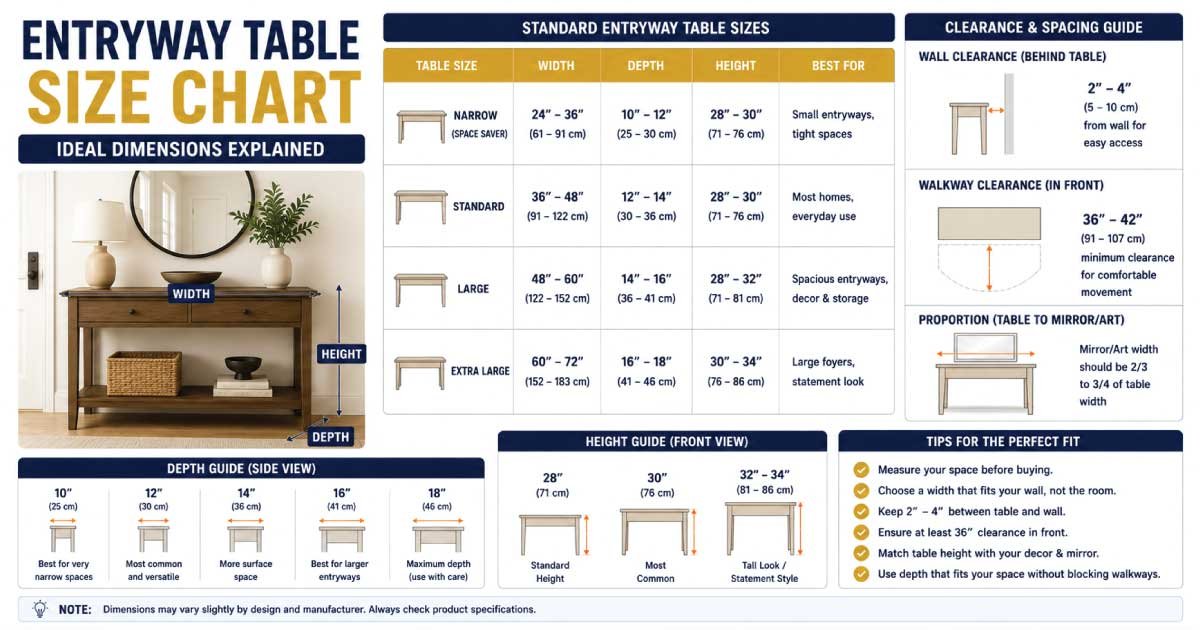
An entryway table, also known as a console table, is one of the first pieces of furniture guests notice when entering your home. It serves both functional and decorative purposes by providing a convenient place for keys, mail, wallets, lamps, plants, and decorative accessories. However, selecting the right size is essential. A table that is too large can make the hallway feel cramped, while one that is too small may look out of place and offer limited storage.
This complete entryway table size guide covers standard dimensions, different table styles, measuring tips, placement ideas, recommended clearances, and expert advice to help you choose the perfect entryway table for your home.
Entryway Table Size Chart
The following chart shows the most common entryway table dimensions.
| Entryway Table Type | Width | Height | Depth |
|---|---|---|---|
| Small Entryway Table | 24–36 inches | 28–32 inches | 10–14 inches |
| Standard Console Table | 36–48 inches | 30–32 inches | 12–16 inches |
| Large Entryway Table | 48–72 inches | 30–34 inches | 14–18 inches |
| Slim Console Table | 30–60 inches | 8–12 inches | 30–32 inches |
| Storage Console Table | 36–60 inches | 30–36 inches | 14–18 inches |
| Floating Entryway Shelf | 24–48 inches | Mounted 30–36 inches from floor | 8–12 inches |
These dimensions represent the most common sizes available from furniture manufacturers.
Why Entryway Table Size Matters
Choosing the correct entryway table size improves both the appearance and functionality of your home’s entrance. A properly sized table creates a welcoming focal point while leaving enough room for comfortable movement.
An oversized console table can make a narrow hallway feel crowded, while a table that is too small may appear insignificant against a large wall. Selecting the correct dimensions helps balance your space, improve organization, and enhance your home’s overall style.
Standard Entryway Table Dimensions
Most homeowners choose a standard console table because it fits a wide variety of entryways.
Typical dimensions include:
- Width: 36–48 inches
- Height: 30–32 inches
- Depth: 12–16 inches
These measurements provide enough surface area for decorative accessories while maintaining comfortable walking space.
Standard entryway tables work well in apartments, townhouses, and medium-sized homes.
Small Entryway Table Dimensions
Compact entryway tables are ideal for homes with limited hallway space.
Typical measurements include:
- Width: 24–36 inches
- Height: 28–32 inches
- Depth: 10–14 inches
These tables provide just enough room for everyday essentials such as:
- Keys
- Wallets
- Small plants
- Decorative bowls
- Picture frames
Small tables fit perfectly inside apartments, condos, and narrow hallways.
Large Entryway Table Dimensions
Large console tables create an impressive first impression in spacious foyers.
Typical dimensions include:
- Width: 48–72 inches
- Height: 30–34 inches
- Depth: 14–18 inches
These tables offer generous display space for:
- Large table lamps
- Decorative vases
- Family photos
- Floral arrangements
- Artwork
- Storage baskets
Large entryway tables work best in homes with wide entrance halls.
Slim Console Table Dimensions
Slim console tables are designed specifically for narrow hallways.
Average dimensions include:
- Width: 30–60 inches
- Height: 30–32 inches
- Depth: 8–12 inches
Because of their shallow depth, they maintain excellent walking clearance while still providing space for decorative items and daily essentials.
Slim console tables are popular in modern homes where space efficiency is important.
Storage Console Table Size
Storage console tables combine display space with practical storage.
Typical dimensions include:
- Width: 36–60 inches
- Height: 30–36 inches
- Depth: 14–18 inches
These models often include:
- Drawers
- Cabinets
- Open shelves
- Basket storage
- Hidden compartments
Storage console tables are ideal for keeping entryways organized and clutter-free.
Floating Entryway Shelf Dimensions
Floating shelves provide a minimalist alternative to traditional console tables.
Typical measurements include:
- Width: 24–48 inches
- Depth: 8–12 inches
- Mounted 30–36 inches above the floor
Floating shelves work well in:
- Small apartments
- Tiny homes
- Modern interiors
- Narrow corridors
Their compact design creates an open and spacious appearance.
▶️ Related Size Guides 👉 Bathtub Size Chart for Bathrooms of Any Shape
How to Measure for an Entryway Table
Measuring your available space before shopping helps prevent purchasing furniture that is too large or too small.
Measure Wall Width
Begin by measuring the available wall where the table will be placed.
Ideally, the table should occupy approximately two-thirds to three-fourths of the wall width.
Measure Hallway Width
Measure the total hallway width to determine the maximum table depth.
Most homeowners should maintain at least 36 inches of walking clearance.
Check Door Clearance
If your front door opens inward, ensure it clears the table completely.
Leave several inches between the table and the swinging door.
Consider Nearby Furniture
Account for nearby furniture including:
- Coat racks
- Benches
- Shoe cabinets
- Staircases
- Closets
Proper spacing improves traffic flow throughout the entryway.
Recommended Entryway Clearances
Adequate clearance keeps the entrance comfortable and safe.
Recommended spacing includes:
| Area | Recommended Clearance |
|---|---|
| Walking space in front | 36–42 inches |
| Between table and door | 6–12 inches |
| Mirror above table | 5–8 inches |
| Decorative lamp height | 24–34 inches |
| Basket storage below | 8–12 inches clearance |
Following these recommendations creates a functional and visually balanced entryway.
▶️ Related Size Guides 👉 Carpet Size Chart for Living Rooms and Bedrooms
Choosing the Right Entryway Table for Your Home
Different homes require different console table sizes.
Small Entryway
Best options include:
- Floating shelf
- Slim console table
- Small entryway table
These furniture pieces maximize functionality without making the entrance feel crowded.
Medium Entryway
Recommended choices include:
- Standard console table
- Storage console table
These sizes provide excellent storage and decorative space while maintaining comfortable traffic flow.
Large Entryway
Large foyers can accommodate:
- Oversized console tables
- Double console tables
- Storage cabinets
- Decorative benches
These larger furniture pieces create an elegant first impression while filling the available space proportionally.
Entryway Table Height Guide
Most console tables fall within a comfortable height range.
Common heights include:
- Low table: 28–30 inches
- Standard table: 30–32 inches
- Tall console: 32–34 inches
Choosing the right height depends on nearby furniture, mirrors, and decorative accessories.
A standard height of around 30 inches works well for most homes.
▶️ Related Size Guides 👉 Pillow Size Chart for Better Sleep Every Night
How Deep Should an Entryway Table Be?
Depth determines how much floor space the table occupies.
Typical depths include:
- Extra slim: 8–10 inches
- Slim: 10–12 inches
- Standard: 12–16 inches
- Deep storage table: 16–18 inches
For narrow hallways, a depth of 10–12 inches is usually ideal because it provides storage while preserving walking space.
Decorating an Entryway Table
An entryway table becomes more attractive when decorated thoughtfully.
Popular decorative items include:
- Mirrors
- Table lamps
- Candles
- Fresh flowers
- Decorative bowls
- Family photos
- Books
- Small plants
- Artwork
- Storage baskets
Avoid overcrowding the tabletop. A clean and organized arrangement creates a welcoming entrance.
Best Materials for Entryway Tables
Entryway tables are available in various materials.
Popular choices include:
- Solid wood
- Engineered wood
- MDF
- Metal
- Glass
- Marble
- Bamboo
- Rattan
Solid wood offers long-lasting durability, while glass and metal create a contemporary appearance.
Common Mistakes to Avoid
Avoid these common shopping mistakes when selecting an entryway table.
- Buying without measuring first
- Choosing excessive depth for narrow hallways
- Blocking door movement
- Ignoring walking clearance
- Selecting a table that is too short or too tall
- Overcrowding the tabletop with decorations
- Forgetting storage requirements
Careful planning helps ensure your console table remains practical and visually appealing.
Conclusion
Selecting the right entryway table size is essential for creating a functional, organized, and inviting entrance. By understanding standard dimensions, measuring your available space, and maintaining proper walking clearances, you can choose a console table that fits your home perfectly. Whether you need a compact floating shelf for a small apartment, a slim console for a narrow hallway, or a large storage table for a spacious foyer, using this entryway table size chart will help you make a confident decision. A well-proportioned entryway table not only improves everyday convenience but also adds style and personality to the very first space guests see when they enter your home.
FAQs:
What is the standard size of an entryway table?
A standard entryway table typically measures 36 to 48 inches wide, 30 to 32 inches high, and 12 to 16 inches deep. These dimensions provide enough surface space for decorative items, keys, and everyday essentials while fitting comfortably in most entryways and foyers.
How much walking space should be left in front of an entryway table?
Leave at least 36 inches of clearance in front of an entryway table to allow comfortable walking and easy access. In larger entryways or high-traffic areas, 42 inches or more provides better movement and creates a more open, welcoming layout.
How high should a mirror be above an entryway table?
A mirror should generally be hung 5 to 8 inches above the top of an entryway table. This spacing creates a balanced appearance, keeps the mirror visually connected to the table, and allows enough room for decorative accessories placed below.
Can I use a floating shelf instead of a console table?
Yes, a floating shelf is a great alternative to a console table, especially in small entryways with limited floor space. It provides a convenient surface for keys, mail, and décor while creating a clean, modern, and space-saving design.
What depth is best for narrow hallways?
A depth of 10 to 12 inches is ideal for entryway tables placed in narrow hallways. This size offers enough space for decorative accents and everyday essentials without blocking foot traffic or making the hallway feel cramped and crowded.
