
An ottoman is one of the most versatile pieces of furniture you can add to your home. It can function as a footrest, coffee table, extra seating, storage unit, or decorative accent piece. However, choosing the right ottoman is not only about style or color—size plays a critical role in comfort, functionality, and how well it fits your space.
Many homeowners purchase an ottoman that looks perfect online but later realize it is either too large for their room or too small to serve its intended purpose. Understanding ottoman dimensions helps you choose a piece that complements your sofa, fits your room layout, and enhances comfort.
In this complete guide, we will cover standard ottoman sizes, a detailed size chart, how to measure your space, different ottoman types, and practical tips for choosing the perfect one. I’ll also share my personal experience buying an ottoman, which taught me how important proper measurements really are.
What Is an Ottoman?
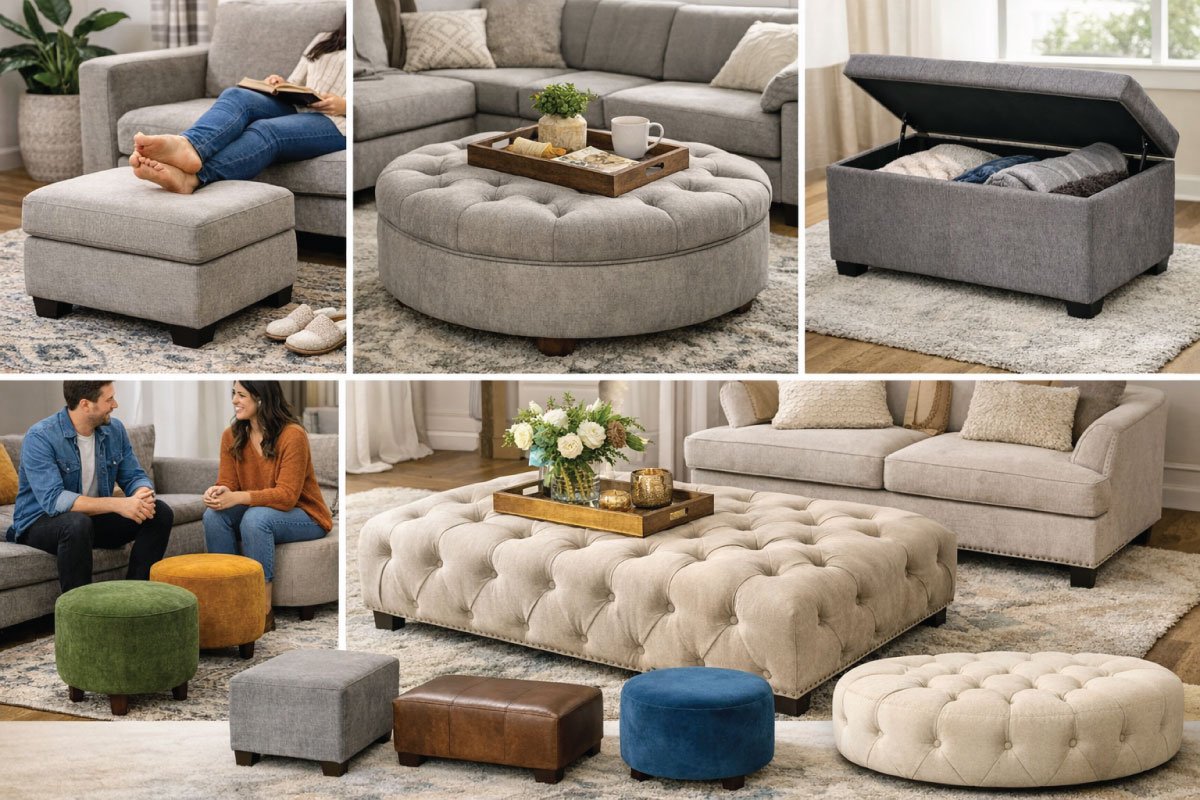
An ottoman is a low piece of upholstered furniture traditionally designed as a footrest placed in front of a chair or sofa. Over time, ottomans have evolved into multifunctional furniture pieces used for various purposes, including:
Footrests
Coffee tables
Storage furniture
Extra seating
Decorative centerpieces
Ottomans come in different shapes such as square, rectangular, round, and oversized, and each shape has different size recommendations.
Standard Ottoman Dimensions
Ottoman sizes vary depending on the design and purpose, but most follow general size ranges.
Average Ottoman Dimensions
| Measurement | Standard Size |
|---|---|
| Height | 16 – 18 inches (40 – 46 cm) |
| Width | 18 – 36 inches (46 – 91 cm) |
| Length | 18 – 36 inches (46 – 91 cm) |
| Depth | 18 – 30 inches (46 – 76 cm) |
A well-sized ottoman should typically be the same height as your sofa seat or slightly lower to provide comfortable leg support.
Ottoman Size Chart
The following chart helps determine the right ottoman size based on furniture and room size.
| Room Size | Ottoman Width | Ottoman Height | Best Use |
|---|---|---|---|
| Small Room | 18 – 24 inches | 16 – 17 inches | Footrest |
| Medium Room | 24 – 30 inches | 16 – 18 inches | Coffee table ottoman |
| Large Room | 30 – 40 inches | 16 – 18 inches | Seating or centerpiece |
| Sectional Sofa Setup | 35 – 45 inches | 17 – 18 inches | Large coffee ottoman |
This size chart helps maintain balance between furniture pieces and prevents overcrowding.
Types of Ottomans and Their Typical Sizes
Different ottoman types serve different purposes, which affects their size.
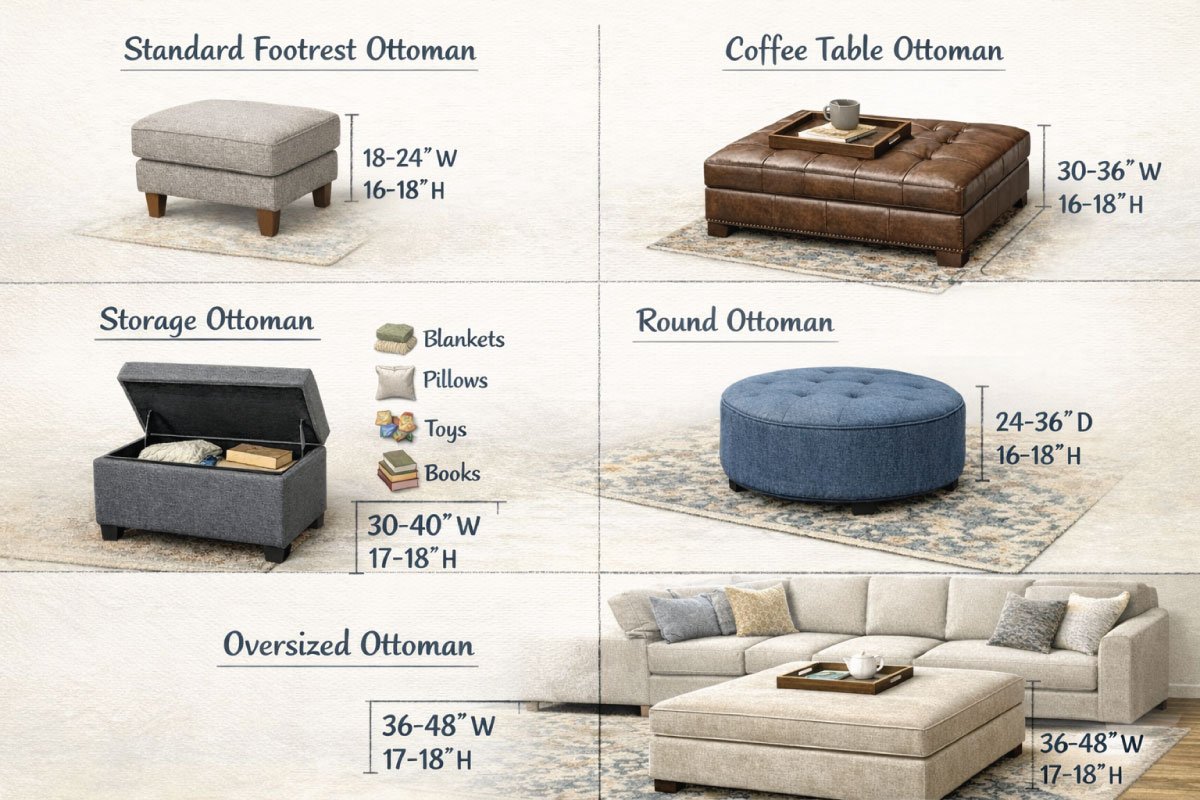
1. Standard Footrest Ottoman
This is the most common ottoman used with armchairs or sofas.
Typical Size
Width: 18 – 24 inches
Height: 16 – 18 inches
These compact ottomans are perfect for relaxing your legs after a long day.
2. Coffee Table Ottoman
A coffee ottoman is larger and designed to replace or accompany a coffee table.
Typical Size
Width: 30 – 36 inches
Height: 16 – 18 inches
Many coffee ottomans have a flat surface or tray for placing drinks and decor items.
3. Storage Ottoman
Storage ottomans include hidden compartments and are ideal for small homes.
Typical Size
Width: 30 – 40 inches
Height: 17 – 18 inches
They are commonly used to store:
Blankets
Pillows
Toys
Books
4. Round Ottoman
Round ottomans are often used as decorative centerpieces.
Typical Size
Diameter: 24 – 36 inches
Height: 16 – 18 inches
They work well in living rooms with curved furniture layouts.
5. Oversized Ottoman
Large ottomans are often used with sectionals.
Typical Size
Width: 36 – 48 inches
Height: 17 – 18 inches
These can function as coffee tables, seating areas, or lounging platforms.
My Personal Experience Buying an Ottoman
A few years ago, I decided to add an ottoman to my living room to improve comfort when relaxing on the sofa. I wanted something stylish that could also work as a coffee table.
While browsing online furniture stores, I found a beautiful large square ottoman with tufted upholstery. It looked perfect in the product photos, so I ordered it without thinking much about dimensions.
When the ottoman arrived, I quickly realized something was wrong.
The ottoman was almost 40 inches wide, which was far larger than I expected. My living room was not very spacious, and placing the ottoman in front of the sofa made the room feel cramped. Walking space between the sofa and TV stand became very tight.
I learned an important lesson that day: always measure your room and compare dimensions before buying furniture.
To solve the problem, I replaced it with a 28-inch square ottoman, which fit perfectly in front of my sofa. It provided enough surface area for a tray and drinks while still leaving comfortable walking space.
Since then, whenever I buy furniture, I always:
Measure the space carefully
Check furniture dimensions
Leave enough walking clearance
This simple habit has saved me from making similar mistakes.
How to Measure Space for an Ottoman
Before purchasing an ottoman, follow these steps to ensure it fits your room properly.
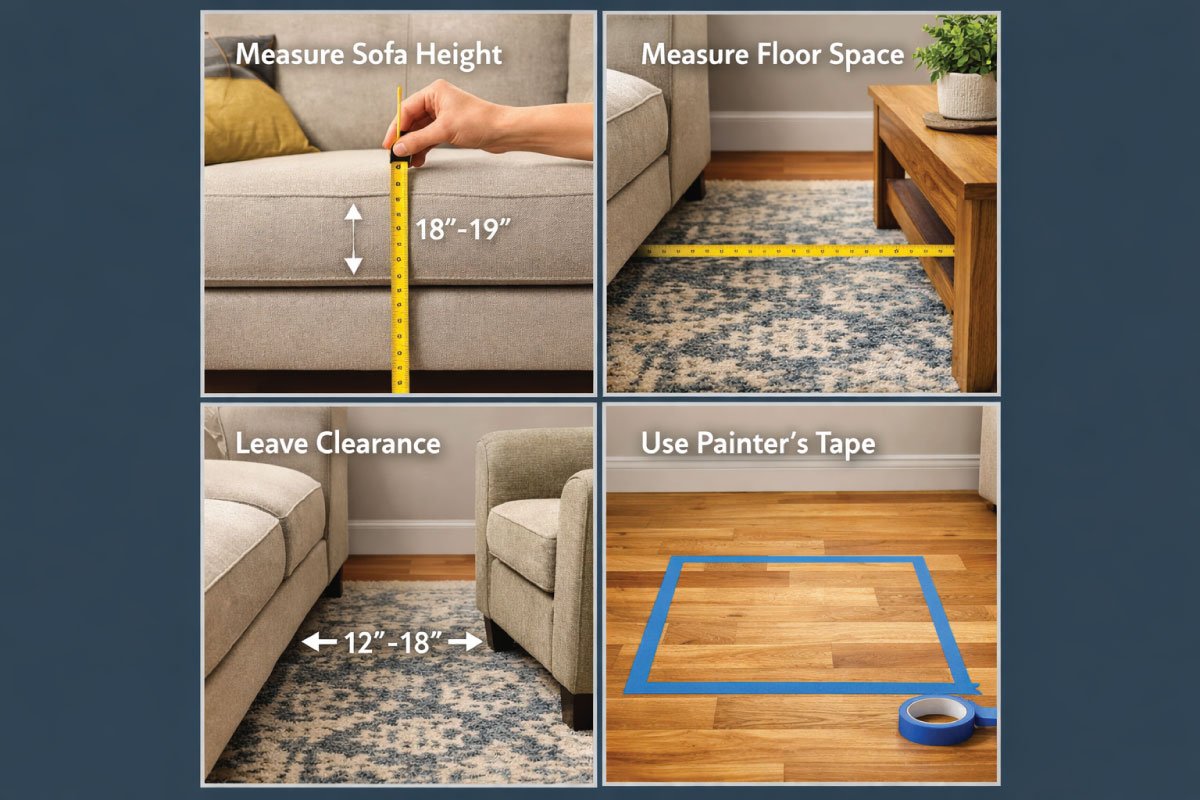
Step 1: Measure Sofa Height
The ottoman height should ideally be equal to or 1–2 inches lower than the sofa seat height.
Step 2: Measure Available Floor Space
Determine how much room you have between the sofa and other furniture pieces.
Step 3: Leave Walking Clearance
Interior designers recommend leaving at least 12–18 inches between the ottoman and surrounding furniture.
This ensures comfortable movement around the room.
Step 4: Use Painter’s Tape
One useful trick is marking the ottoman dimensions on the floor using painter’s tape. This gives you a visual idea of how the furniture will fit.
Choosing the Right Ottoman Shape
Ottoman shape also influences how well it fits into your space.
Square Ottomans
Best for:
Sectional sofas
Large living rooms
They provide balanced proportions.
Rectangular Ottomans
Best for:
Standard sofas
Narrow living rooms
They align nicely with the length of the sofa.
Round Ottomans
Best for:
Small spaces
Rooms with curved layouts
They improve flow by eliminating sharp edges.
Ottoman Height Guide
Height plays an important role in comfort.
| Height | Best Use |
|---|---|
| 14 – 15 inches | Low lounge seating |
| 16 – 18 inches | Standard footrest height |
| 18 – 20 inches | Coffee table ottoman |
Most sofas pair best with ottomans around 16–18 inches tall.
Factors to Consider When Choosing Ottoman Size
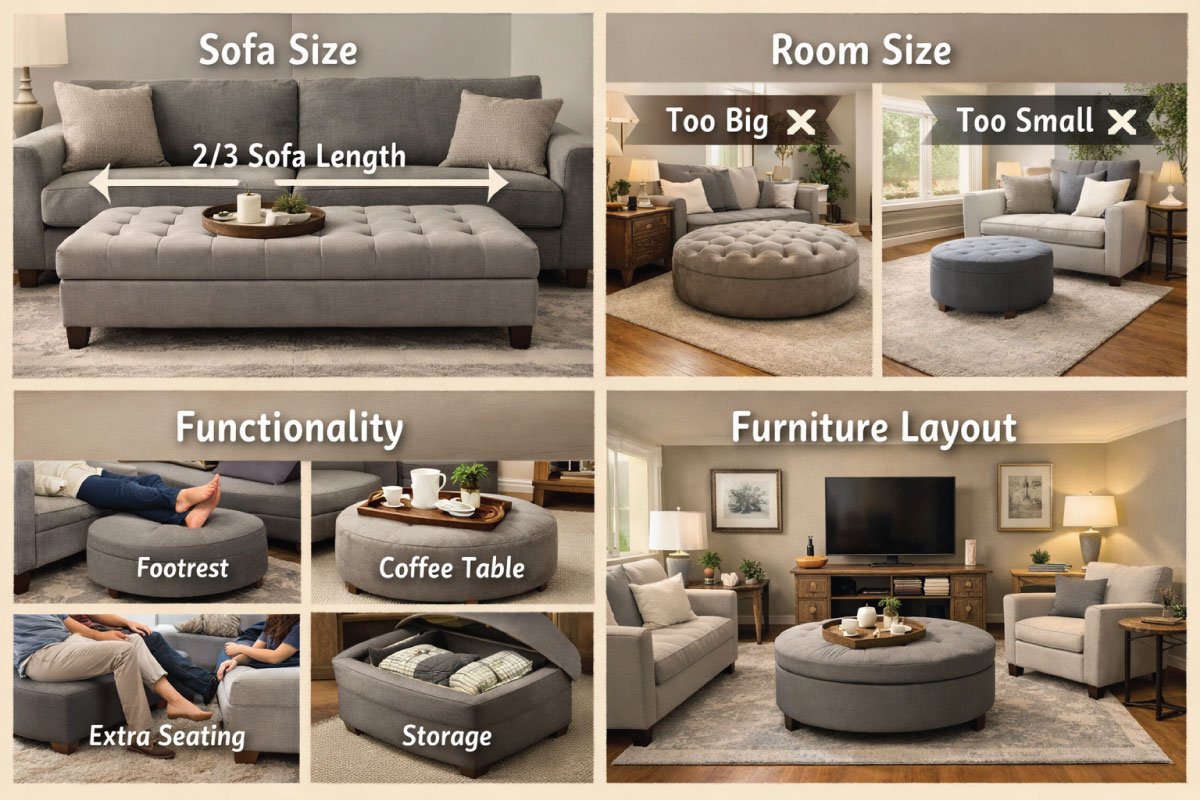
1. Sofa Size
Your ottoman should be about two-thirds the length of your sofa when used as a coffee table.
2. Room Size
Large ottomans can overwhelm small rooms, while tiny ottomans may look lost in spacious living rooms.
3. Functionality
Decide how you plan to use the ottoman:
Footrest
Coffee table
Extra seating
Storage
This determines the ideal size.
4. Furniture Layout
Consider surrounding furniture like:
Coffee tables
Side tables
Chairs
TV stands
Everything should feel balanced.
Common Ottoman Buying Mistakes
Here are some common mistakes people make when choosing an ottoman.
Not Measuring Sofa Height
A tall ottoman can feel awkward if it sits higher than the sofa seat.
Choosing an Oversized Ottoman
Large ottomans may block walking paths in smaller rooms.
Ignoring Storage Needs
Many people overlook storage ottomans that can save valuable space.
Focusing Only on Style
Comfort and practicality should always come before appearance.
Best Ottoman Size for Different Rooms
Choosing the correct ottoman size also depends on where you plan to place it in your home. Each room has different space requirements and furniture layouts, so selecting the appropriate dimensions ensures the ottoman enhances both comfort and functionality.
Living Room
The living room is the most common place for an ottoman. In this setting, ottomans often serve as footrests, coffee tables, or additional seating.
Recommended size for living rooms:
Width: 28 – 36 inches
Height: 16 – 18 inches
If your ottoman is replacing a coffee table, it should be about two-thirds the length of your sofa. This proportion keeps the furniture visually balanced and prevents the room from looking overcrowded.
For larger living rooms with sectionals, an oversized ottoman between 36 and 45 inches wide works well as a central piece.
Bedroom
Ottomans are also popular in bedrooms, especially at the foot of the bed. In this case, the ottoman is often used as a bench, decorative accent, or storage unit.
Recommended size:
Length: 40 – 50 inches
Height: 16 – 18 inches
This size provides enough seating space without blocking walking paths around the bed.
Storage ottomans work particularly well in bedrooms because they can store extra blankets, pillows, or seasonal clothing.
Entryway
Placing an ottoman in the entryway can make it easier to sit down while putting on shoes.
Recommended size:
Width: 24 – 30 inches
Height: 16 – 18 inches
A compact ottoman keeps the entryway functional without making the space feel crowded.
Ottoman Materials and How They Affect Size Choice
The material of an ottoman can also influence how large or small it should be.
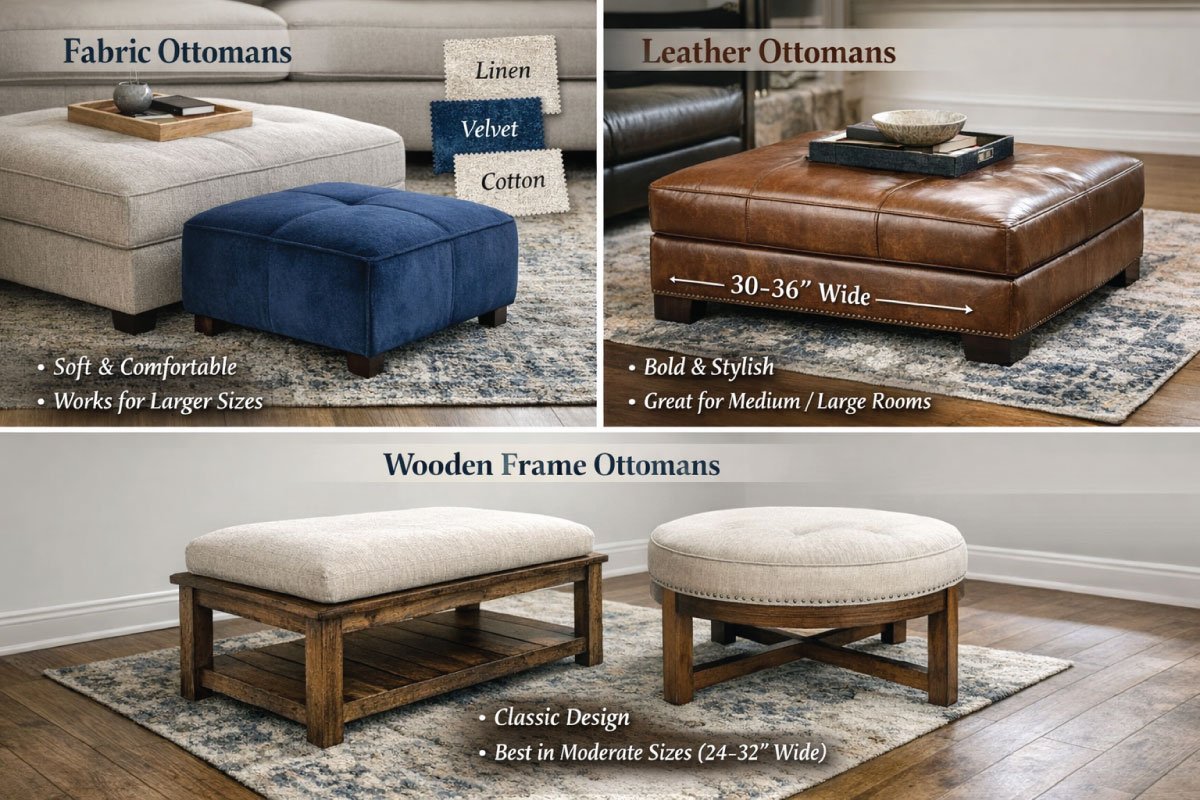
Fabric Ottomans
Fabric ottomans are soft and comfortable, making them ideal for footrests and seating. Because they often appear visually lighter, they can work well even in slightly larger sizes.
Popular fabric choices include:
Linen
Cotton
Velvet
Polyester blends
Leather Ottomans
Leather ottomans tend to look more structured and bold. Because of this, they usually work best in medium or large rooms.
A leather ottoman between 30 and 36 inches wide can serve as an elegant focal point in the living room.
Wooden Frame Ottomans
Some ottomans include wooden legs or partial wooden frames. These styles combine traditional furniture aesthetics with modern comfort.
Wood-framed ottomans usually work best when they are moderate in size, around 24–32 inches wide.
How to Style an Ottoman Like a Designer
Once you choose the perfect size ottoman, styling it properly can elevate the overall look of your room.
Here are a few simple styling ideas.
Use a Decorative Tray
A tray placed on top of a coffee ottoman creates a stable surface for items like:
Coffee mugs
Books
Candles
Small plants
This makes the ottoman both practical and stylish.
Add Decorative Books
Stacking a few coffee table books on an ottoman can make it look more sophisticated while adding personality to the room.
Include a Small Plant or Vase
A small plant or vase with flowers adds freshness and color, turning the ottoman into a visual centerpiece.
Final Thought:
One of the best things about ottomans is their flexibility. A well-sized ottoman can easily move between rooms and serve different purposes over time.
For example, a medium-sized ottoman can function as:
A footrest in the living room
Extra seating during gatherings
A small coffee table with a tray
A bedroom accent piece
Choosing the right dimensions ensures your ottoman remains functional, stylish, and adaptable for years to come.
