
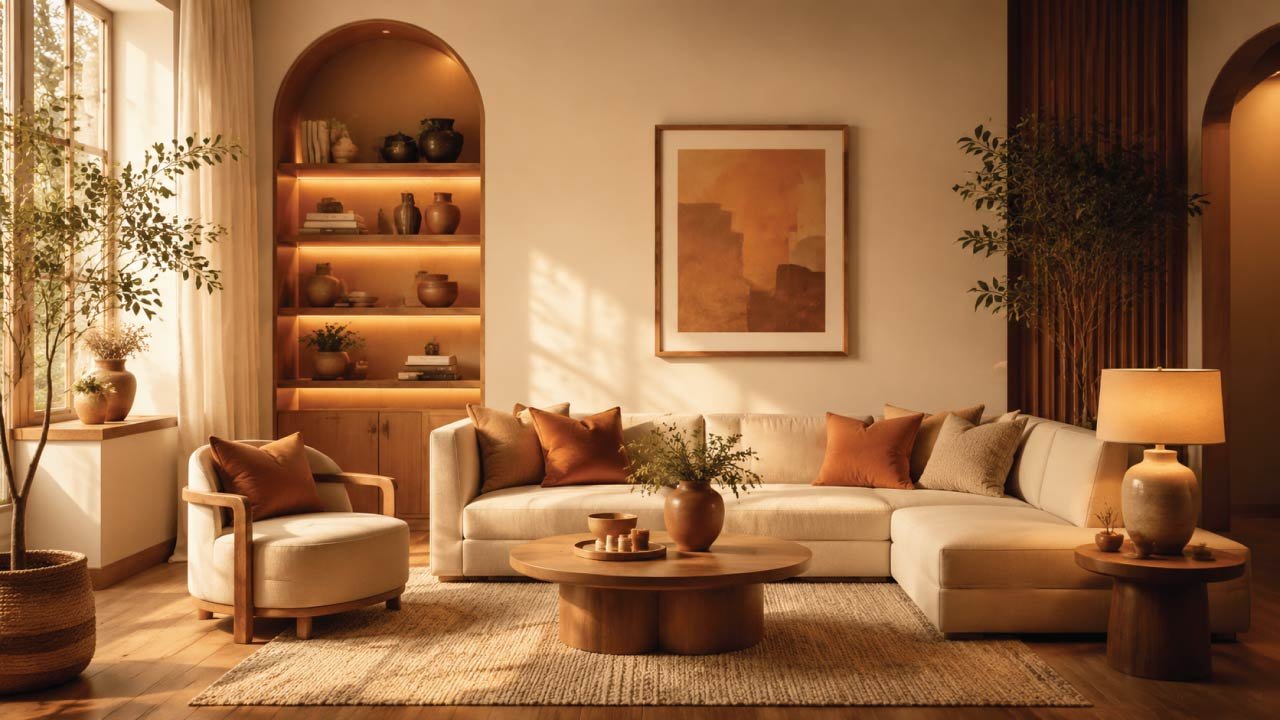
Warm-toned living rooms have become a defining feature of modern interior design because they strike a balance between comfort and sophistication. Unlike cooler palettes that can sometimes feel stark or overly minimal, warm tones create an atmosphere that feels lived-in, welcoming, and emotionally grounding.
From earthy neutrals to golden lighting and natural textures, a warm aesthetic is less about a single color and more about layering tones that feel soft, organic, and harmonious. Whether you’re redesigning your entire living room or simply refreshing a corner, these 12 warm tone aesthetic living room ideas will help you build a space that feels effortlessly cozy and timeless.
1. Start with a Soft Neutral Base
A warm aesthetic living room begins with a soft and calming neutral base that sets the overall mood of the space. Shades like creamy white, beige, taupe, greige, and sand create a gentle foundation that feels soothing, balanced, and naturally welcoming in any lighting condition.
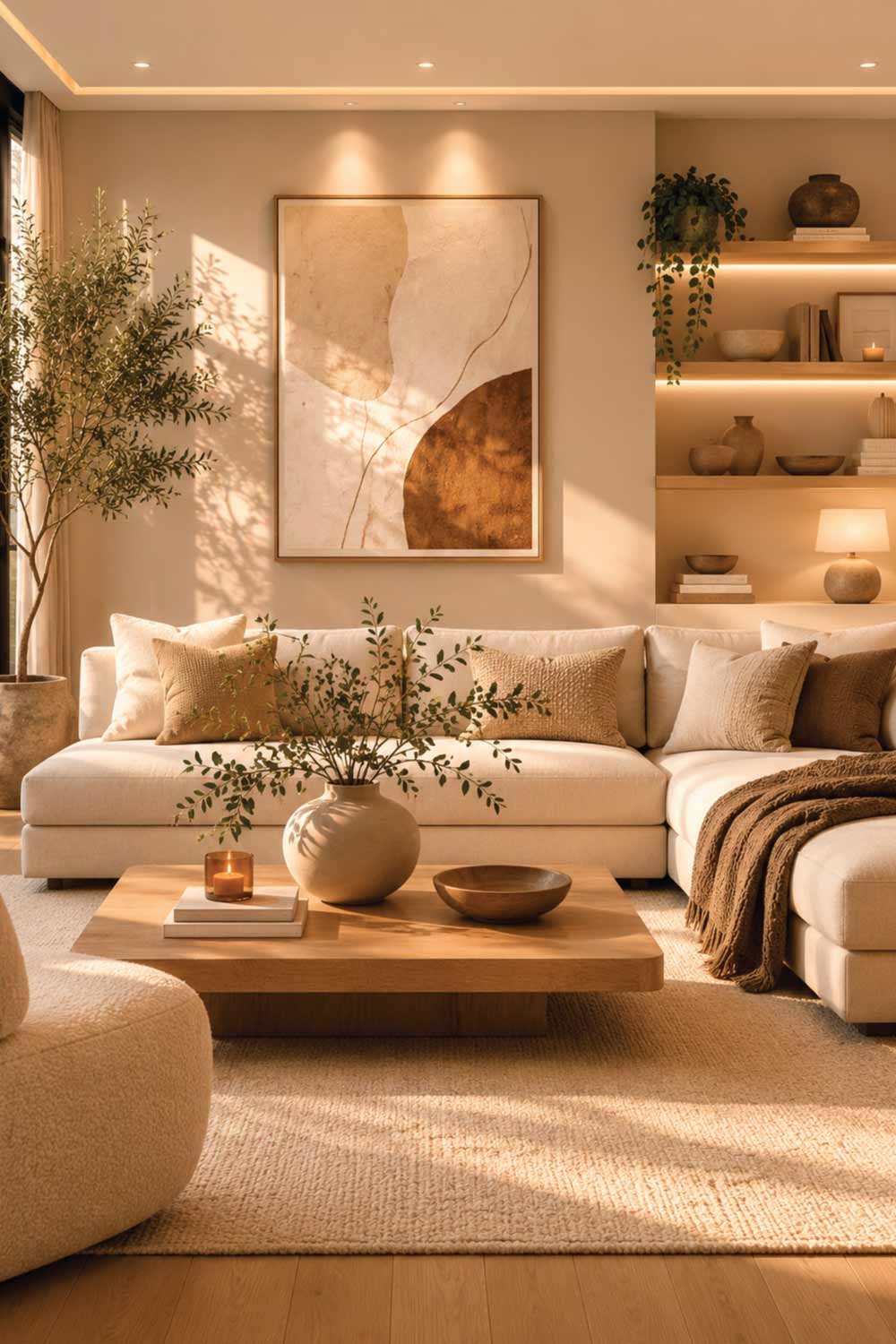
This neutral background helps other warm elements stand out more effectively without making the room feel heavy or crowded. It also provides flexibility for layering textures, furniture, and accent colors, ensuring the design remains cohesive, airy, and visually comfortable throughout the entire living space.
- Choose creamy white walls for soft warm visual foundation
- Use beige tones to create calm and balanced atmosphere
- Select taupe shades for subtle depth and elegant neutrality
- Keep base colors light for flexible interior styling options
- Avoid harsh tones to maintain gentle aesthetic harmony flow
Personal Experience
When I started redesigning a living room, I first switched the wall color to a soft beige. The change instantly made the space feel calmer and more open. It became much easier to add warm accents later without the room feeling cluttered or overwhelming.
2. Add Earthy Browns for Depth
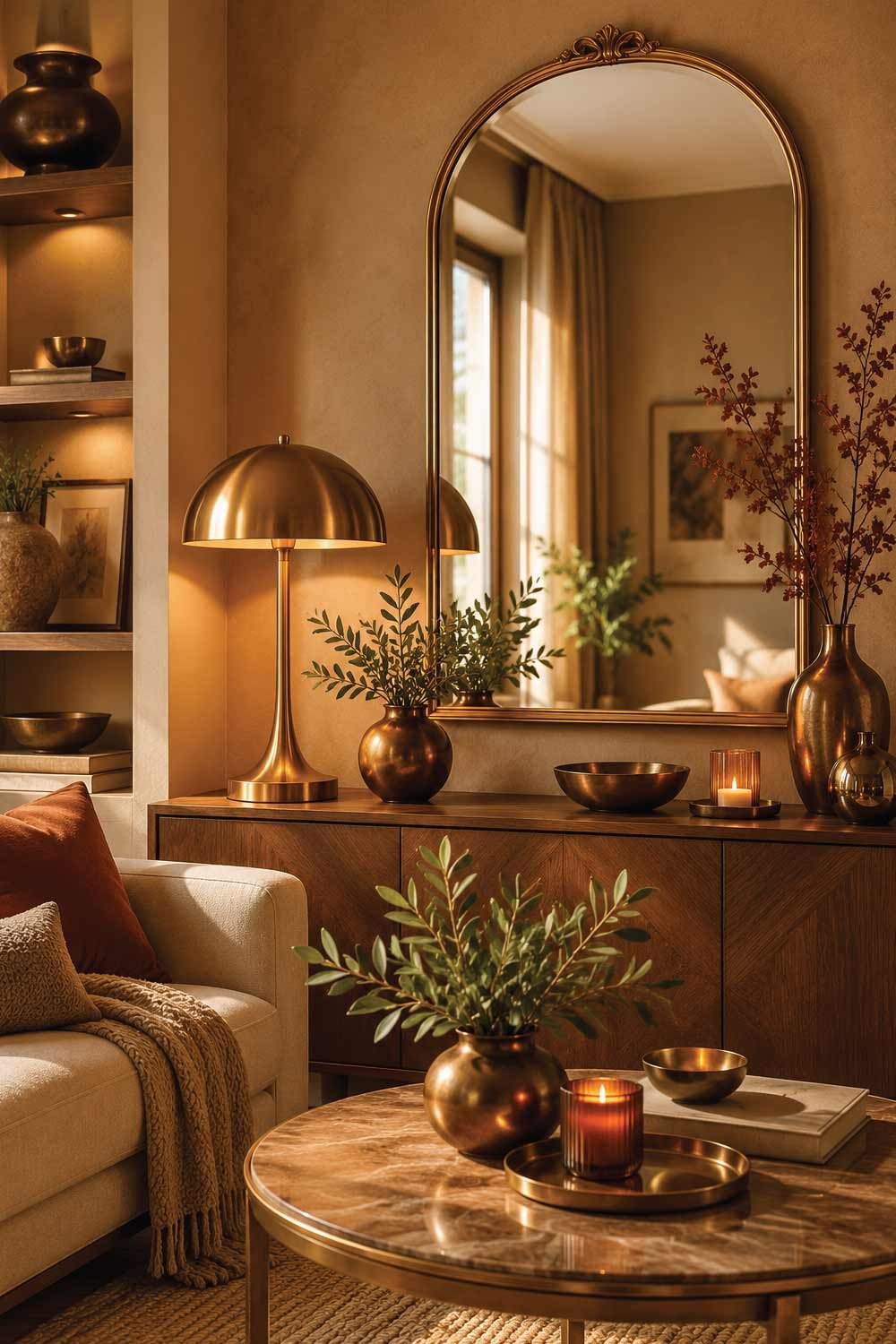
Earthy brown tones add richness, depth, and grounding energy to a warm aesthetic living room. Shades like chocolate, walnut, caramel, and espresso introduce natural contrast that balances lighter neutrals and helps create a more visually structured and layered interior environment.
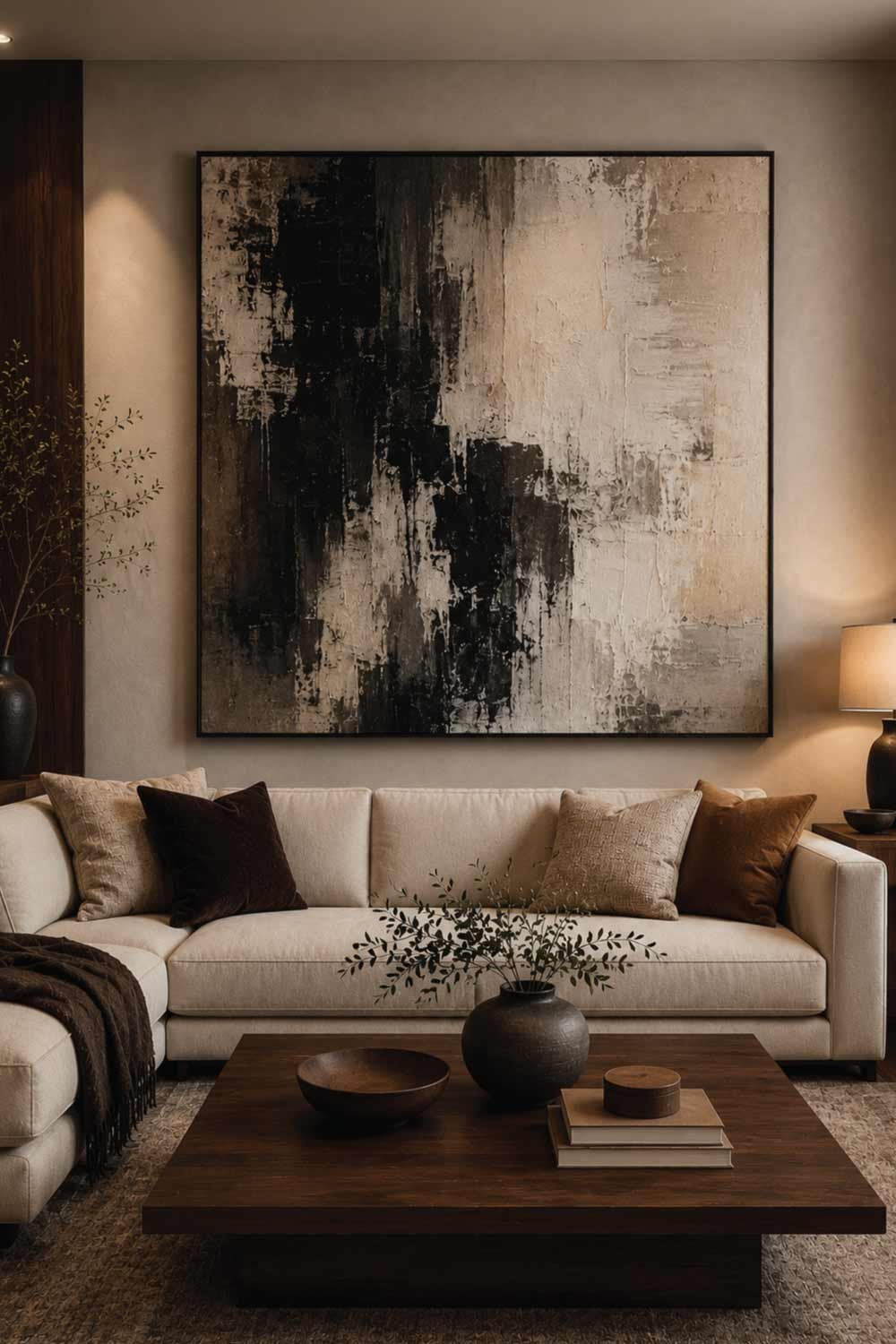
These tones can be incorporated through furniture, wooden finishes, or accent decor pieces. By mixing multiple shades of brown, the space gains dimension and warmth, preventing it from feeling flat while maintaining a cohesive and naturally inspired design style.
- Use walnut wood furniture for rich and warm natural depth
- Add caramel accents for soft inviting interior color balance
- Include espresso tones for strong grounding visual contrast effect
- Mix light and dark browns for layered dimensional appearance
- Apply brown tones across multiple elements for cohesive design
Personal Experience
I once styled a room using only light beige furniture, and it felt incomplete. Later, I added walnut wood pieces and darker brown accents. The space immediately felt more grounded, warm, and visually interesting without losing its simplicity.
3. Use Warm Lighting Instead of Cool White
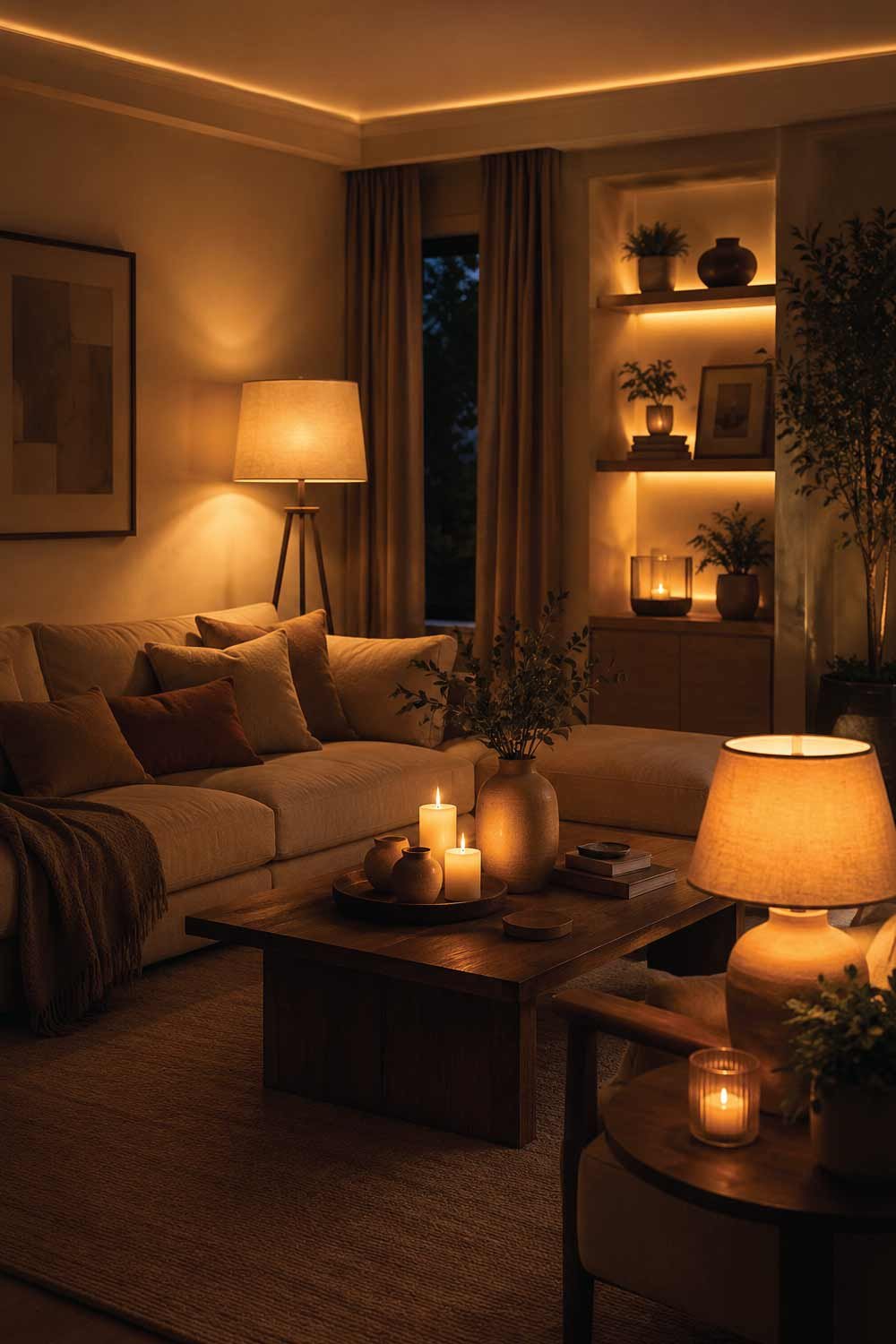
Warm lighting is essential for creating a cozy and inviting aesthetic in any living room. Soft white or amber-toned bulbs replace harsh cool lighting, instantly transforming the atmosphere into something more intimate, relaxing, and visually comforting during both day and night.
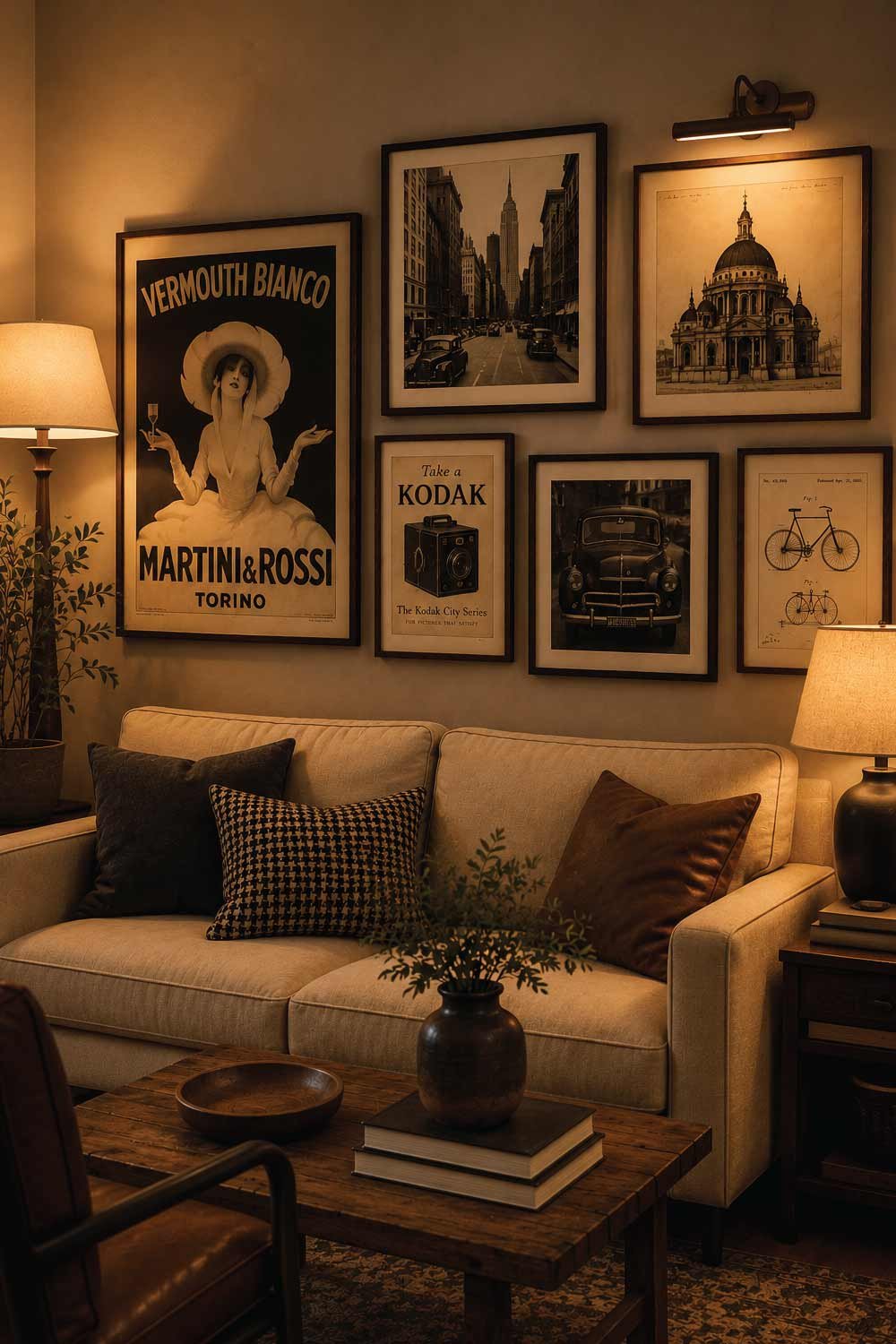
Layered lighting using lamps, sconces, and ambient fixtures enhances depth and mood. Even the same furniture and decor can look dramatically different under warm lighting, as it softens edges and enhances the natural warmth of colors throughout the room.
- Choose warm white bulbs for soft and cozy lighting atmosphere
- Use floor lamps for layered ambient illumination in corners
- Add table lamps for gentle focused lighting and comfort zones
- Install wall sconces for balanced indirect lighting effect style
- Avoid cool lighting to preserve warm aesthetic visual harmony
Personal Experience
In one living room update, I simply replaced cool white bulbs with warm lighting. The change was immediate and dramatic. The room felt cozier, more relaxing, and far more inviting, especially in the evenings.
4. Incorporate Natural Wood Elements
Natural wood is a key component of a warm aesthetic living room because it adds texture, authenticity, and organic warmth. Whether light or dark, wood introduces a natural element that connects indoor spaces with nature and creates a timeless, grounded interior feel.
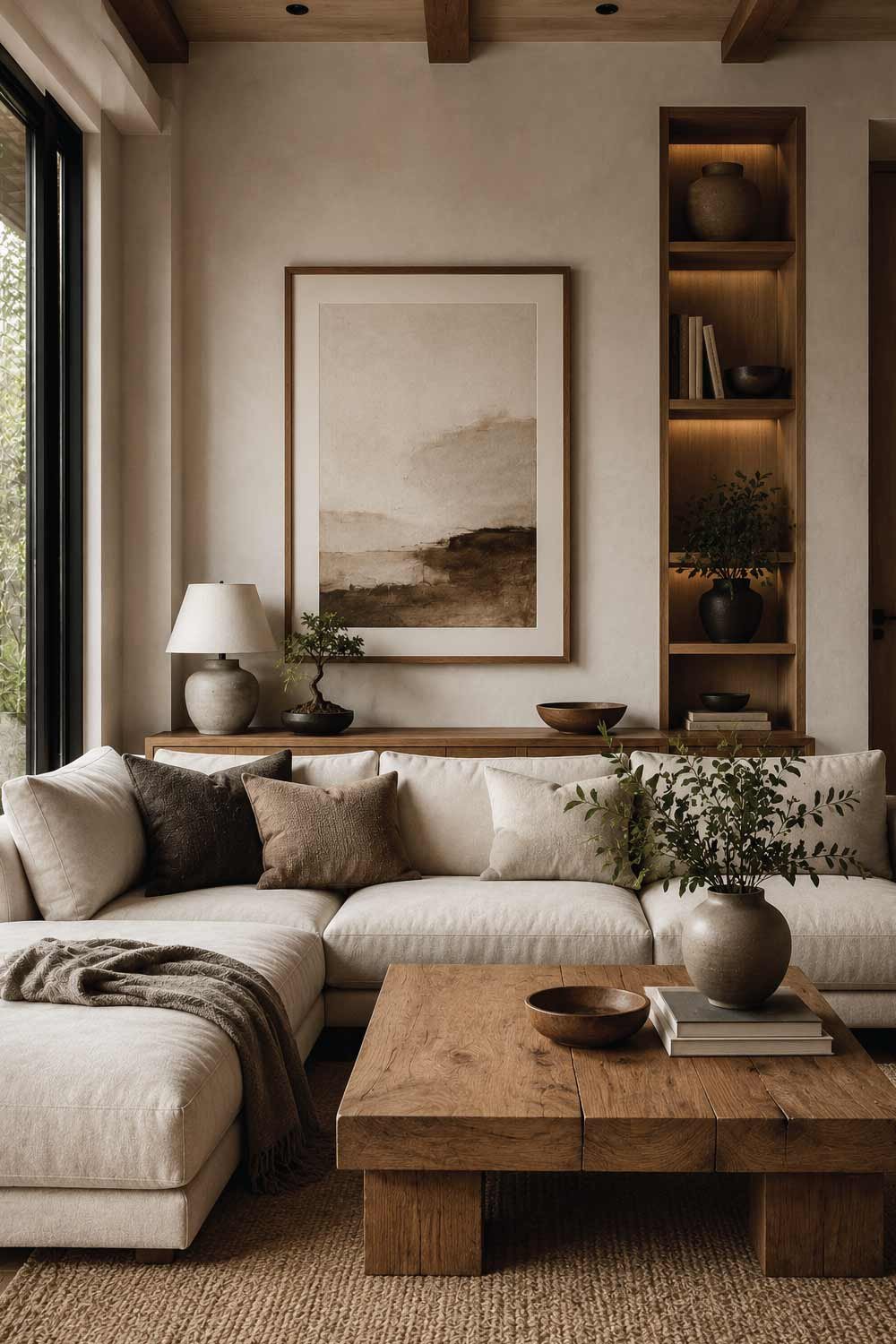
Wood can be used in furniture, flooring, shelving, or structural details. Its natural grain and imperfections bring subtle visual interest, making the space feel more alive and balanced without needing excessive decoration or bold design elements.
- Use oak wood for light and naturally warm interior foundation
- Add walnut furniture for deep rich visual character contrast
- Choose teak elements for durable and elegant natural styling
- Highlight wood grain for authentic organic texture appeal effect
- Keep finishes natural for preserving warm earthy aesthetic look
Personal Experience
In a renovation project, I added a simple oak coffee table to a neutral room. The effect was immediate—the space felt warmer, more grounded, and more connected to nature without needing any additional changes.
5. Layer Textiles in Cozy Fabrics
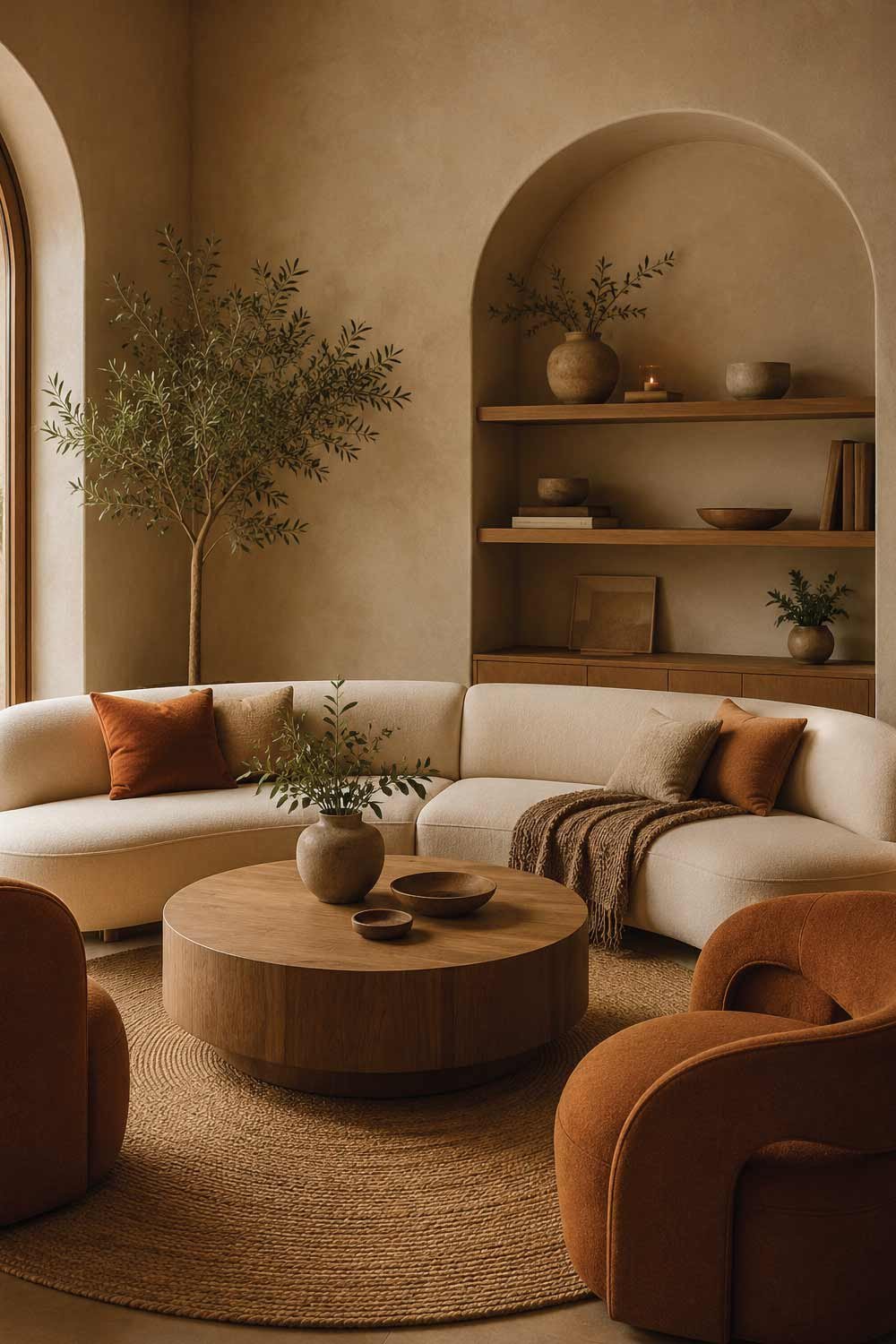
Textiles play a crucial role in building a warm aesthetic by adding softness, comfort, and visual depth. Fabrics like linen, cotton, wool, boucle, and knitted materials create a layered, inviting environment that feels relaxed and naturally lived-in.
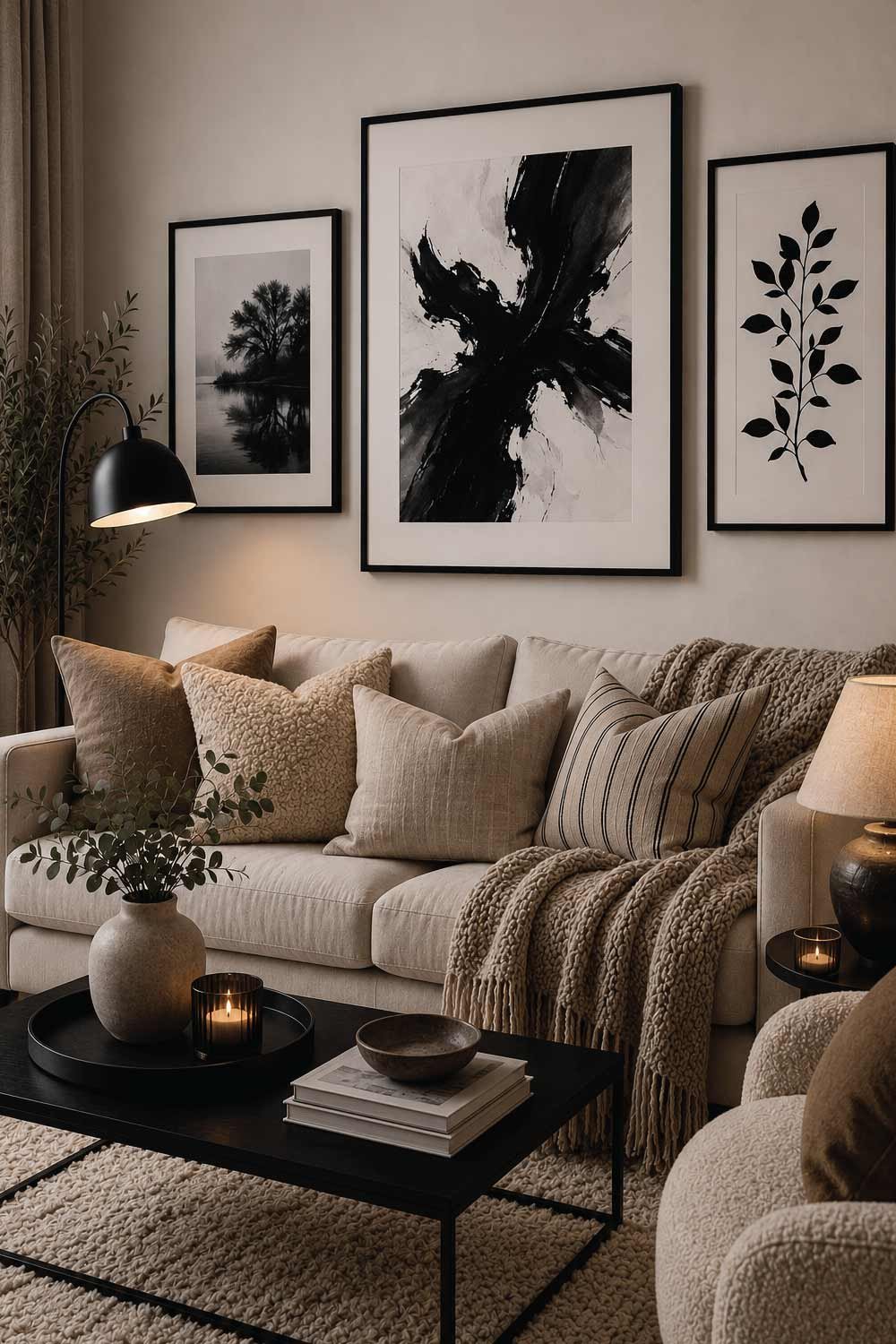
Layering different textures across cushions, throws, and rugs enhances warmth while preventing the space from looking flat. These soft materials balance harder surfaces like wood and metal, creating a harmonious and comfortable living atmosphere.
- Add linen cushions for soft breathable natural seating comfort
- Use wool throws for warmth and layered cozy texture feel
- Include boucle fabrics for modern soft tactile visual interest
- Place soft rugs for comfort and grounded interior balance
- Mix textures for depth and visually engaging warm environment
Personal Experience
I once layered wool throws and linen cushions in a simple living room. The transformation was immediate—the space felt softer, more comfortable, and far more inviting without changing any furniture.
Also Read:
12 Affordable Living Room Furniture Ideas for a Stylish Budget-Friendly Home
6. Choose a Warm Color Accent Palette
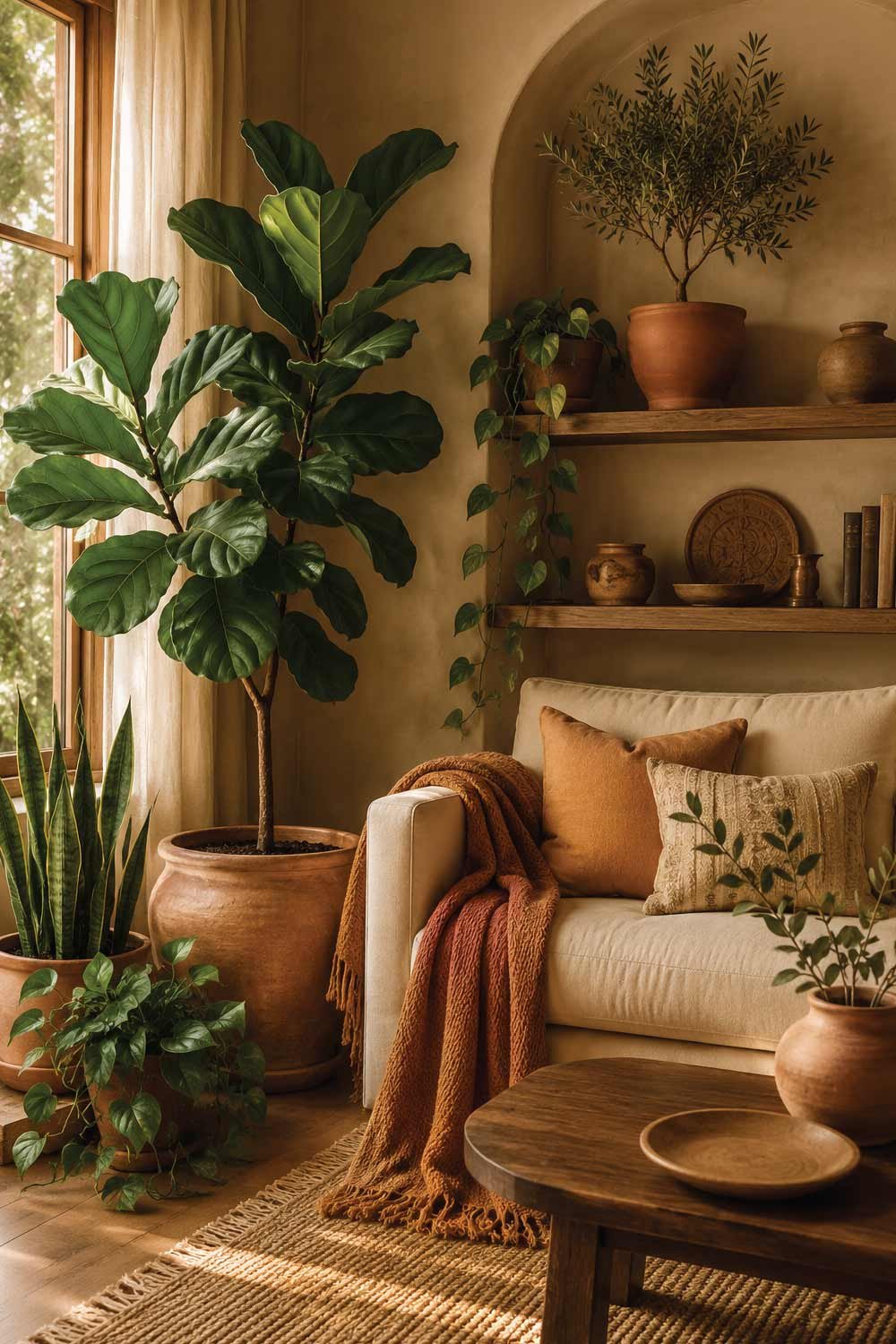
Warm accent colors add personality and vibrancy to a warm aesthetic living room while keeping the overall design balanced and cohesive. Shades like terracotta, rust, mustard, burnt orange, and muted olive introduce energy without overpowering the neutral foundation.
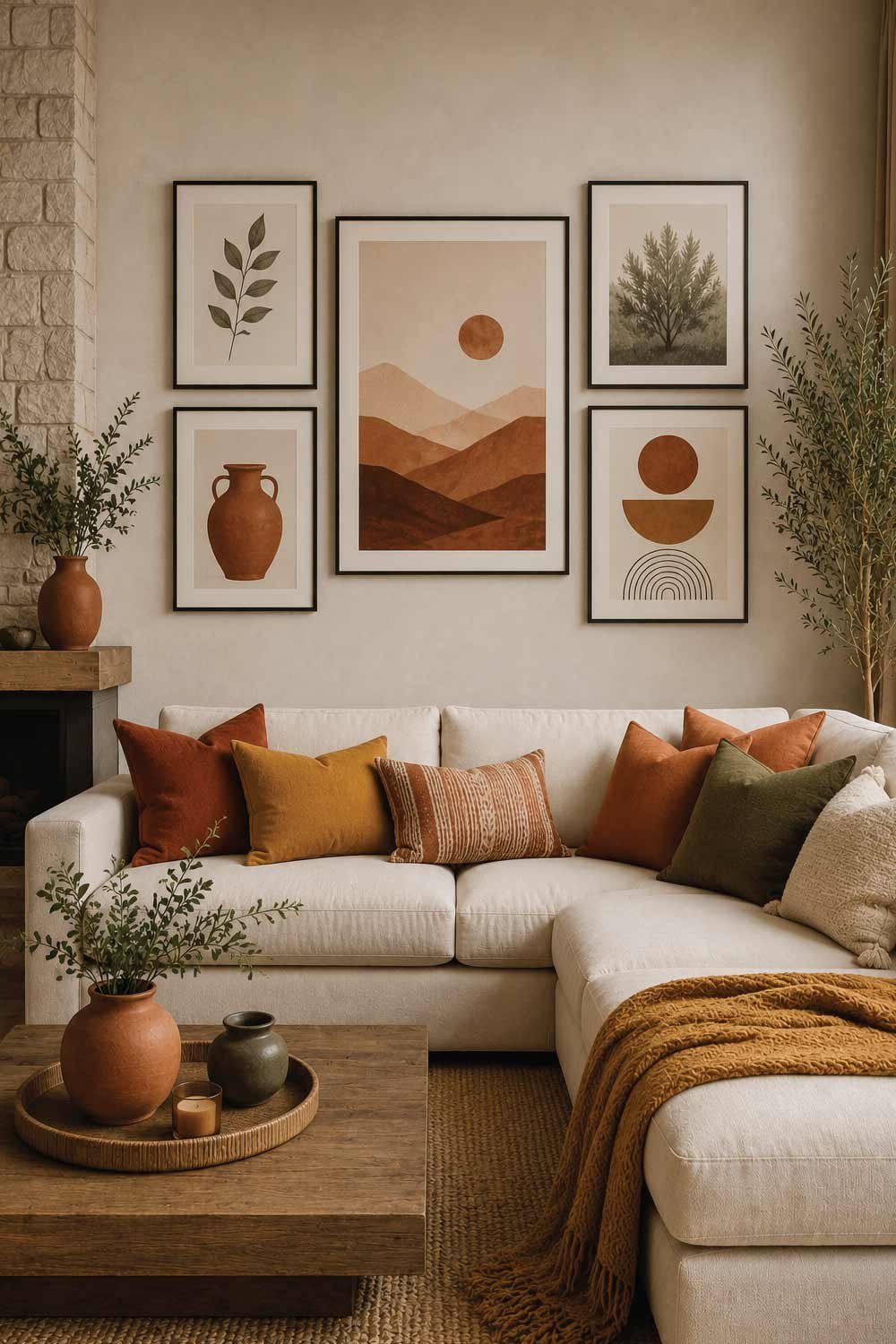
These colors work best when used sparingly across decor elements such as cushions, artwork, rugs, or vases. Small, intentional accents help tie the entire room together, adding depth and warmth while maintaining a clean and harmonious visual flow.
- Use terracotta accents for natural warm earthy visual impact
- Add mustard tones for soft energetic color highlight effect
- Include rust shades for rich and cozy atmosphere enhancement
- Use olive green for balanced natural calming visual harmony
- Apply accents sparingly for subtle and refined design balance
Personal Experience
In one project, I added just a few terracotta cushions and a mustard throw. The room immediately felt more vibrant and warm, yet still calm and balanced. It proved how small accents can completely change a space.
Final Thoughts
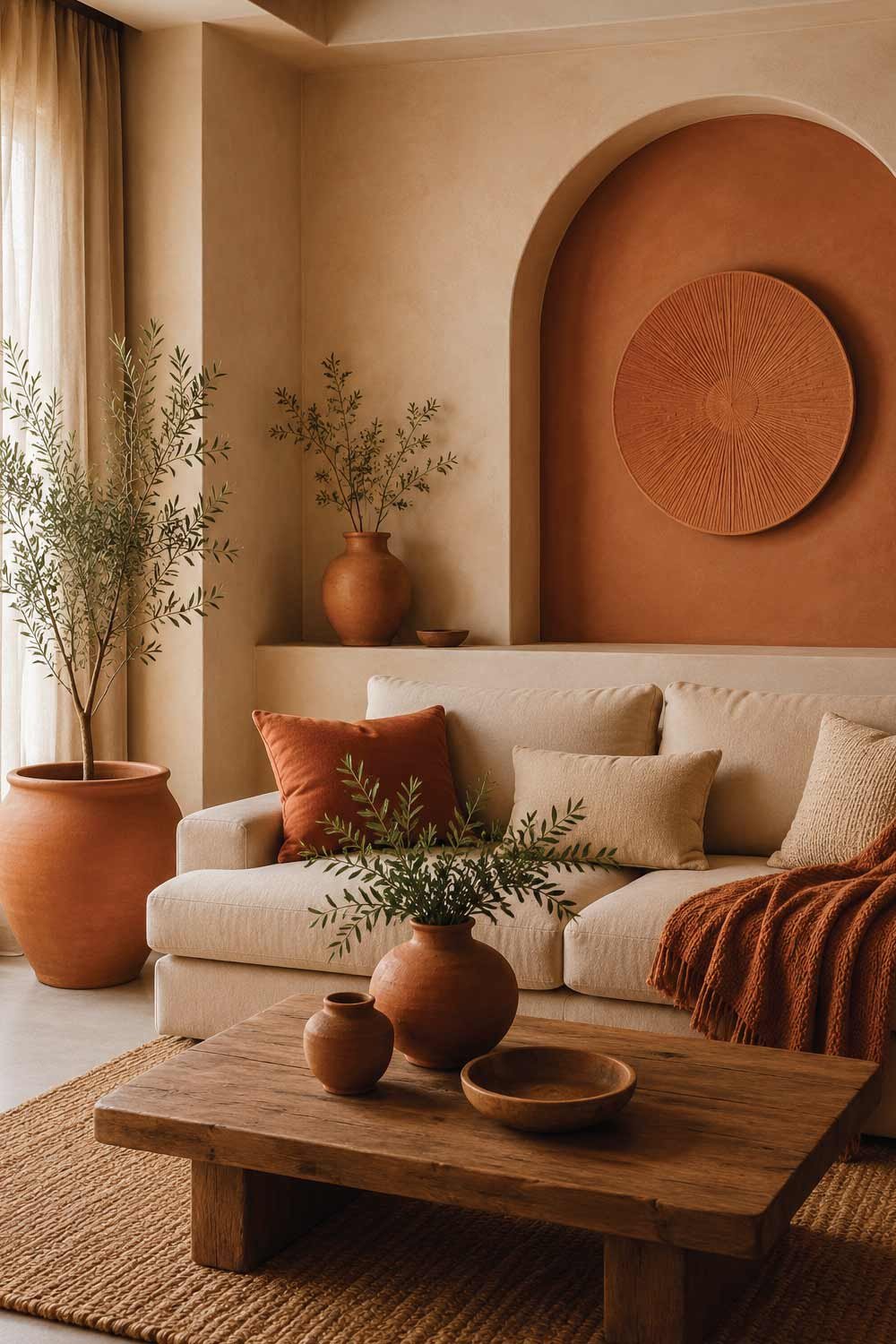
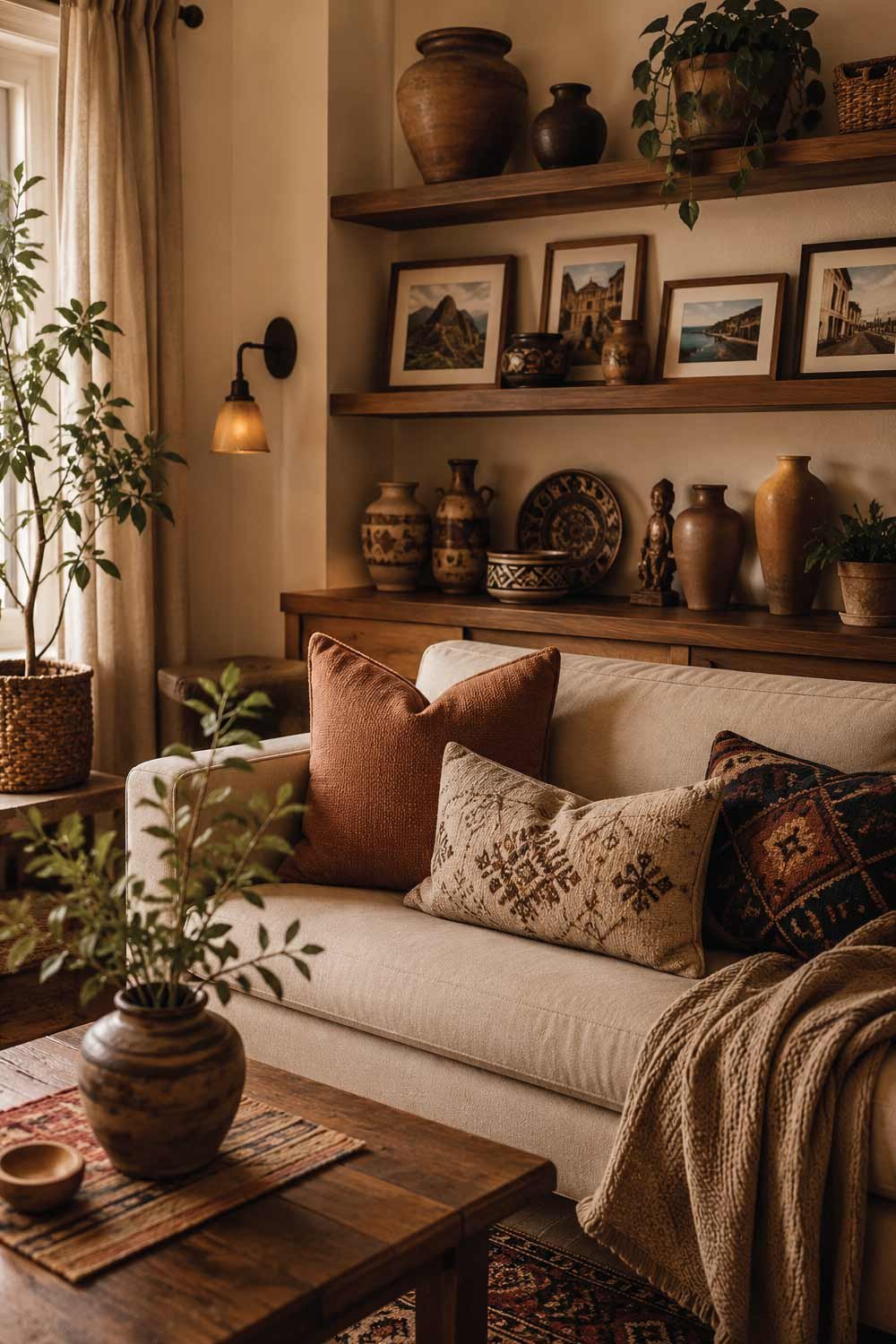
Creating a warm tone aesthetic living room is about layering color, texture, light, and emotion. It’s not a strict formula but a thoughtful balance of elements that make a space feel comforting and natural.
By combining soft neutrals, earthy tones, warm lighting, and organic materials, you can design a living room that feels both stylish and deeply inviting. The goal is not perfection, but warmth spaces that feel like they welcome you in the moment you walk through the door.
