
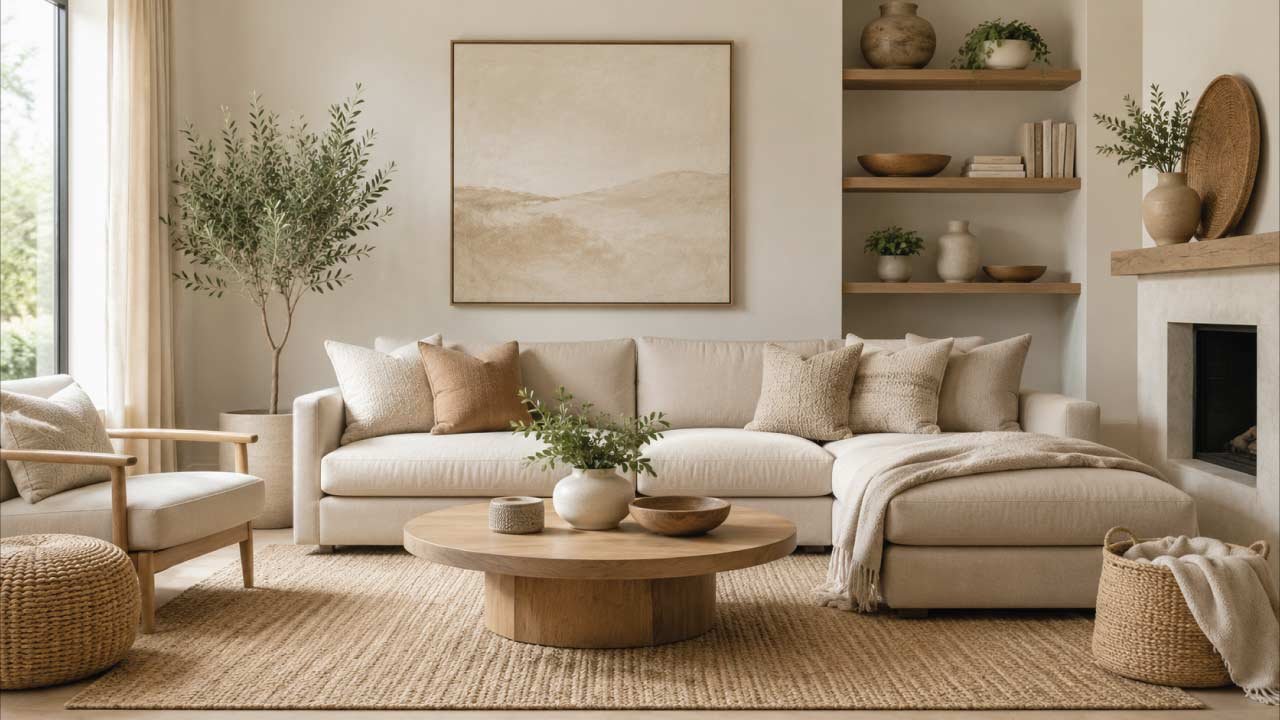
A neutral living room is timeless, calming, and effortlessly stylish. Instead of relying on bold colors or trendy patterns, it focuses on soft tones, natural textures, and thoughtful layering. The result is a space that feels balanced, airy, and welcoming no matter the season.
Whether you prefer modern minimalism, Scandinavian simplicity, or a warm organic style, these 12 neutral living room decor ideas will help you design a space that feels elegant and comfortable at the same time.
1. Build a Soft Neutral Color Palette
The foundation of a neutral living room is its color scheme. Think beyond plain white neutral tones include beige, ivory, cream, taupe, greige, warm gray, and soft browns.To avoid a flat look, mix different shades of the same tone family. For example, pair warm beige walls with ivory sofas and taupe accents. This layering of subtle tones creates depth without overwhelming the space.
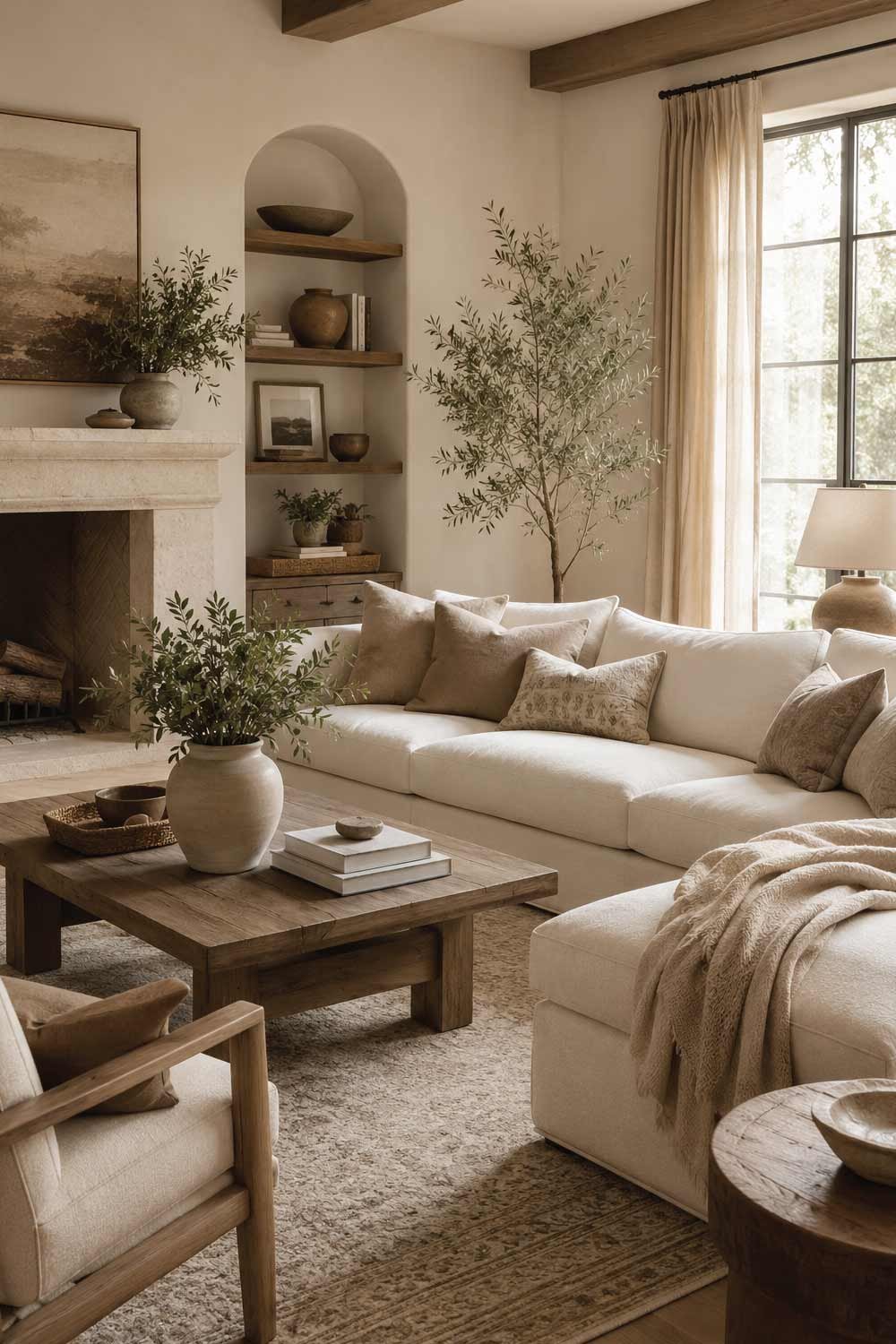
A soft neutral color palette forms the visual foundation of a calm and balanced living room where every element feels naturally connected. Instead of relying on stark white alone, incorporating warm and muted tones like beige, ivory, cream, taupe, greige, warm gray, and soft browns creates depth while maintaining a soothing and cohesive atmosphere throughout the space.
- Combine multiple neutral shades to create subtle visual layering without harsh contrast.
- Use warm beige or cream tones on walls for a soft and inviting backdrop.
- Pair lighter furniture with slightly deeper accents for balanced tonal variation.
- Keep all colors within the same warm or cool family for visual harmony.
- Avoid strong contrasting colors that break the calm and unified aesthetic.
- Let natural light enhance and blend the neutral shades throughout the room.
Personal Experience
In my experience, using layered neutral tones instead of a single shade made my living room feel richer and more refined. The space looked more cohesive and peaceful, and it was easier to decorate without worrying about color clashes.
2. Choose a Light and Airy Sofa
Your sofa is often the largest piece in the room, so it sets the tone. In a neutral living room, opt for colors like off-white, sand, light gray, or oatmeal.Linen and cotton-blend fabrics work especially well because they add natural texture. If you want something more durable, consider performance fabrics in neutral tones that resist stains while maintaining a soft look.
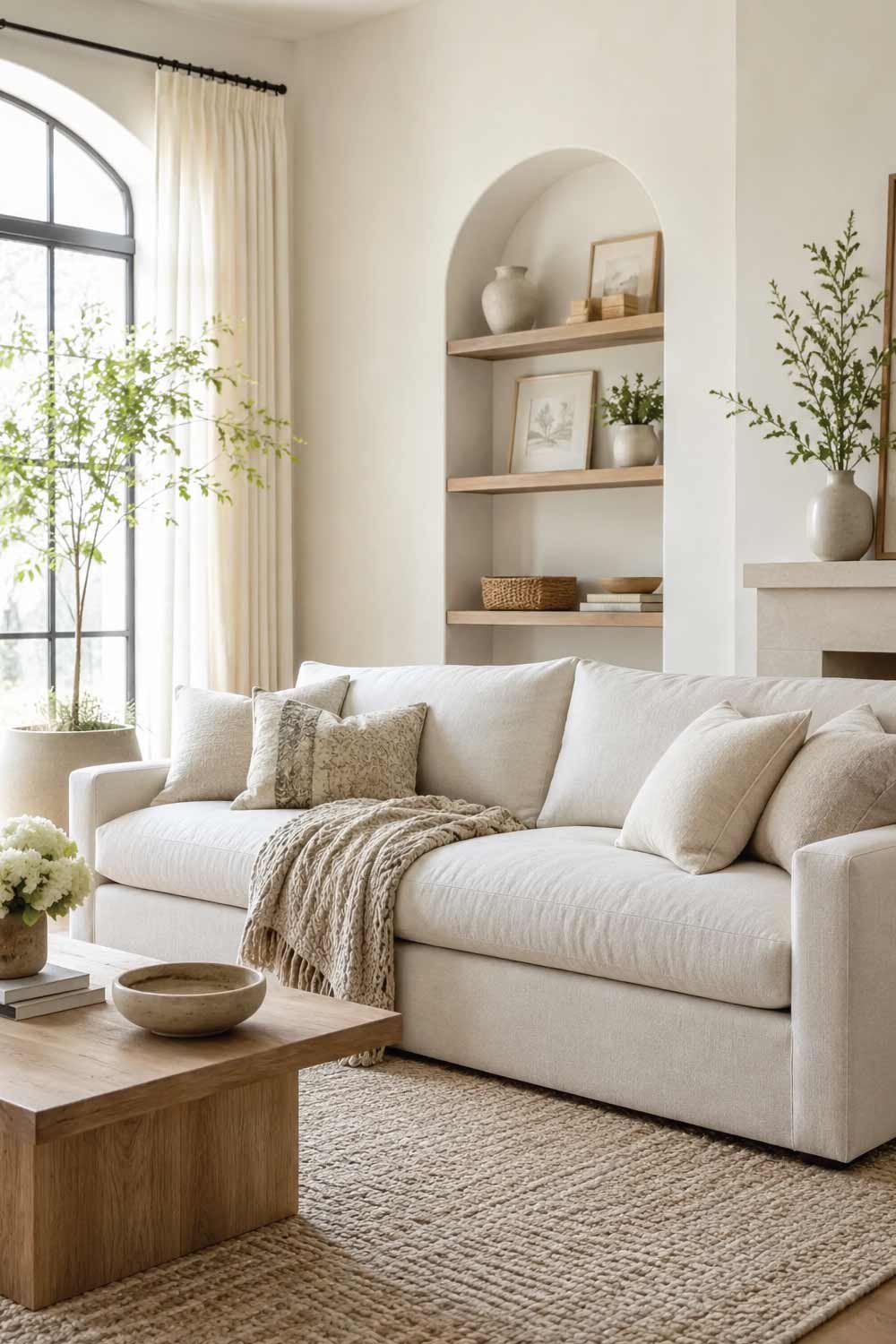
The sofa is usually the visual anchor of a living room, so selecting a light and airy design is essential for maintaining a neutral aesthetic. Soft tones like off-white, sand, light gray, or oatmeal help create an open and elegant atmosphere while preventing the room from feeling heavy or visually crowded.
- Choose light neutral colors to keep the sofa visually soft and unobtrusive.
- Prefer clean-lined designs that enhance openness and modern simplicity.
- Select linen or cotton-blend fabrics for natural texture and comfort.
- Consider stain-resistant performance fabrics for long-term practicality and durability.
- Avoid bulky shapes that reduce visual space and create heaviness in the room.
- Keep sofa design minimal to maintain an airy and balanced environment.
Personal Experience
In my experience, switching to a light-colored sofa made my living room feel instantly brighter and more spacious. It blended smoothly with other neutral elements and helped maintain a calm and cohesive overall look.
3. Layer Natural Textures for Depth
Neutral interiors depend heavily on texture to avoid appearing flat or visually dull. By combining different natural materials, you can create depth, warmth, and subtle contrast while maintaining a calm and cohesive design that feels both inviting and visually interesting without relying on bold colors or patterns.
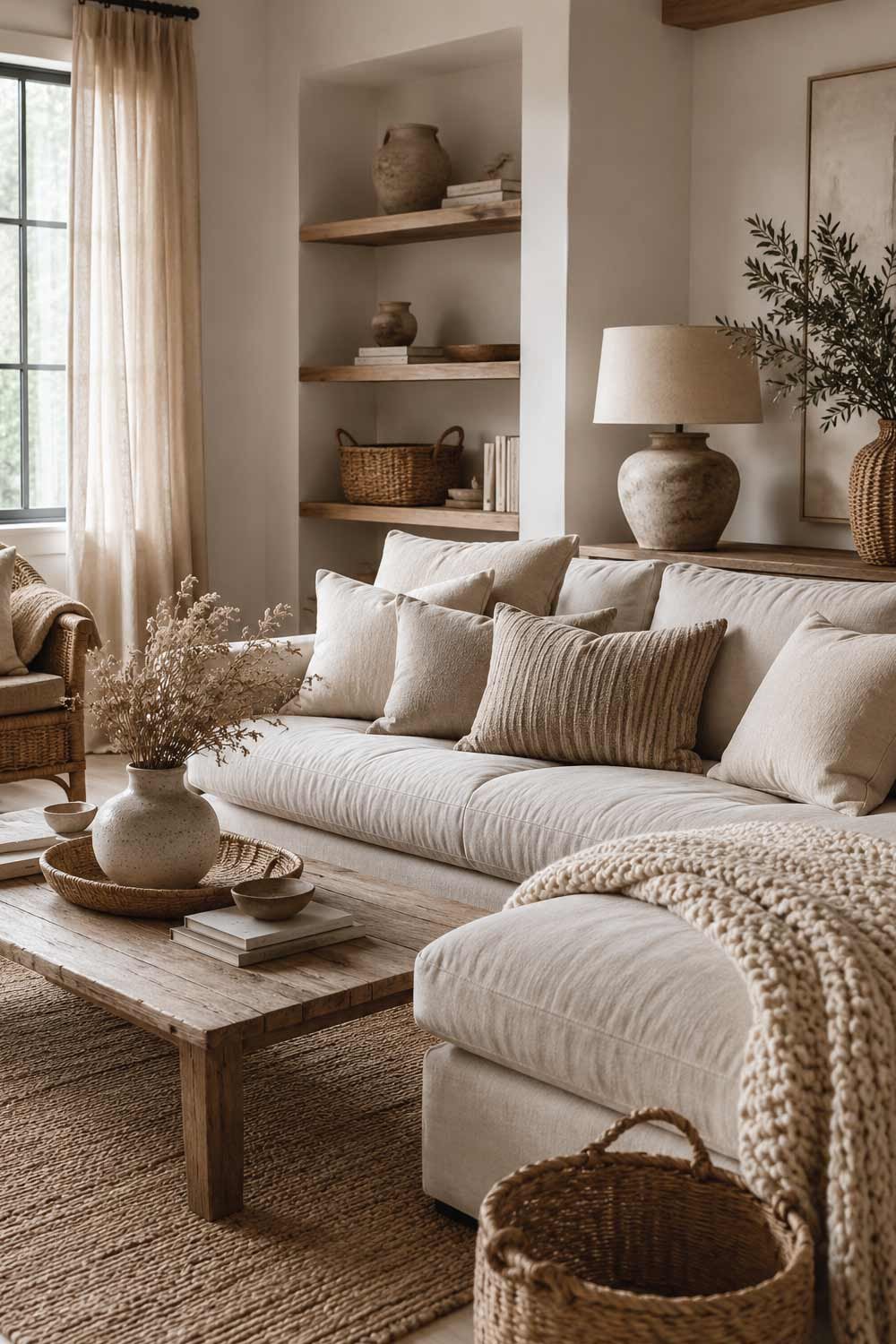
- Mix linen, wool, and cotton fabrics to create soft and balanced layering effects.
- Add rattan or wicker baskets for natural texture and practical storage solutions.
- Use jute rugs to introduce earthy tones and subtle surface variation.
- Incorporate ceramic décor pieces for smooth contrast against woven materials.
- Combine soft and rough textures to create visual depth within neutral tones.
- Maintain consistency by keeping all textures within a muted color palette.
Combine materials like linen curtains, wool throws, rattan baskets, jute rugs, wooden furniture, and ceramic décor. Each texture adds subtle contrast while staying within the neutral palette.
Personal Experience
In my experience, layering different textures made my neutral living room feel much more dynamic and comfortable. Even without bright colors, the space felt rich and thoughtfully designed through subtle material contrasts.
4. Add Warm Wooden Elements
Wood plays a crucial role in neutral interiors by adding warmth, structure, and natural grounding to the space. Without wooden elements, neutral rooms can sometimes feel cold or incomplete, but introducing subtle wood tones helps create balance, comfort, and a more inviting and lived-in atmosphere.
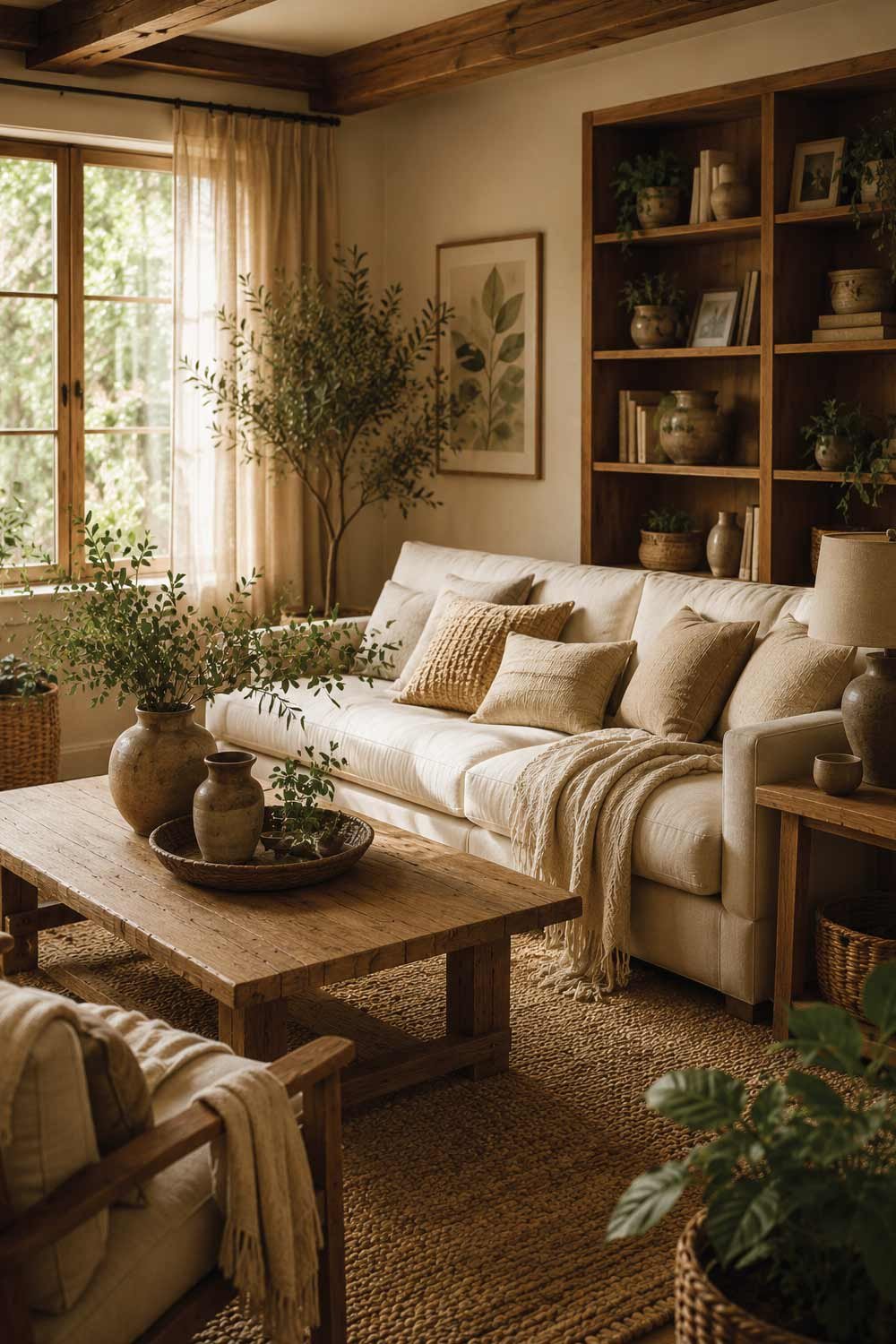
- Use light oak or ash wood for a soft and Scandinavian-inspired aesthetic.
- Choose walnut finishes for deeper warmth and richer visual character.
- Incorporate wooden coffee tables to anchor the seating area naturally.
- Add wood through shelving units for both function and design consistency.
- Use wooden picture frames for subtle decorative continuity across walls.
- Balance wood tones with soft neutrals to maintain overall harmony.
Light woods like oak, ash, or birch work beautifully for Scandinavian-style spaces, while medium walnut tones add richness and depth. You can introduce wood through coffee tables, shelving, side tables, or picture frames.
Personal Experience
In my experience, adding wooden furniture made my neutral space feel warmer and more grounded. It balanced the softness of fabrics and gave the room a natural, welcoming atmosphere that felt more complete.
5. Use Layered Lighting for Soft Ambiance
Lighting is essential in neutral living rooms because it shapes the mood and enhances the softness of the entire palette. Instead of relying on a single harsh overhead light, using multiple light sources helps create a warm, cozy, and visually balanced atmosphere that highlights textures and neutral tones beautifully.
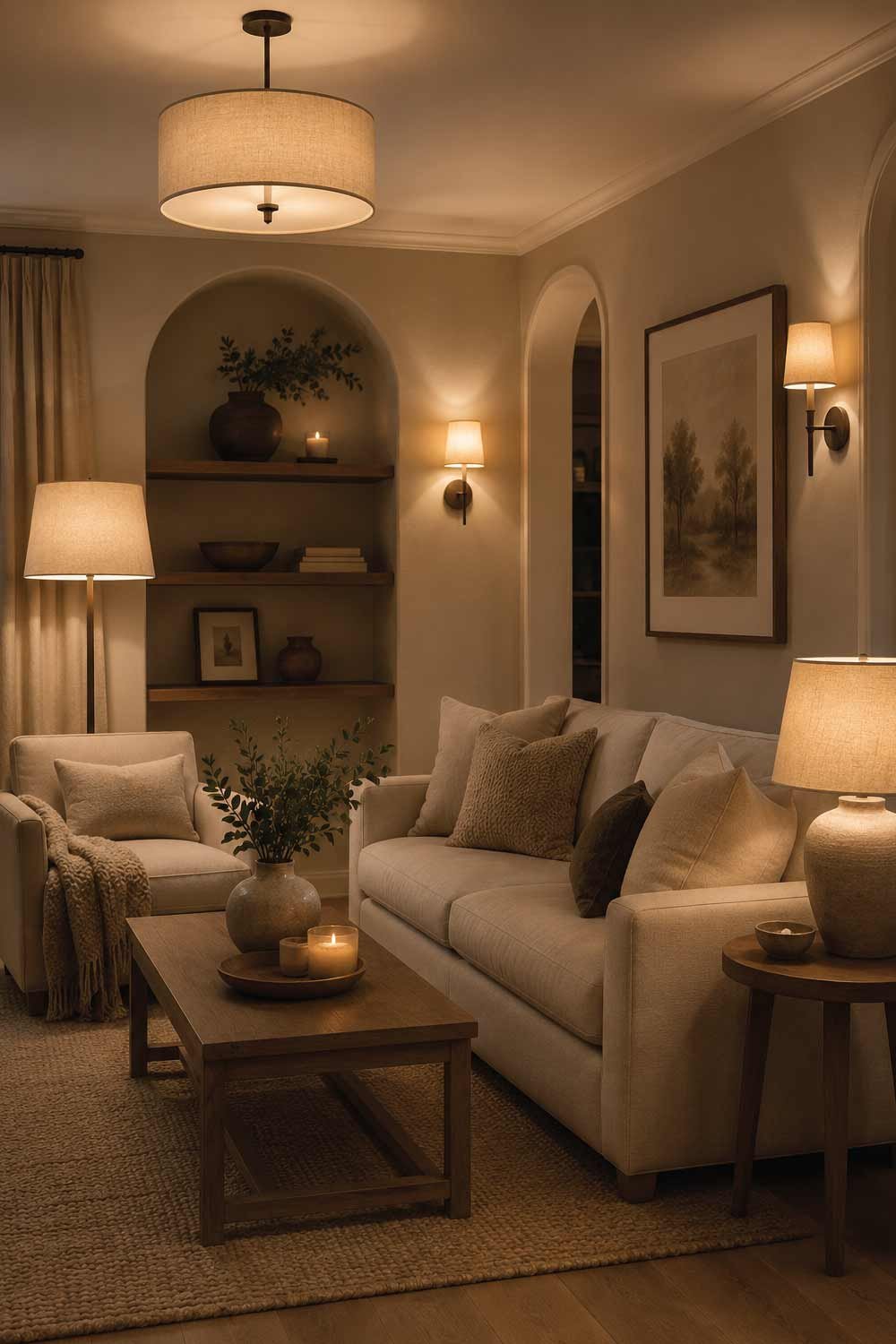
- Combine floor lamps, table lamps, and wall sconces for layered illumination.
- Use warm white bulbs to enhance softness and natural color warmth.
- Choose fabric or linen lamp shades to diffuse light gently across the room.
- Position lights in different corners to eliminate harsh shadows effectively.
- Avoid overly bright lighting that flattens the subtle neutral color palette.
- Adjust lighting levels to suit different moods and times of day.
Combine floor lamps, table lamps, wall sconces, and soft ceiling lights. Warm white bulbs are key they enhance neutral tones and create a cozy glow.Lamps with fabric or linen shades are especially effective in softening the overall look of the room.
Personal Experience
In my experience, switching to layered warm lighting completely changed the mood of my living room. It made the neutral tones feel richer and more inviting, especially during evenings when soft lighting created a relaxing atmosphere.
6. Incorporate a Statement Rug in Subtle Tones
A statement rug is an important element in a neutral living room because it helps define the seating area while adding softness and texture underfoot. Even in a muted palette, a well-chosen rug can introduce subtle patterns or tonal variation that enhances the overall design without disrupting the calm aesthetic.
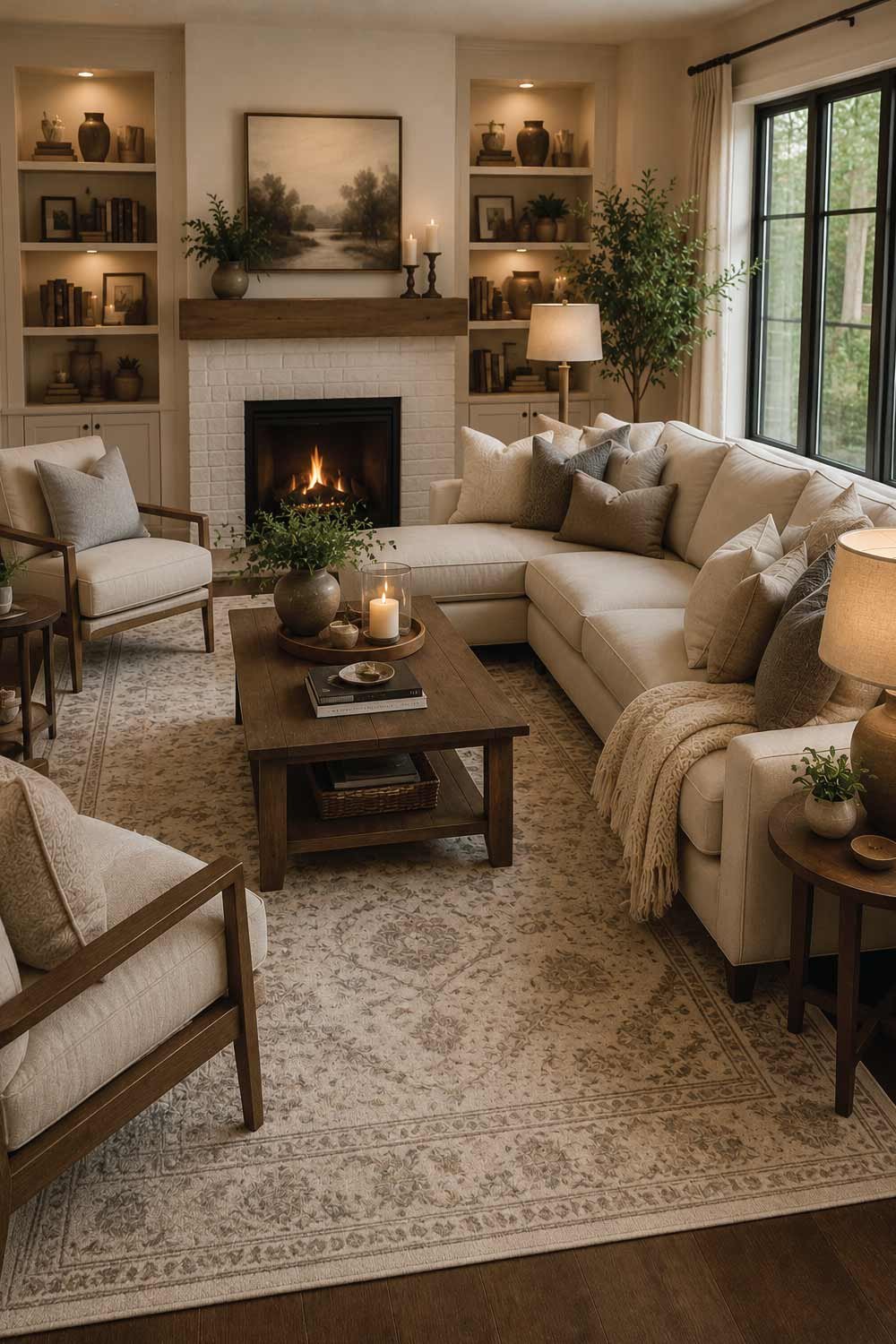
- Choose rugs in beige, ivory, or soft gray for a cohesive neutral base.
- Opt for subtle geometric or tonal patterns to add quiet visual interest.
- Select large rugs to properly anchor furniture and define the space clearly.
- Use textured solids to enhance depth without introducing strong colors.
- Match rug tones with surrounding furniture for seamless visual flow.
- Avoid overly bold patterns that break the calm and neutral atmosphere.
Look for beige, ivory, light gray, or muted geometric designs. A slightly patterned rug can add personality without disrupting the calm aesthetic.Make sure it’s large enough to anchor the seating area and create a unified layout.
Personal Experience
In my experience, adding a neutral-toned rug made my living room feel more grounded and organized. It tied the furniture together visually and added comfort without disturbing the soft and calming design style.
Also Read:
7. Keep Furniture Simple and Clean Lined
Neutral design works best when furniture is kept simple, functional, and visually light. Clean-lined pieces help maintain an uncluttered atmosphere while allowing the soft color palette and natural textures to stand out. Avoiding heavy ornamentation ensures the space feels modern, balanced, and timeless rather than visually overwhelming or dated.
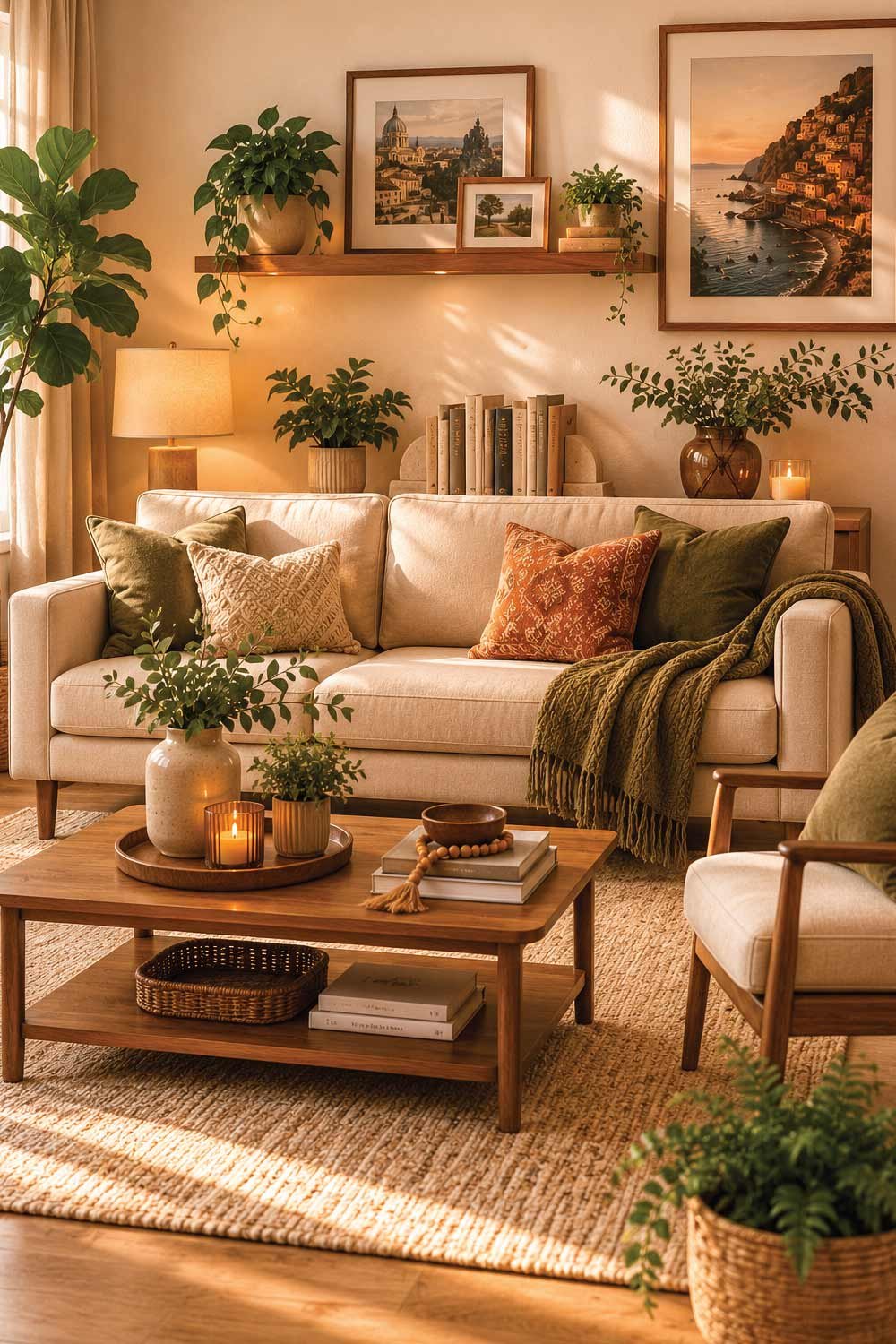
- Choose sofas with straight, minimal silhouettes to maintain visual simplicity.
- Select slim armchairs that enhance openness without adding bulk to the room.
- Use coffee tables with clean geometric shapes for a modern neutral aesthetic.
- Avoid ornate carvings or heavy detailing that distract from calm design flow.
- Prefer furniture with exposed legs to create a lighter visual footprint.
- Keep overall furniture design consistent to maintain harmony across the room.
Instead, choose streamlined silhouettes with subtle detailing. Sofas with low backs, slim armchairs, and minimalist coffee tables all contribute to a clean, modern feel.This simplicity allows textures and tones to stand out naturally.
Personal Experience
In my experience, replacing bulky furniture with clean-lined pieces made my living room feel much more spacious and organized. The simplicity helped the neutral tones stand out more clearly and created a calmer overall atmosphere.
8. Add Greenery for a Natural Touch
Plants are a simple yet powerful way to bring life, freshness, and natural contrast into a neutral living room. The soft green tones beautifully complement beige, ivory, and gray palettes, adding visual balance and a refreshing organic feel without disrupting the calm and minimal aesthetic of the space.
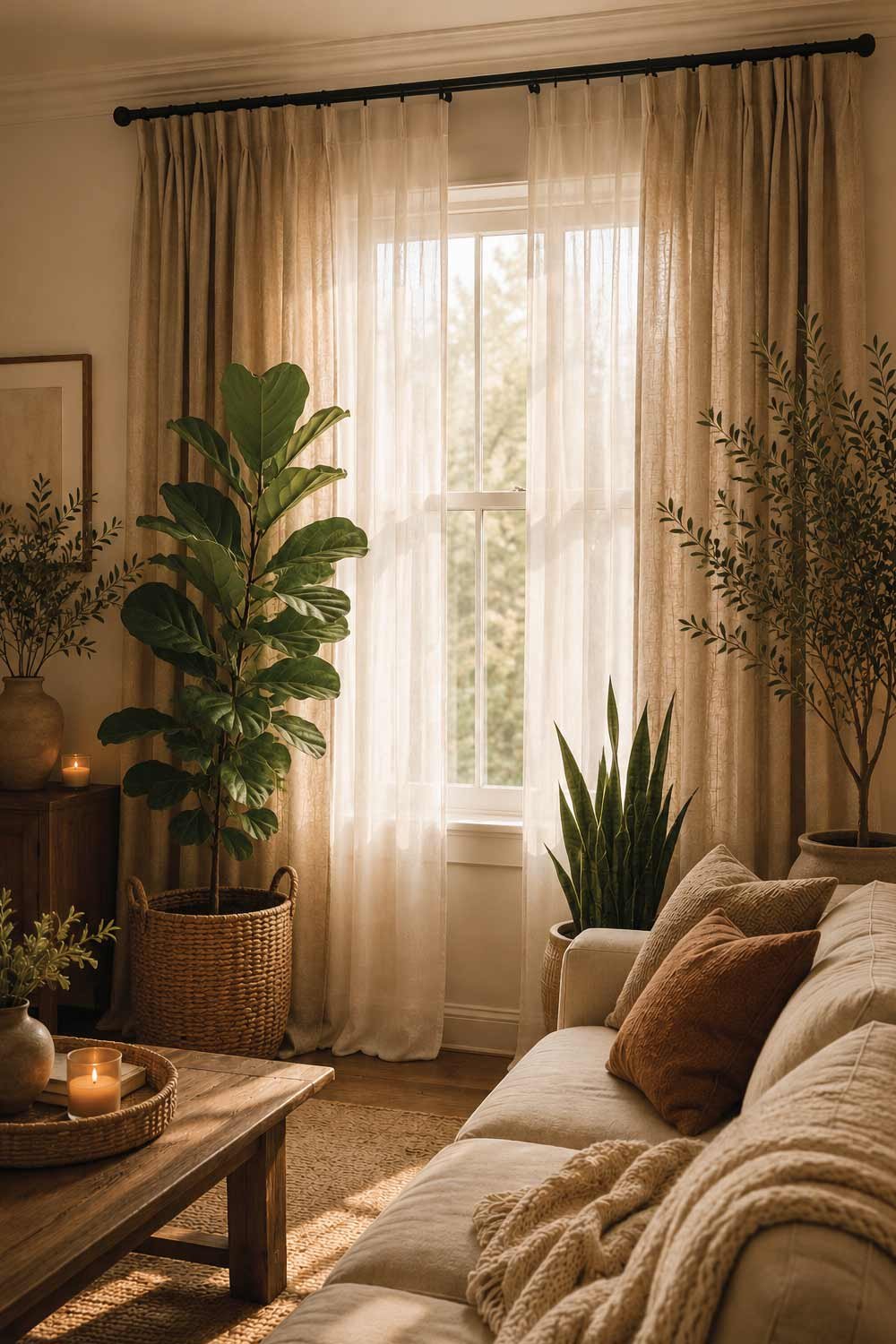
- Use fiddle leaf figs to create a bold yet natural focal greenery element.
- Place snake plants in corners for low-maintenance vertical visual interest.
- Add olive trees for soft Mediterranean-inspired natural elegance indoors.
- Use eucalyptus stems in vases for subtle fragrance and soft greenery accents.
- Choose ceramic or woven planters to maintain a cohesive neutral aesthetic.
- Position plants near light sources for healthy growth and natural brightness.
Use plants like fiddle leaf figs, snake plants, olive trees, or simple eucalyptus arrangements. Place them in ceramic or woven planters to maintain the neutral theme.
Personal Experience
In my experience, adding even a few plants made my neutral living room feel more alive and refreshing. The greenery softened the overall look and created a calming connection to nature that enhanced the entire space.
Also Read:
9. Style with Minimalist Décor Pieces
Minimalist décor in a neutral living room focuses on intentionality, where every item is carefully chosen to contribute to the overall aesthetic. Instead of filling surfaces, the goal is to highlight a few meaningful pieces that add elegance, personality, and subtle visual interest without disrupting the calm and uncluttered environment.
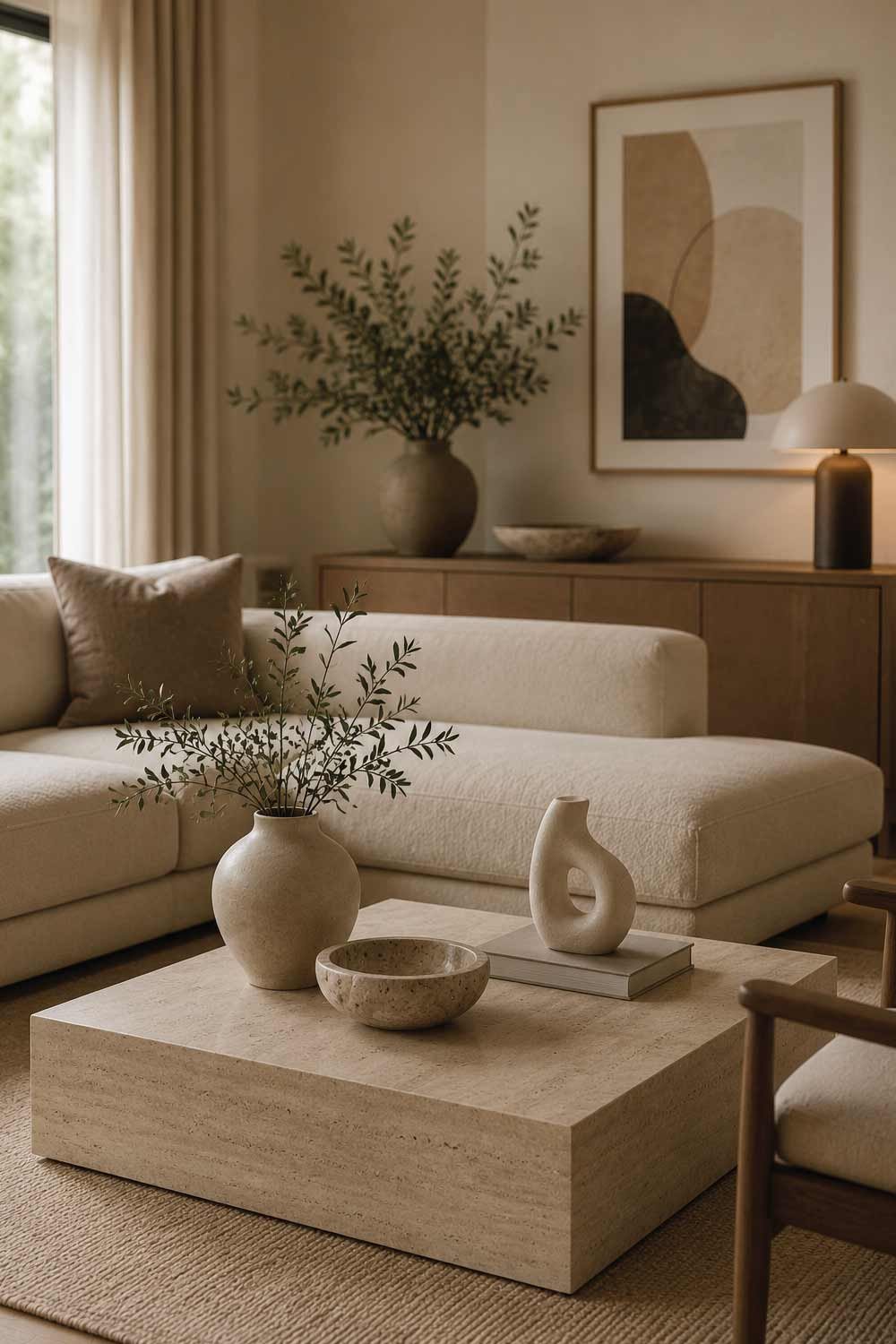
- Choose ceramic vases to introduce soft shapes and natural earthy tones.
- Use stone bowls for subtle texture and understated decorative elegance.
- Add abstract sculptures to create artistic focal points without clutter.
- Select framed artwork in muted tones to maintain visual harmony.
- Group décor items in odd numbers for natural and balanced styling.
- Leave negative space around objects to enhance clarity and focus.
Think ceramic vases, stone bowls, abstract sculptures, or simple framed artwork in soft tones. Group items in odd numbers for a natural styling effect.
Personal Experience
In my experience, reducing décor items and focusing on a few meaningful pieces made my living room feel more refined. Each item stood out more clearly, and the space felt calmer, cleaner, and more intentional overall.
10. Use Soft Flowing Curtains
Curtains in a neutral living room should enhance lightness and softness rather than dominate the space. Light, flowing fabrics like linen or sheer cotton help filter natural light gently, creating an airy and elegant atmosphere while maintaining the calm and cohesive feel that defines neutral interior design.
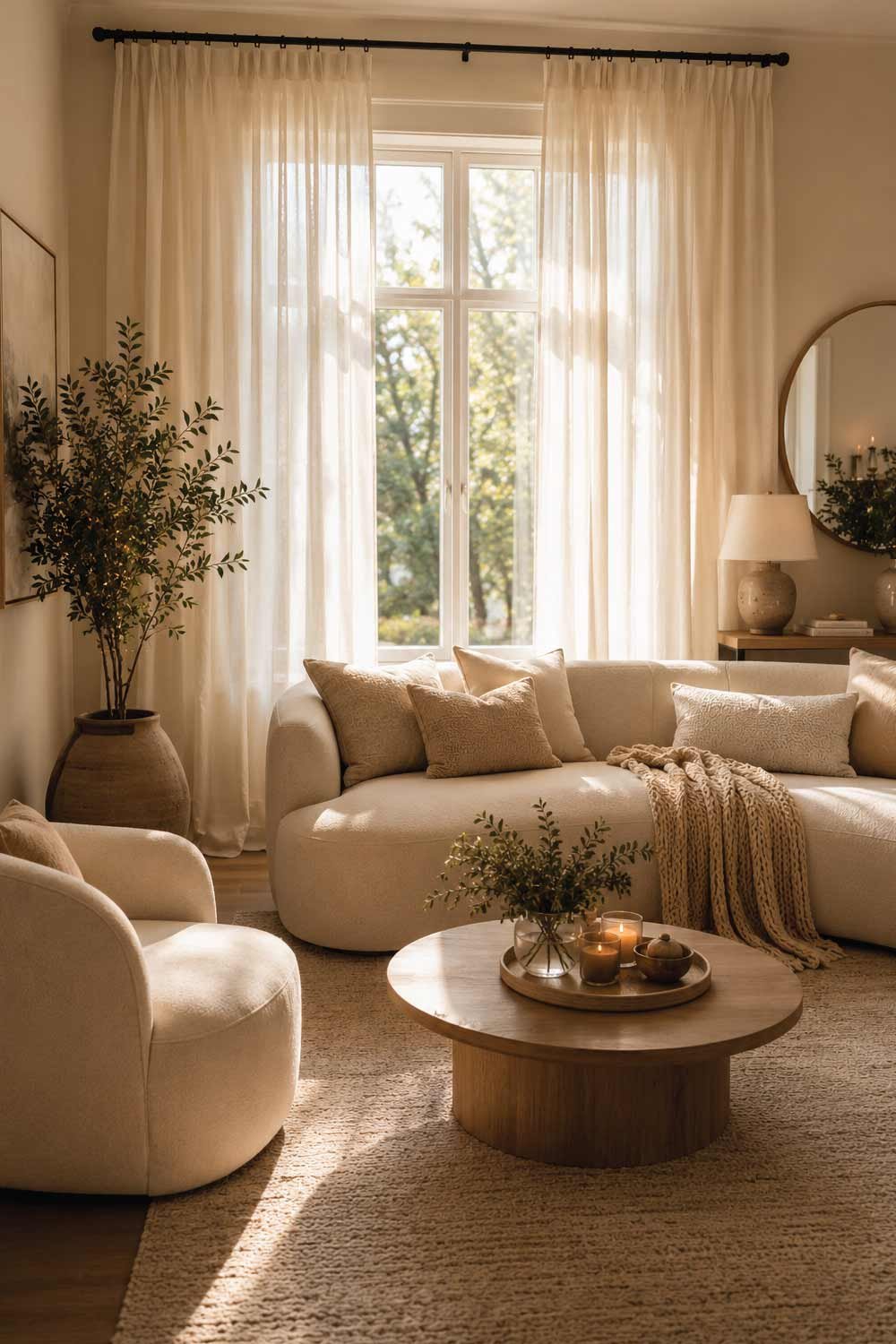
- Choose linen or sheer cotton fabrics for a light and breathable appearance.
- Stick to ivory, cream, or soft beige tones for color consistency.
- Hang curtains high to create the illusion of taller ceilings.
- Extend curtain rods wider to make windows appear larger and brighter.
- Allow fabric to flow naturally for a soft and elegant visual effect.
- Avoid heavy or dark curtains that block light and reduce openness.
Hang them high and wide to create the illusion of taller ceilings and larger windows. This simple trick instantly elevates the room’s elegance.
Personal Experience
In my experience, switching to light, flowing curtains instantly made my living room feel taller and brighter. The natural light improved, and the overall space felt softer, more elegant, and more visually open.
Also Read:
11. Add Subtle Contrast Through Accents
Even in a neutral living room, subtle contrast is essential to prevent the space from feeling flat or monotonous. Carefully placed darker or richer accents help define structure, highlight design elements, and enhance depth while still maintaining the calm and balanced nature of a neutral palette.
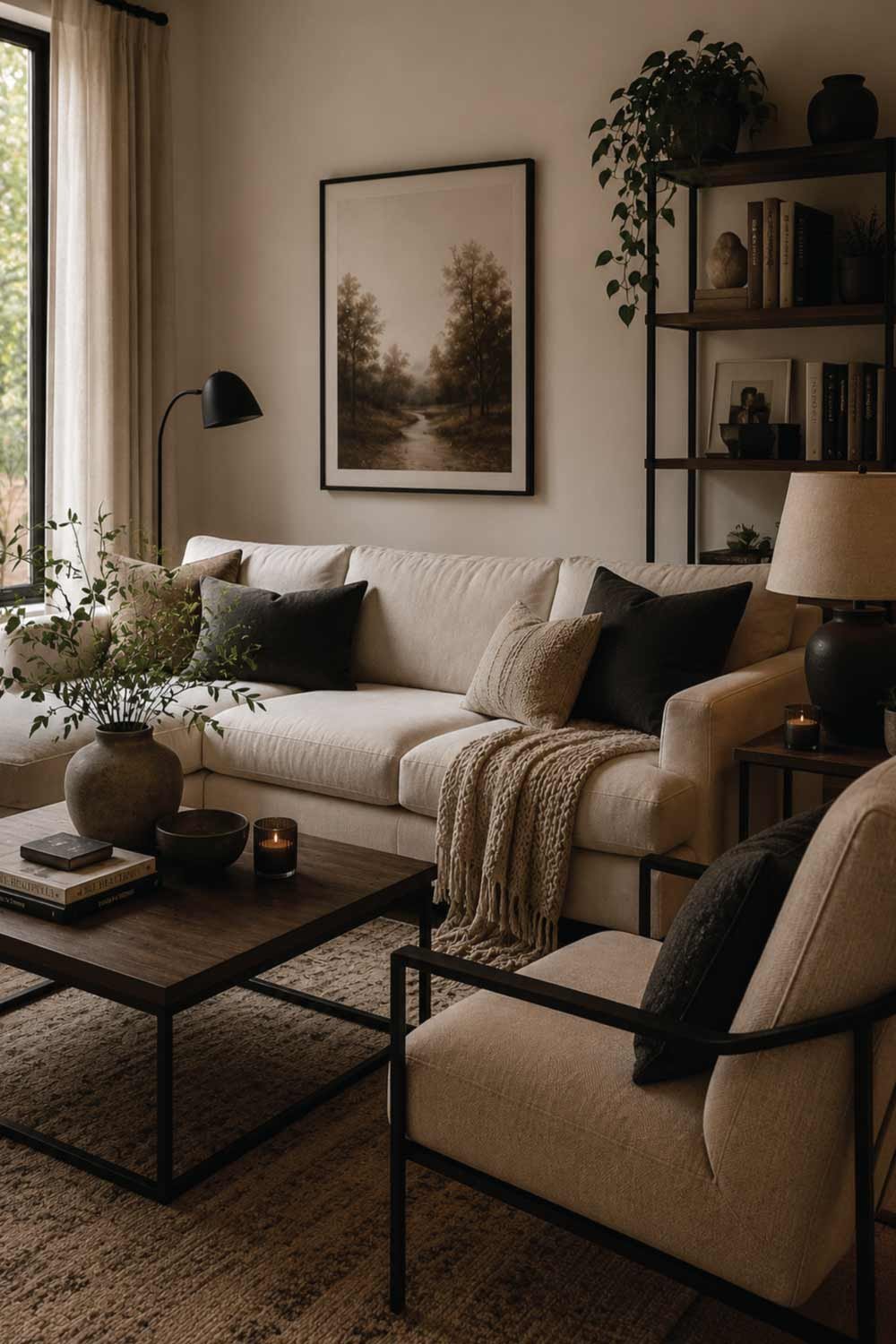
- Introduce charcoal cushions for soft contrast against light-colored sofas.
- Use black metal frames to define edges and add modern structure.
- Add deep brown wood elements for warmth and grounded visual balance.
- Keep contrasting accents minimal to preserve overall neutral harmony.
- Distribute darker tones evenly to avoid visual imbalance in the room.
- Combine contrast with texture to enhance depth without harsh visuals.
You can introduce contrast through darker accents like charcoal cushions, black metal frames, or deep brown wood elements. The key is to keep these accents minimal and balanced.
Personal Experience
In my experience, adding small dark accents made my neutral space feel more dynamic and visually interesting. It added depth without overwhelming the soft color scheme and helped highlight key furniture pieces more effectively.
12. Create a Calm Clutter Free Layout
A calm and clutter-free layout is essential for achieving a truly beautiful neutral living room. Organization, spacing, and intentional placement of furniture and décor help maintain a peaceful and airy environment where the neutral tones and textures can fully stand out without distraction.
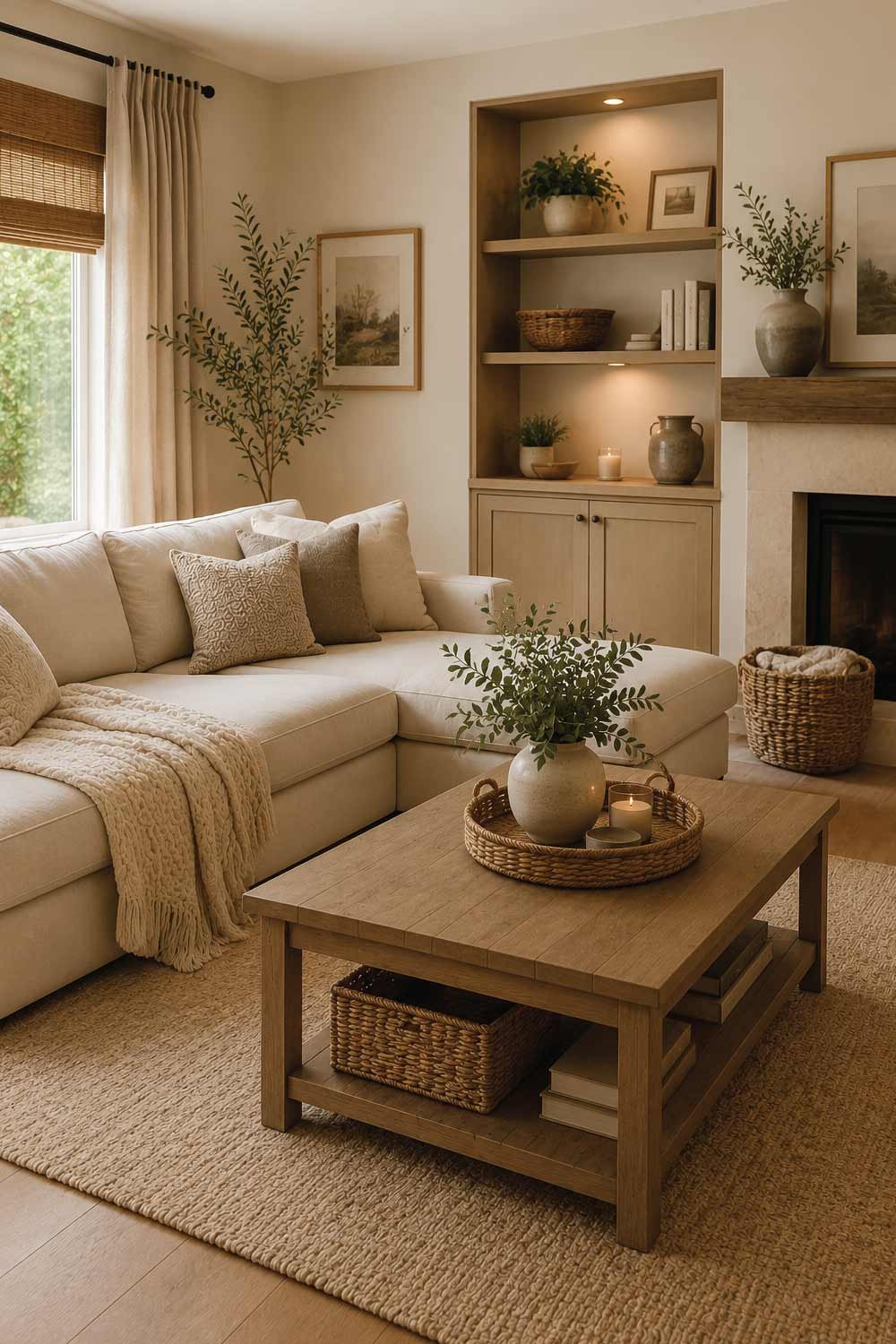
- Use hidden storage solutions like baskets and cabinets to reduce visible clutter.
- Keep surfaces clear and intentionally styled with only essential items displayed.
- Maintain open pathways to ensure smooth movement and spatial flow.
- Avoid overcrowding furniture to preserve openness and visual breathing room.
- Store everyday items out of sight to maintain a clean appearance.
- Arrange décor thoughtfully to support balance and calm visual composition.
Use hidden storage like baskets, cabinets, or storage ottomans to keep everyday items out of sight. Keep surfaces intentionally styled but not overcrowded.
Personal Experience
In my experience, maintaining a clutter-free layout completely transformed how my living room felt. It became more peaceful, organized, and visually balanced, allowing the neutral tones and textures to stand out beautifully.
Also Read:
12 Trending Creative Living Room Wall Art Ideas for Modern Homes
Final Thoughts
A neutral living room is all about balance soft colors, natural textures, and thoughtful simplicity. It’s a style that never goes out of fashion because it focuses on what truly matters: comfort and harmony.
You don’t need a complete renovation to achieve this look. Start with small changes like switching cushions, adding a rug, or introducing warm lighting. Over time, these subtle updates will transform your living room into a calm and elegant retreat.
