
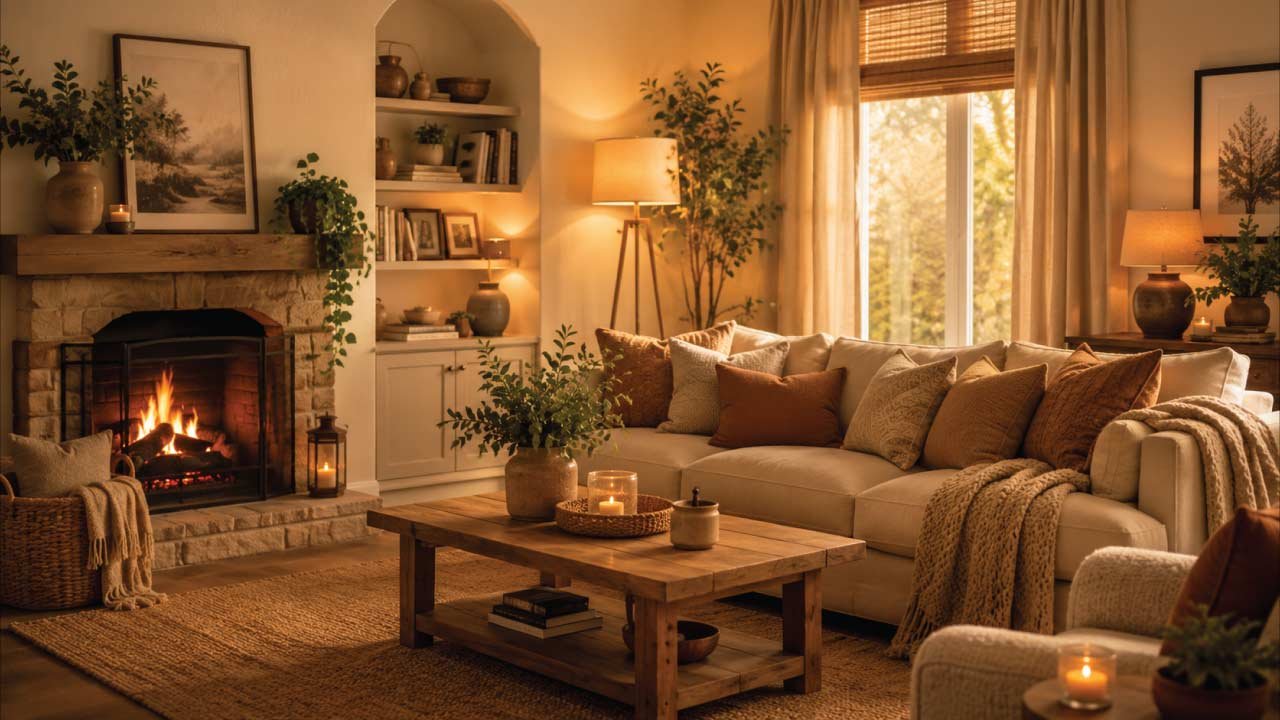
A warm living room is more than a design style it’s a feeling. It’s the kind of space where you naturally slow down, feel comfortable, and want to stay a little longer. Warm décor is built on softness, layered textures, inviting colors, and thoughtful lighting that together create a cozy atmosphere without feeling cluttered or heavy.
Whether your home is modern, traditional, or somewhere in between, these 10 warm living room décor ideas will help you transform your space into a welcoming retreat.
Table of Contents
Toggle1. Use a Warm, Earthy Color Palette
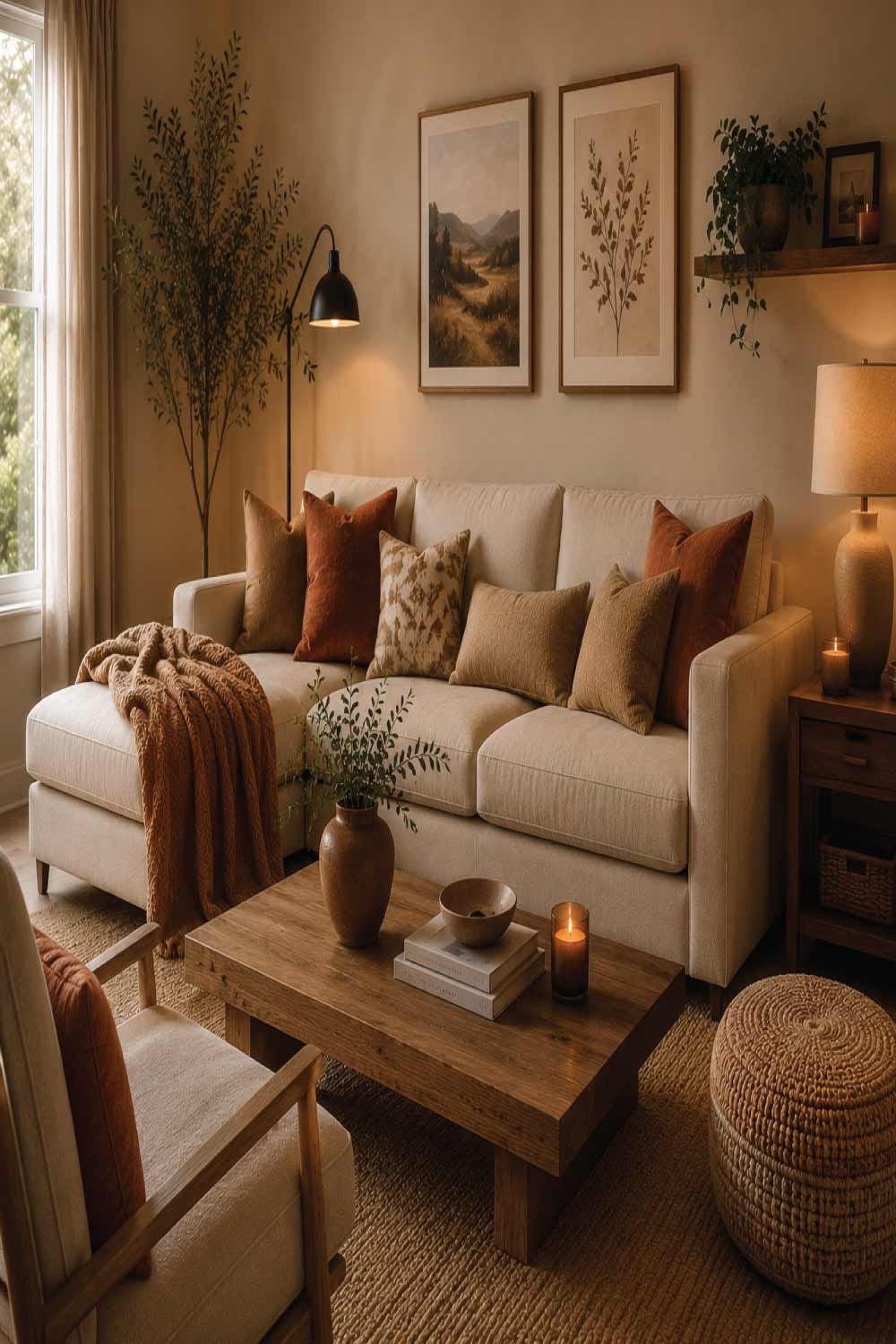
A cozy living room starts with the right color foundation, and warm earthy tones naturally create a sense of comfort and emotional grounding. These shades make the space feel lived-in and inviting, while soft neutrals help maintain balance without overwhelming the room visually or making it feel overly dark or heavy.
- Choose soft beige tones to create a calm and naturally inviting atmosphere.
- Use caramel shades to add warmth and subtle richness to interior spaces.
- Incorporate terracotta accents for a grounded and earthy visual appeal.
- Select warm taupe to maintain elegance while keeping overall softness.
- Avoid overly cool grays that can make rooms feel distant or sterile.
- Add creamy off-white for brightness without losing warm undertones.
- Use cushions and throws to introduce warm tones without repainting walls.
- Maintain tonal consistency to ensure a harmonious and cozy environment.
Think shades like soft beige, caramel, terracotta, warm taupe, muted brown, and creamy off-white. These colors naturally make a space feel more inviting than cooler grays or stark whites. You don’t need to repaint everything just adding warm-toned cushions, rugs, or throws can shift the entire mood.
Personal Experience
I once shifted a neutral gray-themed living room into a warm earthy palette using simple accessories. Just adding terracotta cushions and beige throws completely changed the atmosphere, making the space feel more welcoming, comfortable, and emotionally soothing overall.
2. Layer Soft Textures Everywhere
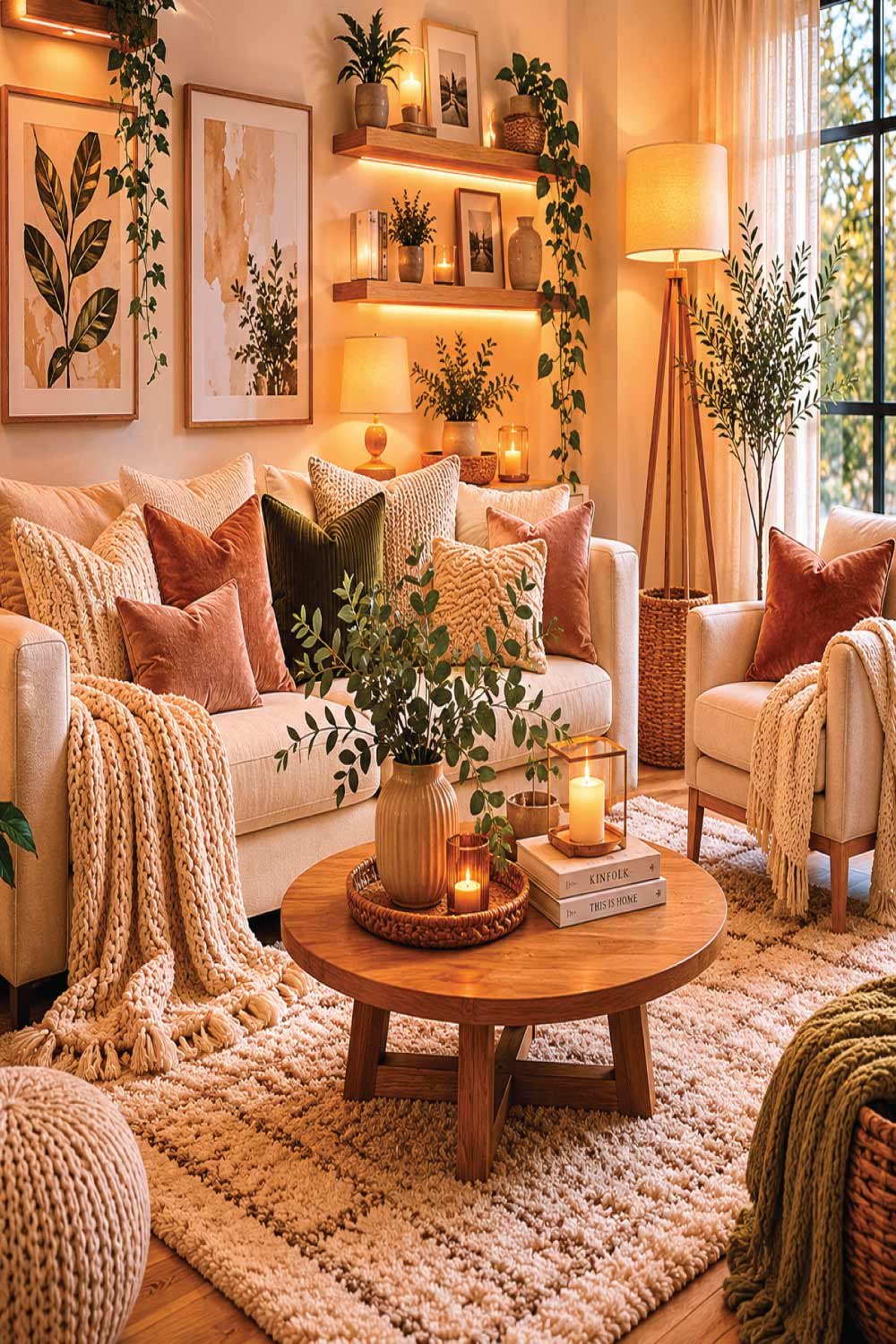
Texture plays a key role in making a living room feel warm, comfortable, and visually rich. A cozy space should not only look inviting but also feel soft and engaging to the touch. Layering different materials adds depth, reduces flatness, and creates a lived-in, relaxed atmosphere that enhances comfort naturally.
- Combine knitted blankets for a soft and visually comforting layering effect.
- Use velvet cushions to add richness and luxurious tactile softness.
- Include wool rugs for warmth and natural underfoot comfort.
- Choose linen curtains for light, breathable, and elegant texture layering.
- Mix different fabric types to create visual depth and interest.
- Avoid overly smooth surfaces that make interiors feel cold or lifeless.
- Layer throws on sofas to enhance casual and cozy aesthetics.
- Balance textures to maintain harmony without visual or physical clutter.
Layer materials like knitted blankets, velvet cushions, wool rugs, linen curtains, and soft upholstery. Mixing textures adds depth and prevents the space from feeling flat. Even a simple sofa becomes more inviting when layered with plush, tactile elements.
Personal Experience
In one home setup, I added layered textiles like wool rugs and velvet cushions to a simple sofa arrangement. The transformation was immediate the room felt warmer, more inviting, and significantly more comfortable for daily relaxation and family use.
3. Add Warm Ambient Lighting
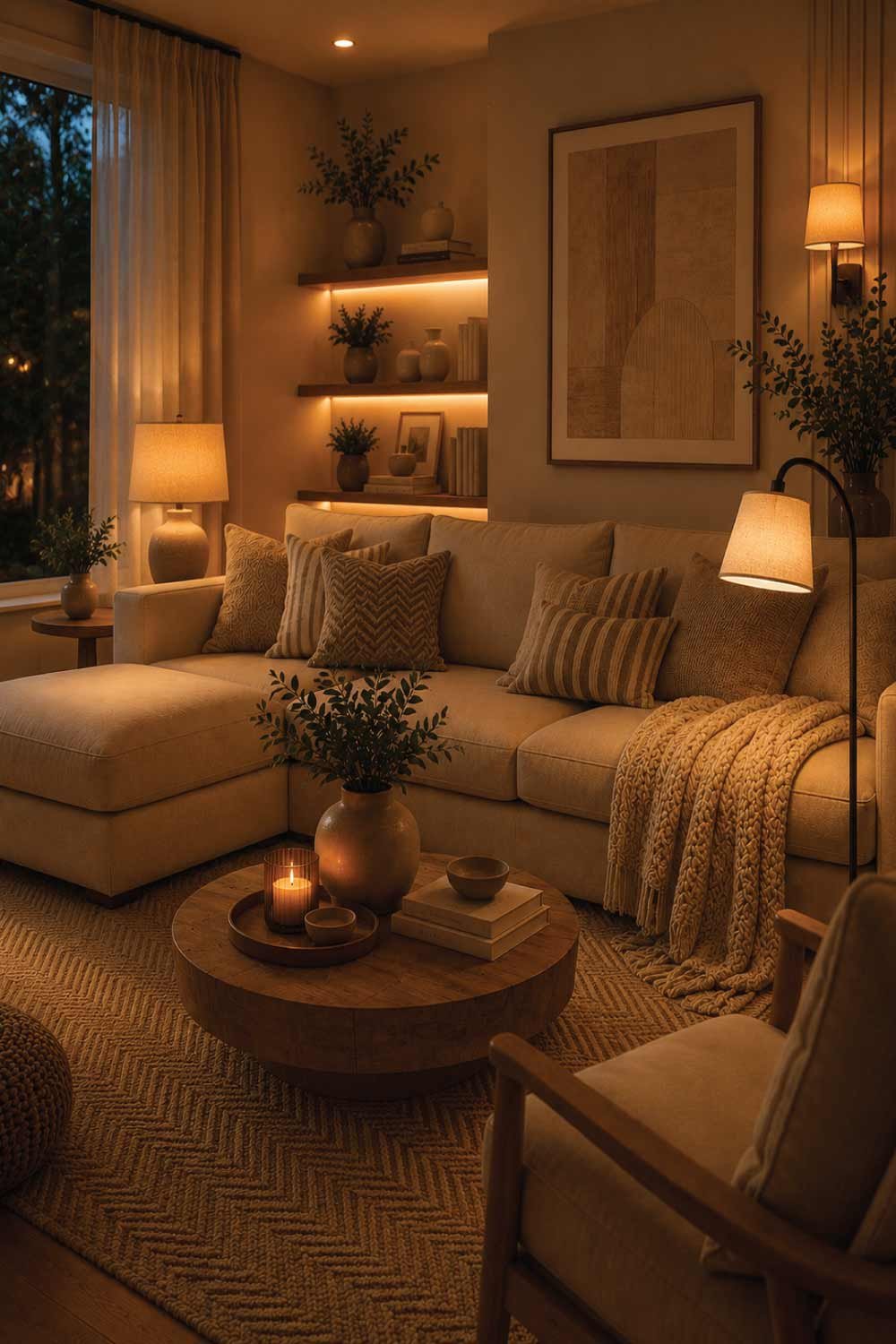
Lighting defines the emotional tone of a living room, and warm ambient lighting is essential for creating a cozy atmosphere. Soft, diffused light reduces harsh shadows and makes the environment feel relaxed. Layered lighting sources help build depth and comfort, especially during evenings when warmth and calmness are most needed.
- Use warm LED bulbs around 2700K to 3000K for soft glow.
- Combine table lamps to create gentle and focused lighting zones.
- Add floor lamps for balanced illumination across seating areas.
- Install wall sconces to introduce layered and elegant light distribution.
- Avoid harsh white lighting that creates cold and unwelcoming atmosphere.
- Use dimmable lights for adjustable mood control throughout the day.
- Place multiple light sources instead of relying on a single fixture.
- Highlight corners softly to eliminate dark and empty visual spaces.
Use table lamps, floor lamps, wall sconces, and warm LED bulbs (around 2700K–3000K). Multiple light sources create a layered glow that feels natural and relaxing, especially in the evening.
Personal Experience
I once replaced bright white lighting with warm ambient lamps in a living room. The difference was striking the space instantly felt calmer, more relaxing, and perfect for evening conversations and quiet downtime without any visual harshness.
4. Incorporate Wooden Elements
Wood is one of the most effective materials for creating warmth in a living room. Its natural texture, grain, and tone add organic richness that instantly softens modern interiors. Whether used in furniture or accents, wood brings balance, making the space feel grounded, timeless, and naturally inviting.
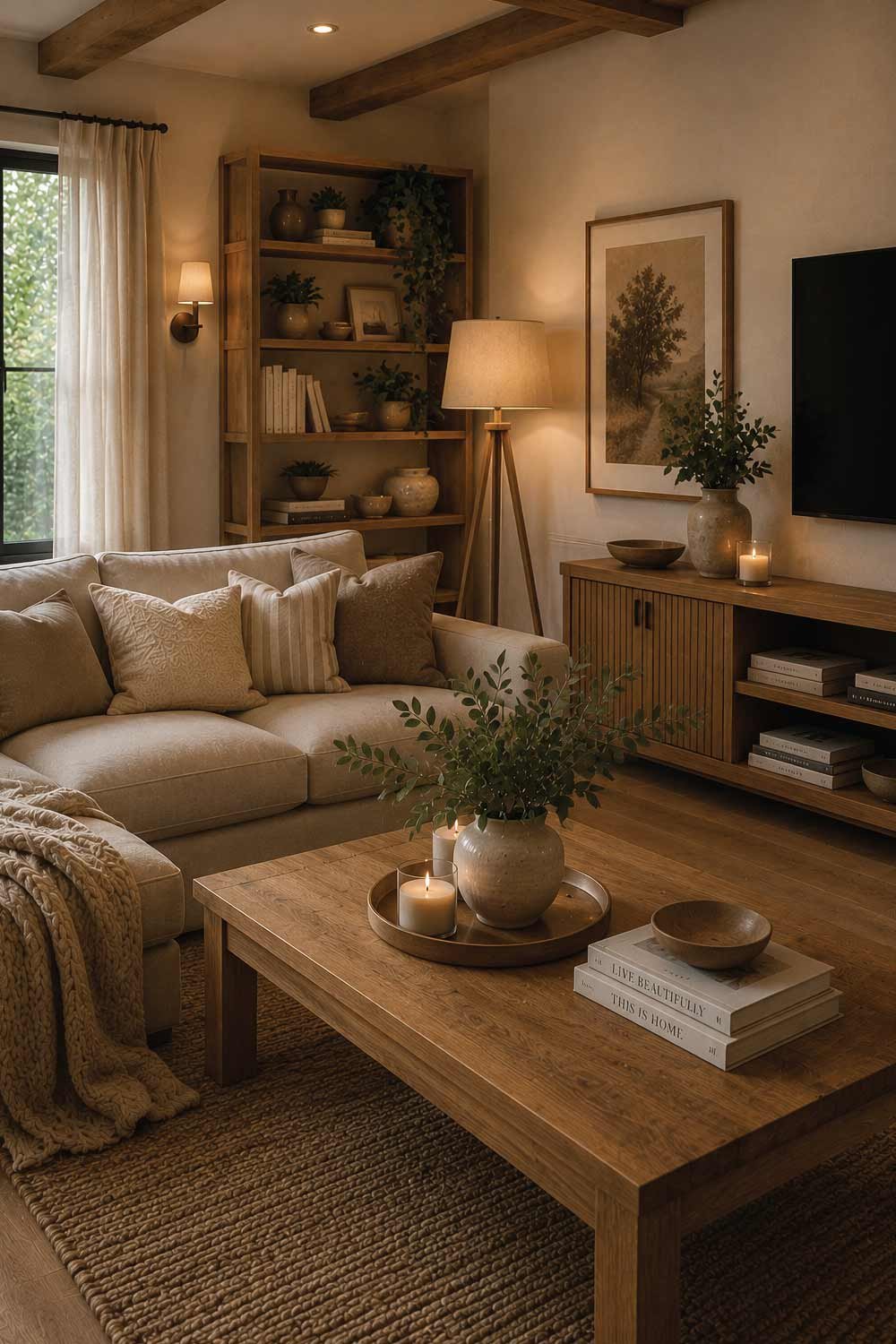
- Use wooden coffee tables to introduce natural warmth and texture.
- Add side tables with visible grain for organic visual appeal.
- Incorporate wooden shelving units for functional and aesthetic balance.
- Choose light oak for soft, airy, and modern cozy interiors.
- Use walnut tones for deeper warmth and rich traditional feel.
- Add wooden frames to enhance natural and cohesive room styling.
- Avoid excessive artificial materials that reduce natural interior warmth.
- Combine wood with soft fabrics for balanced and inviting design.
Consider wooden coffee tables, side tables, shelving units, or even ceiling beams if possible. The natural grain and texture of wood soften modern spaces and make them feel more grounded.
Personal Experience
In a small living room redesign, I introduced a wooden coffee table and shelving unit. The space immediately felt more grounded and warm, and the natural texture of the wood made the entire environment feel more welcoming and balanced.
5. Choose a Comfortable, Deep Sofa
The sofa is the central element of a cozy living room, and its comfort directly affects how inviting the space feels. A deep, soft seating arrangement encourages relaxation and longer use. When combined with warm upholstery tones, it creates a welcoming focal point that enhances both functionality and emotional comfort.
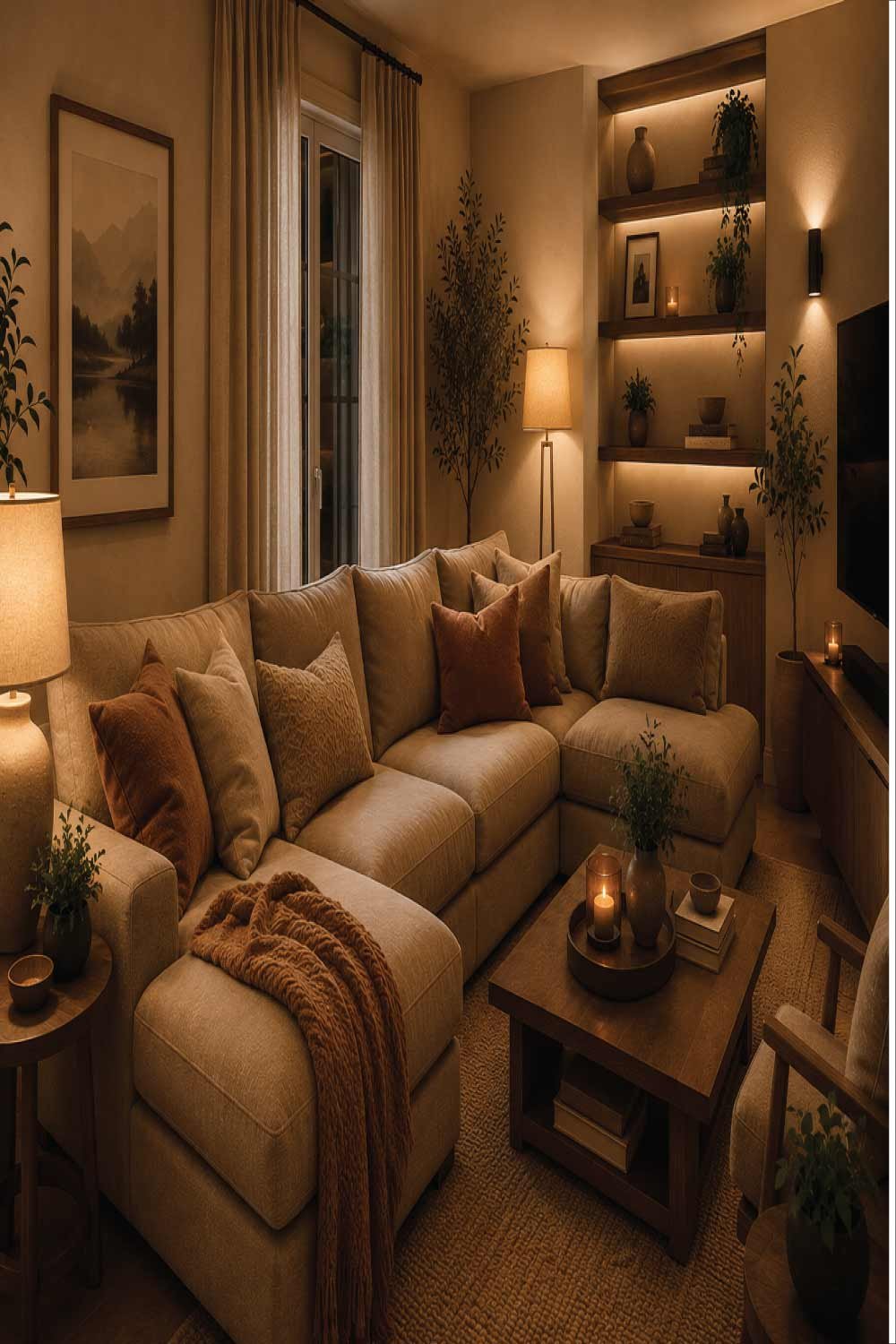
- Select deep-seated sofas to encourage full relaxation and comfort.
- Use soft cushions to enhance overall seating coziness and support.
- Choose warm upholstery tones like beige or soft brown shades.
- Avoid overly rigid designs that reduce comfort and relaxation feel.
- Opt for sectional sofas to create defined and intimate seating zones.
- Ensure cushioning is plush enough for extended sitting comfort.
- Balance size to avoid overwhelming smaller living room spaces.
- Combine sofa with warm throws for enhanced cozy aesthetic appeal.
Opt for a deep-seated sofa with soft cushions that encourage relaxation. Upholstery in warm tones like beige, rust, or soft brown enhances coziness. A sectional sofa can also help define a snug seating area for family gatherings or movie nights.
Personal Experience
I once upgraded a standard sofa to a deeper, softer sectional in a living room. The difference was immediate family gatherings became more comfortable, and the space felt naturally warmer and more inviting for long sitting periods.
Also Read:
12 Trending Living Room Décor Ideas to Make Your Home Look Luxurious
6. Add a Layered Rug Setup
Rugs play a vital role in defining a cozy living room by adding warmth, structure, and softness underfoot. Layering rugs enhances texture and depth, making the space feel more curated and inviting. This approach also helps visually anchor furniture while increasing comfort and aesthetic richness in a subtle way.
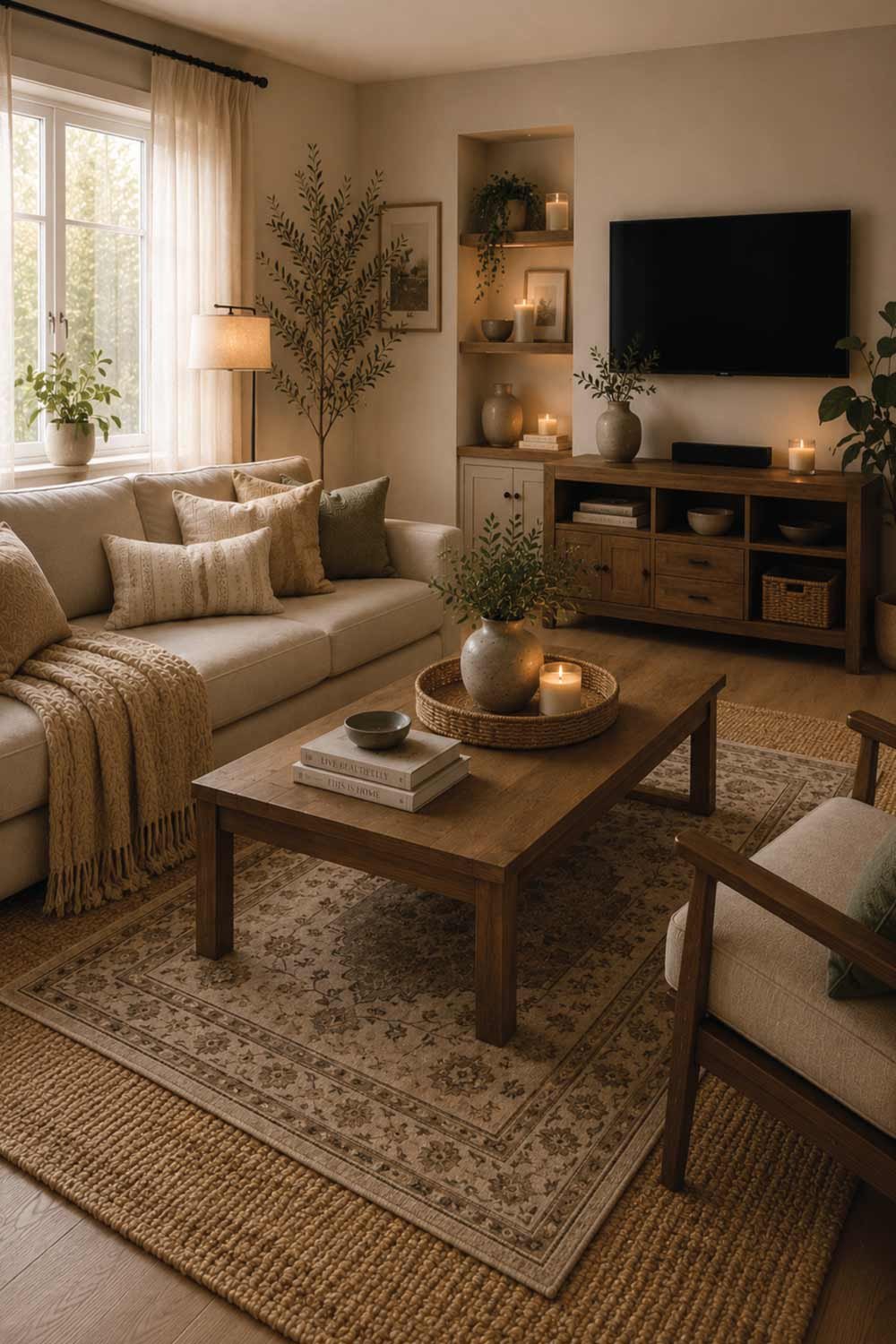
- Use a large base rug to define seating area boundaries clearly.
- Layer smaller patterned rugs to add texture and visual depth.
- Choose wool rugs for warmth, softness, and long-lasting durability.
- Add jute rugs for natural texture and earthy aesthetic appeal.
- Avoid overly bright patterns that disrupt cozy visual harmony.
- Ensure layered rugs complement each other in tone and texture.
- Position rugs properly to anchor furniture and unify layout design.
- Maintain neutral colors for a calm and balanced cozy atmosphere.
Try placing a large neutral base rug and layering a smaller textured or patterned rug on top. Natural materials like wool or jute work especially well in cozy interiors.
Personal Experience
In a cozy living room project, I experimented with layering a jute rug over a soft wool base. The combination added warmth and texture, instantly making the space feel more inviting, structured, and visually rich without feeling overwhelming.
7. Bring in Natural Greenery
Natural greenery plays an important role in making a warm living room feel alive, balanced, and emotionally refreshing. Plants soften hard interiors, improve visual comfort, and introduce organic movement into the space. Their natural tones complement earthy palettes and enhance the overall cozy atmosphere without requiring heavy decoration or structural changes.
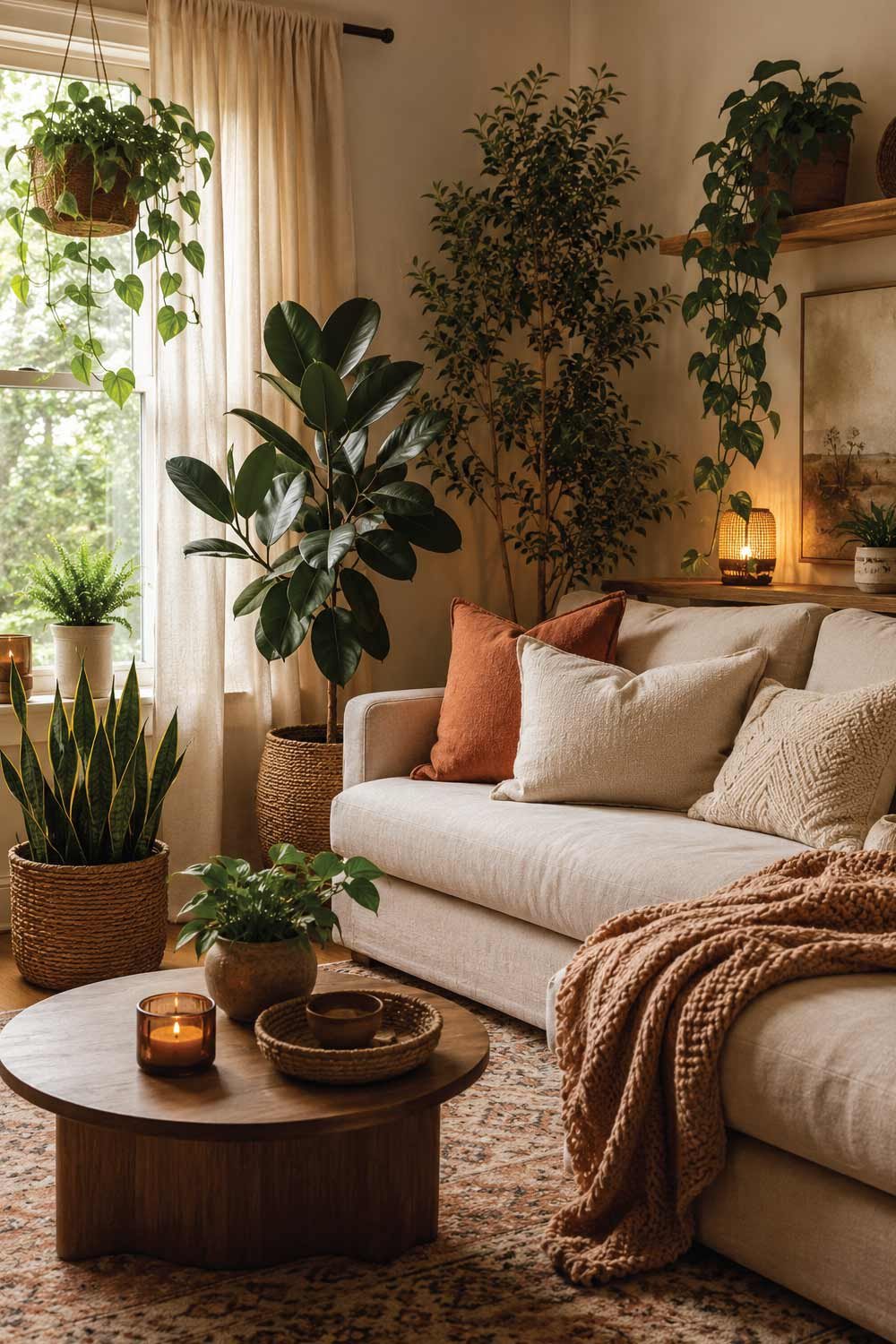
- Choose snake plants for low-maintenance greenery and strong visual structure.
- Use pothos plants to create soft trailing effects around shelves or corners.
- Add rubber plants for bold leaves and rich natural texture contrast.
- Place small indoor trees to create natural focal points and height.
- Position plants near windows for healthy growth and natural light exposure.
- Use corner placements to soften empty and unused room spaces.
Choose easy-care plants like snake plants, pothos, rubber plants, or small indoor trees. Place them in corners, beside sofas, or near windows to create natural focal points.
Personal Experience
I added a few medium-sized indoor plants to a warm-toned living room setup, and the atmosphere changed noticeably. The space felt fresher, more balanced, and visually softer, while also giving a natural sense of calm and relaxation throughout the environment.
8. Use Curtains to Soften the Space
Curtains play a key role in shaping the mood of a living room by softening hard edges and filtering natural light. In a warm interior, they help create flow, warmth, and elegance. Their movement and texture reduce visual rigidity, making the space feel more relaxed, inviting, and naturally comfortable.
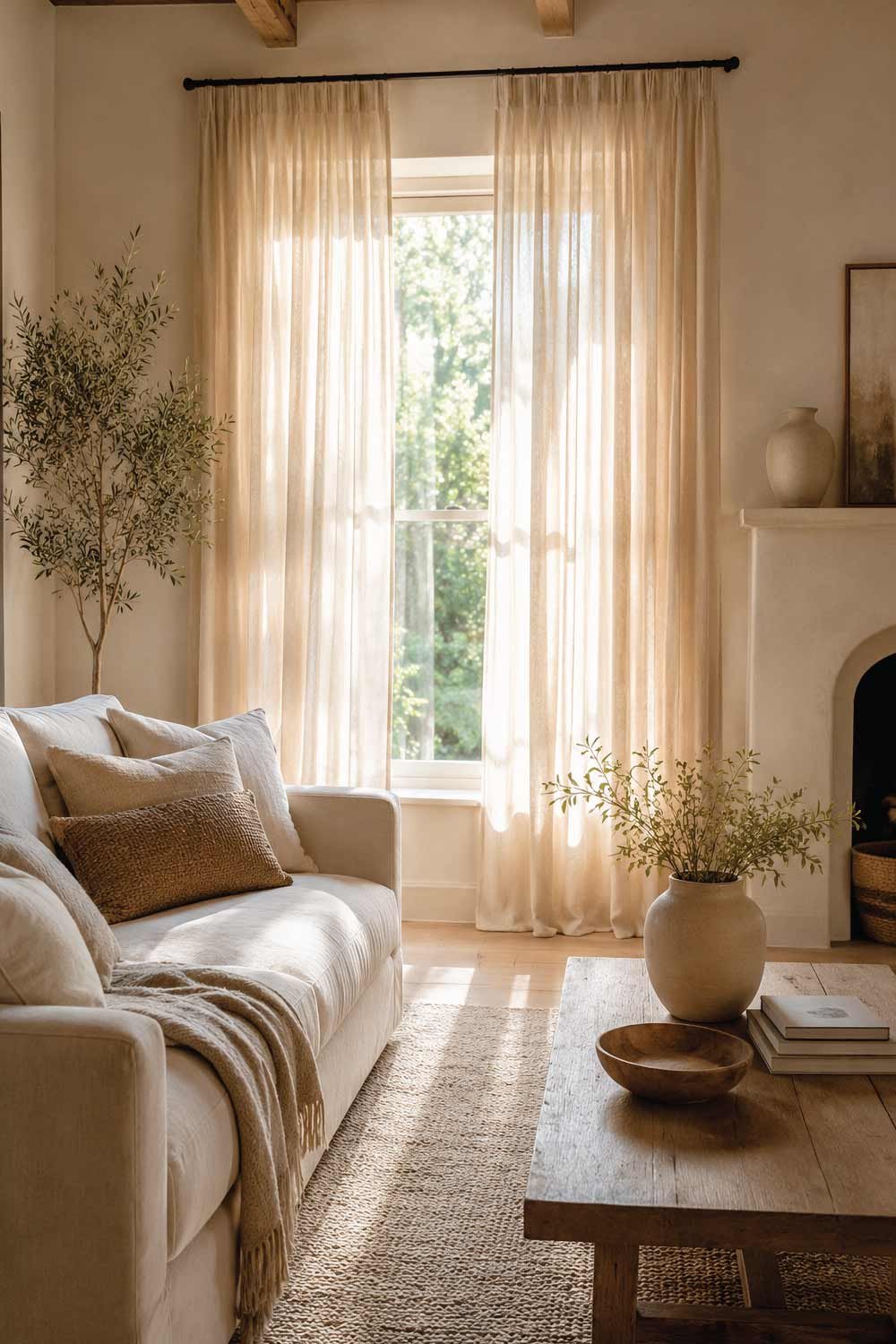
- Choose long flowing curtains to enhance vertical elegance and softness.
- Use linen or cotton fabrics for breathable and natural texture appeal.
- Select warm neutral shades like cream or sand for cozy atmosphere.
- Avoid heavy dark fabrics that make room feel closed and heavy.
- Hang curtains higher than window frame for taller visual effect.
- Allow curtains to lightly touch the floor for graceful flow.
Opt for long, flowing curtains in linen or cotton. Warm neutral shades like cream, sand, or light brown enhance the cozy effect while also filtering natural light beautifully.
Personal Experience
In one interior setup, I replaced short synthetic curtains with long linen panels in a soft neutral tone. The room instantly felt warmer, more elegant, and visually softer, with natural light becoming much more calming and evenly distributed.
Also Read:
12 Trending Aesthetic Living Room Apartment Ideas You Will Love in 2026
9. Decorate with Personal Touches
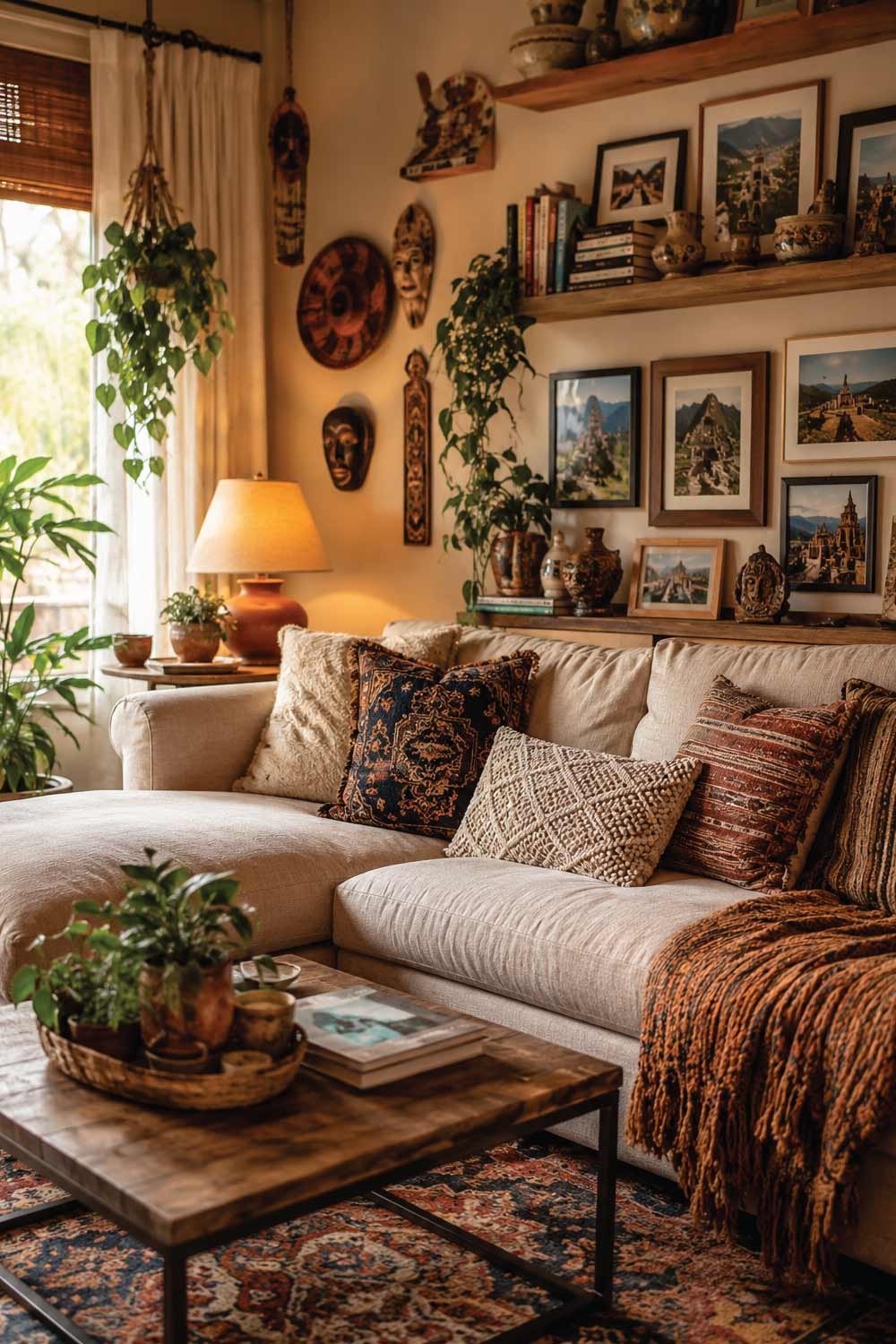
Personal touches are essential in creating a warm living room that feels emotionally connected and lived-in. Instead of looking staged or overly styled, these elements reflect personality and memories. They add depth and meaning to the space, transforming it into a comfortable environment that feels unique, familiar, and genuinely inviting.
- Display framed photos to create emotional connection and personal warmth.
- Add travel souvenirs for storytelling and meaningful visual interest.
- Use handmade crafts to introduce authenticity and unique character.
- Keep books visible for intellectual warmth and relaxed atmosphere.
- Arrange items thoughtfully to avoid cluttered or chaotic appearance.
- Choose meaningful decor instead of purely decorative objects only.
Add framed photos, travel souvenirs, handmade crafts, or books that reflect your personality. These small details create emotional warmth, making the space feel uniquely yours.
Personal Experience
I once added framed travel photos and a few handmade items to a living room. The space immediately felt more personal and comforting, as every corner reflected memories and stories that made the environment feel truly lived-in and warm.
10. Introduce Fireplace-Inspired Focal Points
A fireplace is often the heart of a cozy living room, but even without one, similar focal points can recreate that warm and inviting feeling. These elements naturally draw attention, encourage gathering, and establish a sense of comfort. The goal is to create visual warmth and emotional balance within the space.
- Use faux fireplaces to mimic traditional cozy room atmosphere effectively.
- Arrange candles in clusters for soft glowing and intimate lighting effect.
- Style media consoles as central focal points for balanced room design.
- Use symmetrical decor placement to enhance visual stability and comfort.
- Add warm lighting around focal areas to increase cozy ambiance.
Use a faux fireplace, candle arrangements, or a styled media console as a focal point. Arrange décor symmetrically around it to create a sense of comfort and gathering.
Personal Experience
In a home setup without a fireplace, I created a focal point using candles and a styled console table. The result was surprisingly effective, adding warmth and making the living room feel more centered and inviting for gatherings.
Also Read:
12 Best and Trending Corner Lamp Ideas for Living Rooms in 2026
Final Thoughts
Creating a warm living room is about designing a space that supports relaxation, connection, and comfort. It’s not about following strict rules it’s about combining colors, textures, lighting, and personal touches in a way that feels natural to you.
When done well, a warm living room becomes the heart of the home a place where people gather, unwind, and feel genuinely at ease.
