
Choosing the right side table may seem like a small decision, but in reality, it can dramatically affect both the comfort and visual balance of a room. I learned this the hard way a few years ago when I bought a beautiful side table online without checking the dimensions carefully. It arrived looking perfect—but once placed next to my sofa, it was noticeably too tall. Every time I reached for my coffee, I had to lift my arm awkwardly, and the table visually towered over the sofa arm. That experience taught me an important lesson: side table size matters just as much as style.
This complete side table size guide will help you avoid the same mistake. We’ll cover standard dimensions, how to choose the right size for different rooms, common mistakes, and a clear size chart you can reference before buying.
Why Side Table Size Is So Important
A side table serves both functional and decorative purposes. Functionally, it holds essentials like lamps, books, drinks, and remotes. Aesthetically, it anchors seating areas and balances the proportions of your furniture.
When a side table is:
Too tall, it feels awkward and disrupts visual harmony
Too short, it becomes impractical to use
Too wide or bulky, it crowds the room
Too small, it looks insignificant and underutilized
Getting the size right ensures comfort, convenience, and a polished interior look.
Standard Side Table Dimensions
Although side tables come in a wide range of designs, most follow general sizing standards. These standards are based on ergonomics—how people naturally sit, reach, and move in a space.
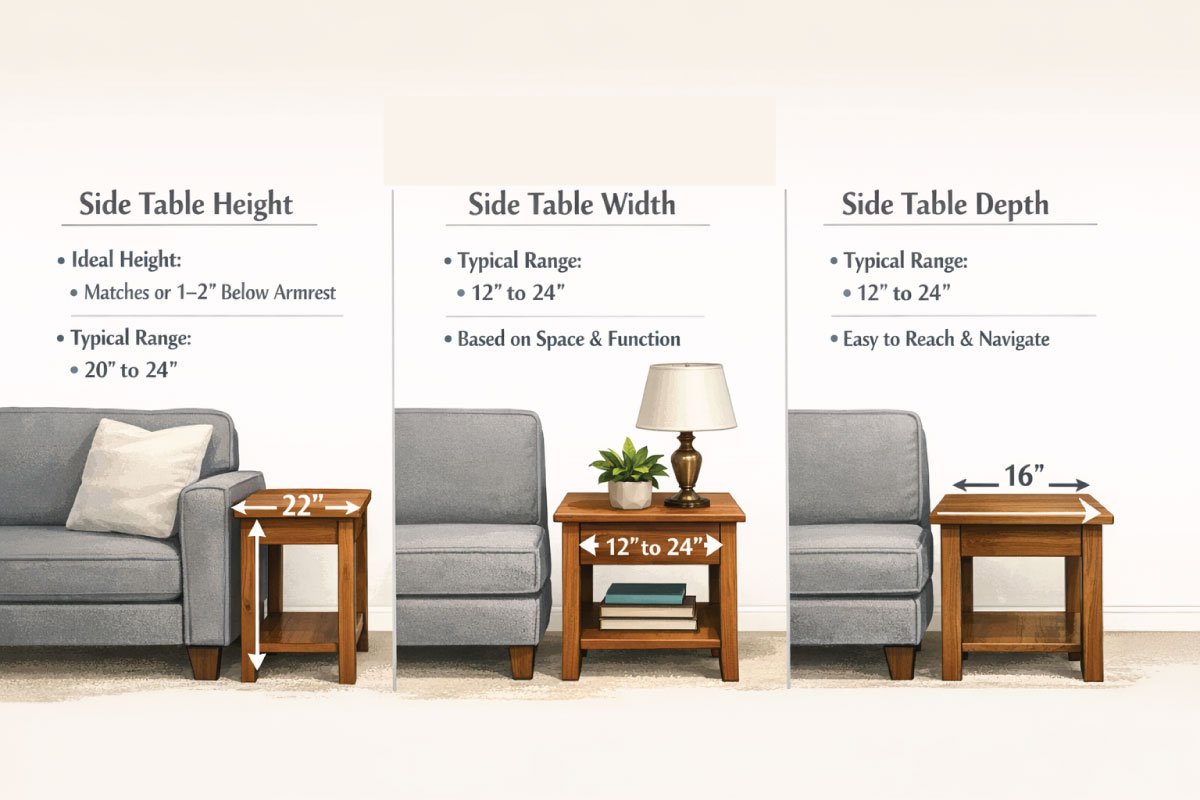
1. Side Table Height
Ideal height:
Equal to or 1–2 inches shorter than the arm height of your sofa or chair
Typical range:
20 to 24 inches
From personal experience, I’ve found that tables closer to the sofa arm height feel the most natural. In my living room now, my sofa arms measure 23 inches high, and my side tables are 22 inches. Reaching for a drink feels effortless.
2. Side Table Width
Typical range:
12 to 24 inches
Width depends on:
Available space
Function (lamp-only vs. lamp + décor + storage)
For compact spaces, a 12–16 inch wide table works well. Larger seating areas can accommodate 20–24 inch wide tables without feeling crowded.
3. Side Table Depth
Typical range:
12 to 24 inches
Depth should allow easy access without blocking walkways. In tight living rooms, I prefer tables no deeper than 16 inches to maintain comfortable movement around the furniture.
Side Table Size Chart
Here’s a simple size chart you can use as a starting point:
| Furniture Type | Ideal Height | Width Range | Depth Range |
|---|---|---|---|
| Sofa Side Table | 20–24 inches | 16–24 inches | 16–24 inches |
| Accent Chair Table | 18–22 inches | 12–20 inches | 12–20 inches |
| Bedside Table | 24–28 inches | 18–24 inches | 16–24 inches |
| Outdoor Side Table | 18–22 inches | 12–18 inches | 12–18 inches |
| Small Space Table | 18–22 inches | 12–16 inches | 12–16 inches |
Tip: Always measure your furniture before buying, even if the table fits within “standard” dimensions.
Choosing the Right Side Table Size for Your Living Room
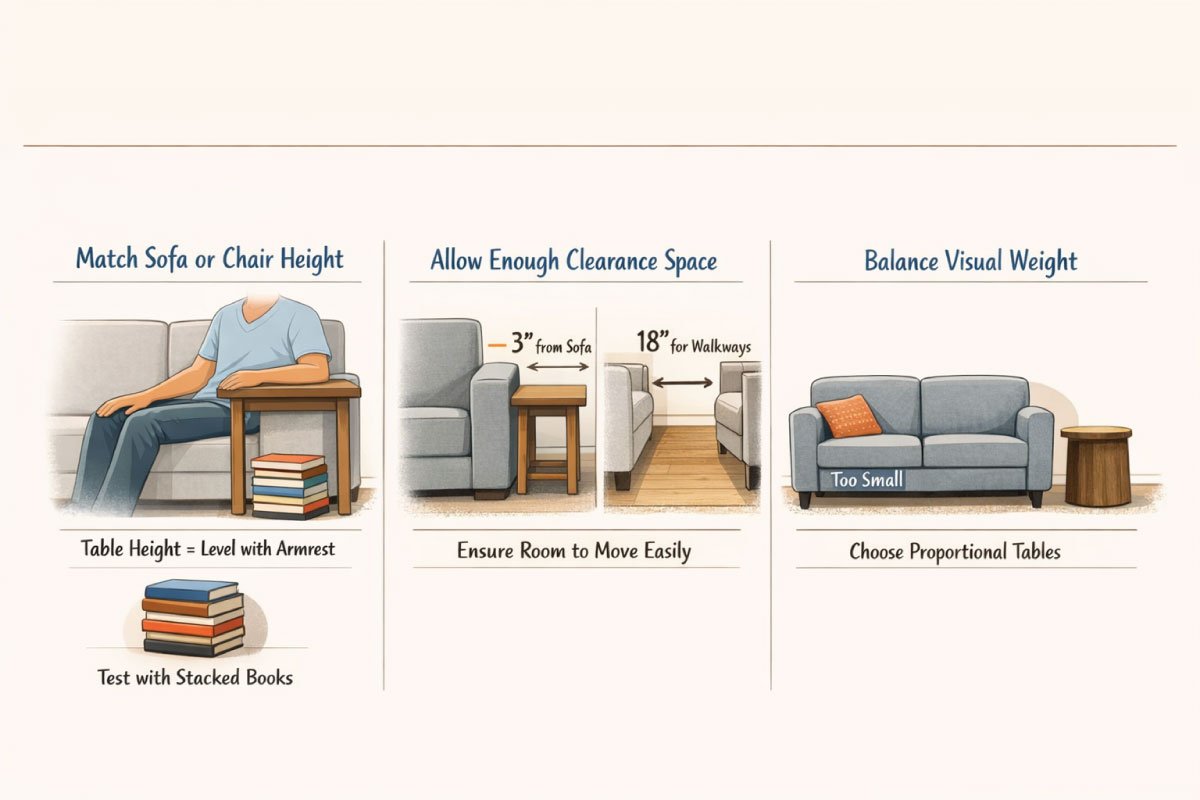
Match the Sofa or Chair Height
The most important rule is aligning the table height with your seating. When seated, your hand should naturally land on the tabletop without lifting your elbow.
When I redesigned my living room, I tested this by sitting on the sofa and stacking books next to it until the height felt right. That stack became my ideal table height.
Allow Enough Clearance Space
Make sure there’s enough room to move around comfortably.
Recommended clearances:
At least 3 inches between sofa and table
At least 18 inches for walkways
Overly large side tables can make even a spacious room feel cramped.
Balance Visual Weight
If your sofa is large and bulky, a tiny side table may look out of place. Conversely, a thick, heavy table next to a sleek sofa can feel overwhelming. Aim for proportional balance.
Side Table Sizes for Bedrooms
Side tables used as nightstands follow slightly different rules.
Height for Bedside Tables
Ideal height:
Equal to or 1–2 inches higher than mattress height
Typical range:
24–28 inches
I once used a 20-inch side table as a nightstand, and while it looked stylish, it was inconvenient. Reaching down for my phone every morning quickly became annoying.
Width and Storage Needs
For bedrooms:
18–24 inches wide is ideal
Consider drawers or shelves for storage
If you only need space for a lamp and phone, smaller is fine. If you store books, glasses, or chargers, go wider.
Side Table Sizes for Small Spaces
In apartments or compact rooms, side tables must work harder without taking up much space.
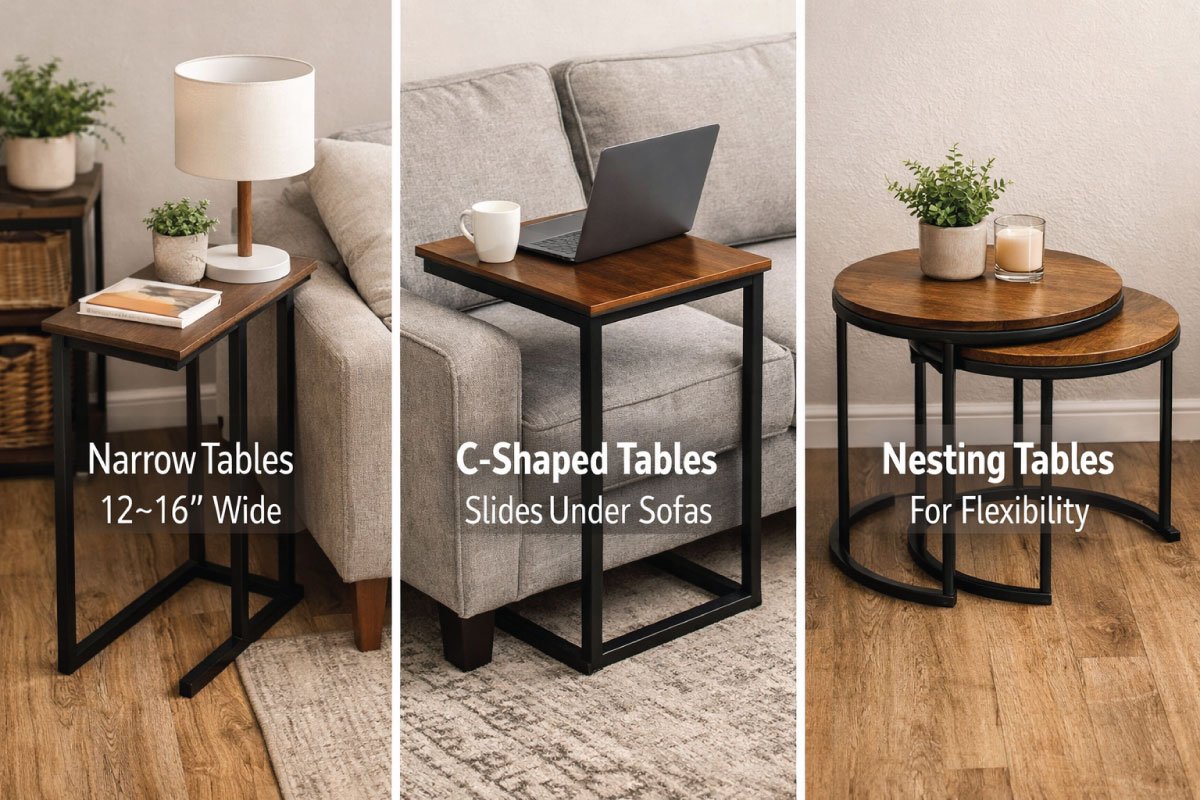
Best options:
Narrow tables (12–16 inches wide)
C-shaped tables that slide under sofas
Nesting tables for flexibility
In my previous apartment, a slim C-table became my go-to solution. It served as a side table, laptop stand, and occasional dining surface—all without cluttering the room.
Outdoor Side Table Size Guidelines
Outdoor side tables should be slightly lower and smaller than indoor ones.
Typical dimensions:
Height: 18–22 inches
Width/Depth: 12–18 inches
They should be large enough for drinks and sunscreen but compact enough to move easily.
Common Side Table Sizing Mistakes
1. Buying Without Measuring
This was my biggest mistake early on. Always measure:
-
Sofa arm height
-
Available floor space
-
Clearance for movement
2. Prioritizing Style Over Function
A sculptural table might look stunning but fail in everyday use. Make sure it can comfortably hold what you need.
3. Ignoring Room Scale
A side table should complement the room, not dominate it. Step back and assess how it looks from different angles.
4. Forgetting Storage Needs
If clutter builds up quickly, you probably need a table with drawers or shelves.
How to Test Side Table Size Before Buying
Here’s a simple trick I still use:
Stack books or boxes to the desired height
Sit down and reach naturally
Adjust until it feels comfortable
This real-life test is far more reliable than guessing based on numbers alone.
Side Table Shape and Its Impact on Size
While height, width, and depth are critical, shape also plays a major role in how a side table fits and functions in your space. I didn’t fully appreciate this until I swapped a square side table for a round one in a narrow seating area. The room instantly felt more open, even though the table’s surface area was nearly the same.
Common Side Table Shapes
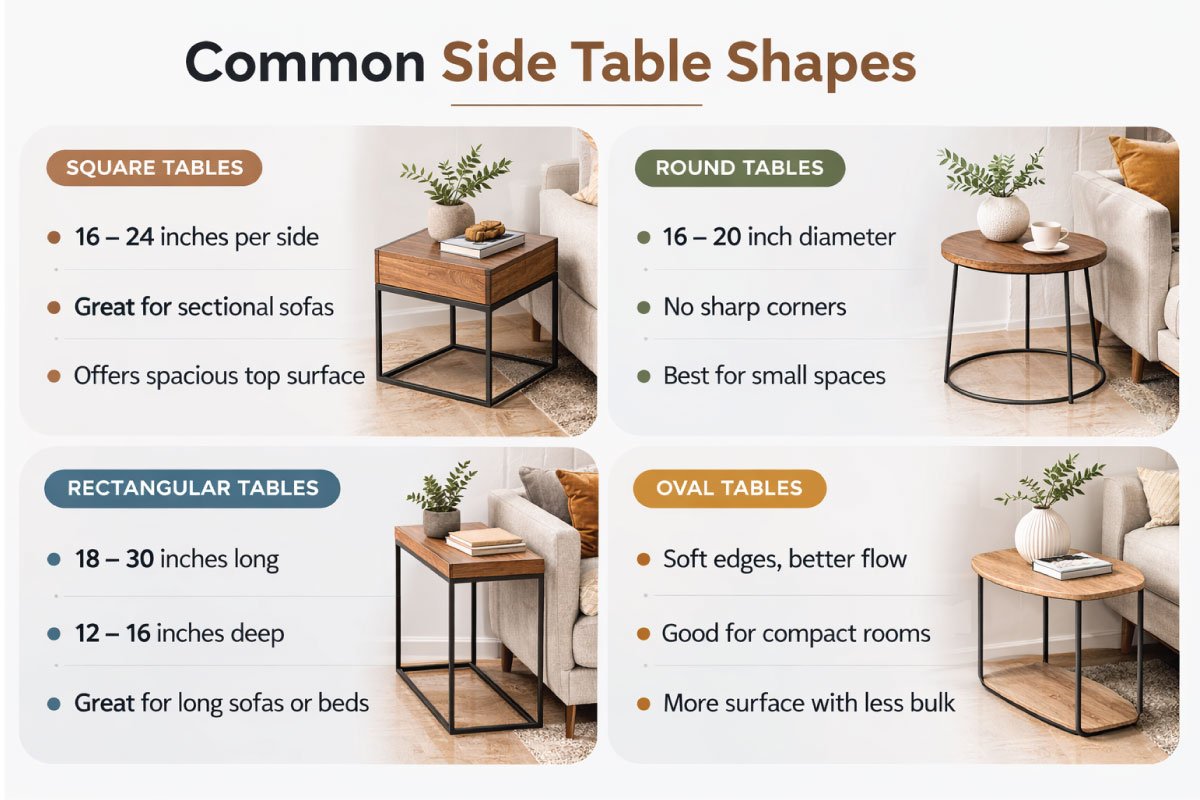
Square tables
Best for symmetrical layouts and sectional sofas. They typically range from 16–24 inches per side and offer generous surface space.
Round tables
Ideal for tight spaces or homes with kids, as there are no sharp corners. A 16–20 inch diameter is usually sufficient for most living rooms.
Rectangular tables
Work well next to long sofas or beds. These often range from 18–30 inches in length but should be kept narrow (12–16 inches deep) to avoid blocking walkways.
Oval tables
A softer alternative to rectangular tables, offering similar surface area with better flow in compact rooms.
Using Multiple Side Tables in One Space
In larger living rooms, you’re not limited to just one side table. Using two or more can improve functionality and symmetry.
Best practices:
Keep all tables within 1–2 inches of the same height
Vary shapes slightly, but maintain similar visual weight
Ensure at least 18 inches of walking space between tables
In my current living room, I use two matching side tables at either end of the sofa and a smaller accent table near an armchair. Keeping their heights consistent made the layout feel intentional rather than cluttered.
Side Tables with Storage:
Side tables with drawers or shelves are incredibly practical, but they do affect sizing.
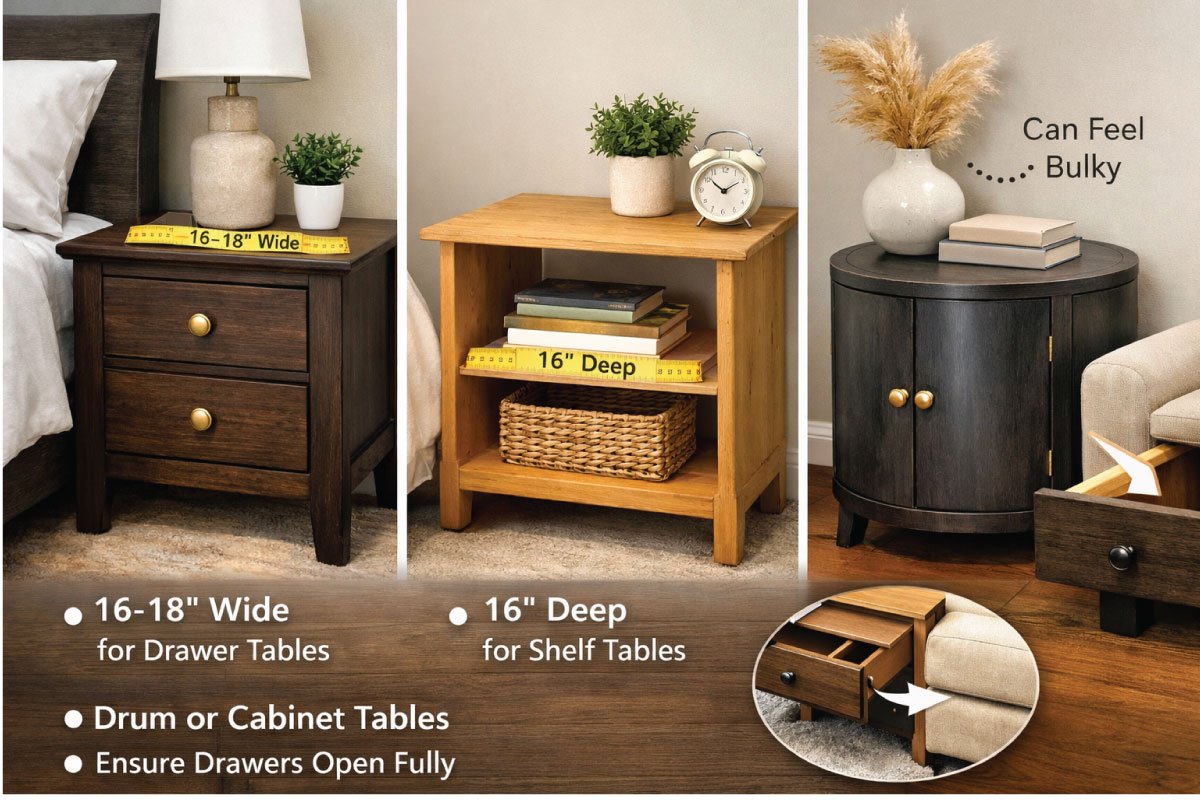
Drawer tables often need at least 16–18 inches of width
Shelf tables require enough depth (usually 16 inches or more) to be useful
Drum or cabinet-style tables may look compact but feel bulky visually
If you’re choosing a storage table, make sure drawers can open fully without hitting nearby furniture.
Styling Tips That Affect Size Choice
Sometimes a table technically fits—but looks wrong because of styling choices.
Keep these in mind:
Large lamps need wider tables (18–24 inches) for stability
Minimal décor works better on smaller tables
Tall décor items can visually compensate for a slightly shorter table
I once used a slim table that felt undersized until I added a lamp with a wider base. That single styling change made the proportions feel balanced.
Quick Measurement Checklist Before Buying
Before purchasing any side table, run through this checklist:
Measure sofa or bed height
Measure available floor space
Check clearance for walkways
Consider what items will live on the table
Account for drawer or shelf access
Doing this takes five minutes—and can save you years of mild daily annoyance.
Final Thoughts:
Choosing the right side table size is about balancing comfort, proportion, and practicality. While standard dimensions provide a helpful guideline, your space and lifestyle should always drive the final decision.
From personal experience, I can confidently say that measuring first and visualizing the table in use makes all the difference. The right side table doesn’t just fill space—it enhances how you live in it.
