
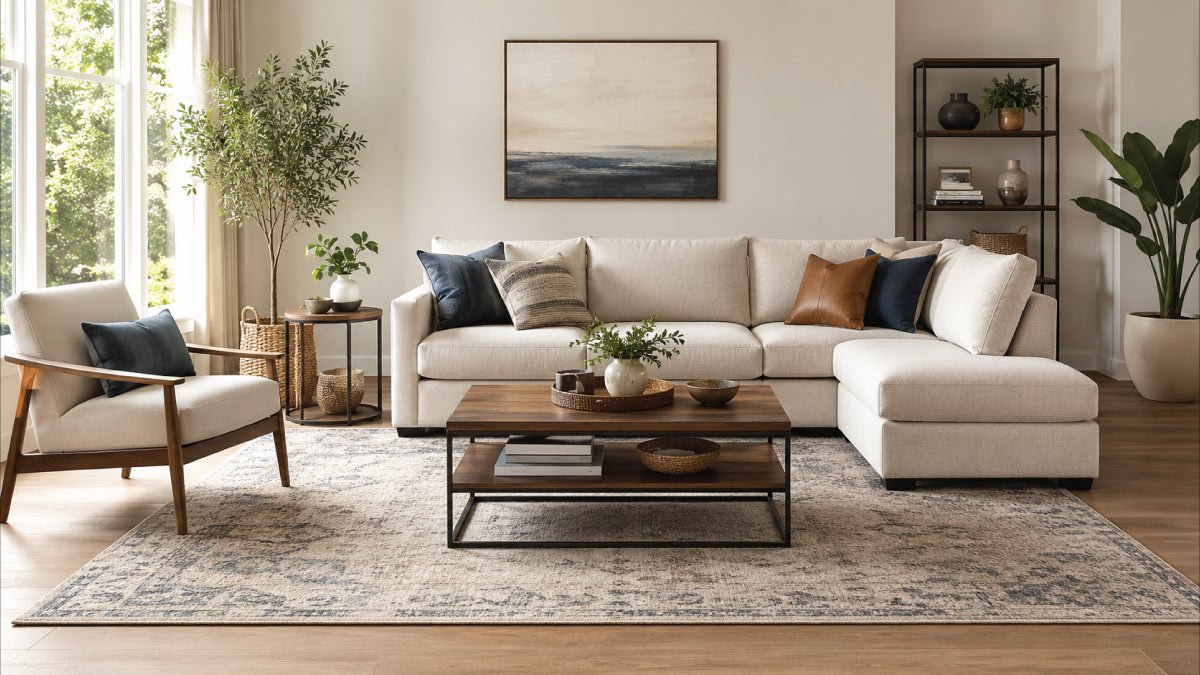
A rug can completely transform a living room. It anchors the furniture, defines the seating area, adds warmth, and brings texture and color into the space. But while choosing a rug style or color is often fun, choosing the right rug size is where most people struggle.
A rug that’s too small can make a room feel disconnected and unfinished. A rug that’s too large (or poorly placed) can overwhelm the space. The right size, however, creates balance, makes your furniture look intentional, and visually ties everything together.
This guide breaks down exactly how to choose the perfect rug size for your living room no guesswork, just clear design principles you can follow.
Why Rug Size Matters in Living Room Design
Rug size plays a crucial role in shaping how your living room looks, feels, and functions. More than a decorative layer, the right rug size visually anchors furniture, guides movement, and creates balance. Choosing incorrectly can make even a well-furnished room feel awkward or incomplete.
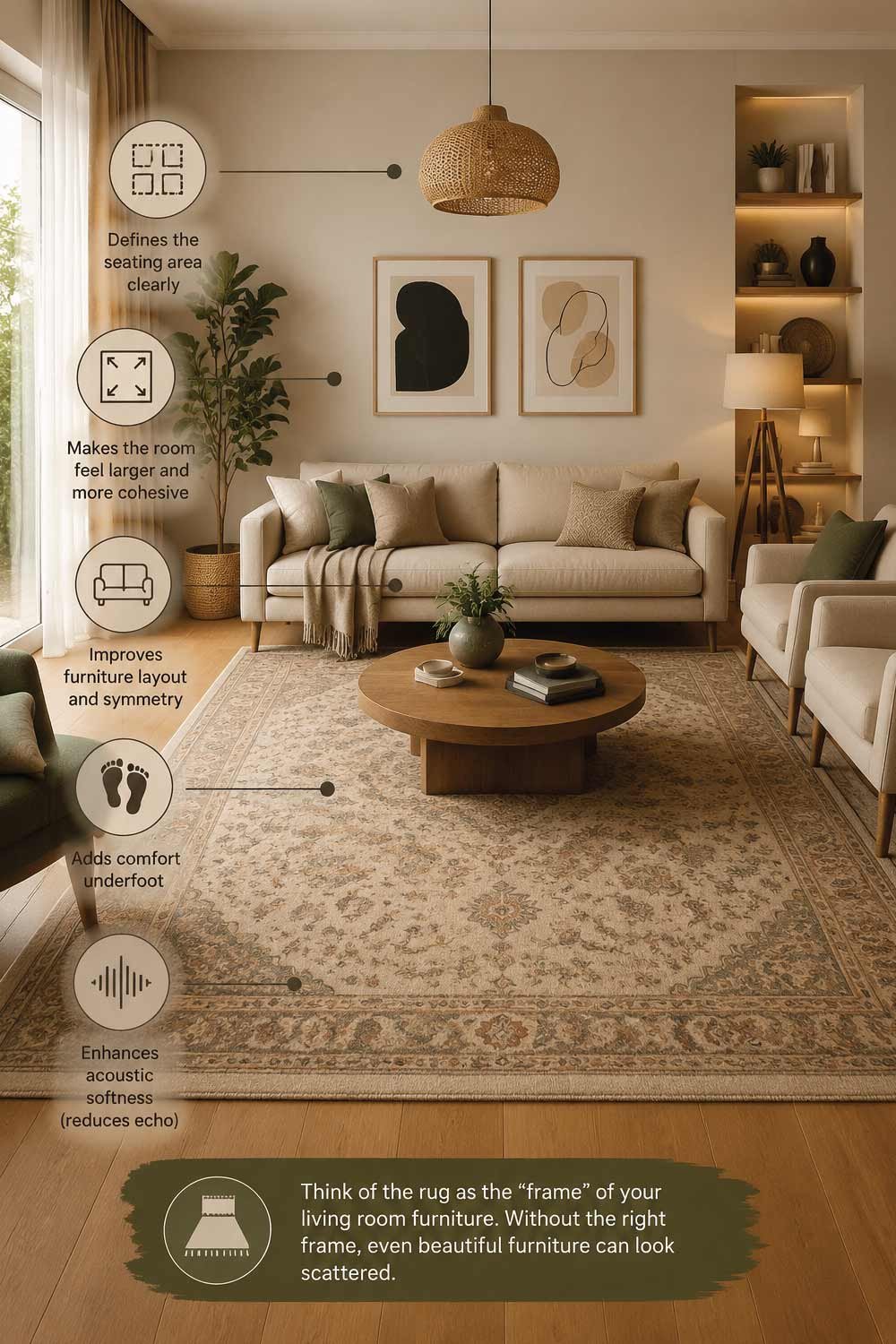
A properly sized rug:
- Defines the seating area clearly
- Makes the room feel larger and more cohesive
- Improves furniture layout and symmetry
- Adds comfort underfoot
- Enhances acoustic softness (reduces echo)
Think of the rug as the “frame” of your living room furniture. Without the right frame, even beautiful furniture can look scattered.
Step 1: Measure Your Living Room and Furniture Layout
Accurate measurements are the foundation of choosing the right rug size. Understanding your living room’s dimensions and how furniture is arranged helps you avoid rugs that feel too small or overpowering. This step ensures your rug complements the layout rather than disrupting it.
Measure:
- Length and width of the living room
- Sofa dimensions
- Distance between furniture pieces
- Walkways and open space around seating
Then, sketch a simple layout. You don’t need professional tools—a rough drawing helps you visualize how much floor space your rug should cover.
A common mistake is choosing a rug based only on room size. In reality, rug size depends more on furniture arrangement than the room itself.
Read More:
19 Best Living Room Chairs Ideas for Modern Homes (2026 Edition)
Step 2: Understand the Three Main Rug Placement Styles
Choosing the right rug size also depends on how you want your furniture to interact with it. Interior designers generally follow three classic rug placement styles, each suited to different room sizes and aesthetics. Understanding these layouts helps you select a rug that enhances balance, comfort, and visual flow.
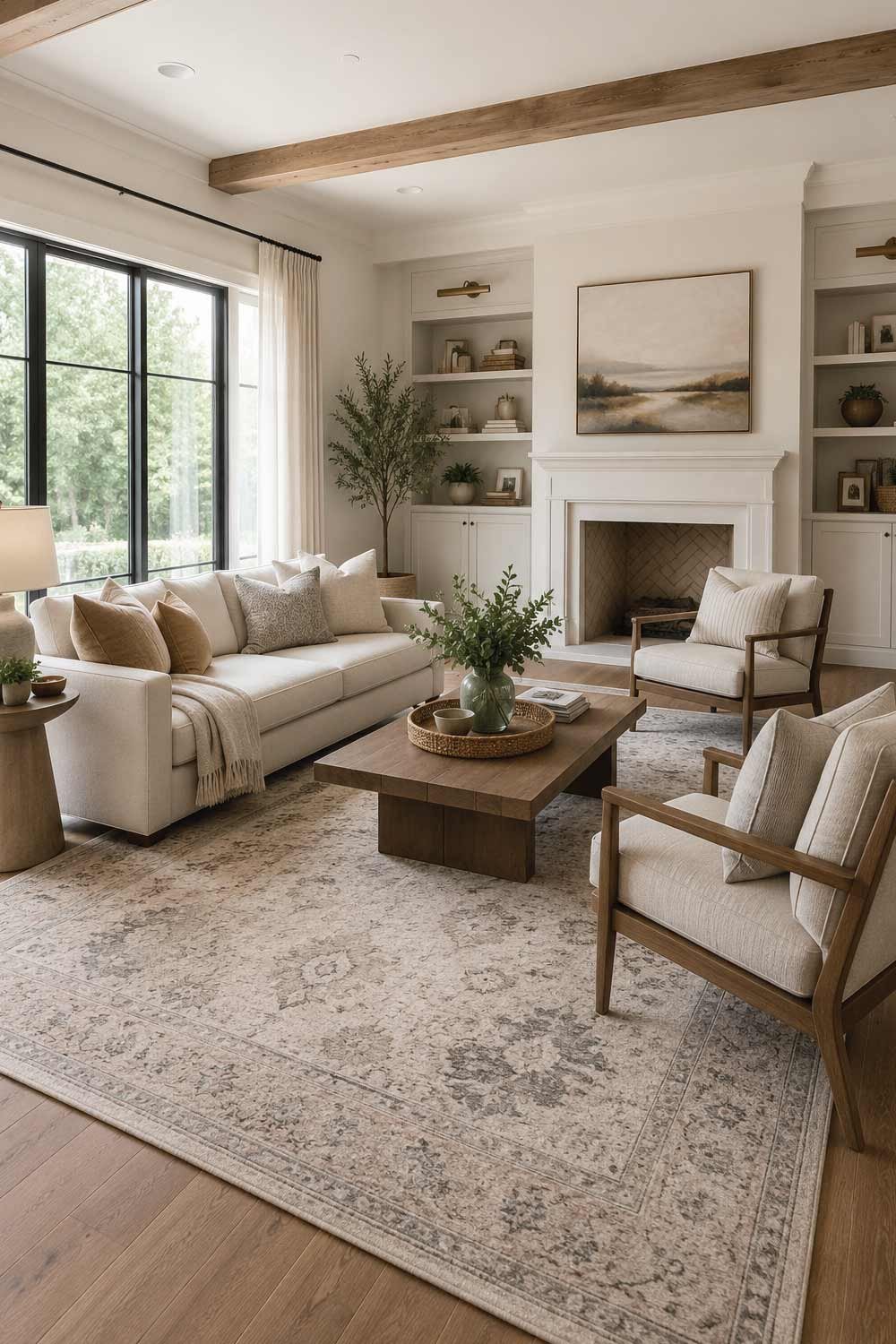
Interior designers typically use three standard rug layouts in living rooms. Each creates a different visual effect.
1. All Furniture Legs on the Rug (Luxury Look)
This placement style creates a strong visual foundation by allowing every major furniture piece to rest fully on the rug. It works especially well when you want the living room to feel intentional, spacious, and polished, giving the entire seating area a unified and upscale appearance.
In this layout, all furniture pieces sit completely on the rug:
- Sofa
- Chairs
- Coffee table
Best for:
- Large living rooms
- Open floor plans
- Formal or luxury spaces
Effect:
Creates a cohesive, grounded, and high-end look.
Recommended rug size:
- 9×12 ft or larger (depending on room size)
This is the most balanced and visually complete option.
2. Front Legs on the Rug (Most Popular Option)
This is the most commonly used rug placement because it balances openness with connection. By placing only the front legs on the rug, the seating area feels anchored without covering too much floor, making it ideal for everyday living and flexible layouts.
Here, only the front legs of sofas and chairs rest on the rug, while the back legs remain off.
Best for:
- Medium-sized living rooms
- Standard homes and apartments
- Most modern interiors
Recommended rug sizes:
- 8×10 ft (most common)
- 6×9 ft (for smaller spaces)
This is the safest and most versatile choice for most homes.
3. Coffee Table Only on the Rug (Small Space Solution)
This layout is designed for compact spaces where floor area is limited. The rug acts as a visual accent rather than a full anchor, helping define the center of the room while keeping the space feeling open and uncluttered.
Only the coffee table sits on the rug, while seating remains outside it.
Best for:
- Small living rooms
- Studio apartments
- Tight layouts
Recommended rug size:
- 5×7 ft or 6×9 ft
While functional, this layout can sometimes feel visually disconnected if not styled carefully.
- Ideal for small rooms or apartments
- Works under coffee table only
- Best for minimal seating arrangements
6×9 ft Rug
- Fits small to medium living rooms
- Works with front legs of furniture on rug
- Common in compact homes
8×10 ft Rug
- Most popular living room size
- Works for standard sofas and seating sets
- Creates balanced, designer-style layout
9×12 ft Rug
- Ideal for large living rooms
- Allows full furniture placement
- Creates a luxurious, unified look
10×14 ft Rug (Extra Large Spaces)
- Best for open floor plans
- Anchors multiple seating zones
- Used in high-end or spacious interiors
Read More:
Step 4: The 18–24 Inch Rule (Designer Secret)
Designers often rely on a simple proportion guideline to keep living rooms visually balanced. Matching rug width to sofa length prevents furniture from looking cramped or disconnected. This rule helps anchor the seating area properly and ensures the rug feels intentional rather than undersized.
A rug should extend 18–24 inches beyond the sofa on each side.
This ensures:
- Proper proportional balance
- Enough space for visual grounding
- Furniture doesn’t look like it’s floating
If your rug is too narrow compared to your sofa, the room will feel visually “cut off.”
Step 5: Leave a Border Around the Room
Leaving visible flooring around your rug is essential for creating breathing room in your layout. This negative space helps frame the rug, defines boundaries, and keeps the room from feeling overcrowded. The right border size improves flow and overall spatial clarity.
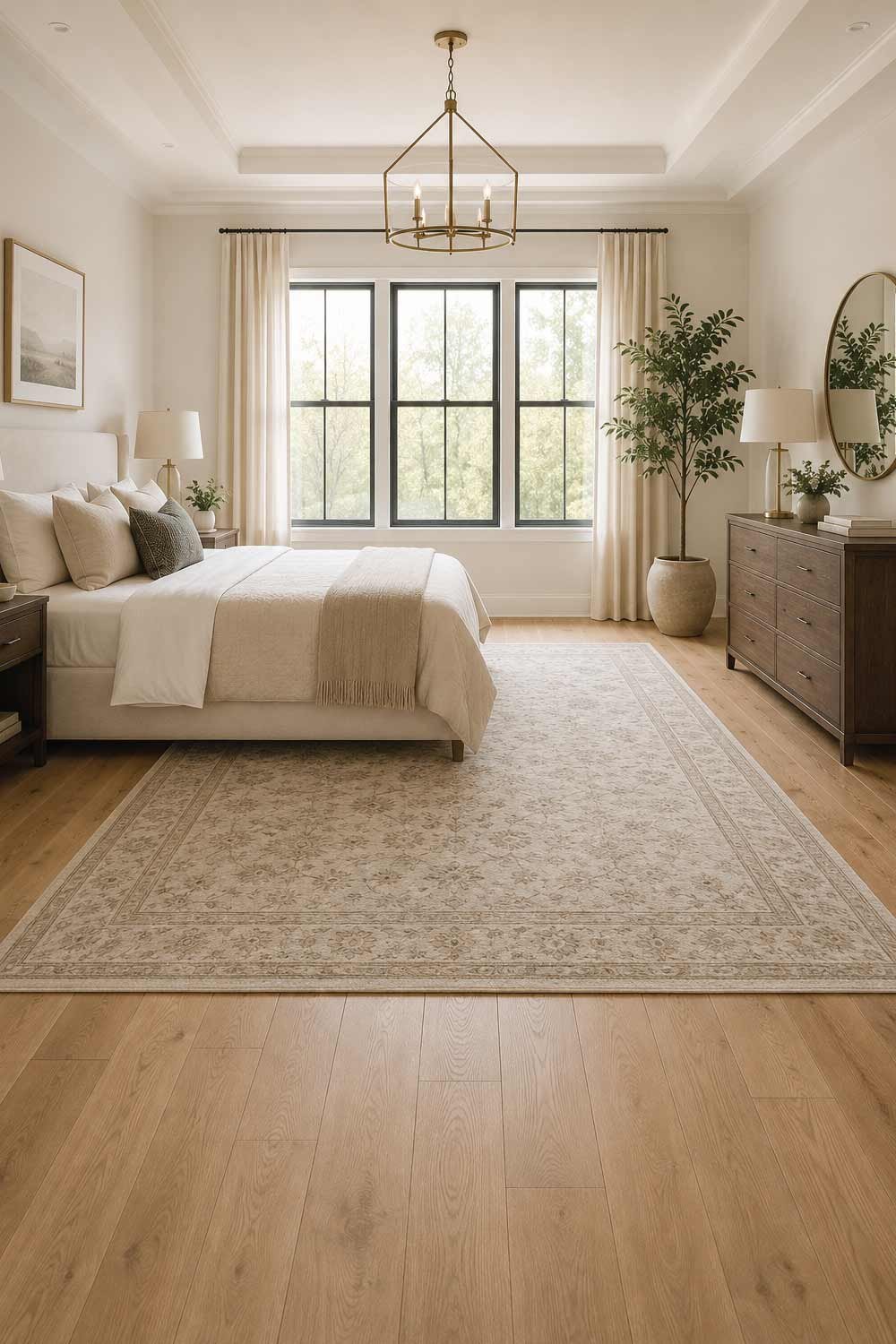
Aim for:
- 12–18 inches of bare floor around the rug edges in most rooms
This border:
- Frames the rug like artwork
- Prevents the room from feeling cramped
- Improves spatial flow
In smaller rooms, you can reduce this to about 8–12 inches, but avoid letting the rug touch the walls unless you’re intentionally creating a wall-to-wall carpet effect.
Step 6: Match Rug Shape with Room Layout
Beyond size, rug shape strongly influences how harmonious your living room feels. Choosing a shape that complements the room’s proportions and furniture arrangement enhances flow and balance. The right shape can soften harsh lines, highlight symmetry, or define zones more effectively.
Rectangular Rugs
Rectangular rugs are the most versatile and widely used option in living room design. Their shape naturally aligns with sofas, media units, and linear furniture layouts, making them easy to style. They help define seating areas clearly while maintaining balance in standard rectangular rooms.
- Most common choice
- Best for standard living rooms
- Works with sofas and TV setups
Square Rugs
Square rugs work best in rooms where length and width are nearly equal. They emphasize symmetry and create a sense of order, especially when furniture is arranged evenly. This shape is ideal for creating a centered, harmonious seating area without visual elongation.
- Best for square rooms
- Works with symmetrical seating layouts
Round Rugs
Round rugs are excellent for softening the overall look of a space. They introduce curves that break up sharp furniture lines and add visual interest. This shape works particularly well in compact seating areas or rooms that need a lighter, more fluid feel.
- Great for small seating corners
- Softens sharp furniture lines
- Works well under circular coffee tables
Layered Rugs
Layered rugs add character and depth by combining textures, patterns, and sizes. This approach allows you to anchor the room with a large neutral base while highlighting style with a smaller accent rug. It’s a popular technique in contemporary and curated interiors.
- Combines a large neutral rug with a smaller decorative rug
- Adds depth and texture
- Popular in modern interior design
Read More:
17 Apartment Living Room Design Ideas for Stylish Small Spaces
Step 7: Consider Furniture Spacing and Flow
A well-sized rug should support natural movement throughout the living room, not interrupt it. Proper placement ensures comfort, functionality, and visual ease. When spacing is planned correctly, the rug enhances flow and helps the seating area feel inviting rather than restrictive.
Make sure:
- Coffee tables are centered on the rug
- Walking paths are not covered by thick rug edges
- Chairs can move without catching on rug corners
A good living room layout allows people to walk comfortably without stepping off and on the rug awkwardly.
Step 8: Common Rug Size Mistakes to Avoid
Even stylish rooms can feel unbalanced due to simple rug-sizing errors. Being aware of these common mistakes helps you avoid layouts that feel awkward or incomplete. Correct sizing and placement make a noticeable difference in how cohesive and polished your living room appears.
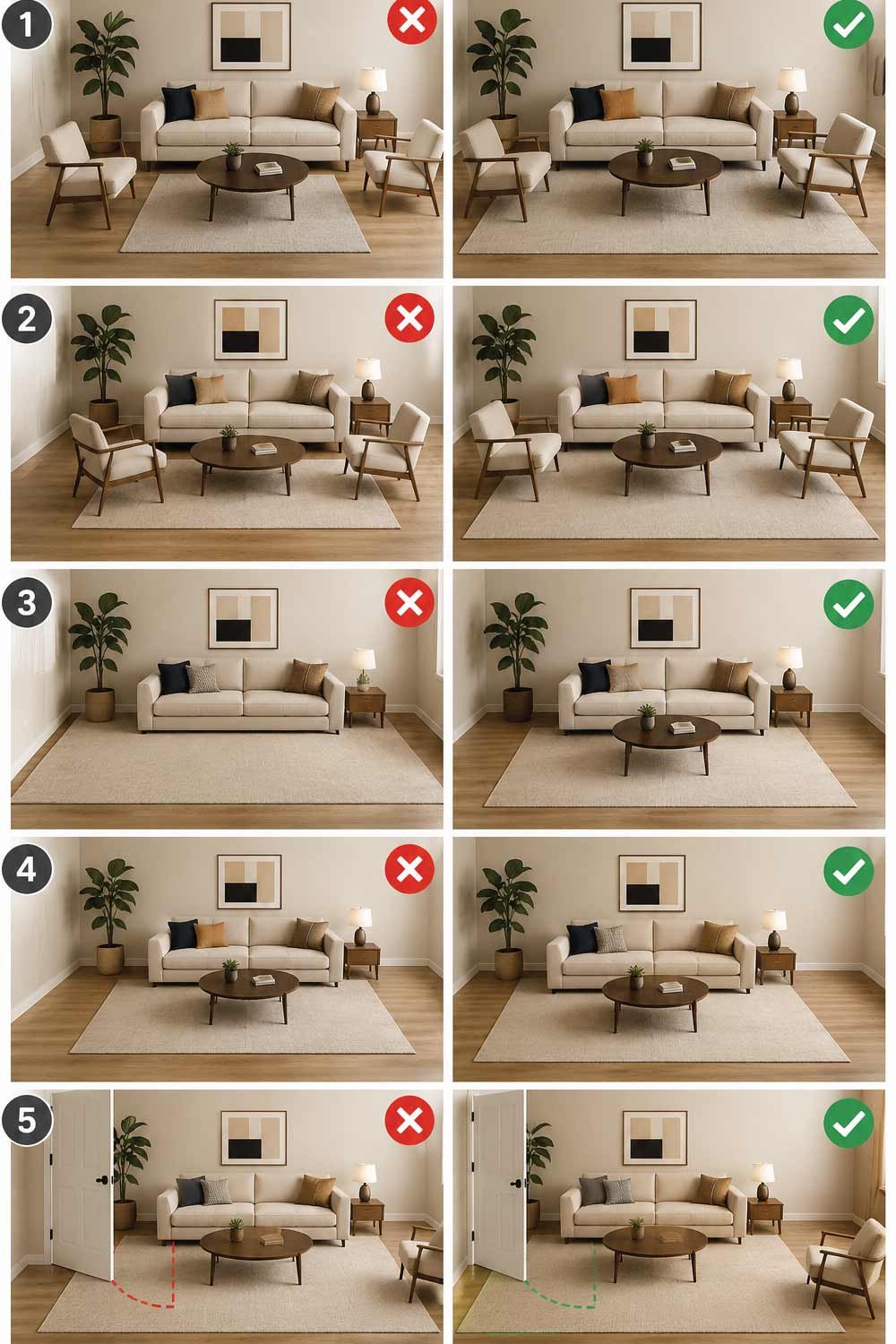
1. Rug Too Small
This is the most common mistake in living room styling. When a rug is undersized, it fails to anchor the furniture properly, making sofas, chairs, and tables appear disconnected. The space can feel unfinished, and the overall design loses its sense of balance and stability.
This is the most common mistake. A small rug makes furniture feel disconnected and floating.
2. Ignoring Furniture Placement
Rug selection should always be based on how furniture is arranged, not just room dimensions. Ignoring layout often results in awkward spacing, uneven proportions, and a lack of visual harmony between seating elements, which disrupts the overall design flow.
Choosing a rug without considering sofas and chairs leads to imbalance.
3. Pushing Rugs Against Walls
Placing a rug directly against the walls eliminates important negative space in the room. This reduces visual breathing room and can make the living area feel tight, crowded, and less intentional in its design.
This removes visual breathing space and makes the room feel boxed in.
4. Not Centering the Rug
Even if the rug is the correct size, poor alignment can ruin the look. An off-center rug throws off the symmetry of the entire seating area and makes the furniture arrangement feel uneven or accidental rather than designed.
Even a properly sized rug can look wrong if it’s off-center.
5. Forgetting Door Clearance
Functionality is just as important as style. If a rug blocks or interferes with door movement, it creates everyday inconvenience and can also lead to damage over time. Always account for door swing and clearance space.
Always ensure doors can open over or near the rug without catching.
Read More:
16 Gray Living Room Design Ideas for a Modern & Elegant Home
Step 9: Quick Rug Size Formula
If you prefer a straightforward approach, this simple formula removes guesswork. By focusing on the seating area rather than the entire room, you can quickly narrow down the right size and avoid common mistakes that come from choosing too small.
- Measure your seating area (not entire room)
- Add at least 24–36 inches of rug space beyond furniture edges
- Choose the nearest standard rug size up, not down
When in doubt, always go slightly larger. A bigger rug almost always looks better than a smaller one.
Step 10: Final Styling Tips for a Balanced Look
Once you’ve selected the correct rug size, the finishing touches make a big difference in how polished and intentional your living room feels. These small styling choices help tie the entire space together, improve comfort, and create a more professionally designed appearance.
- Center the rug with the main sofa or TV wall
- Use a rug pad to prevent slipping and add comfort
- Match rug tones with cushions or curtains for cohesion
- Layer textures (rug + wood + fabric) for depth
- Rotate rugs occasionally to balance wear
These details help your rug feel like an intentional design feature rather than just floor covering.
Final Thoughts
Choosing the right rug size for your living room is less about strict rules and more about proportion and balance. When your rug properly anchors your furniture, defines your space, and leaves enough breathing room around the edges, your entire living room instantly feels more polished and thoughtfully designed.
The key takeaway is simple: your rug should be large enough to connect your furniture, not just sit under it.
Once you understand this principle, selecting the right size becomes much easier and your living room will look more cohesive, spacious, and professionally styled.
