
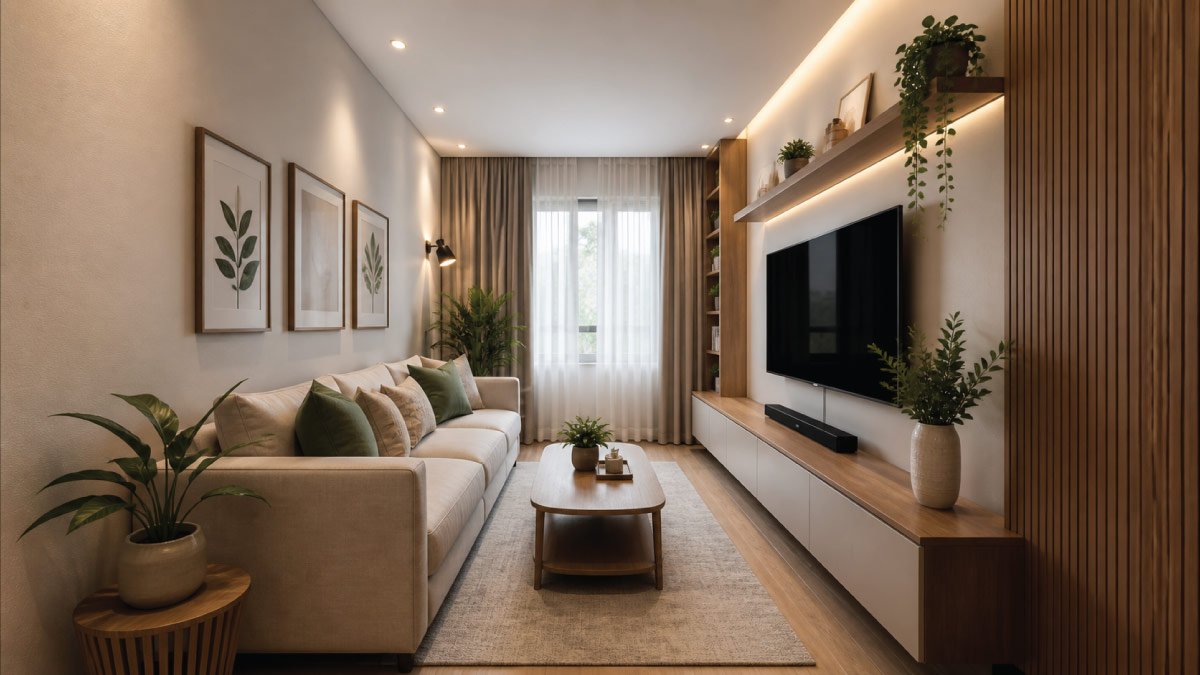
A narrow living room can feel restrictive, awkward, and difficult to decorate but it does not have to stay that way. With the right layout strategies, color choices, and furniture decisions, you can transform even the tightest space into something functional, stylish, and comfortable. Below is a detailed, practical guide to help you fix a narrow living room and make it feel more open and inviting.
Understanding the Challenges of a Narrow Living Room
Before jumping into solutions, it’s important to understand why narrow rooms feel difficult. These spaces often create design challenges that affect comfort, movement, and aesthetics, making them feel less functional than wider rooms. Recognizing these issues helps in planning effective solutions that improve balance, usability, and overall visual appeal of the space.
- Limited width makes furniture placement tricky
- Can feel like a hallway rather than a living space
- Visual imbalance (too long vs too tight)
- Hard to create conversation areas
- Often lacks natural flow
The goal is to balance proportions, improve flow, and visually widen the space.
Smart Layout Strategies
The layout is the foundation of fixing a narrow living room because it determines how space is experienced and used. A well-planned arrangement can instantly reduce the tunnel effect, improve movement, and create functional zones. Thoughtful positioning of furniture helps balance proportions and makes the room feel more open and comfortable.
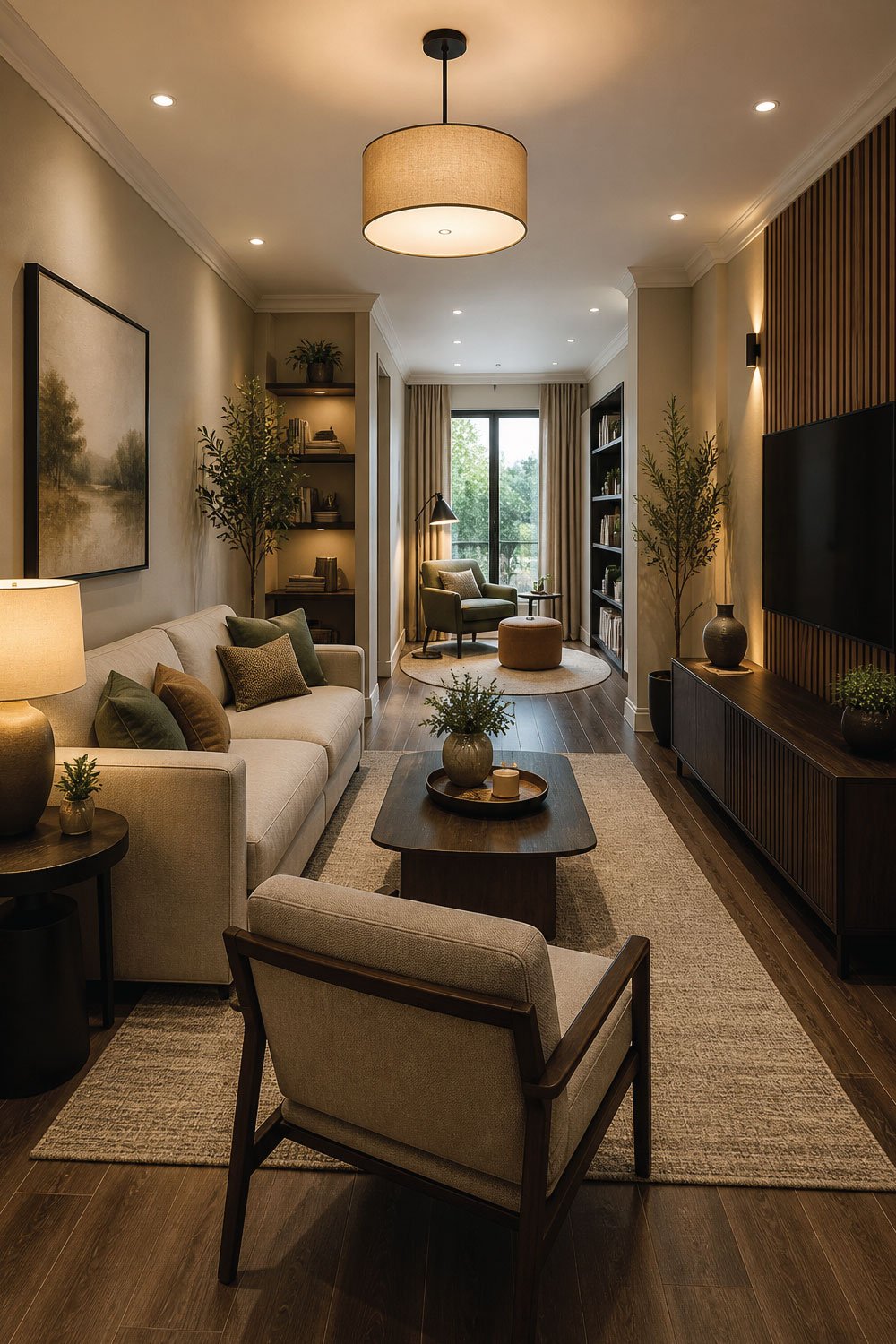
Float your furniture
- Avoid pushing everything against the walls
- Pull the sofa slightly inward to create breathing space
- This makes the room feel wider, not tighter
Create zones
- Divide the room into functional areas (e.g., seating + reading corner)
- Use rugs or lighting to define zones
Use a central focal point
- TV wall, fireplace, or artwork
- Arrange seating around it to avoid the “corridor” effect
Try a perpendicular layout
- Place furniture across the width instead of along the length
- Breaks the tunnel-like appearance
Keep pathways clear
- Ensure at least 2–3 feet of walking space
- Avoid blocking movement from one end to another
Furniture Selection Tips
Choosing the right furniture makes a huge difference in a narrow living room because every piece affects space perception and functionality. Selecting appropriately scaled items helps prevent overcrowding while improving flow and comfort. Smart furniture choices can visually widen the room, enhance usability, and maintain a clean, balanced, and inviting interior.
Go for slim-profile furniture
- Avoid bulky sofas and oversized armchairs
- Choose pieces with exposed legs to create openness
Use multi functional pieces
- Storage ottomans
- Foldable tables
- Sofa beds
Opt for armless or lowarm sofas
- Makes the room feel less crowded
Choose narrow coffee tables
- Rectangular or oval shapes work best
- Avoid chunky square tables
Wall-mounted furniture
- Floating shelves instead of bookcases
- Wall-mounted TV to save floor space
Color and Paint Techniques
Color has a strong psychological and visual impact on how spacious a narrow living room feels. The right paint choices can instantly open up the space, reduce the tunnel effect, and create better balance between long and short walls. Using thoughtful color placement helps enhance brightness, depth, and overall harmony in the room.
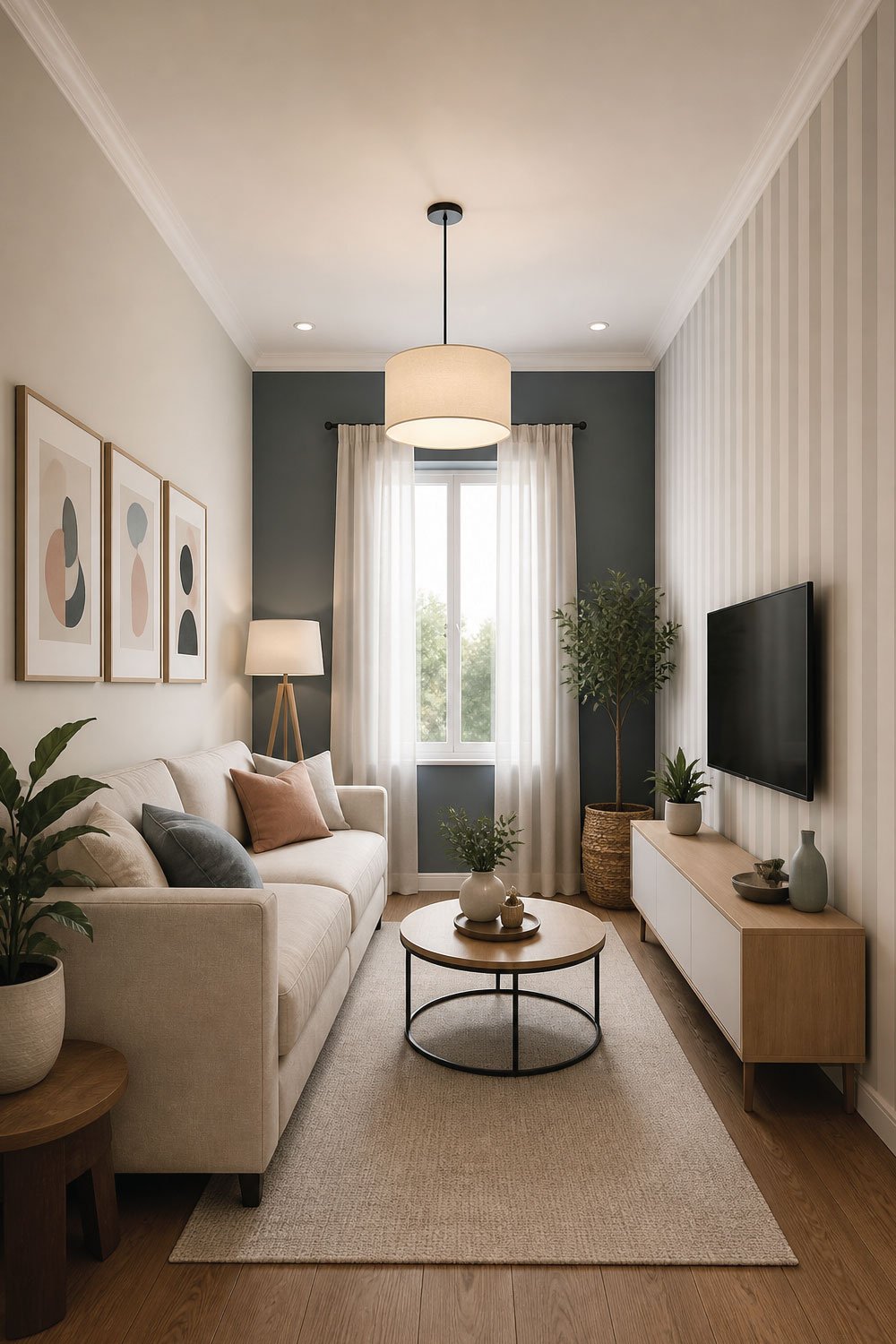
Use light and neutral colors
- Whites, creams, soft greys, pastels
- Reflect light and make the room feel bigger
Paint the long walls lighter
- Helps visually widen the space
Use darker shades on short walls
- Creates the illusion of balance
Vertical stripes for height
- Makes ceilings appear taller
Avoid heavy contrast
- Keeps the space calm and cohesive
Lighting Tricks to Open Up the Space
Lighting plays a major role in transforming a narrow room by influencing depth perception and mood. A well-layered lighting plan eliminates shadows, reduces tightness, and enhances openness. Instead of relying on a single light source, combining multiple lighting types helps distribute brightness evenly and makes the space feel larger and more inviting.
Layer your lighting
- Combine ceiling lights, floor lamps, and table lamps
Use wall sconces
- Saves floor space
- Adds soft, ambient lighting
Avoid a single central light
- Creates uneven lighting and emphasizes narrowness
Add mirrors near light sources
- Reflect light and double the sense of space
Use warm lighting
- Makes the room feel cozy instead of cramped
Mirror and Reflection Hacks
Mirrors are one of the most effective design tools for visually expanding a narrow living room. They work by reflecting light and surroundings, creating an illusion of depth and width. When placed strategically, mirrors can instantly make the space feel brighter, more open, and more balanced without any structural changes.
Place a large mirror on one long wall
- Creates the illusion of width
Use mirrored furniture
- Reflects light subtly
Position mirrors across from windows
- Amplifies natural light
Create a gallery mirror wall
- Adds personality and depth
Also Read This Latest Article:
Flooring and Rug Placement
Flooring and rugs strongly influence how wide or narrow a living room feels. Since the floor is one of the largest visual surfaces, its patterns, size, and placement can reshape perception of space. Thoughtful rug choices help break the tunnel effect, improve balance, and create a more open and proportionate look.
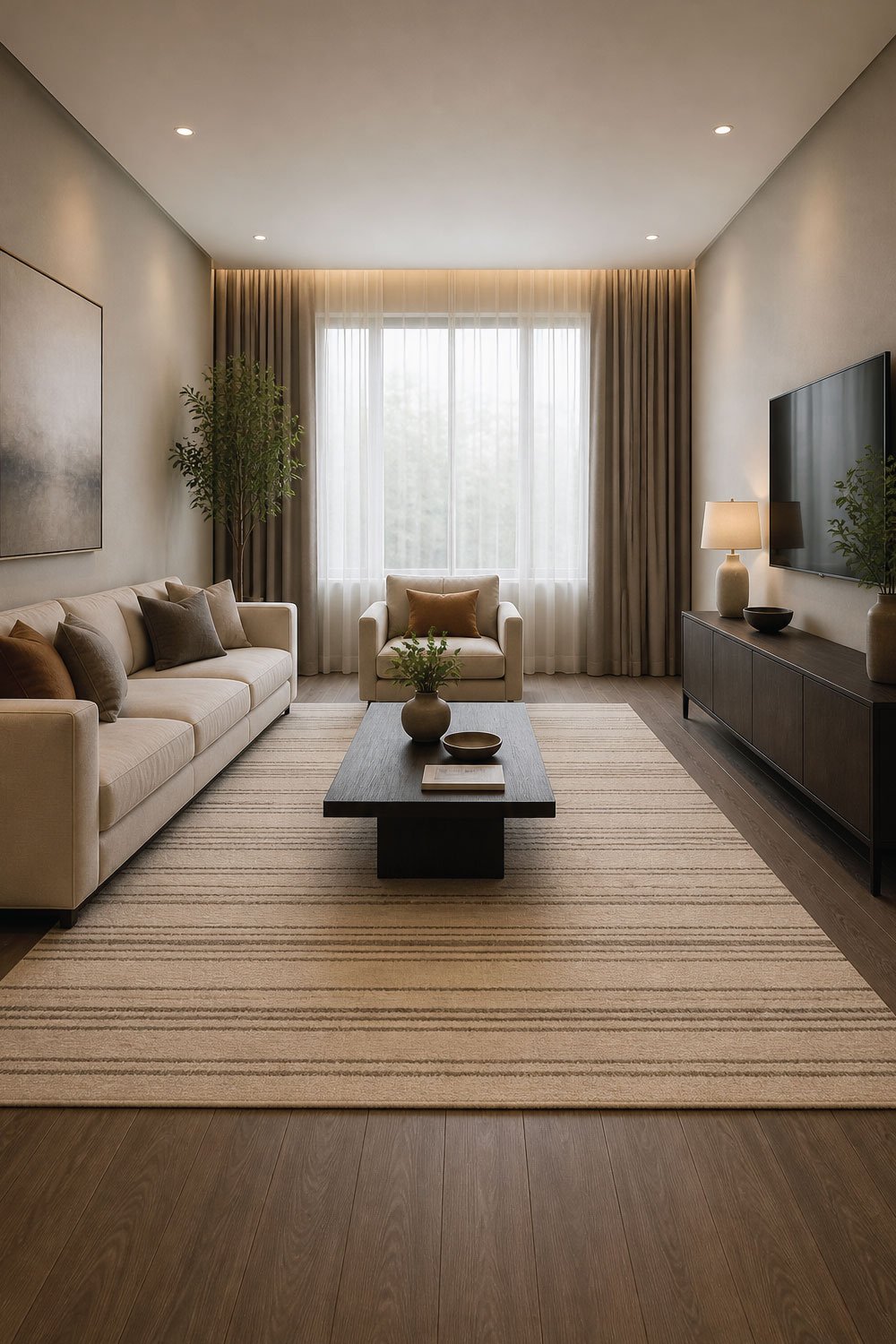
Use horizontal rug patterns
- Makes the room appear wider
Choose large rugs
- Small rugs emphasize narrowness
Lay rugs across the width
- Breaks the long, tunnel-like feel
Avoid busy patterns
- Keeps the space visually calm
Wall Decor and Storage Solutions
Walls play a key role in optimizing narrow living rooms because they offer vertical space that doesn’t interfere with floor movement. Smart wall use helps reduce clutter, improve organization, and visually expand the room. Properly placed décor and storage can shift attention away from narrowness and add structure to the space.
Use vertical storage
- Tall shelves instead of wide cabinets
Hang art strategically
- Place artwork at eye level
- Avoid cluttering walls
Create a feature wall
- One bold wall draws attention away from narrowness
Use floating shelves
- Keeps floor area open
Install built in storage
- Maximizes space without adding bulk
Window Treatment Ideas
Window treatments greatly affect how open or closed a narrow living room feels. The right choices can enhance natural light, improve height perception, and visually expand wall width. Light and well-positioned curtains help create an airy, balanced atmosphere, while heavy or poorly placed drapes can make the space feel tighter.
Use light, airy curtains
- Sheer fabrics work best
Hang curtains higher than the window
- Makes ceilings feel taller
Extend curtain rods beyond window width
- Makes windows appear larger
Avoid heavy drapes
- They visually shrink the room
Also Read This Latest Article:
Decluttering and Minimalism
Clutter is one of the biggest reasons a narrow living room feels even smaller and more cramped. A minimalist approach helps create breathing space, improves movement, and makes the room feel more open and organized. By focusing on essentials and smart storage, you can maintain both function and visual clarity.
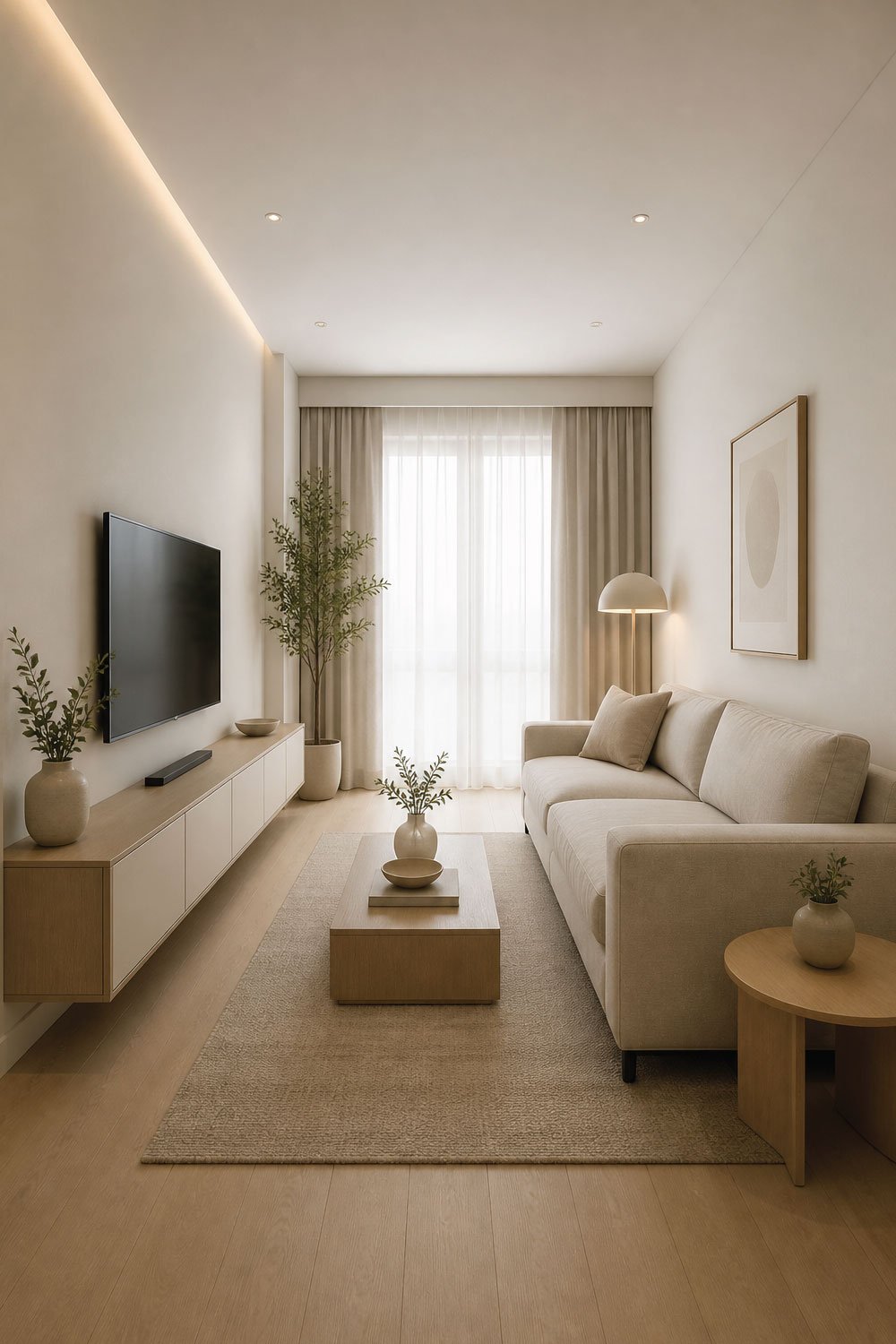
Adopt a “less is more” approach
- Keep only essential furniture
Use hidden storage
- Baskets, ottomans, cabinets
Limit decor items
- Choose a few statement pieces
Keep surfaces clean
- Avoid overcrowding tables and shelves
Styling Tips for a Balanced Look
Styling is what ties the entire design together after layout and furniture decisions. In a narrow living room, the goal is to create visual balance and harmony without adding clutter. Thoughtful styling enhances depth, improves flow, and makes the space feel more intentional and comfortable.
Use symmetry where possible
- Balanced layouts feel less chaotic
Add plants
- Small indoor plants bring life without taking much space
Use consistent color palette
- Creates visual harmony
Mix textures instead of colors
- Adds interest without clutter
Incorporate vertical elements
- Tall lamps, artwork, shelves
Also Read This Latest Article:
Common Mistakes to Avoid
Even well-designed narrow living rooms can feel cramped if common mistakes are made. Avoiding these issues helps maintain openness, improves flow, and ensures the space feels functional and visually balanced. Small adjustments can make a major difference in how spacious the room appears.
- Pushing all furniture against walls
- Using oversized or bulky furniture
- Ignoring lighting layers
- Over-decorating the space
- Using too many dark colors
- Blocking natural light
- Choosing tiny rugs
Budget Friendly Fixes
Improving a narrow living room doesn’t always require expensive renovations. Small, low-cost changes can dramatically improve space perception, brightness, and comfort. By reworking what you already have and adding a few affordable upgrades, you can make the room feel more open and stylish without overspending.
- Rearrange existing furniture
- Add a large mirror
- Change cushion covers and curtains
- Use peel and stick wallpaper for an accent wall
- Add affordable lighting like floor lamps
- Declutter and reorganize
Final Thoughts
Fixing a narrow living room is all about creating balance, improving flow, and using visual tricks to your advantage. By carefully choosing furniture, optimizing layout, and using light, color, and mirrors effectively, you can turn a tight, awkward room into a space that feels open, comfortable, and stylish.
Also Read This Latest Article:
How to Decorate a Small Living Room: Smart Ideas for Stylish, Functional Spaces

I am Engineer Hassan, a professional engineer with over 15 years of experience in measurements, design accuracy, and furniture, appliance, and home product sizing. Through Size Helper, I provide research-based guides and trending 2026 home design ideas for living rooms, bedrooms, sofas, wall décor, fashion, and sports—helping users make confident, informed decisions. Every guide is written with real expertise, verified data, and a commitment to quality, usability, and style.