
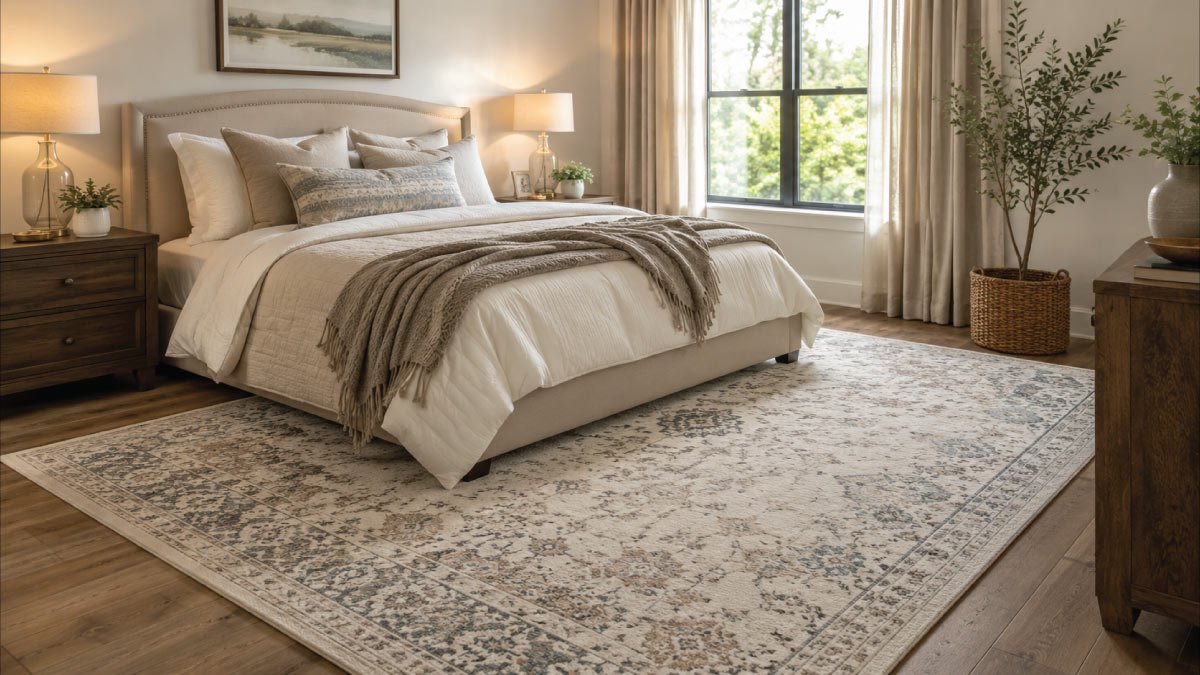
Bedrooms are personal sanctuaries spaces where you relax, recharge, and begin and end each day. One often-overlooked element that can transform a bedroom’s look and feel is an area rug. The right rug can add warmth, softness, color, pattern, and style to a room while tying together furniture and décor. But with endless sizes, materials, colors, and price points, choosing the right area rug for your bedroom can feel overwhelming.
This guide breaks down everything you need to know so you can pick the perfect rug for your bedroom one that looks great, feels comfortable underfoot, and fits your lifestyle and budget.
Why an Area Rug Matters in a Bedroom
Before choosing a rug, it helps to understand why one matters:
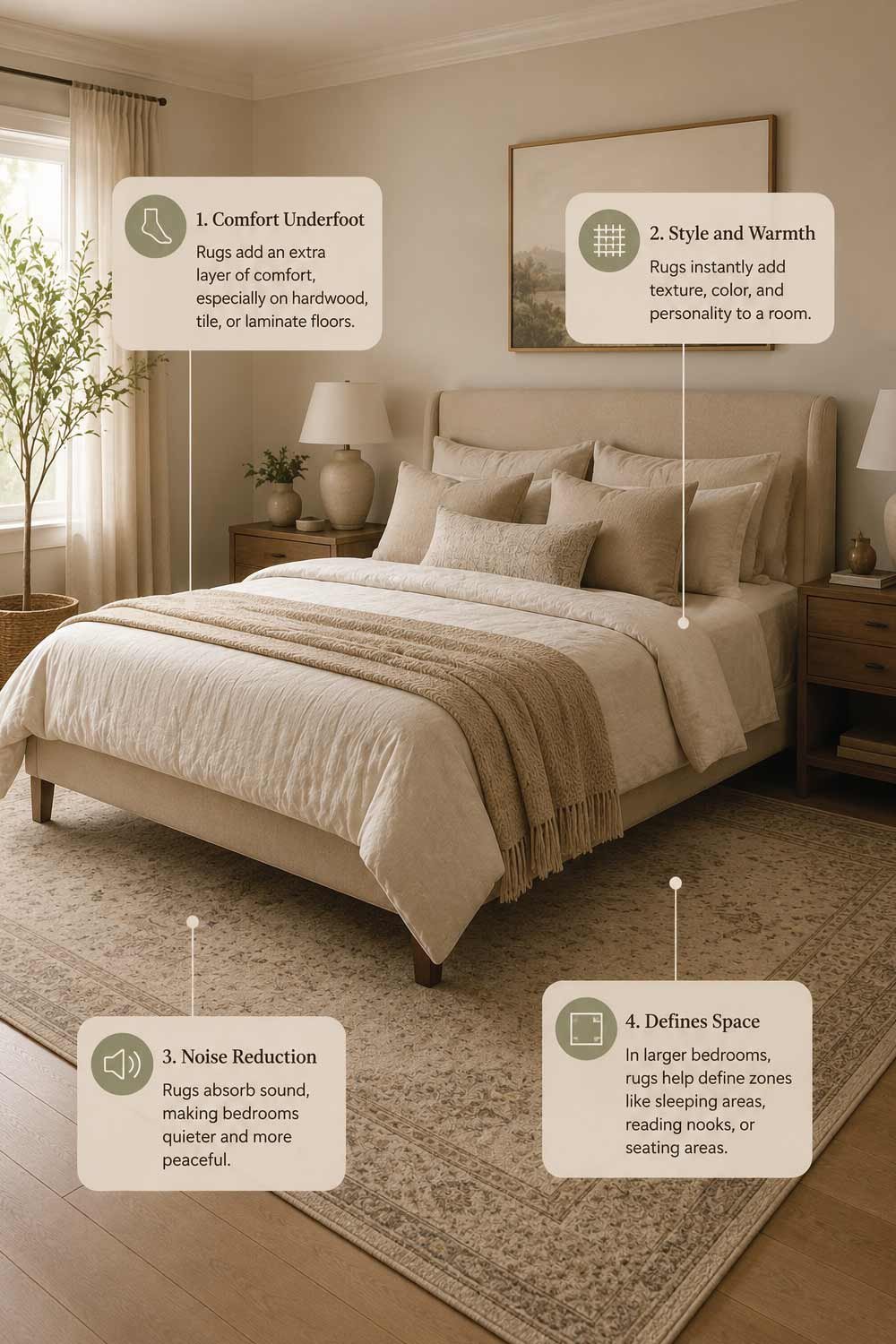
1. Comfort Underfoot
Stepping onto a soft rug first thing in the morning feels amazing and immediately makes the bedroom feel more welcoming and cozy. Rugs add an extra layer of cushioning and support underfoot, especially on hardwood, tile, or laminate floors, helping reduce strain on feet and creating a warmer, more comfortable waking experience.
- Stepping onto a soft rug first thing in the morning feels amazing. Rugs add an extra layer of comfort, especially on hardwood, tile, or laminate floors.
2. Style and Warmth
Rugs instantly add texture, color, and personality to a room, transforming the overall look with minimal effort and cost. They can make a neutral bedroom feel cozy and inviting or help anchor a bold décor theme by balancing patterns, tying together furniture, and enhancing the visual warmth of the entire space.
- Rugs instantly add texture, color, and personality to a room. They can make a neutral bedroom feel cozy or anchor a bold décor theme.
3. Noise Reduction
Rugs absorb sound effectively, reducing echo and background noise so bedrooms feel quieter, calmer, and more peaceful throughout the day and night. This benefit is especially helpful in apartments, shared homes, or upstairs rooms where footsteps and external sounds can easily travel, creating a more restful and private sleeping environment overall.
- Rugs absorb sound, making bedrooms quieter and more peaceful—especially helpful in apartments or upstairs rooms.
4. Defines Space
In larger bedrooms, rugs help define distinct functional zones such as sleeping areas, reading nooks, or seating areas, making the space feel more organized and intentionally designed. They visually separate different parts of the room without walls, improving layout flow while adding comfort, structure, and a more cohesive interior design.
- In larger bedrooms, rugs help define zones like sleeping areas, reading nooks, or seating areas.
Step 1: Start with the Right Size
Picking the perfect rug size is the single most important step in choosing a rug that looks intentional rather than awkward, because proportions directly affect how balanced and grounded the entire bedroom feels. A well-sized rug visually anchors the bed, improves flow, and ensures the space feels thoughtfully designed instead of mismatched or floating.
Here are the most popular bedroom rug sizes and how to use them:
1. 5′ x 8′ Rug Small Bedrooms or Floating Rugs
This size is best suited for smaller bedrooms where every inch of floor space matters, yet you still want to introduce softness and definition under the bed area. It works especially well in compact layouts, helping add comfort and style without overwhelming the room or making it feel crowded or visually heavy.
Ideal for:
- Twin bedrooms
- Placing under the lower two-thirds of the bed
- Rooms with limited floor space
Tip: This size should extend at least halfway under the bed, or else it can look too small.
2. 8′ x 10′ Rug Standard Choice
This is the most popular and versatile rug size, commonly chosen for queen- and full-size beds because it offers the most balanced proportions for average bedrooms. It creates a clean, grounded look that enhances symmetry, improves visual flow, and adds a subtle sense of luxury without dominating the room.
Placement:
- Center the rug under the bed
- Leave equal spacing on both sides
- It should extend roughly 18–24 inches beyond the bed at the sides and foot
This creates a balanced and luxurious look.
3. 9′ x 12′ Rug Larger Rooms / King Beds
This size is ideal for spacious master bedrooms where a more expansive and cohesive look is needed to properly ground large furniture. It helps unify the bed, nightstands, and surrounding space, ensuring everything feels proportionate, well-anchored, and visually connected for a more high-end interior feel.
Placement:
- Position the rug so that all furniture legs (bed, nightstands) sit partially on the rug
- Ensures the rug doesn’t look too small in proportion to the room
4. Runner + Accent Rug Combos
This layered approach works especially well in large bedrooms where a single rug may not be enough to define movement and comfort zones effectively. It adds dimension, texture, and practicality by extending softness beyond the bed while enhancing visual interest throughout the walking paths of the room.
- A large main rug under the bed
- Smaller runners along the sides
This layered approach adds visual depth and comfort around the bed perimeter.
Read Further:
Step 2: Choose a Layout
Once you’ve selected the right rug size, the next step is deciding how it sits within the room. The layout affects how balanced, intentional, and visually connected your bedroom feels. A well-planned rug placement ties furniture together, improves flow, and ensures the space doesn’t feel disjointed or randomly arranged.
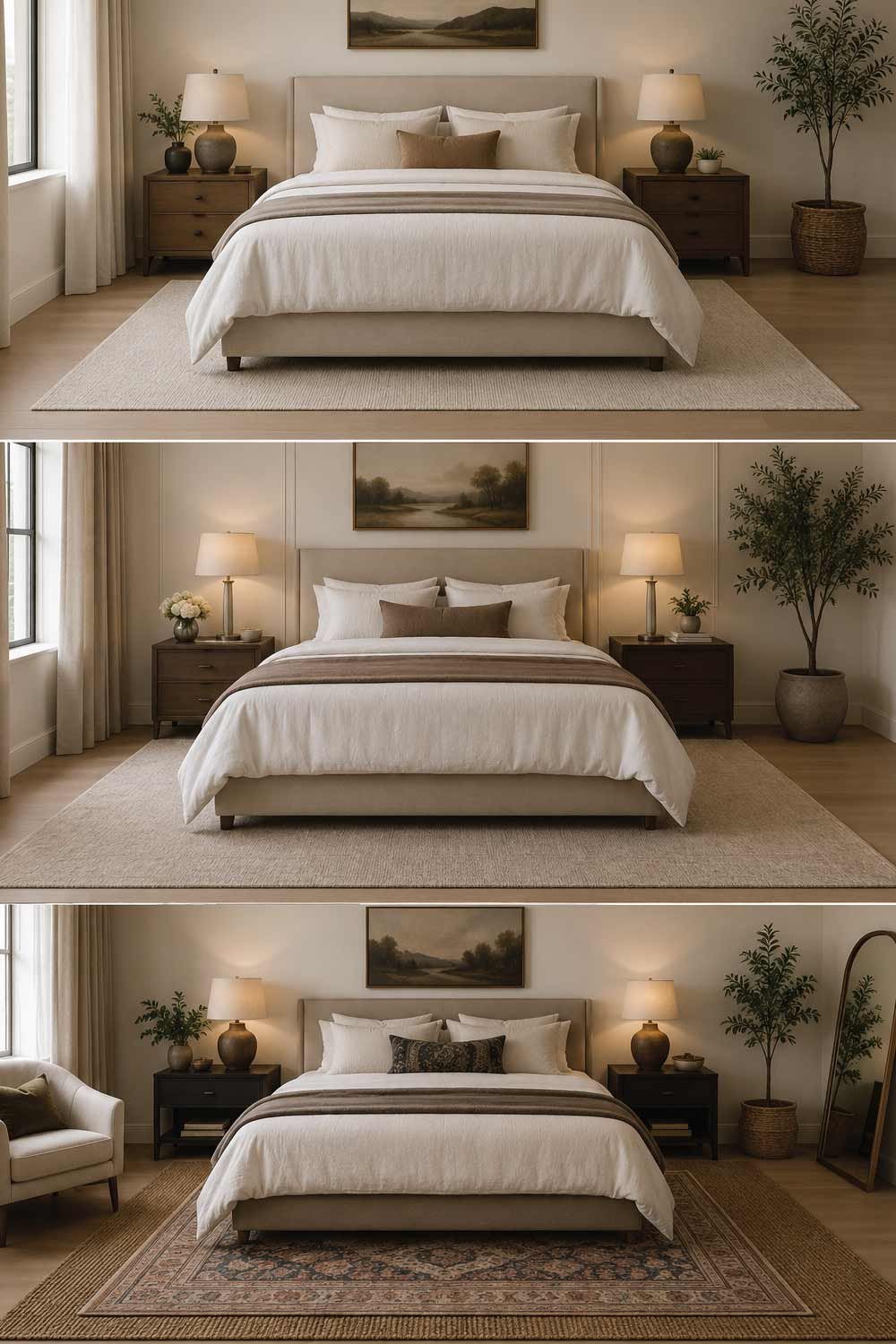
Option A: Rug Under the Bed Only
This is the simplest and most classic layout, where the rug is placed primarily beneath the bed without extending to additional furniture. It works especially well in smaller or narrower rooms where you want to keep the floor plan clean, open, and visually uncluttered while still adding warmth and comfort.
Perfect when:
- You want a simple, classic look
- Room is narrow
Option B: Rug Under Bed + Nightstands
This layout creates a more complete and unified design by extending the rug beneath both the bed and nightstands, helping anchor all key furniture pieces together. It works well in medium to large bedrooms where you want a polished, hotel-like feel with strong visual cohesion and a well-structured floor plan.
Works well when:
- You want a cohesive floor plan
- Rug extends under both the bed and nightstands
Option C: Layered Rugs
Layering rugs is a more design-forward approach that adds depth, texture, and personality to the bedroom by combining different sizes or styles. Typically, a large neutral base rug is paired with a smaller patterned or textured rug, creating contrast while still maintaining balance and visual harmony.
- Mix a large neutral rug with a smaller patterned or textured rug for contrast and interest.
Step 3: Pick the Right Material
Choosing the right rug material is just as important as size and placement because it directly affects comfort, durability, maintenance, and overall feel. The right fabric can make your bedroom feel softer and more inviting, while also ensuring the rug lasts longer and suits your lifestyle needs.
1. Wool Soft, Durable, Timeless
Wool is one of the most premium and reliable rug materials, known for its natural softness and long-lasting durability. It has a slightly plush feel underfoot and naturally resists stains and dirt, making it both practical and luxurious. It also maintains its appearance well over time, even in regularly used bedrooms.
- Naturally stain-resistant
- Cozy underfoot
- Great for high-traffic areas
Best for: Bedrooms with kids or pets
2. Cotton Lightweight & Easy to Clean
Cotton rugs are a flexible and budget-friendly option that works well in casual bedroom settings. They are typically lighter, easier to move, and often available in washable designs, making them convenient for regular cleaning. However, they may not feel as thick or long-lasting as more premium materials.
- Budget-friendly
- Washable options available
Consider: It’s less plush than wool and may wear faster.
3. Synthetic Fibers (Polypropylene, Polyester, Nylon)
Synthetic rugs are designed for practicality, offering strong resistance to stains, moisture, and everyday wear. They are widely used in modern homes because they combine affordability with low maintenance, making them ideal for busy households or anyone who wants an easy-care bedroom rug.
- Very stain-resistant
- Often more affordable
- Easy to spot-clean
Best for:
Busy households
4. Natural Fibers (Jute, Sisal, Seagrass)
Natural fiber rugs bring an earthy, organic feel to the bedroom and are appreciated for their eco-friendly qualities and textured appearance. They add visual depth and a relaxed aesthetic, but their coarser surface means they are not as soft underfoot, especially when walking barefoot.
- Eco-friendly
- Adds texture
Note: They tend to be rougher and not ideal where you’ll walk barefoot.
Read Further:
Step 4: Think About Texture
Texture plays a major role in how a rug feels underfoot and how the entire bedroom atmosphere comes together. It can make the space feel cozy, modern, relaxed, or more decorative, depending on the pile and surface finish. Choosing the right texture helps balance comfort with practicality and sets the overall mood of the room.
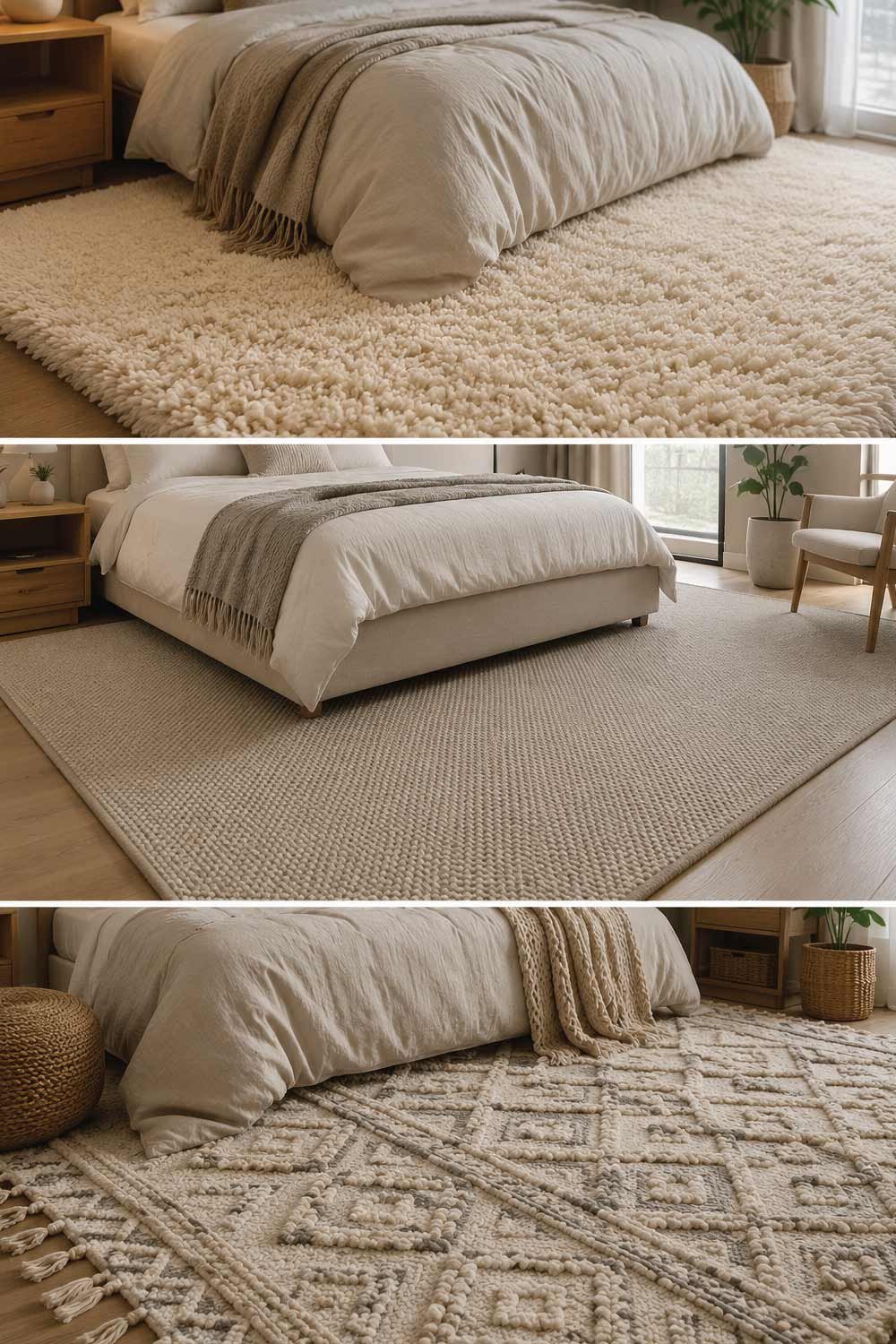
Plush & High-Pile Rugs
- Ultra-soft and cozy
- Great for bedrooms
- Can hide imperfections
Tip: High-pile rugs are harder to clean.
Low-Pile Rugs
- Sleek and modern
- Easier to maintain
- Great under furniture legs
Textured Rugs (Shag, Braided, Patterned)
Add personality and dimension. Perfect for layers or bold designs.
Step 5: Choose the Right Color & Pattern
Color and pattern are what tie the entire bedroom together visually, influencing how spacious, calm, or bold the room feels. The right combination can enhance natural light, balance furniture, and either blend seamlessly with your décor or become a standout design feature that defines the space’s personality.
Color Tips
Color choice has a strong impact on how the bedroom is perceived in terms of size, brightness, and mood. Lighter shades tend to open up the space and create an airy feel, while darker tones add depth and coziness but can make a room feel more enclosed if overused. Neutral colors remain the most flexible for long-term styling changes.
- Light colors make a room feel larger and brighter
- Dark colors hide dirt but may make a space feel smaller
- Neutral rugs are easier to style with changing décor
Pattern Tips
Patterns help add character and functionality to a rug, especially in bedrooms where both aesthetics and practicality matter. Smaller, more detailed patterns are great for hiding everyday wear, while larger designs create a strong visual impact. Directional patterns like stripes can also subtly influence how spacious or elongated a room appears.
- Small, busy patterns hide stains and wear
- Large patterns make a bold design statement
- Stripes can visually widen or lengthen a room
Step 6: Coordinate with Your Bedroom Décor
A rug should feel like a natural extension of your bedroom rather than a separate piece, helping everything come together in a cohesive and visually pleasing way. When the rug connects with your existing colors, textures, and furniture style, the entire room feels more intentional, balanced, and professionally designed.
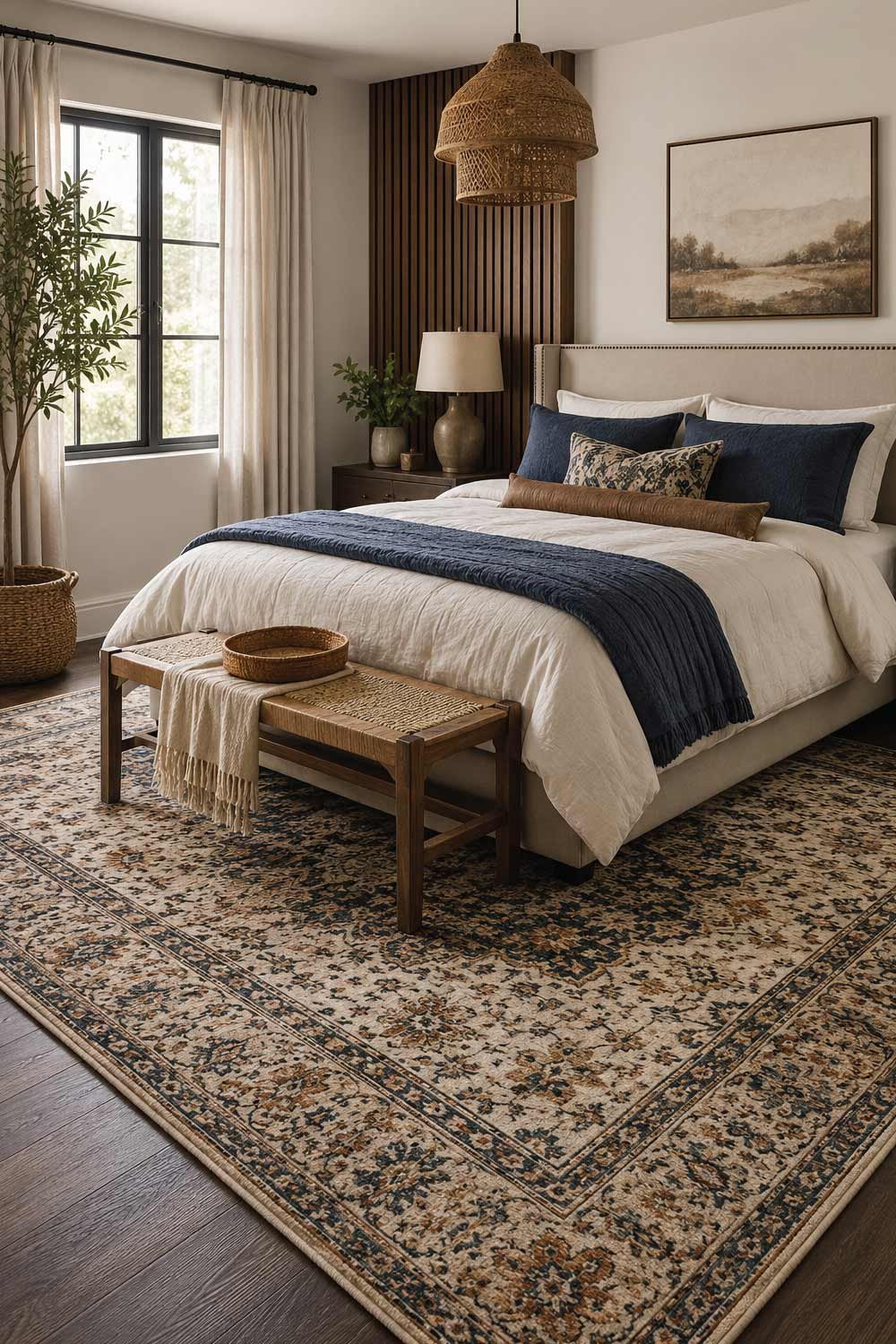
Match to Bedding or Curtains
One of the easiest ways to create harmony is by pulling colors directly from your bedding or curtains and using them as inspiration for your rug choice. This creates a subtle visual link across the room, making the design feel unified without being overly repetitive or forced.
- Pick a color in your bed linens or curtains and use that as your rug’s accent color.
Contrast for Impact
If your bedroom is mostly neutral or minimal, a rug can be used as a bold statement piece to instantly add personality and focus. This approach creates a strong visual anchor in the room, drawing attention to the floor and adding energy without requiring major décor changes elsewhere.
- In a neutral room, use a bold rug to create a focal point.
Complementary Style
Matching your rug style to your overall bedroom theme helps maintain design consistency and prevents visual mismatch. Each interior style has rug types that naturally enhance its look, whether through patterns, textures, or materials, ensuring the rug feels like it truly belongs in the space.
- Traditional rugs for classic bedrooms
- Geometric or abstract for modern interiors
- Natural fiber rugs for boho & coastal themes
Read Further:
How to Maximize Small Spaces: Smart Tips for Comfortable Living
Step 7: Practical Care & Maintenance
Proper care and maintenance keep your rug looking fresh, soft, and visually appealing for years, while also extending its overall lifespan. A well-maintained rug not only enhances comfort but also preserves the color, texture, and structure, ensuring it continues to complement your bedroom without looking dull or worn out over time.
Vacuum Regularly
Regular vacuuming is essential to prevent dust, dirt, and debris from settling deep into the fibers, which can cause long-term wear and dullness. The frequency depends on pile height, as lower piles accumulate less debris while higher piles tend to trap more dust and require slightly more attentive cleaning.
- Vacuum low-pile rugs twice weekly, and high-pile at least once weekly.
Rotate Every Few Months
Rotating your rug every few months ensures even exposure to foot traffic, sunlight, and furniture pressure, which helps prevent uneven fading or worn patches. This simple habit keeps the rug looking balanced and fresh, especially in bedrooms where certain walking paths are used more frequently than others.
- Even wear improves lifespan and appearance.
Blot, Don’t Rub Stains
When spills occur, it’s important to gently blot the area instead of rubbing, as rubbing can push stains deeper into the fibers and damage the rug’s texture. Using a mild cleaning solution and testing it first in a hidden area ensures safe cleaning without causing discoloration or fabric damage.
- Use a mild cleaning solution and always test in an unseen area.
Use Rug Pads
Rug pads provide an essential protective layer between the rug and the floor, improving safety, comfort, and durability. They prevent slipping, add extra cushioning underfoot, and reduce friction, which helps minimize wear and tear over time while also keeping the rug properly positioned in place.
- Pads prevent slipping, add cushion, and reduce wear.
Conclusion
Choosing the right area rug for your bedroom isn’t just about picking a pretty piece—it’s about creating a space that feels intentional, comfortable, and stylish. By considering size, material, texture, color, and function, you can find a rug that enhances your bedroom’s look and feels every day.
Whether you want soft comfort when you wake up, a striking design focal point, or a cozy foundation for your furniture, the perfect rug makes all the difference. Take your time, trust your taste, and enjoy transforming your bedroom into a space you love.
