
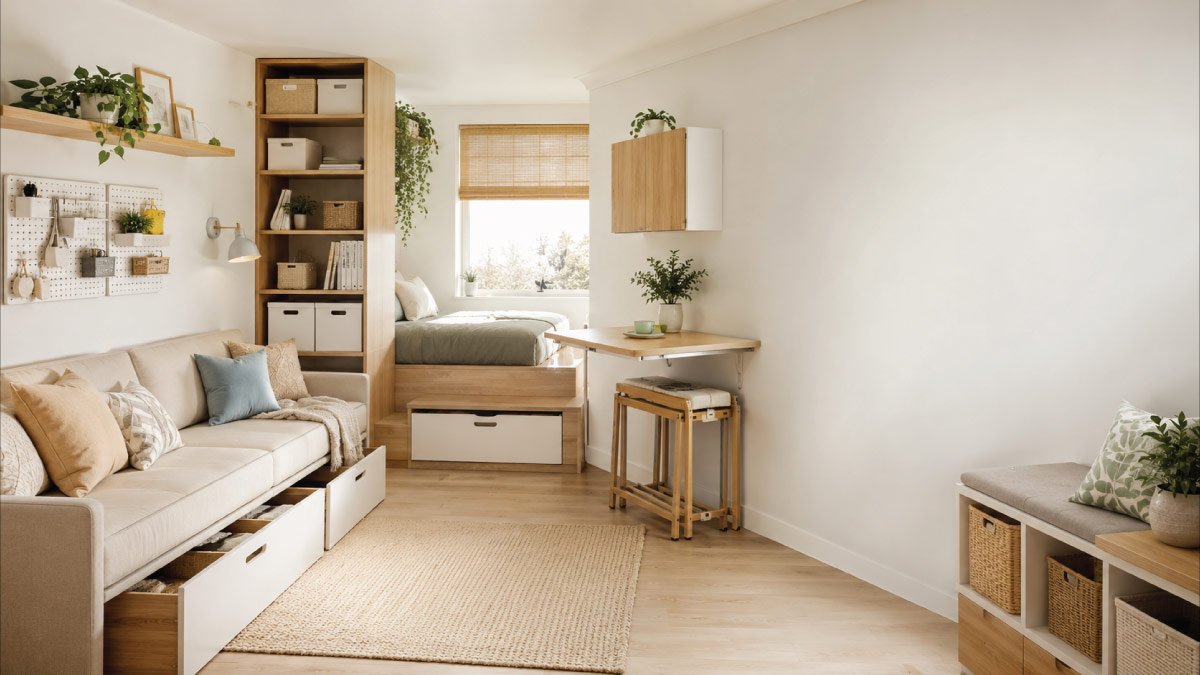
Living in a small space does not mean sacrificing style, comfort, or functionality. Whether you have a tiny apartment, studio, or just a small room in your house, optimizing space is all about smart planning, clever storage, and thoughtful design. In this guide, we’ll explore practical tips, creative ideas, and strategies to make the most out of your compact living space.
1. Start with a Clear Layout
Maximizing a small space begins with a clear understanding of the room itself. A thoughtfully planned layout not only improves functionality but also makes the room feel open and inviting. By carefully assessing the dimensions, positioning furniture strategically, and leaving room for movement, even the tiniest spaces can feel organized and comfortable.

Measure Everything: Before moving furniture or buying new pieces, measure the room dimensions. Knowing the exact space available helps in selecting appropriately sized furniture.
Define Zones: Even in a small room, define functional zones such as sleeping, working, or relaxing areas. This prevents clutter and ensures each area serves a purpose.
Leave Walking Space: Avoid overcrowding. Even leaving small pathways creates a feeling of openness.
Pro Tip:
Sketch your room on paper or use online room planners to visualize the layout before rearranging furniture.
2. Use Multi-Functional Furniture
In small spaces, furniture that serves more than one purpose is essential. Multi-functional pieces optimize usability without crowding the room. By carefully selecting items that combine seating, storage, or sleeping functions, you can reduce clutter and make the space feel larger and more versatile. This strategy is especially useful in apartments and studio setups.
Sofa Beds: Perfect for studio apartments, they act as a seating area by day and a bed by night.
Storage Ottomans: These can hold blankets, books, or toys while providing extra seating.
Foldable Tables: Great for dining or working, and can be tucked away when not in use.
Murphy Beds: Wall-mounted beds that fold up during the day free up floor space for other activities.
Multi functional furniture not only saves space but also reduces visual clutter, making the room feel larger.
3. Embrace Vertical Space
When floor space is limited, vertical solutions become your best ally. Thinking upwards allows you to utilize walls and ceiling areas for storage, décor, or functional setups. Vertical strategies not only keep the room tidy but also visually expand the space, helping small rooms feel less confined while maintaining an organized and stylish atmosphere.
Tall Shelves: Use floor-to-ceiling shelves for books, décor, or storage bins.
Hanging Cabinets: Install cabinets above desks, counters, or beds to store items out of the way.
Wall Hooks and Pegboards: Ideal for kitchen tools, bags, or jackets. Pegboards can even serve as decorative storage for plants or accessories.
Lofted Beds: If ceiling height allows, lofting a bed opens up space underneath for a desk, sofa, or wardrobe.
Tip:
Avoid blocking natural light with tall furniture; keep windows visible to maintain an open feel.
4. Opt for Light and Neutral Colors
The colors you choose dramatically influence the perception of space. Light and neutral shades help small rooms feel airy and open by reflecting more light and visually expanding walls. By combining soft tones, subtle pastels, or monochromatic schemes, you can create a cohesive and inviting environment without overwhelming the senses, keeping the space bright and refreshing.
Whites and Off-Whites: These colors reflect light and make walls seem farther apart.
Soft Pastels: Light blues, greens, and pinks add color without overwhelming the space.
Monochrome Schemes: Using varying shades of the same color helps create visual continuity.
Accents: Add pops of color through rugs, cushions, or artwork rather than painting entire walls.
Pro Tip:
Mirrors amplify light and create the illusion of depth, making small rooms feel twice as large.
5. Clever Storage Solutions
Clutter can quickly make a small room feel cramped and chaotic. Smart storage solutions not only organize belongings but also maintain a sense of openness and calm. By utilizing under bed spaces, built-ins, over door organizers, and floating shelves, you can keep everyday essentials accessible while hiding unnecessary items, creating a visually tidy and functional living area.

Under Bed Storage: Use drawers, boxes, or rolling bins to store seasonal clothes, shoes, or linens.
Built In Cabinets: Built-ins maximize every inch of wall space and can include hidden compartments.
Over Door Organizers: Perfect for shoes, cleaning supplies, or accessories.
Floating Shelves: These keep items off the floor while adding decorative appeal.
Tip:
Always prioritize items you use daily. Keep rarely used items tucked away to maintain an uncluttered appearance.
Don’t Miss Our Most Trending Ideas:
6. Optimize Your Kitchen
Even the smallest kitchens can be fully functional with smart planning and organization. Every inch of counter and cabinet space matters, and thoughtful solutions help reduce clutter while improving workflow. By using vertical storage, foldable surfaces, and strategic containers, you can create a kitchen that feels roomy, efficient, and enjoyable to cook in.
Use Magnetic Racks: Magnetic knife strips or spice racks free up counter space.
Pull-Out Cabinets: These allow easy access to stored items without requiring extra floor space.
Stackable Containers: Keep dry goods in uniform containers to save space and maintain order.
Foldable Dining Surfaces: A wall-mounted table that folds down when needed can double as prep space.
Even a tiny kitchen can feel spacious if every inch is used smartly.
7. Maximize Closet Space
Closets in compact homes tend to get messy quickly, so efficient organization is essential. Smart use of vertical and hidden storage, along with regular rotation of seasonal items, keeps your closet neat and functional. By streamlining hangers and creating zones for different types of clothing, you can make the most of limited wardrobe space.
Double Hanging Rods: Add an extra rod to hang more clothes vertically.
Shelf Dividers: Keep sweaters, towels, and linens stacked neatly.
Hooks Inside Doors: Store belts, scarves, or jewelry on door hooks.
Seasonal Rotation: Keep only current-season clothes in the main closet; store off season items elsewhere.
Pro Tip:
Uniform hangers create a clean, streamlined look and can subtly increase closet capacity.
8. Use Open Furniture and See Through Materials
Heavy, solid furniture can quickly overwhelm a small room, making it feel cramped and dark. Open and transparent designs allow light to flow freely, giving a sense of spaciousness. By choosing glass, acrylic, or leggy furniture, you maintain functionality while keeping the area airy, bright, and visually uncluttered.
Glass or Acrylic Tables: These reflect light and reduce visual weight.
Open-Frame Shelves: Instead of solid cabinets, open shelving feels lighter.
Leggy Furniture: Furniture with visible legs allows light to pass underneath, creating an airy effect.
Tip:
Avoid overcrowding even open frame furniture; it only works if items are neatly arranged.
9. Create Flexible Spaces
In small homes, every room must adapt to multiple purposes. By incorporating flexible layouts and convertible furniture, you can host different activities without overcrowding. Whether it is a workspace doubling as a dining area or a modular setup for entertaining, versatile design ensures small spaces remain functional, comfortable, and visually uncluttered.
Sliding or Folding Partitions: Use screens or curtains to separate areas when needed, but keep them open for everyday living.
Convertible Workspaces: A desk can double as a vanity or dining table depending on your needs.
Modular Furniture: Pieces that can be rearranged offer flexibility for different occasions or seasons.
Flexibility ensures that a single room can accommodate multiple activities without feeling chaotic.
Don’t Miss Our Most Trending Ideas:
How to Decorate a Tiny Apartment: Maximizing Style in Small Spaces
10. Keep Décor Minimal
Minimalism is a key strategy in small spaces. Carefully selecting only a few decorative items prevents visual clutter and enhances the sense of openness. By focusing on impactful pieces and combining décor with functionality, you create a stylish, organized environment where each element serves a purpose and contributes to a calm, spacious aesthetic.

One Statement Piece: Instead of many small décor items, choose a single artwork, lamp, or rug to define the space.
Avoid Excess Clutter: Shelves, tables, and counters should hold only essential or decorative items.
Multipurpose Décor: Items like a decorative basket or bench can double as storage.
Pro Tip:
Adopt the mantra “less is more” for small living spaces.
11. Let in Natural Light
Natural light has the power to instantly transform small spaces, making them feel brighter, more open, and welcoming. Strategically allowing sunlight to enter enhances both the aesthetic and the perception of space. By combining reflective surfaces and layered lighting, even compact rooms can feel airy, cheerful, and more spacious than their actual size.
Avoid Heavy Curtains: Sheer or light curtains let sunlight fill the room.
Mirrors Across from Windows: Reflect natural light and enhance brightness.
Layered Lighting: Combine overhead lights with task and ambient lighting to brighten corners.
Tip:
A bright space always feels larger than a dim, cluttered one.
12. Outdoor or Balcony Extensions
Even a small balcony or outdoor area can serve as an extension of your living space. With thoughtful furniture and vertical solutions, you can create a multifunctional retreat for relaxation, dining, or gardening. Clever use of limited outdoor space adds a feeling of openness and fresh air, making your home feel larger and more inviting.
Foldable Chairs and Tables: Create a small reading or dining nook.
Vertical Gardens: Use wall planters to add greenery without taking up floor space.
Storage Benches: Store cushions, tools, or outdoor essentials while providing seating.
Small outdoor extensions add a sense of openness and can act as a multifunctional area.
Don’t Miss Our Most Trending Ideas:
How to Organize a Small Room: Practical Tips and Smart Solutions
13. Smart Tech Solutions
Technology can be a game-changer in small living spaces, allowing you to maximize functionality without adding clutter. Smart devices, compact appliances, and voice-controlled systems help streamline daily tasks, optimize storage, and enhance comfort. Incorporating tech thoughtfully keeps your home efficient, organized, and modern, while making every inch of space count.

Smart Lighting: Adjustable lighting systems can change the mood and brightness without taking up space.
Voice-Controlled Devices: Reduce the need for extra remotes or control panels.
Compact Appliances: Consider mini washers, stackable units, or combination microwave-ovens.
Smart gadgets reduce clutter and increase convenience in small living spaces.
14. Maintain Organization Regularly
Even the most well-designed small space can feel cramped if clutter accumulates. Regular maintenance, daily tidying, and clear labeling keep spaces functional and visually calm. Treating organization as part of your routine ensures a continuously open and inviting environment, making small homes feel significantly larger and easier to live in without overwhelming effort.
Declutter Frequently: Donate, recycle, or sell items you no longer use.
Daily Tidy-Up: A few minutes a day keeps spaces organized and prevents clutter from piling up.
Label Storage: Knowing where everything belongs reduces the risk of items being misplaced.
Pro Tip:
Think of organization as part of your daily routine; small efforts keep your space feeling big.
Don’t Miss Our Most Trending Ideas:
15. Personalize Your Space
A small space should still feel warm, inviting, and truly yours. Thoughtful personalization balances practicality with aesthetic appeal, ensuring the area reflects your personality. By combining functional elements with personal touches such as art, photos, or cozy accessories, even compact rooms can feel luxurious, comfortable, and uniquely homey.
Add Personality: Use a few personal items like photos, books, or artwork.
Balance Function and Aesthetics: Ensure your space is practical but also reflects your style.
Comfort Matters: Soft rugs, cushions, and throws make small spaces cozy.
Even a tiny room can feel luxurious and welcoming if designed thoughtfully.
Conclusion
Maximizing small spaces is all about smart planning, creativity, and thoughtful design. By using vertical storage, multi-functional furniture, light colors, and minimal décor, you can make your home feel spacious, organized, and comfortable. Remember, small does not mean limited it is an opportunity to be creative, efficient, and stylish.
A tiny apartment or room can become a haven with the right strategies. Start by assessing your space, decluttering, and investing in solutions that combine practicality and aesthetics. With a little planning, you can turn even the smallest living areas into functional, beautiful, and enjoyable spaces.
Don’t Miss Our Most Trending Ideas:
12 Glamorous Luxury Living Room Furniture Ideas You will Love

I am Engineer Hassan, a professional engineer with over 15 years of experience in measurements, design accuracy, and furniture, appliance, and home product sizing. Through Size Helper, I provide research-based guides and trending 2026 home design ideas for living rooms, bedrooms, sofas, wall décor, fashion, and sports—helping users make confident, informed decisions. Every guide is written with real expertise, verified data, and a commitment to quality, usability, and style.