
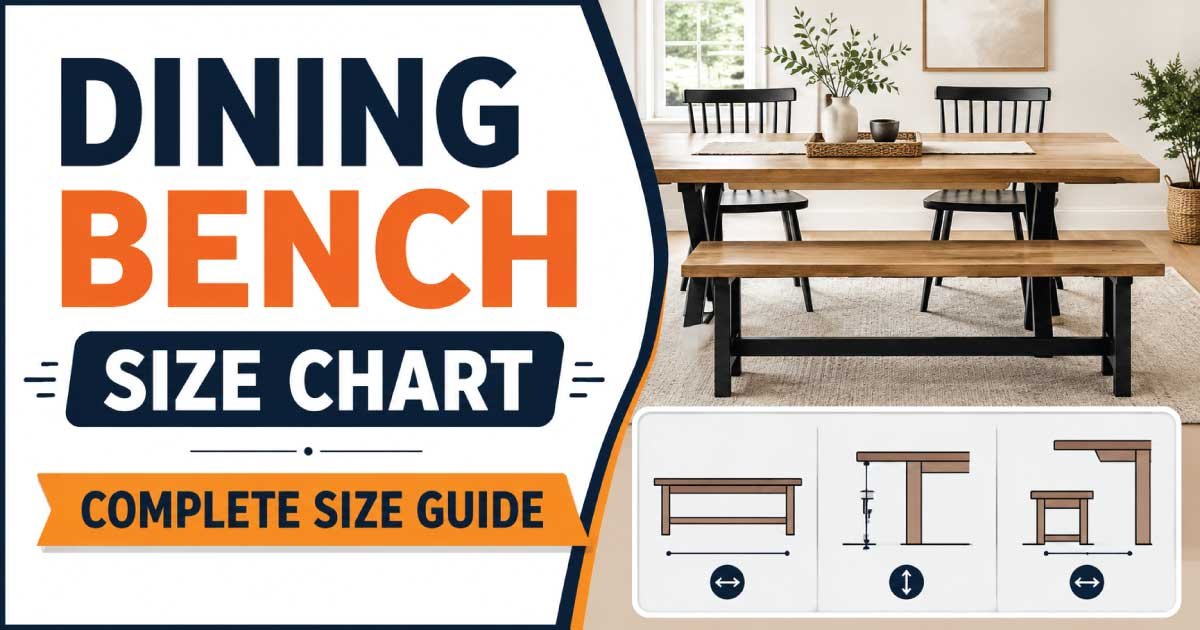
A dining bench is a stylish and practical alternative to traditional dining chairs, offering flexible seating while maximizing space around the dining table. Whether you’re furnishing a small breakfast nook or a large family dining room, selecting the correct dining bench size is essential for comfort, functionality, and visual balance. The right bench should fit neatly beneath the table, provide adequate seating space, and allow comfortable legroom.
This complete guide includes a detailed Dining Bench Size Chart, standard dimensions, seating capacity, spacing recommendations, and expert buying tips to help you choose the perfect dining bench for your home.
Dining Bench Size Chart
| Dining Table Size | Recommended Bench Length | Bench Depth | Bench Height | Seating Capacity |
|---|---|---|---|---|
| 48 inches | 42–44 inches | 14–16 inches | 18 inches | 2 People |
| 60 inches | 52–54 inches | 14–18 inches | 18 inches | 2–3 People |
| 72 inches | 60–66 inches | 16–18 inches | 18 inches | 3 People |
| 84 inches | 72–78 inches | 16–18 inches | 18 inches | 3–4 People |
| 96 inches | 84–90 inches | 18–20 inches | 18 inches | 4 People |
Standard Dining Bench Dimensions
Standard Dining Bench Height
The standard dining bench height is 18 inches (46 cm), which pairs perfectly with most dining tables measuring 28 to 30 inches high. This height leaves approximately 10 to 12 inches of legroom, allowing diners to sit comfortably while maintaining proper posture during meals.
Common Bench Heights
| Bench Type | Height |
|---|---|
| Standard Dining Bench | 18 inches |
| Low Bench | 16–17 inches |
| Tall Dining Bench | 19–20 inches |
| Upholstered Bench | 18–19 inches |
Standard Dining Bench Length
The length of a dining bench determines how many people can sit comfortably. Ideally, the bench should be 6 to 12 inches shorter than the dining table to allow easy access and maintain an attractive appearance.
| Table Length | Recommended Bench Length |
|---|---|
| 48 inches | 42–44 inches |
| 60 inches | 52–54 inches |
| 72 inches | 60–66 inches |
| 84 inches | 72–78 inches |
| 96 inches | 84–90 inches |
Standard Dining Bench Depth
Bench depth affects comfort and floor space. Most dining benches measure between 14 and 18 inches deep, providing enough seating support while allowing users to slide easily beneath the table when not in use.
| Bench Type | Depth |
|---|---|
| Compact Bench | 14–15 inches |
| Standard Bench | 16–18 inches |
| Upholstered Bench | 18–20 inches |
Dining Bench Seating Capacity
The number of people a dining bench can accommodate depends on its length. Allow approximately 24 inches of seating space per adult for maximum comfort.
| Bench Length | Seats |
|---|---|
| 42 inches | 2 People |
| 54 inches | 2–3 People |
| 60 inches | 3 People |
| 72 inches | 3–4 People |
| 84 inches | 4 People |
This spacing allows diners to sit comfortably without feeling crowded.
Dining Bench Clearance Guide
Space Behind a Dining Bench
Adequate clearance behind a dining bench allows people to sit, stand, and move around the dining area comfortably.
| Area | Recommended Clearance |
|---|---|
| Minimum | 36 inches |
| Comfortable | 42 inches |
| High Traffic Areas | 48 inches |
Proper clearance also prevents the bench from blocking doorways or nearby furniture.
Legroom Requirements
Comfortable dining requires sufficient space between the bench seat and the tabletop.
| Measurement | Recommended Size |
|---|---|
| Seat to Table Clearance | 10–12 inches |
| Knee Clearance | 12 inches minimum |
| Foot Clearance | 18 inches minimum |
These dimensions promote better posture and a more enjoyable dining experience.
Dining Bench Sizes by Style
1. Backless Dining Bench
Backless benches are the most common style and can slide completely beneath the table when not in use. They are perfect for smaller dining rooms because they save floor space while maintaining a clean, minimalist appearance.
Typical dimensions include:
- Height: 18 inches
- Depth: 14–16 inches
- Length: 42–84 inches
2. Dining Bench with Back
Benches with backs provide additional support and comfort during extended meals. They work well in family dining rooms and breakfast nooks where seating is frequently used.
Typical dimensions:
- Seat Height: 18 inches
- Overall Height: 32–36 inches
- Depth: 18–20 inches
3. Upholstered Dining Bench
Upholstered benches offer superior comfort with padded seats covered in fabric or leather. They complement both modern and traditional dining rooms while creating an inviting atmosphere.
Typical dimensions:
- Height: 18–19 inches
- Depth: 18–20 inches
- Length: 48–84 inches
4. Storage Dining Bench
Storage benches combine seating with hidden compartments beneath the seat. These multifunctional designs are ideal for storing table linens, placemats, and seasonal dining accessories while reducing clutter.
Common dimensions include:
- Height: 18–19 inches
- Depth: 16–20 inches
- Length: 48–72 inches
Dining Bench Materials
Solid Wood Benches: Solid wood benches are durable, timeless, and available in a variety of finishes. They suit farmhouse, rustic, traditional, and contemporary dining rooms.
Metal Dining Benches: Metal benches provide excellent durability and complement industrial or modern interiors. Powder-coated finishes resist scratches and corrosion.
Upholstered Benches: Fabric and leather upholstery add softness and luxury while increasing seating comfort during long family meals.
Mixed Material Benches: Many modern dining benches combine wood frames with metal legs or upholstered seats, creating a stylish and durable seating solution.
⏩ Related Size Guides 👉 Complete Bed Sizes Chart for Every Bedroom Type
How to Choose the Right Dining Bench Size
Measure Your Dining Table: The bench should be slightly shorter than the table to provide balanced proportions and allow easy access from both ends.
Consider Seating Capacity: Determine how many people will regularly use the bench. Allocate approximately 24 inches of width per person to ensure comfortable seating.
Check Dining Room Space: Measure the available floor space around the table, ensuring there is sufficient room for people to pull out the bench and move freely.
Match Bench Style to Décor: Choose materials, finishes, and upholstery that complement your dining table and the overall design of your dining room.
Dining Bench vs. Dining Chairs
| Feature | Dining Bench | Dining Chairs |
|---|---|---|
| Seating Capacity | Higher | Lower |
| Space Saving | Excellent | Moderate |
| Flexibility | High | Medium |
| Comfort | Good | Excellent |
| Storage | Easy to slide under table | Requires more floor space |
Dining benches are ideal for maximizing seating while maintaining a clean and spacious appearance.
Benefits of a Dining Bench
A properly sized dining bench offers numerous advantages.
- Seats more people
- Saves floor space
- Slides neatly under the table
- Creates a modern appearance
- Works well in small dining rooms
- Flexible seating arrangement
- Easier for children
- Available with storage
- Budget-friendly compared to multiple chairs
- Enhances dining room aesthetics
Common Dining Bench Buying Mistakes
Avoid these common mistakes when selecting a dining bench:
- Buying a bench equal to the table length
- Ignoring seat height
- Forgetting legroom requirements
- Choosing excessive depth
- Overlooking walkway clearance
- Selecting insufficient seating capacity
- Ignoring weight capacity
- Choosing materials that don’t match the dining table
Proper measurements help avoid costly purchasing mistakes.
⏩ Related Size Guides 👉 Pillow Size Chart: Find the Perfect Pillow Size Easily
Dining Bench Maintenance Tips
Regular maintenance keeps your dining bench looking its best.
- Clean wooden surfaces with a soft cloth.
- Vacuum upholstered seats regularly.
- Tighten screws and bolts periodically.
- Use furniture pads to protect flooring.
- Wipe spills immediately.
- Avoid prolonged exposure to direct sunlight.
- Apply wood polish when needed.
- Inspect legs regularly for stability.
Routine care extends the bench’s lifespan and preserves its appearance.
Conclusion
Choosing the correct dining bench size ensures your dining area remains comfortable, functional, and visually balanced. By selecting the appropriate height, length, and depth while allowing adequate clearance around the table, you can create a welcoming space for everyday meals and special gatherings.
Whether you prefer a simple wooden bench, an upholstered design, or a storage bench, the size charts and recommendations in this guide will help you find the perfect dining bench for your home.
⏩ Related Size Guides 👉 Comforter Size Chart: Standard Sizes Explained Clearly
FAQs:
What is the standard dining bench height?
The standard dining bench height is around 18 inches from the floor to the seat surface. This height works well with most dining tables that are 28 to 30 inches tall, allowing comfortable legroom and proper dining posture for adults and children.
How long should a dining bench be?
A dining bench should typically be 6 to 12 inches shorter than the length of your dining table. This creates balanced proportions, allows guests to sit comfortably, and prevents the bench from extending too far beyond the table edges.
How many people fit on a 6-foot dining bench?
A 6-foot dining bench, measuring about 72 inches long, can comfortably seat three adults with enough personal space. It may fit four children or smaller individuals, making it a practical choice for family dining areas and casual seating arrangements.
How much space should be left behind a dining bench?
You should leave at least 36 inches of clearance behind a dining bench for comfortable movement and easy access. In high-traffic dining areas, 42 to 48 inches of space is recommended to allow people to walk around freely.
Can a dining bench replace dining chairs?
Yes, a dining bench can replace traditional dining chairs and is a space-saving seating option. Benches work especially well in small dining rooms, allowing more people to sit while creating a modern, clean, and flexible dining area design.
