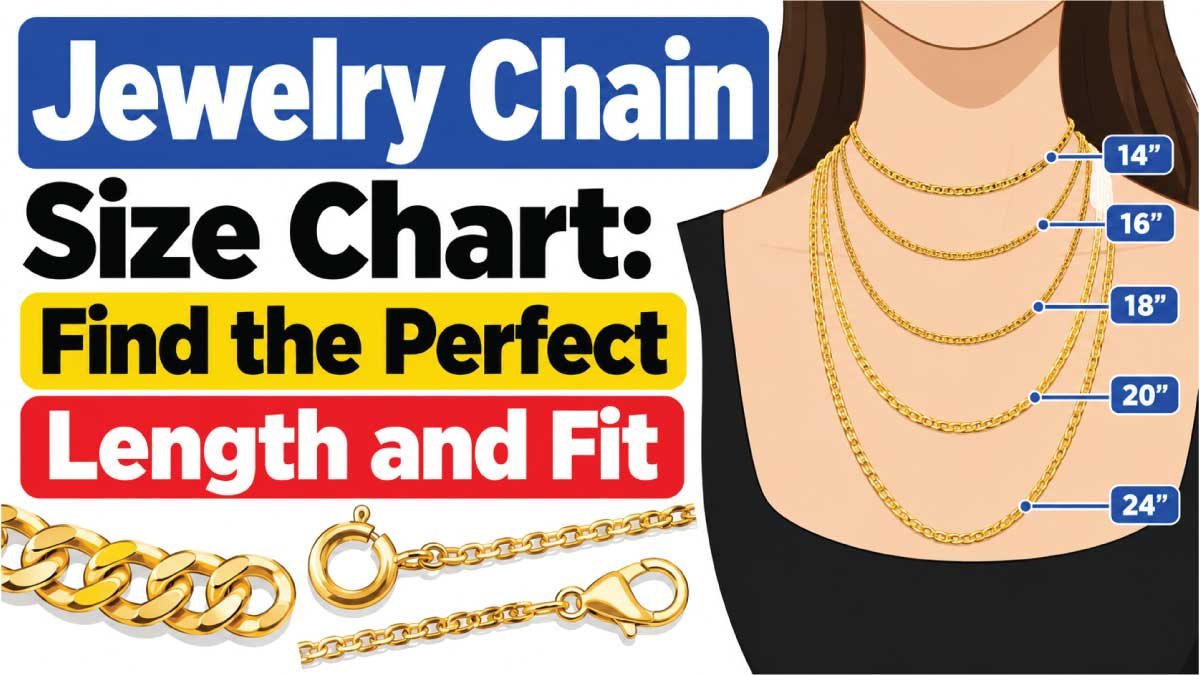
Choosing the right jewelry chain size helps you achieve the look, comfort, and fit you want. Whether you are buying a necklace for everyday wear, selecting a chain for a pendant, or choosing jewelry as a gift, the chain’s length, thickness, and design all influence how it looks when worn.
A chain that sits close to the neck creates a different appearance from one that falls across the chest. Similarly, a delicate chain can look understated, while a thick chain creates a more noticeable statement. Understanding standard chain lengths and how they relate to your body measurements makes it easier to choose a suitable option.
This guide explains jewelry chain sizes in inches and centimeters, compares common necklace lengths, and covers measuring techniques, pendant placement, chain thickness, and fitting tips. With the right measurements, you can select a chain that complements your style and feels comfortable throughout the day.
Standard Jewelry Chain Lengths
Jewelry chains are commonly measured in inches or centimeters. The measurement usually refers to the chain’s total length, although the exact convention can vary by manufacturer and design.
For necklaces, standard lengths generally range from short, close-fitting styles to longer chains that fall over the chest. The best length depends on your neck circumference, preferred placement, pendant size, and clothing.
Jewelry Chain Length Conversion Chart
| Length in Inches | Length in Centimeters | Typical Placement | Common Use |
|---|---|---|---|
| 14 inches | 35.6 cm | Close around the neck | Short necklace |
| 16 inches | 40.6 cm | Around the base of the neck | Choker or short chain |
| 18 inches | 45.7 cm | Near the collarbone | Everyday necklace |
| 20 inches | 50.8 cm | At or below the collarbone | Versatile necklace |
| 22 inches | 55.9 cm | Upper chest | Pendant necklace |
| 24 inches | 61.0 cm | Upper to mid-chest | Statement necklace |
| 26 inches | 66.0 cm | Mid-chest | Long pendant chain |
| 28 inches | 71.1 cm | Lower chest | Long necklace |
| 30 inches | 76.2 cm | Lower chest | Layering or statement style |
| 32 inches | 81.3 cm | Lower chest or torso | Extra-long necklace |
| 36 inches | 91.4 cm | Lower torso, depending on body proportions | Long fashion necklace |
These placements are approximate. Neck size, body shape, chain thickness, and pendant weight can change where a necklace rests.
Jewelry Chain Size Chart by Necklace Style
Different necklace styles are designed to sit at different points on the body. Understanding these categories can help you select a chain that matches your outfit and the look you want.
Choker Chains
Chokers typically sit close to the neck. They are often around 14 to 16 inches long, although the correct measurement depends on neck circumference and the desired fit.
A choker should feel secure without pressing tightly against the skin. If you prefer a relaxed fit, measure your neck and check the finished necklace length before purchasing.
Collarbone-Length Chains
Chains around 16 to 18 inches often sit near the base of the neck or collarbone. They work well with many everyday outfits, open collars, and simple pendants.
An 18-inch chain is a popular option because it offers a balanced appearance without extending too far down the chest.
Princess-Length Chains
Princess-length necklaces commonly measure about 17 to 19 inches, depending on the jewelry convention being used. They generally rest around the collarbone or upper chest.
This length is versatile and works with many necklines, making it suitable for pendants, gemstones, and everyday jewelry.
Matinee-Length Chains
Matinee necklaces are often around 20 to 24 inches long. They typically fall below the collarbone and toward the upper chest.
This style can complement business clothing, casual outfits, and larger pendants. It also provides more room for layering with shorter chains.
Opera-Length Chains
Opera-length necklaces commonly measure around 28 to 36 inches. They create a long, noticeable drop and can be worn as a single strand or styled in multiple loops, depending on the design.
Because these chains extend farther down the body, consider their weight, pendant size, and how they will move during everyday activities.
How to Measure Your Neck for a Jewelry Chain
Measuring your neck helps you choose a necklace that sits comfortably. You can use a flexible measuring tape or a piece of string to estimate the length you need.
Step 1: Choose the Desired Position
Decide where you want the chain to rest. A close-fitting necklace requires a different length from one that hangs around the collarbone or upper chest.
If you already own a necklace that fits well, use it as a reference.
Step 2: Measure Your Neck
Wrap a flexible measuring tape around your neck at the position where you want the chain to sit. Keep the tape comfortably snug without pulling it tightly.
Record the measurement in inches or centimeters. If you use string, mark where the ends meet and measure the string against a ruler.
Step 3: Allow for Comfortable Movement
A necklace should not feel restrictive when you turn your head, bend, or move naturally. For a close-fitting style, choose a finished length that allows enough room for comfort.
Do not simply match the chain length to your neck circumference without considering how you want it to sit.
Step 4: Test the Chain Length
Use a string cut to the desired length and place it around your neck. Check the position while standing and wearing the clothing you expect to pair with the necklace.
This simple test helps you visualize the final look before purchasing a chain.
Jewelry Chain Length Guide for Different Body Types
The same chain length can look different on different people. Neck circumference, shoulder width, torso length, and body proportions influence necklace placement.
For Petite Frames
Shorter and medium-length chains can create a balanced appearance on petite frames. Lengths around 16 to 20 inches are useful starting points for necklaces intended to sit close to the neck or collarbone.
Longer chains can also work well, particularly when styled with a pendant or layered over clothing.
For Average Frames
Chains around 18 to 22 inches offer a versatile starting range for many people. These lengths work with a wide variety of clothing styles and can accommodate small or medium pendants.
Your preferred neckline and the chain’s intended placement should guide the final choice.
For Larger Frames
People with broader shoulders or larger neck circumferences may prefer medium or longer chains to achieve the desired placement. Lengths around 20 to 24 inches can be a useful starting point, although individual measurements matter more than general categories.
A shorter chain may still work well if the necklace is intended to fit close to the neck.
For Longer Torsos
Longer chains may be useful for people who want a pendant to rest farther down the chest. However, the best length depends on the necklace’s purpose and the wearer’s preferred style rather than torso length alone.
Always test the actual placement before making a decision.
Jewelry Chain Size Chart for Men and Women
Men and women can wear many of the same chain lengths. Differences in common sizing preferences usually reflect neck size, clothing styles, pendant choices, and personal taste rather than strict rules.
Common Chain Lengths for Women
| Chain Length | Typical Placement | Popular Uses |
|---|---|---|
| 14 inches | Close around the neck | Chokers |
| 16 inches | Base of the neck | Short necklaces |
| 18 inches | Collarbone area | Everyday pendants |
| 20 inches | Below the collarbone | Casual and layered styles |
| 22 inches | Upper chest | Pendant necklaces |
| 24 inches | Upper to mid-chest | Statement jewelry |
| 30 inches | Lower chest | Long necklaces and layering |
Common Chain Lengths for Men
| Chain Length | Typical Placement | Popular Uses |
|---|---|---|
| 18 inches | Near the collarbone | Short, subtle chains |
| 20 inches | Collarbone area | Everyday necklaces |
| 22 inches | Upper chest | Versatile chain styles |
| 24 inches | Upper chest | Pendants and statement chains |
| 26 inches | Mid-chest | Casual and streetwear styles |
| 28 inches | Lower chest | Long necklaces |
| 30 inches | Lower chest | Bold or layered looks |
These are common styling references rather than gender-specific requirements. Anyone can choose a chain length based on their measurements, preferred placement, and personal style.
Also Read:
Choosing the Right Chain Length for a Pendant
A pendant changes the appearance of a necklace because it hangs below the chain. The chain may sit at the collarbone while the pendant extends farther down the chest.
Small Pendants
Small pendants often pair well with chains around 16 to 20 inches. This length can keep the jewelry close to the neckline and create a subtle appearance.
Examples include small initials, simple geometric shapes, and delicate charms.
Medium Pendants
Chains around 18 to 24 inches can work well for medium pendants. The additional length gives the pendant space to sit naturally without appearing crowded near the neck.
The best choice depends on the pendant’s dimensions and the neckline of the clothing.
Large Pendants
Large pendants may suit chains around 20 to 30 inches, depending on their weight and the desired placement. A longer chain can make a large pendant more visible and create a balanced look.
Check the chain’s strength and clasp quality, particularly if the pendant is heavy.
How to Account for Pendant Length
Before purchasing, consider the distance from the chain’s resting point to the bottom of the pendant. A long pendant can extend noticeably below the chain and may affect how the necklace looks with different outfits.
Preview the complete necklace using a string and a similar-sized object if you want to estimate the final placement.
Also Read:
Jewelry Chain Thickness and Size Guide
Chain thickness affects the appearance, weight, and sometimes the durability of a necklace. Two chains with the same length can look completely different if one is delicate and the other is substantial.
Common Chain Thicknesses
| Chain Thickness | Appearance | Typical Style |
|---|---|---|
| 0.8–1.5 mm | Very delicate | Minimalist necklaces |
| 1.5–2 mm | Fine and understated | Everyday jewelry |
| 2–3 mm | Slim and versatile | Pendants and simple chains |
| 3–5 mm | Noticeable | Bold everyday necklaces |
| 5–7 mm | Thick and prominent | Statement jewelry |
| 8 mm or more | Heavy visual appearance | Oversized fashion chains |
Thickness ranges are general examples. Actual appearance depends on link shape, material, finish, and chain construction.
Thin Chains
Thin chains create a delicate appearance and often suit small pendants. They can be comfortable for everyday use, but very fine chains may require careful handling.
Avoid attaching a heavy pendant to a chain that is not designed to support it.
Medium Chains
Medium-thickness chains offer a balance between subtlety and visibility. They are useful for people who want a necklace that can be worn alone or with a suitable pendant.
Thick Chains
Thick chains make a stronger visual statement and may be heavier around the neck. Consider the chain’s total weight and how it feels during extended wear.
A thicker chain is not automatically stronger; construction, material, and clasp design also matter.
Also Read:
Jewelry Chain Lengths for Different Necklines
Your clothing neckline can influence how a necklace looks and where it should sit.
Crew-Neck Tops
Chains around 18 to 22 inches are useful starting points for crew-neck tops. Shorter necklaces may sit close to the collar, while longer options can fall over the fabric.
V-Neck Tops
A chain with a pendant can complement a V-neck by following the neckline’s shape. The appropriate length depends on the depth of the V and where you want the pendant to rest.
Open-Collar Shirts
Medium-length chains around 18 to 22 inches can work well with open collars. Longer chains may create a more relaxed look, particularly when worn over casual clothing.
High-Neck Clothing
Longer necklaces can provide contrast against high-neck tops and sweaters. Chains around 24 to 30 inches are possible options, depending on body proportions and the intended style.
Formal Clothing
Shorter or medium-length chains can work well with formal outfits, particularly when the jewelry is intended to remain subtle. Consider whether the chain will be visible or worn underneath clothing.
How to Choose the Right Jewelry Chain Material
Material influences a chain’s weight, maintenance requirements, appearance, and suitability for everyday wear.
Gold Chains
Gold chains are available in different karats, colors, thicknesses, and link styles. Choose a chain length based on your desired placement, and check the construction if you plan to wear a pendant.
Solid gold, gold-filled, and gold-plated jewelry are different products with different characteristics, so check the material description carefully.
Silver Chains
Silver chains offer a versatile appearance that works with many outfits. Sterling silver is commonly used in jewelry, but it can tarnish over time and may require cleaning.
Choose a length and thickness that suit your style, and follow the manufacturer’s care instructions.
Stainless Steel Chains
Stainless steel chains are often chosen for casual or contemporary jewelry. Their weight and flexibility depend on the design and construction.
Check the clasp, finish, and overall quality rather than selecting a chain based on material alone.
Costume Jewelry Chains
Costume jewelry includes a wide range of materials and finishes. These chains can be suitable for occasional wear, but their durability varies considerably.
Consider how frequently you will wear the necklace and whether the material is appropriate for your skin.
Common Mistakes When Choosing a Chain Size
Choosing Length Without Measuring
A chain may look attractive in a product photo but sit differently on your body. Measure the desired position or preview the length with string before buying.
Ignoring the Clasp
Some manufacturers measure the entire chain, including the clasp, while others may describe the wearable length differently. Check the product specifications to understand how the measurement is taken.
Selecting the Wrong Thickness
A chain can be the correct length but still look different from what you expected because its thickness is too delicate or too bold for your style.
Forgetting About Pendants
Pendants extend below the chain and change the final placement. Account for their dimensions before choosing a length.
Assuming One Size Fits Everyone
Neck circumference, body proportions, and personal preferences vary. Use general chain length categories as a starting point rather than a strict rule.
Overlooking Comfort
A necklace should allow natural movement without feeling restrictive or excessively heavy. Check how it feels when standing, sitting, and moving your head.
Jewelry Chain Size Chart: Frequently Asked Questions
What Is the Most Common Jewelry Chain Length?
An 18-inch chain is a common choice for necklaces that sit near the collarbone. A 20-inch chain is another versatile option, while 22- and 24-inch chains provide a longer drop.
The best length depends on your neck size, clothing, and preferred style.
How Do I Convert Chain Length From Inches to Centimeters?
Multiply the length in inches by 2.54 to convert it to centimeters. For example, an 18-inch chain is approximately 45.7 cm long, while a 24-inch chain is 61 cm long.
Is an 18-Inch Chain Too Short?
Not necessarily. An 18-inch chain is a common necklace length that often sits near the collarbone. However, it may feel tight on a larger neck, so measure before buying.
What Is the Best Chain Length for Everyday Wear?
Lengths around 18 to 22 inches are versatile for many people. They can work with casual clothing, simple pendants, and different necklines.
Choose the length that feels comfortable and matches where you want the chain to sit.
What Chain Length Is Best for a Pendant?
For many small or medium pendants, 18 to 24 inches is a useful starting range. Larger pendants may look better on longer chains, depending on their size and weight.
Can I Wear Two Chains at the Same Time?
Yes. Layering chains of different lengths helps create separation and prevents the necklaces from appearing crowded. For example, you could combine a 16-inch chain with a 20-inch chain and a 24-inch chain.
Does Chain Thickness Affect the Fit?
Thickness mainly affects appearance and weight, but it can also influence how a necklace drapes and feels. A thick chain may sit differently from a fine chain of the same length.
How Do I Know if a Chain Is Too Tight?
A chain may be too tight if it presses against your neck, restricts comfortable movement, or leaves uncomfortable pressure marks. Choose a longer length if you want a looser fit.
Final Thoughts
Choosing the right jewelry chain size involves more than selecting a length from a chart. Neck circumference, necklace placement, pendant dimensions, chain thickness, and clothing all influence how a chain looks and feels.
Use the conversion chart to compare inches and centimeters, then measure your neck or test a sample length with string. Consider whether you want a close-fitting choker, a collarbone-length necklace, or a longer statement chain.
For many people, 18 to 22 inches provides a versatile starting range for everyday jewelry. However, the best choice is the one that matches your measurements, complements your style, and feels comfortable throughout the day.
