
A Crib Size Chart is an essential guide for parents looking to choose the right crib and mattress for their baby. It provides accurate measurements for standard cribs, mini cribs, convertible cribs, and portable cribs, making it easier to compare sizes and ensure a safe, comfortable fit. Since a properly fitted mattress is crucial for infant safety, understanding standard crib mattress dimensions helps prevent gaps and compatibility issues.
In this complete guide, you will find easy-to-read crib size charts, standard crib mattress dimensions, size comparisons, and practical tips for selecting the best crib and bedding for your nursery.
Why a Crib Size Chart Matters
A crib size chart provides parents with accurate measurements for different crib types, helping them compare options before buying. Whether selecting a standard crib, mini crib, or convertible crib, the chart prevents sizing confusion and ensures compatibility with mattresses, sheets, and nursery space.
- Prevents purchasing the wrong mattress.
- Helps maximize nursery space.
- Simplifies furniture planning.
- Supports safer sleeping arrangements.
- Makes online shopping easier.
Standard Crib Dimensions
A standard crib is the most common option for newborns and infants. Most models follow federal regulations, ensuring consistency in size. This makes finding compatible mattresses and accessories straightforward while providing adequate sleeping space as your child grows during the first few years.
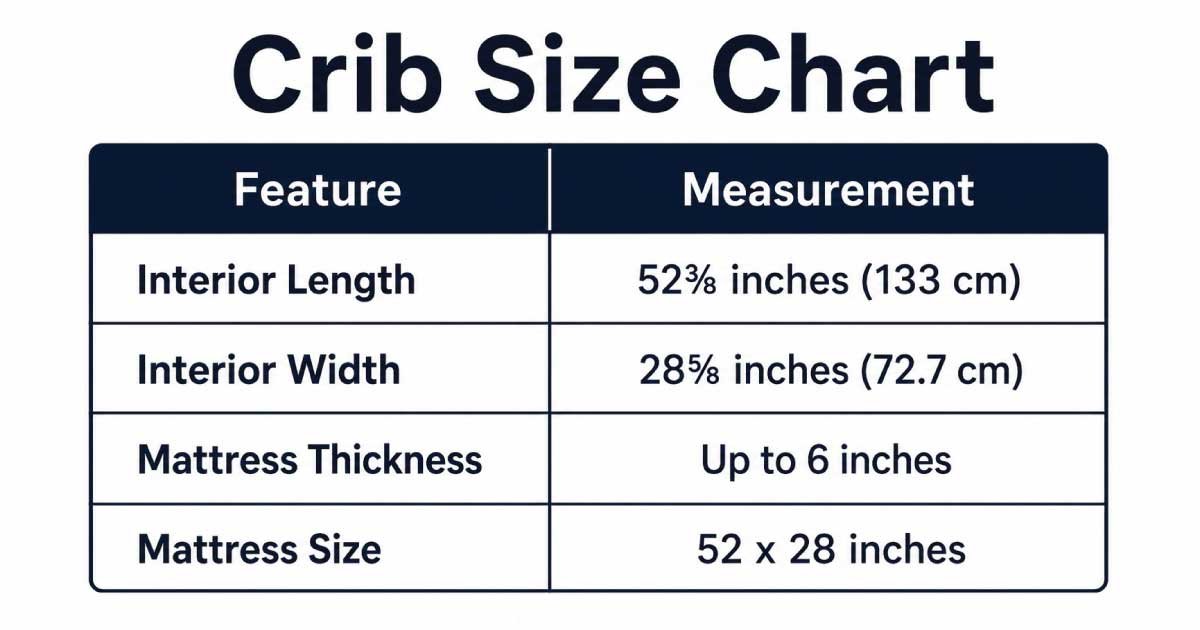
| Feature | Measurement |
|---|---|
| Interior Length | 52⅜ inches (133 cm) |
| Interior Width | 28⅝ inches (72.7 cm) |
| Mattress Thickness | Up to 6 inches |
| Mattress Size | 52 x 28 inches |
Crib Size Chart PDF
This crib size chart provides the standard interior dimensions and recommended mattress specifications for a safe and proper fit. It includes key measurements such as interior length, interior width, maximum mattress thickness, and standard mattress size to help ensure comfort, stability, and compliance with safety guidelines.
📏 Essential Size Chart Guides 👉 Vanity Stool Size Chart: Easy Measurement Guide
Mini Crib Dimensions
Mini cribs are designed for smaller nurseries, apartments, or temporary sleeping arrangements. Although more compact than standard cribs, they still provide a safe sleeping environment for newborns. Parents should verify mattress compatibility because mini crib sizes can vary slightly between manufacturers.
| Feature | Measurement |
|---|---|
| Interior Length | 38 inches |
| Interior Width | 24 inches |
| Mattress Size | 38 x 24 inches |
| Typical Use | Birth to 18–24 months |
Convertible Crib Dimensions
Convertible cribs offer long-term value by transforming into toddler beds, daybeds, or even full-size beds. While their interior sleeping area usually matches standard crib dimensions, the exterior frame is often larger due to the additional conversion features and structural components.
Common Conversion Options
- Crib to toddler bed
- Toddler bed to daybed
- Daybed to full-size bed
- Long-term furniture investment
- Ideal for growing families
Portable Crib Dimensions
Portable cribs prioritize convenience and mobility. Their lightweight construction allows parents to move them easily between rooms or take them during travel. Although smaller than standard cribs, portable models should still meet recognized safety standards for infant sleeping environments.
| Feature | Typical Size |
|---|---|
| Length | 39–45 inches |
| Width | 25–30 inches |
| Weight | 20–35 pounds |
| Best For | Travel and temporary use |
Crib Mattress Size Chart
Selecting the correct mattress is just as important as choosing the crib itself. A mattress that fits snugly minimizes gaps where babies could become trapped. Experts recommend checking manufacturer specifications before purchasing replacement mattresses for any crib type.
| Crib Type | Mattress Size |
|---|---|
| Standard Crib | 52 x 28 inches |
| Mini Crib | 38 x 24 inches |
| Portable Crib | Varies by manufacturer |
| Convertible Crib | Standard crib mattress |
How to Measure a Crib Correctly
Accurate measurements ensure the mattress fits securely within the crib. Measuring both interior length and width helps confirm compatibility while reducing safety concerns. Always use a reliable measuring tape and compare your results with the manufacturer’s recommended mattress dimensions.
Steps to Measure
- Measure interior length.
- Measure interior width.
- Measure mattress thickness.
- Check corner gaps.
- Compare with manufacturer specifications.
Safe Mattress Fit Guidelines
A properly fitted mattress should leave almost no space between the mattress edge and crib frame. Large gaps increase the risk of entrapment. Safety organizations recommend that no more than two fingers should fit between the mattress and crib sides.
Safety Checklist
- Mattress fits snugly.
- No visible side gaps.
- Firm sleeping surface.
- Waterproof cover recommended.
- Avoid soft mattress toppers.
Crib Size Comparison Chart
Understanding the differences between crib styles makes choosing the right model much easier. Each crib serves different family needs based on room size, portability, longevity, and intended usage.
| Crib Type | Mattress Size | Space Needed | Portability |
|---|---|---|---|
| Standard | 52 x 28 in | Large | Low |
| Mini | 38 x 24 in | Small | Medium |
| Portable | Varies | Small | High |
| Convertible | 52 x 28 in | Large | Low |
Choosing the Right Crib for Your Nursery
The ideal crib depends on your available space, future plans, and budget. Standard cribs remain the most versatile choice, while mini cribs suit compact rooms. Convertible cribs provide excellent long-term value, and portable cribs are ideal for families needing flexibility or frequent travel.
Things to Consider
- Nursery dimensions
- Budget
- Future conversion options
- Storage requirements
- Ease of assembly
- Mattress compatibility
Crib Height Standards
Crib height is just as important as length and width because it directly impacts your baby’s safety. As infants grow and become more mobile, proper mattress height adjustments help prevent climbing accidents while allowing parents to lift their child comfortably without excessive bending.
- Mattress height should be adjustable.
- Lower the mattress as your baby grows.
- Higher settings suit newborns.
- Lowest settings improve toddler safety.
- Follow manufacturer adjustment guidelines.
Crib Rail Height Requirements
Crib rails serve as a protective barrier that keeps infants safely inside the sleeping area. Federal safety standards require rails to maintain sufficient height above the mattress, reducing the risk of falls while ensuring babies cannot climb over the sides.
| Rail Position | Recommended Height |
|---|---|
| Highest Mattress Setting | At least 26 inches |
| Lowest Mattress Setting | Provides maximum protection |
| Drop-Side Cribs | Not recommended |
| Fixed Rails | Preferred for safety |
Age Guide for Different Crib Sizes
Although every child develops differently, crib usage generally follows age and developmental milestones rather than weight alone. Parents should transition to the next sleeping arrangement once climbing begins or when the child reaches the manufacturer’s recommended limits.
| Crib Type | Recommended Age |
|---|---|
| Standard Crib | Birth to 3 years |
| Mini Crib | Birth to 18–24 months |
| Portable Crib | Birth to 18 months |
| Convertible Crib | Birth through childhood (with conversion) |
Weight Limits for Common Cribs
Each crib has a maximum weight capacity established by the manufacturer. Exceeding this limit may compromise structural stability and safety. Always review the product manual because limits vary depending on construction materials and crib design.
| Crib Type | Typical Weight Limit |
|---|---|
| Standard Crib | 50 pounds |
| Mini Crib | 35–50 pounds |
| Portable Crib | 30–35 pounds |
| Convertible Crib | Varies by conversion stage |
How Much Nursery Space Should a Crib Have?
A crib should fit comfortably within the nursery while leaving enough room for movement and other essential furniture. Maintaining clear space around the crib also improves accessibility and reduces hazards from nearby furniture, windows, or decorative items.
Recommended Layout Tips
- Leave walking space around the crib.
- Keep furniture away from crib rails.
- Avoid placing the crib under windows.
- Keep cords out of reach.
- Allow room for changing tables and storage.
🔍 Check Related Size Charts 👉 Dining Bench Size Chart: Complete Size Guide
Standard Crib vs Mini Crib
Parents often compare standard and mini cribs when planning a nursery. Standard cribs offer more sleeping space and longer usability, while mini cribs save valuable floor space and work well in apartments or shared bedrooms.
| Feature | Standard Crib | Mini Crib |
|---|---|---|
| Mattress Size | 52 x 28 in | 38 x 24 in |
| Nursery Space | Larger | Smaller |
| Longevity | Up to 3 years | Up to 2 years |
| Portability | Low | Moderate |
Standard Crib vs Convertible Crib
Convertible cribs are popular because they continue serving children long after infancy. Although they cost more initially, many families appreciate their long-term value and reduced need for additional furniture purchases as children grow.
Benefits of Convertible Cribs
- Long-lasting investment.
- Multiple bed configurations.
- Consistent bedroom style.
- Reduces future furniture costs.
- Suitable for growing children.
Travel Cribs vs Portable Cribs
Travel cribs and portable cribs are often confused because both are lightweight and easy to move. However, travel cribs prioritize folding convenience, while portable cribs are designed for temporary daily use inside the home.
| Feature | Travel Crib | Portable Crib |
|---|---|---|
| Foldable | Yes | Sometimes |
| Lightweight | Yes | Moderate |
| Daily Use | Limited | Yes |
| Travel Friendly | Excellent | Good |
Common Crib Mattress Thickness
Mattress thickness affects both comfort and safety. A firm mattress with appropriate thickness keeps babies supported while maintaining adequate rail height. Excessively thick mattresses can reduce crib rail effectiveness and increase the risk of climbing accidents.
Recommended Guidelines
- Maximum thickness: approximately 6 inches.
- Choose a firm infant mattress.
- Replace damaged mattresses promptly.
- Ensure waterproof protection.
- Avoid memory foam designed for adults.
Mistakes to Avoid When Choosing a Crib
Many parents focus only on appearance and overlook important safety features. Understanding common buying mistakes helps ensure the crib provides a secure sleeping environment while meeting your family’s long-term needs and available nursery space.
- Buying the wrong mattress size.
- Choosing decorative but unsafe bedding.
- Ignoring weight limits.
- Purchasing outdated or recalled cribs.
- Skipping assembly instructions.
- Using secondhand cribs without inspection.
Crib Safety Tips Every Parent Should Know
Creating a safe sleep environment requires more than selecting the correct crib size. Parents should regularly inspect the crib, use approved accessories, and follow safe sleep recommendations to reduce potential hazards during infancy.
Safety Checklist
- Place babies on their backs to sleep.
- Use only a fitted crib sheet.
- Remove pillows and blankets.
- Keep stuffed toys out of the crib.
- Tighten hardware regularly.
- Check for recalls before use.
Conclusion
Selecting the correct crib size is one of the most important decisions when preparing a safe and comfortable nursery. Choosing the right crib ensures your baby has a secure sleeping space while also making the best use of the available room. A well-planned choice can provide both convenience and peace of mind for parents.
Understanding the differences between standard, mini, portable, and convertible cribs helps parents make informed purchasing decisions. Each crib type offers unique advantages, from space-saving designs to long-term versatility, allowing families to select the option that best suits their needs and lifestyle.
Using a reliable crib size chart also makes it easier to ensure proper mattress compatibility. A correctly fitted mattress reduces safety risks, provides better support, and creates a more comfortable sleeping environment for your baby. Following recommended size guidelines helps avoid gaps that could compromise safety.
By combining accurate sizing information with established safety recommendations, parents can create a secure and comfortable nursery that supports their baby’s growth and development. Investing in the right crib and mattress from the beginning promotes restful sleep, long-lasting usability, and confidence throughout the early years.
Frequently Asked Questions About Crib Sizes
What Is the Standard Crib Mattress Size?
A standard crib mattress typically measures 52 inches long by 28 inches wide, making it compatible with most standard and convertible cribs that meet federal safety regulations. Always verify your crib manufacturer’s specifications before purchasing a mattress to ensure a proper fit and provide a safe, comfortable sleeping environment for your baby.
Can I Use a Mini Crib Mattress in a Standard Crib?
No. A mini crib mattress is considerably smaller than a standard crib mattress and should never be used in a full-size crib. The extra space around the mattress can create dangerous gaps, increasing the risk of entrapment or suffocation. Always use the correct mattress size recommended by the crib manufacturer.
How Can I Tell If My Crib Mattress Fits Correctly?
A properly fitting crib mattress should sit snugly inside the crib with no more than a two-finger gap between the mattress edge and the crib frame. If larger gaps are present, the mattress is too small and may pose a safety risk. Always check the fit before placing your baby in the crib.
When Should My Baby Stop Sleeping in a Crib?
Most children transition from a crib to a toddler or regular bed between 18 months and 3 years of age. The right time depends on your child’s height, weight, climbing ability, and the crib manufacturer’s recommendations. Moving your child once they begin climbing out of the crib helps improve safety.
Are Convertible Cribs Worth Buying?
Yes. Convertible cribs offer excellent long-term value because they can transform into toddler beds, daybeds, or even full-size beds as your child grows. This versatility reduces the need to purchase multiple pieces of bedroom furniture, making them a practical and cost-effective investment for many families.
