
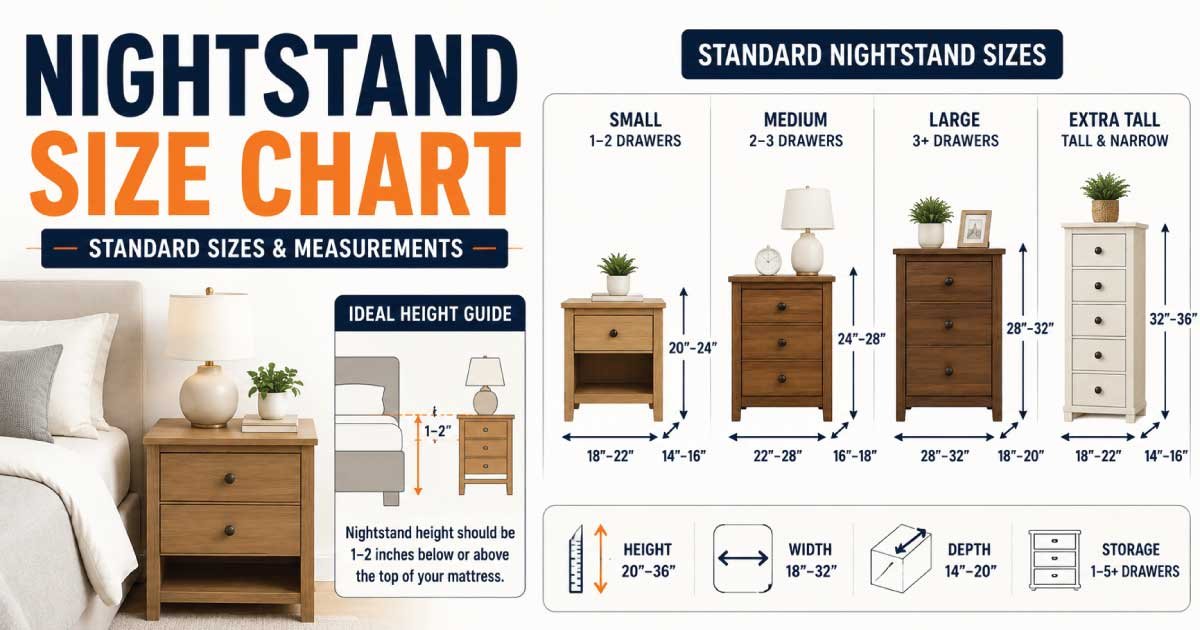
A nightstand is one of the most practical pieces of bedroom furniture. It keeps your essentials within easy reach while adding balance and style to your sleeping space. However, choosing the wrong size can make a bedroom feel cramped or awkward. A nightstand that is too tall, too short, too wide, or too deep may affect both comfort and functionality.
This complete Nightstand Size Chart will help you choose the perfect dimensions based on your bed size, room layout, and storage needs. Whether you’re furnishing a master bedroom, guest room, or small apartment, this guide covers everything you need to know.
Standard Nightstand Size Chart
| Nightstand Type | Height | Width | Depth |
|---|---|---|---|
| Small Nightstand | 20–24 inches | 14–18 inches | 14–16 inches |
| Standard Nightstand | 24–28 inches | 18–24 inches | 16–20 inches |
| Large Nightstand | 28–30 inches | 24–30 inches | 18–22 inches |
| Extra Wide Nightstand | 30–36 inches | 30–40 inches | 18–24 inches |
| Floating Nightstand | 20–28 inches (mounted) | 16–24 inches | 12–16 inches |
Nightstand Height Chart
The most important measurement is height. Ideally, your nightstand should be level with the top of your mattress.
| Mattress Height | Recommended Nightstand Height |
|---|---|
| 18 inches | 18–20 inches |
| 20 inches | 20–22 inches |
| 22 inches | 22–24 inches |
| 24 inches | 24–26 inches |
| 26 inches | 26–28 inches |
| 28 inches | 28–30 inches |
Ideal Rule
A nightstand should be:
- Equal to mattress height
- Up to 2 inches shorter
- Up to 2 inches taller
Anything beyond this range may become uncomfortable for reaching items while lying in bed.
Nightstand Width Chart
Width depends on your bed size and available space.
| Bed Size | Recommended Nightstand Width |
|---|---|
| Twin | 16–20 inches |
| Twin XL | 18–22 inches |
| Full | 18–24 inches |
| Queen | 20–28 inches |
| King | 24–30 inches |
| California King | 24–36 inches |
Larger beds generally look more balanced with wider nightstands.
Nightstand Depth Chart
Depth determines how much floor space your nightstand occupies.
| Bedroom Size | Recommended Depth |
|---|---|
| Small Bedroom | 14–16 inches |
| Standard Bedroom | 16–18 inches |
| Large Bedroom | 18–22 inches |
Avoid choosing overly deep nightstands in narrow rooms because they can block walkways.
Nightstand Sizes by Bed Type
Twin Bed
Recommended dimensions:
- Height: 20–24 inches
- Width: 16–20 inches
- Depth: 14–16 inches
Twin beds work well with compact nightstands that save floor space.
Full Bed
Recommended dimensions:
- Height: 22–26 inches
- Width: 18–22 inches
- Depth: 16–18 inches
A medium-sized nightstand provides enough storage without overwhelming the bed.
Queen Bed
Recommended dimensions:
- Height: 24–28 inches
- Width: 20–28 inches
- Depth: 16–20 inches
Queen beds pair well with matching nightstands on both sides for a balanced appearance.
King Bed
Recommended dimensions:
- Height: 24–30 inches
- Width: 24–30 inches
- Depth: 18–22 inches
Because king beds are much wider, larger nightstands create better visual proportion.
California King Bed
Recommended dimensions:
- Height: 24–30 inches
- Width: 24–36 inches
- Depth: 18–22 inches
Extra-wide nightstands often complement California king beds beautifully.
How to Measure for the Right Nightstand
Choosing the correct nightstand only takes a few simple measurements.
Step 1: Measure Mattress Height
Measure from the floor to the top of your mattress.
Step 2: Measure Available Wall Space
Determine how much room is available between:
- Bed and wall
- Bed and closet
- Bed and doorway
This helps prevent overcrowding.
Step 3: Leave Walking Space
Maintain at least:
- 24–30 inches for comfortable walking
- 36 inches for major pathways
Step 4: Check Drawer Clearance
If your nightstand has drawers, ensure they can fully open without hitting other furniture.
Nightstand Size for Small Bedrooms
Small bedrooms benefit from space-saving furniture.
Recommended dimensions:
- Width: 14–18 inches
- Depth: 14–16 inches
- Height: Match mattress
Space-saving ideas include:
- Floating nightstands
- Open shelves
- Slim drawer units
- Wall-mounted designs
These options create an open and airy feel while still providing storage.
Nightstand Size for Large Bedrooms
Larger rooms can accommodate more substantial furniture.
Recommended size:
- Width: 24–36 inches
- Depth: 18–22 inches
- Height: Mattress level
Many homeowners choose larger nightstands because they offer:
- Extra drawers
- Charging stations
- Decorative space
- Better visual balance
One Nightstand or Two?
Most bedrooms look best with two matching nightstands.
Use Two Nightstands When
- The bed is centered.
- Two people share the bed.
- You want a symmetrical look.
- There is enough wall space.
Use One Nightstand When
- The room is very small.
- The bed is against a wall.
- You prefer an asymmetrical design.
- Space is limited.
Floating Nightstand Size Guide
Floating nightstands have become increasingly popular in modern bedrooms.
Typical dimensions:
| Dimension | Size |
|---|---|
| Height from floor | Match mattress height |
| Width | 16–24 inches |
| Depth | 12–16 inches |
Advantages include:
- Easier floor cleaning
- Modern appearance
- Saves floor space
- Makes small rooms appear larger
Nightstand Drawer Size
Storage needs vary by household.
Typical drawer dimensions:
| Drawer Type | Height |
|---|---|
| Small Drawer | 3–5 inches |
| Medium Drawer | 5–7 inches |
| Large Drawer | 7–10 inches |
Most standard nightstands have:
- One drawer
- Two drawers
- Three drawers
Open shelving underneath provides additional storage for books and baskets.
⏩ Helpful Size Tips 👉 Home Theatre Recliner Size Chart for Perfect Fit
How Much Space Should Be Between the Bed and Nightstand?
Leave approximately 2–6 inches between the bed and the nightstand.
This small gap:
- Prevents furniture from rubbing together
- Makes bed-making easier
- Improves accessibility
- Creates a cleaner appearance
Choosing the Right Nightstand Style
The size of your nightstand should also match your bedroom style.
Modern Bedrooms
- Floating designs
- Clean lines
- Minimal hardware
- Slim profiles
Traditional Bedrooms
- Wood construction
- Multiple drawers
- Decorative legs
- Rich finishes
Farmhouse Bedrooms
- Rustic wood
- Open shelving
- Distressed finishes
- Simple hardware
Contemporary Bedrooms
- Mixed materials
- Metal accents
- Neutral colors
- Functional storage
Common Nightstand Mistakes
Avoid these common sizing mistakes:
Choosing a Nightstand That’s Too Tall
A tall nightstand makes it difficult to reach your phone, lamp, or water bottle while lying down.
Choosing One That’s Too Short
Items become inconvenient to access, especially at night.
Ignoring Room Size
Oversized furniture can overwhelm a small bedroom.
Forgetting Storage Needs
Think about what you keep beside your bed:
- Books
- Glasses
- Chargers
- Medications
- Water bottle
- Alarm clock
Choose enough drawers or shelves to keep these items organized.
⏩ Helpful Size Tips 👉 Apartment Furniture Size Guide With Size Chart
Tips for Choosing the Perfect Nightstand
- Match the height to your mattress.
- Choose a width proportional to your bed.
- Leave enough walking space.
- Consider drawer storage if you need organization.
- Select durable materials like solid wood or high-quality engineered wood.
- Ensure the style complements your bedroom furniture.
- Measure carefully before purchasing.
Final Thoughts
Selecting the right nightstand is about more than appearance—it directly affects comfort, convenience, and bedroom functionality. The best choice is one that aligns with the height of your mattress, fits comfortably within your available floor space, and provides enough storage for your daily essentials.
By following the size charts and measurement tips in this guide, you can confidently choose a nightstand that complements your bed and enhances the overall balance of your bedroom. Whether you prefer a compact floating design for a small room or a spacious two-drawer nightstand for a king-size bed, the right dimensions will help create a practical and visually appealing space.
⏩ Helpful Size Tips 👉 Best Blinds Sizes Chart for Every Window Type
FAQs:
What is the standard size of a nightstand?
A standard nightstand typically measures 24 to 28 inches high, 18 to 24 inches wide, and 16 to 20 inches deep. These dimensions provide enough surface area for lamps, books, phones, and personal items while maintaining comfortable access beside most standard beds.
Should a nightstand be higher than the bed?
A nightstand should ideally be the same height as your mattress surface or within 2 inches above or below it. This placement makes reaching items easier, creates a balanced appearance, and provides comfortable access while sitting or lying in bed.
How wide should a nightstand be?
Most nightstands are between 18 and 28 inches wide, depending on the bed size and available bedroom space. Smaller rooms benefit from compact designs, while larger bedrooms with king or queen beds can accommodate wider nightstands for better storage and balance.
Is one nightstand enough?
Yes, one nightstand can be enough, especially in small bedrooms, guest rooms, or spaces where one side of the bed is against a wall. A single nightstand provides essential storage and surface space without making the room feel crowded or limiting movement.
What is the best depth for a nightstand?
A nightstand depth of 16 to 20 inches works well for most bedrooms, offering enough room for daily essentials without taking up excessive space. For smaller rooms or narrow areas, a compact nightstand with 14 to 16 inches of depth is a practical choice.
