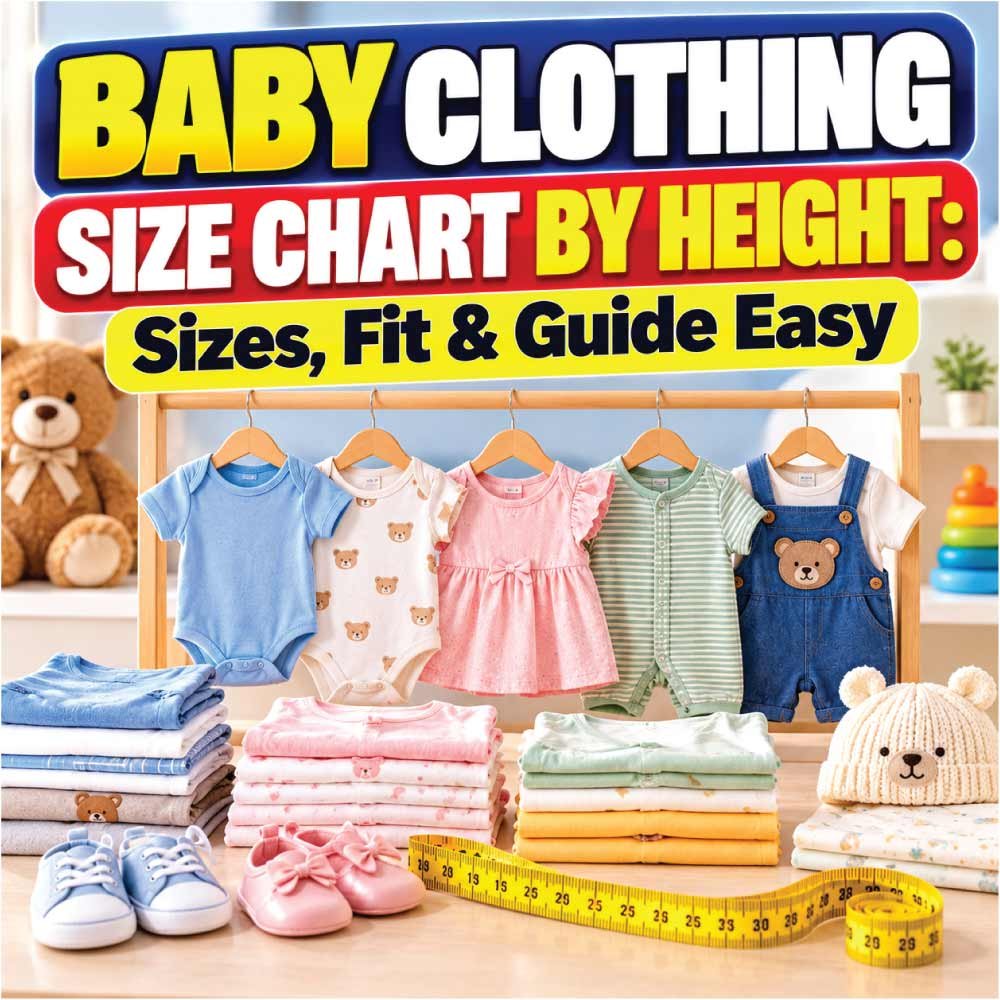
Choosing baby clothes by age alone can be surprisingly difficult. Babies grow at different rates, and a garment labeled “6 months” may fit one baby perfectly while being too short or too loose on another. That is why baby clothing size chart by height is a useful way to narrow down the right size.
Height, along with weight, chest, waist, and body proportions, can provide a better indication of how clothing will fit than age alone. This guide explains how baby clothing sizes relate to height, how to measure your baby correctly, how to read a size chart, and what to do when your baby’s measurements fall between two sizes.
Whether you are buying bodysuits, sleepers, shirts, pants, dresses, or everyday outfits, the goal is the same: choose clothing that fits comfortably without restricting movement.
Baby Clothing Size Chart by Height
A height-based baby clothing chart provides a practical starting point for selecting clothing. The measurements below are general size guidance rather than universal standards because sizing varies between manufacturers and countries.
| Baby Size | Approx. Age | Height Range | Typical Clothing Use |
|---|---|---|---|
| Newborn | 0–1 month | Up to 21.5 in / 55 cm | Newborn outfits, bodysuits |
| 0–3 Months | 0–3 months | 21.5–24 in / 55–61 cm | Bodysuits, sleepers, tops |
| 3–6 Months | 3–6 months | 24–26 in / 61–66 cm | Everyday baby clothing |
| 6–9 Months | 6–9 months | 26–28 in / 66–71 cm | Tops, pants, sleepers |
| 9–12 Months | 9–12 months | 28–30 in / 71–76 cm | Everyday outfits |
| 12–18 Months | 12–18 months | 30–32 in / 76–81 cm | Toddler-style clothing |
| 18–24 Months | 18–24 months | 32–34 in / 81–86 cm | Larger baby/toddler clothing |
These ranges should be treated as a general reference, not an exact standard. Clothing manufacturers may use different measurements, labels, and fit models.
When purchasing a particular garment, always compare your baby’s height with the manufacturer’s size chart if one is available.
Why Height Matters When Choosing Baby Clothes
Age-based sizing is convenient, but it does not tell you how tall a baby actually is. Two babies who are both nine months old can have noticeably different body lengths.
Height is especially useful when choosing garments where length affects comfort and usability.
For example, a baby may have enough room around the chest but be too tall for a particular sleeper. Similarly, pants may fit around the waist but become too short at the ankles.
Height can help you evaluate:
- Overall garment length
- Sleeve length
- Leg length
- Bodysuit length
- Sleeper and romper fit
- Dress length
- Jacket and coat coverage
However, height should not be considered in isolation. Baby clothing fit is affected by body shape, weight, diaper size, garment design, and fabric stretch.
A good approach is to use height as the starting measurement, then check other measurements when the manufacturer provides them.
How to Measure a Baby’s Height for Clothing
Accurate measurement is important because even a small difference can affect which clothing size is most appropriate.
Measure Length for Babies Who Cannot Stand
Young babies are usually measured lying down rather than standing.
Place your baby on a firm, flat surface. Keep the head positioned naturally and gently straighten the legs without forcing them.
Measure from:
- The top of the baby’s head.
- Along the body.
- To the bottom of the heels.
Record the measurement in either inches or centimeters.
Because babies move frequently, it can help to have another adult assist with positioning and recording the measurement.
Measure Standing Height for Older Babies
Once a child can stand safely, height can be measured vertically.
Have the child stand upright against a flat wall with the feet positioned naturally. Keep the body straight without forcing an uncomfortable posture.
Measure from the floor to the top of the head.
For clothing purposes, consistency matters. If you are comparing measurements over time, try to measure in the same way each time.
Baby Clothing Sizes by Height and Age
Parents often begin shopping with age labels such as newborn, 3 months, 6 months, or 12 months. These labels are useful, but they are better treated as general categories rather than exact measurements.
Newborn Clothing Size
Newborn clothing is designed for very small babies and is generally intended for babies with shorter body lengths.
Common newborn garments include:
- Bodysuits
- Sleepers
- Gowns
- Hats
- Mittens
- Small pants
- Newborn shirts
Not every newborn needs the same amount of newborn-sized clothing. Some babies outgrow this size quickly, while others wear it for longer.
If a baby is already near the upper end of the manufacturer’s newborn height range, buying some 0–3 month clothing may provide more useful growing room.
0–3 Month Clothing
The 0–3 month category generally accommodates babies who have grown beyond newborn sizing but are still relatively small.
This is one of the most commonly purchased early clothing sizes because babies grow rapidly during the first few months.
Look for comfortable stretch around the torso and enough length through the legs and body.
3–6 Month Clothing
At this stage, babies can have substantial differences in height and body shape. A height measurement can therefore become more useful than relying on age.
If your baby’s height is close to the upper end of a 3–6 month range, compare the next size before purchasing several outfits.
6–9 and 9–12 Month Clothing
During the second half of the first year, babies become increasingly mobile. Clothing needs to provide enough room for kicking, crawling, sitting, and other movements.
Height remains important for sleepers, pants, rompers, and one-piece outfits.
Baby Clothing Size Chart in Inches and Centimeters
Using both inches and centimeters makes a chart useful for shoppers in different countries.
| Size | Height in Inches | Height in Centimeters |
|---|---|---|
| Newborn | Up to 21.5 in | Up to 55 cm |
| 0–3 Months | 21.5–24 in | 55–61 cm |
| 3–6 Months | 24–26 in | 61–66 cm |
| 6–9 Months | 26–28 in | 66–71 cm |
| 9–12 Months | 28–30 in | 71–76 cm |
| 12–18 Months | 30–32 in | 76–81 cm |
| 18–24 Months | 32–34 in | 81–86 cm |
These measurements are general reference ranges. Individual brands may use different size intervals, so the manufacturer’s chart should take priority when available.
How to Choose the Right Baby Clothing Size by Height
Once you know your baby’s height, compare it with the size chart for the clothing brand.
If Your Baby Falls Clearly Within One Size
If the height falls comfortably inside a manufacturer’s size range, that size is usually the best starting point.
For example, if a chart lists a size for 66–71 cm and your baby measures around 68 cm, the baby’s height is comfortably within that range.
You should still check the garment’s other measurements when available.
If Your Baby Is Between Two Sizes
This is one of the most common sizing situations.
When your baby’s height falls between sizes, consider:
- The garment type
- How quickly your baby is growing
- Whether the fabric stretches
- Whether you want a close or relaxed fit
- The manufacturer’s specific recommendations
For fitted clothing, staying closer to the current measurements may provide a better fit. For outerwear or certain loose garments, sizing up may provide additional growing room.
However, avoid choosing a much larger size simply because you expect your baby to grow. Oversized clothing can be uncomfortable and may interfere with movement.
Height Is Not the Only Baby Clothing Measurement
A height chart is helpful, but baby clothing does not fit based on height alone.
Weight
Weight can help distinguish between babies who have similar heights but different body builds.
A baby with a higher weight for the same height may need a wider or roomier garment even when the length is appropriate.
Chest
Chest circumference is particularly useful for:
- Shirts
- Jackets
- Sweaters
- Dresses
- Bodysuits
- Outerwear
If a garment fits correctly in length but feels tight around the chest, the next size may be more comfortable.
Waist
Waist measurements can be useful for pants, shorts, skirts, and some dresses.
Elastic waistbands provide more flexibility, while fitted waistbands require closer attention to measurements.
Inseam
Inseam length can be useful for pants and trousers. If the waist fits but the pants are consistently too short, the baby may need a different size or a garment with a longer cut.
Baby Clothing Size Chart by Height vs. Age
Height and age provide different types of information.
| Sizing Method | Main Benefit | Main Limitation |
|---|---|---|
| Age | Easy and convenient | Babies grow at different rates |
| Height | Reflects body length | Does not show body width |
| Weight | Helps indicate overall body size | Does not show garment length |
| Chest | Useful for upper-body fit | Not enough for one-piece clothing |
| Waist | Helpful for bottoms | Does not determine overall length |
For general shopping, age is a convenient starting point. For better accuracy, height plus weight is often more informative.
When a garment is fitted, adding chest or waist measurements can provide an even clearer picture.
Also Read:
How Baby Clothing Sizes Vary by Brand
One of the biggest reasons parents experience sizing confusion is that baby clothing does not follow one universal sizing system.
One brand may design its clothing with a slim fit, while another may offer a roomier cut. Some brands may also label clothing according to age while providing height and weight ranges separately.
Fabric makes a difference too. Stretchy cotton garments can accommodate small differences in body size, while structured clothing may require a closer measurement match.
Before buying online, check:
- The brand’s size chart
- Height range
- Weight range
- Chest measurement
- Waist measurement when provided
- Garment type
- Fit description
- Customer reviews when available
The manufacturer’s size chart should generally take priority over a generic baby clothing size chart.
Also Read:
When Should You Size Up Baby Clothes?
Sizing up can be useful when your baby is approaching the upper limit of a clothing range.
For example, if your baby is very close to the maximum height listed for a particular size, moving to the next size may provide more usable length.
You may also consider sizing up when:
- Sleeves or legs are already becoming short.
- The bodysuit pulls tightly around the diaper area.
- The garment restricts movement.
- The clothing shrinks after washing.
- You want a little additional growing room.
- The brand’s clothing runs small.
However, bigger is not always better. Clothing that is excessively loose can bunch up, make movement difficult, or simply be uncomfortable.
The goal is comfortable growing room, not excessive size.
Common Baby Clothing Sizing Mistakes
Choosing baby clothes can become easier when you know what to avoid.
Relying Only on Age
Age labels are approximate. A “12-month” garment does not necessarily fit every 12-month-old baby.
Use age as a quick reference, then check height and other available measurements.
Ignoring the Manufacturer’s Chart
A generic chart can help when you are unsure where to start, but individual brands may use different sizing.
Always check the specific product’s measurements before purchasing when possible.
Buying Too Many Clothes in One Size
Babies can move through sizes quickly. Buying a large quantity of one size may leave you with clothing that is barely worn.
A more practical approach is to purchase a reasonable number of essential pieces and add larger sizes as your baby grows.
Forgetting About Diaper Space
One-piece clothing needs enough room for the diaper area. A garment can appear suitable by height but still feel restrictive through the torso.
Check the fit around the bottom and leg openings.
Ignoring Fabric Shrinkage
Some natural fabrics may change slightly after washing. Follow the garment’s care instructions and consider this when deciding how closely a garment should fit.
Also Read:
Tips for Buying Baby Clothes Online
Online shopping makes it especially important to use measurements because you cannot physically check the garment before buying.
Before ordering, follow these steps:
- Measure your baby’s height.
- Record the measurement in centimeters or inches.
- Check the manufacturer’s size chart.
- Compare height first.
- Check weight, chest, and waist measurements if provided.
- Read the fit description.
- Consider the garment type.
- Check the return or exchange policy.
- Avoid buying excessive quantities in a size your baby is about to outgrow.
If two sizes appear suitable, think about whether the garment is meant to fit close to the body or have a relaxed shape.
Choosing Sizes for Different Baby Clothing Types
Different garments require different considerations.
Bodysuits
For bodysuits, overall height and torso length are especially important. A bodysuit that is too short may pull around the shoulders or diaper area.
Sleepers
Sleepers need enough length for comfortable leg movement. Footed sleepers require particular attention to both body and foot length.
Pants
For pants, waist fit and leg length both matter. Elastic waistbands can accommodate some variation.
Dresses
Height can help determine overall dress length, but chest and shoulder measurements may be more important for the upper portion.
Jackets and Coats
Outerwear may need slightly more room to accommodate layers underneath. However, avoid choosing an excessively large garment.
Shirts and Tops
Chest, shoulder, and overall height are useful when selecting tops. Stretchy fabrics generally provide more flexibility.
How Fast Do Babies Outgrow Clothing?
Baby growth is not perfectly predictable. Some babies remain in a size for a relatively short period, while others may wear it for longer.
Growth can also be uneven. A baby may gain length faster than width or vice versa.
Instead of relying on a specific number of weeks or months, watch for practical signs that clothing has become too small:
- Sleeves no longer reach comfortably.
- Pants become noticeably short.
- Bodysuits pull around the diaper area.
- Snaps are difficult to close.
- Neck openings feel tight.
- The garment restricts normal movement.
- The baby appears uncomfortable while wearing it.
These signs can be more useful than age labels alone.
Frequently Asked Questions
What size baby clothes are based on height?
Baby clothing sizes often correspond to approximate height ranges, such as newborn, 0–3 months, 3–6 months, and larger sizes. Because sizing differs between brands, compare your baby’s actual height with the manufacturer’s chart whenever possible.
Is height or weight more important for baby clothes?
Height is especially useful for determining clothing length, while weight helps indicate overall body size. Using both measurements together generally gives a better indication of fit than relying on either measurement alone.
How do I measure my baby’s height for clothing?
For a baby who cannot stand, measure body length while the baby is lying flat, from the top of the head to the bottom of the heels. Older children can be measured standing against a wall.
Should I buy baby clothes one size bigger?
Sizing up can be practical when your baby is close to the upper end of a size range. However, excessively large clothing may be uncomfortable. Choose the next size when it provides useful growing room without creating an overly loose fit.
Why does my baby wear a different size from the age label?
Age labels are general guidelines rather than exact measurements. Babies grow at different rates, so a child may need a smaller or larger clothing size than their age suggests. Height, weight, and body proportions provide more useful information.
What if my baby is between two clothing sizes?
Check the garment type and the manufacturer’s measurements. If your baby is close to the upper limit of the smaller size, the larger size may provide more comfortable growing room. For fitted garments, prioritize the measurements most relevant to the garment.
Do all baby clothing brands use the same sizes?
No. Baby clothing brands can differ in their size ranges, garment proportions, and fit. Some use age labels, while others provide height and weight measurements. Always compare your baby’s measurements with the specific brand’s chart.
Should baby clothes be loose or tight?
Baby clothes should generally be comfortable and allow natural movement without being excessively tight or excessively loose. Look for enough room for movement and the diaper while avoiding garments that bunch or restrict the baby.
Final Thoughts on Baby Clothing Size by Height
A baby clothing size chart by height can make shopping much easier because it focuses on your baby’s actual body length instead of relying entirely on age labels. Start by measuring your baby’s height accurately, then compare that measurement with the clothing manufacturer’s chart.
Remember that height is only one part of fit. Weight, chest, waist, torso length, diaper space, fabric stretch, and garment design can all affect how clothing feels.
When your baby falls between two sizes, consider the garment type and how close the child is to the upper end of the current range. A little growing room can be useful, but oversized clothing is not automatically a better choice.
The most reliable approach is simple: measure first, compare with the brand’s chart, and choose the size that provides comfortable movement and appropriate coverage. This method can reduce sizing mistakes and help you buy baby clothes that fit better for longer.
