
A filing cabinet is an essential storage solution for organizing important documents, office files, paperwork, and records. Whether you are setting up a home office, business workspace, or professional filing system, choosing the correct filing cabinet size helps improve organization and saves valuable space.
Filing cabinets come in different sizes, styles, and configurations. The right choice depends on the number of documents you need to store, available office space, file type, and how frequently you access your files.
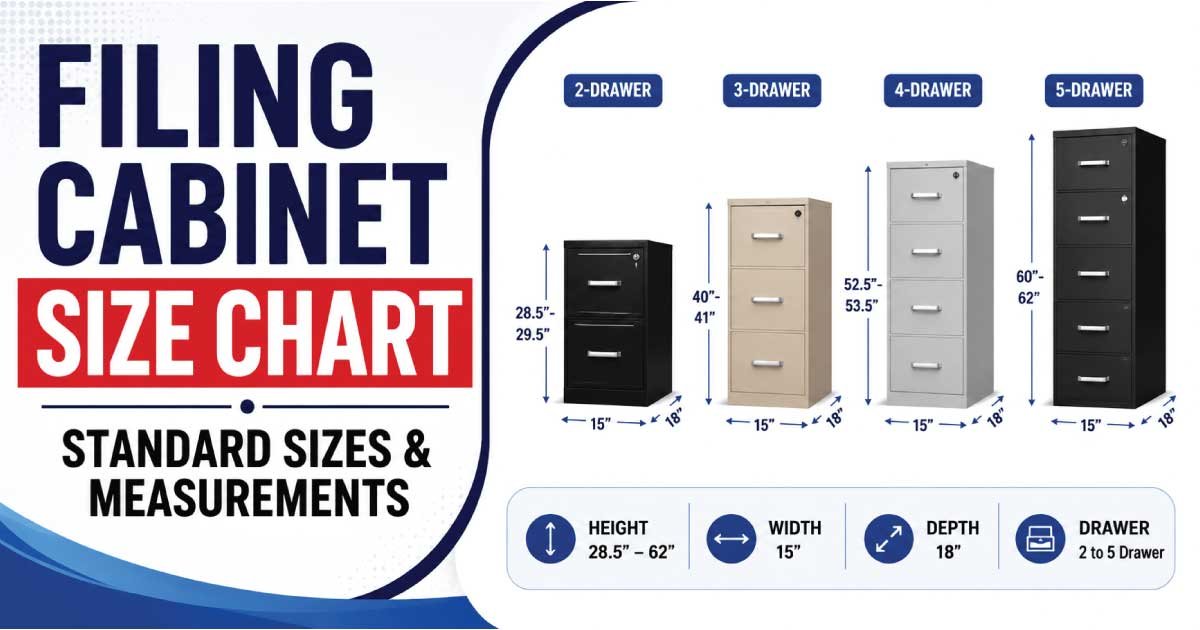
A detailed filing cabinet size chart helps you understand standard heights, widths, depths, drawer sizes, and storage capacity before selecting the best filing cabinet for your needs.
This complete guide explains standard filing cabinet dimensions, different types of filing cabinets, drawer measurements, office placement tips, and how to choose the perfect size.
Filing Cabinet Size Chart (Standard Dimensions)
Filing cabinets are available in different sizes depending on their design and storage capacity. The most common measurements include height, width, and depth.
| Filing Cabinet Type | Width | Depth | Height |
|---|---|---|---|
| Small 2-Drawer Filing Cabinet | 15–18 inches | 18–25 inches | 24–30 inches |
| Standard 2-Drawer Filing Cabinet | 15–18 inches | 25–29 inches | 28–30 inches |
| 3-Drawer Filing Cabinet | 15–18 inches | 25–29 inches | 40–42 inches |
| 4-Drawer Filing Cabinet | 15–18 inches | 25–29 inches | 52–54 inches |
| Lateral Filing Cabinet | 30–42 inches | 18–25 inches | 28–42 inches |
| Mobile Filing Cabinet | 15–20 inches | 18–24 inches | 20–28 inches |
A standard vertical filing cabinet usually measures around 15–18 inches wide, 25–29 inches deep, and 28–42 inches high, making it suitable for most home and office environments.
Understanding Filing Cabinet Dimensions
Before purchasing a filing cabinet, it is important to understand the three main measurements: height, width, and depth. These dimensions determine storage capacity, placement options, and ease of use.
Filing Cabinet Width Guide
The width determines how much space the cabinet requires and how many files can fit side-by-side.
Narrow Filing Cabinet Width (12–15 Inches)
Narrow filing cabinets are designed for small spaces and light storage needs.
They are suitable for:
- Home offices
- Small work areas
- Personal documents
- Limited paperwork
These cabinets save space but provide less storage capacity.
Standard Filing Cabinet Width (15–18 Inches)
Standard filing cabinets are the most common choice for offices and homes.
They provide enough space for:
- Letter-size files
- Folders
- Business documents
- Tax records
A 15–18 inch width works well for everyday filing requirements.
Wide Filing Cabinet Width (30–42 Inches)
Wide or lateral filing cabinets provide more horizontal storage space.
They are ideal for:
- Large offices
- Business records
- High-volume paperwork
These cabinets allow easier file access and can store many documents.
Filing Cabinet Height Guide
The height of a filing cabinet depends on the number of drawers and storage requirements.
2-Drawer Filing Cabinet Height
A 2-drawer filing cabinet usually measures:
- Height: 24–30 inches
Benefits include:
- Fits under desks
- Easy access
- Suitable for small offices
This is one of the best options for home offices.
3-Drawer Filing Cabinet Height
A 3-drawer cabinet typically measures:
- Height: 40–42 inches
It provides additional storage while maintaining a compact footprint.
Suitable for:
- Small businesses
- Professional offices
- Home workspaces
4-Drawer Filing Cabinet Height
A 4-drawer filing cabinet usually measures:
- Height: 52–54 inches
It provides maximum vertical storage and is commonly used in offices with large filing needs.
Filing Cabinet Depth Guide
Depth determines how far the cabinet extends into your workspace and what file sizes it can accommodate.
Standard Filing Cabinet Depth
Most filing cabinets have a depth of:
- 25–29 inches
This allows storage of standard documents and folders while maintaining easy access.
Compact Filing Cabinet Depth
Small filing cabinets may have:
- 18–24 inches depth
They are ideal for:
- Apartments
- Small desks
- Limited office areas
Deep Filing Cabinet Depth
Large cabinets may have:
- 30+ inches depth
These are suitable for:
- Heavy-duty office use
- Large document collections
- Archive storage
⏩ Complete Size Chart 👉 Bookshelf Size Chart: Complete Guide to Standard Sizes
Different Types of Filing Cabinets and Their Sizes
Filing cabinets come in several styles designed for different storage needs.
Vertical Filing Cabinet Size Guide
Vertical filing cabinets store files from front to back and save floor space.
Common dimensions:
- Width: 15–18 inches
- Depth: 25–29 inches
- Height: 28–54 inches
They are suitable for:
- Home offices
- Small businesses
- Individual workstations
Lateral Filing Cabinet Size Guide
Lateral filing cabinets store files side-by-side and provide wider drawers.
Typical dimensions:
- Width: 30–42 inches
- Depth: 18–25 inches
- Height: 28–42 inches
Advantages include:
- Easier file access
- More storage capacity
- Better organization
Mobile Filing Cabinet Size Guide
Mobile filing cabinets include wheels for easy movement.
Standard dimensions:
- Width: 15–20 inches
- Depth: 18–24 inches
- Height: 20–28 inches
They are perfect for:
- Under-desk storage
- Flexible workspaces
- Small offices
Fireproof Filing Cabinet Size Guide
Fireproof cabinets are designed to protect important documents.
Typical dimensions:
- Width: 18–24 inches
- Depth: 20–30 inches
- Height: 24–40 inches
They are commonly used for:
- Legal documents
- Financial records
- Important certificates
Filing Cabinet Drawer Size Guide
Drawer size is important because it determines the type of files you can store.
Letter Size Filing Cabinet Dimensions
Letter-size files are commonly used in homes and offices.
Standard measurements:
- File width: 8.5 inches
- File length: 11 inches
Most standard filing cabinets support letter-size folders.
Legal Size Filing Cabinet Dimensions
Legal-size files require longer drawers.
Standard measurements:
- File width: 8.5 inches
- File length: 14 inches
Legal filing cabinets are commonly used by:
- Law offices
- Government departments
- Professional businesses
Filing Cabinet Size for Different Spaces
The best filing cabinet size depends on your available workspace and storage requirements.
Home Office Filing Cabinet Size
For home offices, recommended dimensions are:
- Width: 15–18 inches
- Depth: 18–29 inches
- Height: 24–42 inches
Popular choices include:
- 2-drawer cabinets
- Mobile cabinets
- Compact vertical cabinets
Small Business Filing Cabinet Size
Small businesses often need more storage capacity.
Recommended size:
- Width: 18–36 inches
- Depth: 25–30 inches
- Height: 40–54 inches
These provide enough space for customer files and business records.
Large Office Filing Cabinet Size
Large offices typically require:
- Width: 30–42 inches
- Depth: 20–30 inches
- Height: 40–54 inches
Lateral cabinets are often preferred because they provide quick access to large numbers of files.
⏩ Complete Size Chart 👉 Curtain Tieback Length Chart: Complete Guide + PDF
How to Choose the Right Filing Cabinet Size
Selecting the right filing cabinet requires considering your storage needs and available space.
Determine Your File Storage Needs
Consider how many documents you need to store.
For small collections:
- Choose a 2-drawer cabinet
For growing records:
- Choose a 3 or 4-drawer cabinet
For large businesses:
- Choose lateral filing systems
Measure Your Available Space
Before purchasing, measure:
- Floor area
- Desk clearance
- Doorways
- Workspace movement area
Leave enough room to fully open drawers.
Recommended clearance:
- 36 inches in front of filing drawers
Choose Between Vertical and Lateral Cabinets
Vertical cabinets:
- Save floor space
- Work well in small offices
- Store files vertically
Lateral cabinets:
- Provide easier access
- Store more documents
- Work well in larger spaces
Consider Security Features
For sensitive documents, choose cabinets with:
- Locks
- Fire protection
- Strong construction
Security is important for:
- Financial records
- Business documents
- Personal information
Common Filing Cabinet Size Mistakes to Avoid
Avoid these mistakes when choosing a filing cabinet.
Choosing Too Small a Cabinet
A small cabinet may quickly become overcrowded. Consider future document growth before purchasing.
Ignoring Drawer Clearance
Make sure drawers can open completely without hitting desks or walls.
Not Checking File Compatibility
Always confirm whether the cabinet supports:
- Letter-size files
- Legal-size files
- Hanging folders
Buying a Cabinet Too Large for the Space
A large filing cabinet can reduce workspace and make movement difficult. Measure carefully before buying.
Filing Cabinet Size Recommendations
| Usage Type | Recommended Filing Cabinet Size |
|---|---|
| Home Office | 2-Drawer Cabinet |
| Small Business | 3-Drawer Cabinet |
| Large Office | 4-Drawer or Lateral Cabinet |
| Limited Space | Mobile Filing Cabinet |
| Secure Documents | Fireproof Filing Cabinet |
Final Thoughts on Filing Cabinet Dimensions
Choosing the right filing cabinet size helps create an organized and efficient workspace. The ideal cabinet should provide enough storage, fit comfortably in your office, and match your filing requirements.
For most home offices, a 15–18 inch wide, 25–29 inch deep, 2-drawer filing cabinet is a practical choice. Businesses with larger storage needs may benefit from 3-drawer, 4-drawer, or lateral filing cabinets.
By using this filing cabinet size chart and complete measurement guide, you can select a cabinet that keeps your documents organized while maximizing your available workspace.
⏩ Complete Size Chart 👉 Chair Size Chart: Complete Guide to Standard Dimensions
