
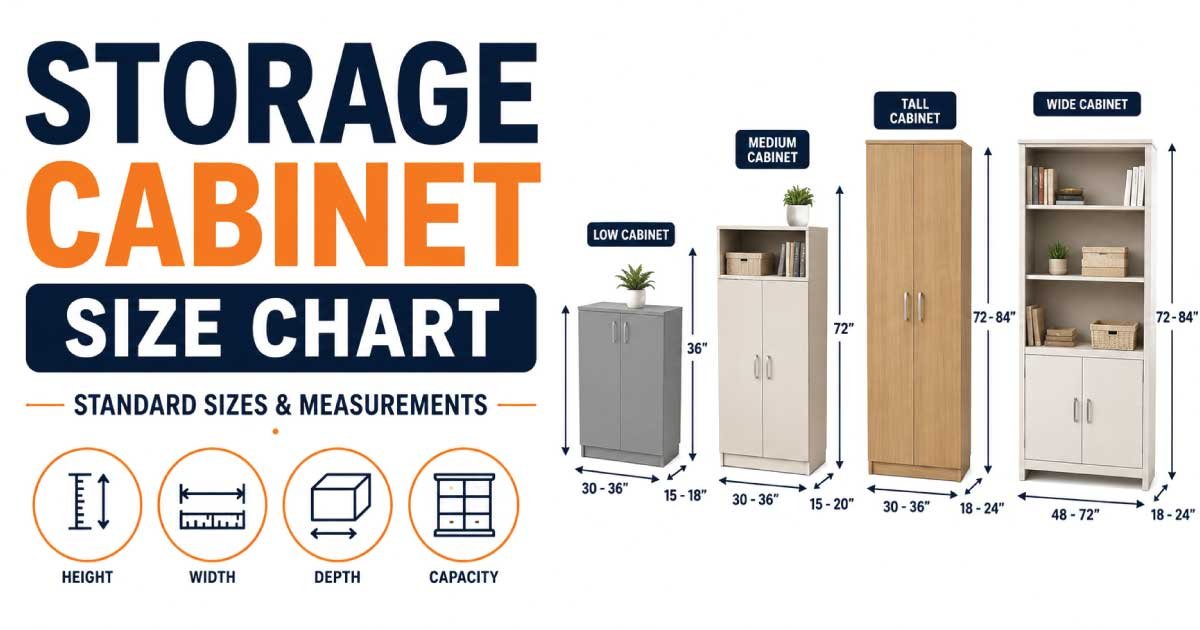
A storage cabinet is one of the most practical furniture pieces for organizing household items, office supplies, pantry goods, tools, and cleaning equipment. Whether you’re furnishing a kitchen, garage, bedroom, laundry room, or office, selecting the correct cabinet size is essential for maximizing storage while maintaining comfortable room layout and accessibility. Storage cabinets come in a wide variety of heights, widths, and depths, making it important to understand standard dimensions before purchasing.
This complete guide includes a detailed Storage Cabinet Size Chart, standard cabinet dimensions, shelving recommendations, clearance guidelines, and expert buying tips to help you choose the ideal storage cabinet for your space.
Storage Cabinet Size Chart
| Storage Cabinet Type | Width | Depth | Height | Best For |
|---|---|---|---|---|
| Small Cabinet | 24–30 inches | 12–16 inches | 30–36 inches | Bathrooms, Bedrooms |
| Medium Cabinet | 30–36 inches | 16–20 inches | 48–60 inches | Kitchens, Offices |
| Standard Cabinet | 36–48 inches | 18–24 inches | 60–72 inches | Living Rooms, Garages |
| Large Cabinet | 48–60 inches | 20–24 inches | 72–84 inches | Pantry, Laundry Room |
| Extra Large Cabinet | 60–72 inches | 24–30 inches | 84–96 inches | Workshops, Storage Rooms |
Standard Storage Cabinet Dimensions
Standard Storage Cabinet Height
Storage cabinet height depends on its intended purpose. Smaller cabinets fit beneath countertops, while taller cabinets maximize vertical storage. Most household storage cabinets range between 30 and 84 inches high, with taller pantry and utility cabinets reaching up to 96 inches.
Common Cabinet Heights
| Cabinet Type | Height |
|---|---|
| Base Cabinet | 30–36 inches |
| Medium Cabinet | 48–60 inches |
| Tall Cabinet | 72 inches |
| Pantry Cabinet | 84–96 inches |
Standard Storage Cabinet Width
Cabinet width determines storage capacity and should be selected based on available wall space. Most cabinets range from 24 to 60 inches wide, with wider units offering additional shelves and larger storage compartments.
| Cabinet Size | Width |
|---|---|
| Small | 24–30 inches |
| Medium | 30–36 inches |
| Standard | 36–48 inches |
| Large | 48–60 inches |
Standard Storage Cabinet Depth
Depth influences both storage capacity and floor space. Most residential storage cabinets have depths between 12 and 24 inches, while garage and utility cabinets may be deeper to accommodate bulky items.
| Cabinet Type | Depth |
|---|---|
| Slim Cabinet | 12–14 inches |
| Standard Cabinet | 16–20 inches |
| Utility Cabinet | 20–24 inches |
| Heavy-Duty Cabinet | 24–30 inches |
Storage Cabinet Size by Room
Kitchen Storage Cabinets
Kitchen storage cabinets provide space for cookware, dry foods, and small appliances. Standard kitchen storage cabinets usually feature adjustable shelves and durable finishes that resist moisture and stains.
Typical dimensions include:
- Width: 30–48 inches
- Depth: 16–24 inches
- Height: 60–84 inches
Pantry Storage Cabinets
Pantry cabinets maximize food storage through multiple adjustable shelves. Tall designs make efficient use of vertical space while keeping groceries organized and easily accessible.
Typical dimensions:
- Width: 24–48 inches
- Depth: 18–24 inches
- Height: 72–96 inches
Garage Storage Cabinets
Garage cabinets are designed for heavy tools, equipment, and automotive supplies. They feature reinforced construction and greater weight capacities than standard household cabinets.
Typical dimensions:
- Width: 36–60 inches
- Depth: 18–24 inches
- Height: 72–84 inches
Office Storage Cabinets
Office cabinets organize documents, office supplies, books, and electronics. Their compact dimensions fit comfortably in home offices while maximizing available storage.
Typical dimensions:
- Width: 30–36 inches
- Depth: 16–20 inches
- Height: 48–72 inches
Storage Cabinet Shelf Size Chart
Adjustable shelving increases cabinet versatility.
| Shelf Type | Standard Depth | Shelf Spacing |
|---|---|---|
| Small Shelf | 12 inches | 10–12 inches |
| Standard Shelf | 16 inches | 12–15 inches |
| Deep Shelf | 20 inches | 15–18 inches |
| Utility Shelf | 24 inches | 18–24 inches |
Proper shelf spacing allows efficient organization of items of various sizes.
Storage Cabinet Door Clearance
Recommended Door Opening Space
Cabinet doors require sufficient clearance for convenient access.
| Door Type | Clearance Needed |
|---|---|
| Single Door | 20–24 inches |
| Double Door | 36–48 inches |
| Sliding Door | No front clearance required |
Ensure cabinet doors do not interfere with nearby furniture or walkways.
Walking Clearance Around Cabinets
Adequate walking space improves accessibility and safety.
| Area | Minimum Clearance |
|---|---|
| Residential | 36 inches |
| High-Traffic Area | 42 inches |
| Accessible Design | 48–60 inches |
These clearances allow comfortable movement while opening cabinet doors.
⏩ Detailed Measurement Guide 👉 Loveseat Sofa Size Chart: Complete Guide to Dimensions
Storage Cabinet Materials
Solid Wood Cabinets
Solid wood cabinets offer exceptional durability and timeless appeal. They work well in traditional, farmhouse, and luxury interiors while providing excellent long-term value.
Engineered Wood Cabinets
Engineered wood provides an affordable alternative with numerous finishes that mimic natural wood while resisting warping and shrinking.
Metal Storage Cabinets
Metal cabinets are highly durable and commonly used in garages, workshops, and commercial environments due to their strength and resistance to impact.
Plastic Storage Cabinets
Plastic cabinets resist moisture, making them suitable for bathrooms, laundry rooms, and outdoor covered spaces. They are lightweight and easy to maintain.
Storage Cabinet Weight Capacity
Different cabinet constructions support varying loads.
| Cabinet Type | Maximum Weight Capacity |
|---|---|
| Small Cabinet | 100 lbs |
| Standard Cabinet | 200 lbs |
| Heavy-Duty Cabinet | 300 lbs |
| Garage Cabinet | 500 lbs |
Always distribute heavy items evenly across shelves to prevent sagging.
How to Choose the Right Storage Cabinet Size
Measure Available Space
Measure both floor space and ceiling height before selecting a cabinet. Include clearance for doors, trim, and nearby furniture to ensure proper installation.
Identify Storage Needs
Consider what you plan to store. Large tools, appliances, books, or pantry items may require deeper shelves and stronger cabinet construction.
Select Adjustable Shelves
Adjustable shelving allows you to customize storage as your needs change over time, increasing the cabinet’s versatility.
Match the Room Style
Choose cabinet finishes, colors, and hardware that complement your existing furniture and interior design.
⏩ Detailed Measurement Guide 👉 Blinds Size Chart: Complete Guide to Standard Sizes
Storage Cabinet vs. Storage Shelves
| Feature | Storage Cabinet | Open Shelving |
|---|---|---|
| Dust Protection | Excellent | Limited |
| Hidden Storage | Yes | No |
| Organization | High | Moderate |
| Appearance | Clean and Organized | Decorative |
| Security | Lockable Options | No |
Cabinets are ideal when you want concealed, organized storage with added protection.
Benefits of a Properly Sized Storage Cabinet
Selecting the correct cabinet size provides several advantages.
- Maximizes storage capacity
- Reduces household clutter
- Protects stored items
- Improves room organization
- Makes efficient use of vertical space
- Enhances room appearance
- Offers flexible storage options
- Increases property value
- Keeps frequently used items accessible
- Supports long-term organization
Common Storage Cabinet Buying Mistakes
Avoid these common purchasing mistakes:
- Buying a cabinet that’s too large for the room
- Ignoring door clearance
- Choosing insufficient shelf depth
- Forgetting ceiling height
- Overloading shelves
- Ignoring weight capacity
- Selecting fixed shelves only
- Choosing materials unsuitable for humid environments
Planning carefully ensures your cabinet performs well for years.
Storage Cabinet Maintenance Tips
Proper maintenance helps extend the life of your storage cabinet.
- Dust shelves regularly.
- Tighten hinges and handles periodically.
- Avoid exceeding shelf weight limits.
- Clean surfaces with appropriate products.
- Lubricate door hinges when necessary.
- Inspect shelves for sagging.
- Keep cabinets dry to prevent moisture damage.
- Organize contents to distribute weight evenly.
Routine maintenance preserves both function and appearance.
⏩ Detailed Measurement Guide 👉 Blinds Size Chart: Choose the Right Blind Size
Conclusion
Choosing the correct storage cabinet size is essential for creating an organized, functional, and visually appealing space. By selecting the appropriate height, width, depth, and shelving configuration, you can maximize storage while ensuring easy access to your belongings. Whether you need a compact cabinet for a bathroom or a large utility cabinet for a garage, the size charts and recommendations in this guide will help you find the perfect storage cabinet for your needs.
FAQs:
What is the standard size of a storage cabinet?
A standard storage cabinet usually measures 36 to 48 inches in width, 18 to 24 inches in depth, and 60 to 72 inches in height. However, dimensions can vary depending on the room, storage needs, and whether the cabinet is used for home, office, or garage organization.
How deep should a storage cabinet be?
Most storage cabinets have a depth between 16 and 24 inches, providing enough space for books, containers, household supplies, and other items. Slim storage cabinets may be 12 inches deep, making them ideal for narrow hallways, bathrooms, or small rooms.
How much clearance is needed in front of a storage cabinet?
A minimum clearance of 36 inches should be maintained in front of a storage cabinet to allow doors and drawers to open easily. For frequently used cabinets or high-traffic areas, 42 to 48 inches of space provides better accessibility.
Are adjustable shelves better than fixed shelves?
Yes, adjustable shelves are generally more practical because they allow you to customize storage space according to your needs. You can change shelf heights to fit different-sized items, making organization easier and allowing the cabinet to adapt as storage requirements change.
What material is best for a storage cabinet?
The best storage cabinet material depends on your needs and environment. Solid wood provides durability and a premium look, engineered wood offers affordability, metal works well for heavy-duty storage, and plastic cabinets are suitable for moisture-prone areas like garages and laundry rooms.
