
A dresser is one of the most practical pieces of bedroom furniture, providing essential storage while enhancing the overall style of your room. However, choosing the wrong dresser size can make a bedroom feel cramped or leave valuable storage space unused. Understanding dresser dimensions helps you select a model that fits your room, matches your storage needs, and complements your existing furniture.
This complete dresser size guide explains standard dresser dimensions, different dresser styles, recommended room clearances, and practical tips for selecting the perfect dresser for any bedroom.
Dresser Size Chart
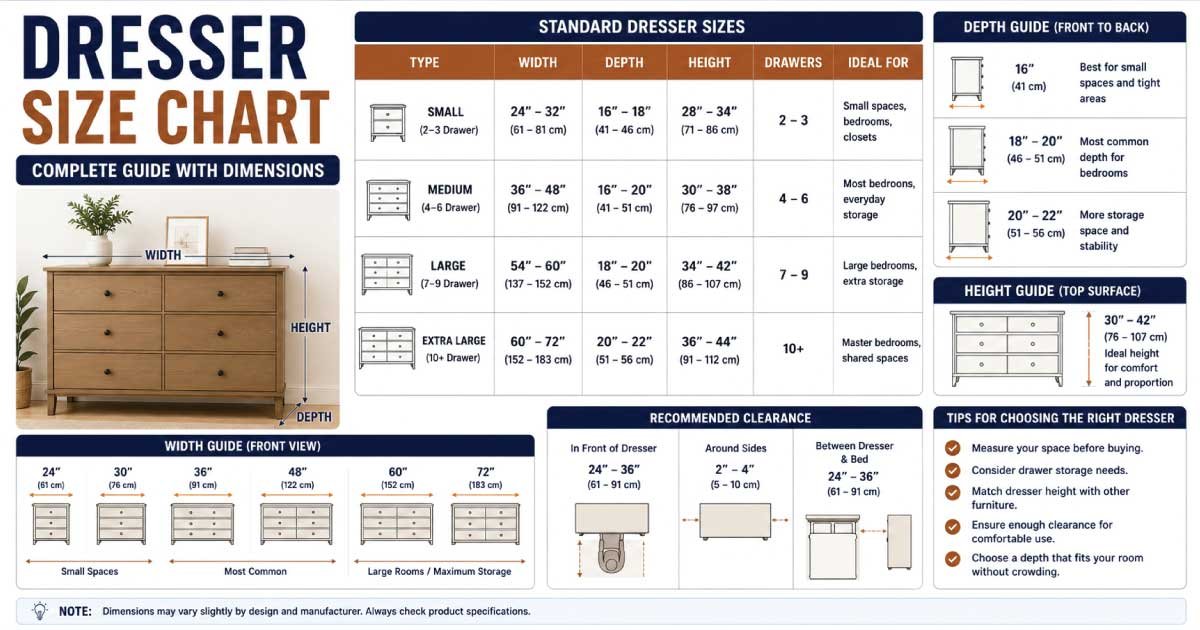
The following table shows the most common dresser sizes.
| Dresser Type | Width | Height | Depth |
|---|---|---|---|
| Small Dresser | 24–36 inches | 30–42 inches | 16–20 inches |
| Standard Dresser | 48–60 inches | 30–36 inches | 18–20 inches |
| Large Dresser | 60–72 inches | 30–38 inches | 18–22 inches |
| Double Dresser | 60–72 inches | 30–36 inches | 18–20 inches |
| Tall Chest | 24–40 inches | 44–60 inches | 16–20 inches |
| Narrow Chest | 20–30 inches | 50–60 inches | 16–18 inches |
| Horizontal Dresser | 48–72 inches | 30–36 inches | 18–20 inches |
| Combo Dresser | 42–60 inches | 48–72 inches | 18–22 inches |
| Kids Dresser | 30–48 inches | 30–42 inches | 16–18 inches |
These measurements may vary slightly depending on the manufacturer and furniture style.
Why Dresser Size Matters
Choosing the correct dresser size affects much more than appearance. A properly sized dresser provides enough storage without overwhelming the room. It also allows comfortable movement, easy drawer access, and better furniture arrangement.
A dresser that is too large can block walkways and make a bedroom feel crowded. On the other hand, a dresser that is too small may not provide enough storage for clothing, accessories, or household essentials.
Considering room dimensions, storage requirements, and surrounding furniture before purchasing helps create a balanced and functional bedroom layout.
Standard Dresser Dimensions
Most standard dressers fall within similar size ranges, making it easier to compare different models.
Typical dimensions include:
- Width: 48–60 inches
- Height: 30–36 inches
- Depth: 18–20 inches
This size comfortably fits most primary bedrooms while offering six to nine spacious drawers for everyday clothing storage.
A standard dresser is also an excellent choice if you plan to place a mirror above it or use the top surface for decorative items, lamps, or televisions.
Small Dresser Dimensions
Small dressers are ideal for compact bedrooms, apartments, dorm rooms, guest bedrooms, or children’s rooms.
Typical measurements include:
- Width: 24–36 inches
- Height: 30–42 inches
- Depth: 16–20 inches
Despite their compact footprint, small dressers provide enough storage for folded clothes, undergarments, socks, and accessories.
Their smaller size also makes them easier to reposition when rearranging furniture.
Large Dresser Dimensions
Large dressers provide extensive storage for couples or families who need additional clothing organization.
Typical dimensions include:
- Width: 60–72 inches
- Height: 30–38 inches
- Depth: 18–22 inches
Large dressers usually include eight to twelve drawers, offering separate storage for shirts, pants, sweaters, seasonal clothing, and accessories.
These dressers work best in spacious bedrooms where they can serve as a focal point without restricting movement.
Double Dresser Size
A double dresser is one of the most popular furniture choices for master bedrooms.
Typical dimensions:
- Width: 60–72 inches
- Height: 30–36 inches
- Depth: 18–20 inches
Double dressers feature two columns of drawers positioned side by side. Their wide design provides excellent storage while leaving enough surface space for mirrors, artwork, decorative trays, or table lamps.
Many homeowners prefer double dressers because they balance storage capacity with a modern appearance.
Tall Chest Dimensions
Tall chests maximize vertical storage while occupying very little floor space.
Standard dimensions include:
- Width: 24–40 inches
- Height: 44–60 inches
- Depth: 16–20 inches
Tall chests are ideal for:
- Small bedrooms
- Apartments
- Guest rooms
- Studio apartments
- Narrow spaces
Because they grow upward instead of outward, they save valuable floor space while offering multiple storage drawers.
Horizontal Dresser Size
Horizontal dressers have a wide, low-profile design that fits beautifully beneath mirrors or wall-mounted televisions.
Typical measurements:
- Width: 48–72 inches
- Height: 30–36 inches
- Depth: 18–20 inches
These dressers often feature six to nine drawers arranged in two rows.
Horizontal dressers create a balanced appearance and work well with contemporary, farmhouse, and traditional bedroom styles.
Combo Dresser Dimensions
Combo dressers combine standard drawers with cabinet doors or tall storage compartments.
Average dimensions include:
- Width: 42–60 inches
- Height: 48–72 inches
- Depth: 18–22 inches
The combination of drawers and cabinets provides flexible storage for clothing, blankets, shoes, handbags, or seasonal items.
Combo dressers are especially useful when closet space is limited.
Kids Dresser Size
Children’s dressers are designed with lower heights and smaller drawers for easier access.
Typical dimensions include:
- Width: 30–48 inches
- Height: 30–42 inches
- Depth: 16–18 inches
These dressers encourage children to organize their clothing independently while fitting comfortably inside smaller bedrooms.
Rounded edges and anti-tip hardware are recommended for additional safety.
How to Measure for a Dresser
Before buying a dresser, accurate measurements are essential.
Measure the following:
Room Width
Determine how much wall space is available. Leave enough room beside windows, doors, and closets.
Available Floor Space
Measure the exact area where the dresser will sit. Remember to account for nearby furniture such as beds, nightstands, desks, and wardrobes.
Walkway Clearance
Maintain at least:
- 24 inches for minimum walking space
- 30–36 inches for comfortable movement
- More space in larger bedrooms
Adequate clearance keeps the room functional and prevents the dresser from obstructing traffic flow.
Drawer Opening Space
Don’t forget that drawers require extra room to fully extend. A dresser positioned too close to the bed or another piece of furniture may prevent drawers from opening completely.
⏩ Helpful Size Tips 👉 T-Shirt Size Chart for Women: Complete Guide
Choosing the Right Dresser Size for Your Bedroom
Every bedroom has different storage and layout requirements.
Small Bedroom
Recommended dresser sizes:
- Small dresser
- Tall chest
- Narrow chest
These options maximize storage without consuming excessive floor space.
Medium Bedroom
Ideal choices include:
- Standard dresser
- Horizontal dresser
- Six-drawer dresser
These sizes provide an excellent balance between storage and available space.
Large Bedroom
Large bedrooms can comfortably accommodate:
- Double dresser
- Large dresser
- Combo dresser
These larger models offer extensive storage while maintaining visual balance within spacious rooms.
Dresser Placement Tips
Correct placement improves both functionality and appearance.
Popular dresser locations include:
- Opposite the bed
- Beside the closet
- Adjacent to bedroom windows
- Along the longest wall
- Under wall-mounted artwork
Avoid blocking:
- Entry doors
- Closet doors
- HVAC vents
- Windows
- Main walkways
Thoughtful placement enhances both convenience and room flow.
⏩ Helpful Size Tips 👉 Standard T-Shirt Size Chart for Men: Complete Guide
How Many Drawers Do You Need?
The ideal number of drawers depends on your storage needs.
General recommendations:
- 3 drawers: Minimal clothing storage
- 4–5 drawers: Guest rooms
- 6 drawers: Average adult
- 8 drawers: Couples
- 9–12 drawers: Large wardrobes and families
Choosing the appropriate drawer count helps keep clothing organized and reduces clutter.
Dresser Height Considerations
Height affects both comfort and usability.
Standard dresser heights:
- Low dresser: 26–30 inches
- Standard dresser: 30–36 inches
- Tall dresser: 44–60 inches
A lower dresser works well beneath mirrors or televisions, while taller models maximize storage in compact rooms.
Common Dresser Materials
The material influences durability, appearance, and cost.
Popular options include:
- Solid wood
- Engineered wood
- MDF
- Particle board
- Metal
- Bamboo
- Rattan
- Glass accents
Solid wood dressers generally last the longest, while engineered wood provides an affordable alternative with many attractive finishes.
Mistakes to Avoid When Buying a Dresser
Many homeowners purchase the wrong dresser simply by overlooking a few important details.
Avoid these common mistakes:
- Not measuring the room first
- Ignoring drawer opening clearance
- Choosing style over storage
- Buying oversized furniture
- Forgetting hallway and doorway measurements
- Overlooking bedroom traffic flow
- Selecting poor-quality drawer slides
Planning ahead helps prevent costly purchasing mistakes.
⏩ Helpful Size Tips 👉 Dining Table Size Chart With Complete Guide
Conclusion
Selecting the right dresser size improves both organization and bedroom comfort. By understanding standard dresser dimensions, measuring your available space carefully, and considering your storage requirements, you can choose a dresser that fits perfectly within your room.
Whether you need a compact chest for a small bedroom, a standard six-drawer dresser for everyday storage, or a spacious double dresser for a master suite, using this dresser size chart makes it easier to compare options and make a confident decision.
A well-sized dresser not only keeps clothing organized but also creates a balanced, attractive, and functional bedroom that serves your needs for years to come.
FAQs:
What is the standard size of a dresser?
A standard dresser typically measures 48 to 60 inches wide, 30 to 36 inches high, and 18 to 20 inches deep. These dimensions provide ample storage space for clothing and accessories while fitting comfortably in most bedrooms without overwhelming the available floor area.
How much space should be left in front of a dresser?
You should leave at least 30 inches of clearance in front of a dresser to allow drawers to open fully and provide comfortable movement. For larger bedrooms or high-traffic areas, 36 inches of space can improve accessibility and overall room flow.
Is a tall dresser better for small bedrooms?
Yes, a tall dresser is an excellent choice for small bedrooms because it uses vertical space instead of taking up extra floor area. It provides plenty of storage for clothing and personal items while keeping the room organized and open.
Can a dresser be used as a TV stand?
Yes, a dresser can function as a TV stand, especially wide and sturdy horizontal models. They provide a stable surface for televisions while offering additional storage through drawers, making them a practical and stylish option for bedroom entertainment setups.
How deep is a typical dresser?
Most standard dressers have a depth of 18 to 20 inches, providing enough room for folded clothes, accessories, and everyday items. Compact dresser models may be around 16 inches deep, making them suitable for smaller bedrooms, apartments, or narrow spaces.
