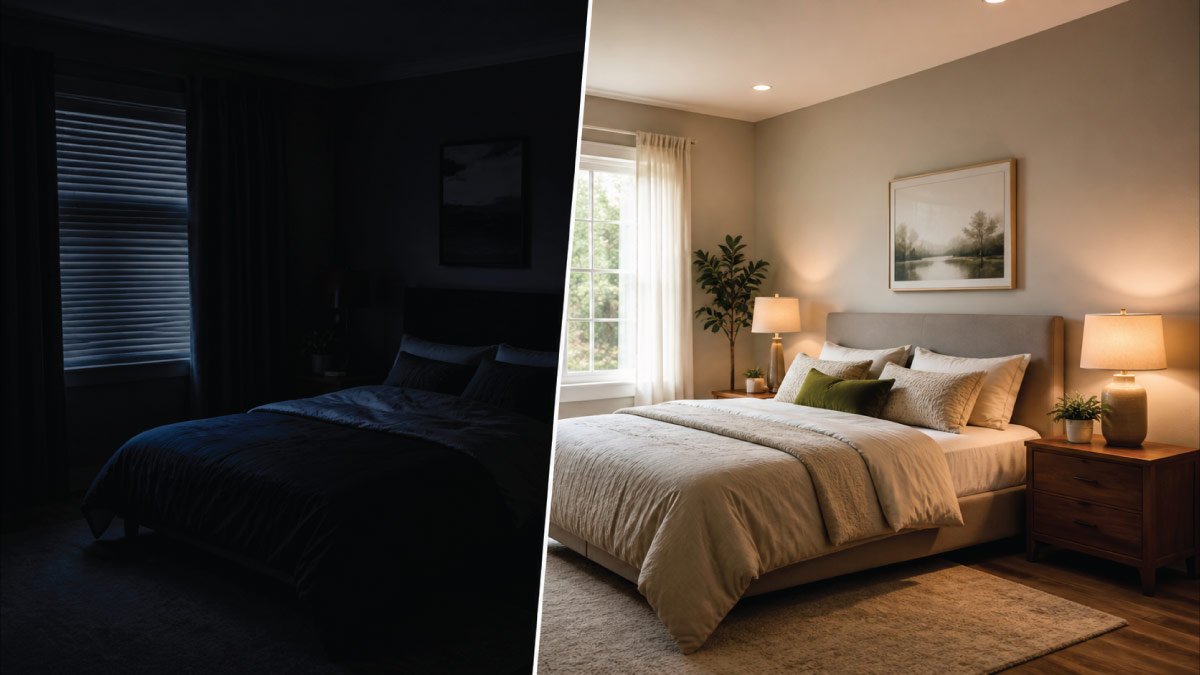
A dark bedroom can feel cozy at first, but over time it may start to feel gloomy, cramped, or even draining. Whether your bedroom lacks natural light, has small windows, or is weighed down by dark colors and heavy furniture, the good news is this: you do not need a full renovation to fix it.
With the right combination of light, color, layout, and design tricks, you can transform even the darkest bedroom into a bright, welcoming retreat. This guide will walk you through practical, affordable, and stylish ways to fix a dark bedroom step by step.
1. Understand Why Your Bedroom Feels Dark
Before making changes to brighten your bedroom, it is important to first understand what is making the space feel dark. Different factors can reduce brightness and create a dull atmosphere. These may include architectural limitations, décor choices, or lighting setups. By carefully identifying the root causes, you can plan more effective improvements and choose solutions that truly enhance natural and artificial light levels.
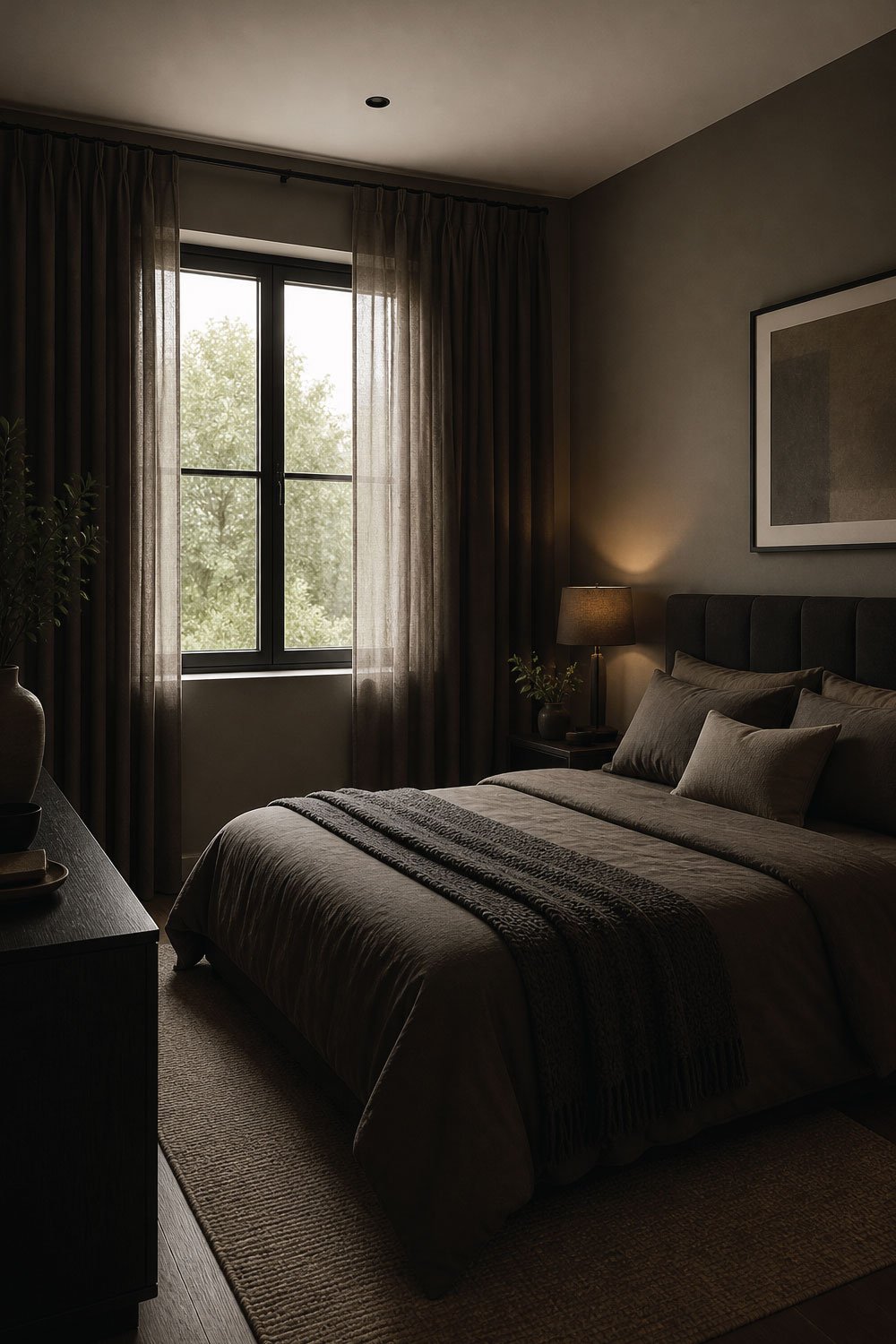
Common reasons include:
- Small or north facing windows
- Heavy curtains or blinds blocking light
- Dark wall colors absorbing light
- Poor artificial lighting
- Bulky furniture crowding the room
- Lack of reflective surfaces
Once you know the main issues, it becomes much easier to choose the right fixes.
2. Let in as Much Natural Light as Possible
Maximizing natural light is one of the most effective ways to make a dark bedroom feel brighter and more welcoming. Sunlight not only improves visibility but also enhances mood and makes the space feel larger and more open. Small adjustments to windows, curtains, and room layout can significantly increase the amount of daylight entering your room throughout the day.
Clean and Clear Your Windows
It sounds obvious, but dirty windows can block a surprising amount of light. Clean both the inside and outside regularly to maximize brightness.
Replace Heavy Curtains
Thick, dark drapes absorb light. Swap them for:
- Sheer or semi sheer curtains
- Light cotton or linen panels
- Roller or Roman blinds in neutral tones
If privacy is a concern, layer sheer curtains with blackout curtains that you only close at night.
Keep Windows Unobstructed
Avoid placing furniture directly in front of windows. Even partially blocking a window can significantly reduce light flow.
3. Choose Lighter Wall Colors
Wall color has a major influence on how bright or dark a bedroom feels because it determines how much light is reflected around the space. Dark shades tend to absorb light, making rooms feel smaller and dimmer, while lighter tones help bounce both natural and artificial light. Choosing the right color can instantly change the mood, openness, and overall brightness of the room without any structural changes.
Best Paint Colors for Dark Bedrooms
- Soft white
- Cream or ivory
- Light gray
- Pale beige
- Pastel shades (blush, sage, sky blue)
If pure white feels too stark, choose a warm white with subtle undertones.
Try an Accent Wall (the Right Way)
If you love darker shades, keep them limited. Paint one wall preferably the one behind the bed while keeping the other walls light. This adds depth without making the room feel closed in.
4. Upgrade Your Lighting Strategy
A single overhead light often creates uneven brightness and shadows, which makes a bedroom feel dull and flat. To properly brighten a dark room, you need a layered lighting approach that distributes light across different areas and heights. Combining multiple light sources improves visibility, adds warmth, and creates a more balanced and inviting atmosphere throughout the space.
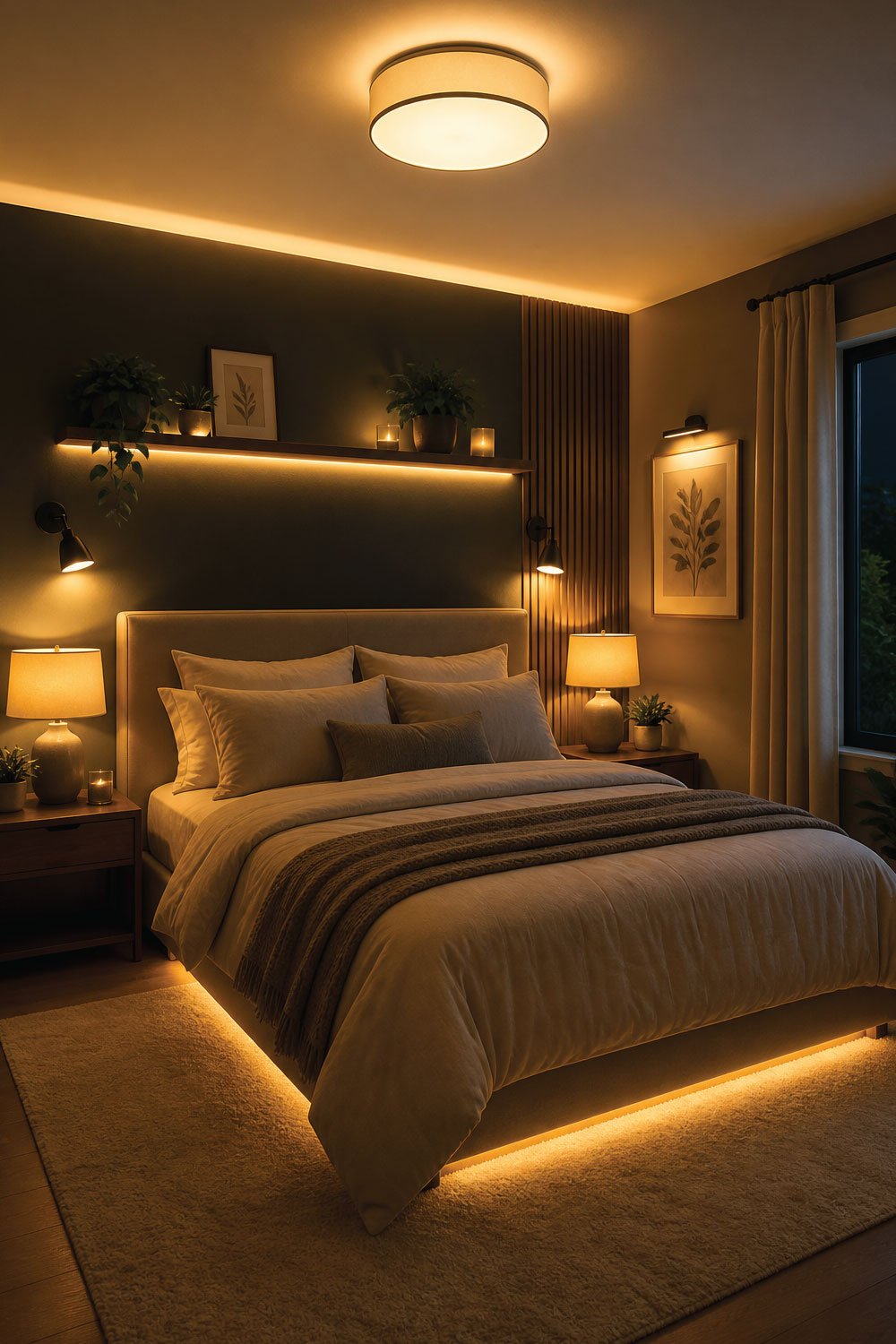
Use Layered Lighting
- Ambient lighting: Ceiling fixtures or flush mounts
- Task lighting: Bedside lamps or wall sconces
- Accent lighting: LED strips, fairy lights, or picture lights
Choose the Right Bulbs
- Use warm white (2700K–3000K) for a cozy glow
- Avoid overly yellow or dim bulbs
- Choose higher lumen output for darker rooms
Add Bedside Lamps
Matching lamps on both sides of the bed instantly balance and brighten the room.
5. Use Mirrors to Reflect Light
Mirrors are one of the most effective and simple tools for improving brightness in a dark bedroom. They work by reflecting both natural and artificial light, helping distribute it more evenly across the space. When placed thoughtfully, mirrors can instantly make a room feel larger, more open, and significantly brighter without requiring any electrical or structural changes.
AlsoRead:
16 Small Bedroom Ideas for Adults with Fairy Light Magic and Pink Decor
Best Mirror Placement
- Opposite or near a window to reflect natural light
- Behind lamps to amplify artificial light
- As a large wall mirror to visually double brightness
Even a small mirror can make a noticeable difference when placed correctly.
6. Rethink Your Furniture Choices
Furniture has a strong impact on how open or closed a bedroom feels. Heavy, dark, or oversized pieces can absorb light and make the space feel tighter than it actually is. By choosing lighter materials and simplifying your layout, you can improve light flow and create a more airy, balanced environment that feels less crowded and more comfortable.
Choose Lighter Finishes
- White, beige, or light wood tones
- Glass or mirrored nightstands
- Furniture with slim legs instead of heavy bases
Reduce Visual Clutter
Too much furniture blocks light and makes a room feel cramped. Remove anything that’s unnecessary or rarely used.
Keep the Floor Visible
Furniture that sits directly on the floor can feel heavy. Pieces with legs allow light to flow underneath, making the room feel airier.
7. Brighten the Floor with Rugs
Flooring often gets overlooked, but it has a strong impact on how bright or dark a bedroom feels. Dark floors can absorb a lot of light and make the entire space feel heavier. Adding the right rug helps balance this by introducing lighter tones and soft textures that reflect light back into the room, creating a more comfortable and visually open environment.
Use Light Colored Rugs
A large rug in a neutral or light tone can:
- Reflect light upward
- Add warmth without heaviness
- Create contrast against dark floors
Choose simple patterns or subtle textures to avoid visual clutter.
8. Update Bedding and Textiles
Your bed is usually the largest and most noticeable element in the room, so its color and texture strongly influence how bright the space feels. Dark or heavy bedding can make the room appear smaller, while lighter fabrics help reflect light and create a fresher, more open look. Updating textiles is an easy and affordable way to instantly lift the overall atmosphere of your bedroom.
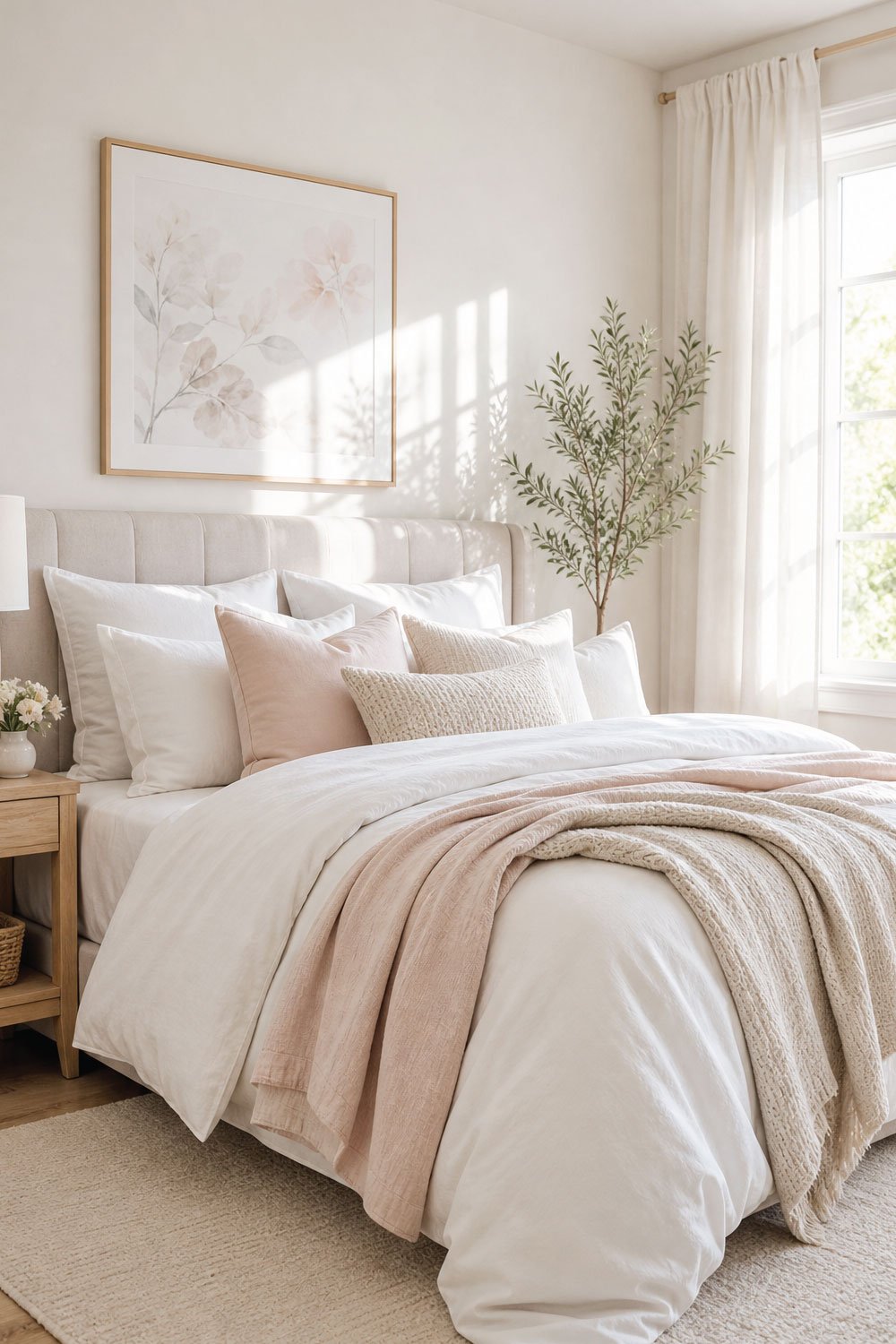
Go Light and Layered
Choose:
- White or light-colored sheets
- Soft pastels or neutral duvets
- Lightweight throws instead of heavy blankets
Layering light fabrics adds depth while keeping the room bright.
Avoid Overly Dark Patterns
If you love patterns, keep them small and balanced with solid light colors.
9. Add Reflective and Glossy Accents
Decorative details might seem minor, but they play an important role in how light moves around a bedroom. Reflective and glossy surfaces help bounce both natural and artificial light across the space, reducing dull corners and adding subtle brightness. When used in moderation, these accents can enhance the room’s overall glow without requiring major design changes or renovations.
AlsoRead:
18 Hidden Storage Beds for Small Bedrooms You will Love
Brightening Decor Ideas
- Metallic accents (gold, brass, silver)
- Glass or crystal lamps
- Glossy picture frames
- Lacquered trays or decor pieces
These surfaces bounce light around the room, increasing brightness without effort.
10. Use Vertical Space Wisely
Dark bedrooms often feel smaller and more enclosed, which can make lighting issues seem worse. By using vertical space effectively, you can create the illusion of height and openness. This helps draw the eye upward, making the room feel larger, more balanced, and less heavy, while also improving how light spreads throughout the space.
Draw the Eye Upward
- Hang curtains closer to the ceiling
- Use tall mirrors or vertical artwork
- Install wall mounted lighting instead of floor lamps
This creates the illusion of height and openness.
11. Bring in Light Friendly Plants
Plants can brighten a room without making it feel heavy by adding freshness, softness, and a natural sense of balance. In darker bedrooms, the key is choosing varieties that thrive in low light while still contributing to a lighter, more uplifting atmosphere. Greenery also helps break up solid surfaces, making the space feel more lively and less visually flat.
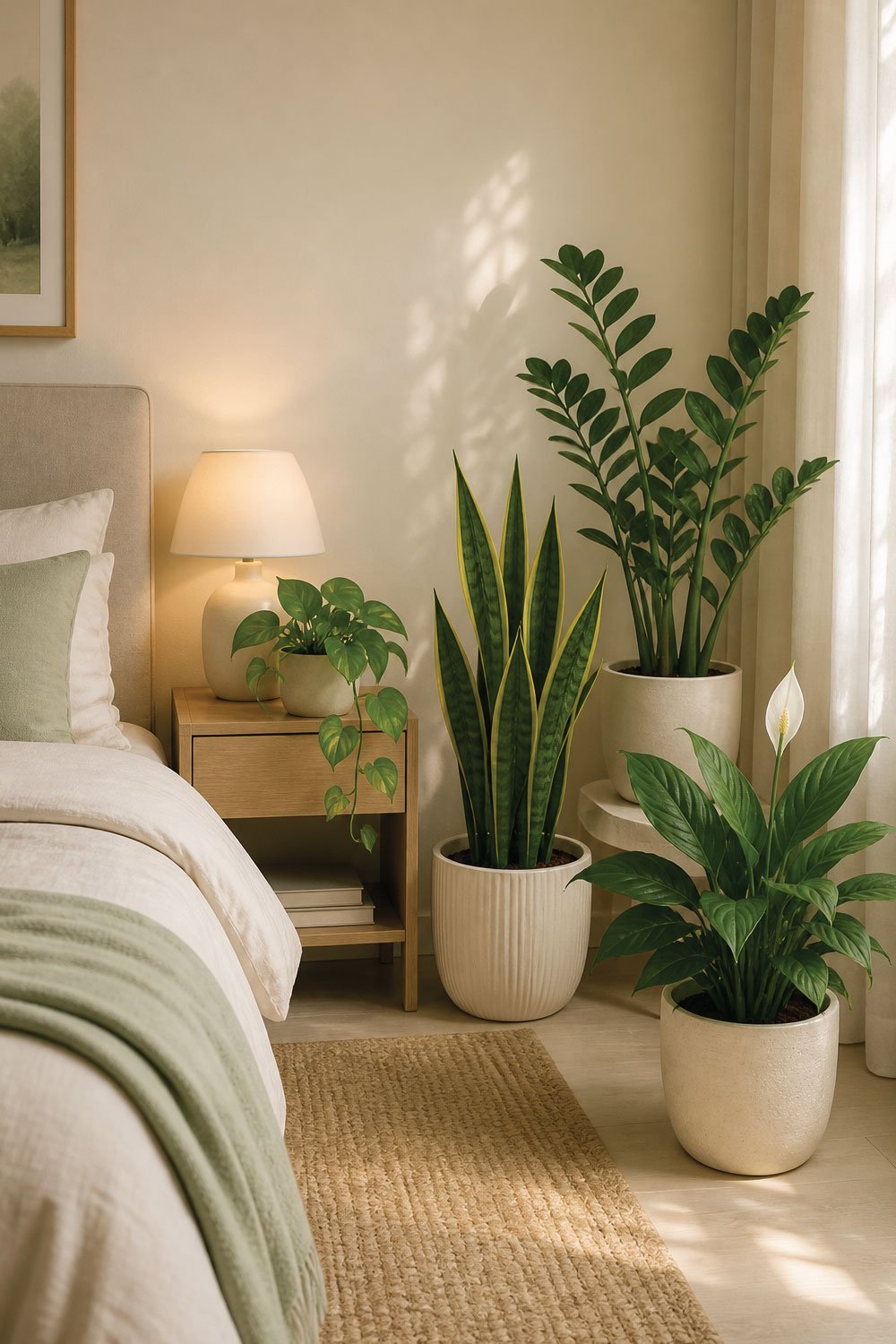
Best Plants for Low Light Bedrooms
- Snake plant
- ZZ plant
- Pothos
- Peace lily
Choose light colored planters to keep the look fresh and bright.
12. Declutter and Simplify
Clutter has a stronger impact in darker rooms because it blocks both physical and visual light flow. When surfaces are crowded or storage is overloaded, the space feels smaller, heavier, and less open. Simplifying your bedroom layout allows light to move more freely, improves visibility, and creates a calmer environment that feels naturally brighter and more comfortable.
Decluttering Tips
- Keep nightstands minimal
- Store items in closed drawers
- Avoid overcrowding walls with artwork
A clean, simple layout allows light to move freely and makes the space feel calmer and brighter.
13. Try Temporary Fixes if You are Renting
If you can’t paint walls or make permanent structural changes, you can still significantly brighten a dark bedroom using renter friendly solutions. These options focus on reversible upgrades that improve light reflection, enhance décor, and create a fresher look without damaging surfaces or violating lease agreements. With the right combination, even small changes can make a noticeable difference in overall brightness.
AlsoRead:
13 Smart Storage Ideas for Small Bedrooms for Boys
Renter Friendly Brightening Ideas
- Peel-and-stick wallpaper in light tones
- Removable mirrors
- Floor lamps and plug-in sconces
- Light bedding and curtains
These renter friendly upgrades can dramatically improve brightness without violating lease rules.
14. Create a Bright Bedroom Mood
Brightness is not only about the amount of light in a room but also about how the space makes you feel. Even a well lit bedroom can feel dull if the colors and textures are heavy or unbalanced. Creating the right mood involves combining lighting, color, and comfort elements so the room feels open, peaceful, and naturally uplifting.
Use Color Psychology
Light, warm colors promote calm and comfort, while dark colors can feel heavy in poorly lit spaces. Choosing softer shades helps maintain a positive and airy atmosphere.
Keep It Balanced
A bright bedroom doesn’t have to feel sterile. Mixing light colors with soft textures and warm lighting creates a space that feels both uplifting and cozy.
Final Thoughts:
Fixing a dark bedroom does not require tearing down walls or installing new windows. By maximizing light, choosing brighter colors, upgrading lighting, and simplifying your space, you can completely transform how your bedroom looks and feels.
Start small change the curtains, add a lamp, or repaint one wall. Each improvement builds on the next, and before you know it, your once dark bedroom will feel open, relaxing, and full of life.
A brighter bedroom isn’t just about design it is about creating a space where you wake up feeling refreshed and at ease.
Post Views: 3