
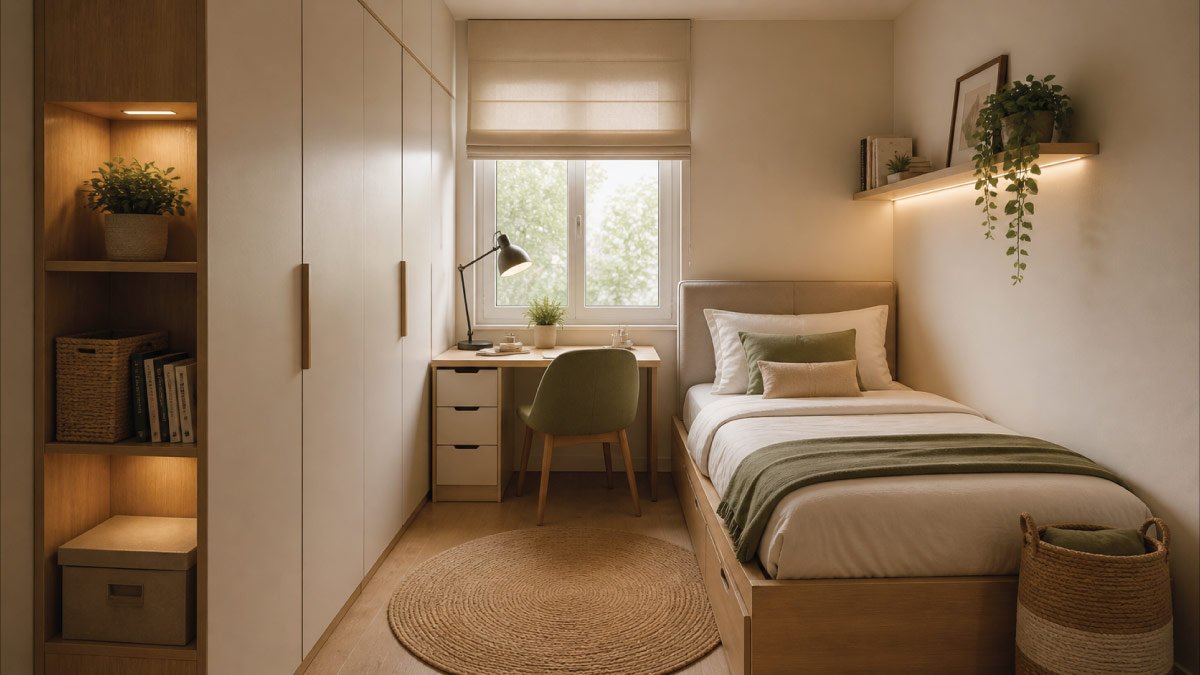
Arranging furniture in a small bedroom can feel overwhelming. Limited space, awkward layouts, and the need to balance comfort with functionality often make it tricky to create a room that feels open rather than cramped. However, with thoughtful planning, smart furniture choices, and clever layout strategies, even the smallest bedroom can feel spacious, stylish, and comfortable.
This guide will walk you step by step through how to arrange furniture in a small bedroom, helping you maximize space without sacrificing design or practicality.
7. Minimize the Number of Furniture Pieces
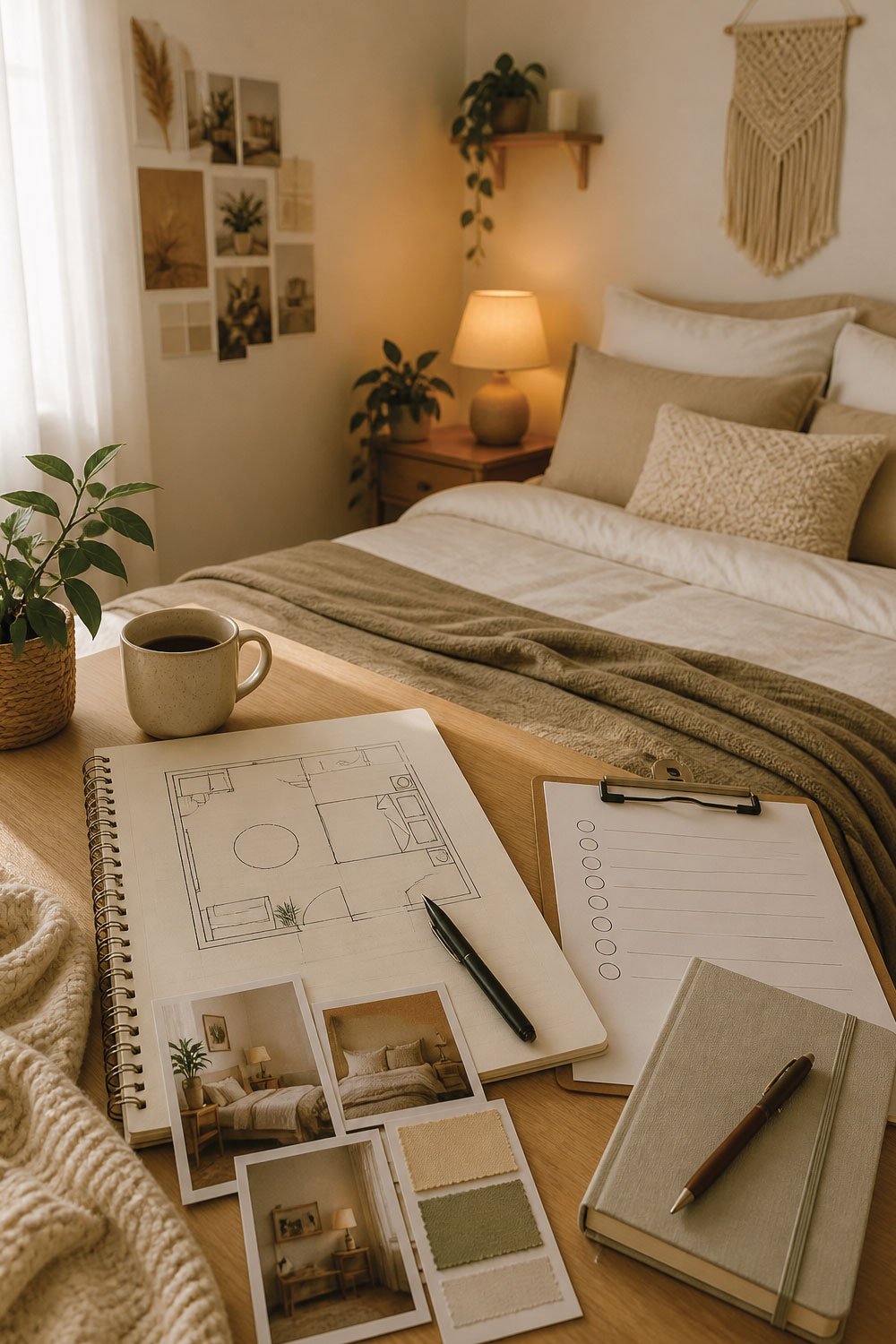
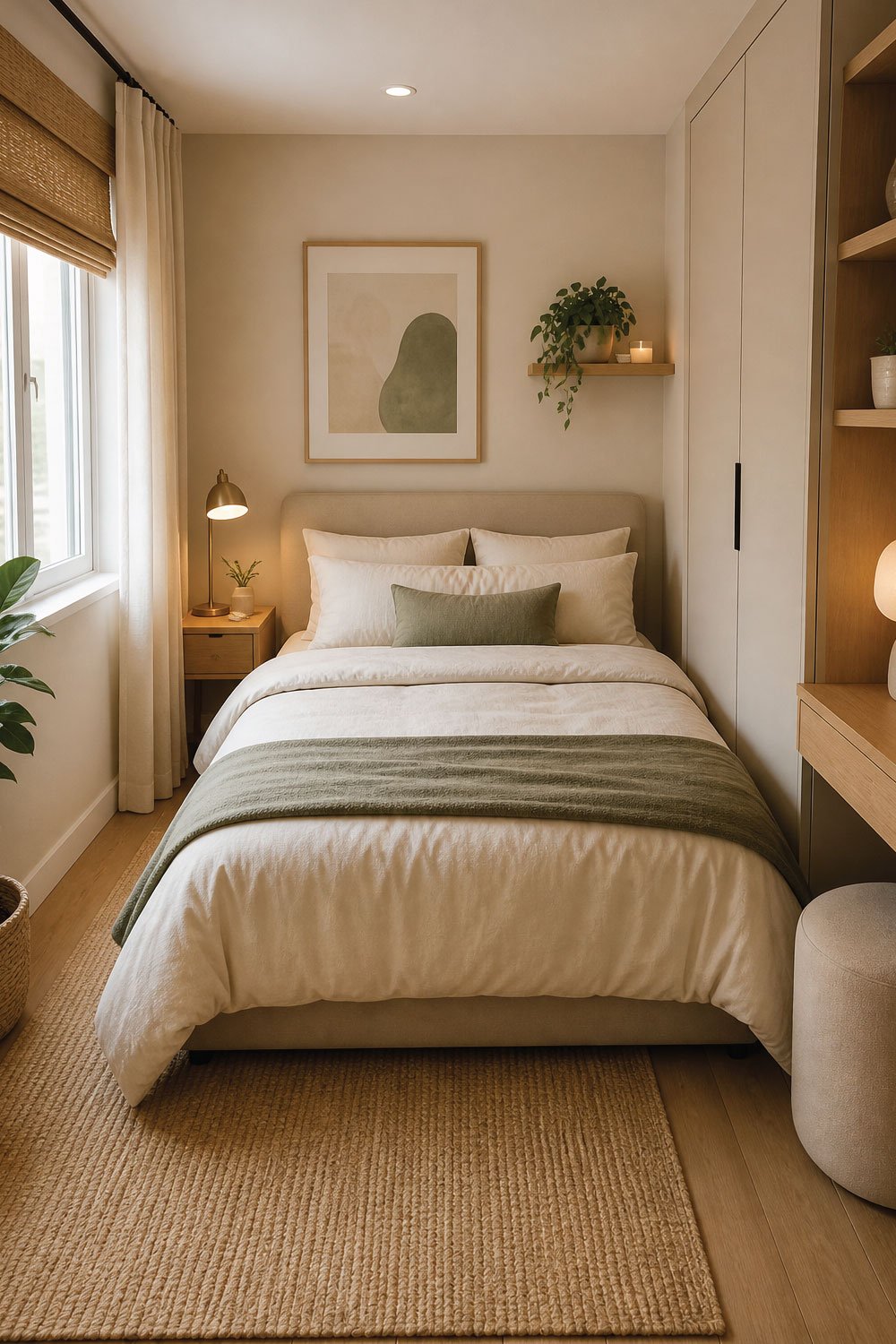
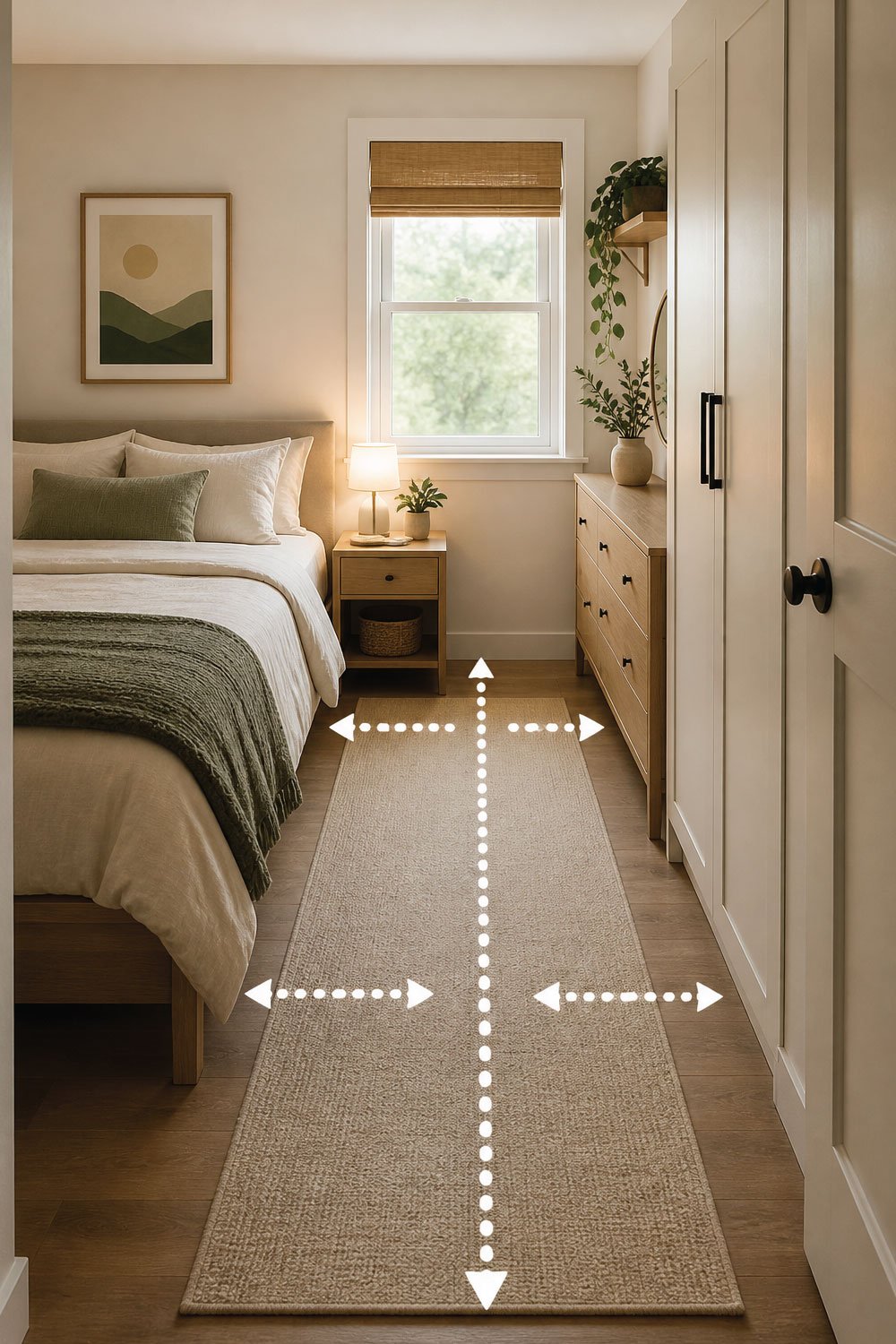
In a small bedroom, overcrowding is one of the fastest ways to make the space feel tight and uncomfortable. The key is to focus only on essential furniture and avoid adding items that don’t serve a clear purpose. A simplified layout improves movement, reduces visual clutter, and creates a more open, relaxing environment.
Less is more in a small bedroom. Instead of filling the room, include only essential pieces.
Ask yourself:
- Do I really need a dresser if I have a closet?
- Can one nightstand work instead of two?
- Can shelves replace bulky cabinets?
Reducing furniture creates breathing room and makes the space feel larger.
8. Use Light Colors and Visual Tricks
How a bedroom looks visually can dramatically change how spacious it feels, even without changing the physical layout. Light colors, reflective surfaces, and carefully chosen furniture styles can make a small room appear brighter, airier, and more open. These visual techniques work alongside furniture arrangement to enhance the overall sense of space.
While furniture arrangement is key, visual choices also affect how spacious a room feels.
Color Tips
- Light neutrals reflect light and open up the space
- Soft whites, creams, pale grays, and pastels work well
- Keep furniture colors close to wall colors to reduce visual breaks
Visual Tricks
- Use mirrors to reflect light and create depth
- Choose furniture with exposed legs for an airy look
- Opt for glass or acrylic pieces where possible
9. Think About Storage Inside the Bed Area
The space around the bed is often underused, even though it offers some of the most practical storage opportunities in a small bedroom. By integrating storage into this central zone, you can reduce clutter elsewhere in the room and make better use of every inch without adding extra furniture.
AlsoRead:
The area around and under the bed is prime storage real estate.
Ideas include:
- Under-bed storage bins
- Platform beds with drawers
- Headboards with shelves
- Wall-mounted lighting instead of table lamps
By maximizing the bed zone, you free up space elsewhere in the room.
10. Create Zones Without Walls
Even in a compact bedroom, dividing the space into functional zones can improve organization and usability. Clear visual separation helps the room feel structured rather than chaotic. You don’t need physical barriers simple design choices can define sleeping, working, and relaxing areas while maintaining an open and connected feel.
Even small bedrooms benefit from clear zones. You can define areas visually without physical dividers.
Examples:
- A rug under the bed to define the sleeping zone
- A small desk by the window for a work zone
- Wall lighting to highlight specific areas
Zoning helps the room feel intentional and organized rather than cluttered.
11. Use Sliding Doors and Compact Solutions
Traditional doors and bulky furniture can take up unnecessary space in a small bedroom, limiting movement and layout options. Switching to compact, space efficient alternatives helps improve flow and usability. These solutions are especially effective in tight layouts where every inch of floor space matters.
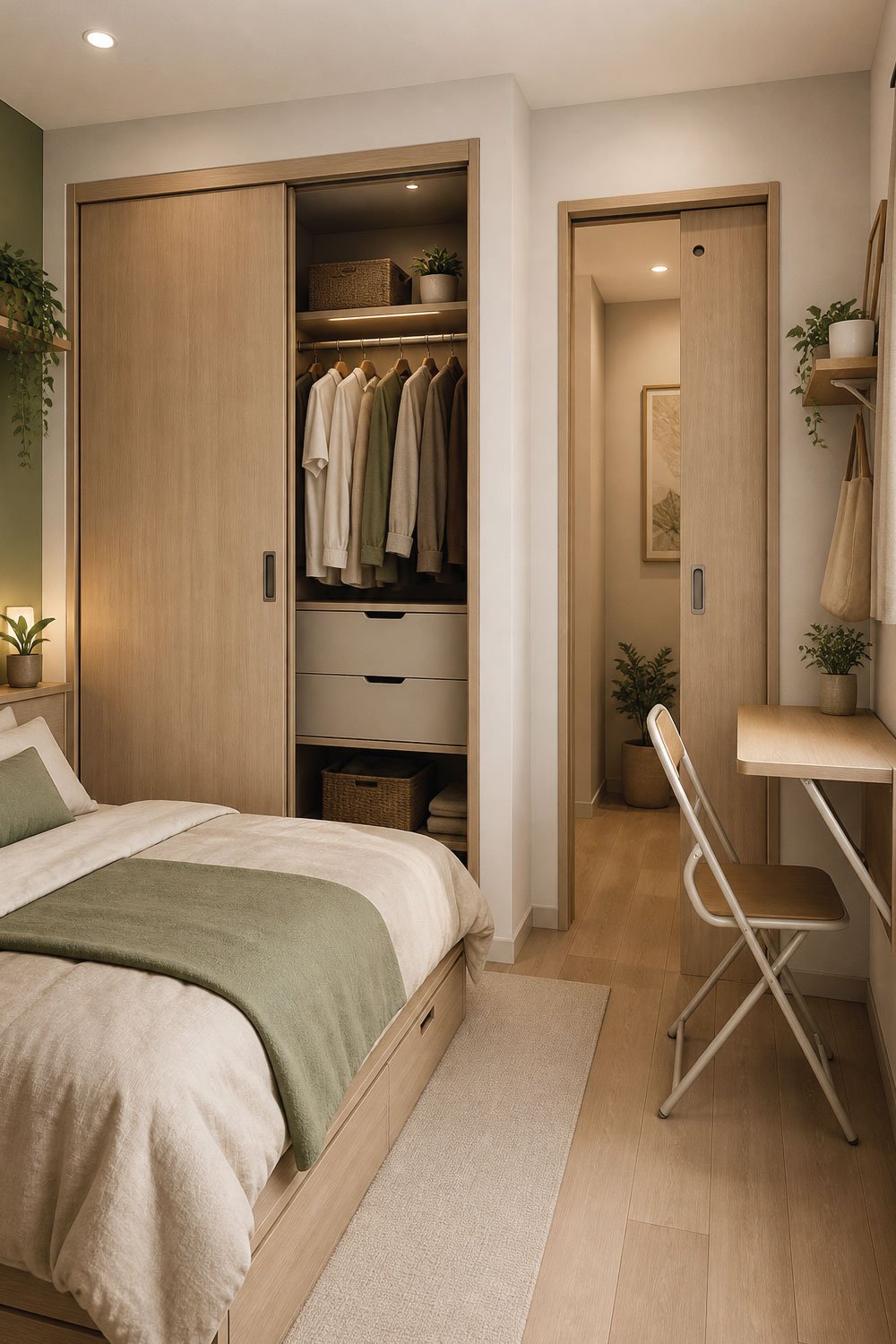
Traditional swinging doors can take up valuable space.
Consider:
- Sliding closet doors
- Pocket doors
- Curtains instead of doors for closets
- Foldable chairs or desks
These space-saving solutions can dramatically improve flow in a small bedroom.
12. Do not Push Everything Against the Walls
A common misconception in small bedroom design is that pushing all furniture against the walls automatically creates more space. While it may seem efficient, this approach can sometimes make the room feel rigid, unbalanced, and visually cramped. Thoughtful spacing and intentional placement often create a more open and comfortable atmosphere.
https://sizehelper.com/10-trending-living-room-paint-color-ideas-you-will-love-in-2026/
While it seems logical to push furniture against walls, doing so can sometimes make the room feel boxed in.
Try:
- Floating the bed slightly away from the wall
- Leaving small gaps behind furniture
- Centering key pieces for balance
Balanced spacing often looks better than furniture crammed into corners.
13. Maintain Visual Simplicity
In a small bedroom, visual clutter can be just as overwhelming as physical clutter. Too many colors, patterns, or oversized decor items can make the space feel chaotic and smaller than it actually is. Keeping the design simple and cohesive helps create a calm, organized environment that feels more open and breathable.
Too many patterns, colors, or bulky items can overwhelm a small bedroom.
Tips:
- Stick to one main furniture style
- Keep accessories minimal
- Use closed storage to hide clutter
- Limit decorative items on surfaces
A visually calm room feels larger and more relaxing.
14. Adapt the Layout Over Time
A small bedroom is not a fixed space it should evolve with your lifestyle and needs. As your routines, storage requirements, or preferences change, adjusting the layout can significantly improve comfort and usability. Regularly reassessing the arrangement helps ensure the room continues to function efficiently and feel inviting.
Your needs may change, and that is okay. Rearranging furniture occasionally can refresh the space and improve functionality.
Seasonal adjustments, lifestyle changes, or new storage needs may call for a new layout. Stay flexible and open to experimentation.
Final Thoughts
Arranging furniture in a small bedroom is all about intentional choices. By prioritizing function, choosing the right sized furniture, using vertical space, and minimizing clutter, you can create a bedroom that feels comfortable, stylish, and surprisingly spacious.
Remember, a small bedroom does not have to feel cramped. With smart planning and thoughtful design, it can become a cozy retreat that works perfectly for your lifestyle.
