
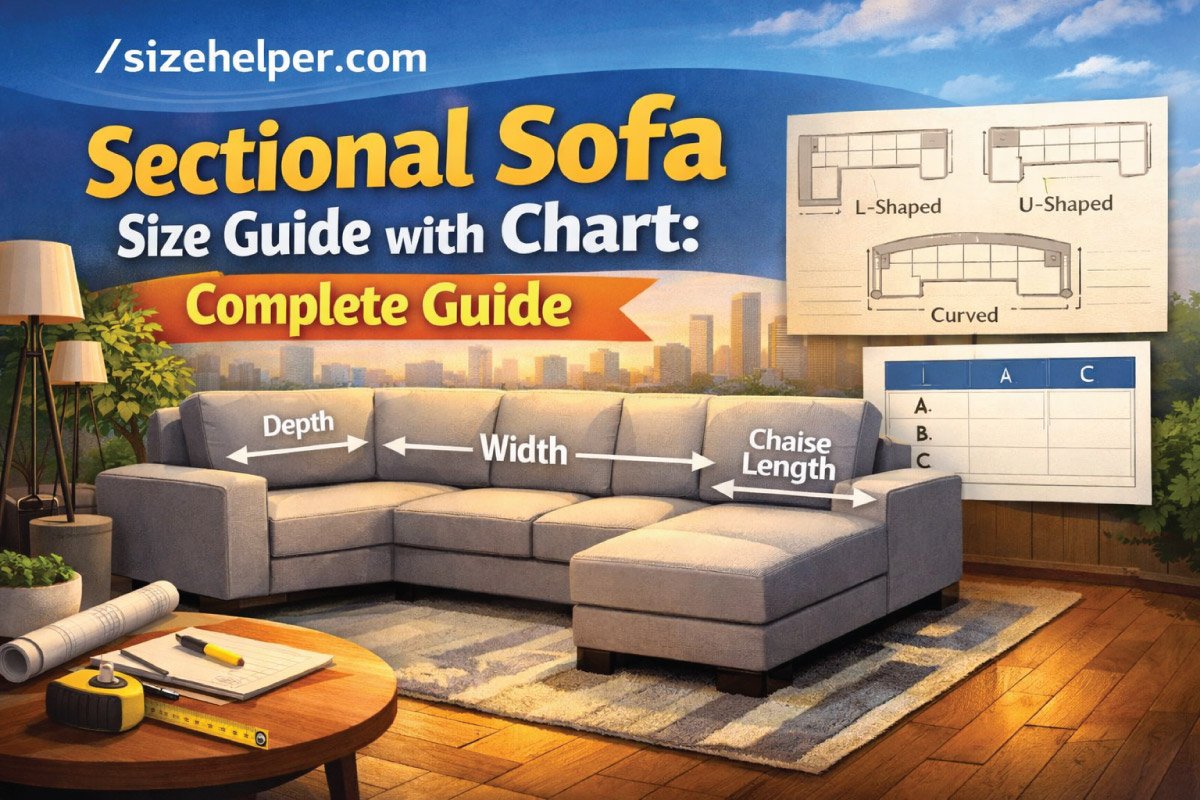
Buying a sectional sofa sounds simple—until you actually start measuring your space. I’ve been there. When I moved into my current living room, I thought, “Any sectional will work as long as it looks good.” Spoiler alert: I was wrong. After returning one sofa that completely overwhelmed the room and nearly blocking a doorway with another, I learned the hard way that sectional sofa size matters just as much as style.
This complete guide will walk you through everything you need to know about sectional sofa sizing—from standard dimensions and layouts to room size recommendations—plus a clear size chart and practical tips based on real-life experience.
Table of Contents
ToggleWhat Is a Sectional Sofa?
A sectional sofa is made up of multiple connected pieces (called modules) that can be arranged in different configurations. Common layouts include:
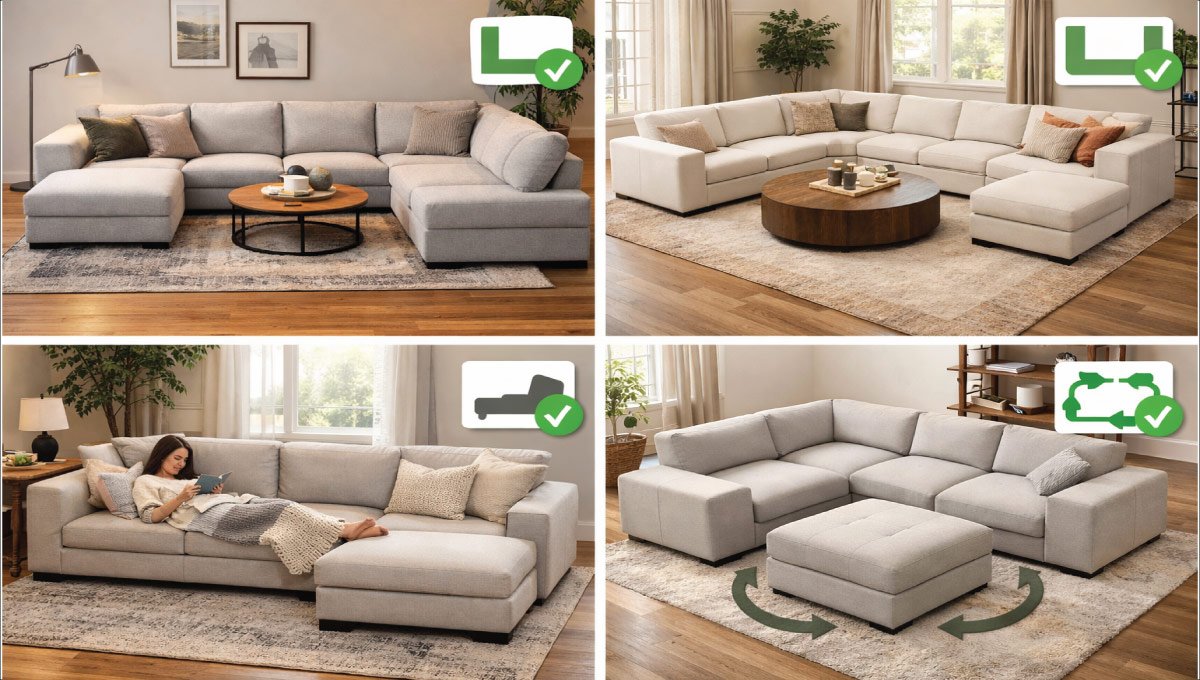
L-shaped sectionals
U-shaped sectionals
Sectionals with chaise lounges
Modular sectionals with flexible pieces
Sectionals are popular because they maximize seating, define living spaces, and adapt to different room layouts—but only if you choose the right size.
Why Sectional Sofa Size Is So Important
From personal experience, choosing the wrong sectional size can create several problems:
The room feels cramped or overcrowded
Walkways become blocked
The sofa dominates the space visually
Other furniture (coffee tables, chairs) no longer fits
On the flip side, a properly sized sectional can:
Make your living room feel balanced
Improve traffic flow
Provide comfortable seating without overwhelming the space
That’s why measuring and understanding dimensions is essential before buying.
Standard Sectional Sofa Dimensions
While sectional sofas vary by brand and style, most fall within standard size ranges.
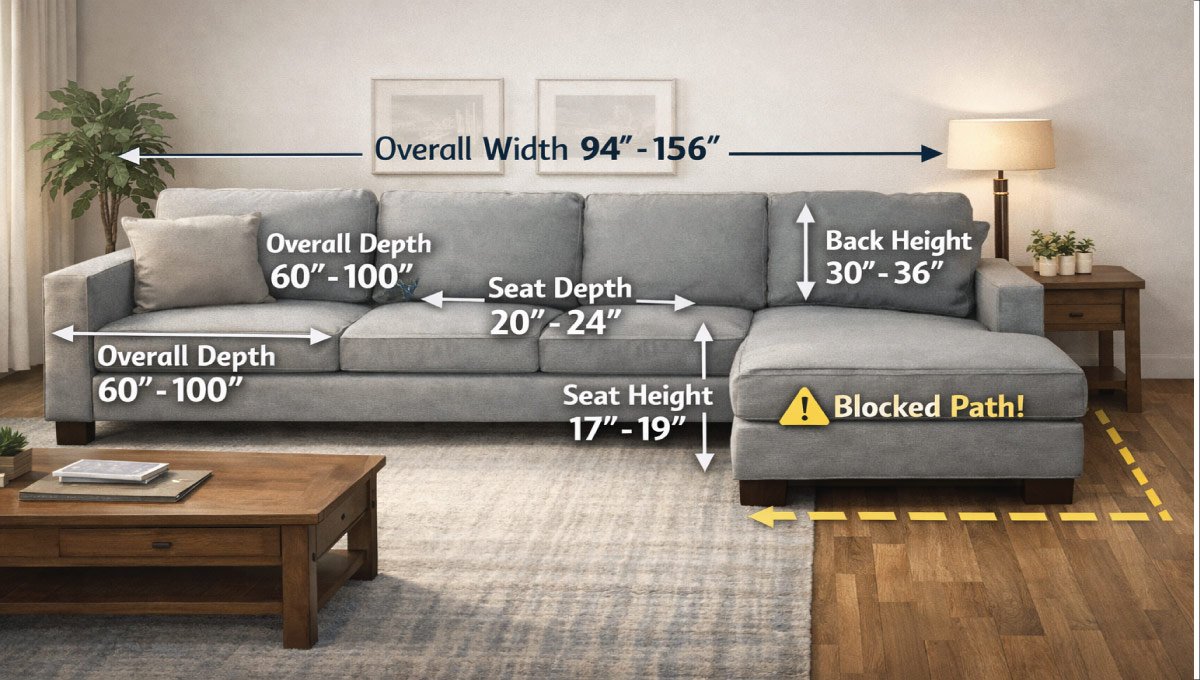
Typical Sectional Sofa Measurements
Overall width: 94″–156″
Overall depth: 60″–100″
Seat depth: 20″–24″
Seat height: 17″–19″
Back height: 30″–36″
When I measured my own living room, I focused only on width at first and ignored depth. Big mistake. The chaise stuck out so far that it blocked the main walking path.
Sectional Sofa Size Guide Chart
Here’s a clear size chart to help you quickly compare sectional options:
| Sectional Type | Typical Width | Typical Depth | Best Room Size |
|---|---|---|---|
| Small L-Shaped | 90″–110″ | 60″–70″ | Apartments, small living rooms |
| Standard L-Shaped | 110″–130″ | 70″–85″ | Medium living rooms |
| Large L-Shaped | 130″–150″ | 85″–95″ | Open-plan spaces |
| U-Shaped | 140″–180″ | 90″–120″ | Large living rooms |
| Chaise Sectional | 100″–130″ | 65″–75″ | Small to medium rooms |
| Modular Sectional | Varies | Varies | Flexible layouts |
This chart would have saved me weeks of frustration if I had paid attention earlier.
Sectional Sofa Sizes by Room Type
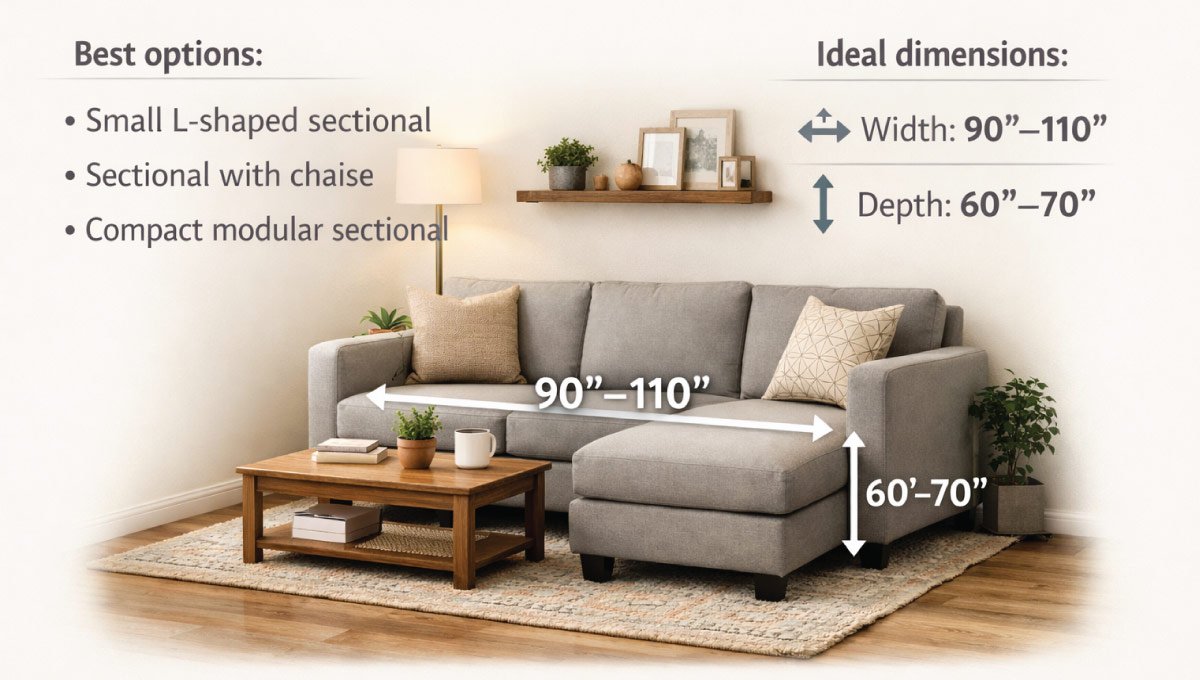
Small Living Rooms (Under 200 sq ft)
Best options:
Small L-shaped sectional
Sectional with chaise
Compact modular sectional
Ideal dimensions:
Width: 90″–110″
Depth: 60″–70″
In my first apartment, a compact L-shaped sectional worked perfectly because it hugged the corner and left space for a coffee table and walking paths.
Medium Living Rooms (200–350 sq ft)
Best options:
Standard L-shaped sectional
Modular sectional
Ideal dimensions:
Width: 110″–130″
Depth: 70″–85″
This is where I made my second mistake—choosing a sectional that technically fit but left no breathing room. Always leave at least 30–36 inches for walkways.
Large Living Rooms (350+ sq ft)
Best options:
Large L-shaped sectional
U-shaped sectional
Oversized modular sectional
Ideal dimensions:
Width: 130″–180″
Depth: 85″–120″
Large rooms can handle bigger sectionals, but scale still matters. A massive sofa in a large room can look luxurious—or sloppy if not proportioned well.
L-Shaped vs. U-Shaped Sectionals: Size Comparison
L-Shaped Sectionals
More versatile
Fit smaller rooms
Easier to place in corners
Typical size:
110″–150″ wide
U-Shaped Sectionals
Maximum seating
Require significant floor space
Best for entertaining
Typical size:
140″–180″ wide
I briefly considered a U-shaped sectional but quickly realized it would dominate my space and leave no room for side tables.
Sectional Sofa Depth: The Most Overlooked Measurement
Depth is often ignored—but it matters more than you think.
Standard depth: 34″–40″
Deep-seat sectionals: 40″–45″+
Deep seats are great for lounging, but if your room is narrow, they can make the space feel tight. I chose a deep-seat model and loved it for movie nights—but had to adjust the rest of the furniture layout to compensate.
Chaise Length and Orientation
Chaise sectionals add comfort but increase overall length.
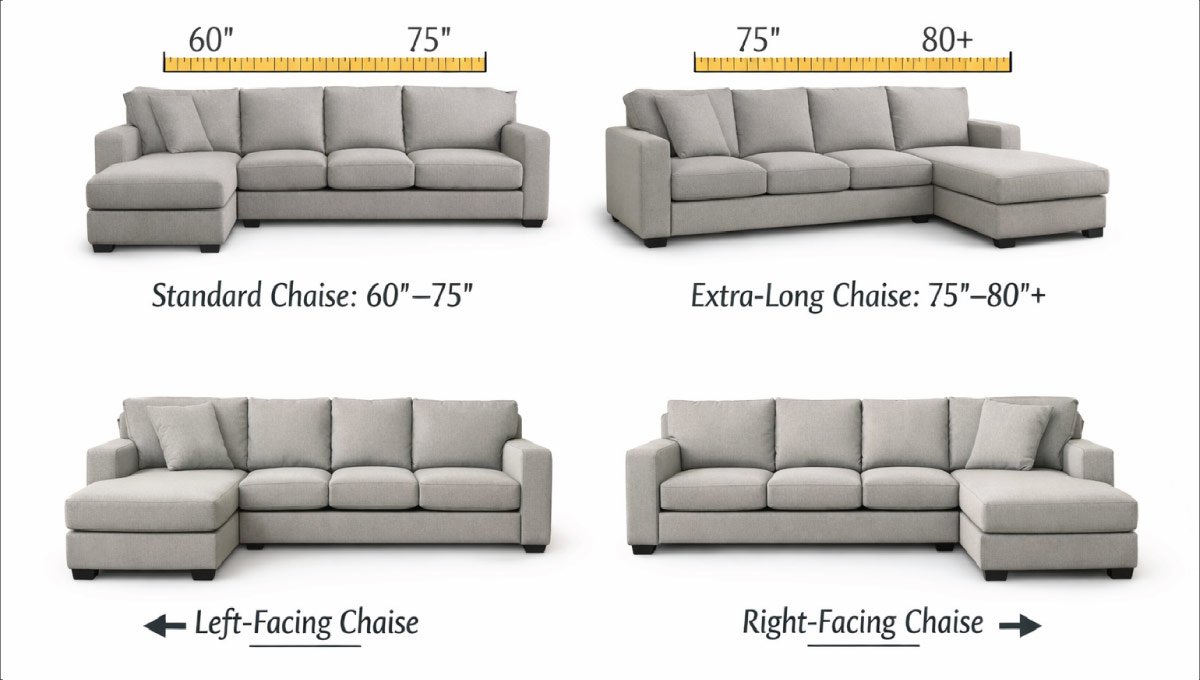
Standard chaise length: 60″–75″
Extra-long chaise: 75″–80″+
Also decide:
Left-facing chaise
Right-facing chaise
Pro tip from experience: Always face the sectional as if you’re standing in front of it when choosing orientation. I once ordered the wrong side and had to wait weeks for a replacement.
Modular Sectionals: Flexible Sizing
Modular sectionals are made of individual pieces that can be rearranged.
Advantages:
Customizable layout
Easy to expand or reduce
Great for awkward spaces
Typical module size:
Each piece: 25″–40″ wide
If I ever move again, I’ll choose modular—hands down. It eliminates most sizing headaches.
How to Measure Your Space for a Sectional Sofa
Follow these steps (learned the hard way):
Measure wall-to-wall dimensions
Mark doorways, windows, and walkways
Use painter’s tape to outline the sectional size on the floor
Leave 30–36″ for walking paths
Account for coffee tables and side tables
The painter’s tape trick completely changed how I shop for furniture—it makes size instantly obvious.
Sectional Sofa Size Mistakes to Avoid
Based on personal experience, avoid these common mistakes:
Measuring only wall length, not depth
Forgetting walkways
Ignoring chaise length
Buying oversized sectionals for small rooms
Assuming “standard size” fits all spaces
I made at least three of these mistakes before getting it right.
How Sectional Sofa Size Affects Everyday Living
One thing I didn’t fully understand before owning a sectional is how much its size affects daily routines—not just how the room looks on day one. A sectional becomes part of how you move, sit, relax, and even clean your living space.
When my sectional was slightly too large, I noticed subtle frustrations piling up:
Walking paths felt tight
Vacuuming behind the sofa was a chore
Side tables had nowhere to go
Guests felt unsure where to sit
Once I downsized by just one module, everything improved. The room felt calmer, easier to navigate, and more inviting. That experience taught me that the right sectional size often feels invisible—it supports your life instead of interrupting it.
Sectional Sofa Size and Traffic Flow (The Make-or-Break Factor)
Traffic flow is one of the biggest reasons sectionals fail in real homes. Because they’re wide and deep, even a few extra inches can change how a room functions.
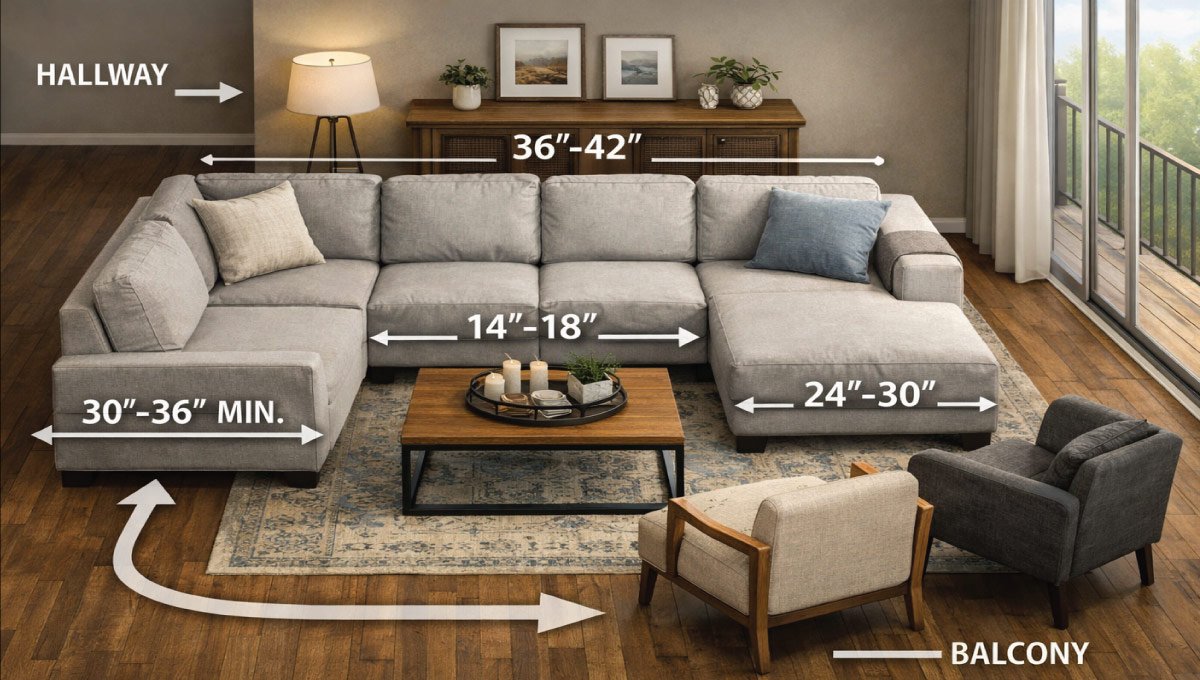
Here are spacing guidelines I now always follow:
Main walkways: 30–36 inches minimum
Behind a floating sectional: 36–42 inches
Between sectional and coffee table: 14–18 inches
Between sectional and accent chairs: 24–30 inches
In one layout, my sectional technically fit, but walking from the hallway to the balcony required weaving around the chaise. That alone made the sofa feel “wrong,” even though it was comfortable. Furniture should never force awkward movement.
Sectional Sofa Size and Seating Comfort
More seats don’t always mean more comfort. I’ve learned that how seating is distributed matters just as much as how many people can fit.
Things to consider:
Corner seats are often deeper and harder to sit upright in
Chaise sections are great for lounging but less versatile for guests
Armless modules provide flexibility but less support
In practice, I found that a slightly smaller sectional with better-proportioned seats was more comfortable than a huge one with awkward corners. Comfort improves when every seat feels usable—not just impressive in size.
Sectional Size for Different Lifestyles
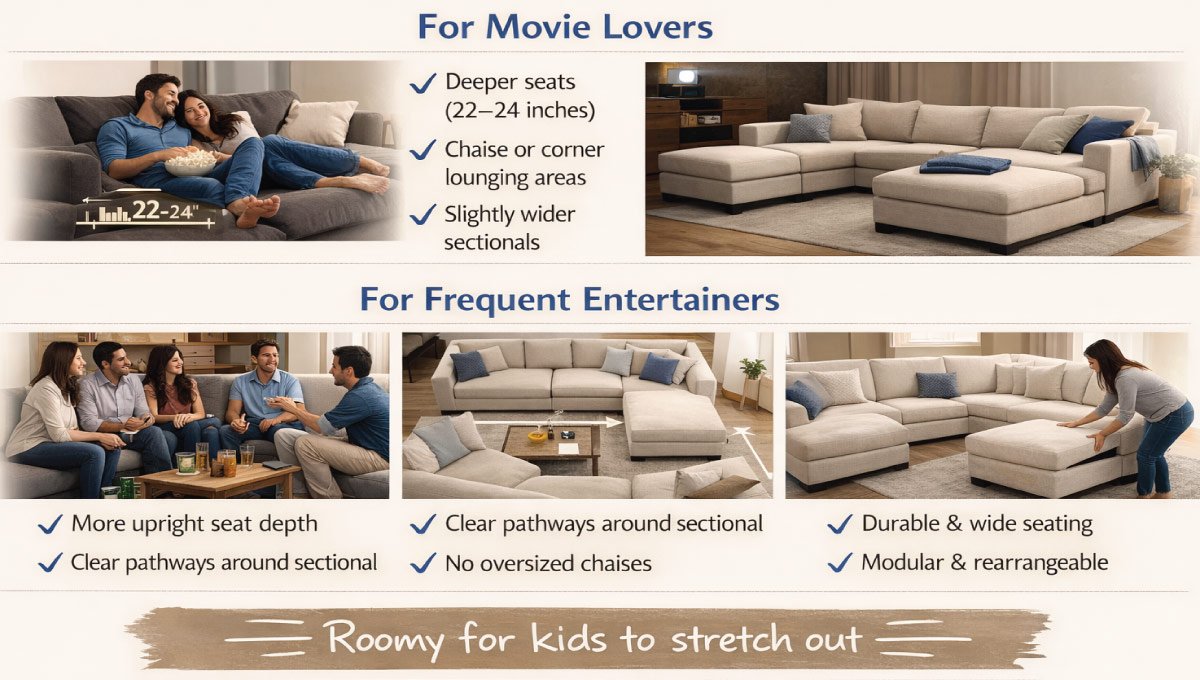
For Movie Lovers
Deeper seats (22–24 inches)
Chaise or corner lounging areas
Slightly wider sectionals work well
For Frequent Entertainers
More upright seat depth
Clear pathways around the sectional
Avoid oversized chaises that isolate guests
For Families
Durable upholstery and wider seating zones
Modular sectionals that can be rearranged
Enough space for kids to stretch out
My lifestyle changed over time, and so did my sectional needs. What worked for hosting friends didn’t always work for everyday lounging—and vice versa. Choosing a size that fits your current lifestyle matters more than planning for rare occasions.
Sectional Sofa Size and Visual Balance
Even when measurements are technically correct, visual balance can still be off.
Sectionals feel larger when they have:
Thick arms
Overstuffed cushions
Low legs or skirted bases
Dark, heavy fabrics
They feel lighter when they have:
Slim arms
Raised legs
Clean lines
Neutral or lighter fabrics
I once swapped nothing but the sectional style—same size on paper—and the room instantly felt bigger. Design details amplify or minimize size more than most people expect.
When a Smaller Sectional Is the Better Choice
It’s tempting to buy the biggest sectional your room can handle, especially when you want maximum seating. But I’ve found that slightly smaller sectionals often age better.
Benefits of sizing down:
Easier rearranging
Better airflow and movement
Room for chairs or ottomans
Less visual clutter
Every time I chose the absolute maximum size, I eventually wished I’d left more breathing room. The sectionals I’ve loved most were the ones that allowed flexibility.
Final Thoughts:
A sectional sofa can transform your living room—but only if the size works with your space. After multiple returns and layout changes, I learned that comfort, scale, and flow matter more than looks alone.
Use the size chart, measure carefully, and visualize the layout before buying. Trust me—getting the size right the first time will save you time, money, and a lot of frustration.
If I had followed this guide from the beginning, I would’ve avoided weeks of inconvenience. Hopefully, it helps you do exactly that.
