
Choosing the right armchair looks simple—until you actually try to fit one into your living room, bedroom, or reading nook. I’ve learned this the hard way. Years ago, I bought a beautiful armchair online without checking the dimensions carefully. It arrived oversized, blocked half a doorway, and turned my cozy corner into a cramped obstacle course. Since then, I’ve become borderline obsessive about armchair measurements.
This detailed guide is designed to save you from that mistake. Below, you’ll find a complete armchair size guide with an easy-to-read chart, explanations of key dimensions, room-by-room recommendations, and practical tips from real-life experience.
Table of Contents
ToggleWhy Armchair Size Matters More Than You Think
An armchair isn’t just about style it’s about comfort, proportion, and functionality. The wrong size can:
Make a room feel crowded
Feel uncomfortable for long sitting sessions
Look visually “off” next to sofas or tables
Limit movement around the space
When I downsized apartments, armchair sizing became critical. A chair that worked in a large living room felt overwhelming in a small condo. Proper sizing isn’t optional—it’s essential.
Standard Armchair Dimensions
Most armchairs fall within a predictable size range, but even a few inches can change how a chair feels and functions.
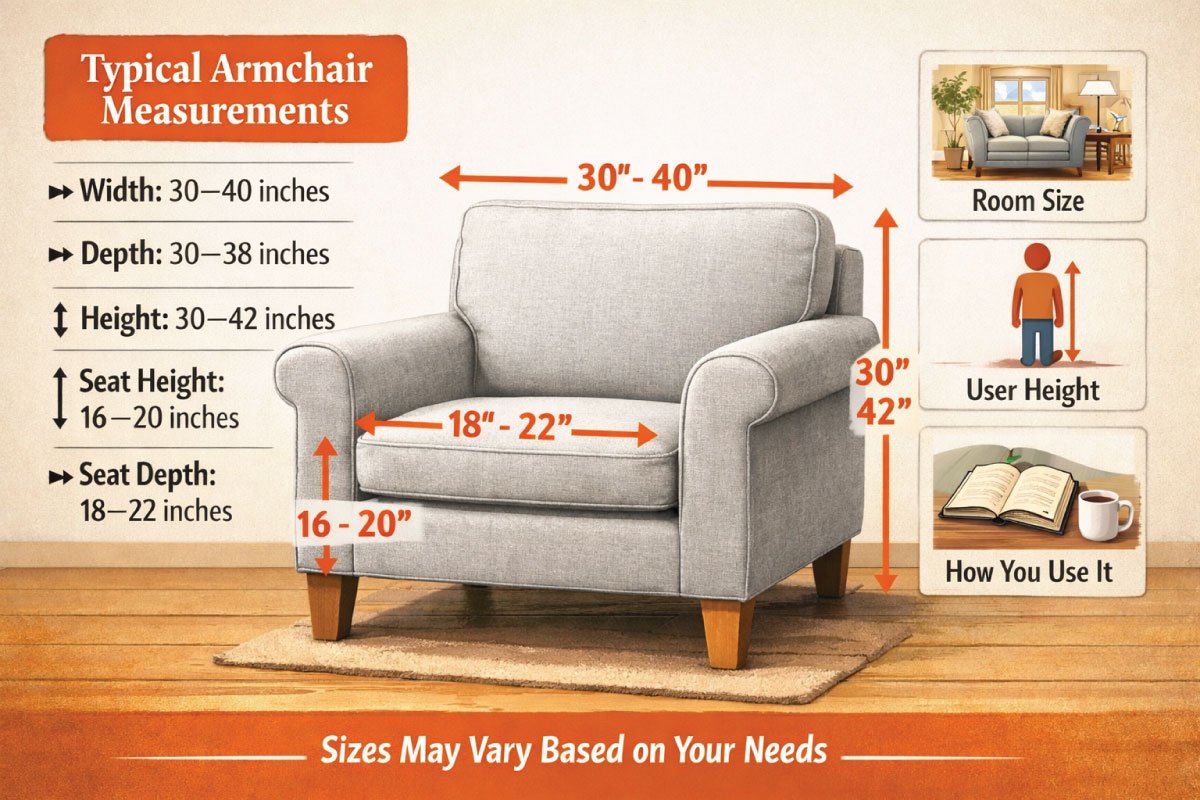
Typical Armchair Measurements:
Width: 30–40 inches
Depth: 30–38 inches
Height: 30–42 inches
Seat Height: 16–20 inches
Seat Depth: 18–22 inches
These numbers are averages, not rules. Your ideal size depends on room size, user height, and how you plan to use the chair.
Armchair Size Chart (Easy Reference)
Here’s a simplified chart to help you compare common armchair types:
| Armchair Type | Width (in) | Depth (in) | Height (in) | Best For |
|---|---|---|---|---|
| Small Armchair | 28–32 | 28–32 | 30–36 | Apartments, bedrooms |
| Standard Armchair | 32–38 | 30–36 | 32–40 | Living rooms |
| Oversized Armchair | 38–45 | 36–40 | 34–42 | Lounging, tall users |
| Accent Chair | 26–34 | 26–32 | 28–38 | Decorative seating |
| Recliner Armchair | 34–40 | 36–40 | 38–42 | TV rooms, relaxation |
I personally keep this chart saved on my phone when furniture shopping—it’s surprisingly useful in stores.
Key Armchair Dimensions Explained2
Understanding what each measurement means makes choosing much easier.
1. Width
Measured from arm to arm.
Wider chairs offer more lounging comfort
Narrower chairs fit better in tight spaces
Personal tip: If you like curling up or sitting cross-legged, choose a wider seat.
2. Depth
Measured from the front edge to the backrest.
Deeper seats = better for relaxing
Shallower seats = better posture and easier standing
I once bought a deep armchair that looked luxurious but forced my feet to dangle. Lesson learned: depth matters as much as width.
3. Height
Measured from floor to top of the backrest.
Tall backs support neck and shoulders
Low backs create a modern, open feel
4. Seat Height
Measured from floor to seat cushion.
Lower seats feel relaxed
Higher seats are easier for seniors or people with knee issues
Armchair Sizes by Room Type
In my current living room, I chose armchairs slightly narrower than my sofa arms—it keeps the room balanced without overpowering the space.
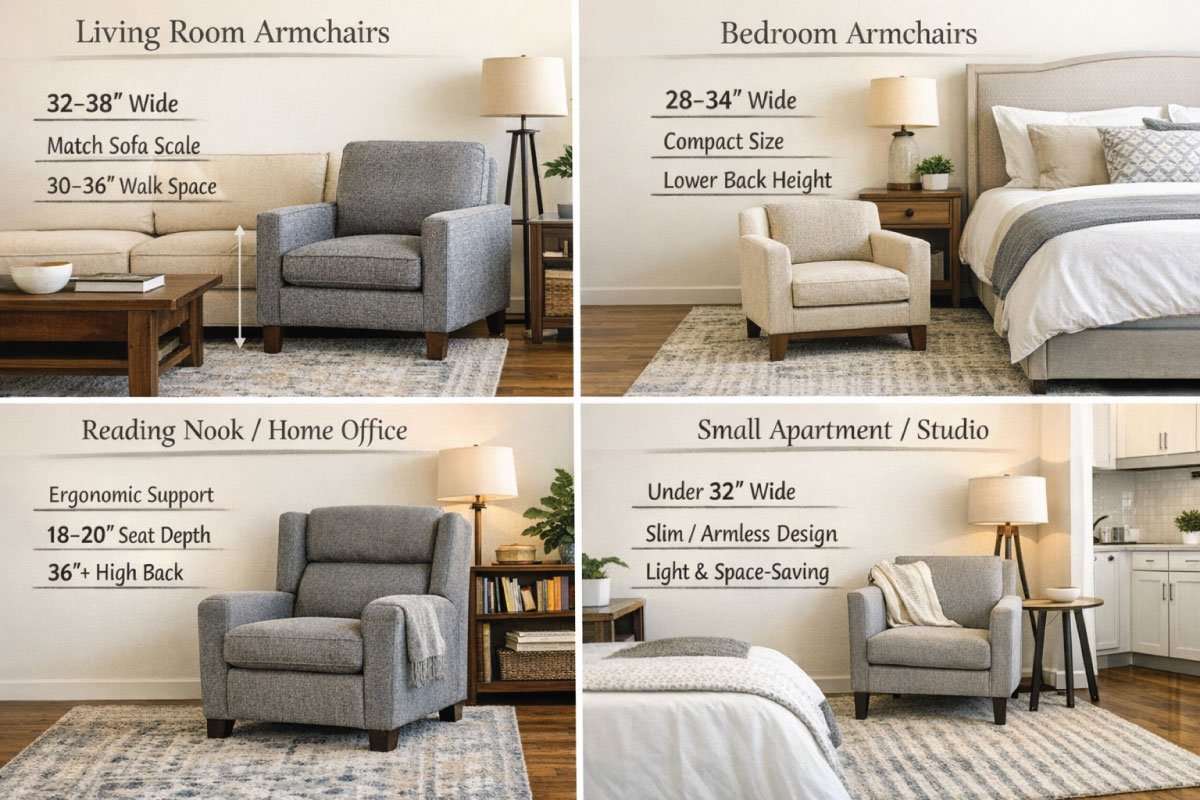
Living Room Armchairs
Ideal width: 32–38 inches
Match the scale of your sofa
Leave 30–36 inches of walking clearance
Bedroom Armchairs
Ideal width: 28–34 inches
Compact footprint
Lower back height for visual softness
A small armchair at the foot of the bed adds function without clutter.
Reading Nooks & Home Offices
Look for ergonomic support
Seat depth: 18–20 inches
Back height: 36+ inches
My favorite reading chair is technically “oversized,” but the high back and deep seat make long reading sessions incredibly comfortable.
Small Apartments & Studios
Choose armless or slim-arm designs
Width under 32 inches
Light visual weight (legs exposed)
Space-saving armchairs changed everything for me when I lived in a studio—bulkier chairs just didn’t work.
Armchair Size vs. Body Type
Comfort is personal. Here’s a general guideline:
Petite users: Lower seat height (16–17”)
Average height: Standard seat height (18”)
Tall users: Deeper seats (20–22”) and higher backs
Always try to sit before buying when possible. Online photos can be misleading.
Armchair Styles and How Size Affects Them
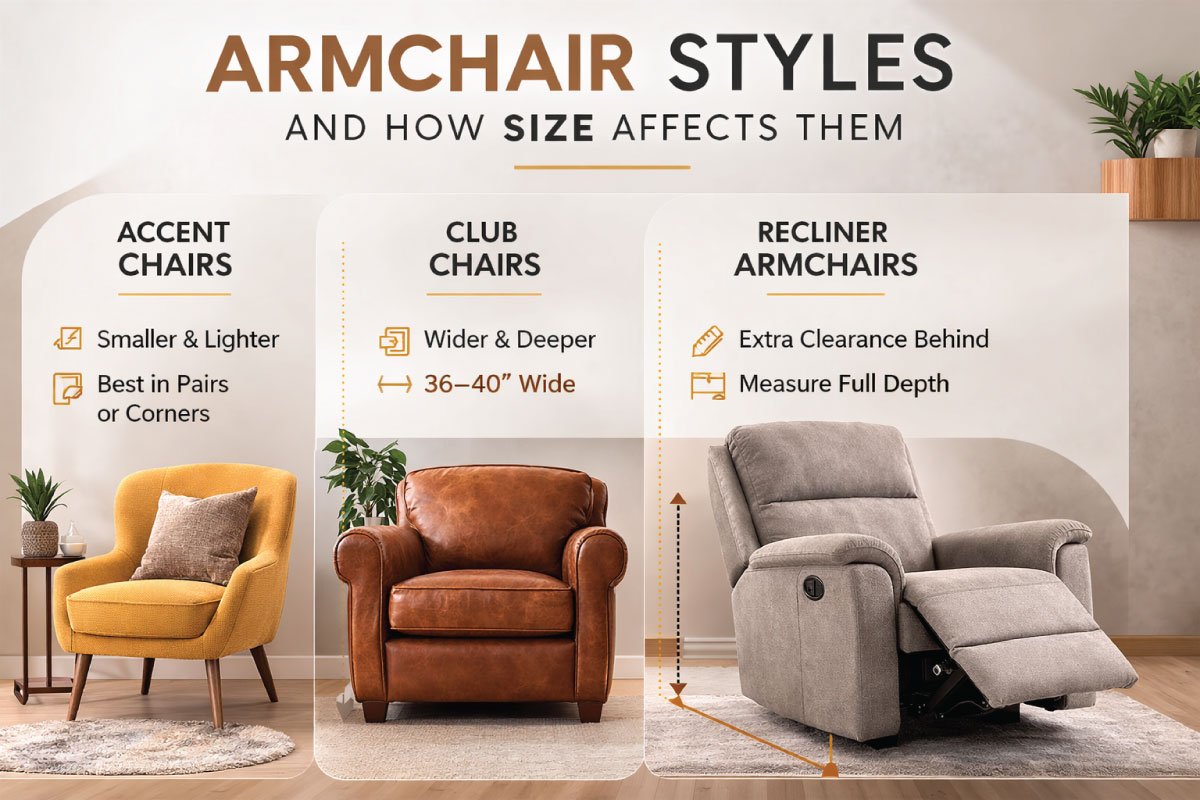
Accent Chairs
Smaller and lighter
Designed more for looks than lounging
Best in pairs or corners
Club Chairs
Wider and deeper
Great for conversation areas
Typically 36–40 inches wide
Recliner Armchairs
Need extra clearance behind
Measure fully reclined depth
Ideal for TV rooms
I once forgot to measure recline clearance and ended up with a chair that hit the wall every time it opened—don’t repeat that mistake.
Common Armchair Sizing Mistakes
Ignoring arm width
Forgetting recline space
Choosing style over comfort
Not checking seat depth
I’ve made every one of these mistakes at least once—and paid return shipping for it.
Measuring Your Space Before Buying
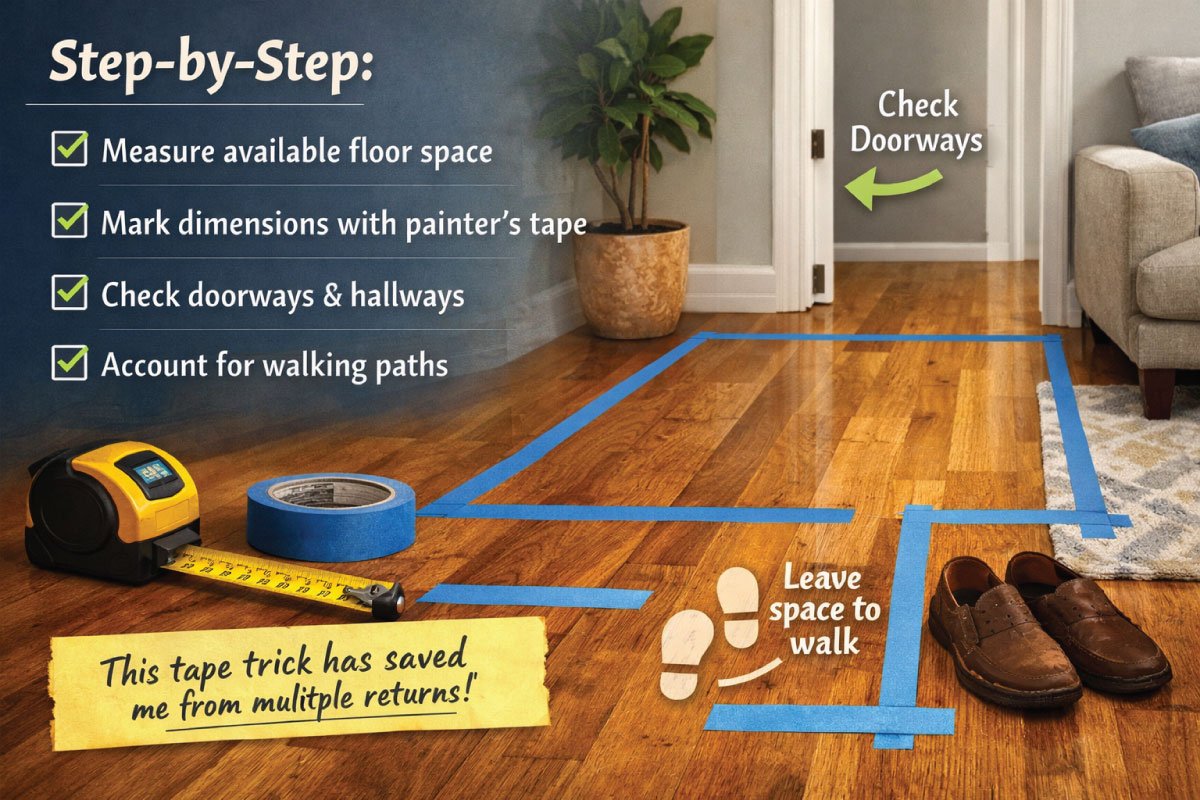
Step-by-Step:
Measure available floor space
Mark dimensions with painter’s tape
Check doorways and hallways
Account for walking paths
This simple tape trick has saved me from multiple returns.
How Armchair Size Impacts Everyday Comfort
Even when an armchair looks perfect in photos, small size details can make a huge difference in daily life. Over the years, I’ve learned that comfort isn’t just about fabric or cushioning—it’s about proportions.
A chair that’s too narrow might feel tight after 30 minutes of reading. A chair that’s too deep can feel luxurious at first but forces your legs to dangle if you’re not tall enough.
From personal experience:
Shallow seats are great for posture and conversation areas.
Deeper seats work best for lounging, napping, or reading for long periods.
Low-back chairs feel modern and open but provide less support.
High-back chairs feel cozy and secure, especially for tall users.
Now, whenever I test chairs, I make sure to sit in multiple positions—upright, lounging, and cross-legged—to get a real sense of usability.
Armchair Placement and Room Flow
Even a small armchair can disrupt a room if placement isn’t carefully considered. I learned this the hard way when my first oversized accent chair blocked a walking path in my living room.
Spacing Guidelines I Follow Now:
Walking paths: 30–36 inches minimum
Between chair and sofa: 14–18 inches
Between two chairs: 24–30 inches
Near doors or hallways: Leave at least 30 inches clearance
Painter’s tape on the floor is a lifesaver. Before buying any chair now, I outline the dimensions on the floor. It instantly shows whether the chair will fit comfortably and whether traffic flow will be smooth.
Armchair Size for Different Lifestyles
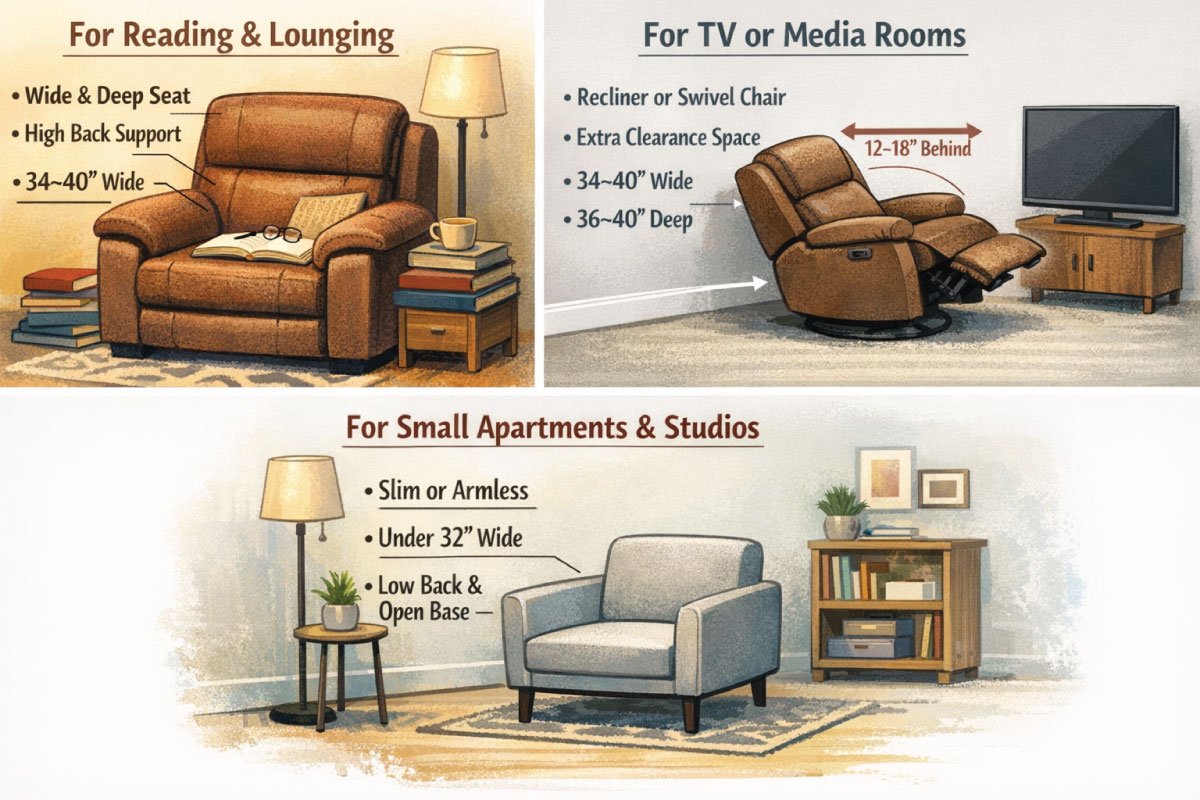
For Reading and Lounging
Wider seats and deeper cushions
Higher back for neck and shoulder support
Chair width: 34–40 inches
Seat depth: 20–22 inches
My favorite reading chair is slightly oversized, but the depth and high back make marathon reading sessions effortless.
For TV or Media Rooms
Recliner or swivel armchairs
Extra clearance for reclining (usually 12–18 inches behind)
Width: 34–40 inches
Depth: 36–40 inches
I once bought a recliner without checking clearance. Every time it reclined, it hit the wall. Lesson learned: always measure fully extended depth.
For Small Apartments or Studios
Slim-arm or armless designs
Width under 32 inches
Light visual weight (legs exposed)
Keep back low to avoid overwhelming the room
When I lived in a studio, switching to a compact, armless chair instantly made the space feel bigger and more functional.
How Armchair Style Affects Size Perception
Even chairs with identical measurements can feel different in a room based on style:
Track-arm chairs: Sleek, modern, visually smaller
Rolled-arm chairs: Classic, bulkier, take up more perceived space
Skirted bases: Add visual weight
Exposed legs: Make chairs feel lighter
I once compared two 34-inch-wide chairs—one with thick rolled arms, one with slim track arms. The slimmer design felt noticeably smaller and fit the room better, even though the width was identical.
Armchair vs. Accent Chair: Size Considerations
While all accent chairs are technically armchairs, their function changes sizing priorities:
Accent chairs: Smaller, visually light, meant to complement other furniture
Club chairs or lounge chairs: Deeper, wider, prioritize comfort
Recliners: Require extra clearance, prioritize relaxation over aesthetics
Choosing the right type ensures the size matches your intended use. My lounge chair is wider than my accent chairs, making it my go-to for long reading or nap sessions.
My Personal Experience: What I Finally Got Right
After years of trial and error, I now follow a strict rule: I never buy an armchair without checking five measurements—width, depth, height, seat height, and clearance space.
My current armchair is 34 inches wide with a 20-inch seat depth. It fits perfectly in my living room, complements my sofa, and feels comfortable for hours. Most importantly, it suits my lifestyle, not just my décor.
Final Thoughts:
An armchair is more than a seat—it’s where you read, relax, and recharge. Choosing the right size ensures comfort, balance, and long-term satisfaction.
Quick Takeaways:
Always measure before buying
Use size charts as guidelines, not rules
Match chair size to room scale
Prioritize comfort over trends
If you take one thing from my experience, let it be this: the right armchair size can completely transform how a room feels—and how you feel using it.
If you’d like, I can also help you choose the best armchair size for a specific room or recommend styles based on your space.
