
Buying a sofa seems simple—until you actually start shopping. That’s when questions pile up fast: Will it fit through the door? Is it too big for my living room? Will it seat everyone comfortably? I’ve been there. After moving into a new apartment a few years ago, I confidently ordered a sofa online without measuring properly. It looked perfect on the website… and then arrived looking like a giant ship docked in a very small harbor. That experience taught me one thing the hard way: sofa size matters more than style.
This complete sofa size guide will walk you through everything you need to know—standard sofa dimensions, how to measure your space, a detailed sofa size chart, and tips for choosing the right sofa based on room size and lifestyle. I’ll also share practical lessons I learned from my own mistakes so you don’t repeat them.
Table of Contents
ToggleWhy Sofa Size Is So Important
Sofa size shapes the look, feel, and functionality of a living room. Picking the right dimensions ensures your space feels balanced, comfortable, and inviting, while avoiding common pitfalls like cramped layouts or awkward empty spots.
From personal experience, I’ve learned that the “right” sofa:
Fits comfortably within the room without blocking walkways
Seats the right number of people
Matches the scale of other furniture
Can actually be delivered into your home without drama
Sofa size isn’t just about length—it’s about depth, height, seat comfort, and proportions.
Standard Sofa Dimensions Explained
Understanding standard sofa dimensions makes choosing the right couch much easier. By knowing the typical length, depth, height, and seat height, you can pick a sofa that fits your space, suits your comfort preferences, and works well for everyone who will use it.
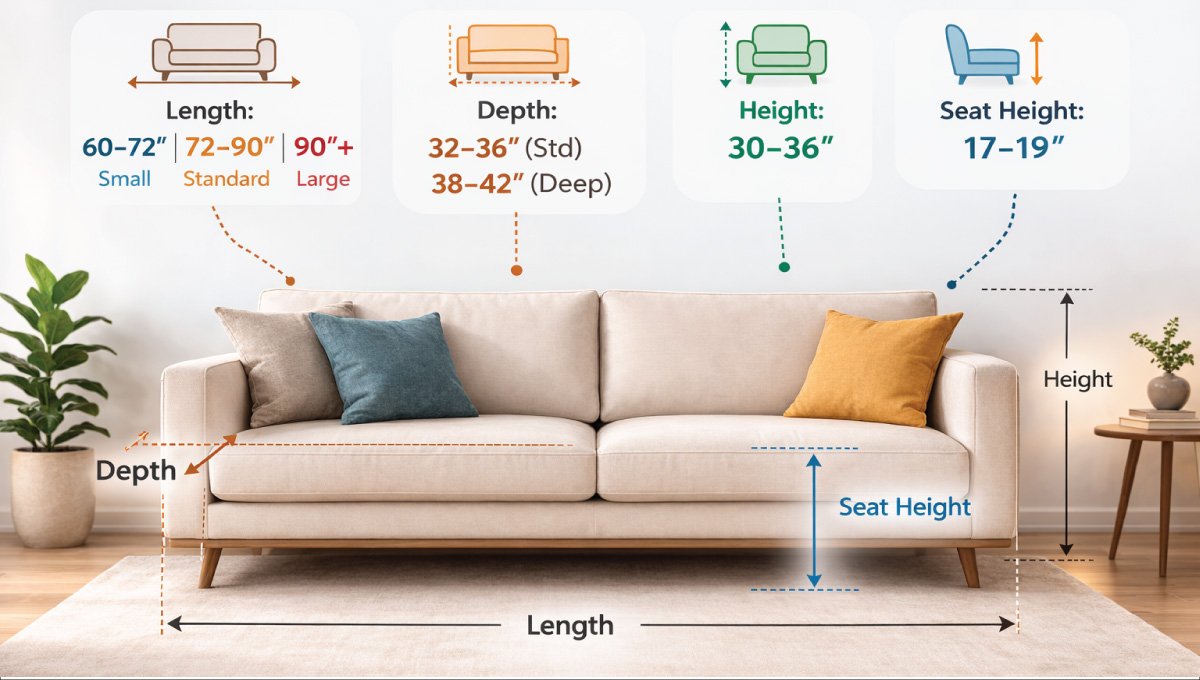
1. Sofa Length (Width)
The width of a sofa determines how many people it can comfortably seat and how it fits along a wall. Choosing the right length ensures your living space feels balanced without crowding the room or leaving it feeling empty.
Small sofas: 60–72 inches
Standard sofas: 72–90 inches
Large sofas: 90+ inches
2. Sofa Depth
Depth affects how relaxed or upright your seating feels. Selecting the right depth balances comfort with practicality, making sure everyone can sit or lounge without feeling cramped or unsupported.
Standard depth: 32–36 inches
Deep sofas: 38–42 inches
I personally prefer deeper sofas because I like to curl up with a book—but I’ve noticed shorter guests sometimes feel like their feet don’t touch the floor.
3. Sofa Height
Sofa height influences both style and support. Taller backs provide better posture and comfort, while lower-profile designs give a modern, open feel to your living area.
Standard height: 30–36 inches
Lower backs feel modern, while taller backs offer better support.
4. Seat Height
Seat height impacts how easy it is to sit down and get up. Choosing the right height ensures comfort for all users, from kids to older adults, while supporting proper posture.
Standard seat height: 17–19 inches
This is especially important for comfort, especially for kids or older adults.
Sofa Size Chart (Quick Reference)
A quick-reference sofa size chart makes it easy to compare different types at a glance. Knowing typical lengths, depths, heights, and seating capacities helps you choose a sofa that fits your space, meets your comfort needs, and avoids layout headaches.
| Sofa Type | Length (inches) | Depth (inches) | Height (inches) | Seats |
|---|---|---|---|---|
| Loveseat | 48–72 | 32–36 | 30–35 | 2 |
| Standard Sofa | 72–90 | 32–36 | 30–36 | 3 |
| Large Sofa | 90–100 | 34–40 | 30–36 | 4 |
| Sectional (L-shape) | 95–130+ | 34–40 | 30–36 | 4–6 |
| Apartment Sofa | 60–78 | 30–34 | 30–34 | 2–3 |
| Sleeper Sofa | 72–96 | 34–40 | 30–36 | 3–4 |
Tip from experience: Always compare these numbers to your room size, not just what “sounds right.”
How to Measure Your Space Correctly
Measuring your space correctly is crucial to avoid costly mistakes and delivery headaches. By carefully mapping your room, entryways, and pathways, you can ensure your new sofa fits perfectly and leaves plenty of room for comfortable movement.
Step 1: Measure the Room
Length and width of the room
Distance between walls, windows, doors, and fireplaces
Leave at least 30–36 inches for walkways
Step 2: Measure Entry Points
Front door width and height
Hallways
Staircases and turns
Elevator dimensions (if applicable)
When my oversized sofa arrived, it couldn’t make the tight turn in the hallway. That was an expensive lesson.
Step 3: Use Tape or Cardboard
Lay painter’s tape or cardboard on the floor to outline the sofa dimensions. This trick completely changed how I shop for furniture—it instantly shows whether a sofa will overpower the room.
Choosing the Right Sofa Size by Room Type
In small living rooms, choosing the right sofa is all about maximizing space without sacrificing comfort. Compact designs like loveseats or slim-arm sofas keep the room open and functional while still providing cozy seating.
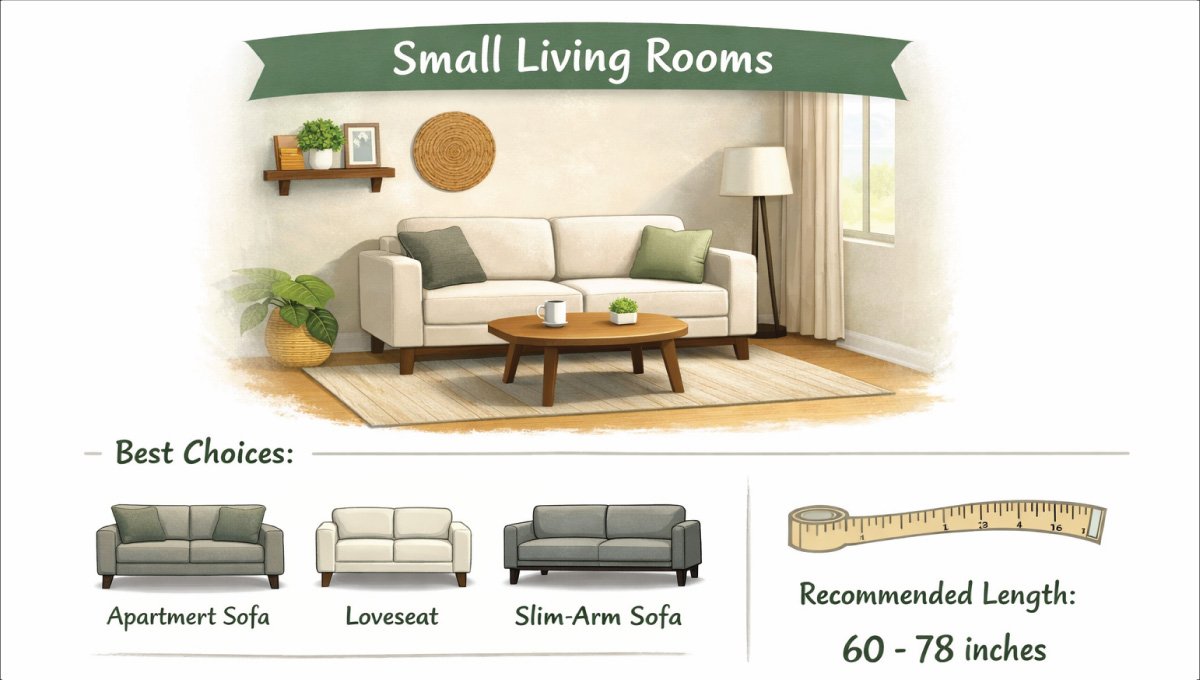
Small Living Rooms
In small living rooms, selecting the right sofa can make a huge difference in how spacious and inviting the space feels. Choosing compact designs with slim profiles ensures comfort without overwhelming the room.
Best choices:
Apartment sofas
Loveseats
Slim-arm sofas
Recommended length: 60–78 inches
Personally, after downsizing, I switched to a slim-arm apartment sofa, and the room instantly felt bigger and brighter.
Medium Living Rooms
Medium living rooms offer the perfect balance of space and flexibility. With room for standard 3-seater sofas, small sectionals, or a sofa paired with an accent chair, you can create a comfortable, functional layout without making the space feel crowded or empty.
Best choices:
Standard 3-seater sofas
Small sectionals
Sofa + accent chair combo
Recommended length: 72–90 inches
This size allows comfort without crowding.
Large Living Rooms
In large living rooms, choosing the right sofa is about balance and proportion. Generously sized pieces like sectionals or modular sofas help fill the space, create a focal point, and make the room feel inviting instead of sparse.
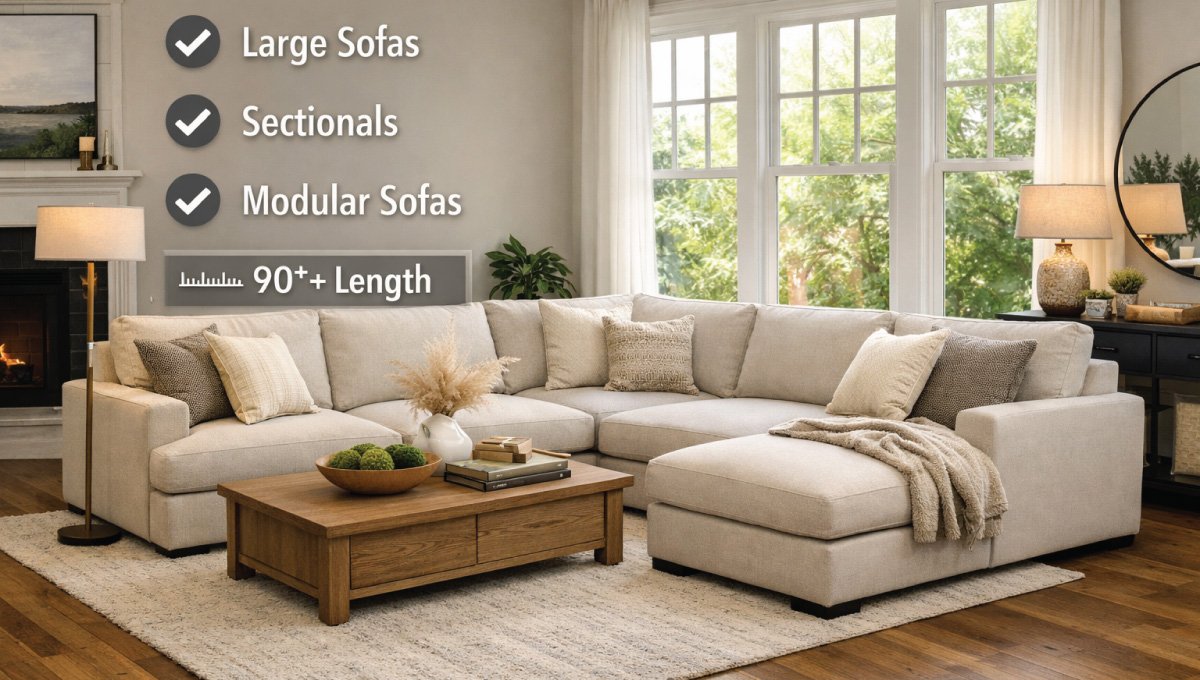
Best choices:
Large sofas
Sectionals
Modular sofas
Recommended length: 90+ inches
In my current home, I use a sectional with a chaise, which anchors the room and makes it feel cozy rather than empty.
Sofa Size Based on Seating Needs
Choosing a sofa based on seating needs ensures everyone has a comfortable spot. By matching the size and style to how many people will use it and how they’ll sit or lounge, you create a space that’s both functional and inviting for daily life and entertaining.
1–2 people: Loveseat or small sofa
3 people: Standard sofa
Family or frequent guests: Sectional or large sofa
Lounging and naps: Deeper seats and chaise options
I host friends often, and I’ve noticed that deeper seating encourages people to relax and stay longer—sometimes much longer than planned.
Sofa Size vs. Style: What Most People Miss
Sofa style can dramatically affect how a piece fits and feels in a room, even if the dimensions are the same. Arm shapes, back height, and overall design influence both comfort and the visual space a sofa occupies, making style just as important as size.
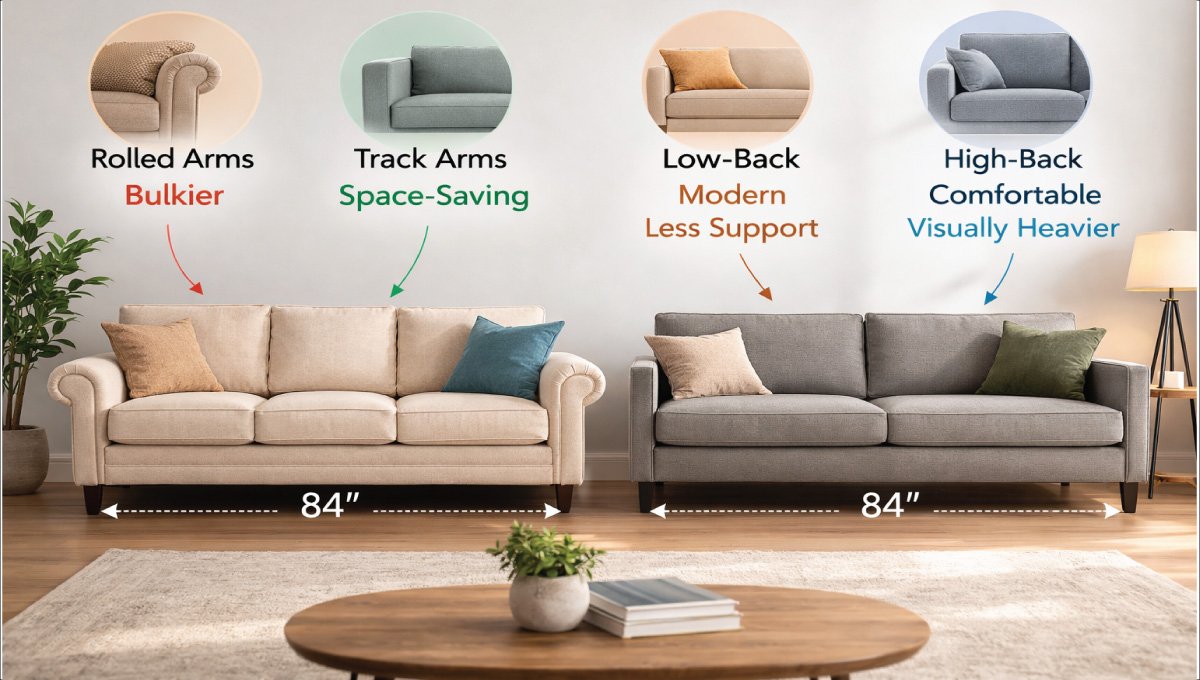
Rolled arms: Traditional, bulkier
Track arms: Clean, space-saving
Low-back sofas: Modern but less supportive
High-back sofas: Comfortable but visually heavier
I once compared two 84-inch sofas—one with wide rolled arms and one with slim track arms. The slim-arm version felt almost a foot smaller visually.
Sleeper Sofas and Sectionals: Special Size Considerations
Sleeper sofas and sectionals need extra planning to ensure they fit comfortably and function well. Considering full extension for sleepers and measuring each section of a sectional helps prevent cramped layouts and keeps your room both practical and inviting.
Sleeper Sofas
Sleeper sofas are a versatile solution for guests, but they need careful planning. You must account for the space required when fully extended and check mattress sizes to ensure comfort. Proper measurement prevents cramped rooms and makes sure your sleeper sofa remains both functional and convenient for everyday living.
Allow 90–100 inches of open space in front when fully extended
Check mattress size (twin, full, queen)
From experience, sleeper sofas are lifesavers—but only if you’ve planned for them properly.
Sectional Sofas
Sectionals offer flexibility and ample seating, but their size and layout require attention. Measuring each piece, considering chaise orientation, and leaving enough surrounding space ensures the sectional fits your room without feeling crowded or boxed in, creating a comfortable and visually balanced focal point.
Measure each section separately
Consider left-facing vs. right-facing chaise
Leave space so the room doesn’t feel boxed in
Common Sofa Size Mistakes (I’ve Made These)
Buying without measuring doorways
Choosing style over comfort
Ignoring seat depth
Forgetting space for coffee tables
Assuming “standard size” fits everywhere
Every one of these mistakes cost me either money, time, or comfort.
How Sofa Size Affects Daily Comfort (What You Don’t Notice at First)
One thing I didn’t fully appreciate early on was how sofa size affects everyday habits—not just how the room looks. After living with different sofas over the years, I’ve realized that comfort isn’t only about softness; it’s about proportions.
A sofa that’s too deep can feel luxurious at first, but if you’re sitting upright to work on a laptop or eat dinner, you may find yourself constantly adjusting pillows. On the other hand, a shallow sofa might look neat and tailored but can feel stiff during long movie nights.
Here’s what I’ve personally noticed:
Deep sofas are great for lounging, reading, and naps
Standard-depth sofas work better for conversation and posture
Low seat heights feel relaxed but can be tough on knees
Higher seat heights are easier to get in and out of
Before buying my current sofa, I tested how it felt to sit for five minutes versus thirty. That small test made a huge difference in long-term comfort.
Sofa Size and Layout: Planning the Whole Room
A sofa should never be chosen in isolation. One mistake I made early on was selecting a sofa I loved and then trying to force the rest of the furniture to work around it.
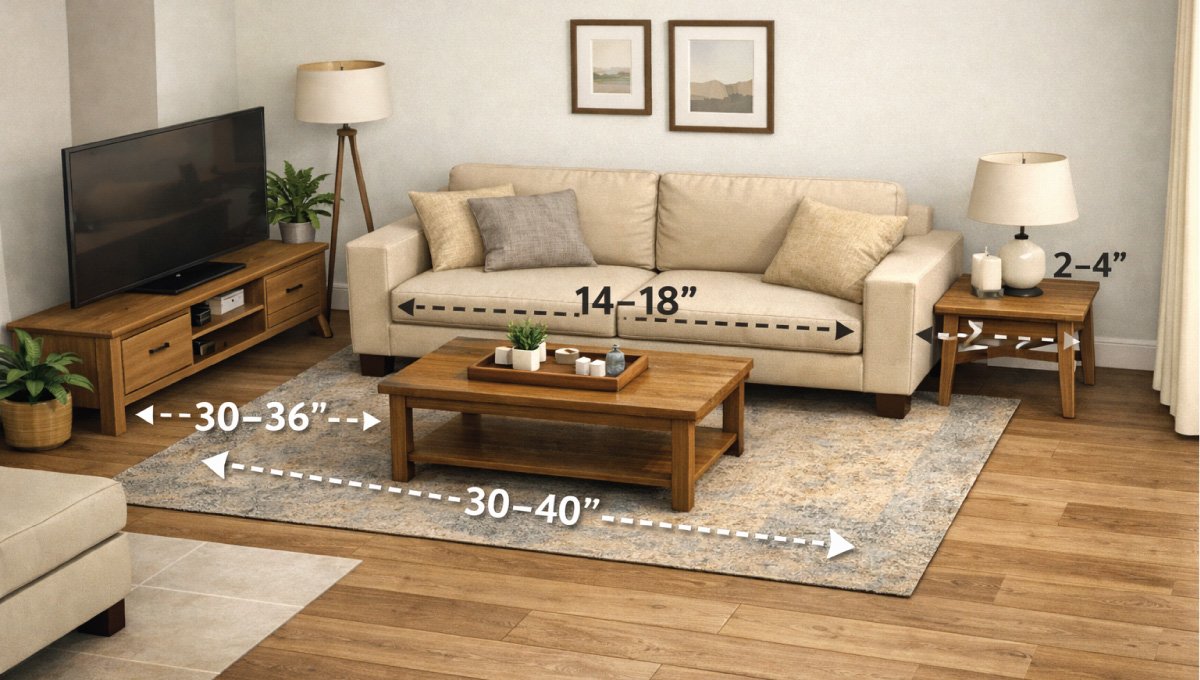
Key Spacing Guidelines to Follow
Sofa to coffee table: 14–18 inches
Sofa to TV stand: 30–40 inches
Sofa to walkway: 30–36 inches
Sofa to side tables: 2–4 inches
These numbers may sound technical, but once I started following them, my living rooms felt instantly more open and intentional. When spacing is right, even a larger sofa can feel balanced rather than overwhelming.
Sofa Size for Different Lifestyles
Choosing the right sofa isn’t just about room size—it’s about how you live. Pets, kids, and frequent moves all affect what dimensions and styles will work best. Considering your lifestyle alongside space ensures your sofa is comfortable, practical, and suited to daily life, so it feels like it was made just for your home.
For Pet Owners
Pet-friendly sofas require thoughtful sizing to keep both you and your furry friends comfortable. Wider seats, deeper cushions, and lower backs make it easy for pets to share the space without crowding you, ensuring that your sofa remains functional, cozy, and inviting for everyone in the household.
Wider seats give pets room without crowding you
Deeper sofas are better for dogs that like to stretch out
Lower backs make it easier for pets to climb up
I learned quickly that a “perfect-sized” sofa for humans can feel very small once a dog claims half of it.
For Families With Kids
Families need sofas that accommodate more than just adults. Slightly larger dimensions, deeper seats, and sectionals create a comfortable space for kids to lounge, play, and watch movies, helping keep the room organized while maximizing usability for everyday family life.
Extra length allows kids to sprawl
Deeper seats are better for movie nights
Sectionals help separate seating zones
In homes I’ve visited with kids, compact sofas almost always lead to constant rearranging—and frustration.
For Small Apartments and Renters
Apartment and rental living demands flexibility in sofa sizing. Modular or compact designs, manageable lengths, and easy delivery considerations ensure your sofa fits your current space while making moves and future adjustments simple and stress-free.
Avoid ultra-long sofas
Choose modular or apartment-size designs
Prioritize easy delivery dimensions
After struggling with tight stairwells once, I now always think ahead to the next place, not just the current one.
How to Balance Sofa Size With Other Furniture
A common mistake is pairing a large sofa with undersized furniture—or vice versa.
Here’s what I’ve learned works best:
Large sofas → larger coffee tables and rugs
Small sofas → slim tables and lighter visual pieces
Sectionals → round or oval coffee tables for flow
Rug size matters too. Ideally, at least the front legs of the sofa should sit on the rug. When I upgraded to a larger rug under my sofa, the entire room felt more cohesive—even though the sofa itself didn’t change.
When to Break the “Rules” on Sofa Size
Sofa size guidelines are useful, but they don’t have to be rigid. Sometimes breaking the rules—like choosing an oversized piece in a small room or a deep sofa in a compact space—can create style, comfort, or function you wouldn’t get otherwise. The trick is understanding the trade-offs before making bold choices.
You might intentionally choose:
An oversized sofa for a minimalist room
A compact sofa to highlight architectural features
A deep sofa even in a small room if lounging is your priority
The key is awareness. When you know the trade-offs, you can decide which compromises are worth it.
Final Thoughts:
After years of moving, redecorating, and learning the hard way, here’s my simple rule:
Measure twice, imagine daily life once, and buy with comfort in mind.
A sofa isn’t just furniture—it’s where you relax after work, binge-watch shows, nap on weekends, and host friends. The right size makes your home feel balanced and welcoming, while the wrong size becomes a daily annoyance.
Use this sofa size guide and chart as your reference, trust your measurements, and don’t rush the decision. Your future self—stretched out comfortably on the perfect sofa—will thank you.
