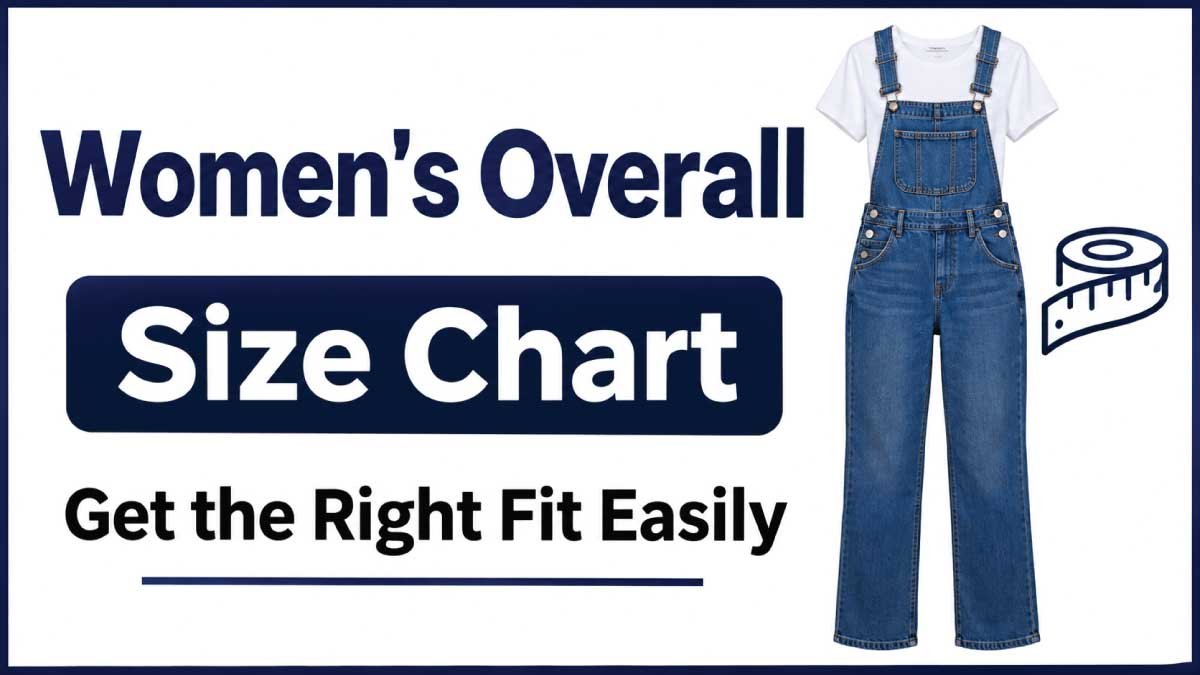
Finding the right size of women’s overalls is essential for comfort, mobility, and a flattering fit. Whether you are shopping for workwear, denim overalls, gardening clothes, insulated coveralls, or casual everyday outfits, understanding the correct measurements can make choosing the right size much easier. Women’s overalls come in different cuts, lengths, and styles, so selecting a size based only on your usual clothing label may not provide the best fit.
This women’s overall size chart explains standard sizing, bust, waist, hip, inseam, and length measurements to help you find suitable overalls. It also covers international size conversions, different overall styles, measuring instructions, and practical buying tips. Since sizing varies between manufacturers, use these charts as general guidance and always compare your measurements with the specific brand’s sizing information before purchasing.
Women’s Overall Size Chart
Women’s overalls are available in a variety of sizes, from extra small to plus sizes. Most manufacturers consider several body measurements when designing their garments, including bust, waist, hips, and inseam. Some designs also use torso length and shoulder measurements to achieve a more comfortable fit.
The following chart provides approximate women’s body measurements for selecting overalls. Actual garment measurements may differ depending on the manufacturer, fabric, and overall style.
Standard Women’s Overall Size Chart
Use this chart as a starting point when determining your overall size.
| US Size | Bust (inches) | Waist (inches) | Hips (inches) |
|---|---|---|---|
| XS (0–2) | 32–33 | 24–25 | 34–35 |
| S (4–6) | 34–35 | 26–27 | 36–37 |
| M (8–10) | 36–37 | 28–29 | 38–39 |
| L (12–14) | 38.5–40 | 30.5–32 | 40.5–42 |
| XL (16–18) | 41.5–43 | 33.5–35 | 43.5–45 |
| 2XL (20–22) | 45–47 | 37–39 | 47–49 |
| 3XL (24–26) | 49–51 | 41–43 | 51–53 |
| 4XL (28–30) | 53–55 | 45–47 | 55–57 |
These measurements are approximate body-size references rather than universal sizing standards. Some brands use different numerical labels, while others offer petite, tall, and extended sizing options.
Women’s Overall Size Conversion Chart
Women’s overall sizes can vary between the United States, United Kingdom, and European markets. Understanding the general conversion system can help when shopping from international clothing brands.
| US Size | UK Size | EU Size | International Size |
|---|---|---|---|
| 0–2 | 4–6 | 32–34 | XS |
| 4–6 | 8–10 | 36–38 | S |
| 8–10 | 12–14 | 40–42 | M |
| 12–14 | 16–18 | 44–46 | L |
| 16–18 | 20–22 | 48–50 | XL |
| 20–22 | 24–26 | 52–54 | 2XL |
| 24–26 | 28–30 | 56–58 | 3XL |
| 28–30 | 32–34 | 60–62 | 4XL |
International conversions are approximate because clothing manufacturers do not follow one identical sizing system. Always check the brand’s measurement chart instead of relying exclusively on converted labels.
Women’s Overall Bust Size Chart
Bust measurement is particularly important when selecting women’s overalls because the upper section must fit comfortably without restricting movement. This is especially relevant for one-piece coveralls, fitted denim designs, and overalls with a structured bib.
A properly fitted upper body should allow comfortable movement when reaching, bending, and working.
Bust Measurement Reference
| Bust (inches) | Bust (cm) | Suggested Size |
|---|---|---|
| 32–33 | 81–84 | XS |
| 34–35 | 86–89 | S |
| 36–37 | 91–94 | M |
| 38.5–40 | 98–102 | L |
| 41.5–43 | 105–109 | XL |
| 45–47 | 114–119 | 2XL |
| 49–51 | 124–130 | 3XL |
| 53–55 | 135–140 | 4XL |
How to Choose the Right Bust Fit
When selecting overalls, consider the following points:
- Upper-body comfort: The fabric should not pull tightly across the bust.
- Arm movement: You should be able to reach forward and raise your arms comfortably.
- Shoulder positioning: Shoulder seams and straps should sit naturally.
- Layering: Allow sufficient room for a shirt or lightweight sweater underneath.
- Closure comfort: Zippers, buttons, and fasteners should close without excessive tension.
For fitted styles, accurate bust measurements are especially important. If you plan to wear thicker clothing underneath work overalls, consider the manufacturer’s guidance about additional room.
Women’s Overall Waist Size Chart
Waist measurement helps determine how overalls fit around the middle of the body. Some designs feature a defined waist, while others have a relaxed or loose construction.
Denim overalls may have a more structured waist, whereas workwear designs often provide additional room for movement.
Women’s Waist Measurement Guide
| Waist (inches) | Waist (cm) | Suggested Size |
|---|---|---|
| 24–25 | 61–64 | XS |
| 26–27 | 66–69 | S |
| 28–29 | 71–74 | M |
| 30.5–32 | 77–81 | L |
| 33.5–35 | 85–89 | XL |
| 37–39 | 94–99 | 2XL |
| 41–43 | 104–109 | 3XL |
| 45–47 | 114–119 | 4XL |
Understanding Different Waist Fits
Women’s overalls are available in different waist constructions to suit different preferences.
- Regular waist: Provides a balanced fit for everyday use.
- High-waisted design: Sits higher on the waist and is common in fashion overalls.
- Relaxed waist: Offers additional space for comfortable movement.
- Elastic waist: Includes stretch sections for a flexible fit.
- Adjustable waist: Uses buttons, straps, or other features to modify the fit.
If your waist measurement falls between two sizes, consider the fabric and overall design. Stretch denim may provide more flexibility than rigid cotton fabric.
Women’s Overall Hip Size Chart
Hip measurement is another important factor when selecting women’s overalls. A garment that fits properly around the bust and waist may still feel uncomfortable if the hips and seat are too tight.
This is especially important for fitted denim overalls, jumpsuit-style designs, and one-piece workwear.
Hip Measurement Reference
| Hips (inches) | Hips (cm) | Suggested Size |
|---|---|---|
| 34–35 | 86–89 | XS |
| 36–37 | 91–94 | S |
| 38–39 | 97–99 | M |
| 40.5–42 | 103–107 | L |
| 43.5–45 | 110–114 | XL |
| 47–49 | 119–124 | 2XL |
| 51–53 | 130–135 | 3XL |
| 55–57 | 140–145 | 4XL |
Choosing a Comfortable Hip Fit
Your overalls should provide enough room around the hips and seat for sitting, walking, squatting, and bending.
Pay attention to these details:
- The fabric should not pull tightly across the seat.
- The crotch area should provide comfortable movement.
- Side seams should remain in their natural position.
- Pockets should lie flat rather than pulling open.
- The upper legs should have enough room for normal movement.
For workwear, a relaxed fit may be more practical than a close-fitting design. For casual fashion, you can choose between fitted, regular, and oversized styles depending on your preference.
Women’s Overall Inseam and Length Chart
Inseam determines the length of the legs and affects how overalls sit around the ankles and footwear. Choosing the right inseam can make a significant difference in comfort and appearance.
Women’s overalls are often available in petite, regular, and tall lengths. Some brands also offer adjustable hems or different leg-length options.
Women’s Inseam Length Guide
| Inseam (inches) | Inseam (cm) | General Length |
|---|---|---|
| 25–27 | 64–69 | Extra Short |
| 28–29 | 71–74 | Petite |
| 30–31 | 76–79 | Regular |
| 32–33 | 81–84 | Long |
| 34–35 | 86–89 | Tall |
| 36–37 | 91–94 | Extra Tall |
These are general inseam categories rather than fixed requirements. Actual length availability depends on the manufacturer and garment style.
Petite, Regular, and Tall Overalls
Petite Overalls: Designed for shorter proportions, these styles may feature shorter inseams and adjusted torso lengths. They can help prevent excessive fabric around the legs and upper body.
Regular Overalls: Suitable for many standard clothing proportions, regular-length designs offer a commonly available inseam range.
Tall Overalls: Designed for longer body and leg proportions, tall options may include longer inseams and additional torso length.
When choosing between these options, consider both your height and individual body proportions. Two women of the same height may need different inseam lengths.
Different Types of Women’s Overalls and Their Sizing
Women’s overalls come in several designs, each offering different features, fits, and uses. Understanding the differences helps you select a style that meets your requirements.
1. Women’s Denim Overalls
Denim overalls are popular for casual outfits and everyday activities. They generally feature adjustable shoulder straps, a front bib, and trouser-style legs.
Common uses include:
- Everyday casual clothing.
- Gardening and outdoor activities.
- DIY projects.
- Weekend outfits.
- Seasonal fashion.
Denim overalls are available in fitted, straight-leg, wide-leg, and oversized styles. Rigid denim may have less flexibility than stretch denim, so check waist and hip measurements carefully.
2. Women’s Work Overalls
Work overalls are designed for practical activities that require durable clothing and comfortable movement.
They are commonly used for:
- Construction and maintenance.
- Farming and gardening.
- Mechanical work.
- Workshops and manufacturing.
- General outdoor tasks.
When selecting work overalls, prioritize comfort around the shoulders, waist, hips, thighs, and crotch. Additional room may be necessary if you wear work clothing underneath.
3. Women’s Coveralls
Coveralls are generally one-piece garments that cover the torso and legs. Some designs also include sleeves for additional coverage.
They are suitable for automotive work, maintenance, industrial activities, and other practical applications.
Unlike bib overalls, coveralls usually have a more connected upper and lower construction. For this reason, check bust, waist, hip, torso, sleeve, and inseam measurements where available.
4. Women’s Insulated Overalls
Insulated overalls are designed for cold-weather use and usually include additional lining or insulation.
They can be useful for:
- Winter outdoor activities.
- Snow-related recreation.
- Cold-weather maintenance.
- Outdoor work in low temperatures.
Because insulation adds bulk, these garments may require additional room for movement and clothing layers. Follow the manufacturer’s sizing recommendations before choosing a larger size.
5. Women’s Fashion Overalls
Fashion overalls are available in denim, cotton, linen, and other materials. They often feature different cuts, decorative details, and leg shapes.
Popular options include:
- Slim-fit overalls.
- Straight-leg overalls.
- Wide-leg overalls.
- Cropped overalls.
- Loose-fit overalls.
Choose a design that matches your preferred style while maintaining comfortable movement around the waist, hips, and upper body.
Also Read:
How to Measure Yourself for Women’s Overalls
Taking accurate body measurements is one of the best ways to find the right overall size. Before shopping, prepare a flexible measuring tape and wear lightweight clothing that does not add unnecessary bulk.
Stand naturally and avoid pulling the tape too tightly.
1. Measure Your Bust
Bust measurement helps determine the correct upper-body fit.
- Stand upright with your shoulders relaxed.
- Wrap the measuring tape around the fullest part of your bust.
- Keep the tape level across your back.
- Make sure it is comfortably snug without compressing your body.
- Record the measurement in inches or centimeters.
Wear a well-fitting everyday bra when measuring so that the result reflects your normal clothing measurements.
2. Measure Your Waist
To measure your natural waist:
- Stand straight in a relaxed position.
- Locate the narrowest part of your natural waist.
- Wrap the measuring tape around this area.
- Keep the tape horizontal.
- Record the measurement without pulling the tape tightly.
Do not hold your stomach in while measuring, as this can affect the result.
3. Measure Your Hips
Hip measurement helps determine the fit around your seat and upper legs.
- Stand with your feet comfortably together.
- Place the tape around the fullest part of your hips and seat.
- Keep the tape level around your body.
- Avoid compressing the fabric or skin.
- Record the measurement.
Make sure the tape passes around the widest part rather than measuring only the hip bones.
4. Measure Your Inseam
Inseam determines the inside leg length.
- Stand straight with your feet naturally positioned.
- Place the beginning of the tape at the crotch area.
- Measure down the inside of your leg.
- Stop at the desired bottom position near your ankle.
- Record the result.
You can also measure a pair of trousers that already fits comfortably.
5. Measure Your Torso
Torso length can be important when selecting bib overalls and one-piece coveralls.
To measure your torso, follow the manufacturer’s specified measurement method. Some brands measure from the shoulder, through the crotch, and back to the starting point, while others provide separate front and back torso measurements.
Always follow the product’s instructions because torso measurement methods are not identical across manufacturers.
Also Read:
How to Choose the Right Women’s Overall Size
Once you have your measurements, compare them with the manufacturer’s size chart. Consider the following factors before making your final selection.
Compare Your Largest Measurements
Your bust, waist, and hips may correspond to different sizes. When this happens, consider the overall’s construction and the manufacturer’s fitting advice.
For one-piece garments, a size that accommodates the largest relevant measurement may provide a better starting point. However, check the garment’s other dimensions to ensure that it does not become excessively loose elsewhere.
Consider the Fabric
Fabric composition affects the way overalls fit.
- Cotton: Comfortable and breathable, but some fabrics may shrink after washing.
- Denim: Durable and structured, with flexibility depending on its composition.
- Stretch denim: Provides additional flexibility and movement.
- Polyester blends: Often used in workwear and practical clothing.
- Insulated fabrics: Add warmth and bulk, which can affect sizing.
Always review the care label and fabric information before purchasing.
Think About Clothing Layers
If you plan to wear a sweatshirt, thermal top, or thick shirt underneath your overalls, consider the additional space required.
Winter workwear generally needs more room than lightweight casual overalls.
Check Adjustable Features
Adjustable shoulder straps, elastic waist sections, side buttons, and adjustable hems can improve overall comfort.
However, these features should complement the correct garment size rather than replace accurate measurements.
Also Read:
Common Women’s Overall Sizing Mistakes to Avoid
Choosing the wrong overall size can affect comfort and appearance. Avoid these common mistakes when shopping.
Relying Only on Your Regular Clothing Size
A medium dress or pair of jeans does not necessarily mean you need medium overalls. Different garments use different sizing systems and measurements.
Always compare your body measurements with the product’s chart.
Ignoring Torso Length
Some overalls may fit around the bust and hips but feel uncomfortable because the torso is too short or too long.
This is particularly important for one-piece coveralls and fitted jumpsuits.
Choosing the Wrong Leg Length
Overalls that are too long may gather excessively around the ankles, while short legs may ride up during movement.
Check petite, regular, and tall options before ordering.
Forgetting About Fabric Shrinkage
Certain cotton and denim garments may shrink depending on the material and washing conditions.
Read the care instructions before purchasing and avoid assuming every fabric maintains exactly the same dimensions after washing.
Ignoring the Intended Fit
A slim-fit fashion overall and relaxed work overall are designed differently. Selecting the same size in both styles may produce different results.
Check whether the garment is fitted, regular, relaxed, or oversized.
Tips for Getting the Best Fit and Maintaining Women’s Overalls
A good fit depends on both correct sizing and proper garment care. These practical tips can help you get better use from your overalls.
- Measure before buying: Take fresh bust, waist, hip, and inseam measurements.
- Check the size chart: Compare your measurements with the specific manufacturer’s recommendations.
- Review customer feedback: Look for comments about whether the garment runs small, large, or true to size.
- Consider fabric stretch: Stretch materials may provide more flexibility than rigid fabrics.
- Test your movement: Make sure you can sit, bend, walk, and reach comfortably.
- Follow washing instructions: Use the recommended washing and drying methods.
- Inspect adjustable straps: Ensure buckles, buttons, and closures work correctly.
- Choose appropriate footwear: Check the leg length with the shoes or boots you normally wear.
For workwear, also verify that the garment provides the level of protection required for your particular workplace. Ordinary overalls should not automatically be considered protective equipment.
Frequently Asked Questions About Women’s Overall Sizes
1. How do I know what size women’s overalls to buy?
Measure your bust, waist, hips, and inseam, then compare the results with the manufacturer’s size chart. Consider the overall style, fabric, and intended use before choosing a size.
2. Should women’s overalls be tight or loose?
Women’s overalls should fit comfortably without restricting movement. Casual fitted styles may sit closer to the body, while workwear and winter overalls generally benefit from additional room.
3. Are women’s overall sizes the same as regular clothing sizes?
Not always. Overall sizing can differ from dresses, jeans, and other clothing because manufacturers use different measurements and garment construction methods.
4. How do I measure myself for women’s overalls?
Measure your bust at its fullest point, waist at its natural position, hips around their fullest area, and inseam from the crotch to the desired leg length. Follow additional manufacturer instructions for torso measurements.
5. What is the difference between petite and regular overalls?
Petite overalls are designed for shorter proportions and may have adjusted inseam and torso lengths. Regular overalls generally follow standard length proportions.
6. Should I size up when buying women’s work overalls?
Not automatically. Choose a size based on your measurements and the manufacturer’s guidance. If you plan to wear thicker clothing underneath, consider the additional room needed.
7. Do women’s denim overalls stretch?
Some denim overalls contain stretch fibers that provide additional flexibility, while rigid denim designs offer less stretch. Check the fabric composition to understand how the garment may fit.
8. What inseam length should I choose for women’s overalls?
The correct inseam depends on your leg length, height, preferred fit, and footwear. Measure your inside leg and compare it with the available petite, regular, and tall options.
9. Can women’s overalls shrink after washing?
Yes, some cotton and denim overalls may shrink depending on their fabric composition and washing conditions. Follow the manufacturer’s care instructions to minimize unwanted changes.
10. Are US and UK women’s overall sizes the same?
No. US and UK clothing sizes use different numerical labels. Use an international conversion chart as a starting point, then verify your measurements against the manufacturer’s sizing guide.
Conclusion
Choosing the correct size from a women’s overall size chart makes it easier to find comfortable, practical, and well-fitting clothing. Bust, waist, hip, inseam, and torso measurements all play important roles in determining the right fit. Fabric type, garment construction, and intended use should also influence your decision.
Before purchasing, take accurate measurements and compare them with the specific brand’s sizing information. Whether you prefer denim overalls, casual fashion styles, insulated designs, or durable workwear, understanding your measurements will help you choose women’s overalls that offer the right balance of comfort, fit, and functionality.
