
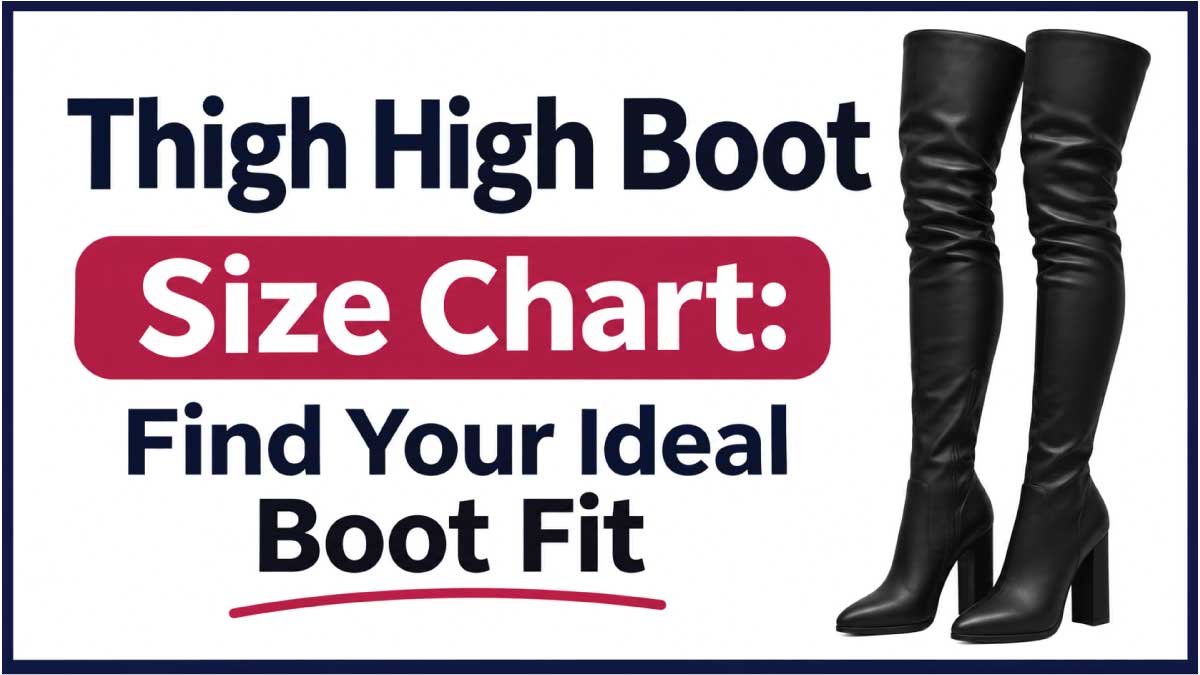
Thigh high boots are a stylish footwear choice that extends above the knee and covers a significant portion of the thigh. They are available in different designs, including flat thigh high boots, heeled styles, stretch boots, and over-the-knee fashion boots. Because these boots cover more of the leg than regular footwear, choosing the correct size involves more than measuring foot length.
A proper thigh high boot fit should provide enough room for your toes, a secure heel, and comfortable coverage around the calf and thigh. Boots that are too tight may restrict movement, while oversized styles may slide down or create uncomfortable folds.
A thigh high boot size chart helps you compare standard shoe sizes and leg measurements before purchasing. This guide explains women’s thigh high boot sizing, international size conversions, how to measure your feet and legs, and practical tips for finding a comfortable fit.
Thigh High Boot Size Chart
Thigh high boots are generally available in standard shoe sizes, but their leg measurements can vary considerably between brands. Foot length determines the basic shoe size, while calf circumference, thigh circumference, and shaft height help determine how the upper part of the boot fits.
The following charts provide approximate measurements for choosing thigh high boots.
Women’s Thigh High Boot Size Chart
Most thigh high boots are designed using women’s shoe sizing. Compare your foot length with the measurements below to find an approximate US, UK, and EU size.
| Foot Length (inches) | Foot Length (cm) | US Size | UK Size | EU Size |
|---|---|---|---|---|
| 8.3 | 21.0 | 4 | 2 | 35 |
| 8.5 | 21.6 | 4.5 | 2.5 | 35.5 |
| 8.7 | 22.0 | 5 | 3 | 36 |
| 8.9 | 22.5 | 5.5 | 3.5 | 36.5 |
| 9.1 | 23.0 | 6 | 4 | 37 |
| 9.3 | 23.5 | 6.5 | 4.5 | 37.5 |
| 9.4 | 23.8 | 7 | 5 | 38 |
| 9.6 | 24.3 | 7.5 | 5.5 | 38.5 |
| 9.8 | 24.6 | 8 | 6 | 39 |
| 10.0 | 25.1 | 8.5 | 6.5 | 40 |
| 10.2 | 25.5 | 9 | 7 | 40.5 |
| 10.4 | 26.0 | 9.5 | 7.5 | 41 |
| 10.6 | 26.5 | 10 | 8 | 42 |
| 10.8 | 27.0 | 10.5 | 8.5 | 42.5 |
| 11.0 | 27.5 | 11 | 9 | 43 |
Foot length and size conversions are approximate. Always check the individual manufacturer’s chart.
Thigh High Boot Calf and Thigh Size Chart
Unlike regular shoes, thigh high boots need to fit comfortably around the lower and upper legs. Calf and thigh measurements are especially important when choosing fitted or non-stretch styles.
| Fit Category | Calf Circumference (inches) | Thigh Circumference (inches) | General Fit |
|---|---|---|---|
| Narrow | 12–13 | 18–20 | Slim leg fit |
| Standard | 13–15 | 20–23 | Regular fit |
| Wide | 15–17 | 23–26 | Roomier fit |
| Extra Wide | 17–19 | 26–29 | Extended fit |
These are general fit estimates, not universal manufacturer measurements. Actual calf and thigh allowances vary by boot design and material.
Thigh High Boot Shaft Height Chart
Shaft height describes the distance from the bottom of the heel or sole to the top opening of the boot. Thigh high boots typically extend above the knee, but their exact height depends on the wearer’s leg length and the design.
| Boot Style | Approximate Shaft Height (inches) | Approximate Height (cm) |
|---|---|---|
| Knee-High Boots | 14–17 | 36–43 |
| Over-the-Knee Boots | 18–22 | 46–56 |
| Standard Thigh High Boots | 22–26 | 56–66 |
| Extra-High Thigh Boots | 26–30 | 66–76 |
These ranges are general style references. Check the product’s shaft measurement and compare it with your own leg length to understand where the boot will sit.
Thigh High Boot Size Conversion Chart
International footwear brands use different sizing systems. A US size may not correspond exactly to the same numerical size in the UK or EU system.
The following conversion charts provide a convenient reference when shopping for thigh high boots from international retailers.
Women’s US to UK and EU Boot Size Conversion
| US Size | UK Size | EU Size | Foot Length (cm) |
|---|---|---|---|
| 5 | 3 | 36 | 22.0 |
| 6 | 4 | 37 | 23.0 |
| 7 | 5 | 38 | 23.8 |
| 8 | 6 | 39 | 24.6 |
| 9 | 7 | 40.5 | 25.5 |
| 10 | 8 | 42 | 26.5 |
| 11 | 9 | 43 | 27.5 |
Thigh High Boot Width Options
Some footwear manufacturers offer different width options to accommodate different foot shapes. These labels generally describe the width of the footwear rather than the circumference of the boot shaft.
| Width Category | Common Women’s Label | Description |
|---|---|---|
| Narrow | B | Slimmer foot fit |
| Standard | B | Regular foot width |
| Wide | D | More room across the forefoot |
| Extra Wide | 2E | Additional foot width |
Width labels can vary between manufacturers. A wide-foot option does not necessarily mean that the calf or thigh section of the boot is wider. Check the leg circumference separately.
How to Measure for Thigh High Boots
Measuring your feet and legs before buying thigh high boots can help you avoid common fitting problems. You will need a flexible measuring tape, a flat surface, and a mirror or assistance if measuring your upper leg is difficult.
For accurate results, measure while standing naturally and wear the type of socks or tights you plan to use with the boots.
1. Measure Your Foot Length
Foot length determines your basic footwear size.
- Place a sheet of paper against a wall on a flat floor.
- Stand on the paper with your heel lightly touching the wall.
- Keep your weight evenly distributed.
- Mark the position of your longest toe.
- Measure from the wall to the mark.
Repeat the process for both feet. Use the measurement of your longer foot when comparing sizes.
2. Measure Your Calf Circumference
The calf measurement helps determine whether the lower section of the boot will fit comfortably.
- Stand with your feet flat on the floor.
- Locate the widest part of your calf.
- Wrap a flexible measuring tape around this area.
- Keep the tape level and comfortably snug.
- Record the measurement in inches or centimeters.
Avoid pulling the tape tightly because this can produce an inaccurate measurement.
3. Measure Your Thigh Circumference
Thigh circumference is particularly important for boots that extend well above the knee.
- Stand naturally with your legs relaxed.
- Identify the point where the top of the boot is expected to sit.
- Wrap the measuring tape around your thigh at that position.
- Keep the tape comfortably snug without compressing the skin.
- Record the measurement.
If you are unsure where the boot opening will sit, measure several points along your thigh. This gives you a better idea of how the shaft may fit at different heights.
4. Measure Your Leg Length
Leg length helps you determine whether the boots will reach the desired position.
- Stand straight with your feet flat.
- Measure from the floor near your heel upward along the leg.
- Stop at the point where you want the top of the boot to finish.
- Record the measurement.
Compare this measurement with the manufacturer’s shaft height. Remember that heel height can influence where the top of the boot sits.
5. Measure Your Instep
The instep is the upper middle area of your foot. A high instep may make some fitted boots more difficult to put on.
Wrap a measuring tape around the highest part of your instep and record the circumference. This is particularly useful when choosing boots with narrow openings or limited adjustability.
Also Read:
How Should Thigh High Boots Fit?
The ideal thigh high boots should feel secure without restricting circulation or movement. They should stay in place while walking, sitting, and standing.
Consider these fitting points before purchasing:
- Toe area: Your toes should have enough room to move without touching the front of the boot.
- Heel: Your heel should remain secure without excessive slipping.
- Calf: The boot should fit smoothly around the calf without painful pressure.
- Thigh: The upper opening should stay in place without squeezing or rolling down.
- Shaft height: The boot should reach the intended position without uncomfortable bunching.
- Overall comfort: You should be able to walk and bend your knees naturally.
A fitted appearance does not mean the boots should feel painfully tight. If the material pulls excessively or causes numbness, choose a different size or a wider shaft design.
Also Read:
Different Types of Thigh High Boots and Their Fit
Thigh high boots come in several styles, and each design can fit differently. Understanding the material and construction can help you choose a suitable pair.
Stretch Thigh High Boots
Stretch thigh high boots are made from flexible materials that adapt to the shape of the leg. They are commonly available in fitted designs that follow the calf and thigh.
These styles can accommodate small differences in leg circumference, but the fabric should not feel excessively stretched. Check the manufacturer’s recommended calf and thigh measurements.
Suede Thigh High Boots
Suede thigh high boots offer a soft texture and a fashionable appearance. They are available in flat and heeled designs.
Some suede styles have limited stretch, so calf and thigh measurements are important. Choose a comfortable shaft fit rather than relying on the material to expand significantly.
Leather Thigh High Boots
Leather thigh high boots can provide a structured fit and a classic appearance. Some styles soften with wear, but their overall shaft dimensions may remain relatively stable.
Check the calf and thigh circumference carefully, especially when buying structured leather designs.
Lace-Up Thigh High Boots
Lace-up thigh high boots allow some adjustment around the leg. Their fastening system can help create a more customized fit than pull-on designs.
Make sure the laces distribute pressure evenly and do not need to be tightened excessively to keep the boots secure.
Heeled Thigh High Boots
Heeled thigh high boots can change the position of your foot and place more pressure toward the front of the shoe.
Pay attention to toe room, heel stability, and sole comfort. Choose a heel height that allows you to walk confidently.
Flat Thigh High Boots
Flat styles are popular for casual outfits and everyday fashion. They generally provide a lower heel profile, although comfort still depends on the footbed, sole, and shaft construction.
Look for enough cushioning and a secure fit around the foot and leg.
Also Read:
Tips for Choosing the Right Thigh High Boot Size
Selecting the correct thigh high boot size requires attention to both footwear and leg measurements. These practical tips can make shopping easier.
Prioritize Foot Measurements
Start with foot length rather than relying only on your usual shoe size. Different manufacturers may use slightly different sizing systems.
Check Calf and Thigh Circumference
A boot may fit your feet perfectly but feel uncomfortable around the legs. Compare your calf and thigh measurements with the product’s shaft specifications.
Consider the Material
Stretch fabrics may provide more flexibility than structured leather or suede. However, do not assume every stretch boot can accommodate significantly larger measurements.
Check the Shaft Height
Look at the product’s stated shaft height and compare it with your leg length. This helps you estimate whether the boot will reach your desired position.
Consider Your Clothing
If you plan to wear thigh high boots over jeans, leggings, or thicker tights, account for the additional fabric around your legs. A slightly roomier shaft may be more comfortable.
Read Product Reviews
Customer reviews can reveal whether a particular style runs small, has a narrow shaft, or tends to slide down. Focus on feedback about the exact model you intend to purchase.
Check the Return Policy
Boots can be difficult to size accurately online. Review the retailer’s exchange and return policy before ordering, especially when purchasing an unfamiliar brand.
Common Thigh High Boot Sizing Mistakes
A few common mistakes can make thigh high boots uncomfortable or difficult to wear.
Choosing based only on shoe size: Footwear size does not determine calf or thigh fit. Check all relevant measurements before purchasing.
Ignoring shaft height: A boot may fit around your legs but sit higher or lower than expected. Always compare shaft height with your leg length.
Buying an excessively tight fit: Tight boots may cause pressure, discomfort, and restricted movement. Choose a size that allows you to walk and bend comfortably.
Assuming every stretch boot fits the same: Different stretch materials have different levels of flexibility. Check the manufacturer’s sizing guidance.
Overlooking the boot opening: The top opening should fit securely without rolling down or squeezing your thigh.
Forgetting about clothing layers: Wearing boots over thick leggings or jeans can change the fit. Consider how you plan to style them.
Frequently Asked Questions
1. How Should Thigh High Boots Fit?
Thigh high boots should fit securely around your feet, calves, and thighs without creating uncomfortable pressure. The top opening should stay in place while allowing you to walk and bend naturally.
2. Should I Size Up in Thigh High Boots?
Sizing up may be helpful if your measurements fall between sizes or if you plan to wear thick socks. However, a larger shoe size will not necessarily provide a wider calf or thigh section. Check the shaft measurements separately.
3. How Do I Stop Thigh High Boots from Slipping Down?
Choose boots with a suitable thigh circumference and a secure upper opening. Some styles include elastic panels, adjustable straps, or silicone grip details to help keep them in position.
4. What Is the Difference Between Over-the-Knee and Thigh High Boots?
Over-the-knee boots extend above the knee, while thigh high boots generally reach farther up the thigh. The exact difference depends on the manufacturer’s design and the wearer’s leg length.
5. How Do I Measure My Thigh for Boots?
Stand naturally and wrap a flexible measuring tape around your thigh at the point where the top of the boot will sit. Keep the tape level and comfortably snug without compressing the skin.
6. Can Thigh High Boots Fit Wide Calves?
Yes. Some manufacturers offer wide-calf and extra-wide-calf styles. Stretch materials and adjustable lace-up designs may also provide additional flexibility. Always compare your calf measurement with the product specifications.
7. Do Thigh High Boots Stretch Over Time?
Stretch fabric may relax slightly with wear, while leather may soften and adapt to your leg. However, you should not expect a boot to expand enough to correct a significantly incorrect size.
8. How High Should Thigh High Boots Reach?
Thigh high boots generally extend above the knee and cover part of the thigh. Their final position depends on shaft height, leg length, and the design of the boot.
9. Are Thigh High Boots Supposed to Be Tight Around the Thigh?
They may have a fitted appearance, but they should not squeeze the thigh or restrict movement. The upper opening should remain secure while allowing comfortable walking and bending.
Conclusion
Choosing the correct thigh high boot size involves more than finding your usual shoe size. Foot length, calf circumference, thigh circumference, shaft height, and material all influence how comfortably a pair fits.
Use the thigh high boot size chart to compare international shoe sizes and understand the measurements that affect leg fit. Measure both feet and legs carefully, check the manufacturer’s specifications, and consider the type of clothing you plan to wear with your boots.
With accurate measurements and the right design, you can find thigh high boots that feel comfortable, stay securely in place, and complement your style.
