
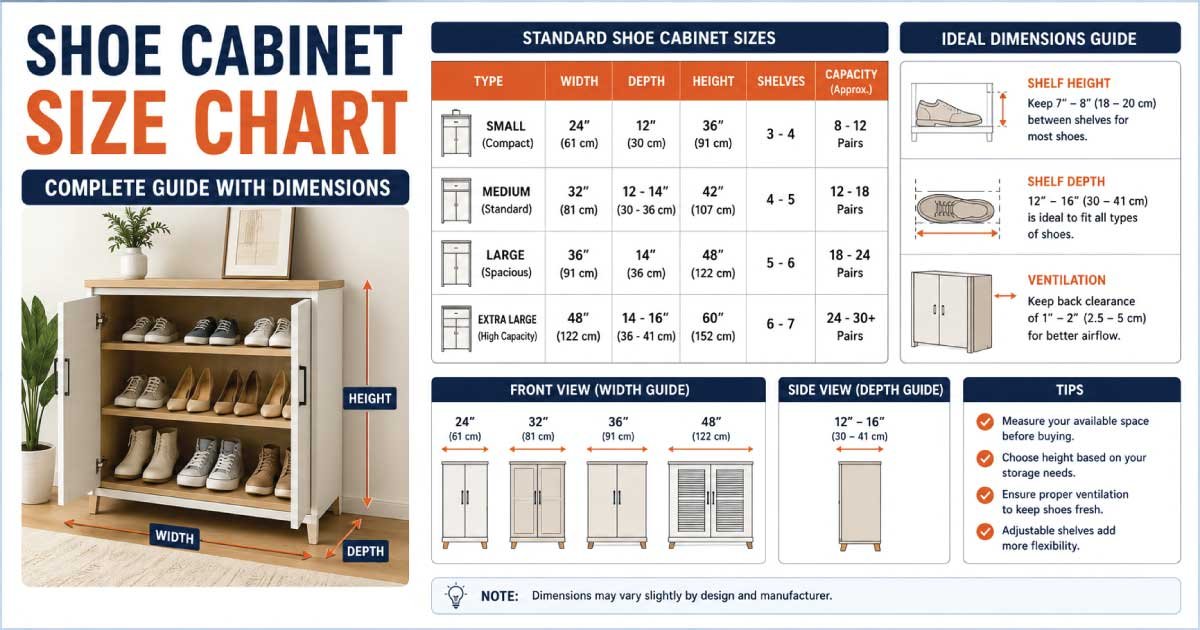
A shoe cabinet is one of the best storage solutions for keeping footwear organized while maintaining a clean and clutter-free entryway, hallway, bedroom, or closet. Choosing the correct shoe cabinet size is essential to ensure it fits your available space and provides enough storage for your family’s footwear. Shoe cabinets come in many styles, including slim cabinets, tilt-out cabinets, freestanding units, and large wardrobe-style organizers.
This complete guide includes a detailed Shoe Cabinet Size Chart, standard dimensions, storage capacity, shelf spacing, clearance recommendations, and expert buying tips to help you choose the perfect shoe cabinet for your home.
Shoe Cabinet Size Chart
| Shoe Cabinet Type | Width | Depth | Height | Shoe Capacity |
|---|---|---|---|---|
| Small Cabinet | 20–24 inches | 10–12 inches | 30–36 inches | 6–10 Pairs |
| Compact Cabinet | 24–30 inches | 10–14 inches | 36–48 inches | 10–16 Pairs |
| Standard Cabinet | 30–40 inches | 12–16 inches | 48–60 inches | 16–24 Pairs |
| Large Cabinet | 40–48 inches | 14–18 inches | 60–72 inches | 24–36 Pairs |
| Extra Large Cabinet | 48–72 inches | 16–24 inches | 72–84 inches | 36–60 Pairs |
Standard Shoe Cabinet Dimensions
Standard Shoe Cabinet Height
The height of a shoe cabinet depends on its storage capacity and design. Smaller cabinets are suitable for apartments or entryways, while taller cabinets maximize vertical storage without occupying additional floor space. Most shoe cabinets range from 30 to 72 inches high, although wardrobe-style models may reach 84 inches.
Common Shoe Cabinet Heights
| Cabinet Style | Height |
|---|---|
| Entryway Cabinet | 30–36 inches |
| Medium Cabinet | 48–60 inches |
| Tall Cabinet | 60–72 inches |
| Wardrobe Shoe Cabinet | 72–84 inches |
Standard Shoe Cabinet Width
Cabinet width determines how many pairs of shoes can be stored on each shelf. Wider cabinets provide more storage while maintaining easy access to footwear.
| Cabinet Size | Width |
|---|---|
| Small | 20–24 inches |
| Compact | 24–30 inches |
| Standard | 30–40 inches |
| Large | 40–48 inches |
| Extra Large | 48–72 inches |
Standard Shoe Cabinet Depth
Depth is especially important because it determines whether shoes fit comfortably inside the cabinet. Slim cabinets are ideal for narrow hallways, while deeper cabinets accommodate boots and larger footwear.
| Cabinet Type | Depth |
|---|---|
| Slim Cabinet | 10–12 inches |
| Standard Cabinet | 12–16 inches |
| Deep Cabinet | 16–20 inches |
| Boot Storage Cabinet | 20–24 inches |
Shoe Cabinet Capacity Guide
The number of shoes a cabinet can hold depends on shelf size and spacing.
| Cabinet Size | Approximate Capacity |
|---|---|
| Small | 6–10 pairs |
| Compact | 10–16 pairs |
| Standard | 16–24 pairs |
| Large | 24–36 pairs |
| Extra Large | 36–60 pairs |
Families with several members should consider larger cabinets with adjustable shelving for greater flexibility.
Shoe Cabinet Shelf Size Chart
Proper shelf dimensions improve organization and make it easier to store different types of footwear.
| Shoe Type | Shelf Height | Shelf Depth |
|---|---|---|
| Flats & Sandals | 5–6 inches | 10–12 inches |
| Sneakers | 7–8 inches | 12–14 inches |
| Dress Shoes | 6–7 inches | 12–14 inches |
| High Heels | 8–10 inches | 12–14 inches |
| Ankle Boots | 10–12 inches | 14–16 inches |
| Tall Boots | 16–20 inches | 16–20 inches |
Adjustable shelves make storing seasonal footwear much easier.
Shoe Cabinet Sizes by Style
Slim Shoe Cabinet
Slim shoe cabinets are perfect for apartments and narrow entryways. Their shallow depth allows them to fit comfortably against walls while storing everyday footwear efficiently.
Typical dimensions include:
- Width: 20–30 inches
- Depth: 10–12 inches
- Height: 36–60 inches
Freestanding Shoe Cabinet
Freestanding cabinets provide generous storage while remaining easy to relocate. Many include adjustable shelves and enclosed doors that protect shoes from dust.
Typical dimensions:
- Width: 30–40 inches
- Depth: 12–16 inches
- Height: 48–72 inches
Tilt-Out Shoe Cabinet
Tilt-out cabinets feature angled compartments that maximize storage while minimizing cabinet depth. They are ideal for hallways where space is limited.
Typical dimensions:
- Width: 24–36 inches
- Depth: 10–12 inches
- Height: 36–60 inches
Shoe Storage Wardrobe
Large wardrobe-style cabinets provide storage for shoes, boots, accessories, and seasonal items. These units are ideal for walk-in closets or spacious mudrooms.
Typical dimensions:
- Width: 48–72 inches
- Depth: 18–24 inches
- Height: 72–84 inches
Shoe Cabinet Clearance Guide
Door Opening Clearance
Leave sufficient space in front of the cabinet for doors or tilt-out compartments to open fully.
| Door Type | Recommended Clearance |
|---|---|
| Hinged Door | 24–30 inches |
| Double Door | 36–42 inches |
| Tilt-Out Drawer | 20–24 inches |
| Sliding Door | Minimal front clearance |
Proper clearance ensures convenient daily access.
Walking Space Around the Cabinet
Adequate walkway space prevents congestion, especially in entryways.
| Location | Minimum Clearance |
|---|---|
| Hallway | 36 inches |
| Entryway | 42 inches |
| Accessible Design | 48–60 inches |
Maintaining these clearances improves both safety and functionality.
⏩ Detailed Measurement Guide 👉 Child Size Recliner Size Chart: Complete Dimensions Guide
Shoe Cabinet Materials
Solid Wood Shoe Cabinets: Solid wood cabinets provide exceptional durability and a timeless appearance. They are ideal for traditional, farmhouse, and luxury interiors.
Engineered Wood Cabinets: Engineered wood offers an affordable solution with a wide range of finishes that resemble natural wood while resisting warping.
Metal Shoe Cabinets: Metal cabinets are strong, durable, and often feature ventilation holes that improve airflow and reduce moisture buildup.
Plastic Shoe Cabinets: Plastic cabinets are lightweight, moisture-resistant, and easy to clean, making them suitable for garages, mudrooms, and utility spaces.
How to Choose the Right Shoe Cabinet Size
Measure Your Available Space: Measure both the width and depth of the intended location before purchasing. Ensure the cabinet will not block doors, walkways, or nearby furniture.
Estimate Your Shoe Collection: Count the number of shoes you currently own and allow additional capacity for future purchases. Buying a slightly larger cabinet often proves more practical over time.
Consider Different Types of Footwear: If you own boots, athletic shoes, or high heels, choose adjustable shelves that accommodate varying shoe heights.
Match Your Home Décor: Select a cabinet finish and hardware that complement your flooring, wall colors, and surrounding furniture for a cohesive appearance.
Shoe Cabinet vs. Shoe Rack
| Feature | Shoe Cabinet | Shoe Rack |
|---|---|---|
| Dust Protection | Excellent | Limited |
| Hidden Storage | Yes | No |
| Appearance | Neat and Modern | Open Display |
| Capacity | High | Moderate |
| Maintenance | Easy | Easy |
Shoe cabinets provide cleaner, more organized storage while protecting footwear from dust and sunlight.
Benefits of a Properly Sized Shoe Cabinet
Choosing the correct cabinet size offers numerous advantages.
- Keeps footwear organized
- Protects shoes from dust
- Maximizes vertical storage
- Saves floor space
- Reduces entryway clutter
- Improves home appearance
- Accommodates seasonal footwear
- Enhances accessibility
- Extends shoe lifespan
- Increases overall home organization
⏩ Detailed Measurement Guide Fashion Size Charts Guide 2026: Clothing, Shoes & Accessories Explained
Common Shoe Cabinet Buying Mistakes
Avoid these common purchasing mistakes:
- Buying a cabinet that’s too small
- Ignoring boot storage requirements
- Choosing insufficient shelf depth
- Forgetting door clearance
- Overlooking adjustable shelving
- Blocking hallway walkways
- Selecting poor-quality materials
- Underestimating future storage needs
Proper planning helps you choose a cabinet that remains useful for many years.
Shoe Cabinet Maintenance Tips
Regular maintenance keeps your cabinet looking its best and protects your footwear.
- Clean cabinet surfaces weekly.
- Dust shelves regularly.
- Remove dirt from shoes before storing.
- Allow wet shoes to dry completely.
- Tighten hinges and hardware periodically.
- Keep ventilation openings clear.
- Avoid overloading shelves.
- Rearrange footwear seasonally for better organization.
Routine care preserves both the cabinet and your shoe collection.
Conclusion
Selecting the right shoe cabinet size helps create an organized, clutter-free home while protecting your footwear from dust, moisture, and damage.
By considering cabinet height, width, depth, storage capacity, shelf spacing, and available floor space, you can choose a cabinet that fits both your home and your lifestyle.
Whether you need a slim entryway organizer or a large wardrobe-style storage unit, the size charts and recommendations in this guide will help you find the perfect shoe cabinet for your needs.
⏩ Detailed Measurement Guide 👉 Sofa Size Chart: Standard Sizes Explained Clearly
FAQs:
What is the standard size of a shoe cabinet?
A standard shoe cabinet usually measures 30 to 40 inches wide, 12 to 16 inches deep, and 48 to 60 inches high. These dimensions provide enough storage space for approximately 16 to 24 pairs of shoes while maintaining a compact design suitable for entryways and bedrooms.
How deep should a shoe cabinet be?
Most shoe cabinets have a depth of 12 to 16 inches, which is suitable for regular footwear like sneakers, sandals, and dress shoes. Slim cabinets may be 10 to 12 inches deep, while cabinets designed for boots often require 16 to 24 inches of depth.
How much space should be left in front of a shoe cabinet?
You should leave at least 24 to 36 inches of open space in front of a shoe cabinet for comfortable use. This clearance allows doors, drawers, or flip compartments to open fully and provides enough room for putting on or removing shoes.
Can tall boots fit inside a standard shoe cabinet?
Tall boots may not fit inside standard shoe cabinets because most shelves are designed for regular shoes. Cabinets with adjustable or removable shelves work better, while dedicated boot storage sections usually need 16 to 20 inches of vertical space.
What is the best material for a shoe cabinet?
The best shoe cabinet material depends on your storage location and usage needs. Solid wood provides durability and a stylish appearance, engineered wood offers affordability, metal improves strength and ventilation, and plastic cabinets are practical for damp areas like garages or mudrooms.
