
Furnishing a small room can feel challenging, but with the right furniture sizes and smart planning, even the most compact space can feel open, functional, and stylish. Whether you’re decorating a small bedroom, apartment living room, home office, or studio, choosing furniture with the correct proportions is essential. Oversized pieces can overwhelm a room, while undersized furniture may reduce comfort or usability.
This small room furniture size guide breaks down ideal dimensions, layout tips, and space-saving strategies to help you make confident choices. From sofas and beds to desks and storage units, you’ll learn how to balance comfort, functionality, and aesthetics without sacrificing precious square footage.
Why Furniture Size Matters in Small Rooms
In small rooms, every inch counts. Properly sized furniture improves movement, maintains visual balance, and ensures the room remains comfortable and usable. Poor sizing can block walkways, limit storage, and make a space feel cramped or cluttered.
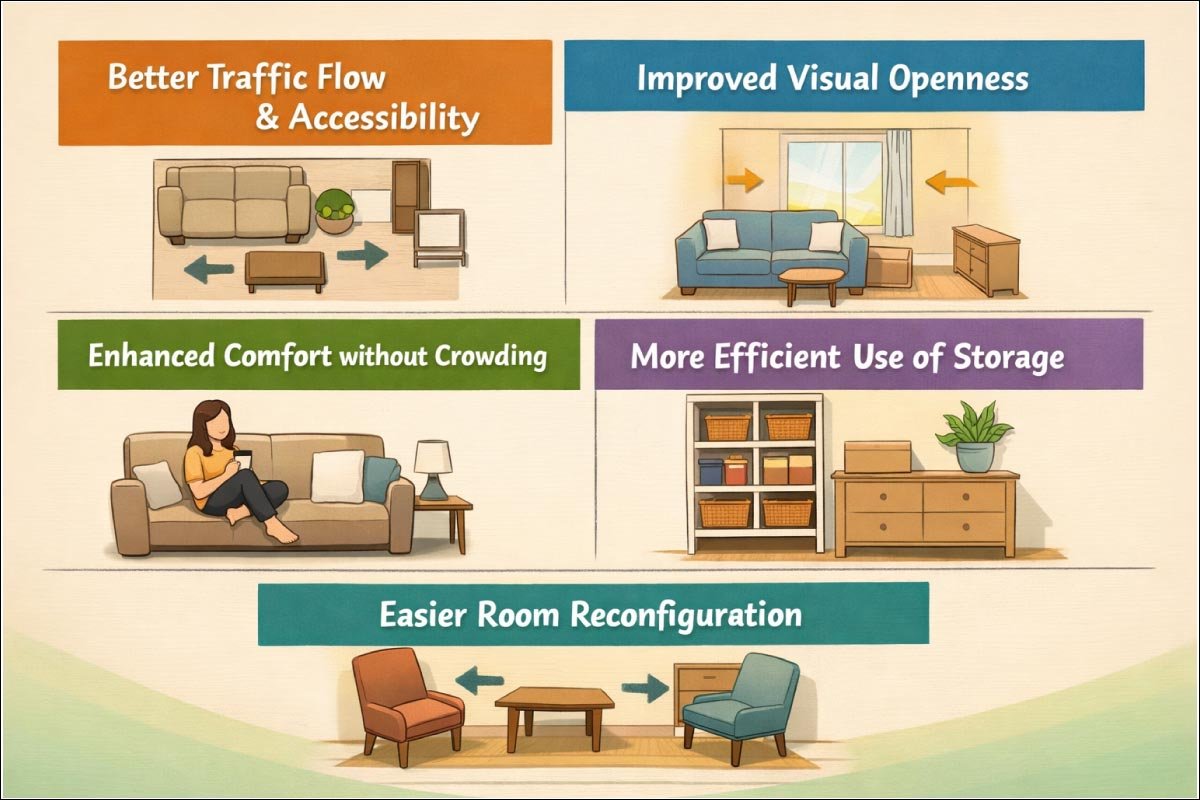
Key benefits of choosing the right furniture size include:
- Better traffic flow and accessibility
- Improved visual openness
- Enhanced comfort without crowding
- More efficient use of storage
- Easier room reconfiguration
A well-planned small room doesn’t require fewer furniture pieces—just smarter sizing.
General Furniture Sizing Principles for Small Spaces
- Leave walking clearance: Maintain at least 30–36 inches for main walkways and 24 inches for secondary paths.
- Choose low-profile designs: Furniture with lower heights creates a more open visual effect.
- Opt for multi-functional pieces: Storage beds, nesting tables, and sofa beds reduce the need for extra furniture.
- Avoid bulky arms and frames: Slim silhouettes save space without compromising comfort.
- Use vertical space: Tall shelving and wall-mounted units maximize storage while preserving floor area.
Small Living Room Furniture Size Guide
In a small living room, furniture size directly affects comfort, movement, and visual balance. Selecting pieces that are properly scaled prevents the space from feeling cramped while still supporting everyday activities like seating, entertaining, and relaxing. A thoughtful size guide helps you create a living room that feels open, practical, and welcoming.
Ideal Living Room Furniture Dimensions
Recommended Furniture Sizes for Small Living Rooms
This table highlights ideal furniture dimensions designed specifically for small living rooms. Choosing the right width, depth, and height helps maintain comfort while preventing overcrowding. These recommended sizes ensure better movement, balanced proportions, and a visually open layout without sacrificing essential functionality or everyday usability.
| Furniture Type | Ideal Width (inches) | Ideal Depth (inches) | Ideal Height (inches) |
|---|---|---|---|
| Sofa | 60–75 | 30–36 | 30–34 |
| Loveseat | 48–60 | 30–34 | 30–34 |
| Accent Chair | 26–32 | 26–30 | 30–36 |
| Coffee Table | 36–42 | 18–22 | 16–18 |
| TV Stand | 40–60 | 14–18 | 18–24 |
Living Room Tips for Small Spaces
Designing a small living room requires smart choices that balance comfort and space efficiency. Simple adjustments to furniture style and layout can make the room feel larger and more functional. These practical tips focus on selecting streamlined pieces and improving flow without sacrificing usability or visual appeal.
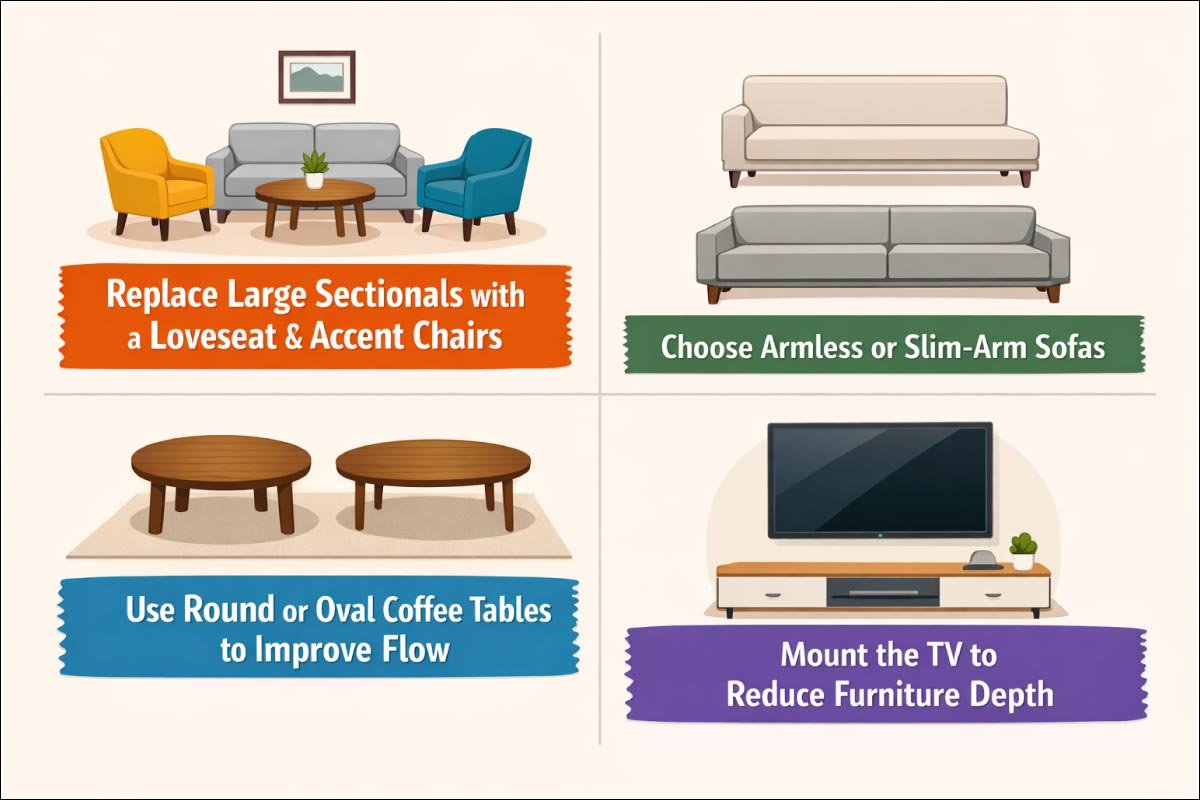
- Replace large sectionals with a loveseat and accent chairs
- Choose armless or slim-arm sofas
- Use round or oval coffee tables to improve flow
- Mount the TV to reduce furniture depth
Small Bedroom Furniture Size Guide
Selecting the right furniture sizes is essential in a small bedroom where space is limited. Proper proportions help prevent overcrowding and allow for comfortable movement. By focusing on well-scaled beds and efficient storage, you can create a calm, functional bedroom that feels open, organized, and relaxing.
Ideal Bedroom Furniture Dimensions
Small Bedroom Furniture Size Chart
This table provides a clear size reference for choosing furniture in small bedrooms. By selecting compact beds, slim nightstands, and vertical dressers, you can maximize floor space while maintaining comfort and storage. These recommended dimensions help create a balanced, uncluttered bedroom layout that feels open and functional.
| Furniture Type | Recommended Size | Width (inches) | Depth (inches) |
|---|---|---|---|
| Twin Bed | Small rooms | 39 | 75 |
| Full Bed | Medium-small rooms | 54 | 75 |
| Queen Bed (Compact) | Tight layouts | 60 | 80 |
| Nightstand | Slim profile | 16–22 | 14–18 |
| Dresser | Vertical style | 24–36 | 16–18 |
Bedroom Space-Saving Strategies
Maximizing space in a small bedroom requires clever strategies that enhance storage and openness. By selecting furniture and layouts that save floor area and create visual depth, you can make the room feel larger, more organized, and functional without compromising style or comfort.
- Use under-bed storage drawers
- Choose wall-mounted or floating nightstands
- Opt for sliding closet doors instead of hinged ones
- Use mirrors to visually expand the room
Small Dining Area Furniture Size Guide
Dining Furniture Dimensions for Small Rooms
Selecting the right dining furniture dimensions is key to maximizing comfort and usability in small rooms. Properly sized tables and chairs allow for easy movement, efficient seating, and a balanced layout. Following recommended dimensions ensures the dining area feels open, functional, and welcoming without crowding the space.
Small Dining Furniture Size Guide
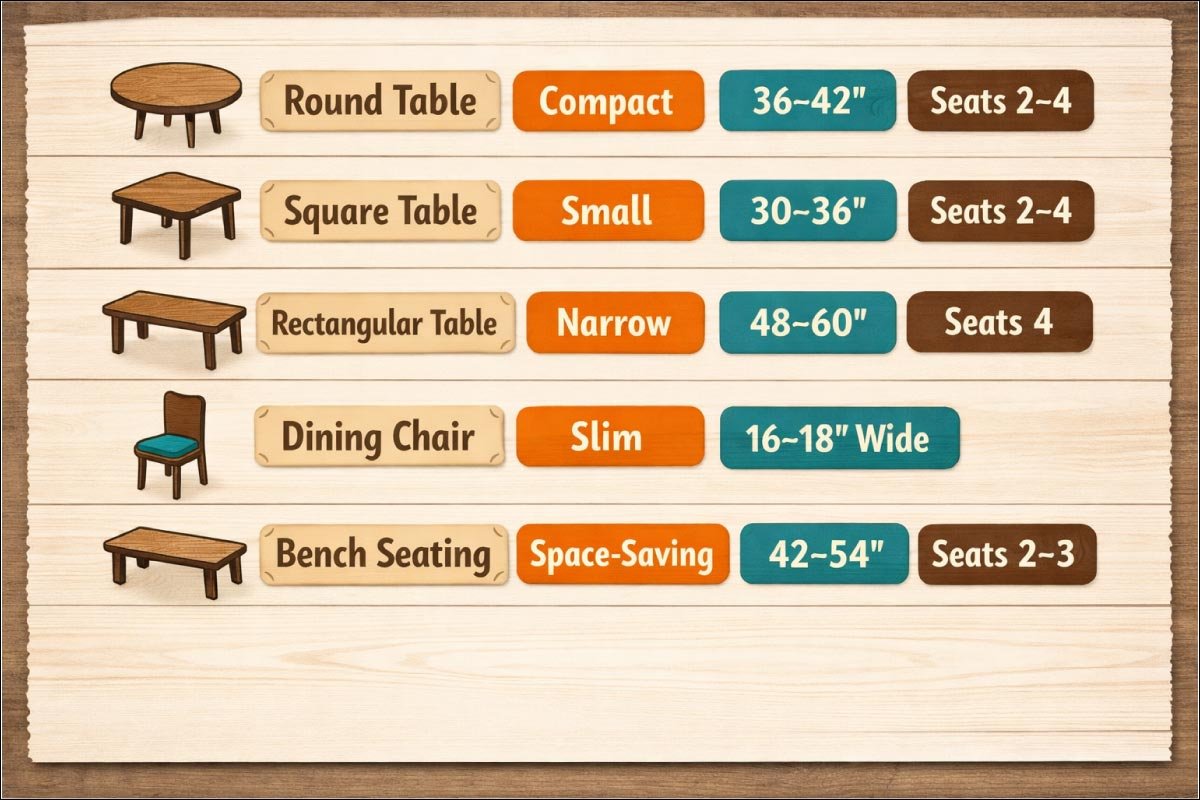
This table offers recommended sizes for small dining furniture, helping optimize limited space without compromising comfort. Choosing compact tables, slim chairs, and space-saving benches ensures efficient layouts, easy movement, and a cozy dining experience, making even the tiniest dining area functional and inviting for family and guests.
| Furniture Type | Ideal Size | Width/Diameter (inches) | Seating Capacity |
|---|---|---|---|
| Round Table | Compact | 36–42 | 2–4 |
| Square Table | Small | 30–36 | 2–4 |
| Rectangular Table | Narrow | 48–60 | 4 |
| Dining Chair | Slim | 16–18 wide | — |
| Bench Seating | Space-saving | 42–54 | 2–3 |
Dining Area Tips
Designing a small dining area requires smart furniture choices and layout strategies to maintain comfort and flow. By selecting space-saving pieces and thoughtful arrangements, you can create a dining space that feels open, functional, and inviting without compromising style or usability.
- Use round tables to eliminate sharp corners
- Choose armless or stackable chairs
- Consider foldable or extendable tables
- Place dining areas near windows for an open feel
Small Home Office Furniture Size Guide
In a small home office, furniture size directly affects both comfort and efficiency. Properly scaled desks, chairs, and storage solutions help maintain clear movement and an organized workspace. A size guide ensures that each piece fits the room, maximizes functionality, and creates a productive yet uncluttered environment.
Home Office Furniture Dimensions
Choosing the right dimensions for home office furniture is essential in small spaces. Properly sized desks, chairs, and storage units ensure comfort, accessibility, and efficient use of space. Following recommended dimensions helps create a functional workspace that supports productivity without making the room feel cramped or cluttered.
Small Home Office Furniture Size Chart
This table outlines ideal furniture dimensions for small home offices. Compact desks, adjustable chairs, vertical bookshelves, and slim filing cabinets help maximize workspace efficiency while maintaining comfort. Following these recommended sizes ensures a functional, organized, and uncluttered office environment, even within limited square footage.
| Furniture Type | Ideal Width (inches) | Ideal Depth (inches) | Ideal Height (inches) |
|---|---|---|---|
| Writing Desk | 36–48 | 18–24 | 29–30 |
| Computer Desk | 40–50 | 20–24 | 29–30 |
| Office Chair | Compact | 24–26 | Adjustable |
| Bookshelf | Vertical | 18–24 | 60–72 |
| Filing Cabinet | Slim | 15–18 | 20–28 |
Office Layout Tips
- Place desks against walls or windows
- Use floating shelves instead of bookcases
- Choose chairs without bulky arms
- Keep cables hidden to reduce visual clutter
Multi-Functional Furniture for Small Rooms
In small rooms, multi-functional furniture maximizes utility without crowding the space. Choosing pieces that serve multiple purposes helps maintain an open, organized environment while meeting different needs. Thoughtful selection ensures functionality, convenience, and efficient use of limited square footage.
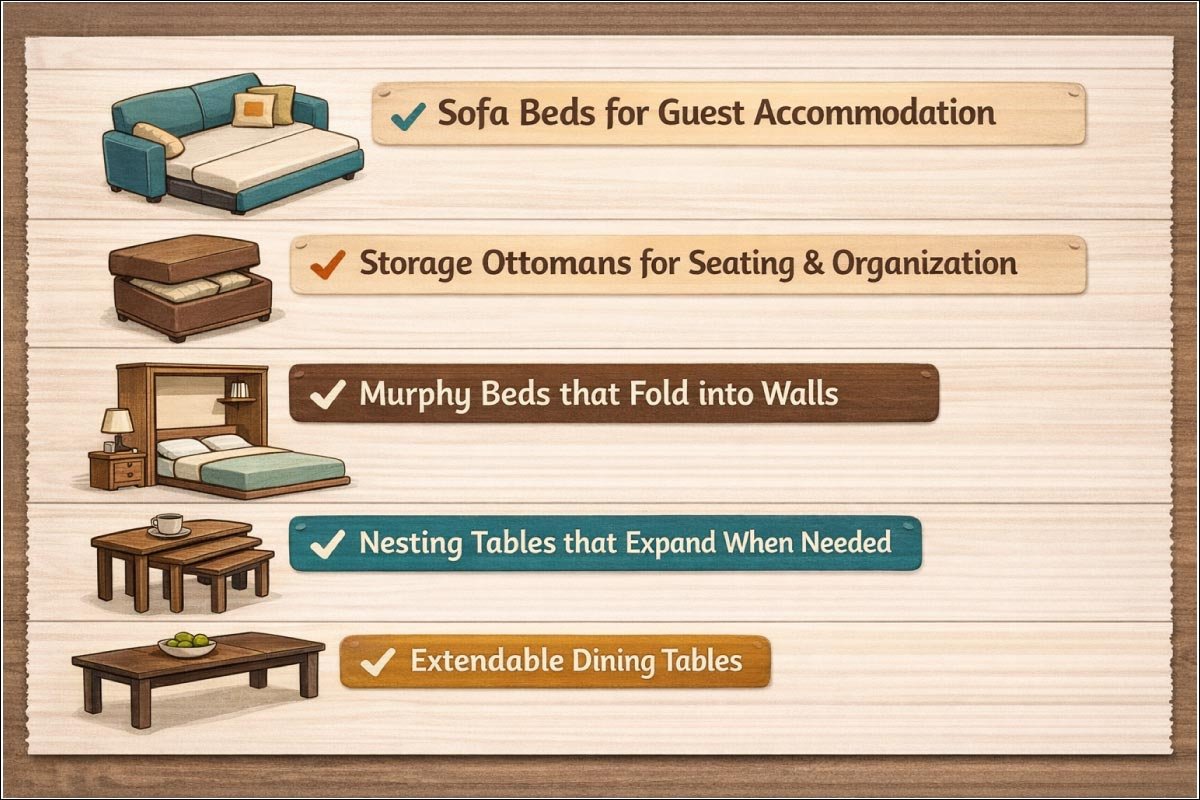
Popular options include:
- Sofa beds for guest accommodation
- Storage ottomans for seating and organization
- Murphy beds that fold into walls
- Nesting tables that expand when needed
- Extendable dining tables
When selecting multi-functional furniture, ensure that moving parts don’t require extra clearance that negates space savings.
Layout and Spacing Guidelines
Proper layout and spacing are essential in small rooms to ensure furniture feels comfortable and functional. Even well-sized pieces can make a space feel cramped if clearance is insufficient. Following spacing guidelines helps maintain flow, accessibility, and a sense of openness throughout the room.
- Between sofa and coffee table: 14–18 inches
- Bed clearance on each side: Minimum 24 inches
- Desk chair clearance: At least 36 inches behind the desk
- Dining chair pull-out space: 30–36 inches
Proper spacing enhances comfort and makes the room feel larger than it actually is.
Common Mistakes to Avoid in Small Rooms
In small rooms, even minor design missteps can make the space feel cluttered or uncomfortable. Being mindful of common mistakes helps maintain flow, maximize storage, and create a visually balanced environment. Prioritizing function and proportion over style alone keeps small spaces practical and inviting.
- Choosing furniture based on looks rather than dimensions
- Filling every wall with furniture
- Ignoring vertical storage opportunities
- Using heavy, dark furniture in very tight spaces
- Blocking natural light with tall or bulky items
Avoiding these mistakes ensures your small room remains functional and visually balanced.
Final Thoughts
Designing a small room doesn’t mean sacrificing comfort or style—it simply requires smarter furniture sizing and thoughtful planning. By choosing compact, well-proportioned furniture and following proper spacing guidelines, you can transform even the smallest room into a comfortable, efficient, and attractive space.
Use this small room furniture size guide as a reference when shopping or planning layouts, and always measure your space before making decisions. With the right sizes and layouts, small rooms can feel surprisingly spacious and beautifully organized.
