
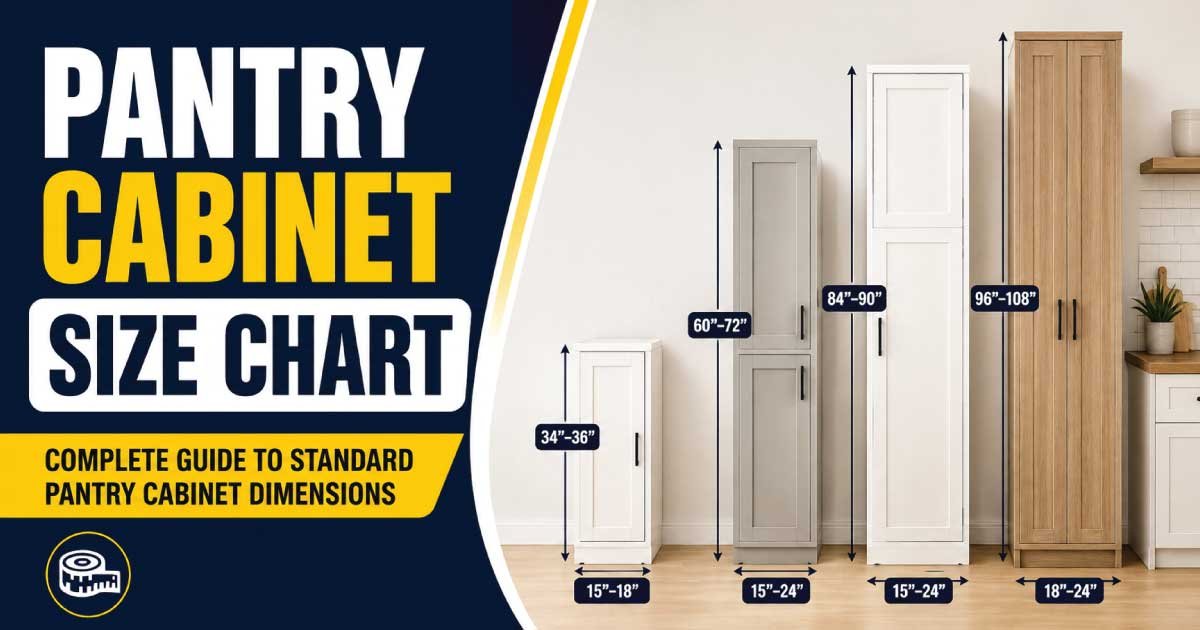
A pantry cabinet is one of the most useful storage solutions in a modern kitchen. It provides tall, organized storage for dry foods, canned goods, spices, baking supplies, small appliances, and other kitchen essentials. Choosing the right pantry cabinet size is important because the cabinet needs to provide enough storage without making the kitchen feel crowded.
Pantry cabinets are available in different widths, heights, depths, shelf configurations, and installation styles. Standard pantry cabinet dimensions make it easier to plan a kitchen, but the best size depends on your available wall space, ceiling height, storage needs, and kitchen layout.
In this pantry cabinet size chart and complete guide, you will learn about standard pantry cabinet dimensions, pantry cabinet width, height, depth, tall kitchen cabinets, narrow pantry cabinets, pull-out pantry sizes, corner pantry cabinets, cabinet clearance, and how to measure your space before choosing a pantry.
What Is a Pantry Cabinet?
A pantry cabinet is a tall kitchen cabinet designed primarily for food and household storage. Unlike standard base cabinets, which sit below the countertop, pantry cabinets extend vertically from near the floor toward the ceiling.
A pantry cabinet can provide significantly more storage in a relatively small floor footprint.
Common pantry cabinet uses include:
- Canned food
- Pasta and rice
- Cereal
- Baking ingredients
- Snacks
- Spices
- Cooking oils
- Kitchen appliances
- Cleaning supplies
- Paper products
- Food-storage containers
Pantry cabinets can have fixed shelves, adjustable shelves, drawers, pull-out shelves, or specialized organizers.
What Is the Standard Pantry Cabinet Size?
There is no single universal pantry cabinet size, but many standard pantry cabinets are approximately 84 to 96 inches high, around 12 to 36 inches wide, and approximately 24 inches deep.
A 24-inch-wide pantry cabinet is a common choice because it provides useful storage without taking up excessive floor space.
However, narrower 12- or 15-inch pantry cabinets can be useful in compact kitchens, while 30- and 36-inch pantry cabinets provide considerably more storage.
The cabinet height should be selected according to your ceiling height and the overall height of surrounding kitchen cabinets.
Pantry Cabinet Size Chart
The following pantry cabinet size chart provides a quick reference for common residential pantry dimensions.
| Pantry Cabinet Type | Common Width | Typical Height | Typical Depth |
|---|---|---|---|
| Narrow Pantry | 9–12 in | 84–96 in | 12–24 in |
| Small Pantry | 15–18 in | 84–96 in | 24 in |
| Standard Pantry | 21–24 in | 84–96 in | 24 in |
| Wide Pantry | 30 in | 84–96 in | 24 in |
| Extra-Wide Pantry | 33–36 in | 84–96 in | 24 in |
| Pull-Out Pantry | 9–18 in | 72–96 in | 18–24 in |
| Tall Utility Pantry | 18–36 in | 84–96 in | 24 in |
| Appliance Pantry | 24–36 in | 84–96 in | 24 in |
These are common size ranges rather than fixed industry requirements. Actual pantry cabinet dimensions vary by manufacturer, cabinet style, and installation system.
Standard Pantry Cabinet Height
Pantry cabinets are designed to provide vertical storage, so they are significantly taller than standard base cabinets.
Common pantry cabinet heights include:
- 72 inches
- 78 inches
- 84 inches
- 90 inches
- 96 inches
Some custom cabinets can be made even taller.
84-Inch Pantry Cabinet
An 84-inch pantry cabinet is useful for kitchens with relatively standard ceiling heights and can align well with other tall cabinetry.
90-Inch Pantry Cabinet
A 90-inch pantry cabinet can work well in kitchens with taller ceilings and provides additional vertical storage.
96-Inch Pantry Cabinet
A 96-inch pantry cabinet is commonly used in kitchens with high ceilings. It can provide substantial storage but may require a step stool for accessing the upper shelves.
Pantry Cabinet Height by Ceiling Height
Ceiling height is one of the most important factors when selecting a tall pantry.
| Ceiling Height | Common Pantry Approach |
|---|---|
| 8 ft | 84-inch pantry |
| 9 ft | 84–90-inch pantry |
| 10 ft | 90–96-inch pantry |
| 10+ ft | Tall or custom pantry |
These are general planning guidelines. The cabinet should also account for crown molding, soffits, ceiling irregularities, and installation clearance.
Also Read: Counter Stool Size Chart: Complete Guide With Dimensions
Standard Pantry Cabinet Width
Pantry cabinets are available in several widths.
Common widths include:
- 9 inches
- 12 inches
- 15 inches
- 18 inches
- 21 inches
- 24 inches
- 30 inches
- 33 inches
- 36 inches
The best width depends on the amount of storage you need and the available wall space.
12-Inch Pantry Cabinet
A 12-inch pantry is a compact storage solution for narrow spaces.
It can be useful for:
- Spices
- Canned foods
- Baking trays
- Bottles
- Small packages
- Pull-out storage
A narrow pantry can be especially useful when there is an unused gap between larger cabinets or appliances.
18-Inch Pantry Cabinet
An 18-inch pantry provides more storage while still maintaining a relatively narrow footprint.
It can work well in small and medium kitchens.
24-Inch Pantry Cabinet
A 24-inch pantry is a versatile standard size.
It provides enough width for shelves and food containers while remaining practical for many kitchen layouts.
30-Inch Pantry Cabinet
A 30-inch pantry provides generous storage.
It can accommodate larger shelves, drawers, and interior organizers.
36-Inch Pantry Cabinet
A 36-inch pantry is an extra-wide option that can provide substantial food and appliance storage.
Because of its size, it should be carefully planned so that doors, drawers, and surrounding appliances have enough clearance.
Pantry Cabinet Width Chart
| Width | Best Use |
|---|---|
| 9–12 in | Narrow storage and pull-outs |
| 15–18 in | Compact food storage |
| 21–24 in | Standard pantry storage |
| 30 in | Large pantry |
| 33–36 in | Extra-large pantry storage |
A wider pantry provides more storage, but width is not the only consideration. Interior organization can have a major impact on how useful the cabinet becomes.
Standard Pantry Cabinet Depth
A standard pantry cabinet is often around 24 inches deep.
This depth allows the pantry to align with standard base cabinets and accommodate many common kitchen storage items.
However, deeper shelves are not always better.
A very deep pantry can cause items to become hidden behind other products, making it difficult to see or reach food stored at the back.
For this reason, pantry organization is just as important as cabinet depth.
Also Read: Kitchen Cart Size Chart: Ideal Dimensions Explained
How Deep Should a Pantry Cabinet Be?
For many kitchens, approximately 12 to 24 inches can be practical depending on the pantry type.
A 12-inch-deep pantry can be excellent for cans, spices, and smaller food packages because items remain easy to see.
A 24-inch-deep pantry provides more capacity and can accommodate larger appliances, containers, and bulk food items.
If the pantry is too deep for its intended use, storage efficiency may decrease because items can become difficult to reach.
Pull-Out Pantry Cabinet Sizes
Pull-out pantry cabinets are designed with narrow widths and sliding shelves or storage racks.
Common pull-out pantry widths include approximately:
- 9 inches
- 12 inches
- 15 inches
- 18 inches
They can be particularly useful for storing:
- Spices
- Oils
- Canned foods
- Bottles
- Condiments
- Baking ingredients
Pull-out shelves allow you to bring stored items forward, making narrow and deep spaces easier to access.
Tall Pantry Cabinet vs. Base Cabinet
A pantry cabinet differs from a standard base cabinet mainly because of its height.
A base cabinet is generally around 34.5 inches high before the countertop, while a tall pantry cabinet can reach approximately 84 to 96 inches.
| Feature | Base Cabinet | Pantry Cabinet |
|---|---|---|
| Typical Height | 34.5 in | 84–96 in |
| Typical Depth | 24 in | 24 in |
| Common Width | 9–48 in | 9–36 in |
| Main Purpose | Countertop storage | Vertical storage |
| Countertop | Yes | Usually no |
Pantry cabinets maximize vertical storage, while base cabinets provide accessible storage underneath the countertop.
What Size Pantry Cabinet Is Best for a Small Kitchen?
A small kitchen can benefit from a narrow pantry cabinet.
A cabinet around 12 to 18 inches wide can provide considerable vertical storage without consuming too much floor space.
For a compact kitchen, consider a pantry with:
- Adjustable shelves
- Pull-out shelves
- Narrow drawers
- Door storage
- Vertical organizers
The goal is to maximize storage capacity while preserving comfortable walking and working space.
What Size Pantry Cabinet Is Best for a Large Kitchen?
Large kitchens can accommodate wider pantry cabinets.
A 24- to 36-inch pantry can provide extensive storage for food, cookware, small appliances, and household supplies.
Large kitchens may also use multiple pantry cabinets.
For example, two 24-inch pantry cabinets can provide a combined 48 inches of storage while allowing the storage system to be divided into separate categories.
Pantry Cabinet Size for Food Storage
The ideal pantry size depends on how much food your household stores.
A smaller household may find a 12- to 18-inch pantry sufficient.
A larger family or household that buys food in bulk may benefit from a 24- to 36-inch pantry.
Think about the types of products you normally store:
- Cereal boxes
- Flour and sugar
- Pasta
- Rice
- Canned vegetables
- Snacks
- Bottles
- Baking supplies
- Pet food
- Small appliances
This helps determine whether you need narrow shelves, deep shelves, pull-outs, or larger compartments.
Pantry Shelf Depth
Shelf depth should match the items you plan to store.
A shelf that is too deep can make it difficult to see products at the back.
Common practical shelf depths may range from approximately 10 to 20 inches, depending on the cabinet and storage system.
Shallower shelves are often useful for small packaged goods because everything remains visible.
Deeper shelves can be useful for larger containers and appliances.
Also Read: Media Kitchen Island Size Chart: Complete Size Guide
Pantry Shelf Spacing
Adjustable shelves provide more flexibility than fixed shelves because you can change the vertical space according to the items being stored.
For example:
- Short shelves for cans and jars
- Medium shelves for cereal and boxed foods
- Tall shelves for bottles
- Larger compartments for small appliances
A well-organized pantry does not need every shelf to have the same height.
Adjustable shelving allows you to use the cabinet’s vertical space more efficiently.
Pantry Cabinet Door Size
The cabinet door width is related to the overall pantry width.
A narrow pantry may use one door, while a wider pantry may use two doors.
Wide pantry doors can become heavy, particularly when the shelves are fully loaded.
For large pantry cabinets, double doors or specialized pull-out systems can make access easier.
The door also needs sufficient clearance to open without hitting nearby cabinets, walls, appliances, or kitchen islands.
Pantry Cabinet Clearance
Tall pantry cabinets require sufficient space around them.
Before installation, check:
- Door swing
- Nearby cabinet doors
- Appliance doors
- Refrigerator clearance
- Walking paths
- Kitchen island clearance
- Wall openings
A pantry may technically fit in a particular space but still be inconvenient if its door blocks a walkway or interferes with another cabinet.
How to Measure for a Pantry Cabinet
Accurate measurements are essential before buying or installing a pantry cabinet.
Step 1: Measure the Available Width
Measure the wall space from side to side.
If the pantry will sit between two cabinets, measure the exact opening at multiple points.
Step 2: Measure the Ceiling Height
Measure from the finished floor to the ceiling.
Check the height in several locations because ceilings are not always perfectly level.
Step 3: Measure the Available Depth
Measure from the wall to the front edge of surrounding cabinets.
A pantry that is deeper than neighboring cabinets may create an awkward appearance or reduce walkway space.
Step 4: Check Door Clearance
Make sure the pantry door can open fully.
Check nearby appliances and cabinets.
Step 5: Check Baseboard and Trim
Baseboards and wall trim can affect how the pantry sits against the wall.
Step 6: Check Electrical and Plumbing Locations
If the pantry is near appliances or plumbing, make sure the cabinet will not interfere with outlets, pipes, or other services.
Freestanding vs. Built-In Pantry Cabinets
Pantry cabinets can be either freestanding or built into the kitchen cabinetry.
Freestanding Pantry
A freestanding pantry can be moved or replaced more easily.
It can be useful for rental homes, temporary kitchen layouts, or homeowners who want flexible storage.
Built-In Pantry
A built-in pantry is integrated into the kitchen cabinetry.
It provides a more seamless appearance and can be designed to match the surrounding cabinets.
Built-in pantry cabinets are particularly useful when planning a complete kitchen remodel.
Corner Pantry Cabinet Sizes
Corner pantry cabinets are designed to use otherwise difficult-to-access corner areas.
Their dimensions vary considerably depending on the kitchen layout.
Corner pantry solutions may include:
- Tall corner cabinets
- Diagonal corner units
- Custom pantry systems
- Rotating shelves
- Pull-out organizers
Because corners have unusual geometry, exact measurements are especially important.
Pantry Cabinet Organization Ideas
The right cabinet size is only the beginning. Interior organization determines how effectively you use the available space.
Consider organizing the pantry by category.
Upper Shelves
Use upper shelves for less frequently used items such as specialty ingredients and extra supplies.
Middle Shelves
Keep everyday foods such as cereal, snacks, pasta, and canned goods at comfortable eye level.
Lower Shelves
Use lower shelves for heavier items such as bulk food, bottles, and appliances.
Door Storage
The inside of the pantry door can sometimes be used for spices, small containers, or other lightweight items.
Common Pantry Cabinet Size Mistakes
Choosing a Pantry That Is Too Deep
Deep storage can hide products and make the pantry difficult to organize.
Ignoring Ceiling Height
A tall cabinet may not fit if the ceiling is lower than expected.
Forgetting Door Clearance
A pantry door can interfere with appliances, islands, or nearby cabinets.
Using Only Fixed Shelves
Adjustable shelves provide greater flexibility as your storage needs change.
Choosing Width Without Considering Storage
A wider cabinet provides more capacity, but interior organization can sometimes be more important than width.
Not Measuring the Entire Opening
Walls, trim, baseboards, and neighboring cabinets can affect the available space.
Frequently Asked Questions About Pantry Cabinet Sizes
What is the standard size of a pantry cabinet?
Many pantry cabinets are approximately 84 to 96 inches high, around 12 to 36 inches wide, and about 24 inches deep. Exact dimensions vary by manufacturer and cabinet style.
How wide should a pantry cabinet be?
A pantry can be as narrow as 9 or 12 inches, while larger models may reach 30 or 36 inches. A 24-inch width is a versatile option for many kitchens because it provides useful storage without requiring excessive wall space.
How deep should a kitchen pantry cabinet be?
Many standard pantry cabinets are approximately 24 inches deep. However, shallower 12- to 18-inch designs can be easier to organize because food items remain more visible and accessible.
What is the best pantry cabinet size for a small kitchen?
A 12- to 18-inch-wide pantry can be a practical choice for a small kitchen. Pull-out shelves and adjustable storage can make a narrow pantry surprisingly useful.
What height should a pantry cabinet be?
Common pantry cabinet heights range from approximately 84 to 96 inches. The best height depends on ceiling height, surrounding cabinetry, storage requirements, and accessibility.
Is a 24-inch pantry cabinet too deep?
A 24-inch pantry is a common depth, but it may be deeper than necessary for small food packages. Adjustable shelves, pull-outs, and good organization can help make a deep pantry easier to use.
What size pantry cabinet is best for a large family?
A 24- to 36-inch pantry can provide substantial storage for a larger household. Multiple pantry cabinets can also be combined to create a larger food-storage system.
Are pantry cabinets the same depth as base cabinets?
Many pantry cabinets are approximately 24 inches deep, similar to base cabinets. However, shallower pantry cabinets are available and can sometimes provide easier access to stored food.
Final Thoughts on Pantry Cabinet Sizes
Choosing the right pantry cabinet size can dramatically improve kitchen storage and organization. Standard pantry cabinets are commonly around 84 to 96 inches high, 12 to 36 inches wide, and approximately 24 inches deep, although many other sizes are available.
For compact kitchens, a narrow 12- to 18-inch pantry can provide valuable vertical storage. For larger kitchens, a 24- to 36-inch pantry can offer significantly more capacity for food, cookware, appliances, and household supplies.
The best pantry is not necessarily the biggest one. Consider the available wall space, ceiling height, cabinet depth, shelf depth, door clearance, and your household’s storage needs.
Before purchasing a pantry cabinet, carefully measure the width, height, depth, surrounding cabinets, doors, appliances, and walking space. Then compare your measurements with the manufacturer’s exact specifications.
Use this Pantry Cabinet Size Chart as a practical reference when planning your kitchen storage, and always confirm the exact dimensions before ordering or installing a cabinet.
