
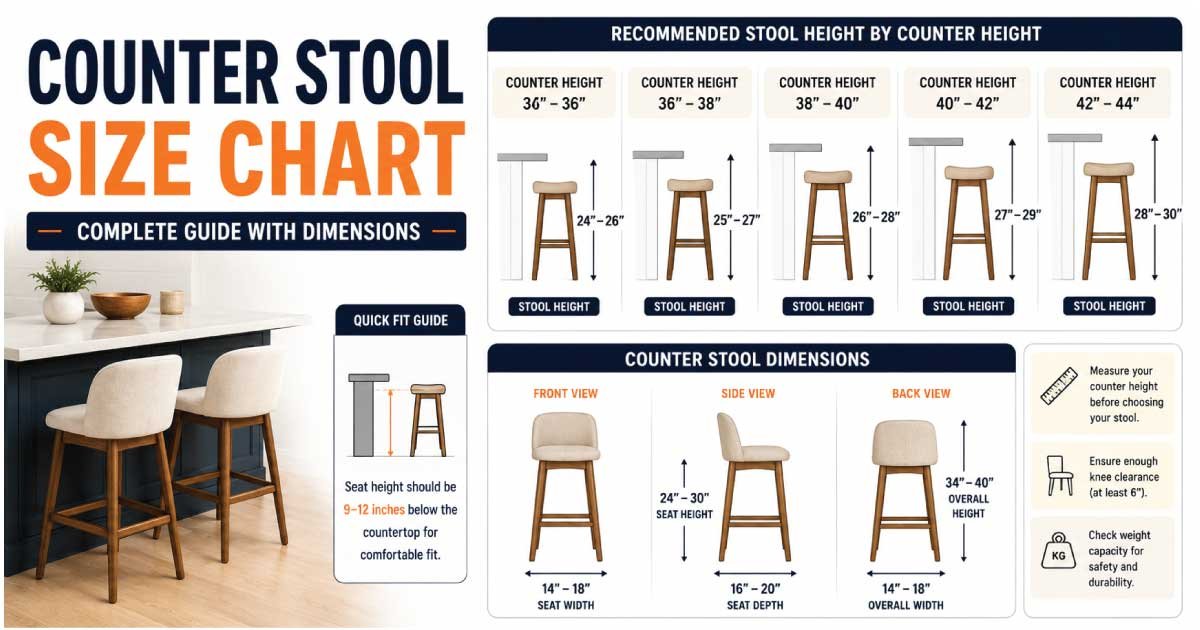
Choosing the correct counter stool size is essential for creating a comfortable and functional dining or entertaining space. Whether you’re furnishing a kitchen island, breakfast bar, or home counter, the right stool height ensures proper legroom, comfortable seating, and a balanced appearance. Counter stools come in a variety of heights, widths, and styles, making it important to understand standard measurements before buying.
This complete guide includes a detailed Counter Stool Size Chart, standard dimensions, spacing recommendations, bar vs. counter stool comparisons, and expert tips to help you select the perfect stools for your home.
Counter Stool Size Chart
| Counter Height | Stool Seat Height | Overall Stool Height | Recommended Use |
|---|---|---|---|
| 34 inches | 24 inches | 36–38 inches | Kitchen Counters |
| 35 inches | 24–25 inches | 36–39 inches | Standard Counters |
| 36 inches | 24–26 inches | 37–40 inches | Kitchen Islands |
| 37 inches | 25–26 inches | 38–41 inches | Breakfast Bars |
| 38 inches | 26 inches | 39–42 inches | Raised Counters |
Standard Counter Stool Dimensions
Standard Counter Stool Seat Height
Counter stools are designed to fit countertops measuring 34 to 36 inches high. The standard seat height ranges from 24 to 26 inches, leaving approximately 9 to 12 inches of legroom between the seat and the countertop. This spacing provides comfortable seating for eating, working, and socializing while maintaining proper posture.
| Stool Type | Seat Height |
|---|---|
| Low Counter Stool | 24 inches |
| Standard Counter Stool | 25 inches |
| Tall Counter Stool | 26 inches |
| Adjustable Counter Stool | 22–30 inches |
Standard Counter Stool Width
The width of a counter stool affects seating comfort and determines how many stools can fit beneath a counter or island. Most counter stools measure between 16 and 22 inches wide, with wider models providing additional comfort through armrests and padded seats.
| Stool Style | Width |
|---|---|
| Backless Stool | 16–18 inches |
| Standard Stool | 18–20 inches |
| Upholstered Stool | 20–22 inches |
| Swivel Stool | 20–24 inches |
Standard Counter Stool Depth
Seat depth influences overall comfort, especially during longer periods of sitting. Most counter stools have a depth ranging from 15 to 20 inches, providing sufficient support while allowing users to sit comfortably beneath the counter.
| Stool Type | Seat Depth |
|---|---|
| Compact Stool | 15–16 inches |
| Standard Stool | 16–18 inches |
| Large Upholstered Stool | 18–20 inches |
Counter Height vs. Stool Height
Choosing the proper stool height depends entirely on your countertop measurement.
| Counter Height | Recommended Stool Height |
|---|---|
| 34 inches | 24 inches |
| 35 inches | 24–25 inches |
| 36 inches | 24–26 inches |
| 37 inches | 25–26 inches |
| 38 inches | 26 inches |
Always maintain 9–12 inches between the countertop and the stool seat for maximum comfort.
Counter Stool Spacing Guide
Space Between Stools
Proper spacing prevents guests from feeling crowded and allows enough room to move comfortably.
| Number of Stools | Counter Length |
|---|---|
| 2 Stools | 48 inches |
| 3 Stools | 72 inches |
| 4 Stools | 96 inches |
| 5 Stools | 120 inches |
Allow approximately 24 to 30 inches of counter space for each stool.
Clearance Behind Counter Stools
Adequate clearance behind stools allows people to sit down and move freely.
| Area | Minimum Clearance |
|---|---|
| Walkway | 36 inches |
| Busy Kitchen | 42 inches |
| Accessible Space | 48–60 inches |
These clearances help maintain smooth traffic flow, especially in open-concept kitchens.
Counter Stool Sizes by Style
Backless Counter Stools
Backless stools are compact and slide completely under the counter when not in use. They are ideal for small kitchens where saving floor space is important. Most models measure 24–26 inches high with widths between 16 and 18 inches, making them a practical and minimalist seating solution.
Counter Stools with Backs
Stools with backs provide additional comfort and support, making them ideal for longer meals or casual gatherings. They generally feature seat heights of 24–26 inches, widths of 18–22 inches, and overall heights between 36 and 42 inches, depending on the backrest design.
Swivel Counter Stools
Swivel stools allow users to rotate without moving the stool itself, improving convenience in busy kitchens. These stools are slightly wider to accommodate the swivel mechanism and typically measure 20–24 inches wide with standard counter-height seating.
Adjustable Counter Stools
Adjustable stools feature gas-lift mechanisms that allow users to raise or lower the seat height. They usually adjust between 22 and 30 inches, making them suitable for both counter-height and bar-height surfaces while offering flexibility for different users.
Counter Stool Materials
Wood Counter Stools
Wood stools offer timeless style and exceptional durability. They complement traditional, farmhouse, and rustic kitchens while remaining sturdy enough for everyday use.
Metal Counter Stools
Metal stools provide a modern industrial appearance. They are highly durable, easy to clean, and commonly used in contemporary kitchens.
Upholstered Counter Stools
Upholstered stools feature padded seats and fabric or leather coverings for enhanced comfort. They work well in dining areas where people remain seated for extended periods.
Plastic and Acrylic Counter Stools
Plastic and acrylic stools are lightweight, affordable, and resistant to moisture. Their sleek designs make them popular in modern and minimalist interiors.
Counter Stool Weight Capacity
Different stool constructions support varying weight limits.
| Stool Type | Weight Capacity |
|---|---|
| Basic Wooden Stool | 250 lbs |
| Metal Stool | 300 lbs |
| Heavy-Duty Stool | 350 lbs |
| Commercial Stool | 400 lbs |
Always choose a stool with a weight capacity that exceeds expected daily use.
▶️ Related Size Guides 👉 Standard Couch Size Chart 2026: Complete Guide
Counter Stool Buying Guide
Measure Your Counter Height
Measure from the floor to the underside of your countertop before purchasing stools. This ensures you select the correct seat height and maintain comfortable legroom.
Consider Available Space
Determine how many stools your counter can accommodate without overcrowding. Leave approximately 24 to 30 inches between the centers of adjacent stools.
Choose the Right Style
Select a style that complements your kitchen design while meeting your comfort needs. Backless stools maximize space, whereas backed and upholstered stools provide greater support.
Match Materials with Your Décor
Coordinate stool materials with cabinets, countertops, and flooring to create a cohesive kitchen design.
Counter Stool vs. Bar Stool
Many people confuse counter stools with bar stools, but they are designed for different counter heights.
| Feature | Counter Stool | Bar Stool |
|---|---|---|
| Seat Height | 24–26 inches | 28–30 inches |
| Counter Height | 34–36 inches | 40–42 inches |
| Typical Use | Kitchen Islands | Home Bars |
| Legroom | 9–12 inches | 10–12 inches |
Choosing the correct type ensures both comfort and proper proportions.
▶️ Related Size Guides 👉 Queen Bed Size Chart: Complete Guide (Dimensions, Inches, Feet & CM)
Common Counter Stool Buying Mistakes
Avoid these common errors when selecting counter stools:
- Measuring only the countertop instead of the seat clearance
- Buying stools that are too tall or too short
- Ignoring spacing between stools
- Forgetting walkway clearance
- Choosing oversized stools for small kitchens
- Prioritizing style over comfort
- Overlooking weight capacity
- Purchasing non-adjustable stools for multi-purpose counters
Planning carefully helps ensure long-term comfort and functionality.
Benefits of Properly Sized Counter Stools
Properly sized counter stools offer numerous advantages:
- Comfortable seating
- Improved posture
- Better legroom
- Enhanced kitchen appearance
- Efficient use of space
- Easier movement around the kitchen
- Increased seating capacity
- Better entertaining experience
- Long-term comfort
- Greater home value
Counter Stool Maintenance Tips
Proper care keeps counter stools looking new for years.
- Tighten screws regularly.
- Clean spills immediately.
- Dust wooden finishes weekly.
- Use furniture protectors on hard floors.
- Lubricate swivel mechanisms when needed.
- Avoid exceeding recommended weight limits.
- Clean upholstery with suitable products.
- Inspect legs and footrests periodically for stability.
Routine maintenance extends both appearance and lifespan.
▶️ Related Size Guides 👉 Living Room End Table Size Guide With Chart
Conclusion
Selecting the correct counter stool size is essential for creating a comfortable, stylish, and functional kitchen or dining area. By matching stool height to your countertop, allowing adequate spacing between seats, and choosing materials that complement your décor, you can create an inviting space for everyday meals and entertaining.
Using the size charts and recommendations in this guide will help you confidently choose counter stools that fit your kitchen perfectly while maximizing comfort and usability.
FAQs:
What is the standard counter stool height?
The standard counter stool seat height is between 24 and 26 inches, making it the ideal choice for countertops that measure 34 to 36 inches high. This height provides comfortable legroom, proper seating posture, and an enjoyable dining or working experience at kitchen counters.
How much space should be between counter stools?
Allow 24 to 30 inches of counter space for each stool to ensure comfortable seating and easy movement. Proper spacing prevents overcrowding, gives each person enough elbow room, and creates a more functional and inviting kitchen or dining area.
Can bar stools be used at a kitchen counter?
No, bar stools are generally too tall for standard kitchen counters. Their seat height of 28 to 30 inches is designed for bar-height surfaces measuring 40 to 42 inches, which can make seating uncomfortable at regular countertops.
How many counter stools fit on a 6-foot island?
A 6-foot, or 72-inch, kitchen island comfortably fits three counter stools. Allowing about 24 inches of width per person provides adequate personal space, making the island comfortable for dining, entertaining, or everyday family gatherings without feeling crowded.
Should I choose stools with or without backs?
The choice depends on your needs and available space. Backless stools slide neatly under the counter, making them ideal for smaller kitchens, while stools with backs offer better comfort, posture support, and seating for longer meals, conversations, or work sessions.
