
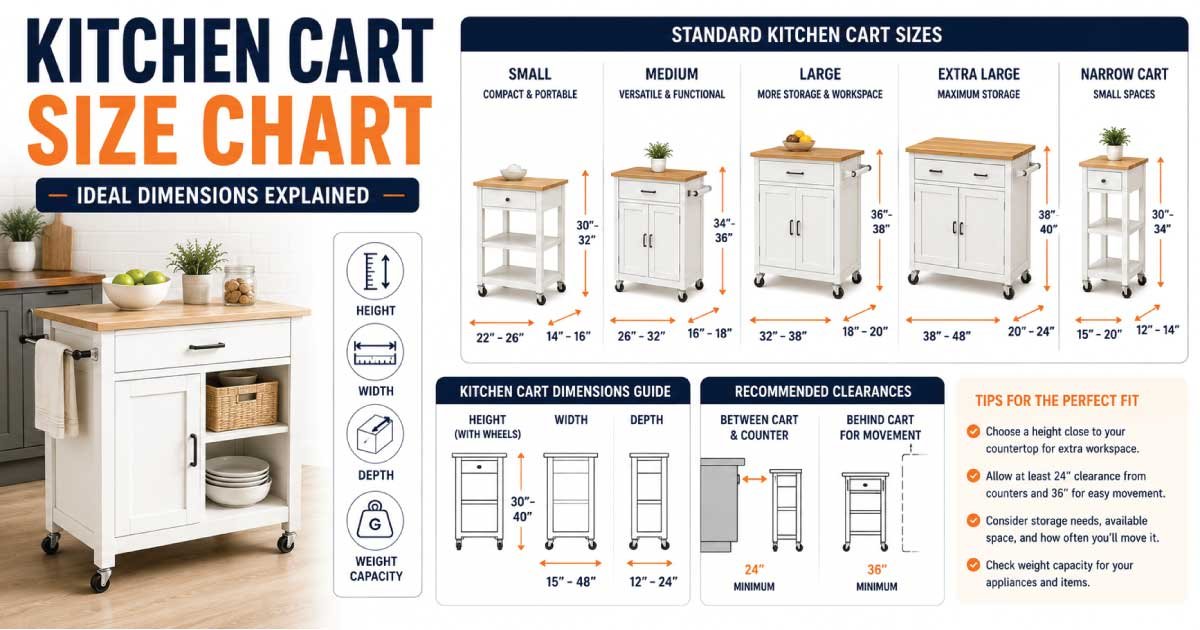
A kitchen cart is one of the most versatile pieces of kitchen furniture, offering additional countertop space, storage, and mobility. Whether you have a compact apartment kitchen or a spacious cooking area, choosing the correct kitchen cart size ensures it fits comfortably while improving functionality. Kitchen carts are available in various widths, heights, and depths, making it important to understand standard dimensions before purchasing.
This complete guide includes a detailed Kitchen Cart Size Chart, standard dimensions, storage options, countertop recommendations, seating considerations, and expert buying tips to help you select the ideal kitchen cart for your home.
Kitchen Cart Size Chart
| Kitchen Cart Type | Width | Depth | Height | Best For |
|---|---|---|---|---|
| Mini Cart | 20–24 inches | 16–20 inches | 34–36 inches | Small kitchens |
| Compact Cart | 24–30 inches | 18–22 inches | 34–36 inches | Apartments |
| Standard Cart | 30–40 inches | 20–24 inches | 36 inches | Everyday use |
| Large Cart | 40–50 inches | 24–30 inches | 36 inches | Family kitchens |
| Extra Large Cart | 50–60 inches | 24–36 inches | 36 inches | Large kitchens |
Standard Kitchen Cart Dimensions
Standard Kitchen Cart Height
Most kitchen carts are designed to match the standard kitchen countertop height of 36 inches (91 cm). This creates a continuous work surface when positioned next to existing cabinets. Some carts designed for serving or dining may have slightly different heights, but 36 inches remains the most practical option for food preparation.
Common Kitchen Cart Heights
| Cart Style | Height |
|---|---|
| Prep Cart | 36 inches |
| Serving Cart | 34–36 inches |
| Bar Cart | 40–42 inches |
| Utility Cart | 34–36 inches |
Standard Kitchen Cart Width
The width of a kitchen cart determines how much workspace and storage it provides. Compact carts fit smaller kitchens, while wider models offer additional drawers, cabinets, and shelving.
Width Guide
| Kitchen Size | Recommended Width |
|---|---|
| Small | 20–24 inches |
| Medium | 30–36 inches |
| Large | 40–50 inches |
| Spacious | 50–60 inches |
Standard Kitchen Cart Depth
Depth affects both countertop usability and how much space the cart occupies. Most kitchen carts have a depth ranging from 18 to 30 inches, providing enough room for meal preparation without obstructing traffic flow.
| Cart Size | Recommended Depth |
|---|---|
| Small | 18–20 inches |
| Standard | 22–24 inches |
| Large | 24–30 inches |
Kitchen Cart Clearance Guide
Recommended Walking Space Around a Kitchen Cart
Because kitchen carts are movable, they should never block walkways or appliance doors. Maintaining sufficient clearance allows people to cook comfortably and safely.
| Area | Minimum Clearance |
|---|---|
| Small Kitchen | 36 inches |
| Standard Kitchen | 42 inches |
| Busy Family Kitchen | 48 inches |
| Accessible Kitchen | 60 inches |
Keeping adequate space around the cart ensures smooth movement and prevents congestion during meal preparation.
Kitchen Cart Storage Size Chart
Kitchen carts come with different storage configurations depending on their intended use.
| Storage Feature | Standard Size |
|---|---|
| Drawer Depth | 16–20 inches |
| Cabinet Depth | 20–24 inches |
| Shelf Height | 10–14 inches |
| Wine Rack Opening | 4–5 inches |
| Spice Shelf | 3–5 inches |
Well-designed storage makes organizing cookware, utensils, and pantry items much easier.
Kitchen Cart Size by Kitchen Type
Small Kitchen Cart
Small kitchen carts are ideal for apartments, studio homes, and compact kitchens. They provide extra workspace without occupying too much floor space. Many include open shelves and towel bars for increased functionality while remaining lightweight and easy to move.
Typical dimensions include:
- Width: 20–24 inches
- Depth: 18–20 inches
- Height: 34–36 inches
Medium Kitchen Cart
Medium-sized carts balance storage and workspace, making them suitable for most households. They often feature drawers, cabinets, and locking caster wheels that allow the cart to remain stable during food preparation.
Typical dimensions:
- Width: 30–40 inches
- Depth: 20–24 inches
- Height: 36 inches
Large Kitchen Cart
Large kitchen carts offer generous countertop space for meal preparation, baking, or serving guests. These models commonly include multiple drawers, enclosed cabinets, and large shelves for cookware storage.
Typical dimensions:
- Width: 40–50 inches
- Depth: 24–30 inches
- Height: 36 inches
Extra Large Kitchen Cart
Extra-large carts function almost like portable kitchen islands. They provide substantial storage and workspace while maintaining mobility. These carts are ideal for spacious kitchens that frequently accommodate entertaining or family cooking.
Typical dimensions:
- Width: 50–60 inches
- Depth: 24–36 inches
- Height: 36 inches
▶️ Complete Size Chart 👉 Ottoman Size Guide with Chart: Complete Guide
Kitchen Cart Countertop Materials
Wood Countertops: Solid wood countertops create a warm appearance while serving as excellent chopping and food preparation surfaces. Regular oiling helps preserve their finish and durability.
Stainless Steel Countertops: Stainless steel is commonly found in professional kitchens because it resists stains, heat, and bacteria. It provides a clean, modern appearance and requires minimal maintenance.
Granite Countertops: Granite offers exceptional durability and a premium appearance. It resists scratches and heat, making it ideal for heavy daily use.
Quartz Countertops: Quartz combines durability with low maintenance. It resists stains, scratches, and moisture while providing numerous color and pattern options.
Kitchen Cart with Seating
Some kitchen carts include an extended countertop that accommodates seating for quick meals or casual dining.
| Seating Capacity | Minimum Width |
|---|---|
| 1 Person | 30 inches |
| 2 People | 48 inches |
| 3 People | 72 inches |
Allow approximately 24 inches of countertop space per person for comfortable seating.
Kitchen Cart Wheels and Mobility
Caster wheels make kitchen carts easy to move wherever additional workspace is needed. Locking wheels improve stability during cooking and food preparation.
Wheel Size Guide
| Cart Weight | Wheel Diameter |
|---|---|
| Lightweight | 2–3 inches |
| Standard | 3–4 inches |
| Heavy Duty | 4–5 inches |
Larger wheels roll more smoothly across tile, hardwood, and laminate flooring.
Kitchen Cart Weight Capacity
Understanding weight limits helps prevent damage and ensures safe operation.
| Cart Type | Maximum Weight |
|---|---|
| Mini Cart | 100 lbs |
| Compact Cart | 150 lbs |
| Standard Cart | 200 lbs |
| Large Cart | 250 lbs |
| Heavy-Duty Cart | 300 lbs |
Always distribute heavy appliances evenly across the countertop.
▶️ Complete Size Chart 👉 Sofa Size Guide with Chart: Complete Guide
How To Choose the Right Kitchen Cart Size
Measure Your Available Space: Measure the kitchen area where the cart will be placed. Leave enough room for cabinet doors, dishwashers, refrigerators, and oven doors to open fully without obstruction.
Consider Storage Requirements: Think about what you plan to store. Extra drawers, cabinets, shelves, and towel racks improve organization and increase the cart’s functionality.
Match Counter Height: Choosing a cart with a height similar to your kitchen countertops creates a seamless workspace for meal preparation and baking.
Select Durable Materials: Choose materials that suit your cooking habits. Stainless steel works well for heavy use, while butcher block offers an attractive food-preparation surface.
Benefits of a Kitchen Cart
Kitchen carts offer numerous advantages beyond additional workspace.
- Extra countertop area
- Portable food preparation station
- Increased kitchen storage
- Easy mobility
- Convenient serving station
- Improved organization
- Multi-purpose functionality
- Space-saving solution
- Attractive kitchen centerpiece
- Budget-friendly alternative to a permanent island
Common Kitchen Cart Mistakes
Avoid these common purchasing mistakes:
- Buying a cart that’s too large for the kitchen
- Ignoring walkway clearance
- Choosing insufficient storage
- Overlooking wheel quality
- Purchasing low-quality countertop materials
- Forgetting weight capacity
- Selecting the wrong height
- Blocking appliance access
Proper planning ensures your kitchen cart enhances functionality rather than creating obstacles.
Kitchen Cart Maintenance Tips
Keeping your kitchen cart in excellent condition extends its lifespan.
- Clean countertops after each use.
- Tighten screws periodically.
- Lock wheels during food preparation.
- Avoid exceeding weight limits.
- Oil wooden countertops regularly.
- Wipe stainless steel with appropriate cleaners.
- Keep caster wheels free of debris.
Routine maintenance preserves both appearance and performance.
▶️ Complete Size Chart 👉 Armchair Size Guide with Chart: Complete Guide
Conclusion
A well-sized kitchen cart adds flexibility, storage, and valuable workspace to any kitchen. Whether you need a compact cart for a small apartment or a large mobile workstation for a spacious family kitchen, selecting the correct dimensions ensures both comfort and functionality. By considering standard sizes, clearance requirements, countertop materials, storage features, and mobility options, you can choose a kitchen cart that perfectly complements your kitchen layout and supports your daily cooking and entertaining needs.
FAQs:
What is the standard size of a kitchen cart?
A standard kitchen cart usually measures 30 to 40 inches wide, 20 to 24 inches deep, and about 36 inches high. These dimensions align with most kitchen countertops, providing additional workspace, storage, and serving space without occupying excessive floor area.
How much space should be left around a kitchen cart?
Leave at least 36 inches of clearance around a kitchen cart to ensure comfortable walking and easy access. In larger kitchens or busy cooking areas, 42 to 48 inches of space provides better movement and improves the overall kitchen workflow.
Can a kitchen cart replace a kitchen island?
Yes, a kitchen cart can serve as an excellent alternative to a permanent kitchen island. It offers additional countertop space, storage, and food preparation areas while remaining portable, making it a practical solution for smaller kitchens or flexible layouts.
What countertop material is best for a kitchen cart?
The best countertop material depends on your cooking habits and design preferences. Quartz and granite offer exceptional durability, stainless steel is ideal for food preparation, and solid wood provides a warm appearance with a sturdy work surface for everyday use.
Are kitchen carts easy to move?
Yes, most kitchen carts are designed with caster wheels that make them easy to move around the kitchen. Many models also include locking wheels, allowing the cart to stay securely in place during meal preparation, serving, or everyday kitchen activities.
