
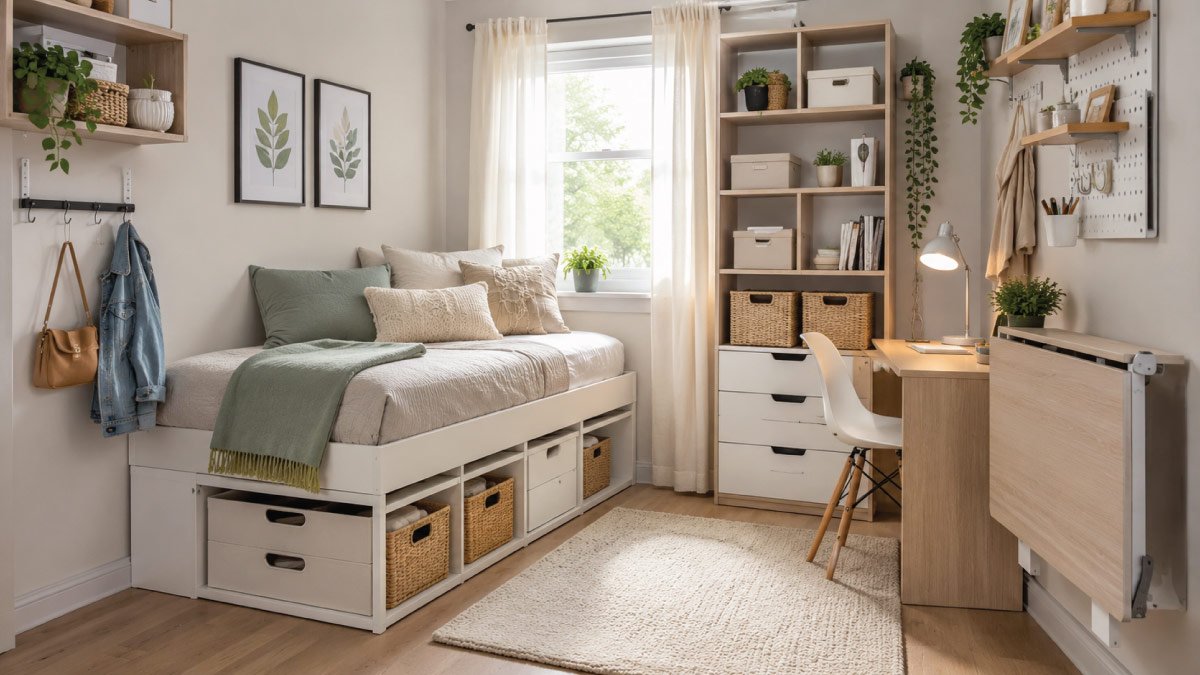
Living in a small room can sometimes feel overwhelming. Limited space often leads to clutter, making the room look chaotic and uncomfortable. However, with the right strategies, even the tiniest room can feel spacious, organized, and cozy. Organizing a small room is about maximizing every inch of space, creating functional zones, and maintaining a sense of style without overcrowding. In this blog post, we will explore practical ways to organize a small room effectively, along with clever design hacks to make it feel larger and more comfortable.
1. Start with a Decluttering Session
Before you begin reorganizing a small room, the first crucial step is decluttering. Assess all your belongings and decide what truly belongs in the space. By sorting items thoughtfully, you can remove unnecessary clutter, creating a cleaner canvas for storage solutions and furniture placement. A decluttered room immediately feels more spacious and manageable.
- Keep Essential items that you use regularly or love.
- Donate/Sell Items in good condition that you no longer need.
- Discard Broken, worn out, or unnecessary items.
Tip:
Use the “one-year rule.” If you haven’t used an item in the past year, chances are you won’t need it.
2. Utilize Vertical Space
When floor space is limited, making use of vertical surfaces is essential. Tall storage solutions, wall shelves, and mounted organizers help keep the room tidy without crowding the floor. By thinking upwards, you can display décor, store essentials, and keep frequently used items within reach, giving the room a more open, airy, and organized feel.
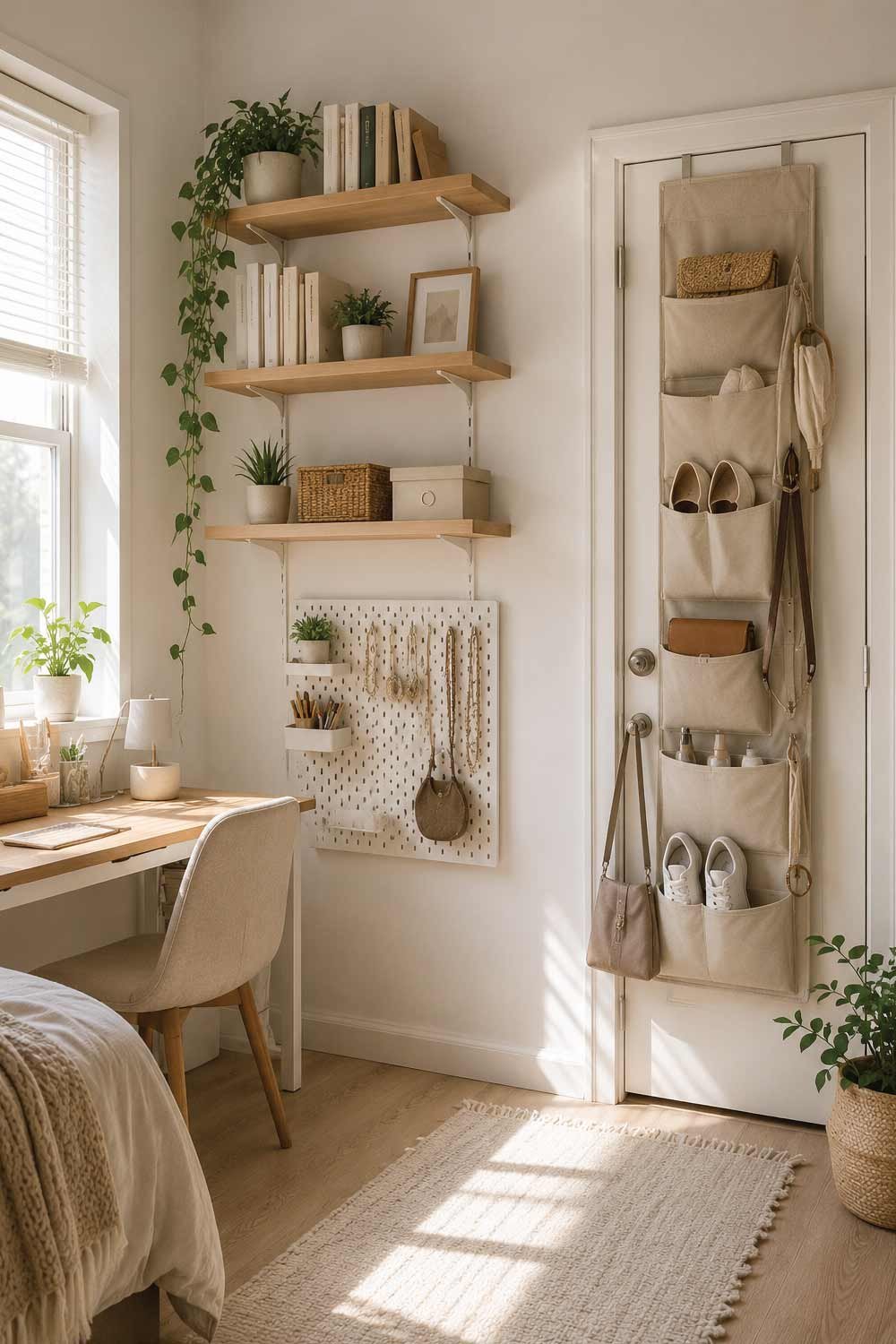
- Wall Shelves: Floating shelves can hold books, décor items, or small storage baskets without taking up floor space.
- Over-the-Door Organizers: Perfect for shoes, accessories, or cleaning supplies.
- Hooks and Pegboards: Great for hanging bags, hats, scarves, or jewelry.
Using vertical space allows you to store items neatly while keeping the floor open, giving the room an airy and spacious feel.
3. Choose Multi-Functional Furniture
In small rooms, furniture that serves multiple purposes is invaluable. Multi functional pieces save space, reduce clutter, and enhance usability. From beds with storage to foldable desks, these options maximize room potential without compromising style. By choosing versatile furniture thoughtfully, you can combine comfort, storage, and functionality in one compact, efficient design.
- Bed with Storage Drawers: Ideal for storing clothes, linens, or shoes underneath your bed.
- Sofa Bed: Combines seating and sleeping space for small apartments or guest rooms.
- Foldable Desks or Wall Mounted Tables: Provides a workspace without taking up permanent floor space.
- Ottomans with Storage: Can be used as seating, a footrest, or to store blankets and books.
Choosing furniture wisely ensures that every piece in the room has a purpose and reduces clutter significantly.
4. Optimize Closet and Wardrobe Space
Closets in small rooms are often underutilized and overcrowded. Organizing them efficiently is key to maintaining a neat space. By using uniform hangers, additional rods, and clever storage bins, you can maximize every inch. A well organized wardrobe allows you to store more, locate items quickly, and keep your room looking tidy and spacious.
- Use Uniform Hangers: Slim, matching hangers save space and create a neat look.
- Install Additional Rods: Double the hanging space for shorter items like shirts and jackets.
- Add Shelf Dividers: Prevent stacks of clothes from toppling over.
- Use Storage Bins: Small bins or baskets on shelves can store accessories, socks, or seasonal items.
Keeping your closet organized not only saves space but also makes it easier to find what you need quickly.
5. Divide the Room into Functional Zones
Even in small spaces, clearly defined zones make a room feel more organized and purposeful. By assigning specific areas for sleeping, working, storage, and relaxation, you create a sense of order and improve usability. Functional zones help reduce clutter, make daily activities more efficient, and give the impression of a larger, thoughtfully designed space.
- Sleeping Zone: Keep the bed area tidy with minimal items on nightstands.
- Work/Study Zone: A compact desk or wall-mounted table can serve as a workspace.
- Storage Zone: Designate areas for clothing, books, and other personal items.
- Relaxation Zone: A cozy corner with a chair or small rug for reading or relaxing.
By clearly defining zones, you reduce clutter and make the room feel more intentional and organized.
6. Use Smart Storage Solutions
Maximizing storage is crucial in a small room, where every corner counts. Creative and thoughtful solutions can help you store items neatly while keeping them accessible. From under bed drawers to modular shelves, smart storage not only organizes belongings efficiently but also frees up space, ensuring the room remains functional, open, and visually appealing.
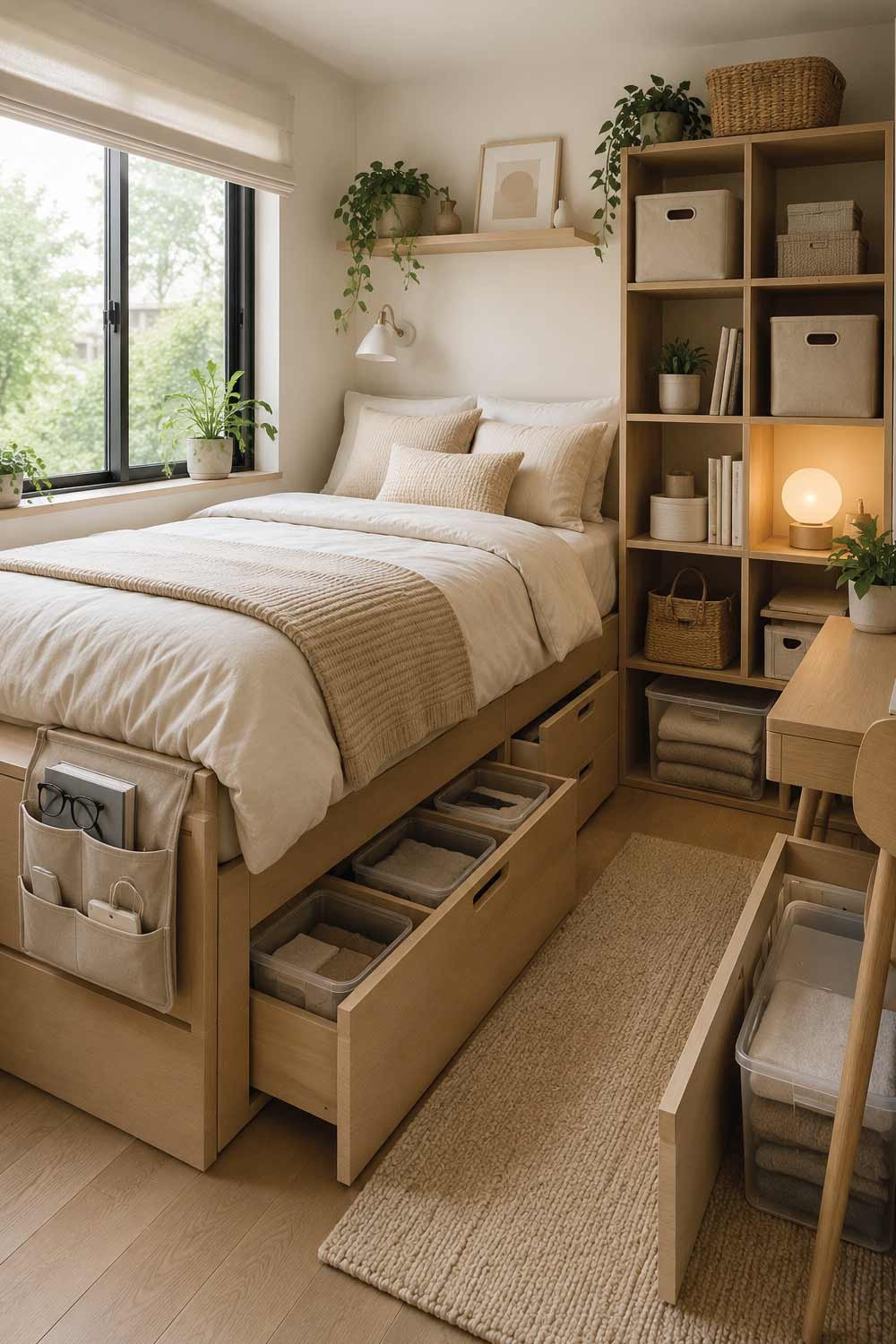
- Under-Bed Storage: Boxes or drawers for shoes, bedding, or out-of-season clothing.
- Storage Cubes or Modular Shelves: Can be stacked or arranged in various configurations.
- Bedside Caddies: Perfect for keeping essentials like books, chargers, or glasses.
- Clear Storage Bins: Helps you see what’s inside without opening each box.
Smart storage keeps items organized and accessible without creating clutter.
Also Read:
How to Decorate a Small Living Room: Smart Ideas for Stylish, Functional Spaces
7. Keep Surfaces Clear
Cluttered surfaces can make even a tidy small room feel cramped. Maintaining clear surfaces is essential to keeping the space clean, functional, and calming. Limiting items to daily essentials and using small organizers ensures that desks, nightstands, and dressers stay tidy. This simple habit enhances visual order and gives the room a peaceful, uncluttered atmosphere.
- Only keep daily essentials on surfaces.
- Use trays or small baskets for items like keys, wallets, or makeup.
- Regularly tidy surfaces to prevent clutter from accumulating.
Minimal surfaces not only make the room look cleaner but also create a sense of calm and order.
8. Incorporate Mirrors
Mirrors are a powerful tool in small-room design, as they reflect light and give the illusion of extra space. Strategically placed mirrors can make a room feel brighter and more open while also serving a decorative purpose. From full-length mirrors to mirrored furniture, these reflective surfaces enhance depth and create a visually spacious environment.
- Full-Length Mirrors: Can be mounted on doors or walls to add height.
- Decorative Wall Mirrors: Serve as both décor and functional reflective surfaces.
- Mirrored Furniture: Small mirrored tables or cabinets reflect light and keep the room airy.
Strategic placement of mirrors enhances brightness and the feeling of spaciousness in a small room.
9. Use Light Colors and Cohesive Décor
Color and décor dramatically influence the perception of space in a small room. Light shades such as pastels, creams, or soft greys reflect more light, making the room feel airy and open. Pairing these tones with cohesive décor and minimalistic designs ensures the space looks organized, polished, and visually balanced without feeling cramped or cluttered.
- Avoid heavy patterns that can overwhelm a small space.
- Stick to a cohesive color palette for furniture, bedding, and décor items.
- Use simple, minimalistic designs to keep the room visually uncluttered.
A well thought out color scheme gives the room a polished and organized look without adding bulk.
10. Implement Vertical and Hidden Lighting
Lighting can completely change the look and feel of a small room. Choosing vertical or hidden light sources prevents floor clutter while brightening the space effectively. Wall-mounted lamps, LED strips, and pendant lights provide functional illumination and visual height, making the room feel larger, well-designed, and comfortable to live and work in.
- Wall-Mounted Lamps: Free up desk or bedside space.
- LED Strip Lights: Can be installed under shelves or along edges to brighten corners.
- Pendant Lights: Hanging lights keep surfaces clear while adding style.
Proper lighting not only illuminates the room but also makes it feel larger and more organized.
Also Read:
11. Regular Maintenance
Keeping a small room organized requires consistent effort rather than a one-time setup. Regular maintenance prevents clutter from piling up and keeps every zone functional. By scheduling weekly tidying, seasonal decluttering, and clearly labeling storage, you can maintain order effortlessly, making the room feel clean, spacious, and easy to navigate at all times.
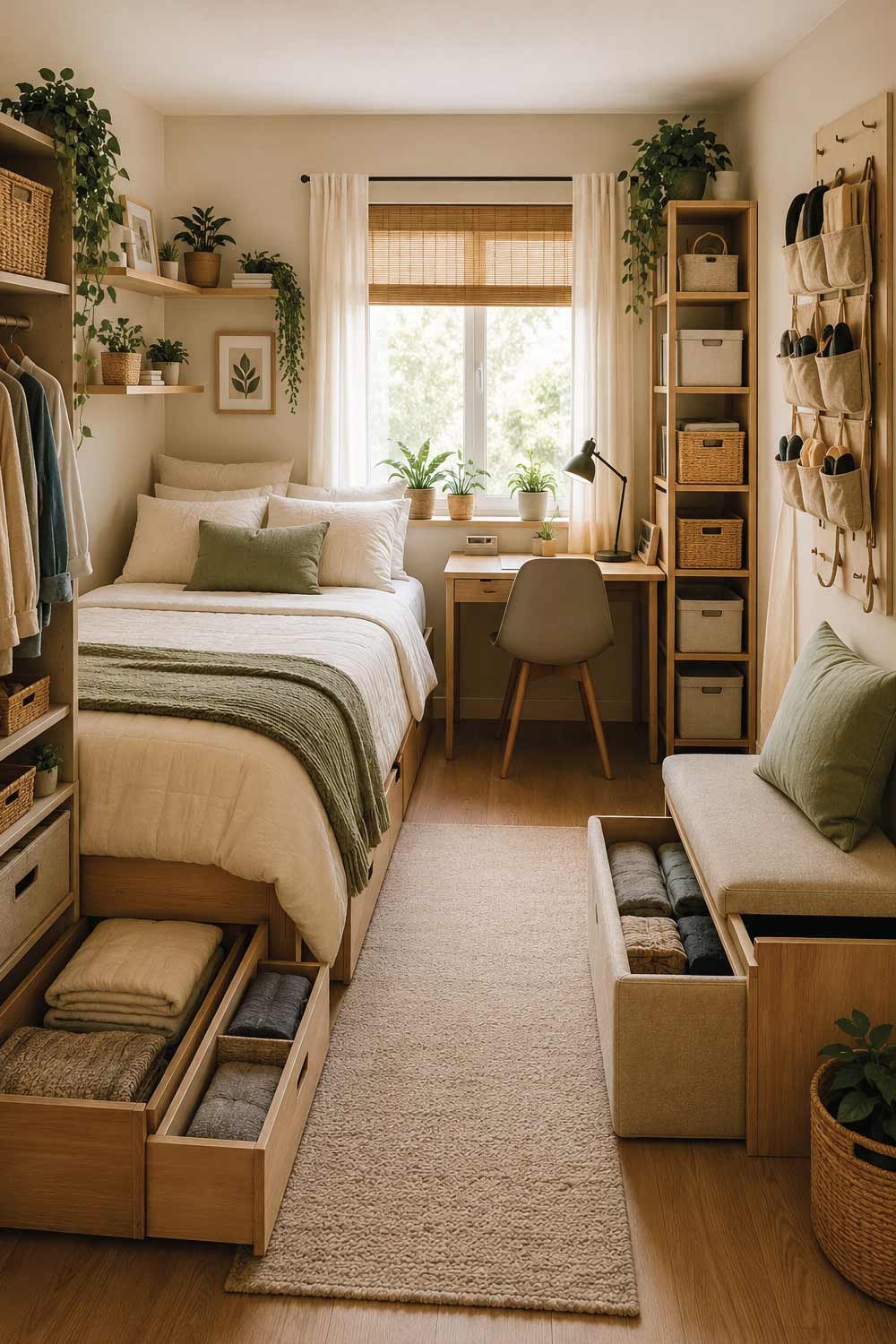
- Weekly Tidying: Spend 10 15 minutes clearing surfaces, folding clothes, and putting things back in place.
- Seasonal Declutter: Every few months, reassess items in the room and donate or discard what’s unnecessary.
- Labeling Storage: Label bins and shelves to easily identify items and reduce mess.
Consistent maintenance ensures your small room remains organized and enjoyable to live in.
12. Personalize Without Cluttering
Personal touches make a room feel inviting, but in small spaces, balance is key. Select meaningful décor items that enhance personality while remaining functional and compact. Thoughtful use of wall art, decorative storage, and small plants allows you to express style and comfort without overcrowding, keeping the room both cozy and organized.
- Minimal Wall Art: Choose a few key pieces instead of overcrowding walls.
- Functional Décor: Items like stylish storage boxes or decorative baskets serve dual purposes.
- Plants: Small indoor plants add life without taking up too much space.
Personal touches make the room feel cozy and reflective of your personality without compromising organization.
Also Read:
Conclusion
Organizing a small room is all about smart planning, efficient storage, and minimalistic design. By decluttering, utilizing vertical space, choosing multi functional furniture, and maintaining regular upkeep, even the tiniest room can feel open, comfortable, and visually appealing. Remember, organization is not about cramming everything in but about making intentional choices and creating a room that functions well while reflecting your style.
With these tips, you can transform a cramped space into a well-organized, enjoyable, and stylish room that maximizes every inch of available space. A small room doesn’t have to feel limiting with the right strategies, it can be a sanctuary of order, efficiency, and comfort.

I am Engineer Hassan, a professional engineer with over 15 years of experience in measurements, design accuracy, and furniture, appliance, and home product sizing. Through Size Helper, I provide research-based guides and trending 2026 home design ideas for living rooms, bedrooms, sofas, wall décor, fashion, and sports—helping users make confident, informed decisions. Every guide is written with real expertise, verified data, and a commitment to quality, usability, and style.