
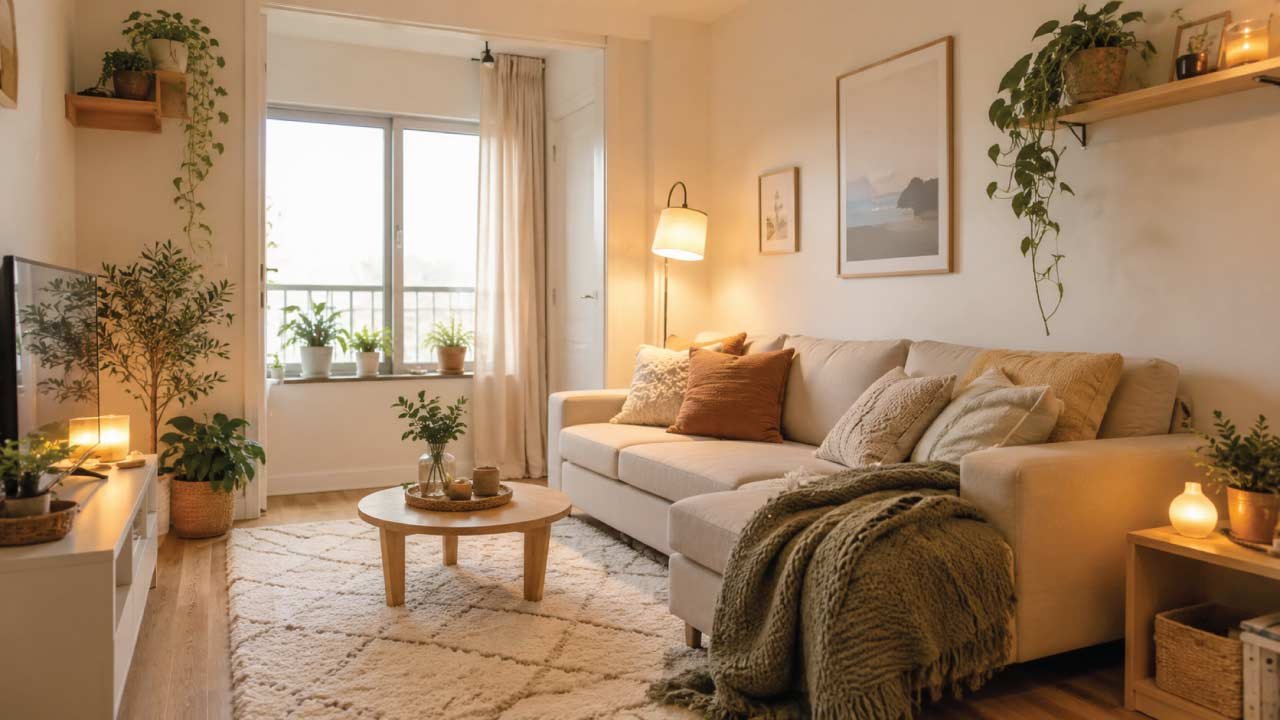
Small living rooms can feel like a challenge at first but they’re actually one of the best canvases for creating a cozy aesthetic. With the right balance of warmth, texture, lighting, and smart layout choices, even the tiniest space can feel inviting, stylish, and surprisingly spacious.
A cozy aesthetic isn’t about filling every corner. It’s about intention, softness, and comfort. Think warm lighting, layered textiles, compact furniture, and personal touches that make the room feel like a true retreat.Here are 12 cozy aesthetic living room ideas for small spaces to help you design a home that feels warm, calm, and beautifully lived-in.
1. Stick to a Soft, Warm Color Palette
Color strongly influences the mood of a living room, especially in small spaces where visual harmony matters. Soft warm tones create a cozy yet open feeling, preventing the room from feeling tight or overwhelming. A cohesive palette helps the space feel balanced, calm, and visually more expansive.
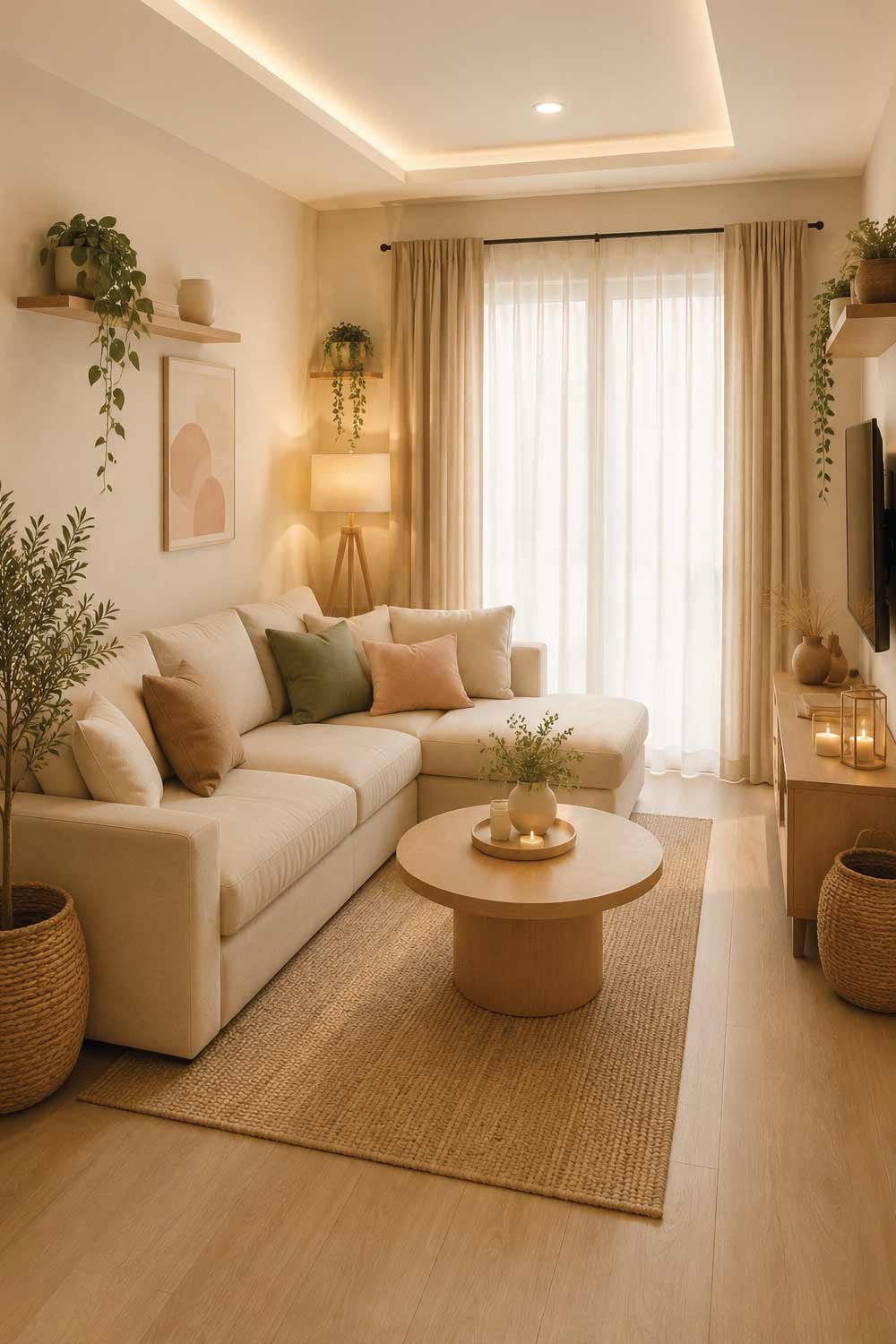
- Soft neutrals create a calming and spacious visual effect in compact rooms.
- Cream and beige tones enhance natural light reflection beautifully.
- Warm white keeps interiors bright without feeling harsh or cold.
- Muted accents like sage or dusty rose add gentle depth.
- Consistent color schemes reduce visual clutter and improve flow.
- Light earthy shades maintain warmth while expanding visual space.
Shades like cream, beige, warm white, soft taupe, and light greige reflect light and prevent the room from feeling cramped. You can add depth with muted tones like dusty rose, sage green, or warm brown accents. Keeping the palette cohesive makes the space feel calm and visually larger.
Personal Experience
When I shifted my living room to warm beige and soft white tones, the entire atmosphere changed. The space felt brighter and more peaceful. Even with simple furniture, the room started looking more open and naturally cozy without needing extra decoration.
2. Choose Small Scale, Comfortable Furniture
In small living rooms, scale matters more than style alone. Oversized furniture can overwhelm the space, while compact and well-proportioned pieces maintain openness. Comfort should remain a priority, but balanced sizing ensures the room stays functional and visually light.
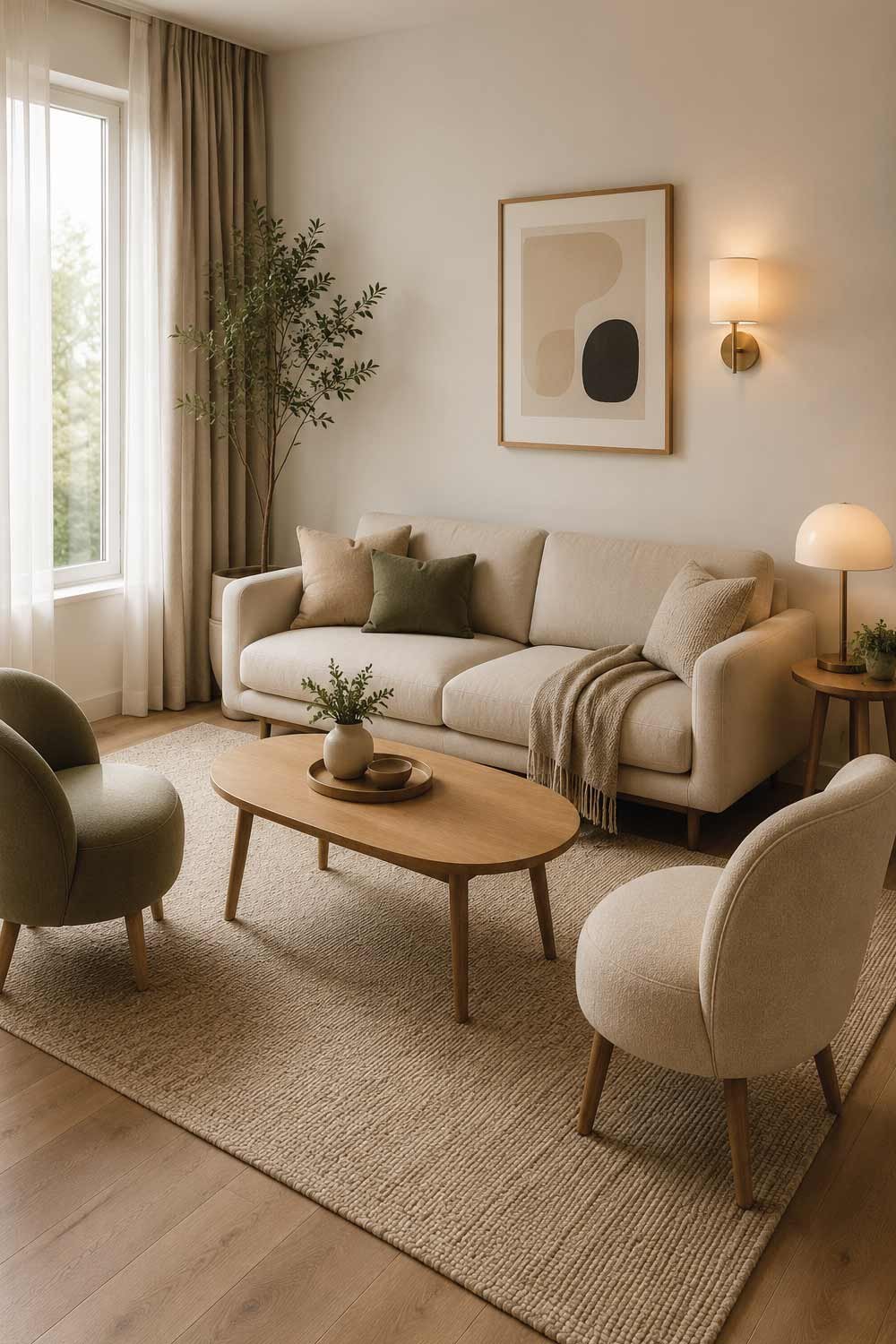
- Compact furniture prevents overcrowding in limited spaces.
- Low-profile sofas create a more open visual structure.
- Slim chairs improve movement and flow within the room.
- Armless seating reduces visual heaviness effectively.
- Rounded edges soften tight layouts and improve comfort.
- Proper scale ensures harmony between furniture and space.
Look for slim sofas, armless chairs, and narrow coffee tables with rounded edges. Prioritize comfort over bulk plush cushions and soft fabrics help maintain coziness without cluttering the room.
Personal Experience
After replacing a bulky sofa with a smaller, low-profile one, my living room instantly felt easier to move around in. The space looked less cramped, and even simple rearrangements made a noticeable difference in openness.
3. Use Multi-Functional Furniture
Multi-functional furniture is essential for maximizing both comfort and space efficiency in small living rooms. Each piece should serve more than one purpose, helping reduce clutter while maintaining a warm and inviting atmosphere. This approach supports both practicality and aesthetic balance.
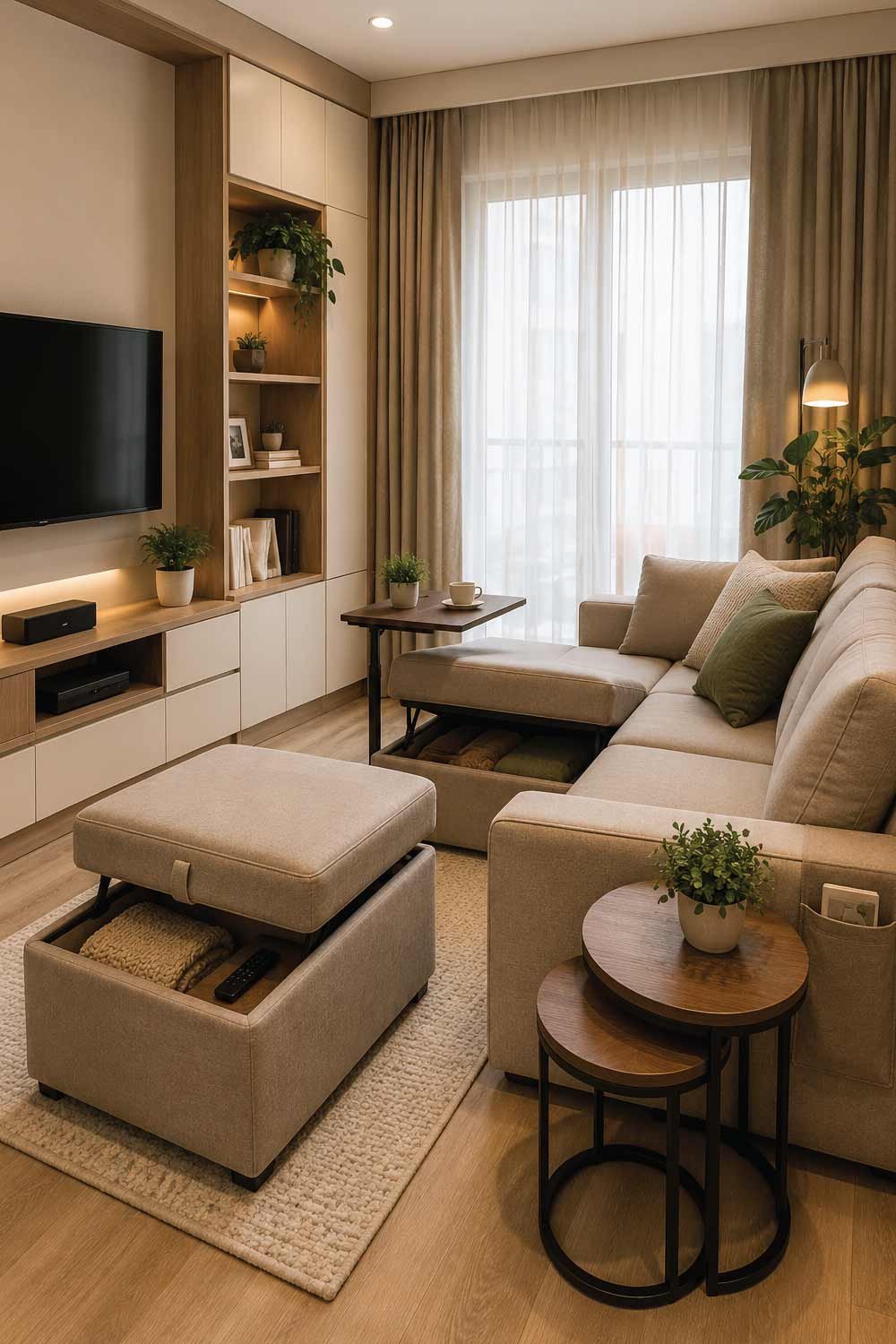
- Multi-functional pieces reduce unnecessary furniture in small rooms.
- Storage ottomans provide seating and hidden organization together.
- Nesting tables save space when not in active use.
- Foldable side tables offer flexible surface options.
- Sofas with storage help hide everyday clutter efficiently.
- Smart furniture improves functionality without sacrificing style.
Think storage ottomans, nesting tables, foldable side tables, or sofas with hidden storage. These pieces reduce visual clutter and make the room feel more spacious and intentional.
Personal Experience
Switching to a storage ottoman helped me keep blankets and remotes out of sight. The room instantly felt cleaner and more organized. Having furniture that serves multiple purposes made the space feel smarter and less crowded.
4. Layer Soft Textures Everywhere
Texture plays a major role in creating warmth and comfort in small living rooms. Even without bold colors, layered fabrics and materials add depth and coziness. Mixing soft textures makes the space feel inviting, lived-in, and visually rich without overwhelming the design.
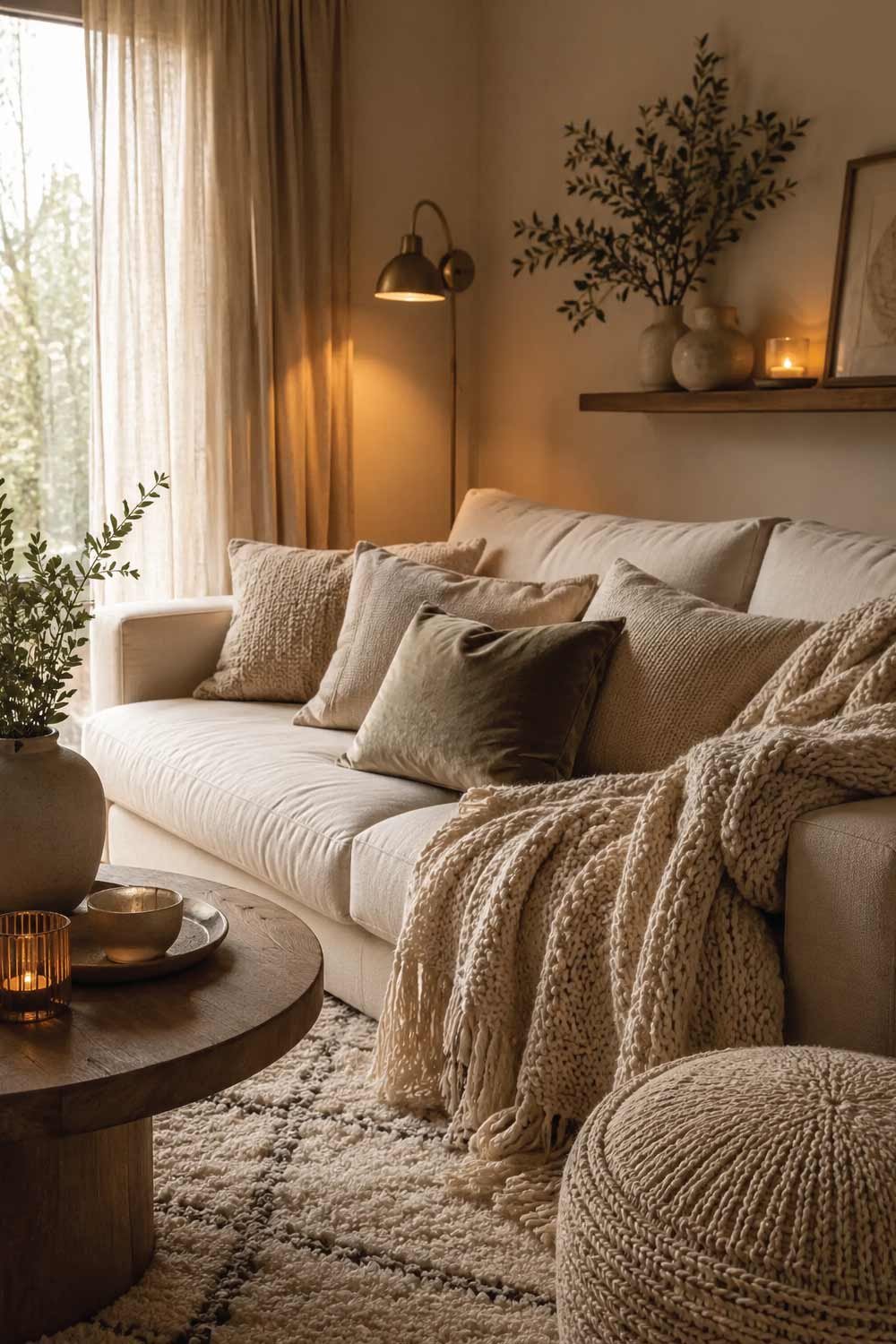
- Layered textures create warmth without heavy decoration.
- Knitted throws add softness and visual comfort.
- Linen cushions bring breathable natural elegance.
- Wool rugs ground the space with warmth and depth.
- Velvet pillows introduce subtle luxury and softness.
- Mixed fabrics enhance coziness without cluttering design.
Mix materials like knitted throws, linen cushions, wool rugs, velvet pillows, and soft cotton upholstery. The combination of textures makes the room feel inviting and comfortable without needing bold colors or heavy décor.
Personal Experience
Adding layered throws and cushions completely changed how my sofa felt. The room became instantly more comfortable and inviting. Even simple textures made the space feel warmer and more visually interesting without adding extra décor.
5. Use Warm, Ambient Lighting
Lighting is essential for shaping mood in a small cozy living room. Harsh lighting can make the space feel cold and tight, while warm ambient lighting creates softness and intimacy. Layered lighting sources help distribute glow evenly, enhancing comfort and relaxation.
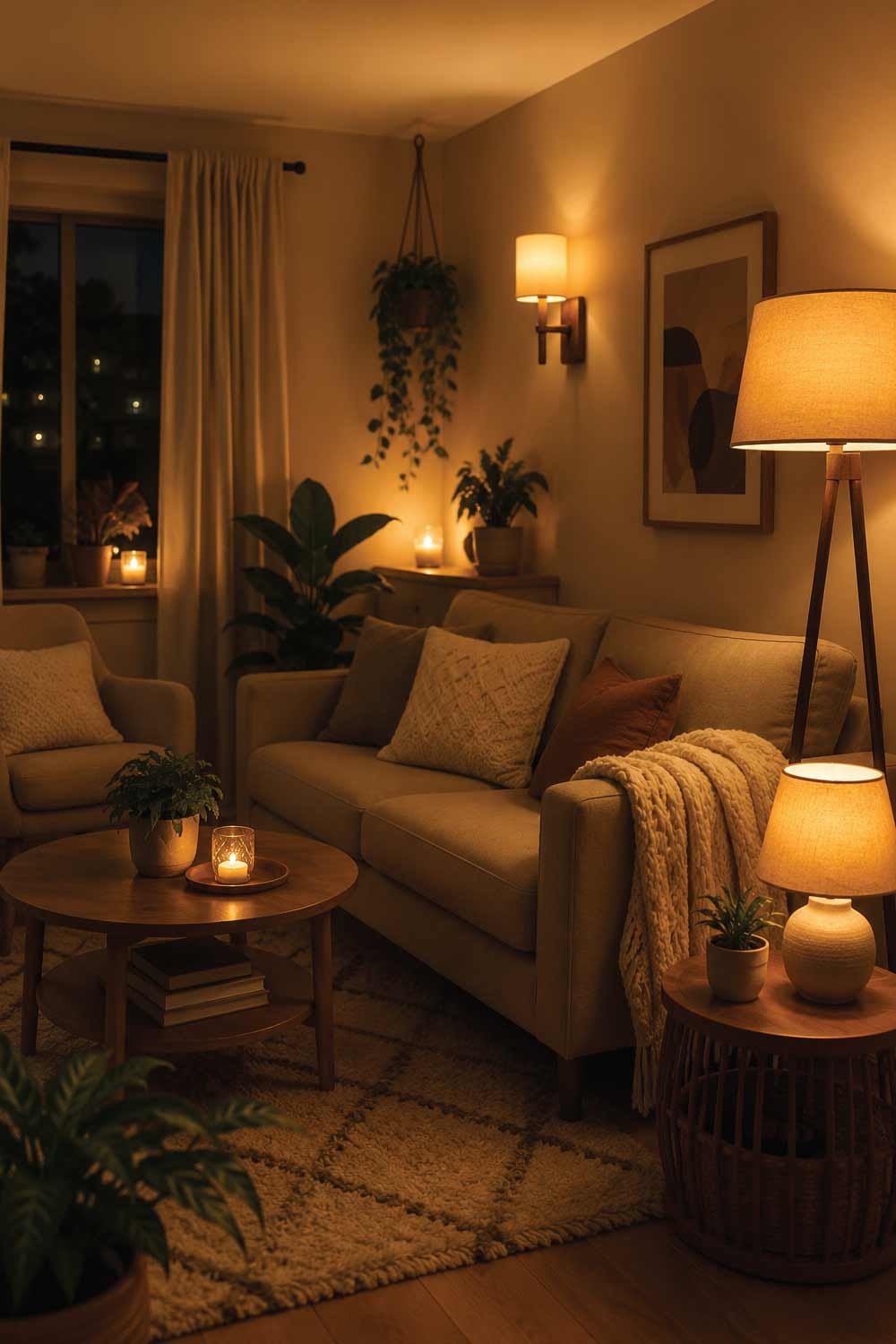
- Warm lighting creates a relaxing and cozy atmosphere indoors.
- Table lamps provide soft, focused illumination in corners.
- Floor lamps add height and ambient glow to spaces.
- Wall sconces save space while adding decorative light.
- Layered lighting prevents harsh shadows in small rooms.
- Soft light enhances warmth and emotional comfort.
Use table lamps, floor lamps, and wall sconces instead of relying on overhead lighting. Soft, diffused light creates a relaxed mood and makes the space feel more intimate and welcoming, especially in the evenings.
Personal Experience
When I replaced bright white lighting with warm lamps, my living room immediately felt more relaxing. Even at night, the space looked soft and inviting. The layered lighting made it feel much more comfortable for spending long hours indoors.
6. Add Mirrors to Expand the Space
Mirrors are a powerful design tool for small living rooms because they enhance brightness and create the illusion of extra space. By reflecting light and surroundings, they visually expand the room while adding subtle decorative elegance.
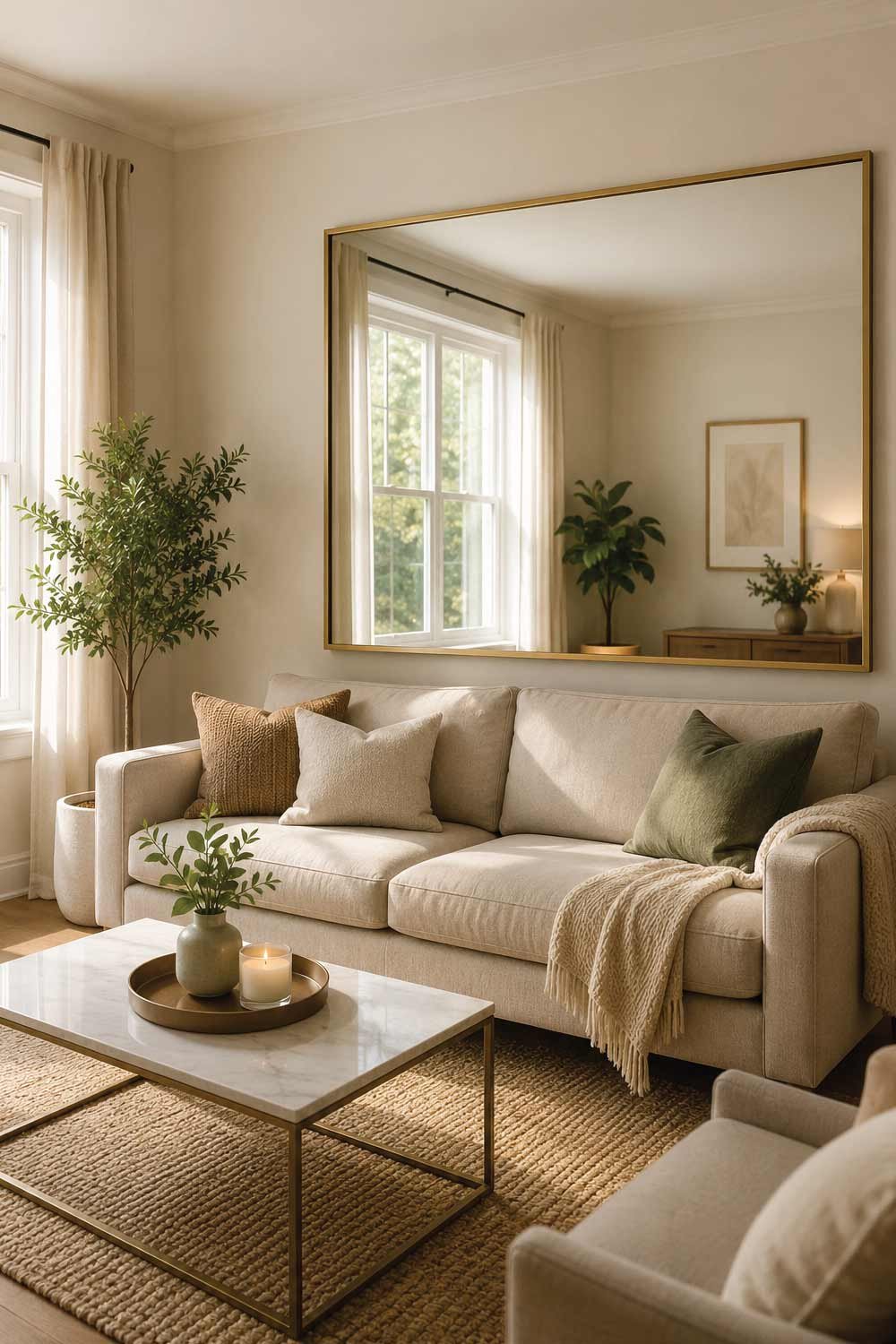
- Mirrors reflect natural light and brighten small spaces.
- Large mirrors create the illusion of extended room size.
- Placement near windows maximizes daylight reflection.
- Framed mirrors add subtle decorative style.
- Mirrors reduce visual heaviness in compact layouts.
- Reflective surfaces enhance openness and depth.
Place a large mirror behind the sofa, across from a window, or on a focal wall. A simple framed mirror also adds subtle decorative charm without overwhelming the aesthetic.
Personal Experience
Adding a large mirror opposite my window completely transformed the room. Natural light spread further, and the space looked noticeably bigger. It became one of the simplest yet most effective changes I made to improve openness.
Also Read:
7. Keep the Layout Open and Balanced
A cozy living room should still feel open enough to move comfortably without obstruction. Balanced layouts improve flow and prevent the space from feeling crowded. Instead of pushing everything against the walls, thoughtful positioning creates a more inviting and naturally structured environment.
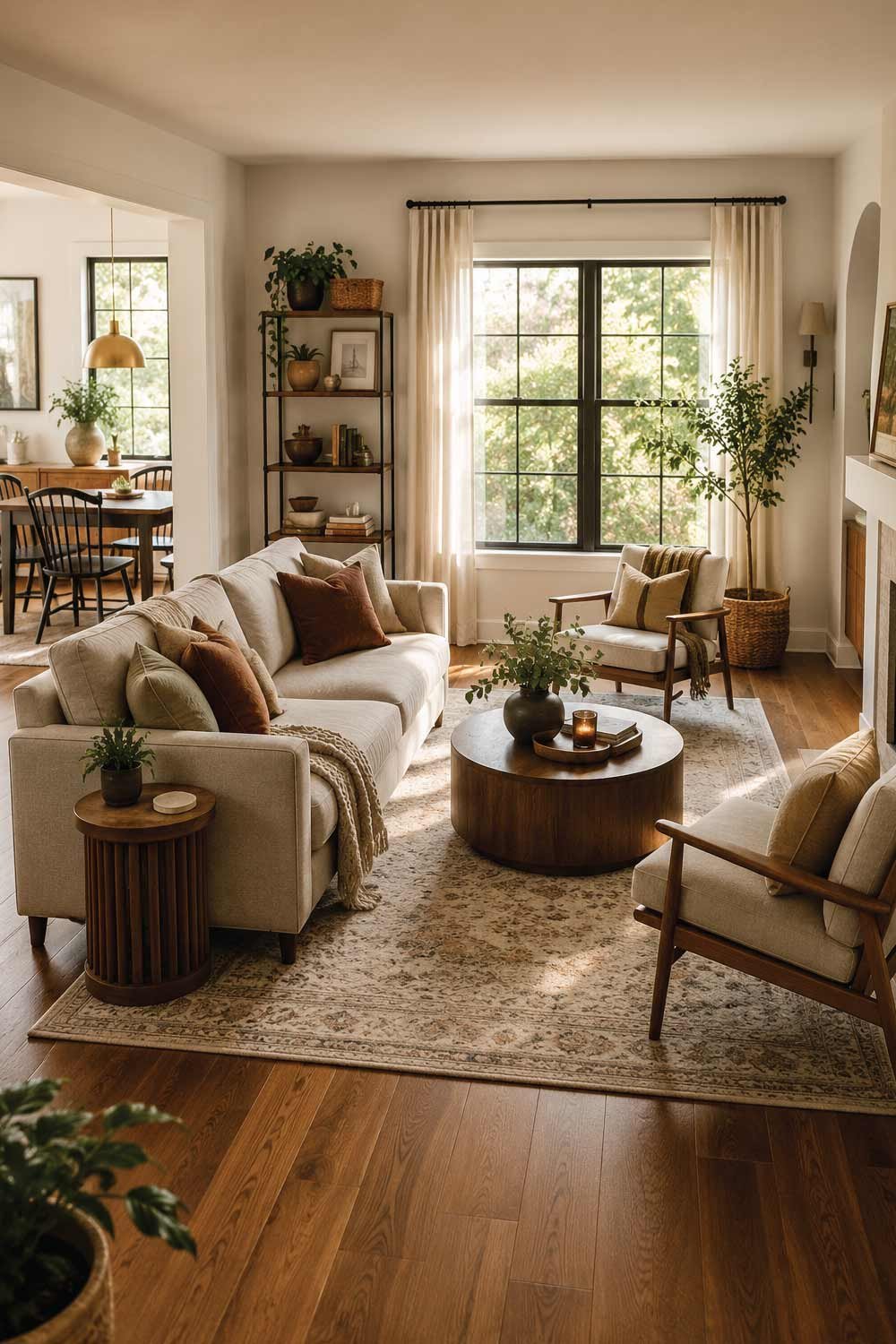
- Floating furniture slightly inward improves spatial flow and balance.
- Central focus points help organize seating arrangements naturally.
- Avoiding wall-only layouts creates a more intentional design.
- Open pathways make small rooms feel more breathable and larger.
- Grouped seating encourages conversation and comfort.
- Balanced spacing enhances visual harmony in compact rooms.
Float your sofa slightly inward and arrange seating around a central point like a coffee table or rug. This creates a defined but airy seating area that feels intentional and comfortable.
Personal Experience
When I moved my sofa slightly away from the wall and centered it around a rug, the room instantly felt more structured. The space didn’t feel smaller in fact, it felt more intentional and comfortable to spend time in.
8. Incorporate Natural Elements
Natural elements bring warmth, softness, and life into small living rooms. Organic textures and materials create a calming atmosphere that enhances coziness without adding clutter. These elements help connect the interior space with nature, making it feel more grounded and refreshing.
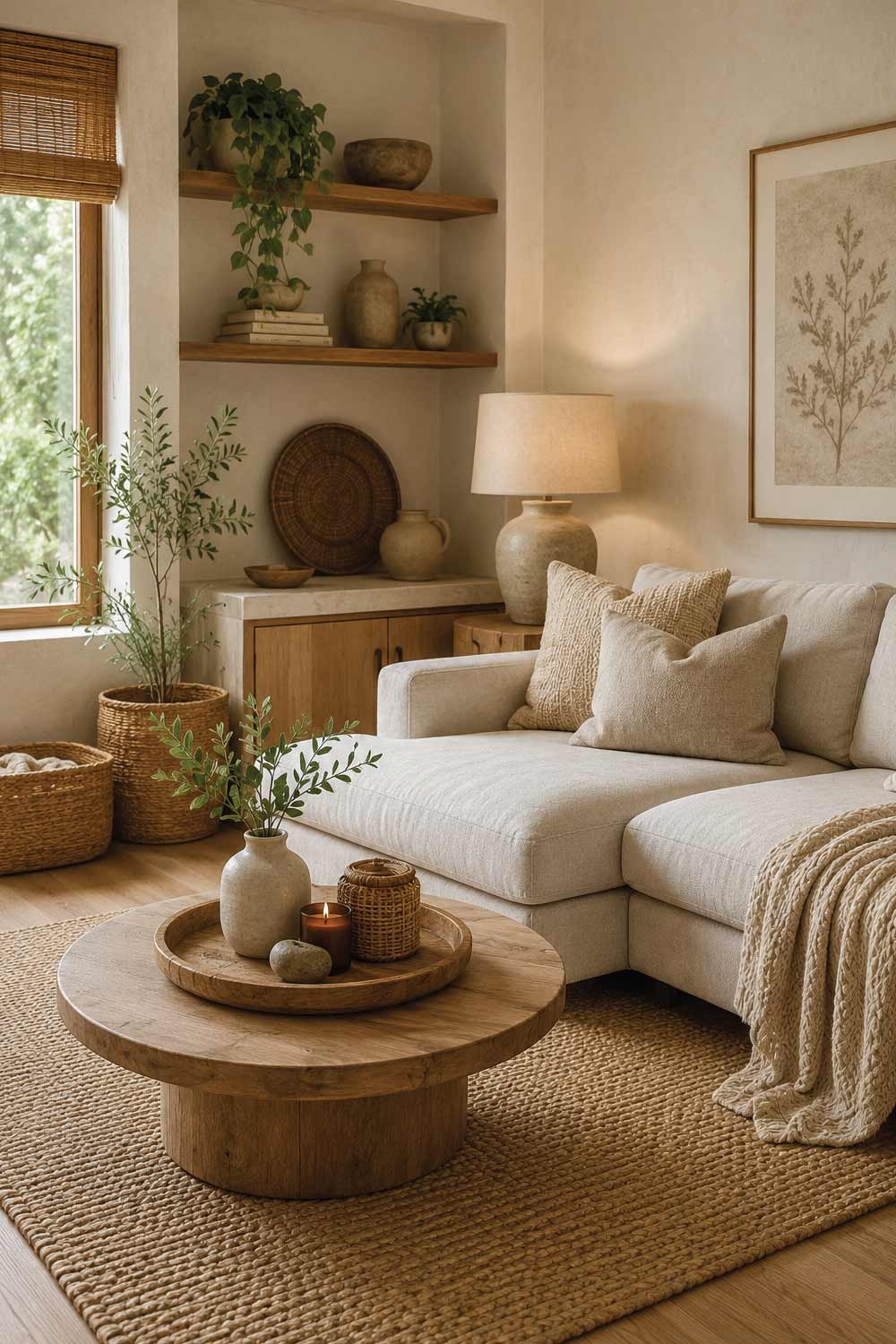
- Natural materials soften sharp and modern interior edges.
- Wood accents add warmth and timeless visual appeal.
- Rattan and jute introduce texture without heaviness.
- Ceramic décor creates subtle handcrafted charm.
- Small plants add freshness and natural energy indoors.
- Organic textures enhance comfort without visual overload.
Wood accents, rattan baskets, jute rugs, stone décor, and ceramic pieces all work beautifully. Add a small indoor plant or trailing greenery to introduce life and freshness without clutter.
Personal Experience
Adding a small wooden tray and a few ceramic pieces made my living room feel warmer instantly. Even a single plant brought life into the space, making it feel more relaxed and naturally comforting.
9. Use Rugs to Define the Space
Rugs play a key role in grounding a small living room while adding warmth and structure. They help visually separate areas and create a cozy foundation. The right rug can make even a compact space feel organized, soft, and intentionally designed.
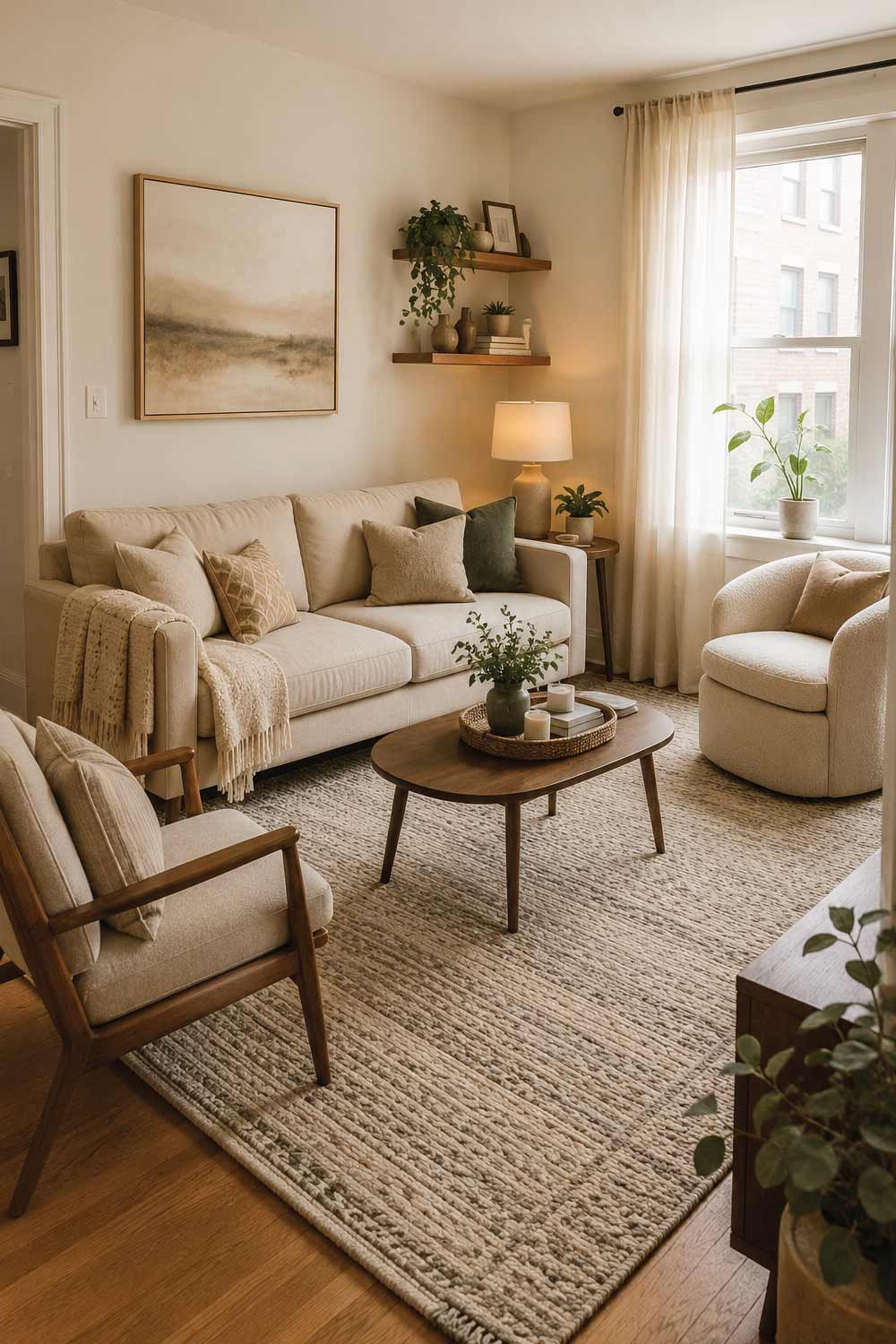
- Rugs anchor furniture and create a defined seating area.
- Proper sizing improves balance and visual proportion.
- Front-leg placement enhances layout cohesion effectively.
- Neutral tones maintain calm and cozy aesthetics.
- Textured rugs add warmth and tactile comfort.
- Soft patterns prevent visual heaviness in small spaces.
Choose a rug that fits under at least the front legs of your furniture. Soft patterns, neutral tones, or textured weaves enhance coziness without overwhelming the space visually.
Personal Experience
When I added a large neutral rug under my seating area, the room immediately felt more complete. The furniture looked better arranged, and the space felt warmer and more connected.
Also Read:
10. Keep Décor Minimal but Meaningful
In small living rooms, décor should be intentional rather than excessive. Carefully chosen items create personality without overwhelming the space. Grouping objects thoughtfully helps maintain visual clarity while still reflecting personal style and warmth.
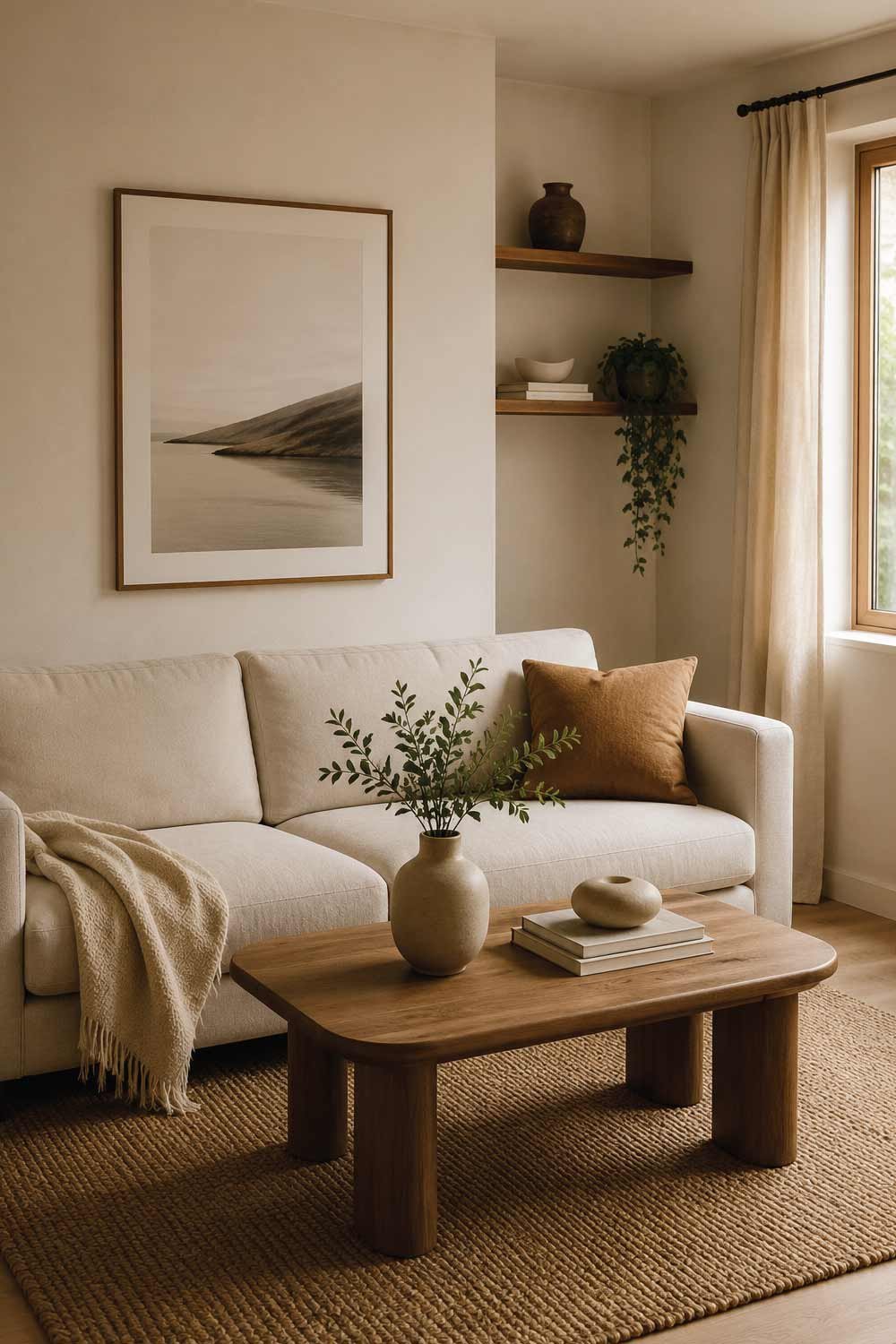
- Minimal décor prevents visual clutter in small rooms.
- Meaningful objects create stronger emotional connection.
- Grouping items improves visual organization and balance.
- Simple designs enhance calm and spacious feeling.
- Statement pieces reduce need for multiple decorations.
- Empty space allows décor to stand out clearly.
This could be a framed print, a ceramic vase, a stack of books, or a sculptural object. Group items in small clusters rather than spreading them across every surface to maintain visual calm.
Personal Experience
Reducing my décor to just a few meaningful items made a big difference. Instead of feeling crowded, the room felt calmer. Each piece stood out more, giving the space a cleaner and more intentional look.
11. Maximize Vertical Space
Vertical space is often underused in small living rooms. By utilizing walls effectively, you can increase storage and decoration without sacrificing floor area. This approach also helps draw the eye upward, making the room feel taller and more open.
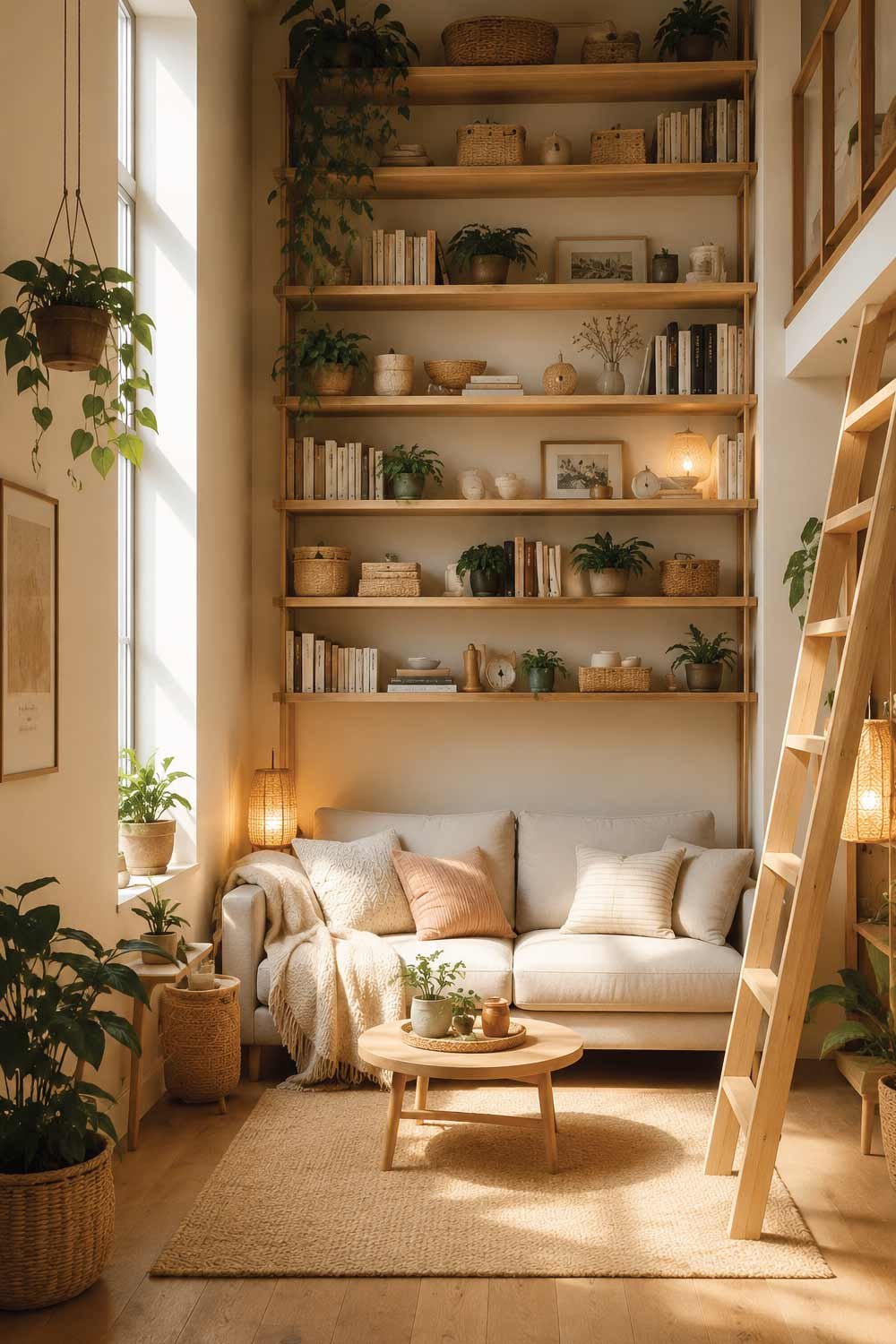
- Wall-mounted storage frees valuable floor space efficiently.
- Tall shelves increase storage without crowding the room.
- Vertical design draws attention upward naturally.
- Shelves combine storage with decorative display areas.
- Vertical arrangements enhance perceived room height.
- Balanced shelving prevents cluttered wall appearance.
Decorate shelves with a mix of books, plants, and small décor items. This draws the eye upward, making the room feel taller and more open while maintaining a cozy aesthetic.
Personal Experience
Installing tall shelves helped me organize books and décor without using floor space. The room felt taller and more open, and everything looked neatly arranged instead of scattered.
Also Read:
12. Create a Personal Cozy Corner
A dedicated cozy corner adds comfort and personality to a small living room. It provides a private space for relaxation, reading, or unwinding. Even in compact layouts, a well-designed nook enhances emotional warmth and makes the home feel more inviting.
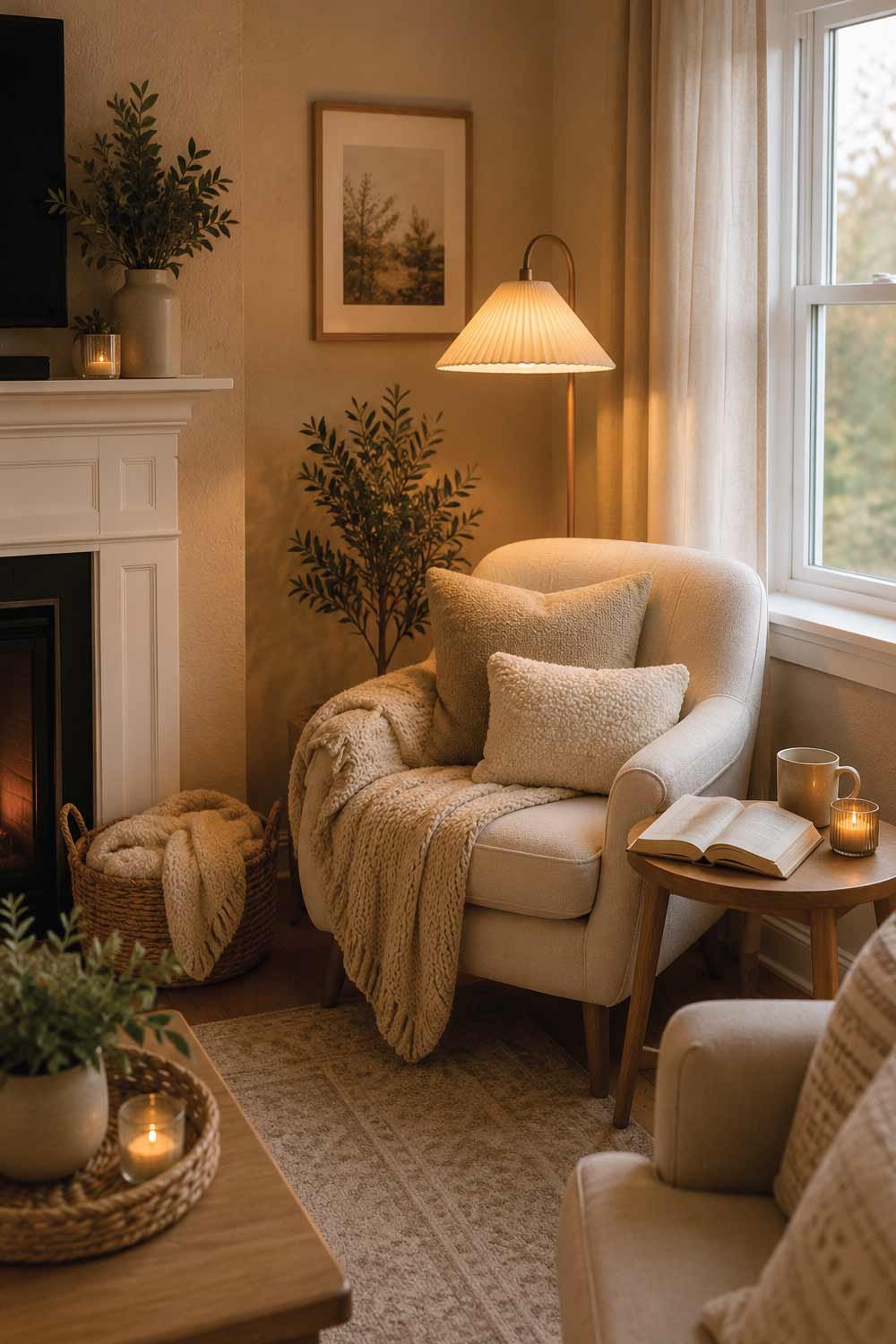
- Cozy corners provide personal relaxation space within small rooms.
- Soft seating enhances comfort and emotional warmth.
- Warm lighting improves mood and atmosphere significantly.
- Small tables add practical convenience for daily use.
- Blankets and cushions increase coziness and softness.
- Personal corners strengthen emotional connection to the space.
Add a soft blanket, warm lighting, and a side table for drinks or books. This little corner becomes your personal retreat within the home, reinforcing the cozy atmosphere of the entire room.
Personal Experience
Creating a small reading corner by my window became my favorite part of the room. With a chair, soft light, and a blanket, it turned into a peaceful retreat that made the entire living room feel more comforting.
Also Read:
Final Thoughts:
A small living room doesn’t limit your creativity it actually encourages it. By focusing on warm colors, layered textures, smart furniture choices, and thoughtful lighting, you can turn even the smallest space into a cozy aesthetic haven.
The key is not to fill the room, but to shape it with intention. Every piece should contribute to comfort, flow, and visual harmony.When done right, a small living room becomes more than just a space it becomes a feeling. A calm, warm, and inviting place you’ll never want to leave.
