
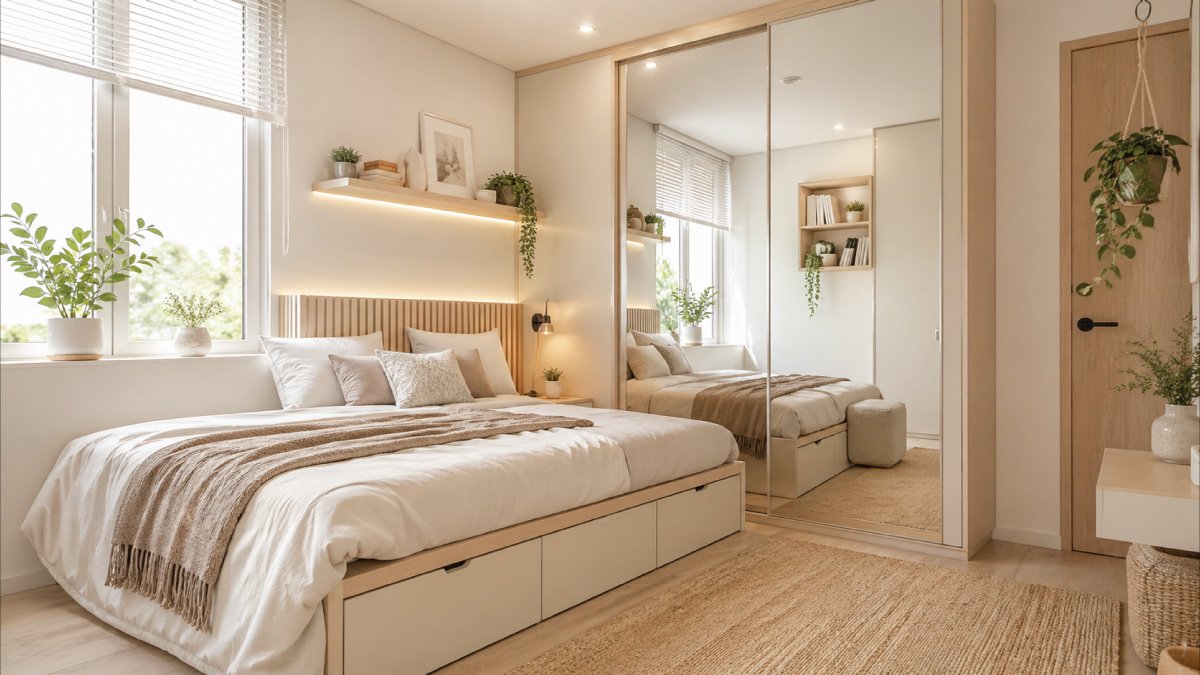
Living with a small bedroom can feel frustrating at first. I know this personally because for several years, I lived in a compact apartment where my bedroom was barely large enough to fit a bed, a side table, and a narrow walkway. At the beginning, I felt cramped and constantly overwhelmed by clutter. But over time, I discovered that with the right ideas for tiny bedrooms, even the smallest space can feel open, functional, and stylish.
In this detailed guide, I’ll share practical, real life-tested tiny bedroom ideas that helped me transform my own space and that can help you maximize tiny bedroom potential without sacrificing comfort or personality. Whether you’re working with a narrow layout, low ceilings, or limited storage, these ideas will help your bedroom feel bigger than it actually is.
1. Choose the Right Bed Size and Style
Choosing the right bed size is crucial in a small bedroom because it directly affects movement, balance, and comfort. A bed that is too large can dominate the room, making it feel cramped and difficult to navigate, especially in compact living spaces with limited layout flexibility.
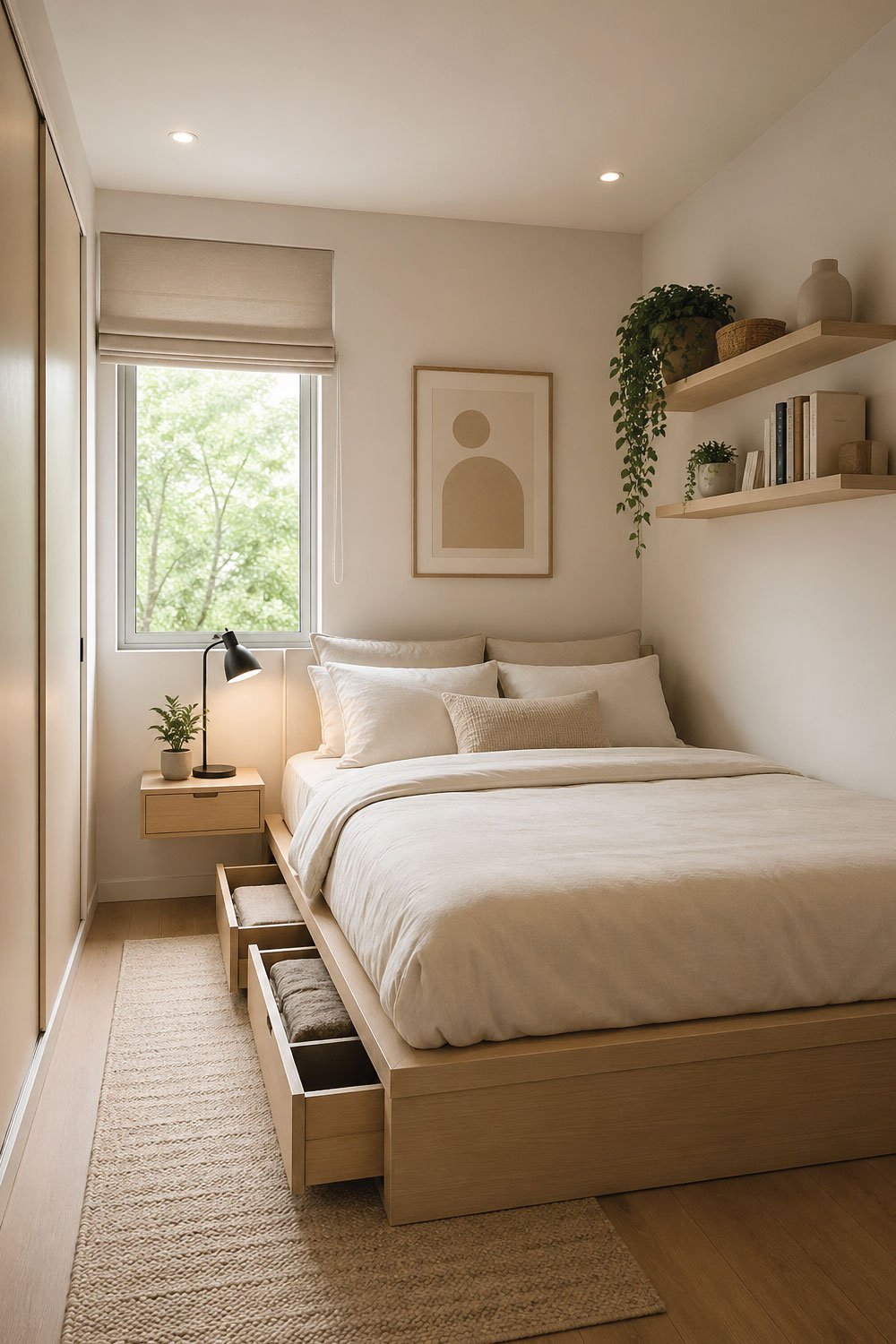
When exploring very small bedroom ideas, the bed should always be your starting point. Slim frames, platform designs, and low-profile structures help maintain openness while still offering comfort and support. Avoid heavy designs that block visual flow or make the space appear smaller than it actually is overall.
- Use full-size bed instead of queen in small rooms.
- Prefer platform or low-profile bed frames.
- Avoid bulky headboards and footboards.
- Keep bed placement against longest wall.
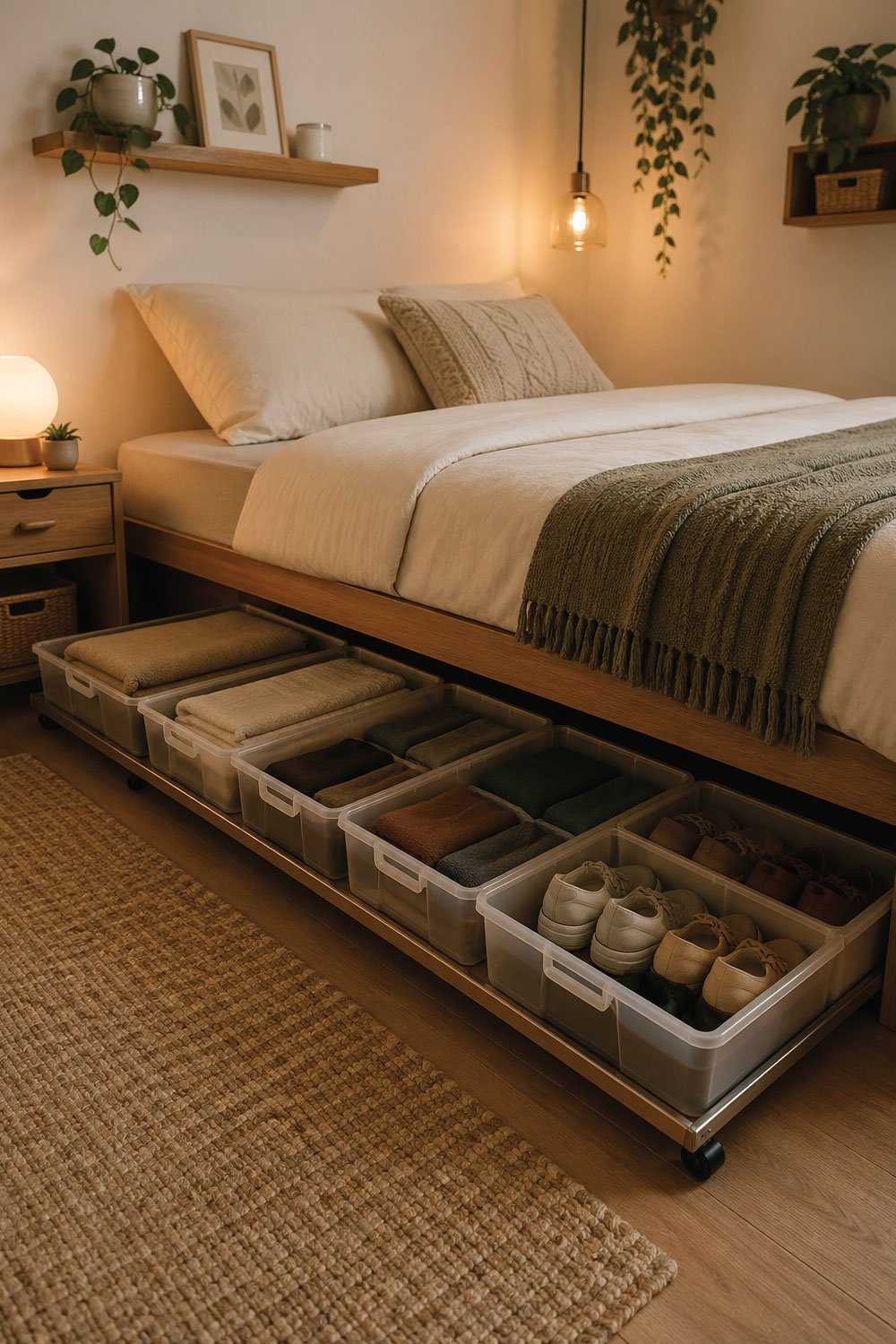
- Choose beds with built-in storage drawers.
- Maintain walking clearance around bed.
- Use light-colored bedding for openness.
- Opt for minimalist bed design styles.
- Measure room before buying furniture.
2. Go Vertical with Storage
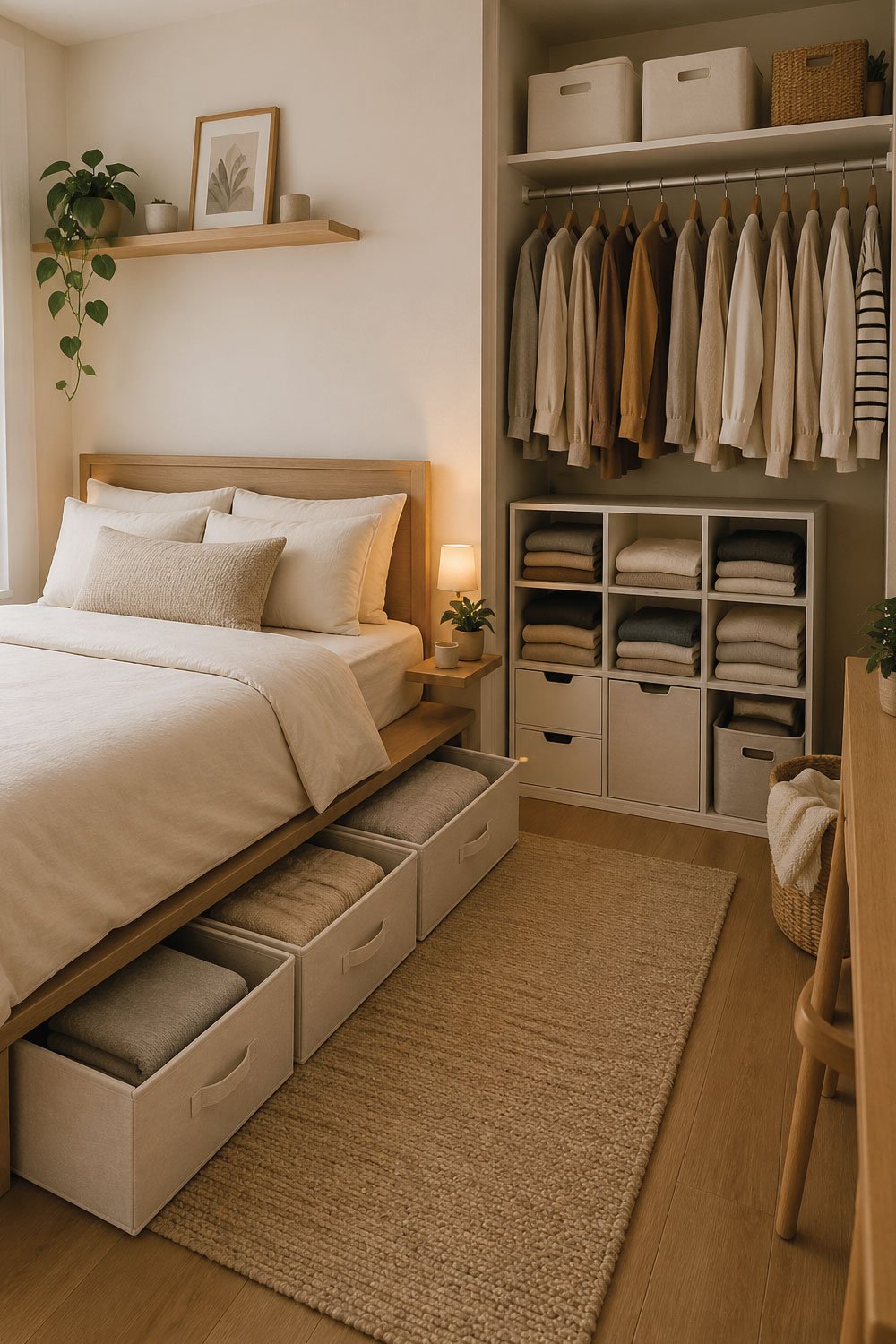
In small bedrooms, vertical space is often underused even though it offers significant storage potential. Utilizing walls for shelves, cabinets, and hanging storage helps free up valuable floor area, making the room feel less cluttered and more functional for everyday use and organization needs overall.
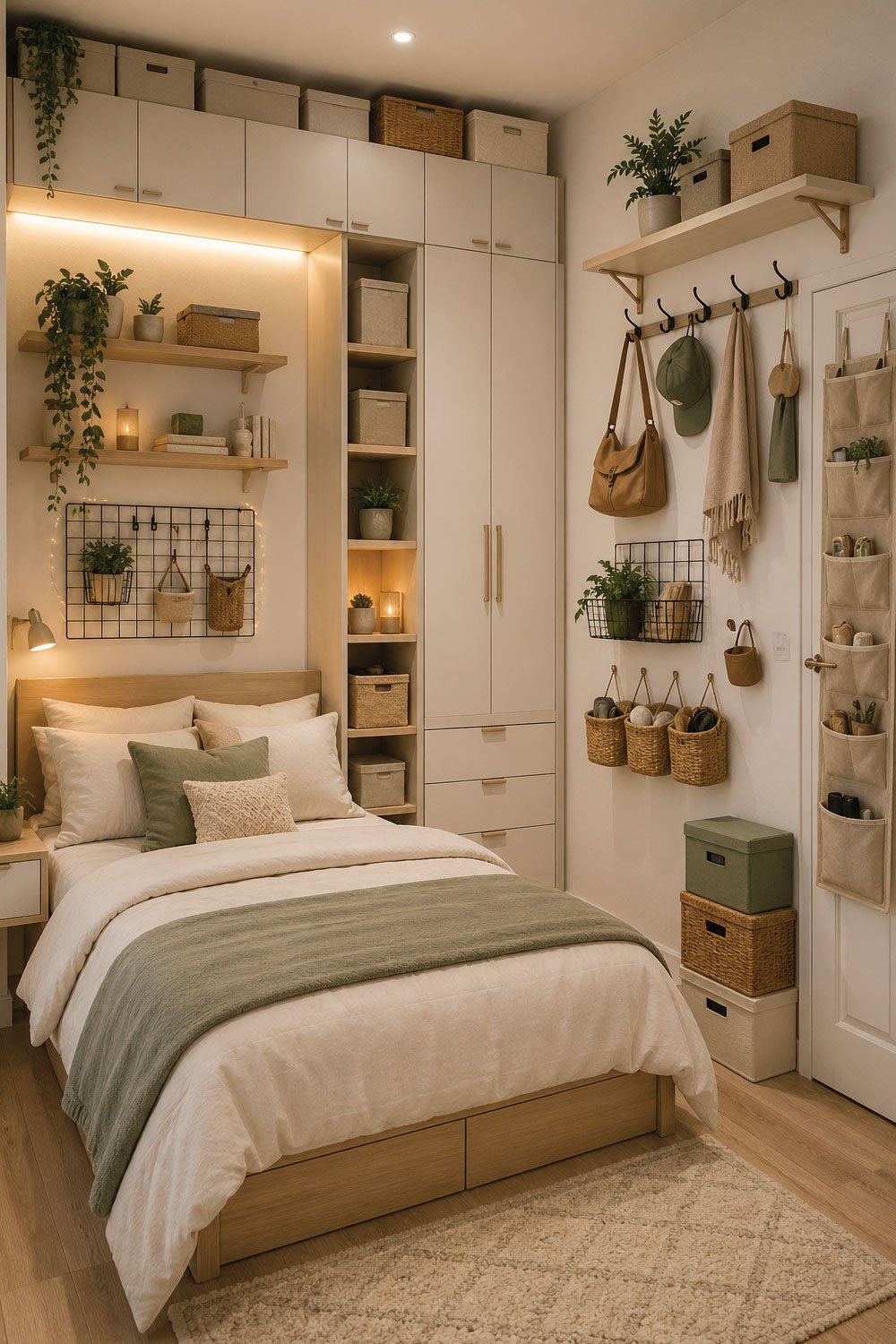
Adding vertical storage is one of the most effective small bedroom strategies I have personally used. Floating shelves above furniture, tall wardrobes, and wall mounted units help maximize height. This approach keeps essentials accessible while creating a cleaner layout that visually expands the room upward and improves overall organization efficiency.
- Install floating shelves above bed or desk.
- Use tall wardrobes for maximum vertical storage.
- Mount hooks on walls for accessories.
- Add overhead cabinets for extra storage.
- Use wall grids for flexible organization.
- Hang storage baskets on walls.
- Utilize door mounted organizers.
- Stack storage boxes vertically.
- Keep floor space as clear as possible.
3. Use Light Colors to Open Up the Room
Light colors play a powerful role in making a tiny bedroom feel more spacious and airy. Soft tones reflect natural light better than darker shades, reducing visual heaviness and creating a calm, open atmosphere that enhances comfort and relaxation within compact living environments overall significantly improves perception.
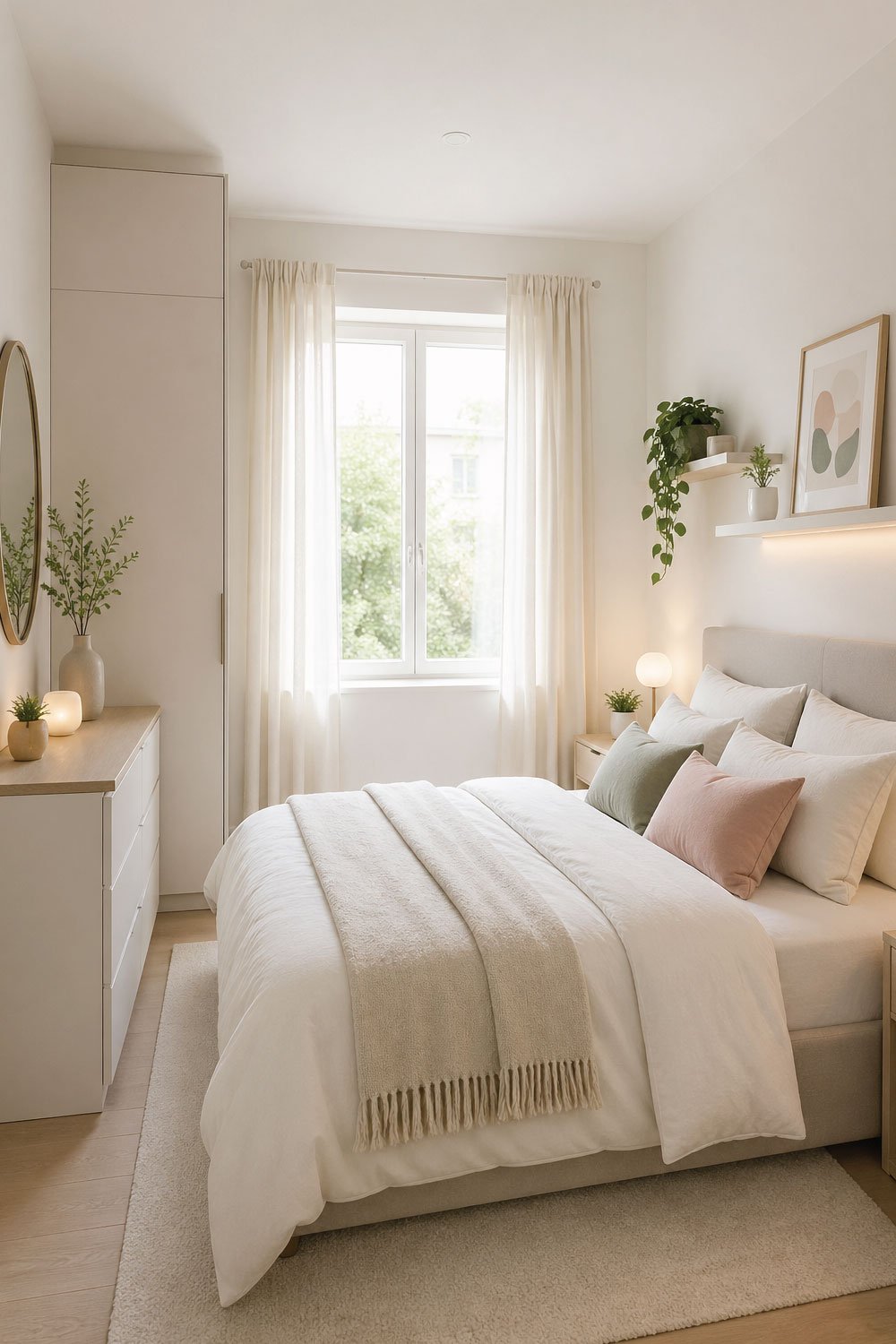
I recommend using neutral palettes like white, beige, or soft gray for walls and large furniture pieces. If you prefer bold colors, apply them in smaller accents such as cushions or artwork. This maintains balance while keeping the overall space visually open and uncluttered effectively.
- Use white or off white wall paint.
- Choose soft gray or beige tones.
- Keep furniture colors neutral.
- Limit dark color usage on large surfaces.
- Add color through pillows and throws.
- Use light colored curtains.
- Match bedding with light tones.
- Avoid overly busy patterns.
- Maintain consistent color palette throughout room.
4. Install Mirrors Strategically
Mirrors are one of the most effective tools for enhancing small bedroom spaces because they reflect both light and surroundings. Proper placement can instantly make a room feel larger, brighter, and more dynamic without requiring structural changes or expensive renovations in most cases whatsoever applied.
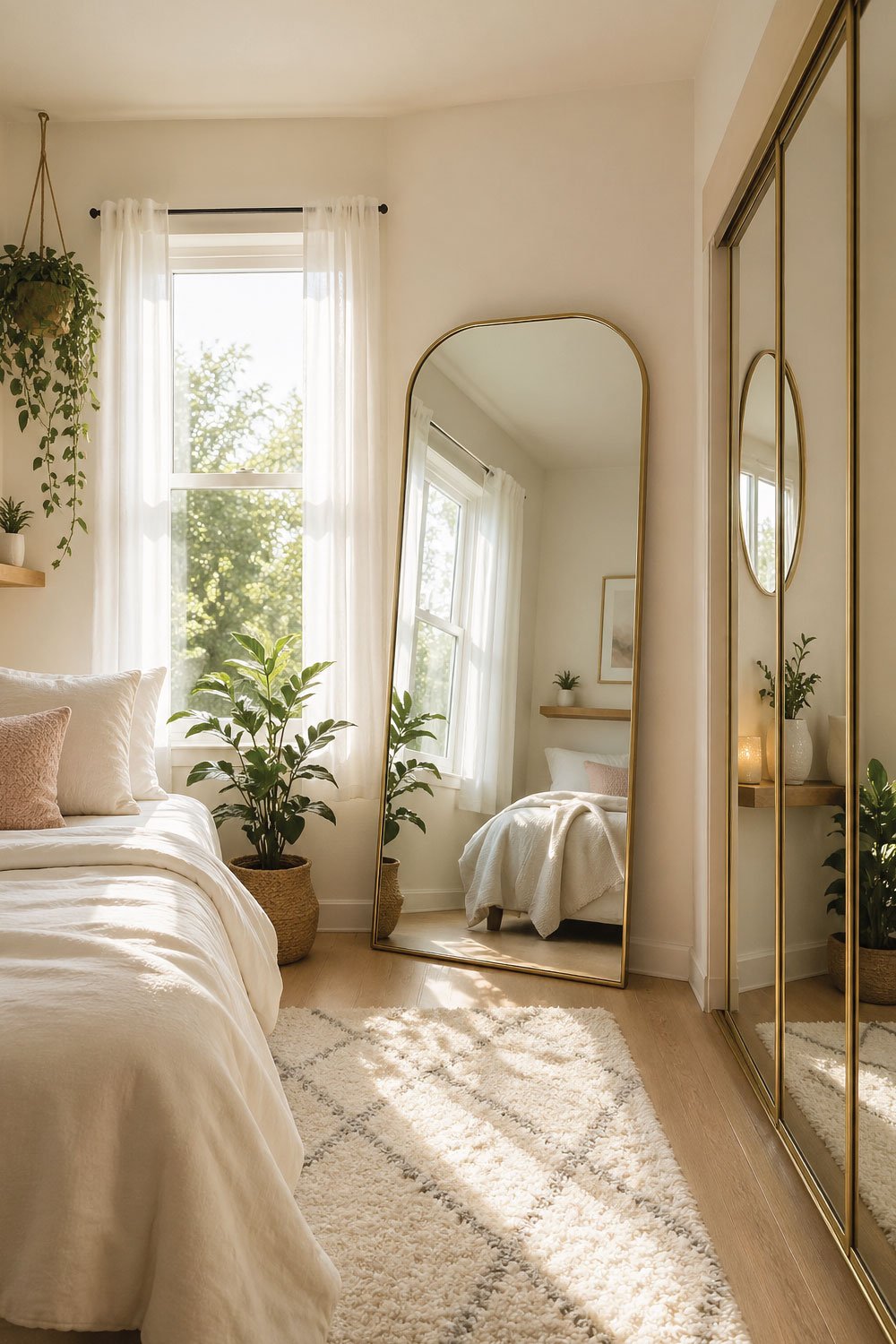
I placed a full length mirror opposite my window and immediately noticed how it amplified natural light throughout the room. Mirrored closet doors or decorative wall mirrors can also create the illusion of depth, making even the smallest bedrooms appear more open and spacious visually enhanced.
- Place mirror opposite window for light reflection.
- Use full-length mirrors for vertical expansion effect.
- Install mirrored closet doors.
- Add decorative wall mirrors strategically.
- Position mirrors near light sources.
- Avoid cluttered reflections.
- Use round mirrors for soft aesthetic.
- Combine multiple small mirrors for effect.
- Keep mirrors clean for maximum brightness.
5. Multi-Functional Furniture Is a Must
In a tiny bedroom, every piece of furniture should serve more than one purpose to maximize efficiency. Multi functional furniture reduces clutter while increasing usability, making it easier to maintain a clean, organized, and visually balanced environment even in extremely limited square footage spaces overall efficiently.
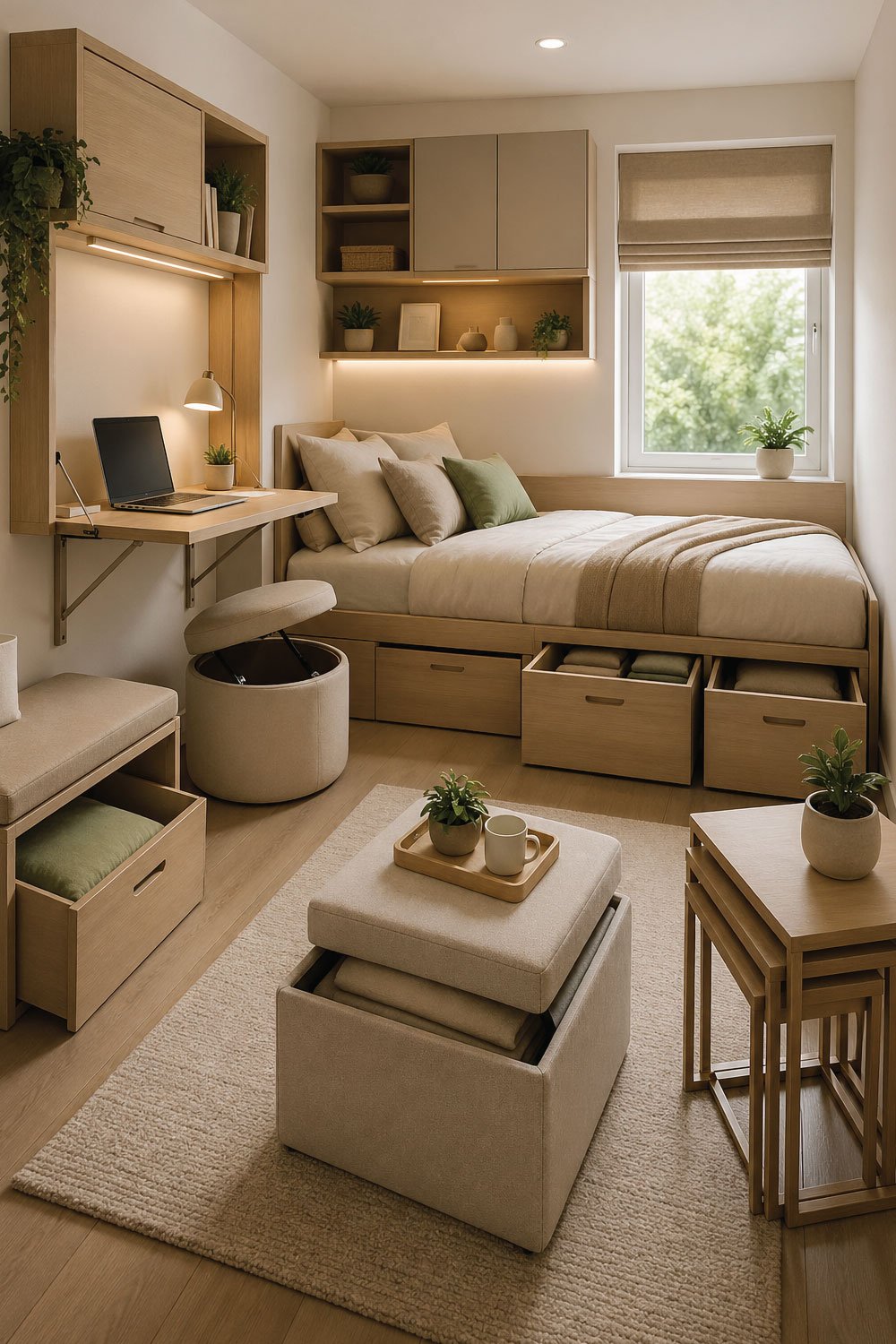
I replaced traditional single use items with smarter alternatives like storage ottomans and beds with drawers underneath. Foldable desks and stackable stools also help save space. These compact solutions ensure that even the smallest rooms remain functional without sacrificing comfort or everyday practicality effectively maximizing utility.
- Use storage ottoman instead of chair.
- Choose beds with built in drawers.
- Select foldable desks for flexibility.
- Use nesting or stackable tables.
- Opt for benches with hidden storage.
- Prefer wall mounted desks.
- Use multi use seating furniture.
- Choose collapsible furniture items.
- Avoid single purpose bulky furniture.
6. Keep the Layout Simple and Open
A simple and open layout is essential in small bedrooms because overcrowding the space with unnecessary furniture creates visual chaos. By prioritizing only essential items and maintaining clear pathways, the room feels larger, more breathable, and significantly more comfortable for daily movement and use overall.
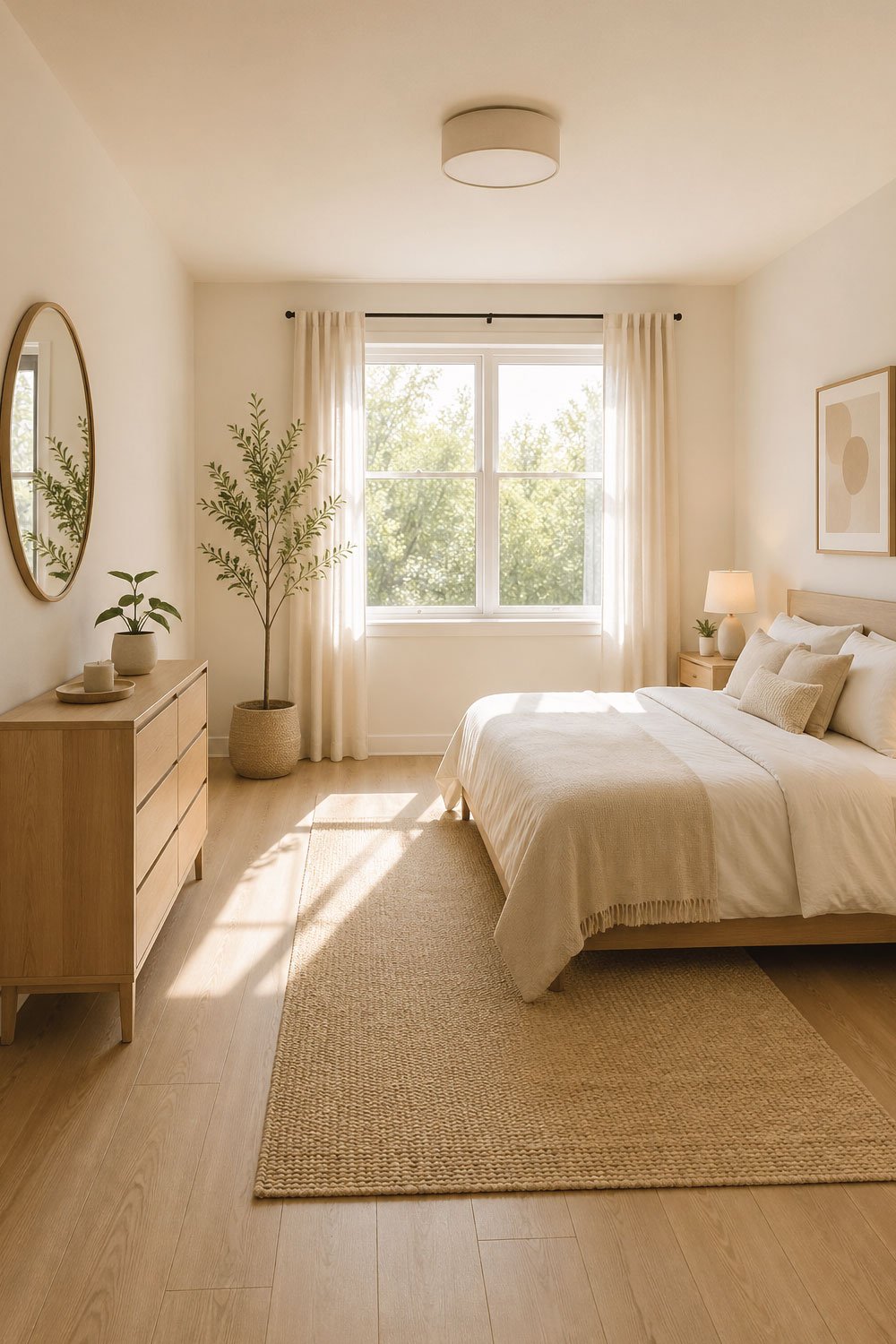
I removed unnecessary furniture and repositioned my bed against the longest wall, which instantly improved movement flow. Keeping open floor space helps reduce stress visually and makes cleaning easier. A minimal layout ensures the bedroom remains functional, calm, and easy to navigate daily with simplicity.
- Keep only essential furniture pieces.
- Maintain clear walking pathways.
- Place bed against longest wall.
- Avoid overcrowding corners.
- Reduce decorative clutter.
- Keep floor space open.
- Limit furniture to multifunctional items.
- Improve natural movement flow.
- Prioritize simplicity over excess décor.
Also Read:
16 Small Bedroom Ideas for Adults with Fairy Light Magic and Pink Decor
Final Thoughts:
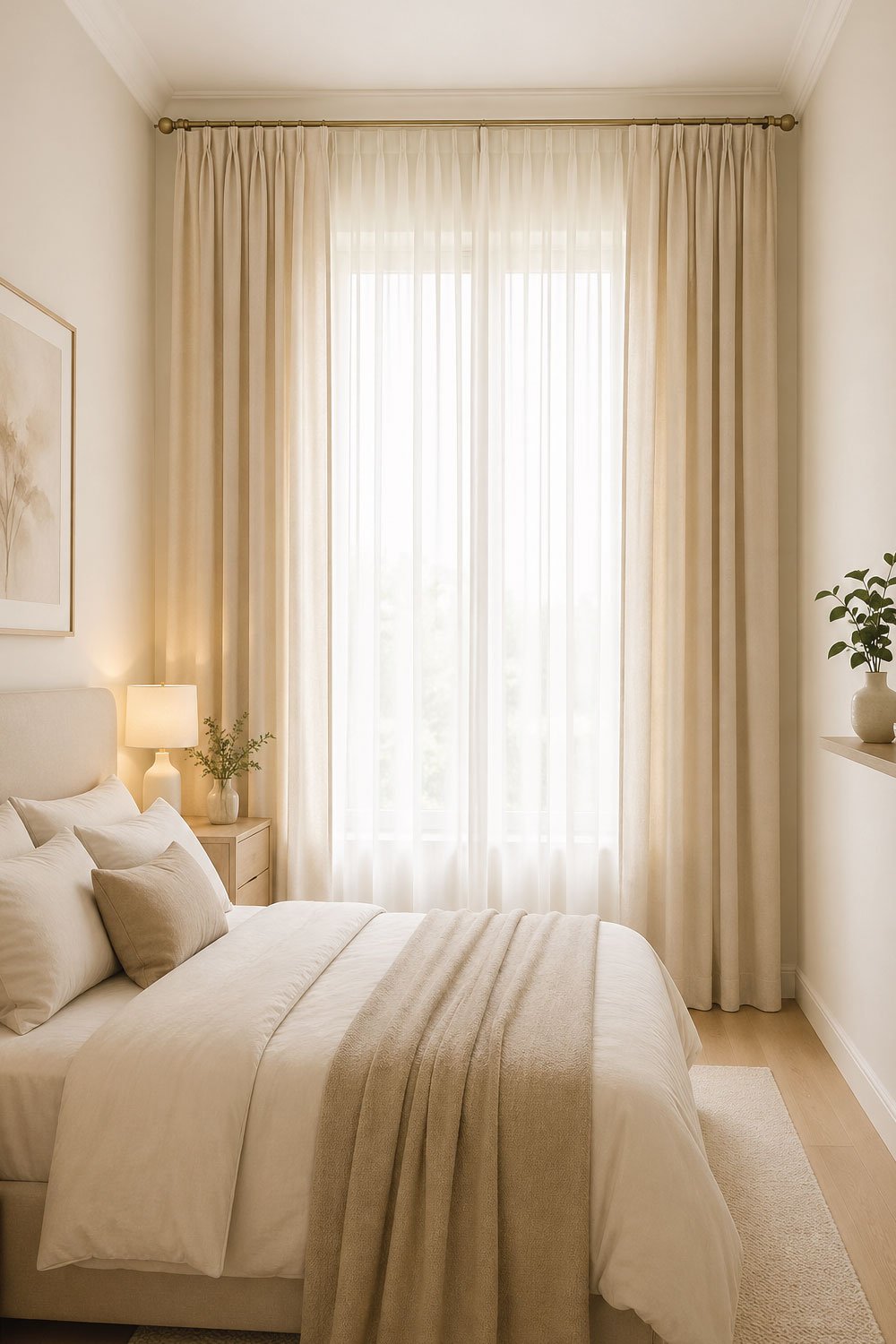
After living in a tiny bedroom for years, I can confidently say that size doesn’t define comfort or style. With thoughtful planning, smart furniture choices, and intentional decor, small spaces can feel just as luxurious as large ones.
These ideas for tiny bedrooms are not just theory they come from real experience, trial and error, and gradual improvement. Whether you are working with very small bedroom ideas or simply want better small bedroom ideas, the key is to think creatively and purposefully.
A tiny bedroom is not a limitation it is an opportunity to design smarter, live lighter, and create a space that truly works for you.
