
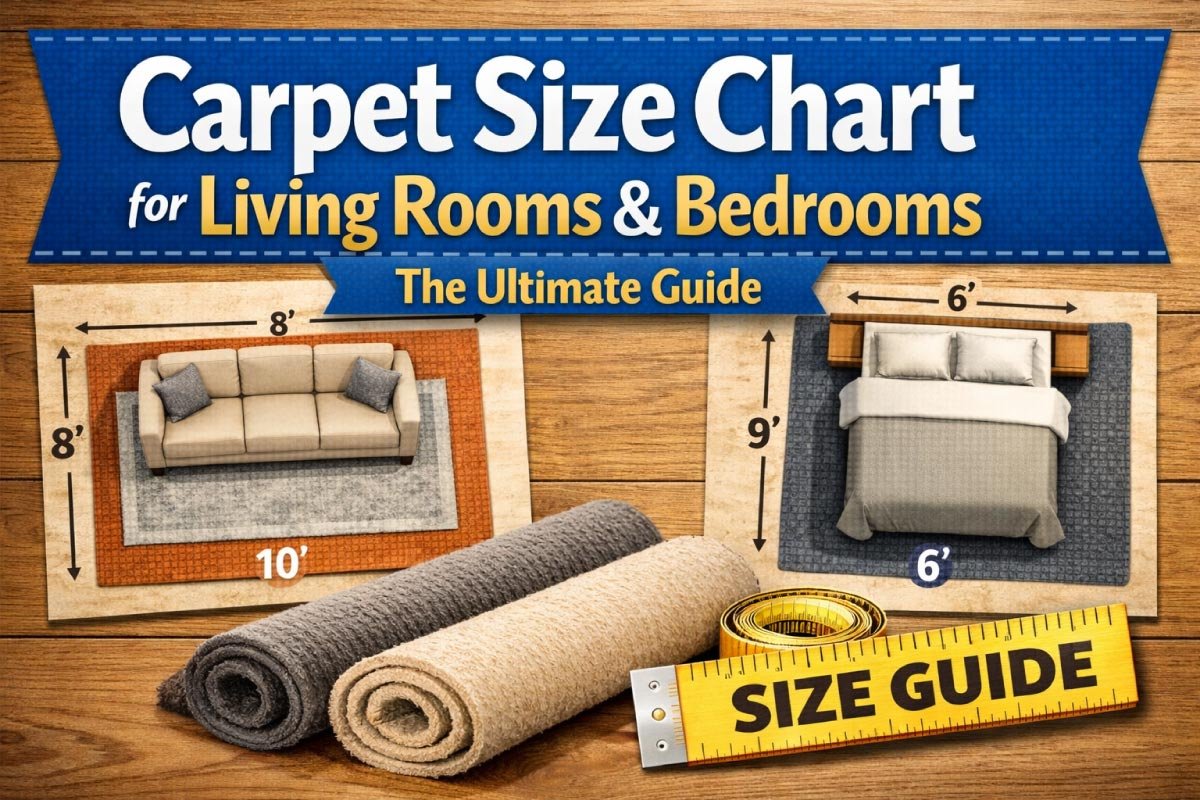
Choosing the right carpet size for your living room or bedroom is crucial to balance style, comfort, and functionality.
A carpet not only adds warmth and texture to a room but also defines spaces, especially in open layouts.
Selecting the correct size ensures your furniture is well-proportioned, the room looks visually appealing, and you avoid awkward gaps or overly crowded areas.
This guide covers recommended carpet sizes, placement tips, and style considerations for both living rooms and bedrooms.
Understanding Carpet Sizes for Living Rooms
Living rooms are often the heart of the home, hosting both family gatherings and casual relaxation.
Carpets in this space serve multiple purposes: grounding furniture, adding visual cohesion, and creating cozy zones.
Selecting the right size depends on your living room dimensions and furniture arrangement. Standard living room carpets range from 5×8 feet for smaller areas to 12×15 feet for larger open layouts.
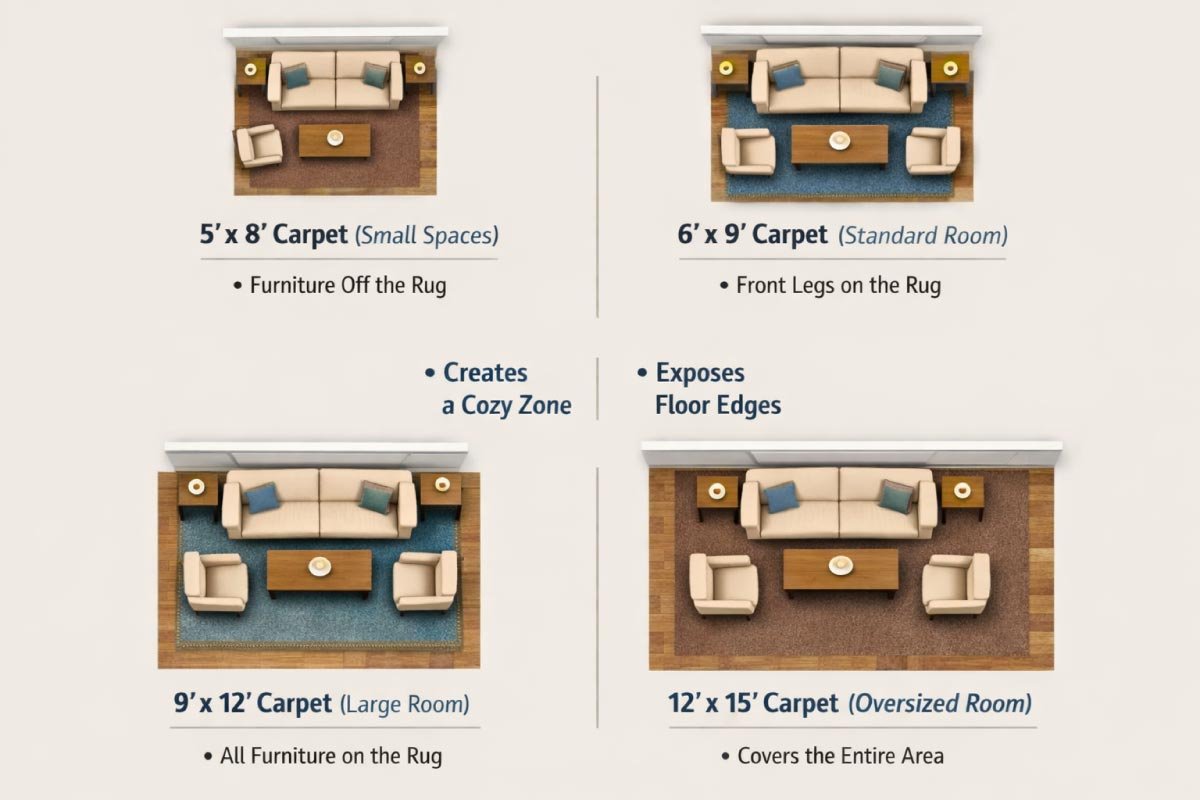
A well-fitted carpet should ideally allow your sofa and chairs to sit fully or partially on it.
For example, in a standard 10×12 feet living room, a 6×9 feet carpet often works perfectly under a coffee table while leaving some floor space visible around the edges.
Oversized carpets can make a room feel more intimate, whereas smaller carpets create a floating effect that emphasizes the surrounding flooring.
Recommended Carpet Sizes for Living Rooms
Choosing the right carpet size can transform a living room, balancing comfort and style while anchoring your furniture.
This table offers practical recommendations based on room dimensions, showing ideal carpet sizes, furniture placement tips, and helpful notes to create a harmonious, inviting space for every living room layout.
| Living Room Size (ft) | Carpet Size (ft) | Furniture Placement Tips | Notes |
|---|---|---|---|
| 10 × 12 | 6 × 9 | Coffee table centered, sofa front legs on carpet | Small room, balanced look |
| 12 × 14 | 8 × 10 | Sofa and chairs on carpet, coffee table fully on | Medium-sized room |
| 14 × 18 | 9 × 12 | Sofa and side chairs fully on carpet | Large room, defines seating area |
| 18 × 20 | 12 × 15 | All furniture fully on carpet | Open plan, cozy central zone |
Carpet Sizes for Bedrooms: Comfort and Style
In bedrooms, carpets serve both aesthetic and functional purposes. They provide warmth underfoot, reduce noise, and add a layer of luxury. The size of a bedroom carpet depends on bed size and room layout.
A common approach is to extend the carpet 2–3 feet beyond the sides and foot of the bed. For a queen bed (60×80 inches), an 8×10 feet carpet works well, giving space for walking on either side without touching cold flooring.
King beds (76×80 inches) often pair best with 9×12 feet carpets, ensuring adequate coverage around the bed while maintaining proportion with the room.
For smaller single or twin beds, 5×8 feet rugs usually suffice, providing warmth and a touch of design without overwhelming the space.
Recommended Carpet Sizes for Bedrooms
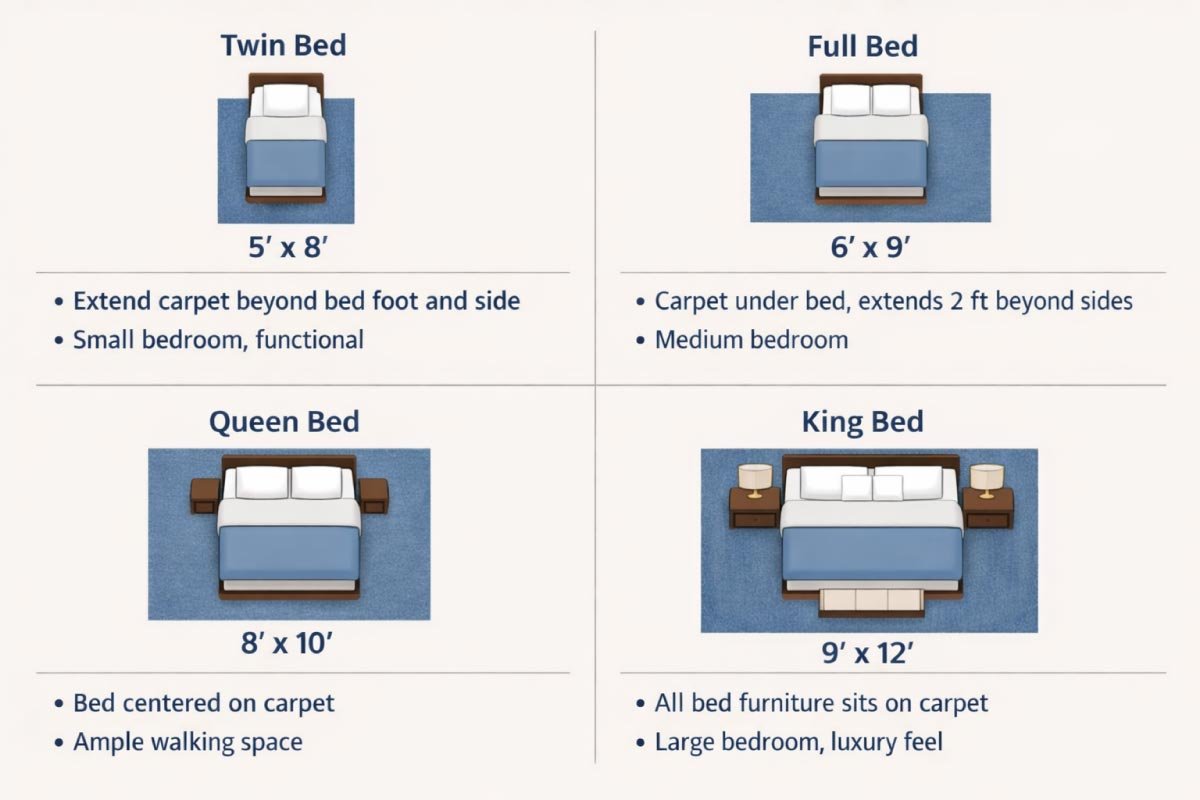
Selecting the right carpet for a bedroom enhances comfort, style, and functionality.
This table provides recommended carpet sizes for different bed dimensions, along with placement tips and notes.
It helps create a cozy, balanced space while ensuring enough walking area and a polished look for bedrooms of all sizes.
| Bed Size | Carpet Size (ft) | Placement Tips | Notes |
|---|---|---|---|
| Twin (38×75) | 5 × 8 | Extend carpet beyond bed foot and side | Small bedroom, functional |
| Full (54×75) | 6 × 9 | Carpet under bed, extends 2 ft beyond sides | Medium bedroom |
| Queen (60×80) | 8 × 10 | Bed centered on carpet, ample walking space | Standard bedroom |
| King (76×80) | 9 × 12 | All bed furniture sits on carpet | Large bedroom, luxury feel |
Also Read:
Choosing the Perfect Carpet Size: A Complete Guide
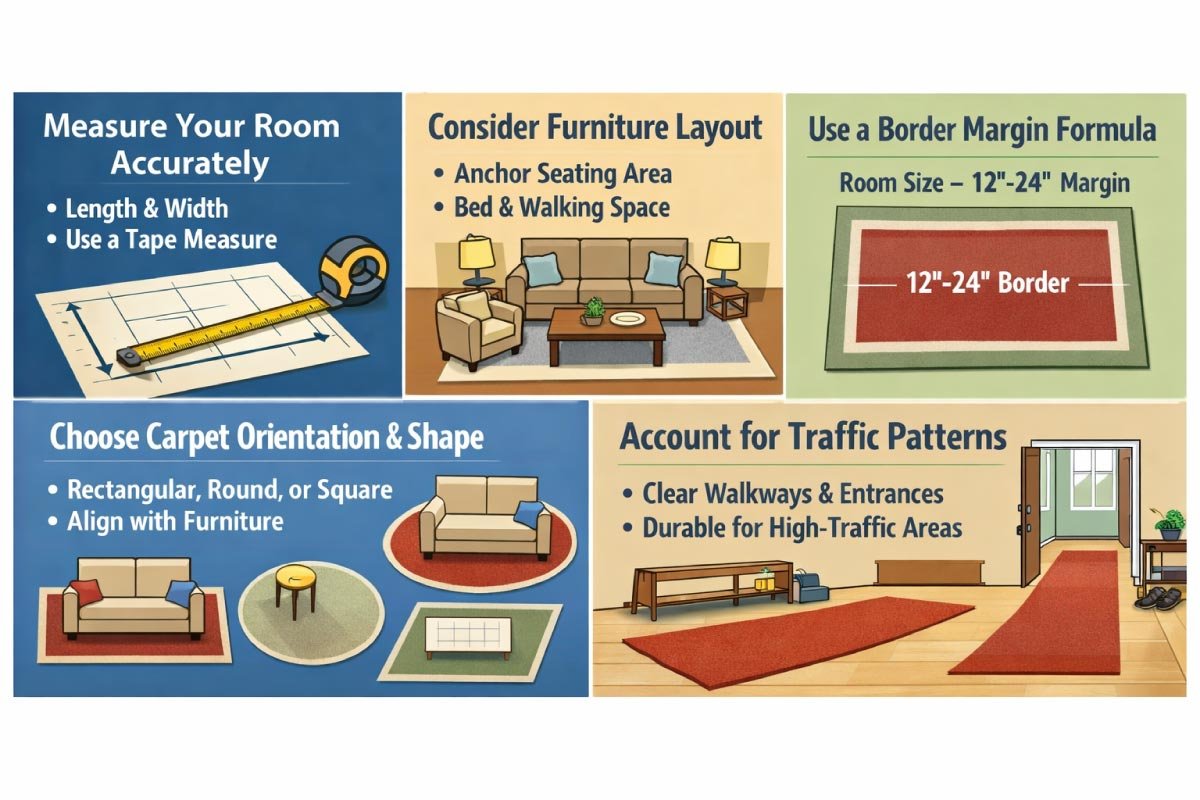
Selecting the right carpet size can transform a room’s appearance and comfort. Accurate measurements, furniture placement, and traffic patterns all play crucial roles.
A well-sized carpet anchors your space, highlights décor, and prevents overcrowding.
By understanding your room dimensions and planning borders, you ensure the carpet fits seamlessly while enhancing both style and functionality.
Also Read:
1. Measure Your Room Accurately
Before selecting a carpet, carefully measure the room’s length and width using a tape measure.
Include any alcoves or irregular spaces that may affect placement. Record dimensions in feet or meters.
This step ensures you know the maximum carpet size that fits comfortably without overlapping baseboards or creating awkward gaps around furniture.
2. Consider Furniture Layout
Furniture placement directly impacts carpet choice. In living rooms, measure the seating area including sofas, chairs, and coffee tables to ensure the carpet anchors the furniture.
In bedrooms, include the bed footprint plus walking space.
A carpet that fits furniture correctly helps define the area, avoids floating pieces, and creates a balanced, visually appealing arrangement.
3. Use a Border Margin Formula
A simple formula helps achieve perfect proportions: Carpet Size = Room Size − Border Margin.
Typically, leaving a 12–24 inch border around the carpet works best.
This ensures the rug complements rather than overwhelms the space.
Borders add visual balance and prevent the room from appearing cramped while maintaining proper clearance around walls and furniture.
4. Choose Carpet Orientation and Shape
Carpet shape and orientation influence room flow. Rectangular carpets suit beds and seating groups,
while square or round rugs highlight smaller zones or accent corners. Consider traffic patterns and focal points.
Aligning the carpet with furniture creates harmony, while the right shape adds dimension. Improper orientation may make the space look uneven or obstruct movement.
5. Account for Traffic Patterns
High-traffic areas need careful consideration when sizing a carpet.
Leave extra space around walkways, doorways, and entry points so the carpet doesn’t feel cramped.
Durable materials are recommended in these zones.
Proper planning prevents wear, ensures safety, and keeps the carpet functional. Strategic placement prolongs its life while maintaining a comfortable, open environment.
Common Carpet Shapes and Their Uses
While size matters, the shape of your carpet also influences room aesthetics.
Rectangular rugs are the most versatile and widely used in both bedrooms and living rooms.
Square carpets are ideal for small areas, reading nooks, or accent zones. Round rugs work beautifully under circular tables or in bedrooms with a minimalist design.
Carpet Shapes and Suggested Placement
Choosing the right carpet shape can dramatically enhance a room’s flow and style.
This table outlines popular carpet shapes, ideal room uses, placement tips, and notes.
It helps match carpets to furniture arrangements and room dimensions, ensuring both functionality and aesthetic appeal while adding comfort and visual interest to any space.
| Carpet Shape | Ideal Room Use | Placement Tips | Notes |
|---|---|---|---|
| Rectangular | Living rooms, bedrooms | Under sofa sets, beds, and coffee tables | Most common and versatile |
| Square | Small bedrooms or corner zones | Centered in small areas or reading nooks | Great for layering |
| Round | Dining areas, bedrooms | Center under round tables or beds | Adds softness and visual interest |
| Runner | Hallways, bedside paths | Along narrow walkways | Functional and decorative |
Shape and size must complement furniture arrangement and room dimensions.
For example, an oversized rectangular carpet under a sofa creates a grounded seating area, while a round rug under a side table adds a playful accent.
Also Read:
Style Tips and Layering Ideas
Carpets are not just functional — they are a statement piece. Layering smaller rugs on top of larger ones can create a rich, textured look.
Neutral carpets serve as a base for colorful furniture, while patterned rugs act as focal points.
Material choice also matters: wool is durable and soft, synthetic fibers are budget-friendly and stain-resistant, and jute or sisal rugs add natural texture.
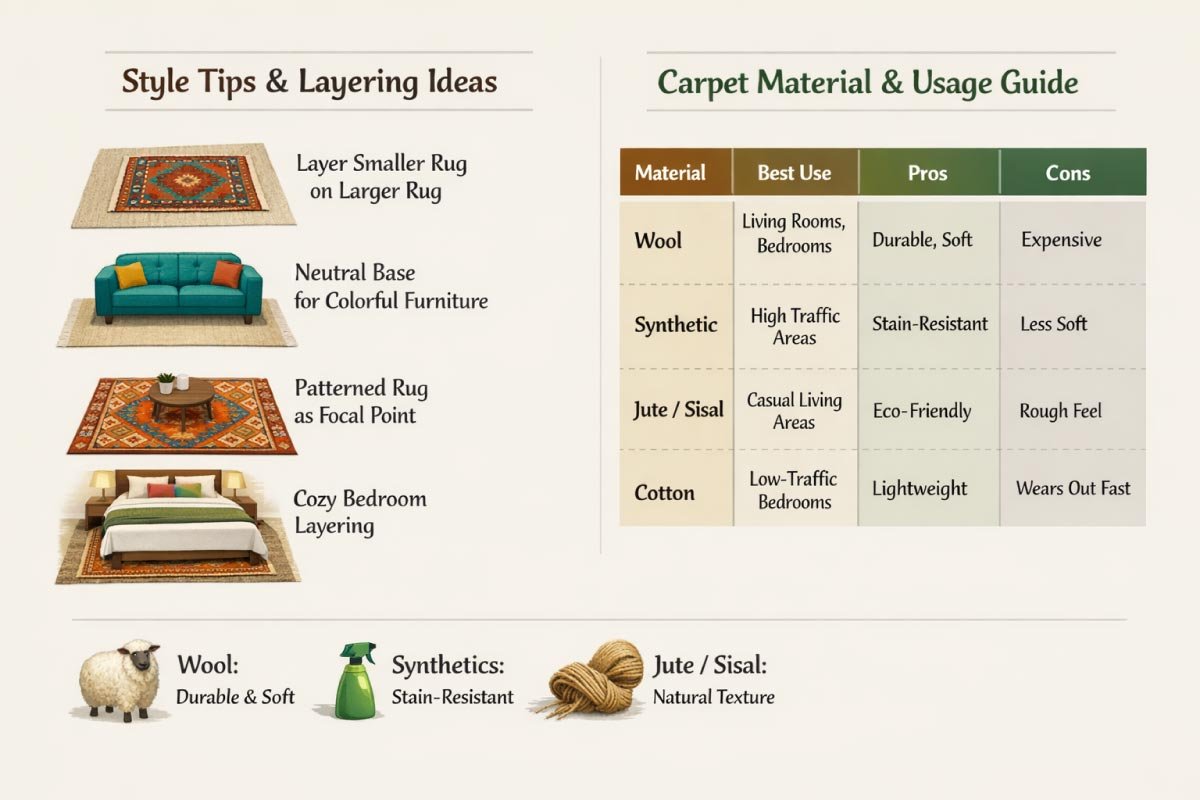
When layering, ensure the base rug is slightly larger than the top rug to frame it effectively.
In bedrooms, layering can add warmth at the foot of the bed or highlight a reading corner.
In living rooms, a neutral large rug with a smaller patterned rug on top can create a visually appealing seating zone.
Carpet Material and Usage Guide
Selecting the right carpet material affects comfort, durability, and style.
This table highlights popular carpet materials, their best uses, advantages, and disadvantages.
Understanding these factors helps you choose a carpet that suits your room’s function, traffic level, and aesthetic preferences, ensuring long-lasting beauty and practical performance for every space.
| Material | Best Use | Pros | Cons |
|---|---|---|---|
| Wool | Living rooms, bedrooms | Durable, soft, insulating | Expensive, may shed initially |
| Synthetic | High traffic areas | Affordable, stain-resistant | Less soft, less luxurious feel |
| Jute / Sisal | Casual living areas | Natural texture, eco-friendly | Rough underfoot, not ideal for bedrooms |
| Cotton | Low-traffic bedrooms | Soft, lightweight, washable | Wears quickly in high traffic |
Final Tips for Choosing the Right Carpet Size
Choosing the perfect carpet size can transform any room, making it feel cozy, stylish, and well-proportioned.
The right carpet balances furniture, foot traffic, and visual appeal.
These practical tips help you select a size that complements your space, enhances comfort, and elevates your home décor effortlessly.
-
Measure Twice: Always double-check room dimensions and furniture layout before buying.
-
Consider Function: High-traffic areas need durable carpets, while bedrooms prioritize softness.
-
Leave Borders: Avoid wall-to-wall coverage; 12–24 inches of exposed floor looks elegant.
-
Match Room Aesthetics: Choose a size, shape, and material that complements your furniture and décor style.
-
Test Layouts: If possible, use painter’s tape to outline the carpet area on the floor to visualize placement.
By following these guidelines, you can confidently select the perfect carpet size for your living room or bedroom. The right carpet enhances comfort, ties together your décor, and creates a welcoming space.
Also Read:

I am Engineer Hassan, a professional engineer with over 15 years of experience in measurements, design accuracy, and furniture, appliance, and home product sizing. Through Size Helper, I provide research-based guides and trending 2026 home design ideas for living rooms, bedrooms, sofas, wall décor, fashion, and sports—helping users make confident, informed decisions. Every guide is written with real expertise, verified data, and a commitment to quality, usability, and style.