
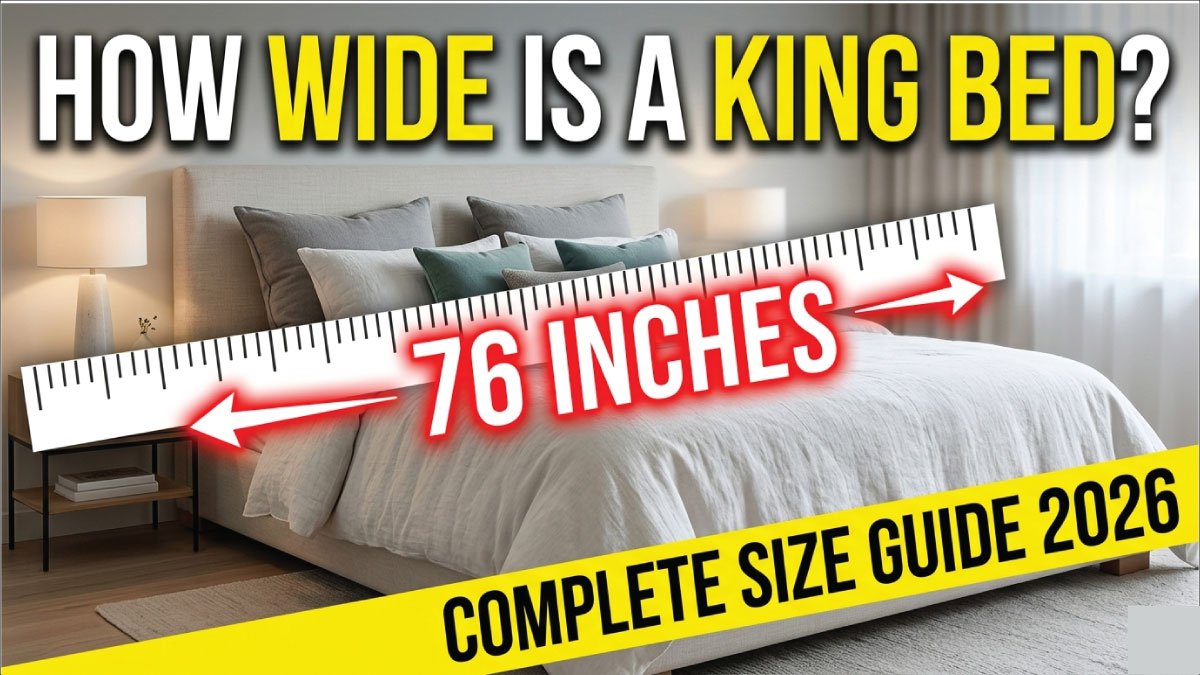
When it comes to comfort, space, and luxury, a king size bed is often the top choice for homeowners. Whether you’re upgrading your bedroom or buying furniture for a new home, one of the most common questions people ask is: how wide is a king size bed?
In this complete guide, we’ll break down exact dimensions, compare different types of king beds, and help you decide if a king size bed is right for your space.
Standard Width of a King Size Bed
A standard king size bed (also known as an Eastern King) measures:
- Width: 76 inches (193 cm)
- Length: 80 inches (203 cm)
This makes it the widest standard bed size available, offering maximum sleeping space for couples.
What does 76 inches wide mean?
- Each person gets about 38 inches of personal space
- That’s roughly the same width as a twin bed per person
- Ideal for couples who prefer extra room or have kids/pets sharing the bed
King Size Bed Dimensions Chart
Here’s a quick comparison of different king bed types:
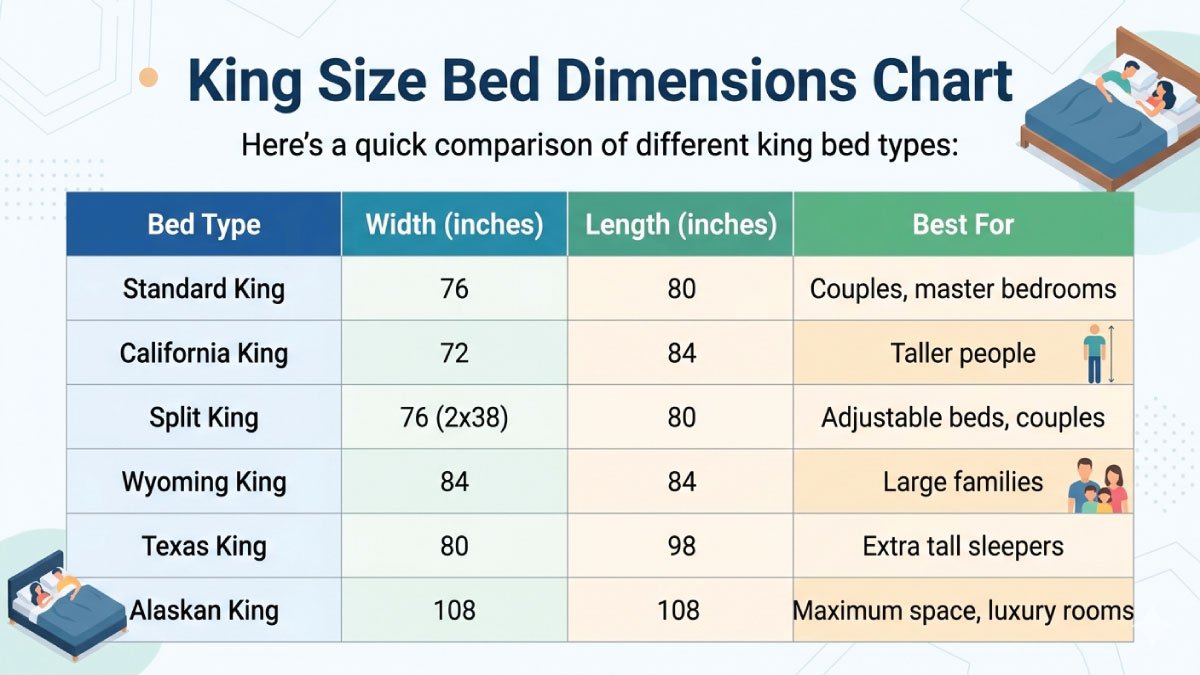
| Bed Type | Width (inches) | Length (inches) | Best For |
|---|---|---|---|
| Standard King | 76 | 80 | Couples, master bedrooms |
| California King | 72 | 84 | Taller people |
| Split King | 76 (2×38) | 80 | Adjustable beds, couples |
| Wyoming King | 84 | 84 | Large families |
| Texas King | 80 | 98 | Extra tall sleepers |
| Alaskan King | 108 | 108 | Maximum space, luxury rooms |
King vs California King: Width Difference
Many people confuse a king bed with a California king, but they are not the same. While both fall into the “king” category, they are designed for different needs and room types. Understanding the difference is important because choosing the wrong one can affect your comfort, room layout, and overall sleep quality.
Key Differences:
1- King Bed Width: 76 inches
A standard king bed offers the maximum width among standard mattress sizes. It provides plenty of horizontal space, making it ideal for couples who value personal space while sleeping. This extra width is especially useful if you move a lot during sleep or share your bed with children or pets.
2- California King Width: 72 inches
A California king is slightly narrower than a standard king. While 4 inches may not sound like a huge difference, it can be noticeable in real-life use, especially for couples who prefer extra elbow room.
👉 A standard king bed is 4 inches wider than a California king.
This additional width can make a significant difference in comfort, especially for people who prioritize space over length.
However:
California king is longer (84 inches): The California king is designed with taller individuals in mind. Its extra length ensures that people over 6 feet tall can stretch out comfortably without their feet hanging off the edge.
King is wider but shorter: The standard king focuses on width rather than length, making it better suited for couples who want more side-to-side sleeping space rather than extra legroom.
Which one should you choose?
Choose King if you want more side-to-side space: If you and your partner value personal sleeping space, the standard king is the better option. It reduces sleep disturbances and provides a more relaxed sleeping experience.
Choose California King if you’re taller than 6 feet: If height is your main concern, the California king is the smarter choice. It ensures proper body support from head to toe, improving sleep posture and comfort.
How Much Space Do You Need for a King Bed?
Before buying a king size bed, you need to ensure your room is large enough. A king bed is a substantial piece of furniture, and without proper planning, it can overwhelm your space and reduce functionality.
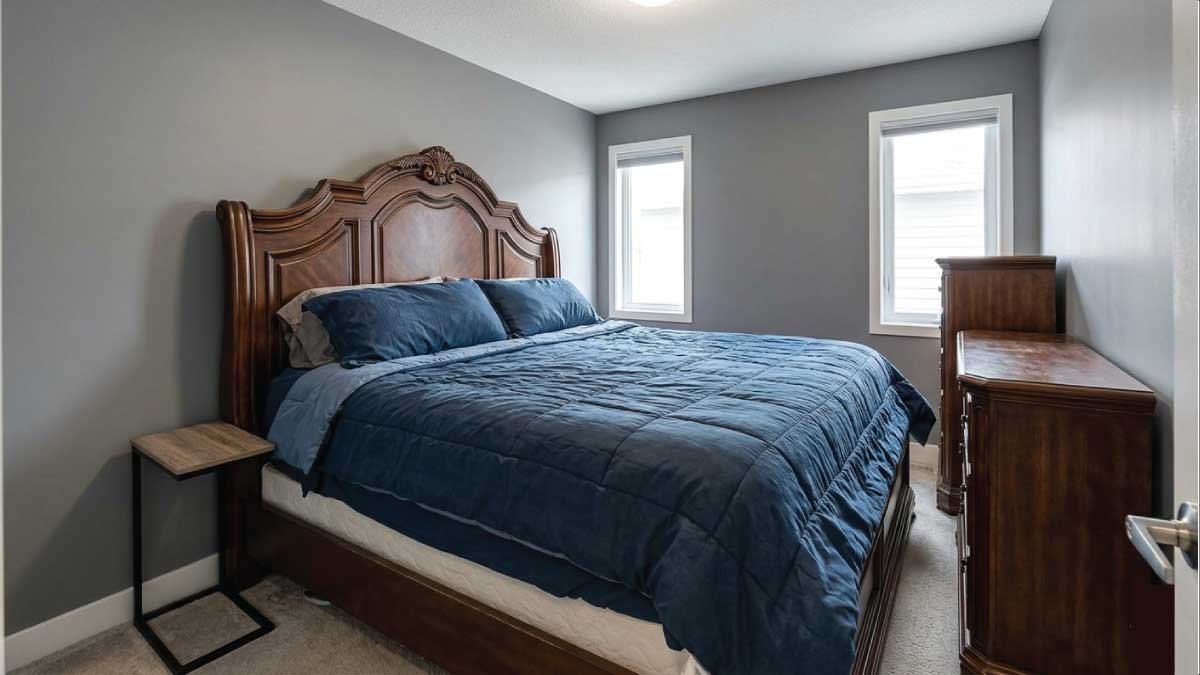
Recommended Room Size:
1- Minimum: 12 x 12 feet: This is the absolute minimum room size where a king bed can fit. However, the space may feel tight, especially if you plan to add other furniture.
2- Ideal: 13 x 13 feet or larger: This size allows for better movement, balanced furniture placement, and a more comfortable overall layout. It also helps maintain a visually pleasing and clutter-free environment.
Why space matters:
A king bed is 76 inches wide, but you also need room for:
Walking space: You need enough clearance to move around the bed comfortably. Tight spaces can make daily activities like making the bed or cleaning more difficult.
Nightstands: Most bedrooms include bedside tables for lamps, phones, or decor. Without enough space, your room may look incomplete or cramped.
Dressers: Storage furniture like dressers or wardrobes requires additional room. A king bed should not block access to these essential pieces.
Door clearance: Doors, closets, and windows need space to open properly. A large bed can interfere with these if not planned correctly.
👉 Leave at least 24–30 inches of space around the bed for comfort.
This spacing ensures ease of movement and creates a more open, breathable bedroom layout.
Is a King Size Bed Too Wide for Small Rooms?
Yes, a king size bed can feel overwhelming in a small bedroom. While it may technically fit, it can negatively impact both functionality and aesthetics.
Problems in small rooms:
Limited walking space: A large bed can leave very little room to move around, making the space feel tight and inconvenient.
Furniture crowding: Adding a king bed may force you to remove or squeeze in other furniture, resulting in an unbalanced and cluttered look.
Poor airflow and visual clutter: Overcrowded rooms often feel stuffy and visually overwhelming, which can reduce comfort and relaxation.
Better alternatives:
If your room is small, consider:
Queen size bed (60 inches wide): A queen bed offers a great balance between comfort and space efficiency. It’s ideal for most average-sized bedrooms.
Full size bed (54 inches wide): A full bed is even more compact and works well for single sleepers or very small rooms.
👉 A king bed is best suited for medium to large bedrooms.
Choosing the right bed size based on your room ensures better comfort, functionality, and design harmony.
Benefits of a King Size Bed
A king size bed isn’t just about size—it’s about comfort and lifestyle. It enhances sleep quality and transforms your bedroom into a more luxurious and functional space.
1. Maximum Sleeping Space
With 76 inches of width, couples can sleep without disturbing each other. Each person gets enough personal space, reducing tossing, turning, and interruptions during the night.
2. Great for Families
Perfect if:
Kids join occasionally: Families with young children often find a king bed helpful for co-sleeping or weekend relaxation.
Pets sleep on the bed: Pet owners benefit from the extra space, allowing everyone to sleep comfortably without feeling cramped.
3. Luxury Feel
King beds instantly make your bedroom feel:
More premium: The large size gives a high-end, upscale appearance.
Hotel-like: Many luxury hotels use king beds, so having one at home recreates that experience.
Spacious: Even visually, a king bed adds a sense of openness and grandeur to the room.
4. Better Sleep Quality
More space = fewer disturbances = deeper sleep.
When you’re not constantly adjusting your position due to lack of space, your sleep becomes more restful and uninterrupted.
Drawbacks of a King Size Bed
While king beds are great, they’re not for everyone. It’s important to consider potential downsides before making a decision.
1. Requires Large Room
Not suitable for compact spaces. A king bed can dominate a small room, making it less functional and uncomfortable to use daily.
2. Higher Cost
Mattress cost is higher: King mattresses are more expensive due to their larger size and materials.
Bedding and accessories are expensive: Sheets, comforters, and bed frames for king beds also cost more compared to smaller sizes.
3. Difficult to Move
Heavy and bulky: King beds are large and heavy, making them harder to transport.
Hard to fit through doors or stairs: Moving a king mattress or frame can be challenging, especially in apartments or homes with narrow spaces.
King Size Bed Frame vs Mattress Width
It’s important to know that the bed frame may be slightly wider than the mattress. Many people overlook this detail and end up with fitting issues in their room.
Example:
- Mattress width: 76 inches
This is the standard width of a king mattress. - Frame width: 78–82 inches (depending on design)
Bed frames often include extra width for structure, headboards, or decorative elements.
👉 Always measure your space based on the full frame size, not just the mattress.
This ensures accurate planning and prevents unexpected space problems after purchase.
King Bed vs Queen Bed (Width Comparison)
Here’s how a king compares to the most popular bed size:
| Bed Type | Width | Difference |
|---|---|---|
| King | 76” | — |
| Queen | 60” | 16 inches narrower |
What does 16 inches mean?
- That’s 8 extra inches per person
- Big difference in comfort for couples
👉 If you have space, upgrading from queen to king is worth it.
Bedding Size for King Beds
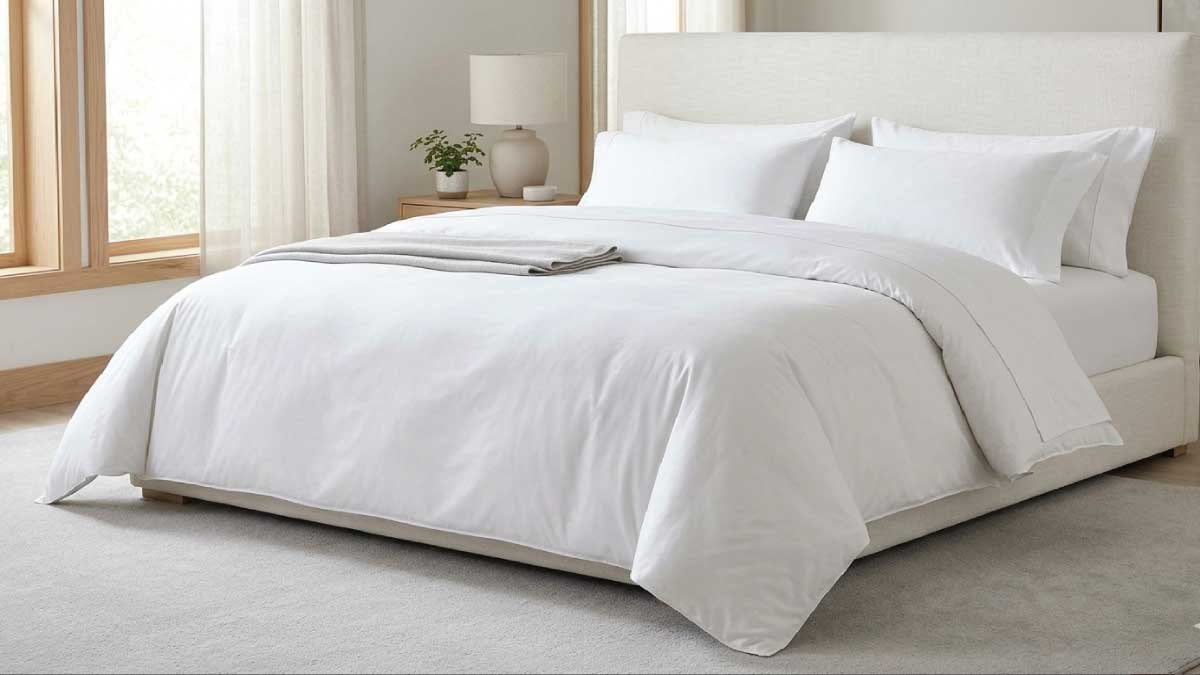
Since king beds are wider, you’ll need larger bedding. Standard sheets and comforters designed for smaller beds won’t properly fit a king mattress, which can lead to discomfort and an untidy appearance. Choosing the correct bedding size ensures a snug fit, better sleep quality, and a polished bedroom look.
Standard King Bedding:
1- Fitted Sheet: 76” x 80”
A fitted sheet is designed to wrap tightly around your mattress using elastic edges. For a king bed, it must match the exact mattress dimensions to prevent slipping or bunching during sleep. Also, consider mattress depth—if you have a pillow-top or thick mattress, you may need a deep-pocket fitted sheet for a proper fit.
2- Flat Sheet: 108” x 102”
The flat sheet sits on top of the fitted sheet and provides an extra layer of comfort. Its larger size allows it to drape over the sides of the bed, making it easier to tuck in neatly. This contributes to a clean, hotel-style finish while also adding warmth and protection.
3- Comforter: 102” x 86” to 110” x 96”
Comforter sizes can vary depending on style and brand. A slightly oversized comforter is often preferred because it provides better coverage on both sides of the bed, especially if two people are sharing. It also enhances the overall aesthetic by giving the bed a fuller, more luxurious appearance.
👉 Always check product labels, as sizes may vary slightly.
Different manufacturers may have slight variations in dimensions, so it’s always a good idea to confirm measurements before purchasing. This helps avoid fitting issues and ensures your bedding looks and feels just right.
Who Should Buy a King Size Bed?
A king size bed is perfect for a variety of lifestyles and sleeping preferences. It’s not just about having a bigger bed—it’s about improving comfort, convenience, and overall sleep quality.
A king size bed is perfect for:
✔ Couples who need space: If you and your partner often feel cramped on a smaller bed, upgrading to a king can make a huge difference. Each person gets more personal space, reducing sleep disturbances and improving comfort throughout the night.
✔ Families with kids: Parents with young children often find a king bed useful, especially if kids occasionally join them. The extra width allows everyone to sleep comfortably without feeling crowded.
✔ Pet owners: If your pets share your bed, a king size mattress provides enough space for everyone. You won’t have to constantly adjust your position or worry about falling off the edge.
✔ People who move a lot during sleep: Some people naturally toss and turn throughout the night. A king bed provides the freedom to move without disturbing your partner, leading to better sleep quality.
✔ Large bedroom owners: If you have a spacious bedroom, a king bed helps fill the space proportionally. It creates a balanced, visually appealing layout and enhances the overall design of the room.
Who Should Avoid It?
While king beds offer many benefits, they are not suitable for everyone. In some cases, choosing a smaller bed can be more practical and cost-effective.
You might want to skip a king bed if:
✖ Your room is small: In a compact room, a king bed can take up too much space, leaving little room for movement or additional furniture. This can make the room feel cramped and uncomfortable.
✖ You live in an apartment: Apartments often have limited space and narrower hallways or staircases. Moving a king bed in and out can be challenging, and it may not fit well in smaller rooms.
✖ You move frequently: If you relocate often, a king bed may not be the best choice. Its size and weight make transportation difficult and time-consuming.
✖ You’re on a tight budget: King beds come with higher costs—not just for the mattress, but also for bedding, frames, and accessories. If budget is a concern, a queen or full bed might be a more practical option.
Tips Before Buying a King Size Bed
Here are some practical tips to avoid mistakes and ensure you make the right decision when purchasing a king size bed.
1. Measure Your Room
Always measure:
Room dimensions: Knowing the exact size of your room helps you determine whether a king bed will fit comfortably without overcrowding the space.
Doorways: Make sure the mattress and bed frame can pass through your doors during delivery.
Staircases: If you live in a multi-story home or apartment, check that there is enough space to move the bed upstairs.
2. Plan Furniture Layout
Make sure you can fit:
Nightstands: Bedside tables are essential for functionality and convenience. Ensure there’s enough room on both sides of the bed.
Wardrobes: Large furniture pieces like wardrobes or closets should remain accessible and not blocked by the bed.
Walking space: You should be able to move freely around the bed without feeling restricted. Proper spacing improves both comfort and usability.
3. Consider Split King Option
Great for:
Adjustable beds: A split king consists of two separate mattresses, allowing each side to be adjusted independently. This is ideal for people who like different sleeping positions.
Different mattress preferences: If you and your partner have different firmness preferences, a split king allows you to customize each side without compromise.
4. Check Delivery Access
King mattresses are large—ensure they can enter your home.
Measure entryways, hallways, and staircases in advance to avoid delivery issues. Some mattresses come compressed in boxes, which can make transportation easier.
Visualizing King Bed Width
If you’re still unsure how wide 76 inches is, imagining real-life comparisons can help you better understand its size.
Equal to two twin beds side by side: A king bed essentially combines two twin beds, giving each sleeper their own dedicated space.
About the width of a small sofa: This comparison helps you visualize how much floor space the bed will occupy in your room.
Enough space for 2 adults + 1 child comfortably: A king bed provides enough room for small families to sleep together without feeling cramped, making it ideal for comfort and flexibility.
Final Thoughts
So, how wide is a king size bed?
👉 The answer is simple: 76 inches wide
But choosing a king bed is about more than just measurements—it’s about your lifestyle, room size, and comfort needs.
If you have a spacious bedroom and want the ultimate sleeping experience, a king size bed is a perfect investment. However, for smaller rooms, a queen or full bed might be a smarter choice.
Also Read:
FAQs
Is a king bed big enough for 3 people?
Yes, a king bed is generally big enough for three people, especially two adults and a child. With 76 inches of width, it offers enough space for comfortable sleeping. However, space may feel slightly tight if all three are adults or if someone moves frequently during sleep.
Is a king bed wider than a double bed?
Yes, a king bed is significantly wider than a double (full) bed. A king measures 76 inches wide, while a double bed is only 54 inches wide. This means a king bed provides 22 extra inches of space, making it much more comfortable for couples.
What is the widest bed available?
The widest bed available is the Alaskan King, which measures 108 inches by 108 inches. It is much larger than a standard king bed and offers massive sleeping space. This bed is ideal for large families, luxury bedrooms, or people who want maximum comfort and space.
Can a king bed fit in a 10×10 room?
Yes, a king bed can technically fit in a 10×10 room, but it is not recommended. The room will feel cramped, leaving very little space for walking or additional furniture. It may also affect comfort, airflow, and overall room functionality in daily use.
Is a king bed good for couples?
Yes, a king bed is one of the best options for couples who want extra personal space. Each person gets plenty of room to sleep comfortably without disturbing the other. It is especially beneficial for light sleepers or couples with different sleep habits.
How much space should be around a king bed?
Ideally, you should leave at least 24 to 30 inches of space around a king bed. This allows for comfortable movement, easy access to furniture, and a balanced room layout. Proper spacing also improves the overall look and feel of your bedroom.
Is a king bed worth the money?
A king bed is worth the investment if you have enough space and prioritize comfort. It improves sleep quality, provides more room, and adds a luxurious feel to your bedroom. However, it may not be ideal for small rooms or tight budgets.
Can one person use a king size bed?
Yes, a single person can absolutely use a king size bed. It offers a large, comfortable sleeping area and is great for those who enjoy extra space. However, it may feel oversized for smaller rooms and is usually more than necessary for one person.
