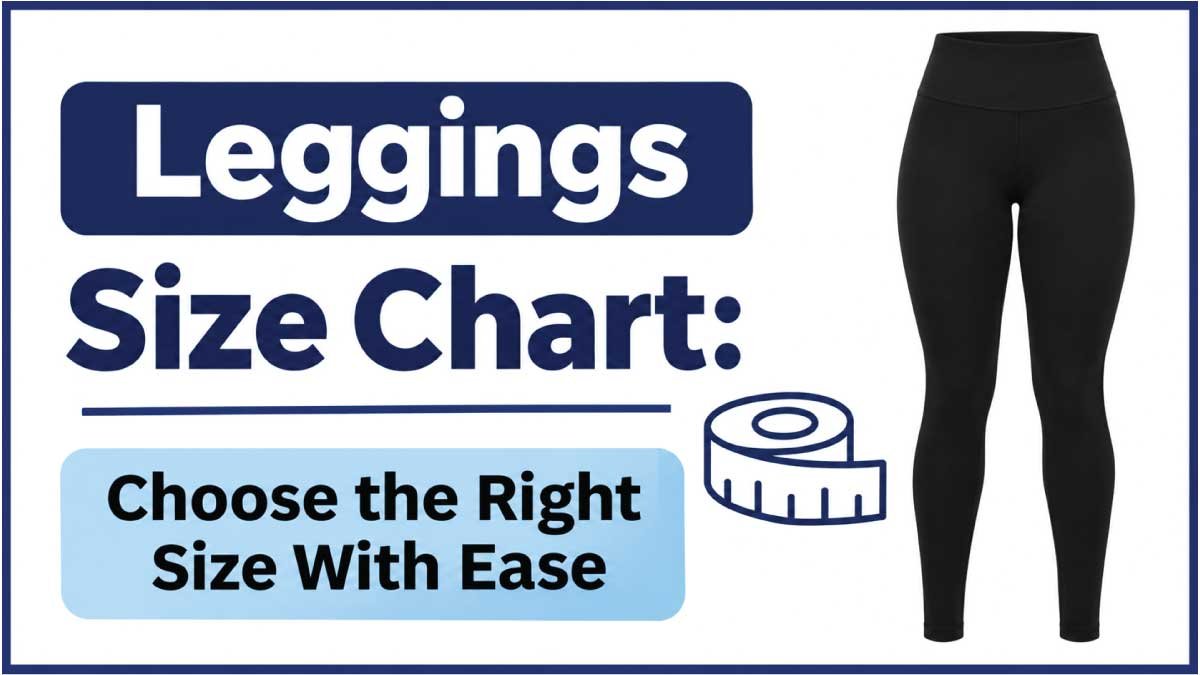
Finding the right leggings size is essential for comfort, flexibility, and confidence. Whether you wear leggings for workouts, yoga, running, casual outfits, or everyday activities, choosing the correct size helps ensure a comfortable fit without excessive tightness, slipping, or unwanted fabric bunching. Since leggings are available in different fabrics, waist heights, lengths, and compression levels, your usual clothing size may not always provide the best fit.
This leggings size chart provides a practical reference for women’s leggings, including waist, hip, inseam, and international size conversions. It also explains how to measure yourself, understand different leggings styles, and choose the right fit for your body shape and intended activity. Because sizing varies between manufacturers, always compare your measurements with the specific brand’s size chart before purchasing.
Standard Leggings Size Chart
Leggings are generally sized using waist and hip measurements, although some manufacturers also consider height, inseam, and body weight. The correct size should provide a secure fit while allowing comfortable movement.
The following chart provides approximate women’s body measurements for common leggings sizes.
Women’s Leggings Size Chart
| US Size | International Size | Waist (inches) | Hips (inches) |
|---|---|---|---|
| 0–2 | XS | 24–25 | 34–35 |
| 4–6 | S | 26–27 | 36–37 |
| 8–10 | M | 28–29 | 38–39 |
| 12–14 | L | 30.5–32 | 40.5–42 |
| 16–18 | XL | 33.5–35 | 43.5–45 |
| 20–22 | 2XL | 37–39 | 47–49 |
| 24–26 | 3XL | 41–43 | 51–53 |
| 28–30 | 4XL | 45–47 | 55–57 |
These are general body measurement ranges, not universal garment specifications. Some athletic brands use compression-based sizing, while fashion brands may offer more relaxed fits.
Leggings Size Conversion Chart
International clothing sizes can differ between countries. The following table provides an approximate conversion for women’s leggings.
| US Size | UK Size | EU Size | International Size |
|---|---|---|---|
| 0–2 | 4–6 | 32–34 | XS |
| 4–6 | 8–10 | 36–38 | S |
| 8–10 | 12–14 | 40–42 | M |
| 12–14 | 16–18 | 44–46 | L |
| 16–18 | 20–22 | 48–50 | XL |
| 20–22 | 24–26 | 52–54 | 2XL |
| 24–26 | 28–30 | 56–58 | 3XL |
| 28–30 | 32–34 | 60–62 | 4XL |
Size conversions are approximate and can vary by manufacturer. Always prioritize actual waist and hip measurements when shopping internationally.
Leggings Waist Size Chart
Waist measurement is one of the most important factors when choosing leggings. The waistband should stay comfortably in place without digging into your skin, rolling down, or creating excessive pressure.
Different leggings styles also use different waistband designs. High-waisted leggings cover more of the stomach, while mid-rise and low-rise styles sit at different positions on the waist.
Women’s Leggings Waist Measurements
| Leggings Size | Waist (inches) | Waist (cm) |
|---|---|---|
| XS | 24–25 | 61–64 |
| S | 26–27 | 66–69 |
| M | 28–29 | 71–74 |
| L | 30.5–32 | 77–81 |
| XL | 33.5–35 | 85–89 |
| 2XL | 37–39 | 94–99 |
| 3XL | 41–43 | 104–109 |
| 4XL | 45–47 | 114–119 |
How Waist Size Affects Leggings Fit
A properly fitted waistband should provide support without causing discomfort.
Consider these characteristics:
- High-waisted leggings: Sit around the natural waist and provide greater stomach coverage.
- Mid-rise leggings: Sit between the natural waist and hips.
- Low-rise leggings: Sit lower on the hips and offer less waist coverage.
- Wide-waistband leggings: Distribute pressure across a larger area.
- Compression leggings: Provide a closer, more supportive fit depending on their intended design.
If the waistband rolls down or feels excessively tight, check whether you need a different size or waistband style.
Leggings Hip Size Chart
Hip measurement is especially important because leggings are designed to stretch around the hips, seat, and upper thighs. Choosing the correct hip size helps prevent excessive pulling, discomfort, and transparency caused by overstretched fabric.
Women’s Leggings Hip Measurements
| Leggings Size | Hips (inches) | Hips (cm) |
|---|---|---|
| XS | 34–35 | 86–89 |
| S | 36–37 | 91–94 |
| M | 38–39 | 97–99 |
| L | 40.5–42 | 103–107 |
| XL | 43.5–45 | 110–114 |
| 2XL | 47–49 | 119–124 |
| 3XL | 51–53 | 130–135 |
| 4XL | 55–57 | 140–145 |
Choosing the Right Hip Fit
When trying leggings, check how the material fits around your hips and seat.
- The fabric should stretch comfortably without excessive tension.
- Seams should not pull or distort during movement.
- The waistband should remain in position.
- The fabric should not become excessively thin when stretched.
- You should be able to squat and sit without discomfort.
For athletic activities, choose leggings made from suitable stretch fabrics that maintain coverage during movement.
Leggings Inseam and Length Size Chart
Leggings are available in several lengths to accommodate different heights, preferences, and activities. Inseam measurement determines the distance from the crotch seam to the bottom of the leg.
Choosing the correct length helps prevent excessive fabric around the ankles or leggings that sit too high on the legs.
Women’s Leggings Inseam Chart
| Inseam (inches) | Inseam (cm) | Length Type |
|---|---|---|
| 19–21 | 48–53 | Capri |
| 22–24 | 56–61 | Cropped |
| 25–27 | 64–69 | 7/8 Length |
| 28–30 | 71–76 | Full Length |
| 31–33 | 79–84 | Tall Length |
| 34–36 | 86–91 | Extra Tall |
These are general length categories. Actual inseam measurements differ between brands and individual designs.
Different Leggings Lengths
Capri Leggings: Capri leggings typically end around the middle of the calf. They are popular for warm-weather outfits, walking, and exercise.
Cropped Leggings: Cropped styles usually finish above the ankle. They provide a shorter alternative to full-length leggings.
7/8 Length Leggings: These designs are slightly shorter than traditional full-length leggings and generally sit above the ankle.
Full-Length Leggings: Full-length leggings extend toward the ankle and are commonly used for workouts, casual outfits, and everyday clothing.
Tall Leggings: Tall options provide additional leg length for people who find standard leggings too short.
Different Types of Leggings and Their Sizing
Leggings come in different styles depending on their intended purpose, fabric, and construction. Understanding these differences helps you choose a size that provides the right combination of comfort and performance.
1. Workout Leggings
Workout leggings are designed for activities such as gym training, running, cycling, and fitness classes.
Common features include:
- Stretchable fabrics.
- Supportive waistbands.
- Moisture-management materials.
- Flexible construction.
- Different compression levels.
When selecting workout leggings, prioritize comfortable movement and appropriate fabric coverage. Avoid choosing an excessively small size simply to achieve a tighter appearance.
2. Yoga Leggings
Yoga leggings are designed to provide flexibility during stretching, bending, and different yoga positions.
They commonly feature soft materials, comfortable waistbands, and four-way stretch construction.
The right yoga leggings should allow unrestricted movement without constantly slipping or requiring adjustment.
3. High-Waisted Leggings
High-waisted leggings have a waistband that sits around or above the natural waist.
They are popular for exercise and casual wear because they provide additional waist coverage.
When choosing this style, make sure the waistband sits comfortably without excessive pressure around the stomach.
4. Compression Leggings
Compression leggings are designed to provide a closer, supportive fit. Their compression level depends on the fabric, construction, and intended use.
They are commonly used for:
- Athletic training.
- Running.
- Fitness activities.
- Sports and exercise.
- Certain recovery applications.
Always follow the manufacturer’s sizing instructions. Compression garments should not cause numbness, pain, or restricted circulation.
5. Casual and Everyday Leggings
Casual leggings are designed for regular clothing rather than intensive athletic activities.
They may feature cotton blends, soft stretch fabrics, different waist heights, and decorative details.
For everyday use, comfort and fabric thickness are important considerations.
6. Fleece-Lined Leggings
Fleece-lined leggings include a soft inner layer designed to provide additional warmth.
They are commonly worn during colder weather.
Because the lining adds thickness, these leggings may feel different from lightweight styles. Check the manufacturer’s size recommendations before choosing your usual size.
Also Read:
How to Measure Yourself for Leggings
Taking accurate measurements helps you select leggings that fit properly. You will need a flexible measuring tape and lightweight clothing.
For the most consistent results, measure your body without pulling the tape too tightly.
1. Measure Your Waist
Waist measurement helps determine the correct waistband size.
- Stand upright in a relaxed position.
- Locate your natural waistline.
- Wrap the measuring tape around your waist.
- Keep the tape horizontal and comfortably snug.
- Record the measurement in inches or centimeters.
Avoid tightening the tape or holding your stomach in while measuring.
2. Measure Your Hips
Hip measurement is important for determining how leggings fit around the lower body.
- Stand with your feet comfortably together.
- Place the tape around the fullest part of your hips and seat.
- Keep the tape level around your body.
- Make sure it is not compressing your skin.
- Record the measurement.
Use this measurement when comparing your body dimensions with the manufacturer’s chart.
3. Measure Your Inseam
Inseam helps determine the correct leg length.
- Stand straight with your feet naturally positioned.
- Place the tape at the crotch area.
- Measure down the inside of your leg.
- Stop at the desired ankle or calf position.
- Record the result.
You can also measure a pair of leggings that already fits you comfortably.
4. Measure Your Thigh
Some manufacturers provide thigh measurements, particularly for compression and athletic leggings.
To measure:
- Stand with your legs relaxed.
- Identify the fullest part of your upper thigh.
- Wrap the measuring tape around that area.
- Keep the tape comfortably snug.
- Record the measurement.
Thigh measurements can help when choosing fitted athletic clothing, especially if you have difficulty finding a comfortable fit around the upper legs.
Also Read:
How to Choose the Right Leggings Size
Selecting the correct leggings size involves more than matching a number on a clothing label. Fabric stretch, waistband construction, compression, and intended activities all influence the fit.
Compare Your Waist and Hip Measurements
Start by comparing your actual body measurements with the manufacturer’s sizing chart.
If your waist corresponds to medium but your hips correspond to large, review the brand’s recommendations for choosing between sizes.
For leggings, hip fit is particularly important because the material needs to stretch comfortably around the seat and thighs.
Consider Fabric Stretch
Different fabrics offer different levels of flexibility.
- Cotton blends: Often provide a soft and comfortable feel.
- Polyester blends: Commonly used in workout clothing.
- Nylon blends: Frequently used in stretchy athletic garments.
- Elastane or spandex blends: Add flexibility and stretch recovery.
Check the fabric composition before deciding whether to choose a closer or more relaxed fit.
Check the Compression Level
Not all leggings are designed to fit the same way.
- Light compression: Provides a relatively relaxed athletic fit.
- Medium compression: Offers a closer fit with additional support.
- High compression: Creates a firmer, more supportive feel.
Compression descriptions vary between manufacturers, so follow the specific product’s sizing guidance.
Consider Your Intended Activity
Your preferred activity should influence the type and fit of leggings you purchase.
- Yoga: Prioritize flexibility and comfortable waistbands.
- Running: Look for a secure waistband and suitable stretch.
- Gym workouts: Choose durable materials that allow unrestricted movement.
- Everyday wear: Prioritize softness and comfort.
- Cold weather: Consider fleece-lined or thicker fabric options.
Also Read:
Common Leggings Sizing Mistakes to Avoid
Even with a size chart, selecting leggings incorrectly can lead to discomfort and poor performance. Avoid these common mistakes.
Choosing a Smaller Size for Extra Compression
Buying a size smaller does not automatically provide better compression. It may cause excessive tightness, fabric transparency, or discomfort.
Choose compression leggings according to their manufacturer’s sizing recommendations.
Ignoring Hip Measurements
Some people choose leggings based only on their waist measurement. However, a garment may fit around the waist but feel too tight around the hips and thighs.
Always compare both measurements.
Overlooking Inseam Length
Standard leggings may be too short or too long depending on your leg proportions.
Check petite, regular, cropped, and tall options where available.
Not Checking Fabric Transparency
When leggings are stretched excessively, some fabrics may become less opaque.
Check the material’s coverage during movement, especially when purchasing workout leggings.
Assuming All Brands Fit the Same
A medium size from one brand may not have the same dimensions as a medium from another.
Always check the specific manufacturer’s chart instead of relying only on your usual size.
Tips for Getting the Best Fit and Maintaining Your Leggings
The right size and proper garment care help leggings maintain their comfort and appearance.
Consider these practical tips:
- Measure before purchasing: Use fresh waist and hip measurements.
- Check the size chart: Follow the manufacturer’s recommendations.
- Test movement: Try sitting, squatting, bending, and stretching.
- Inspect the waistband: Make sure it stays comfortably in place.
- Check fabric coverage: Ensure the material does not become excessively transparent when stretched.
- Follow washing instructions: Use the recommended washing temperature.
- Avoid excessive heat: High drying temperatures may damage elastic fibers.
- Choose suitable fabric: Select materials according to your preferred activity.
Washing leggings according to their care labels can help preserve fabric elasticity and maintain their original fit.
Frequently Asked Questions About Leggings Sizes
1. How do I know what size leggings to buy?
Measure your waist and hips, then compare those measurements with the manufacturer’s size chart. Also consider inseam length, fabric stretch, and compression level.
2. Should leggings be tight or loose?
Leggings should fit close to your body without causing discomfort. They should remain in place during movement while allowing comfortable stretching, sitting, and walking.
3. How do I know if my leggings are too small?
Signs include excessive waistband pressure, seams pulling, restricted movement, fabric transparency, and uncomfortable tightness around the hips or thighs.
4. Should I size up or down in leggings?
Choose your size based on your actual measurements and the brand’s recommendations. If your measurements fall between sizes, consider the fabric stretch and intended fit before deciding.
5. What is the difference between 7/8 and full-length leggings?
7/8 leggings are shorter than traditional full-length designs and generally finish above the ankle. Full-length leggings extend closer to the ankle.
6. How should high-waisted leggings fit?
High-waisted leggings should sit comfortably around your natural waist without rolling down, digging into your skin, or creating excessive pressure.
7. Do leggings stretch over time?
Some leggings may lose elasticity with repeated use and improper washing. High-quality stretch fabrics are designed to recover their shape, but care instructions should be followed.
8. Are workout leggings sized differently from regular leggings?
They can be. Workout leggings may use athletic sizing and compression-based construction, while everyday leggings may have softer fabrics and more relaxed fits.
9. What inseam length should I choose for leggings?
Choose an inseam based on your leg length and preferred style. Cropped and 7/8 designs are shorter, while full-length and tall leggings provide more leg coverage.
10. Can I use jeans size to determine my leggings size?
Your jeans size can provide a general starting point, but it is not always reliable. Leggings use different fabrics and sizing methods, so compare your waist and hip measurements with the actual size chart.
Conclusion
Choosing the correct size from a leggings size chart helps ensure comfort, flexibility, and a secure fit. Waist, hip, and inseam measurements are the most useful starting points when selecting women’s leggings. Fabric stretch, compression level, waistband design, and intended activity also influence how a particular pair will fit.
Before purchasing, measure yourself accurately and compare your measurements with the manufacturer’s sizing information. Whether you need workout leggings, yoga pants, high-waisted designs, compression leggings, or everyday styles, choosing the right size will help you enjoy better comfort and confidence.
