
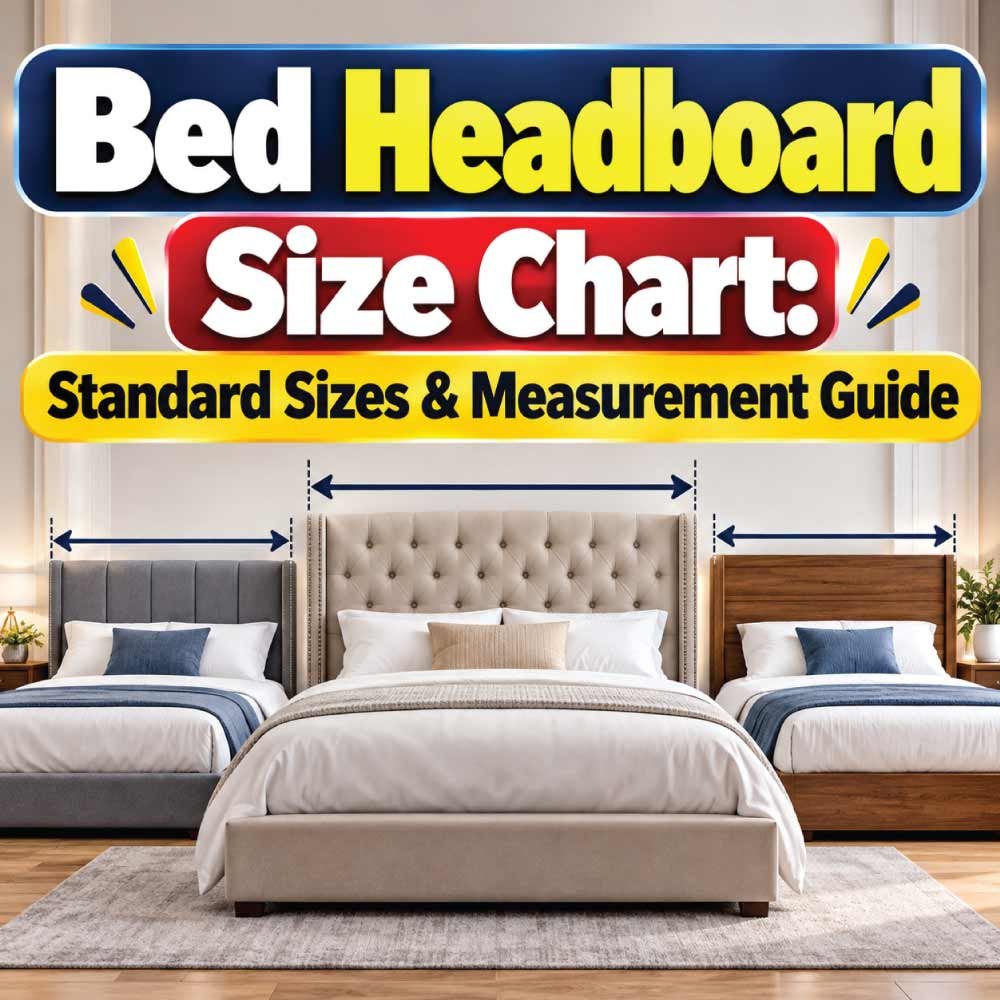
A headboard can completely change the appearance and comfort of a bed, but choosing the right size is not always as simple as matching it to the mattress. Bed headboard size depends on the bed width, headboard height, mounting style, frame dimensions, and the look you want in the room.
A headboard that is too narrow can look unbalanced, while one that is too wide may interfere with nightstands or make a small bedroom feel crowded. Height also matters: a low headboard creates a subtle appearance, whereas a tall upholstered or wooden headboard can become the main focal point.
This bed headboard size chart explains common headboard widths and heights for twin, full, queen, king, and California king beds. You will also learn how to measure an existing bed, how much wider a headboard can be than the mattress, how tall it should be, and how to choose the best proportions for your bedroom.
Bed Headboard Size Chart
The easiest way to select a headboard is to start with the mattress or bed-frame width. In most cases, the headboard should be approximately the same width as the bed, although decorative designs may extend several inches beyond each side.
The following chart provides common size ranges rather than a single universal standard. Headboard dimensions vary between manufacturers and designs, so always check the product’s stated measurements before purchasing.
| Bed Size | Typical Mattress Width | Typical Mattress Length | Common Headboard Width | Common Headboard Height |
|---|---|---|---|---|
| Twin | 38 in | 75 in | 38–44 in | 40–48 in |
| Twin XL | 38 in | 80 in | 38–44 in | 40–48 in |
| Full/Double | 54 in | 75 in | 54–60 in | 40–50 in |
| Queen | 60 in | 80 in | 60–66 in | 45–55 in |
| King | 76 in | 80 in | 76–82 in | 45–60 in |
| California King | 72 in | 84 in | 72–78 in | 45–60 in |
These dimensions are useful starting points for residential bedrooms. A headboard can be significantly taller than the ranges shown, particularly when it is designed as a dramatic feature wall.
For example, a queen mattress is typically 60 inches wide, so a queen headboard around 60–66 inches wide will usually provide a balanced appearance. A wider headboard may also work if you want it to extend behind bedside tables.
What Is the Standard Headboard Size?
There is no single standard headboard size because headboards are designed for different bed sizes and styles. However, the width generally corresponds closely to the mattress or bed frame.
The most common relationships are:
- Twin headboard: approximately 38–44 inches wide
- Full headboard: approximately 54–60 inches wide
- Queen headboard: approximately 60–66 inches wide
- King headboard: approximately 76–82 inches wide
- California king headboard: approximately 72–78 inches wide
The height is much more flexible. Many traditional headboards are around 40–60 inches tall, while tall upholstered headboards can extend considerably higher.
When shopping, do not assume that a headboard labeled “queen” will have exactly the same width as every queen bed. Some designs are intentionally wider, while others are made close to mattress width.
How Headboard Width Relates to Bed Size
Twin Headboard Size
A standard twin mattress is approximately 38 inches wide by 75 inches long. A twin headboard around 38–44 inches wide generally provides a proportional fit.
Twin beds are often used in:
- Children’s bedrooms
- Guest rooms
- Small bedrooms
- Dorm-style spaces
- Bunk or daybed configurations
A relatively compact headboard usually works best in a small room. If the headboard is too wide, it can make a narrow bedroom appear crowded.
Full or Double Headboard Size
A full-size mattress is typically 54 inches wide and 75 inches long. A headboard around 54–60 inches wide is a common choice.
A full headboard can be useful when you want a little decorative overhang without taking up excessive wall space.
Queen Headboard Size
The queen bed is one of the most common bedroom sizes. A standard queen mattress is approximately 60 inches wide by 80 inches long.
A queen headboard typically measures around 60–66 inches wide.
Because queen beds are frequently paired with nightstands, consider the total width of the furniture arrangement rather than looking only at the mattress.
King Headboard Size
A standard king mattress is approximately 76 inches wide by 80 inches long. A suitable headboard is commonly around 76–82 inches wide.
King beds provide enough wall width for substantial upholstered, paneled, or wooden headboards. If you want the headboard to extend beyond the mattress, check that there is sufficient clearance around doors, windows, lamps, and nightstands.
California King Headboard Size
A California king mattress is typically 72 inches wide and 84 inches long. Unlike a standard king, it is narrower and longer.
A California king headboard is commonly around 72–78 inches wide.
One of the most important mistakes to avoid is assuming that a California king headboard and standard king headboard are interchangeable simply because both are king-size beds. Their widths differ, so the headboard should be selected according to the actual bed dimensions.
Headboard Height Guide
Width determines whether a headboard fits the bed, but height determines how it looks in the room.
There is no universal required headboard height. Instead, the best height depends on ceiling height, mattress height, bedroom proportions, and the visual style you want.
| Headboard Style | Typical Height Range | Visual Effect |
|---|---|---|
| Low profile | 30–40 in | Simple and understated |
| Standard | 40–55 in | Balanced and versatile |
| Tall | 55–70 in | Strong focal point |
| Extra tall | 70+ in | Dramatic statement |
The height should also be considered from the floor or mattress level, depending on how the headboard is designed and mounted. Product manufacturers may describe overall height differently, so check the measurement reference carefully.
How Tall Should a Headboard Be?
The ideal height depends largely on the bedroom’s proportions.
Low Headboards
A low headboard can be a good option when:
- The bedroom has a low ceiling.
- You prefer minimalist furniture.
- The bed sits beneath a window.
- You want artwork or wall décor above the bed.
- The bedroom is small.
Low-profile designs can make the wall feel more open and avoid visually overwhelming the room.
Standard-Height Headboards
A medium-height headboard is the safest choice for many bedrooms. It provides enough visual presence to frame the bed without dominating the wall.
This style works particularly well with standard ceiling heights and conventional nightstands.
Tall Headboards
Tall headboards are useful when you want the bed to become a major design feature. Upholstered headboards with vertical panels, tufting, or decorative stitching often use greater height.
However, measure carefully before choosing a tall design. Check:
- Ceiling height
- Window location
- Wall-mounted artwork
- Crown molding
- Wall sconces
- Ceiling fans
- Door and closet clearance
A tall headboard should complement the room rather than compete with other architectural features.
How to Measure for a Headboard
Before purchasing, take several measurements instead of relying only on the mattress name.
Step 1: Measure the Bed Width
Measure the actual width of the mattress or bed frame from one outside edge to the other.
Do not estimate based on whether the bed is called queen or king. Small differences can occur between mattresses, frames, platforms, and upholstered beds.
Step 2: Measure the Bed Height
Measure from the floor to the top of the mattress.
This measurement helps you determine where the headboard will visually begin and how much of it should remain visible above the mattress.
Step 3: Measure the Available Wall Space
Measure the wall behind the bed.
If you plan to use a wider headboard, check the available width on both sides of the mattress. Look for obstacles such as:
- Windows
- Electrical outlets
- Light switches
- Wall sconces
- Doors
- Baseboards
- Built-in furniture
Step 4: Measure the Bed Frame
If the headboard will attach directly to the frame, measure the mounting points. Check the distance between the attachment holes and their height from the floor.
This is especially important because a headboard can have the correct overall dimensions but still be incompatible with the frame’s mounting system.
Step 5: Check the Headboard Thickness
Thickness is often overlooked. A thick upholstered headboard can reduce usable space in a small bedroom.
If your bed is already close to a wall, account for the headboard’s depth before buying.
Should a Headboard Be Wider Than the Bed?
A headboard does not have to be exactly the same width as the mattress.
A slightly wider headboard can create a more substantial, finished appearance. For example, a 60-inch queen mattress can be paired with a headboard around 64–66 inches wide.
Some designs extend much farther than the mattress, particularly when the headboard is intended to span the width of bedside tables.
When a Wider Headboard Works Well
A wider headboard can work especially well when:
- You have a large bedroom.
- The bed has matching nightstands.
- You want a strong feature wall.
- The design is upholstered or paneled.
- There is enough clearance around the furniture.
When to Keep It Close to Bed Width
A headboard close to mattress width is usually preferable when:
- The bedroom is narrow.
- The bed is against a small section of wall.
- Doors or windows are nearby.
- You want a minimalist appearance.
- Space around the bed is limited.
The key is proportion. Wider is not automatically better.
Also Read:
Headboard Width vs. Bed Frame Width
One important measurement distinction is the difference between the mattress width and the overall bed-frame width.
A wooden or upholstered bed frame may extend beyond the mattress. If your frame is wider than the mattress, matching the headboard to the mattress alone may produce an awkward result.
For example, a mattress may be 60 inches wide while the complete upholstered bed frame is wider. In that situation, measure the frame’s exterior width and check how the headboard is intended to attach.
For freestanding headboards, the mattress width is often the primary reference. For frame-mounted headboards, the frame’s mounting dimensions and overall width become equally important.
Types of Headboards and Their Sizing
Different headboard materials and construction styles affect how large the headboard should appear.
Upholstered Headboards
Upholstered headboards are popular because they add softness and visual warmth.
They are available in:
- Flat panels
- Channel tufting
- Button tufting
- Wingback designs
- Padded panels
- Floor-to-ceiling styles
Because upholstery adds visual weight, a slightly wider or taller design can make the bed feel more substantial.
Wooden Headboards
Wood headboards range from simple slatted panels to large decorative structures.
Wooden designs often have a clearly defined frame, making width especially noticeable. Measure carefully if the headboard includes side posts or decorative extensions.
Metal Headboards
Metal headboards are generally lighter visually and may have open patterns.
Their open construction can make a headboard feel less imposing even when the overall dimensions are relatively large.
Wall-Mounted Headboards
Wall-mounted headboards do not always depend on the bed frame for support. They can be installed at a specific height and may allow greater flexibility.
However, installation requires careful attention to:
- Wall construction
- Mounting hardware
- Stud locations
- Headboard weight
- Recommended installation method
Always follow the manufacturer’s mounting instructions.
Freestanding Headboards
Freestanding designs can sit between the bed and wall or form part of a larger bed system.
Their installation method should be checked carefully because the required clearances can differ from those of a frame-mounted headboard.
Also Read:
How to Choose the Right Headboard Size
Selecting the right headboard involves more than matching a label.
1. Start With the Mattress Size
Identify whether you have a twin, Twin XL, full, queen, king, or California king.
Then confirm the actual mattress dimensions.
2. Consider the Bedroom Size
A large headboard may look impressive in a spacious bedroom but overwhelming in a small room.
For compact bedrooms, stay closer to the mattress width and choose a moderate height.
3. Consider Your Ceiling Height
Tall ceilings can support taller headboards. In a room with lower ceilings, a shorter design may create better visual balance.
4. Account for Nightstands
If the headboard extends beyond the mattress, make sure it does not create an awkward relationship with the nightstands.
Measure the entire bed-and-nightstand arrangement before buying.
5. Match the Design to the Room
The headboard should work with the bed frame, bedding, nightstands, lighting, and wall décor.
A very tall headboard may be unnecessary if the room already has strong architectural details.
Also Read:
Common Headboard Sizing Mistakes
Even when the bed size is known, several mistakes can lead to a poor fit.
Mistake 1: Buying Only by Bed Name
A product labeled “queen” should not automatically be assumed to fit every queen bed perfectly.
Always check the manufacturer’s exact dimensions.
Mistake 2: Ignoring Mounting Compatibility
The overall width may be correct while the mounting holes or brackets do not align with your bed frame.
Check attachment requirements before purchasing.
Mistake 3: Forgetting the Wall
A headboard may fit the bed but interfere with a window, outlet, switch, or wall sconce.
Measure the entire installation area.
Mistake 4: Choosing Excessive Height
A very tall headboard can overwhelm a small room or cover architectural features.
Consider the ceiling and wall proportions first.
Mistake 5: Ignoring Headboard Depth
A thick headboard can push the bed farther into the room.
This matters particularly in narrow bedrooms where every few inches of floor space is valuable.
Headboard Size for Different Bedroom Styles
The best headboard dimensions can also depend on the desired design style.
Minimalist Bedrooms
Choose a headboard close to the mattress width with a relatively simple profile. Low or medium heights usually maintain the clean appearance associated with minimalist interiors.
Traditional Bedrooms
Traditional bedrooms can accommodate more substantial headboards with decorative details, woodwork, upholstery, or framing.
Modern Bedrooms
Modern designs often use large upholstered panels, geometric shapes, or wide horizontal forms. A headboard extending beyond the mattress can work particularly well when the surrounding wall is uncluttered.
Small Bedrooms
In a small bedroom, prioritize proportion and clearance. A headboard that is only slightly wider than the mattress can provide definition without consuming too much visual or physical space.
Do Headboards Need to Match the Mattress Exactly?
No. A headboard does not need to have exactly the same dimensions as the mattress.
The important considerations are:
- Width compatibility
- Mounting compatibility
- Overall proportions
- Available wall space
- Headboard height
- Headboard depth
A headboard that is slightly wider than the mattress can look intentional and attractive. However, the larger it becomes, the more important it is to measure the entire wall and surrounding furniture arrangement.
Headboard Measurement Checklist
Before ordering a new headboard, record these measurements:
- Mattress width
- Mattress length
- Bed-frame width
- Bed-frame height
- Floor-to-mattress height
- Available wall width
- Available wall height
- Headboard mounting-hole spacing
- Available space beside the bed
- Maximum acceptable headboard depth
- Ceiling height
- Position of windows and wall fixtures
Having these measurements available makes it much easier to compare products accurately.
Frequently Asked Questions About Headboard Sizes
What is the standard size of a queen headboard?
A queen headboard is commonly around 60–66 inches wide, while height varies considerably by design. Many standard designs fall within roughly 45–55 inches, but taller options are also available.
How wide should a headboard be compared with the bed?
A headboard can be the same width as the mattress or slightly wider. For a more substantial appearance, allowing a few inches of additional width on each side can work well, provided the room has enough space.
Should a headboard touch the floor?
Not necessarily. Some headboards are designed to attach to the bed frame, some mount to the wall, and others extend toward the floor. Follow the construction and installation requirements of the specific design.
How tall should a headboard be above the mattress?
There is no fixed requirement. A visible section of around 20–30 inches above the mattress can provide a balanced traditional appearance, while taller designs can create a stronger focal point.
Can I use a king headboard on a California king bed?
Not usually without considering the width difference. A standard king mattress is wider than a California king, so a standard king headboard may extend farther on each side. Check the exact headboard and bed-frame dimensions before attempting to combine them.
Can a headboard be wider than the bed?
Yes. A wider headboard can create a stylish, substantial appearance and may be useful when the headboard is designed to extend behind nightstands. The available wall space should be measured first.
What is the best headboard size for a small bedroom?
A headboard close to the mattress width with a low or medium height is often the easiest choice for a small bedroom. It provides a finished appearance without consuming excessive visual or physical space.
Does headboard thickness matter?
Yes. A deep upholstered or padded headboard can reduce the amount of floor space available around the bed. Measure the headboard depth and include it when planning the bed’s final position.
Should the headboard be wider than the bed frame?
It can be, but it is not required. For a frame-mounted design, first check the manufacturer’s mounting requirements. For a freestanding design, you have more flexibility with the overall width.
How do I know if a headboard will fit my bed frame?
Compare the headboard’s overall width, mounting-hole spacing, bracket position, and attachment method with your frame. Matching the mattress size alone does not guarantee mounting compatibility.
Final Thoughts
The right bed headboard size should complement both the bed and the bedroom. Start by measuring the actual mattress and bed frame, then consider the available wall space, headboard height, depth, mounting method, and surrounding furniture.
As a general starting point, choose a headboard close to the mattress width or slightly wider when the room allows it. Queen headboards commonly fall around 60–66 inches wide, while king designs are often around 76–82 inches wide. Height is much more flexible and should be selected according to room proportions and personal style.
Most importantly, treat the dimensions in a size chart as a starting guide rather than a guarantee of compatibility. Always check the exact product measurements and mounting requirements before purchasing. With accurate measurements and attention to proportion, you can choose a headboard that fits securely, looks balanced, and works comfortably within your bedroom.
