
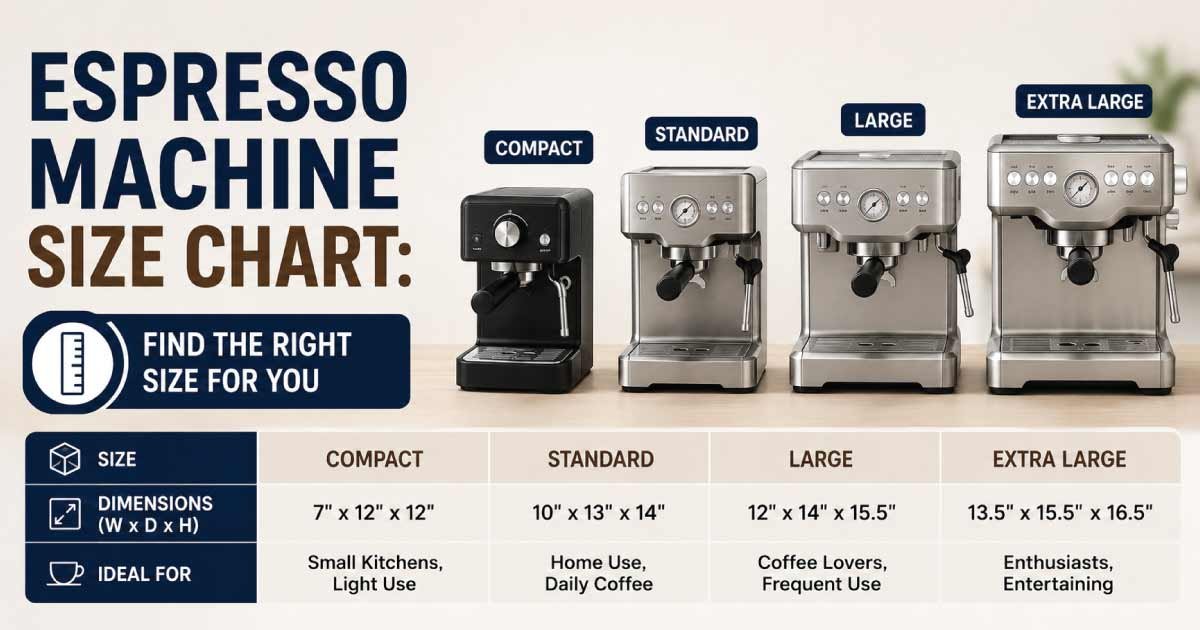
Choosing the right espresso machine size is about more than finding a machine that fits on your countertop. Espresso machines vary widely in width, depth, height, water-tank capacity, boiler size, and overall footprint. A compact machine may be ideal for a small kitchen, while a larger prosumer or commercial-style machine can require significantly more counter space.
This espresso machine size chart provides a practical guide to common espresso machine dimensions, sizes, types, water capacities, and countertop requirements. Whether you are buying your first espresso machine, replacing an old model, or creating a home coffee station, understanding the typical sizes can help you choose the right machine.
The best espresso machine size depends on how frequently you make coffee, how many people use the machine, whether you prepare milk-based drinks, and how much room you have available.
Espresso Machine Size Chart
Espresso machines come in compact, standard, large, and commercial-style sizes. The following chart provides approximate dimensions for common home espresso machines.
| Espresso Machine Size | Approx. Width | Approx. Depth | Approx. Height | Typical Water Capacity | Best For |
|---|---|---|---|---|---|
| Compact | 6–8 in | 10–14 in | 10–13 in | 30–50 oz | Small kitchens, 1 person |
| Small | 8–10 in | 12–16 in | 11–15 in | 40–60 oz | Individuals, couples |
| Medium | 10–12 in | 14–18 in | 12–16 in | 50–70 oz | Most home users |
| Large | 12–15 in | 16–20 in | 14–18 in | 60–100 oz | Frequent home use |
| Prosumer | 11–16 in | 17–24 in | 15–20 in | 70–120+ oz | Coffee enthusiasts |
| Commercial Style | 20+ in | 20–30+ in | 20–30+ in | 100+ oz | Cafés, businesses |
Dimensions and capacities are approximate. Actual specifications vary significantly by machine design and manufacturer.
For many home kitchens, a medium espresso machine around 10–12 inches wide provides a useful balance between functionality and countertop space. However, compact machines can be better for small kitchens, while larger dual-boiler machines may be preferable for frequent milk-based drinks.
Standard Espresso Machine Dimensions
When shopping for an espresso machine, pay attention to width, depth, and height. All three can affect how comfortably the machine fits into your coffee station.
Espresso Machine Width
The width of an espresso machine can range from approximately 6 inches for compact models to more than 20 inches for commercial machines.
Home machines commonly fall somewhere between 8 and 15 inches wide.
Width matters when you have limited countertop space or plan to place accessories such as a grinder, scale, knock box, or coffee storage container beside the machine.
A narrow machine may leave enough space for a separate grinder, while a wider model can require a dedicated coffee station.
Espresso Machine Depth
Depth is often overlooked when comparing machines.
Many home espresso machines extend approximately 12–24 inches from front to back, depending on the design.
Remember to account for:
- Portafilter clearance
- Water-tank access
- Drip tray removal
- Power cord
- Rear ventilation
- Wall clearance
A machine may technically fit on your counter but still be difficult to use if there is insufficient space to remove the water tank or drip tray.
Espresso Machine Height
Espresso machines are commonly around 10–20 inches tall, although commercial machines can be considerably taller.
Height becomes particularly important when the machine is placed underneath kitchen cabinets.
A machine that fits underneath a cabinet may still be difficult to operate if you need to remove a top-mounted water tank.
Espresso Machine Size by Type
The size of an espresso machine is strongly influenced by its internal design.
Compact Espresso Machines
Compact espresso machines are designed to minimize countertop space.
They are useful for:
- Small apartments
- Dorm-style kitchens where permitted
- Office coffee stations
- Small countertops
- Occasional espresso drinkers
- Individuals
Their smaller footprint can be a major advantage, although compact machines may have smaller water tanks and fewer advanced features.
Single-Boiler Espresso Machines
Single-boiler machines generally have a relatively compact design.
They can be suitable for users who primarily make espresso and occasionally prepare milk drinks.
Because brewing and steaming may require different temperature settings, some single-boiler machines require a short transition between functions.
Heat-Exchange Espresso Machines
Heat-exchange machines are often larger than basic single-boiler machines.
They can provide greater convenience for users who regularly prepare espresso and steamed milk.
Their larger internal systems can increase both the machine’s weight and countertop footprint.
Dual-Boiler Espresso Machines
Dual-boiler machines are generally larger and more advanced.
They are designed with separate systems for brewing and steaming, making them popular among serious home coffee enthusiasts.
The additional components can increase:
- Width
- Depth
- Height
- Weight
- Water requirements
- Countertop requirements
These machines are best suited to users who have enough dedicated space for a substantial coffee setup.
Super-Automatic Espresso Machines
Super-automatic machines combine several coffee-making functions into one appliance.
They may include:
- Built-in grinders
- Automatic milk systems
- Large water reservoirs
- Bean containers
- Digital controls
- Automatic cleaning programs
Because more functions are built into the machine, super-automatic models can have a larger footprint than basic espresso machines.
Espresso Machine Dimensions in Inches
For quick comparison, use the following reference chart.
| Machine Type | Width | Depth | Height | Counter Space |
|---|---|---|---|---|
| Compact | 6–8 in | 10–14 in | 10–13 in | Low |
| Basic Home | 8–10 in | 12–16 in | 11–15 in | Low–Moderate |
| Standard Home | 10–12 in | 14–18 in | 12–16 in | Moderate |
| Large Home | 12–15 in | 16–20 in | 14–18 in | High |
| Prosumer | 11–16 in | 17–24 in | 15–20 in | High |
| Commercial | 20+ in | 20–30+ in | 20–30+ in | Very High |
These ranges are intended for planning purposes. Always use the manufacturer’s exact dimensions before designing a permanent installation.
How Much Counter Space Does an Espresso Machine Need?
The machine’s published dimensions are only part of the space requirement.
You also need enough room to operate and maintain the machine.
Front Clearance
Make sure there is sufficient space in front of the machine for:
- Removing the portafilter
- Placing cups
- Removing the drip tray
- Cleaning the machine
- Working with a milk pitcher
If the machine is positioned too close to the edge of a counter, daily use may become uncomfortable.
Top Clearance
Top clearance is important for machines with removable water reservoirs or bean hoppers.
If you need to lift a water tank vertically, an overhead cabinet may prevent you from removing it.
Always check the manufacturer’s recommended clearance.
Side Clearance
Leave enough room beside the machine for accessories and comfortable operation.
If you use a separate coffee grinder, you may need another 6–10 inches or more of counter width for the grinder and coffee preparation area.
Espresso Machine Size and Water Tank Capacity
Water-tank capacity is another useful way to compare machines.
| Water Tank Size | Approx. Capacity | Typical Use |
|---|---|---|
| Small | 20–40 oz | Occasional use |
| Medium | 40–70 oz | Everyday home use |
| Large | 70–100 oz | Frequent use |
| Extra Large | 100+ oz | High-volume use |
A larger water tank means fewer refills, but it can also increase the overall size and weight of the machine.
If you only make one or two espresso drinks each day, a very large reservoir may not provide much practical benefit.
What Espresso Machine Size Is Best for One Person?
For a single coffee drinker, a compact or small espresso machine is often sufficient.
A machine around 6–10 inches wide can be a practical choice when countertop space is limited.
You may want a slightly larger machine if you:
- Drink several coffees daily
- Make cappuccinos or lattes
- Frequently entertain guests
- Want a larger water tank
- Use a separate grinder
The goal is to choose a machine that matches your actual coffee routine rather than simply selecting the smallest model available.
What Espresso Machine Size Is Best for Two People?
For two people, a small to medium home espresso machine is generally a practical choice.
A machine around 8–12 inches wide can provide enough capacity for regular household use while leaving room for a grinder and accessories.
If both people regularly drink milk-based beverages, a machine with a more capable steaming system may be worth the additional countertop space.
What Espresso Machine Size Is Best for a Family?
Families or households with several coffee drinkers may prefer a medium or large espresso machine.
A larger water reservoir can reduce the frequency of refilling, while a more capable brewing and steaming system can make preparing several drinks more convenient.
If several people want drinks at the same time, machine design becomes just as important as exterior dimensions.
Espresso Machine Size for a Small Kitchen
If you have limited counter space, focus on the machine’s complete footprint rather than just its advertised width.
Before buying, measure:
- Available counter width
- Counter depth
- Cabinet clearance
- Outlet location
- Space for the grinder
- Space for cups
- Room to remove the water tank
- Room to remove the drip tray
A narrow espresso machine can be particularly useful in a small kitchen, but a slightly wider machine may provide better functionality if you can accommodate it.
Espresso Machine vs. Coffee Maker Size
Espresso machines and traditional drip coffee makers have different designs and space requirements.
| Feature | Espresso Machine | Drip Coffee Maker |
|---|---|---|
| Typical footprint | Small to large | Small to medium |
| Brewing method | Pressure-based espresso | Filtered brewing |
| Grinder | Separate or built-in | Usually separate |
| Milk steaming | Available on many models | Usually unavailable |
| Counter space | Varies widely | Usually moderate |
| Best for | Espresso drinks | Larger coffee servings |
An espresso setup may require more total counter space if you use a separate grinder and accessories.
Discover More:
How to Measure for an Espresso Machine
Measure the intended location before purchasing.
Step 1: Measure Width
Measure the usable countertop width.
Leave enough room for the espresso machine and any grinder or accessories you plan to keep beside it.
Step 2: Measure Depth
Measure from the front edge of the counter to the backsplash or wall.
Then compare this measurement with the machine’s full depth.
Step 3: Measure Height
Measure from the counter to the bottom of overhead cabinets.
If the machine has a top-loading water tank or bean hopper, determine how much additional vertical space is required to remove or fill it.
Step 4: Consider Operating Clearance
Do not forget the space needed to:
- Insert and remove the portafilter
- Fill the water tank
- Empty the drip tray
- Steam milk
- Clean the machine
- Store accessories
Espresso Machine Size and Grinder Space
For many home baristas, the espresso machine is only one part of the coffee setup.
A separate grinder can require additional countertop space.
A practical coffee station may include:
- Espresso machine
- Coffee grinder
- Knock box
- Digital scale
- Tamper
- Coffee storage
- Milk pitcher
- Cups
If your counter is narrow, consider the combined footprint of the espresso machine and grinder rather than measuring the machine alone.
Is a Bigger Espresso Machine Better?
A larger espresso machine is not automatically better.
Large machines can offer more advanced brewing systems, greater water capacity, and stronger steaming performance, but they also require more space.
Advantages of Larger Machines
- Larger water reservoirs
- More powerful steaming systems
- Greater brewing capacity
- More advanced features
- Better suited to frequent use
- Often more suitable for entertaining
Disadvantages of Larger Machines
- More countertop space required
- Greater weight
- Higher cost in many cases
- More difficult to move
- Potentially more complicated maintenance
Choose the size that supports your coffee habits without overwhelming your available kitchen space.
Discover More:
Tips for Choosing the Right Espresso Machine Size
Before purchasing, consider these practical points:
- Measure your countertop first.
- Check width, depth, and height.
- Account for cabinet clearance.
- Check how the water tank is removed.
- Consider drip-tray clearance.
- Leave space for the portafilter.
- Measure space for a separate grinder.
- Think about how many drinks you make each day.
- Consider whether you regularly prepare milk-based drinks.
- Compare water-tank capacity.
- Check the manufacturer’s exact installation requirements.
It is better to choose a machine that fits comfortably and can be used easily than one that offers features you rarely need.
Common Espresso Machine Size Mistakes
Ignoring the Grinder
A compact espresso machine may fit perfectly, but there may be no room left for the grinder.
Consider the entire coffee station before making a purchase.
Measuring Only Width
A machine can be narrow but unusually deep or tall. Always measure all three dimensions.
Forgetting Cabinet Clearance
Top-mounted water tanks and bean hoppers can require additional vertical space.
Ignoring Door and Drawer Clearance
If your machine is near cabinets or drawers, make sure they can still open normally.
Choosing a Commercial Machine for a Small Kitchen
Commercial-style machines can be excellent performers but may be unnecessarily large for occasional home use.
Discover More:
Frequently Asked Questions About Espresso Machine Sizes
What is the standard size of an espresso machine?
Many home espresso machines are approximately 8–15 inches wide, 12–20 inches deep, and 11–18 inches tall. Exact dimensions vary according to the machine type, boiler configuration, water tank, grinder, and other features.
What is the smallest espresso machine size?
Compact home espresso machines can be around 6–8 inches wide and approximately 10–14 inches deep. These models are useful for small kitchens and individual coffee drinkers.
How much counter space does an espresso machine need?
The required space depends on the machine. In addition to its physical footprint, allow room for the portafilter, water tank, drip tray, grinder, and normal operation. A complete home coffee station may require substantially more space than the machine alone.
How tall is a typical espresso machine?
Many home espresso machines are approximately 10–20 inches tall. Machines with top-mounted water reservoirs or bean hoppers may require additional clearance above their listed height.
What size espresso machine is best for a home?
A medium home espresso machine is a practical choice for many households. Machines around 8–12 inches wide can offer a useful balance between countertop footprint and functionality, although the ideal size depends on your coffee habits.
Are commercial espresso machines too big for home use?
Commercial-style machines can be used in large home coffee setups, but they often require considerably more counter space, power, water capacity, and maintenance. A home-oriented machine is usually more practical for most households.
Does espresso machine size affect performance?
Size alone does not determine performance. Internal design, temperature control, brewing system, steaming capability, grinder quality, and construction can be more important than exterior dimensions.
How much space should I leave around an espresso machine?
The exact clearance depends on the model. Follow the manufacturer’s instructions for ventilation and placement, while also leaving enough working room to access the water tank, drip tray, portafilter, and controls.
Conclusion
Choosing the right espresso machine size requires balancing performance, capacity, and available countertop space. Compact machines around 6–8 inches wide are useful for small kitchens and individual users, while medium models around 8–12 inches wide can work well for many households. Larger prosumer and commercial-style machines require significantly more space but may provide additional capabilities for frequent coffee preparation.
Before buying, measure the width, depth, and height of your available space. Also consider cabinet clearance, water-tank access, drip-tray removal, portafilter operation, and the additional space needed for a coffee grinder.
Use this espresso machine size chart as a starting point when comparing different machines, but always check the manufacturer’s exact specifications before purchasing. The best espresso machine is not necessarily the biggest one—it is the one that fits your kitchen, coffee routine, and available workspace comfortably.
