
A TV console is more than just a stand for your television. It provides storage, enhances your room’s style, and helps create a balanced entertainment area. Choosing the right TV console size is essential because an oversized unit can overwhelm a room, while one that’s too small may look awkward and provide insufficient support.
This complete TV console size guide includes standard dimensions, recommended console widths for different TV sizes, height recommendations, depth measurements, placement tips, and buying advice to help you find the perfect fit for your living room, bedroom, or entertainment space.
Why TV Console Size Matters
The right TV console improves both appearance and functionality. A properly sized console:
- Supports your TV safely
- Creates visual balance
- Provides storage for electronics
- Improves cable management
- Makes viewing more comfortable
- Fits your room proportionally
Choosing the correct dimensions before buying prevents costly mistakes and ensures your entertainment center looks professionally designed.
TV Console Size Chart
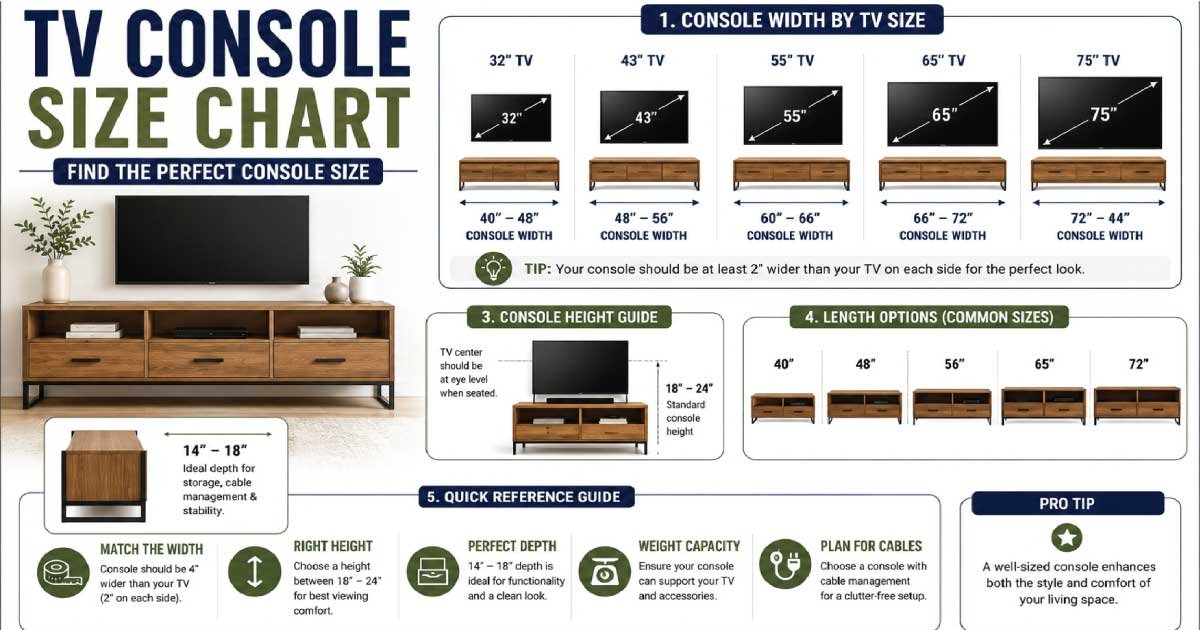
| TV Size | Minimum Console Width | Recommended Width | Console Height | Console Depth |
|---|---|---|---|---|
| 32-inch | 36 inches | 40–48 inches | 20–24 inches | 15–18 inches |
| 40-inch | 44 inches | 48–54 inches | 20–24 inches | 15–18 inches |
| 43-inch | 48 inches | 50–60 inches | 20–24 inches | 15–18 inches |
| 50-inch | 54 inches | 60–65 inches | 20–24 inches | 15–20 inches |
| 55-inch | 60 inches | 63–70 inches | 20–26 inches | 16–20 inches |
| 65-inch | 68 inches | 70–80 inches | 20–26 inches | 16–20 inches |
| 75-inch | 78 inches | 80–90 inches | 22–28 inches | 18–22 inches |
| 85-inch | 88 inches | 90–100 inches | 22–30 inches | 18–24 inches |
Standard TV Console Dimensions
Most TV consoles follow similar size ranges.
| Dimension | Standard Size |
|---|---|
| Width | 48–96 inches |
| Height | 20–30 inches |
| Depth | 15–24 inches |
These dimensions accommodate most modern flat-screen televisions while providing storage underneath.
TV Console Width Guide
The width is the most important measurement.
Ideally, your TV console should extend beyond both sides of the television.
Recommended Rule
Choose a console that is 6–12 inches wider than the TV on each side.
This creates:
- Better balance
- Greater stability
- Extra decorative space
- Improved safety
Example
A 65-inch TV measures approximately 57 inches wide.
A console between 70 and 80 inches creates the ideal appearance.
TV Console Height Guide
Console height affects viewing comfort.
The center of the television should generally sit close to eye level when seated.
Most homeowners prefer TV consoles between:
- 20 inches
- 22 inches
- 24 inches
- 26 inches
Lower consoles work especially well with large televisions.
TV Console Depth Guide
Depth determines how much equipment can fit inside the cabinet.
Typical depths include:
| Purpose | Recommended Depth |
|---|---|
| Small TVs | 15–18 inches |
| Gaming setup | 18–20 inches |
| Large entertainment center | 20–24 inches |
A deeper console allows room for:
- Gaming consoles
- Cable boxes
- Streaming devices
- Sound systems
- Receivers
TV Console Sizes by Television Size
32-Inch TV
Recommended console:
- Width: 40–48 inches
- Height: 20–24 inches
- Depth: 15–18 inches
Perfect for:
- Bedrooms
- Dorm rooms
- Guest rooms
43-Inch TV
Recommended console:
- Width: 50–60 inches
- Height: 20–24 inches
- Depth: 15–18 inches
Works well in:
- Apartments
- Small living rooms
- Offices
50-Inch TV
Recommended dimensions:
- Width: 60–65 inches
- Height: 20–24 inches
- Depth: 15–20 inches
Ideal for medium-sized rooms.
55-Inch TV
One of the most popular TV sizes.
Recommended console:
- Width: 63–70 inches
- Height: 20–26 inches
- Depth: 16–20 inches
This size provides enough storage without taking over the room.
65-Inch TV
A large television deserves a substantial console.
Recommended dimensions:
- Width: 70–80 inches
- Height: 20–26 inches
- Depth: 16–20 inches
These consoles often feature:
- Multiple cabinets
- Adjustable shelves
- Cable management holes
- Soft-close drawers
75-Inch TV
Recommended size:
- Width: 80–90 inches
- Height: 22–28 inches
- Depth: 18–22 inches
Perfect for:
- Home theaters
- Open-concept living rooms
- Family entertainment spaces
85-Inch TV
Recommended console:
- Width: 90–100 inches
- Height: 22–30 inches
- Depth: 18–24 inches
Large entertainment centers help balance oversized televisions while providing generous storage.
▶️ Related Size Guides 👉 How to Choose the Right TV Size for Your Room: A Complete Guide
Choosing the Right TV Console for Your Room
Room size matters just as much as TV size.
Small Living Room
Choose:
- 48–60 inch console
- Open shelving
- Light-colored finish
- Slim profile
This prevents the room from feeling crowded.
Medium Living Room
Ideal console width:
- 60–75 inches
Storage options:
- Cabinets
- Drawers
- Floating shelves
- Decorative displays
Large Living Room
Large spaces benefit from:
- 75–100 inch consoles
- Extra storage
- Wide entertainment centers
- Decorative accents
Large consoles prevent the TV from appearing too small on a large wall.
Wall-Mounted TV Console Sizing
Floating TV consoles have become increasingly popular.
Recommended measurements:
| TV Size | Floating Console Width |
|---|---|
| 43 inches | 48–60 inches |
| 55 inches | 60–70 inches |
| 65 inches | 70–80 inches |
| 75 inches | 80–90 inches |
Leave several inches between the console and the floor for a modern floating appearance.
▶️ Related Size Guides 👉 TV Wall Mount Size Chart: Complete Guide to Standard Sizes
TV Console Storage Options
Different households require different storage capacities.
Minimal Storage
Best for:
- Streaming users
- Minimalist homes
Includes:
- One shelf
- One drawer
Moderate Storage
Suitable for:
- Gaming
- Soundbars
- Cable boxes
Includes:
- Cabinets
- Adjustable shelves
- Open storage
Maximum Storage
Perfect for families.
May include:
- Four cabinets
- Multiple drawers
- Display shelving
- Hidden compartments
Storage needs often determine the ideal console depth and width.
How Much Weight Can a TV Console Hold?
Most quality TV consoles support:
| Console Type | Weight Capacity |
|---|---|
| Small | 75–120 lbs |
| Medium | 120–180 lbs |
| Large | 180–300 lbs |
Always verify the manufacturer’s weight rating before placing a television on the console.
Best Viewing Height
For comfortable viewing:
- TV center should align with seated eye level.
- Avoid placing the television too high.
- Larger TVs often pair best with lower consoles.
This reduces neck strain during long viewing sessions.
TV Console Materials
Material affects durability, appearance, and maintenance.
Solid Wood
Pros:
- Extremely durable
- Timeless appearance
- Long lifespan
Best for traditional and luxury interiors.
Engineered Wood
Pros:
- Affordable
- Modern finishes
- Lightweight
Ideal for budget-friendly homes.
Metal
Advantages:
- Industrial style
- Strong frame
- Modern appearance
Excellent for loft-style interiors.
Glass
Benefits:
- Elegant appearance
- Makes rooms feel larger
- Easy to clean
Works well in contemporary spaces.
Mistakes to Avoid
Avoid these common sizing mistakes:
Buying a Console That’s Too Small
A narrow console makes even an expensive television appear oversized.
Ignoring Room Dimensions
Always measure:
- Wall width
- Walking space
- Furniture placement
Choosing Excessive Height
Tall consoles raise the television above comfortable viewing level.
Not Measuring Electronics
Ensure shelves accommodate:
- Gaming consoles
- DVD players
- Receivers
- Routers
- Streaming devices
Poor Cable Management
Look for built-in cable holes to keep wires organized and hidden.
▶️ Related Size Guides 👉 TV Size Guide for Best Viewing Distance Tips
Quick TV Console Buying Checklist
Before purchasing, confirm:
- TV width
- Room measurements
- Wall space
- Console width
- Console depth
- Storage needs
- Weight capacity
- Viewing height
- Cable management
- Interior style
A few minutes of measuring can help you choose a console that fits beautifully and functions well for years.
Conclusion
Selecting the right TV console size is about more than matching your television—it’s about creating a comfortable, functional, and visually balanced entertainment area. By considering your TV dimensions, room size, storage needs, and viewing height, you can choose a console that enhances both style and practicality. Whether you’re furnishing a compact apartment or a spacious family room, following these size guidelines will help you invest in a TV console that looks great, supports your equipment safely, and complements your home for years to come.
FAQs:
What size TV console should I buy?
Choose a TV console that is at least 6 to 12 inches wider than your television on each side. This size provides better stability, creates a balanced appearance, and offers extra surface space for speakers, decorative items, media devices, and everyday entertainment accessories.
Is a TV console supposed to be wider than the TV?
Yes, a TV console should be wider than the television for both safety and visual appeal. A wider console provides better support, reduces the risk of accidental tipping, and leaves enough room for décor, soundbars, and other entertainment equipment.
How tall should a TV console be?
Most TV consoles measure between 20 and 26 inches in height. This range helps position the center of the television close to your seated eye level, creating a more comfortable viewing experience while reducing neck strain during extended watching sessions.
Can a TV hang over the edges of the console?
No, a television should not extend beyond the edges of the console. The TV base should rest completely on the surface with extra space on both sides to improve stability, enhance safety, and create a more balanced, attractive entertainment setup.
What is the standard depth of a TV console?
A standard TV console is typically 15 to 24 inches deep, providing enough room for televisions, gaming consoles, streaming devices, receivers, soundbars, and cable management. The ideal depth depends on your equipment and the amount of storage you need.
