
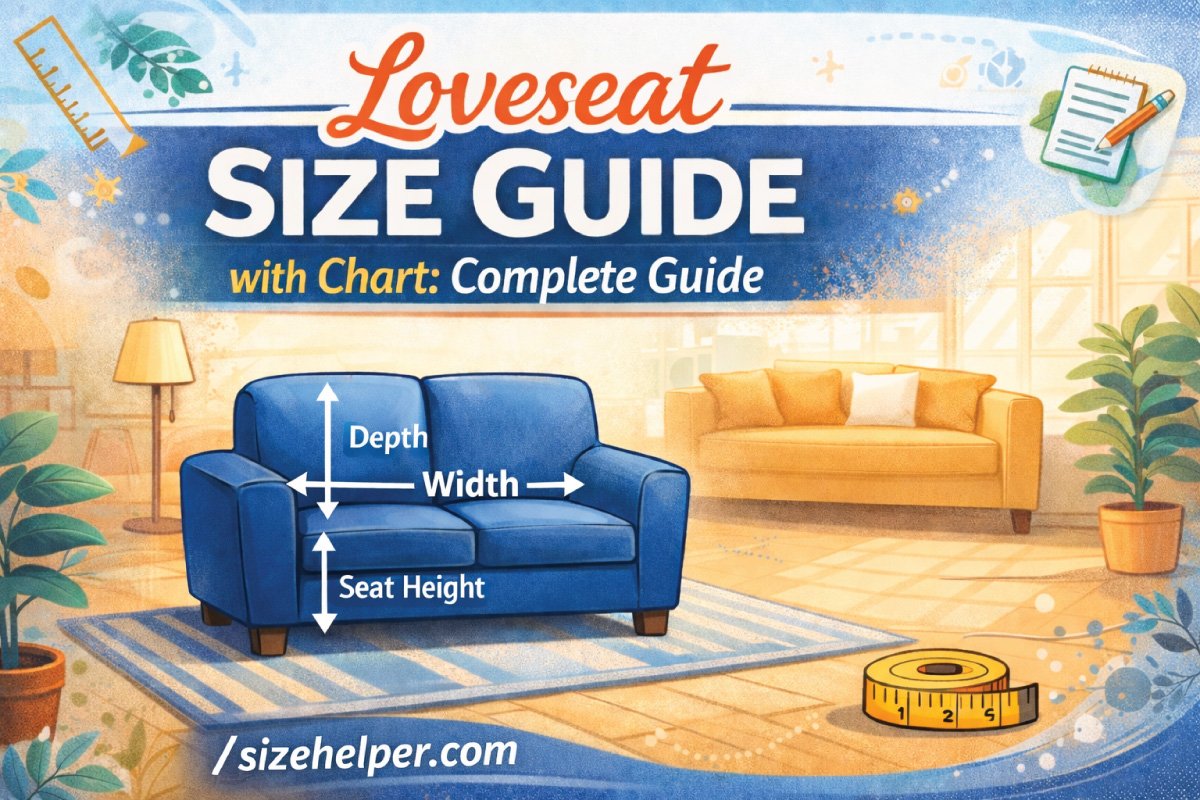
Choosing the right loveseat may seem simple at first—after all, it’s smaller than a sofa, right? That’s what I thought too, until I found myself standing in a furniture showroom with a tape measure in one hand and my phone in the other, trying to visualize whether a “compact loveseat” would actually fit in my living room without blocking the walkway.
If you have ever been confused by loveseat dimensions, styles, or how to choose the right size for your space, this guide is for you. In this complete loveseat size guide, I will break down standard measurements, explain how different styles affect size, include an easy-to-read chart, and share my own personal experience buying (and living with) a loveseat—mistakes and all.
What Is a Loveseat?
A loveseat is a small seating sofa designed to comfortably accommodate two people. Traditionally, loveseats were made for close seating (hence the name), but today they are used for much more practical reasons:
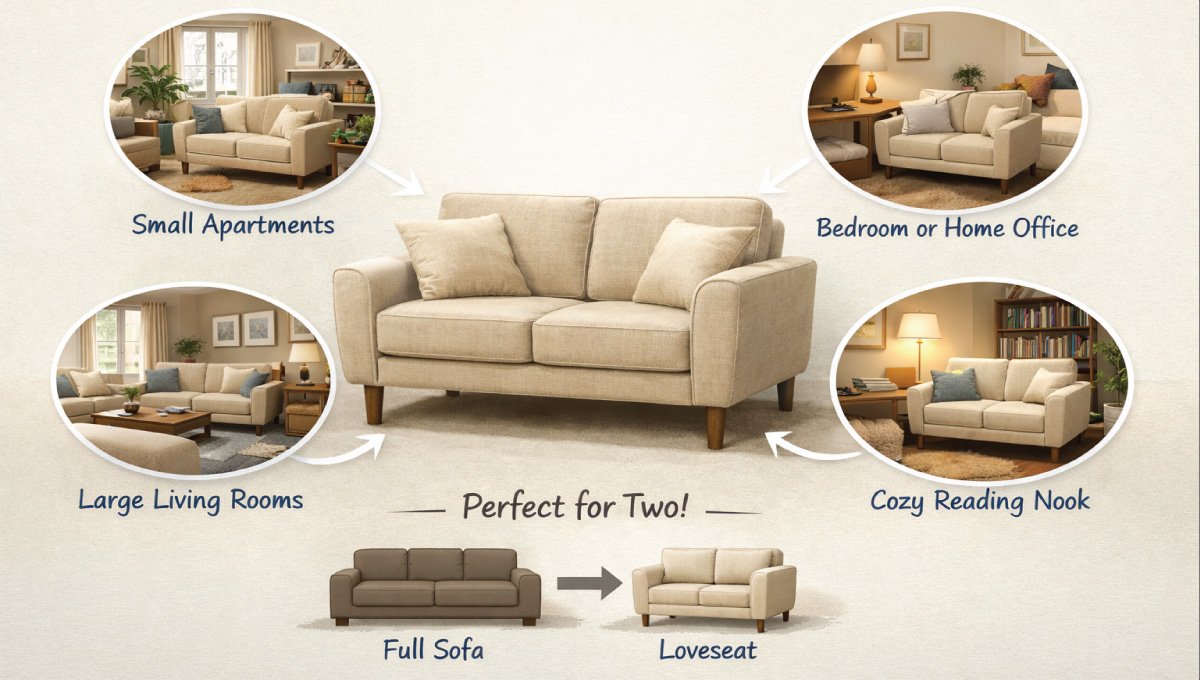
Small apartments
Bedrooms or home offices
Accent seating in large living rooms
Cozy reading corners
While loveseats are smaller than full sofas, their sizes can still vary significantly depending on style, cushioning, and arm design.
Loveseat Size Chart
A loveseat size chart makes it easy to compare different styles and their typical dimensions at a glance. Considering width, depth, and height helps you choose the right loveseat for your space, lifestyle, and comfort needs, while avoiding surprises caused by bulky arms or oversized cushions.
| Loveseat Type | Width (inches) | Depth (inches) | Height (inches) | Best For |
|---|---|---|---|---|
| Compact / Apartment Loveseat | 48–58 | 28–34 | 30–34 | Small apartments, studios |
| Standard Loveseat | 58–72 | 32–38 | 32–40 | Living rooms, shared spaces |
| Deep-Seat Loveseat | 60–72 | 38–40 | 32–38 | Lounging, taller users |
| Reclining Loveseat | 60–80 | 36–40 | 38–42 | Media rooms, comfort seating |
| Sleeper Loveseat | 52–75 | 35–40 | 34–40 | Guest rooms, multifunctional spaces |
Pro tip: Always check both overall width and seat width. Wide arms can dramatically reduce actual seating space.
Standard Loveseat Dimensions
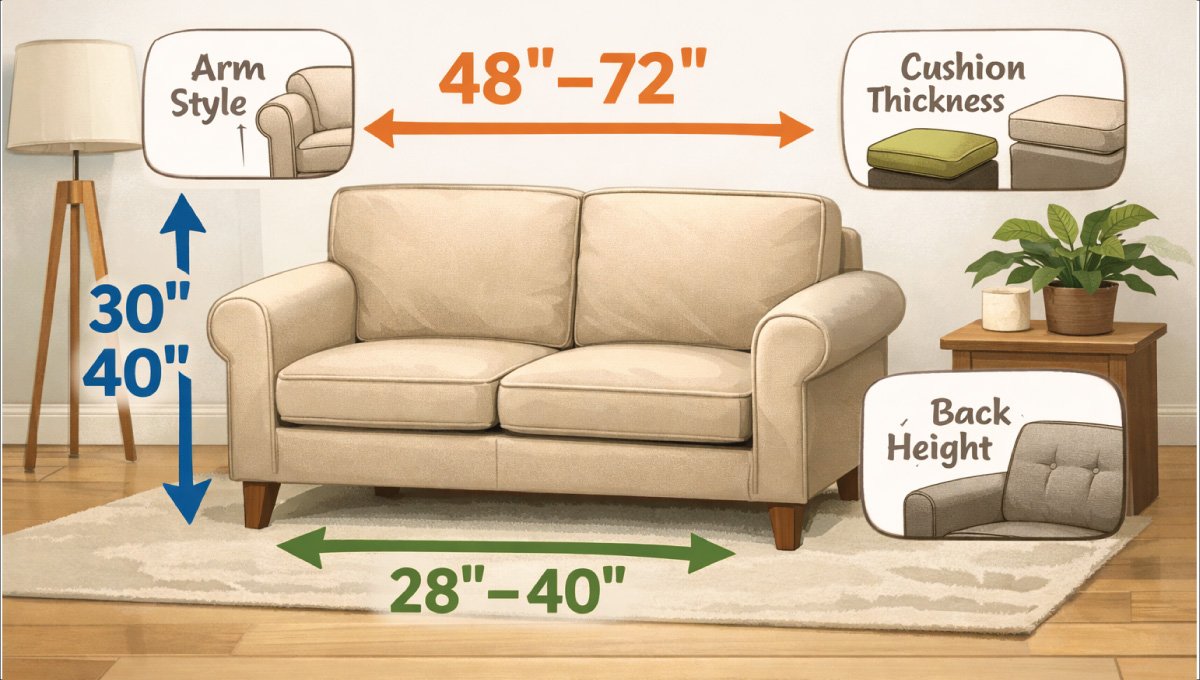
Width: 48–72 inches
Depth: 28–40 inches
Height: 30–40 inches
However, these numbers are only a starting point. I learned quickly that a loveseat labeled “60 inches wide” can feel very different depending on the arms, cushions, and back height.
How to Measure Your Space for a Loveseat
Here’s how to measure properly:
1. Measure the Available Width
Measure wall-to-wall or between furniture pieces
Leave at least 18–24 inches for walkways
2. Measure the Depth
Include space for coffee tables or ottomans
For recliners, add 12–18 inches of clearance when fully extended
3. Measure Doorways and Hallways
Check entry doors, stairwells, and elevator dimensions
Compare with loveseat packaged dimensions, not just assembled size
Loveseat Sizes by Room Type
Living Room Loveseats
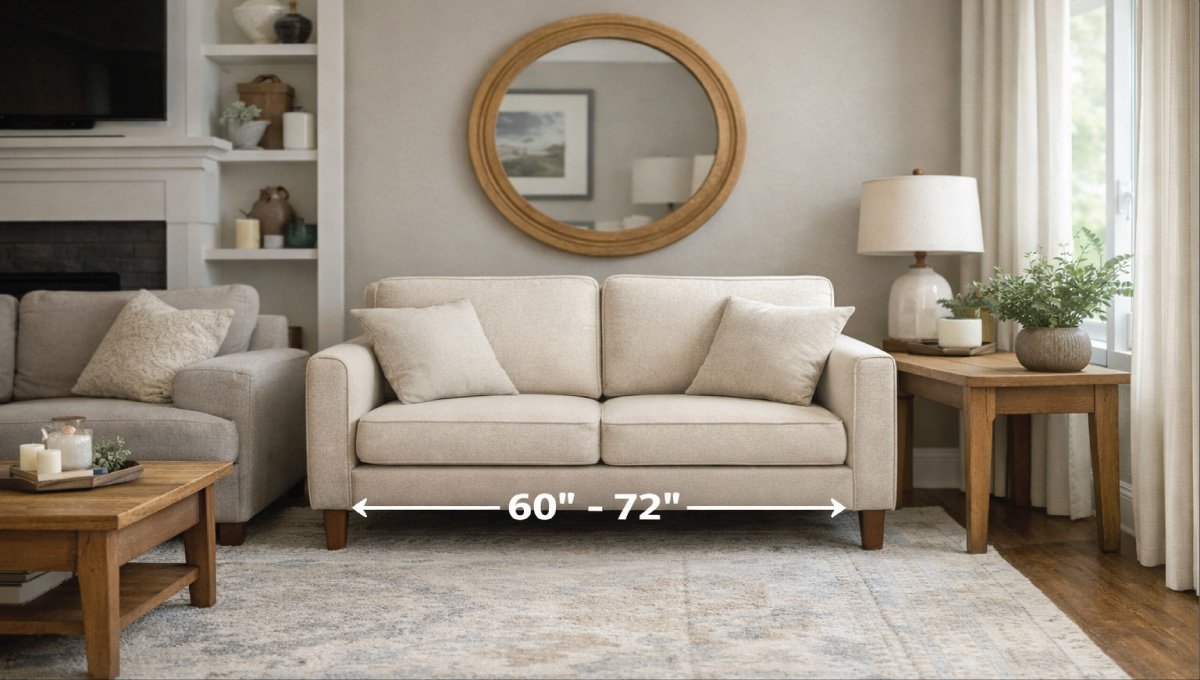
In a main living room, loveseats provide extra seating without dominating the space. Choosing a width of 60–72 inches strikes the right balance between comfort and proportion, allowing the loveseat to complement a larger sofa or sectional while keeping the room open and inviting.
Also Read:
Window Size Guide with Step by Step Measuring Tips
Apartment and Studio Loveseats
For small spaces, the right loveseat combines compact width with thoughtful design. Slim arms, raised legs, and tight backs maximize seating and keep the room feeling open, preventing bulky details from eating into usable space.
Bedroom Loveseats
For bedroom loveseats, a width of 50–60 inches and a depth under 34 inches ensures the piece fits comfortably without overwhelming the space. Opting for lighter colors and raised legs helps maintain an airy, open feel while adding a stylish, functional seating option.
Loveseat Styles and How They Affect Size
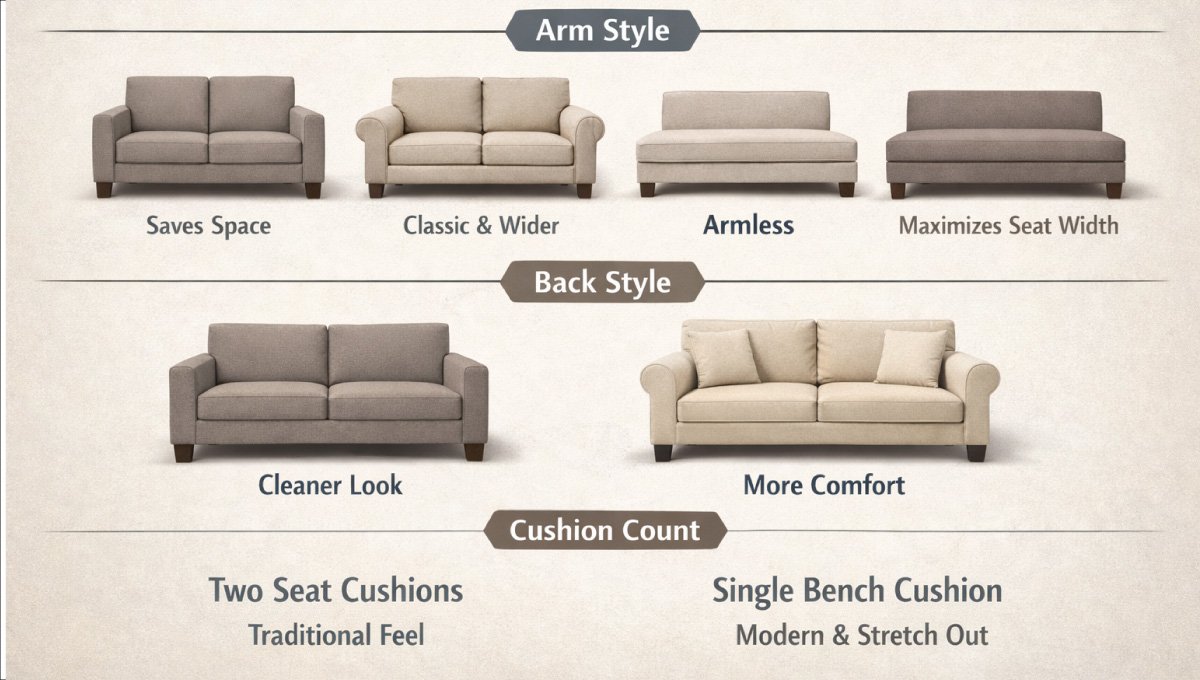
Arm Style
Track arms: Save space, modern look
Rolled arms: Classic, but wider
Armless: Maximizes seat width
Back Style
Tight back: Cleaner look, slightly smaller
Cushioned back: More comfort, more depth
Cushion Count
Two-seat cushions: More traditional, firmer feel
Single bench cushion: Modern, easier to stretch out
My Personal Experience Buying a Loveseat
Buying my first loveseat taught me the importance of looking beyond just width. Ignoring depth, arm thickness, and floor space led to a piece that looked perfect online but felt cramped in real life. After testing seat dimensions, visualizing the footprint with tape, and trying multiple models, I found a loveseat that fits perfectly and remains one of my most-used pieces of furniture.
When I bought my first loveseat, I made three classic mistakes:
I only checked width—not depth
I ignored arm thickness
I didn’t tape the dimensions on the floor
The loveseat looked perfect online: 60 inches wide, “apartment-friendly,” and stylish. In reality, the deep cushions pushed it too close to my coffee table, and the bulky arms reduced the seating area so much that two adults felt cramped.
The second time around, I did it right:
I taped the loveseat outline on the floor
I sat on multiple models in-store
I checked seat depth and seat height
That loveseat is still in my home today, and it’s easily one of the most-used pieces of furniture I own.
Loveseat vs Sofa: Size Comparison
Loveseats and sofas differ primarily in size, seating capacity, and visual impact. Loveseats, typically 48–72 inches wide, suit small spaces and provide compact, secondary seating. Sofas, at 72–96 inches, serve as the main seating area and create a stronger visual presence. In rooms under 12 x 12 feet, a loveseat often feels more proportionate and balanced than a full sofa.
| Feature | Loveseat | Sofa |
|---|---|---|
| Typical Width | 48–72 inches | 72–96 inches |
| Seating Capacity | 2 people | 3–4 people |
| Best For | Small spaces, accents | Main seating |
| Visual Impact | Light, compact | Dominant, central |
If your room is under 12 x 12 feet, a loveseat often feels more balanced than a full sofa.
Tips for Choosing the Right Loveseat Size
Sit on it if possible
Compare seat width, not just overall width
Match scale to room size
Consider who will use it most
Tape dimensions on the floor before buying
How Loveseat Size Affects Everyday Comfort Over Time
One thing I didn’t expect when I bought my first loveseat was how much my opinion would change after living with it for a few months. At first, it felt fine—cozy, stylish, and compact. But over time, small sizing issues became more noticeable.
A loveseat that’s slightly too shallow may feel upright and neat, but it can become uncomfortable during long TV sessions. On the other hand, a loveseat that’s too deep can feel great for lounging but awkward for conversation, especially if your feet don’t reach the floor.
From personal experience, the most comfortable loveseat sizes are the ones that support multiple uses:
Sitting upright with both feet on the floor
Leaning back with a throw pillow
Sharing space without bumping elbows
If a loveseat only feels good in one position, it usually means the size—or proportions—aren’t quite right.
Also Read:
Side Table Size Guide with Chart: Complete Guide
Loveseat Size and Room Flow: Why Inches Matter
Loveseats are often chosen to “save space,” but I’ve learned that even small pieces can disrupt a room’s flow if the size is off.
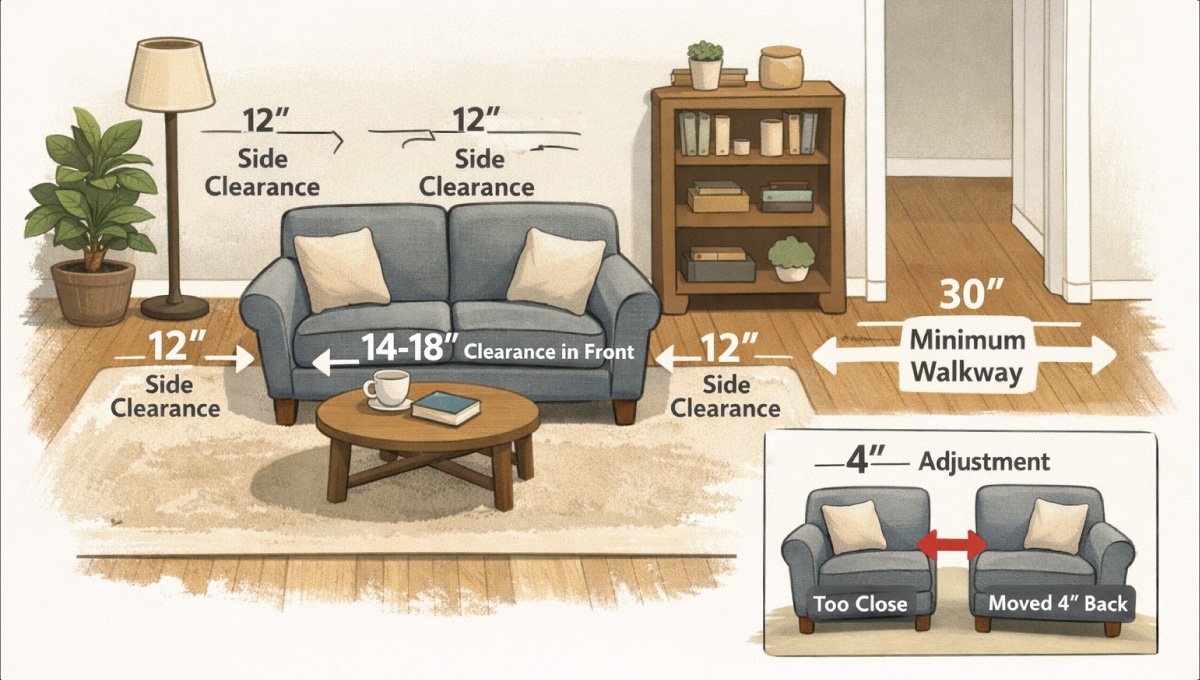
Here’s what I now plan for when placing a loveseat:
Clearance in front: 14–18 inches (for coffee tables or ottomans)
Clearance on sides: At least 12 inches
Walkways nearby: 30 inches minimum
In one apartment, I placed a loveseat too close to the entry path. It technically fit, but every guest brushed against it when walking by. Sliding it just 4 inches made the room feel calmer and more open.
Those little spacing adjustments matter more with loveseats because they’re often used in tighter layouts.
Loveseat Size for Different Body Types
For Taller Users
Look for deeper seats (22–24 inches)
Avoid very low seat heights
Slightly wider loveseats feel less cramped
For Shorter Users
Standard seat depth (20–21 inches) is usually better
Lower seat heights feel more comfortable
Overly deep loveseats may require extra pillows
I’m average height, but several taller friends immediately commented when a loveseat felt “too shallow” for them. Comfort is personal, and loveseat size plays a big role in that.
When a Loveseat Is Better Than a Sofa
A loveseat works better when:
The room has multiple doors or walkways
You want to add accent chairs instead of one large couch
The space needs flexibility for rearranging
The loveseat isn’t the primary seating
In my own home, replacing a bulky sofa with a loveseat plus two chairs made the room feel more open and more functional—even though seating capacity stayed the same.
Loveseat Size and Visual Weight
Visual weight is affected by:
Arm thickness
Cushion bulk
Leg height
Fabric color
For example, a 60-inch loveseat with slim arms and raised legs can feel much lighter than a 58-inch loveseat with thick rolled arms and a skirted base.
I once compared two loveseats only 2 inches apart in width—the sleeker design looked noticeably smaller and fit the room better, even though the difference on paper was minimal.
Final Thoughts:
A loveseat may be smaller than a sofa, but choosing the right size requires just as much planning—if not more. Between room layout, style variations, and comfort preferences, dimensions can make or break how the piece functions in your space.
From my own experience, taking extra time to measure, test, and visualize saved me from buyer’s remorse and helped me find a loveseat that truly fits my home and lifestyle.
If you’re shopping for one right now, keep this guide handy—and don’t underestimate the power of a tape measure.
Also Read:
How to Choose the Right Rug Size for a Living Room: A Complete Guide
