
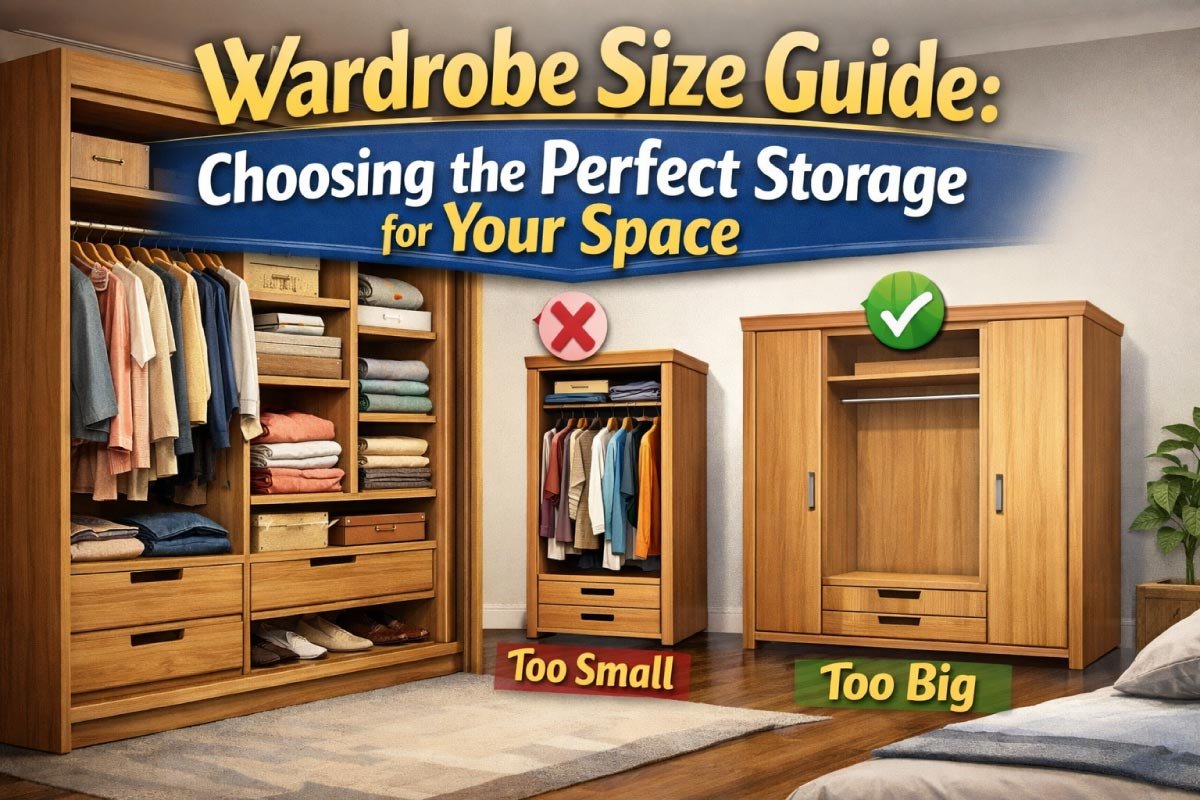
A wardrobe is one of the most essential pieces of furniture in any home. Beyond just storing clothes, it defines organization, space efficiency, and even the aesthetic appeal of your bedroom.
Choosing the right wardrobe size is crucial—not too small to cram your belongings, and not so large that it overwhelms the room.
This guide will help you navigate wardrobe dimensions, types, and designs to make the best choice for your space.
Understanding Standard Wardrobe Sizes
Choosing the right wardrobe size is essential for both storage and room layout.
Wardrobes vary by doors, compartments, and available space, ensuring functional organization without overcrowding.
Selecting the right type maximizes efficiency while keeping your bedroom neat and accessible.
-
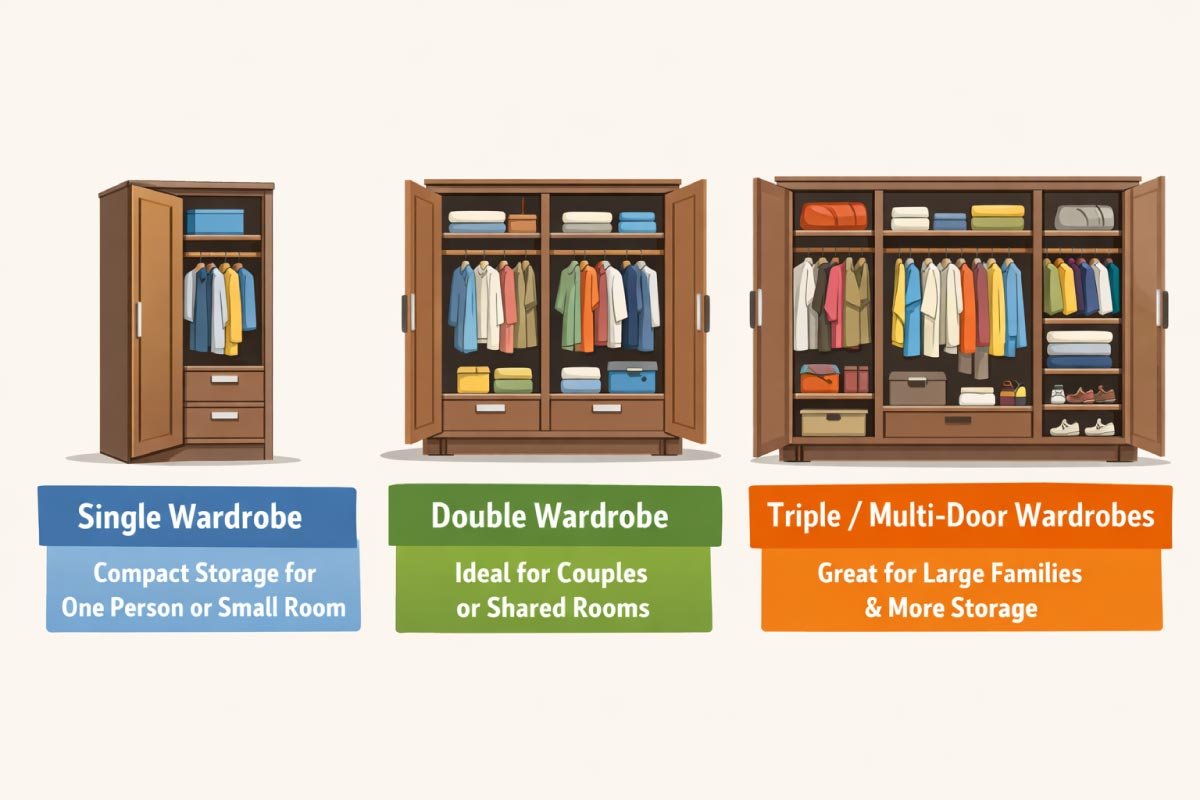
Single Wardrobe – Compact storage for one person or a small room.
-
Double Wardrobe – Ideal for couples or shared rooms, providing ample storage.
-
Triple or Multi-Door Wardrobes – Large families or those with more clothing and accessories prefer these.
Standard Wardrobe Dimensions by Type
Choosing the right wardrobe involves more than style—it’s about functionality, space, and storage needs.
Wardrobes come in various types, each suited to different room sizes and clothing storage requirements.
Understanding standard dimensions helps you maximize space while keeping your clothes organized, accessible, and neatly arranged.
1. Single-Door Wardrobe
Single-door wardrobes are compact and ideal for small bedrooms or guest rooms.
Typically measuring 18–24 inches in width, 20 inches in depth, and 72 inches in height,
they provide enough space for hanging a few garments and storing essentials, making them a practical solution for minimalistic storage needs.
2. Double-Door Wardrobe
Double-door wardrobes are a popular choice for medium-sized bedrooms. Standard dimensions range from 36–48 inches in width, 20–24 inches in depth, and 72 inches in height.
They offer separate compartments for hanging clothes and shelves for folded items, providing a balance between storage space and room footprint.
3. Sliding Door Wardrobe
Sliding door wardrobes save space by eliminating the need for door clearance.
Commonly 60–80 inches wide, 24 inches deep, and 72 inches high, they feature multiple compartments, shelves, and hanging rods.
Perfect for contemporary bedrooms, they combine style with functionality while maximizing usable floor space.
4. Triple-Door Wardrobe
Triple-door wardrobes suit larger bedrooms and families needing extra storage.
With widths ranging from 60–72 inches, depths of 24–26 inches, and heights of 72–78 inches, they provide multiple hanging sections, shelves, and drawers.
Their spacious design allows organized storage for seasonal clothes and accessories.
5. Corner Wardrobe
Corner wardrobes efficiently utilize unused room corners. Dimensions typically range from 48–72 inches in width (combined sides), 24 inches in depth, and 72 inches in height.
They often include angled hanging spaces and shelves, ideal for small rooms or irregular layouts where standard wardrobes cannot fit conveniently.
6. Modular Wardrobe
Modular wardrobes are customizable storage solutions.
Standard units are 24 inches deep and 72 inches high, with widths adjustable per design. These allow flexible compartment arrangements,
including hanging rods, shelves, and drawers. Ideal for changing storage needs, they adapt to different room sizes and personal preferences.
7. Walk-In Wardrobe
Walk-in wardrobes are spacious, luxurious storage areas. Standard dimensions start at 72 inches width and 24 inches depth, often extending much larger based on room availability.
They include multiple hanging zones, drawers, shelves, and sometimes islands, providing an organized, boutique-like experience for extensive clothing collections.
| Wardrobe Type | Width (inches) | Depth (inches) | Height (inches) | Ideal For |
|---|---|---|---|---|
| Single Door | 24–30 | 20–24 | 72–84 | Small rooms, single person |
| Double Door | 36–48 | 20–24 | 72–84 | Couples, medium bedrooms |
| Triple Door | 60–72 | 20–24 | 72–84 | Families, large storage |
| Sliding Door | 48–96 | 22–26 | 72–96 | Space-saving, modern look |
| Walk-in Wardrobe | 96+ | 48+ | 84+ | Luxury, large spaces |
Pro Tip: Depth is crucial—too shallow and clothes may wrinkle; too deep and accessing items becomes inconvenient.
Choosing Wardrobe Height
Selecting the right wardrobe height ensures optimal storage and easy access.
Standard heights fit most rooms, while taller options can maximize vertical space in apartments.
Measuring carefully prevents installation issues and allows you to make full use of both regular and top compartments.
-
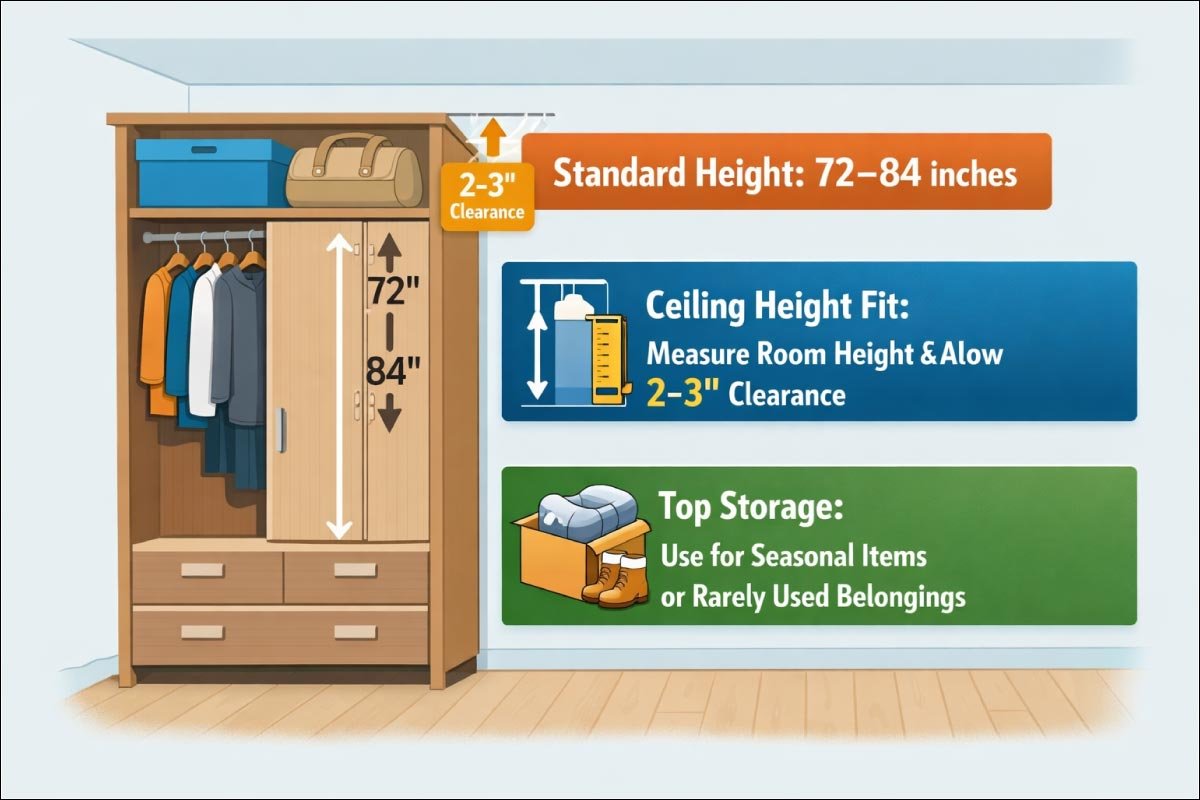
Standard Height: 72–84 inches
-
Ceiling Height Fit: Measure your room’s height and allow 2–3 inches for clearance.
-
Top Storage: Utilize upper compartments for seasonal items or rarely used belongings.
Wardrobe Height Guide
Wardrobe height plays a key role in storage efficiency and room design. From standard to lofted or walk-in styles,
knowing typical heights and required clearances ensures your wardrobe fits seamlessly while maximizing space.
Proper planning prevents accessibility issues and makes organizing clothes easier and more practical.
| Wardrobe Type | Typical Height (inches) | Clearance Needed (inches) | Notes |
|---|---|---|---|
| Standard Wardrobe | 72–84 | 2–3 | Fits most rooms |
| Floor-to-Ceiling | 96+ | 1–2 | Maximizes storage |
| Modular Wardrobe | 72–96 | Adjustable | Flexible installation |
| Walk-in Wardrobe | 84+ | 4–6 | Allows hanging rails & shelves |
| Lofted Wardrobe | 90+ | 2–4 | Use with ladders or steps |
Wardrobe Width: How Much Space Do You Need?
Choosing the right wardrobe width balances storage capacity with available room space.
The width determines how many items you can organize efficiently and affects door functionality.
Selecting an appropriate size ensures easy access while keeping your bedroom uncluttered and practical.
-
Single wardrobes are suitable for limited space and fewer clothes.
-
Double and triple wardrobes accommodate multiple family members.
-
Sliding doors require less floor clearance than swing doors, making them ideal for narrow bedrooms.
Wardrobe Width by Storage Capacity
Wardrobe width should align with your storage needs and room space.
From minimal to walk-in options, selecting the right width ensures sufficient clothing storage while maintaining accessibility.
Planning for clearance and daily usage helps keep the wardrobe functional, organized, and comfortable for one or multiple users.
| Storage Capacity | Wardrobe Width (inches) | Recommended Users | Additional Tips |
|---|---|---|---|
| Minimal Storage | 24–30 | 1 person | Best for small rooms or studios |
| Moderate Storage | 36–48 | 1–2 people | Good for daily wear |
| Large Storage | 60–72 | 2–3 people | Can store seasonal clothing |
| Family Storage | 72–96 | 3+ people | Ideal for shared rooms |
| Walk-in Storage | 96+ | Multiple users | Can include accessories & shoes |
Tip: Always measure your room’s wall space and allow 12–24 inches clearance for movement around the wardrobe.
Discover More:
Wardrobe Depth and Internal Organization
Choosing the right wardrobe depth ensures your clothes fit comfortably and your storage space is functional.
Proper internal organization, including shelves, drawers, and hanging rails, maximizes usability and keeps garments neat.
Consider depth carefully to balance accessibility with room layout.
-
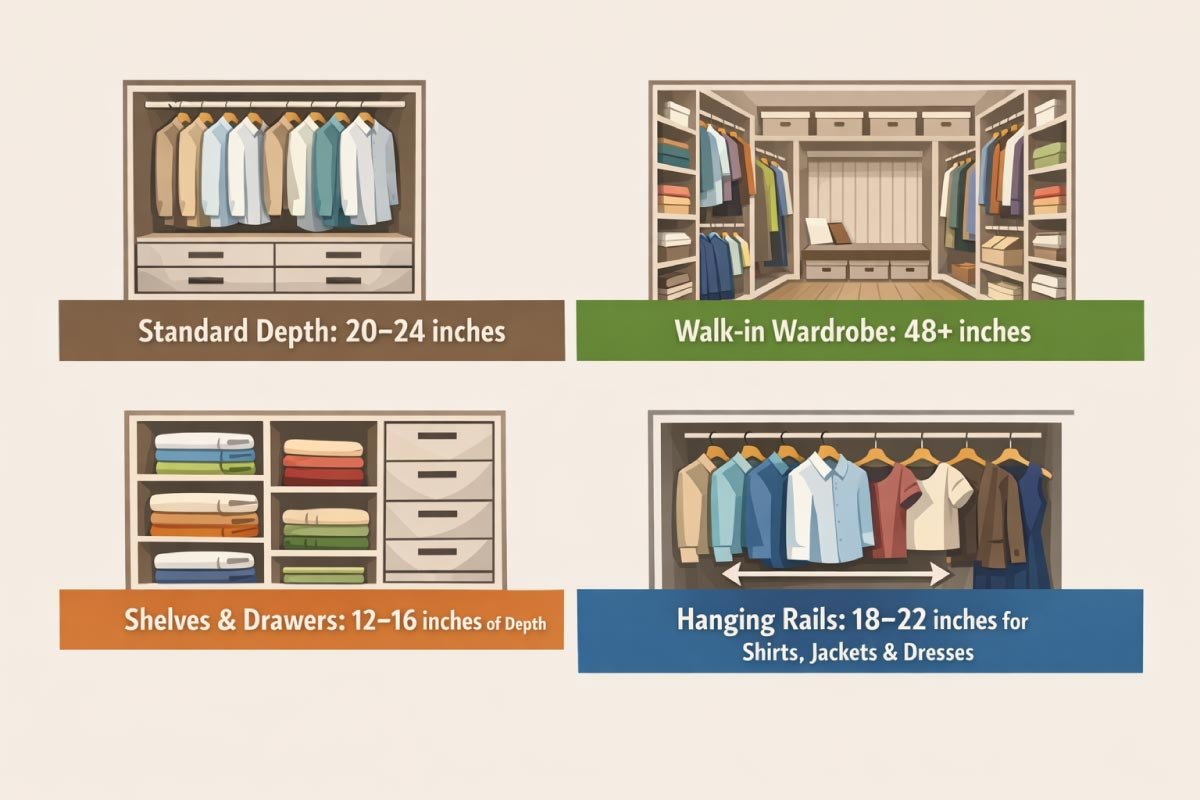
Standard Depth: 20–24 inches
-
Walk-in Wardrobe: 48+ inches
-
Shelves and Drawers: Allow 12–16 inches of depth for folded clothes.
-
Hanging Rails: For shirts, jackets, and dresses, 18–22 inches is optimal.
Wardrobe Depth and Internal Layout
Wardrobe depth and internal layout are essential for easy access and organized storage.
Proper depth ensures clothes, shoes, and accessories fit comfortably without overcrowding.
Considering item types and using shelves, drawers, or pull-out racks maximizes space efficiency while keeping everything within reach for daily convenience.
| Item Type | Recommended Depth (inches) | Notes |
|---|---|---|
| Hanging Clothes | 18–22 | Avoid overcrowding |
| Folded Clothes | 12–16 | Use shelves or cubbies |
| Shoes | 8–12 | Adjustable racks work best |
| Accessories | 6–10 | Drawers or compartments preferred |
| Sliding Wardrobe | 22–26 | Extra depth for sliding mechanism |
Pro Tip: Overly deep wardrobes can make it hard to reach items at the back; consider pull-out racks or drawers.
Discover More:
Wardrobe Doors: Swing vs Sliding
Wardrobe doors influence both the look and usability of your storage.
The right choice depends on available space, room layout, and personal style.
Understanding the pros and cons of swing, sliding, bi-fold, and mirror doors helps create a wardrobe that is practical and visually appealing.
-
Swing Doors: Require floor space to open fully; traditional and easy to install.
-
Sliding Doors: Perfect for tight spaces; modern appearance.
-
Bi-Fold Doors: A mix of both; occupy less space than swing doors.
-
Mirror Doors: Adds the illusion of a larger room.
Wardrobe Door Types and Considerations
choosing the right wardrobe door type affects both functionality and room aesthetics.
From classic swing doors to space-saving sliding or mirrored options, each style suits different spaces and lifestyles.
Understanding space requirements and benefits ensures your wardrobe complements the room while providing easy access and efficient storage.
| Door Type | Space Requirement | Style & Benefits | Ideal For |
|---|---|---|---|
| Swing Doors | High | Classic look, easy access | Spacious bedrooms |
| Sliding Doors | Low | Space-saving, contemporary | Small rooms, apartments |
| Bi-Fold Doors | Medium | Combines swing & sliding features | Moderate space availability |
| Mirror Doors | Low–Medium | Makes room appear bigger, functional | Bedrooms, guest rooms |
| Open Wardrobe | None | Easy access, display option | Walk-in closets, studios |
Custom vs Modular Wardrobes
Choosing between custom, modular, or ready-made wardrobes impacts both style and practicality.
The right type depends on your space, budget, and storage needs.
Understanding the benefits of each option ensures a wardrobe that maximizes functionality while complementing your bedroom’s design.
-
Custom Wardrobes: Tailored to fit your room perfectly; allows full control over layout, materials, and finishes.
-
Modular Wardrobes: Pre-fabricated units that can be rearranged or expanded; cost-effective and flexible.
-
Ready-Made Wardrobes: Standard dimensions; quick to install but less flexible.
Tip: If your bedroom has sloping ceilings, alcoves, or odd corners, a custom wardrobe is usually the best choice.
Discover More:
Additional Considerations When Choosing Wardrobe Size
Selecting the right wardrobe size goes beyond measurements.
Consider room layout, ceiling height, lifestyle needs, and aesthetics to ensure it fits seamlessly.
Planning for future flexibility helps accommodate changing storage requirements, making your wardrobe both practical and stylish for years to come.
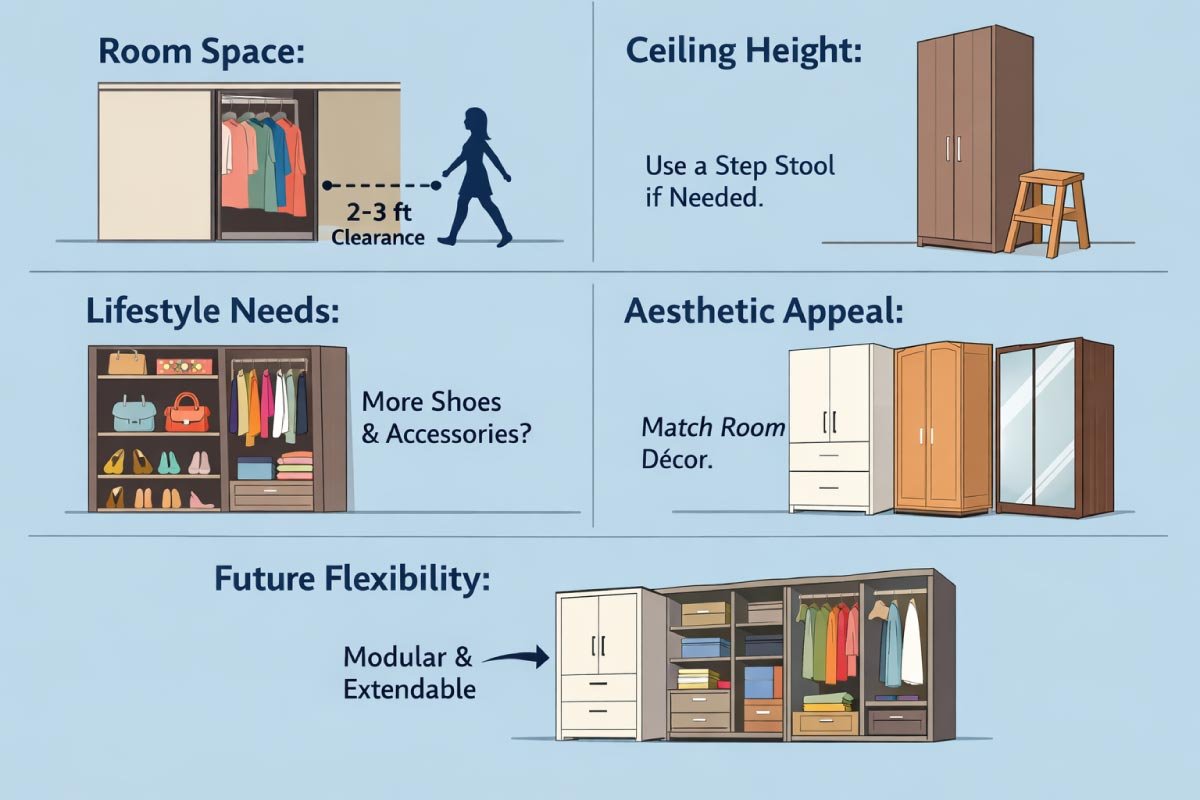
-
Room Space: Always leave at least 2–3 feet of clearance for walking in front of the wardrobe.
-
Ceiling Height: Tall wardrobes can provide extra storage but may require a step stool.
-
Lifestyle Needs: If you have many shoes, accessories, or seasonal clothing, choose a wider wardrobe or one with multiple compartments.
-
Aesthetic Appeal: Color, finish, and door style should complement your room décor.
-
Future Flexibility: Modular or extendable wardrobes allow for adjustments as your storage needs grow.
Discover More:
How to Maximize Wardrobe Efficiency
Maximizing wardrobe efficiency is essential for keeping your clothes and accessories organized while making the most of your space.
By smartly arranging items, utilizing vertical storage, and incorporating functional features, you can create a wardrobe
that not only looks tidy but also simplifies your daily routine, saving time and reducing clutter.
1. Use Vertical Space Effectively
To maximize wardrobe efficiency, always think vertically. Install upper shelves, stackable boxes, or hanging organizers for items used less frequently, such as seasonal clothing.
This approach frees up accessible lower space for everyday items, keeping essentials within reach.
Proper vertical storage ensures you utilize every inch of your wardrobe without overcrowding or wasting space.
2. Compartmentalize Your Items
Dividing your wardrobe into sections for clothing, accessories, and shoes reduces clutter and makes it easier to locate items quickly.
Use labeled bins, baskets, or small containers to separate similar items.
Compartmentalization prevents mix-ups and encourages consistent organization, helping maintain a neat wardrobe even when storage space is limited.
3. Install Pull-Out Drawers for Small Items
Small items like socks, belts, scarves, or jewelry often get lost in large compartments.
Pull-out drawers or sliding organizers are ideal for keeping these items visible and accessible.
These drawers allow for easy retrieval without disrupting other wardrobe sections, helping maintain a clean and orderly space while maximizing efficiency.
4. Opt for Multi-Functional Wardrobes
Consider wardrobes that serve more than one purpose, such as designs that include a dresser, study desk, or entertainment unit.
Multi-functional wardrobes save space by combining storage with utility, making them perfect for smaller rooms.
These smart designs help you consolidate furniture while keeping belongings neatly organized in one accessible area.
5. Regularly Declutter and Reassess
A key to efficient wardrobe use is periodic decluttering. Remove items you no longer wear or need and reorganize based on current usage patterns.
Seasonal rotation and reassessment of storage layouts ensure the wardrobe remains practical and clutter-free,
making it easier to maintain order while maximizing the available storage space.
Conclusion
Choosing the right wardrobe is more than just picking a piece of furniture—it’s about maximizing storage, organizing your belongings, and enhancing the aesthetics of your room.
By carefully considering dimensions like height, width, depth, and door type, you can ensure your wardrobe fits perfectly and serves your lifestyle needs for years to come.
Whether you opt for a compact single wardrobe, a spacious multi-door unit, or a luxurious walk-in closet, measuring your space and understanding your storage requirements are the keys to a successful choice.
Discover More:

I am Engineer Hassan, a professional engineer with over 15 years of experience in measurements, design accuracy, and furniture, appliance, and home product sizing. Through Size Helper, I provide research-based guides and trending 2026 home design ideas for living rooms, bedrooms, sofas, wall décor, fashion, and sports—helping users make confident, informed decisions. Every guide is written with real expertise, verified data, and a commitment to quality, usability, and style.