
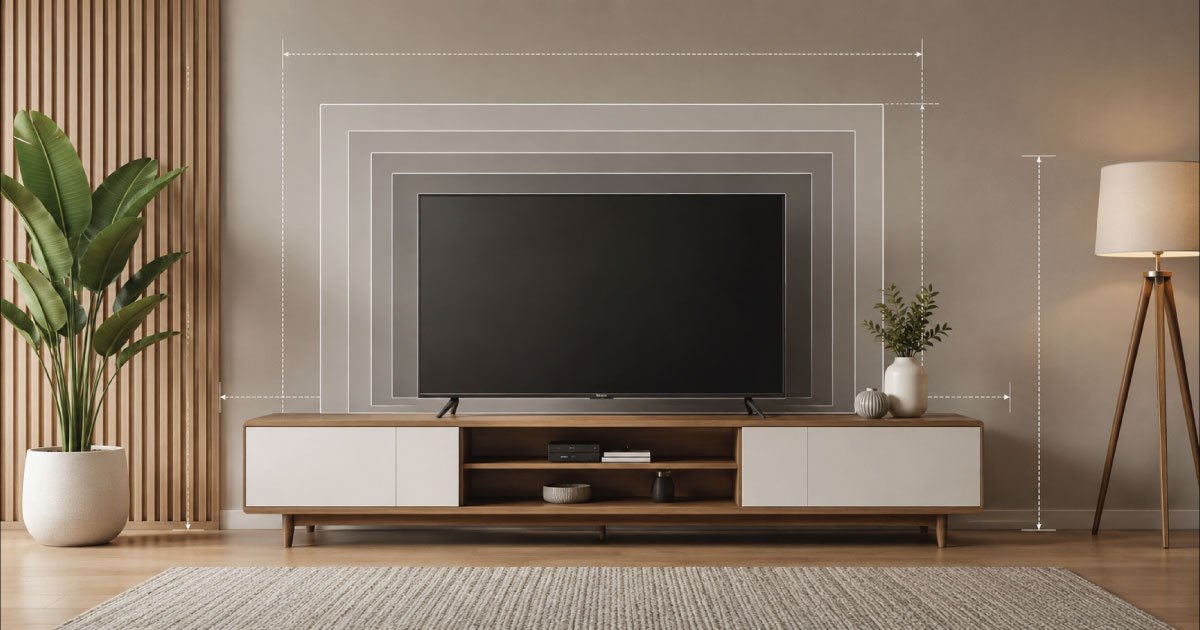
Choosing the right TV stand is not just about style—it’s mostly about size, safety, and viewing comfort. A stand that’s too small can make your setup unstable, while one that’s too large can overwhelm your room. This TV Stand Size Chart guide explains exactly what size stand you need for different TV sizes, how to measure correctly, and what factors you should consider before buying.
Whether you have a compact 32-inch TV or a large 85-inch home theater display, this guide will help you pick the right fit with confidence.
Why TV Stand Size Matters
A properly sized TV stand is essential for both safety and aesthetics. It supports your TV, organizes your media setup, and anchors the entire entertainment area in your room.
A TV stand is the foundation of your entertainment setup. If it’s incorrectly sized, you may face:
- Poor stability (risk of tipping)
- Awkward viewing angles
- Reduced room aesthetics
- Limited storage or wasted space
The goal is simple: your TV stand should be wider than your TV, proportionate to your room, and strong enough to support the weight.
Understanding TV Size (Important First Step)
Before choosing a TV stand, it’s essential to understand how TV sizes actually work. Many people assume the listed size represents width, but that’s not the case—this misunderstanding often leads to incorrect furniture sizing.
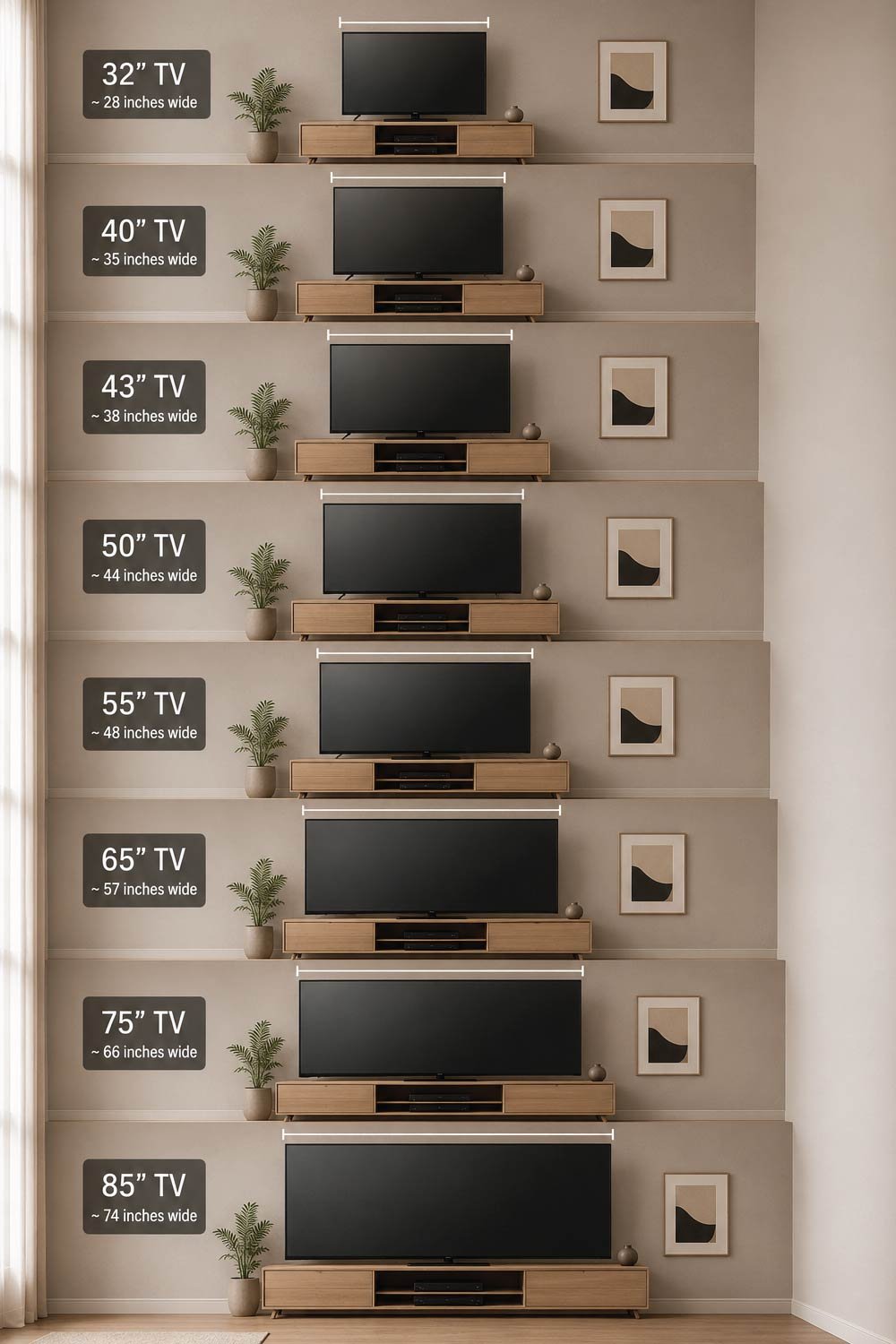
TV sizes are measured diagonally, not horizontally. That means a “55-inch TV” is not 55 inches wide.
Approximate TV Widths
These width estimates help you choose the correct TV stand size based on actual screen width—not diagonal measurement.
- 32″ TV → ~28 inches wide
- 40″ TV → ~35 inches wide
- 43″ TV → ~38 inches wide
- 50″ TV → ~44 inches wide
- 55″ TV → ~48 inches wide
- 65″ TV → ~57 inches wide
- 75″ TV → ~66 inches wide
- 85″ TV → ~74 inches wide
This is important because your TV stand should be based on width, not diagonal size.
Standard TV Stand Size Chart
Choosing the correct TV stand width ensures stability, visual balance, and a better overall setup. This chart helps you quickly match your TV size with the ideal stand dimensions.
Below is a practical TV stand size chart showing recommended stand widths for each TV size.
TV Stand Size Chart Overview
Use these guidelines to select a stand that properly supports your TV and fits your space:
- 32″ TV → Stand width: 40–50 inches
- 40″ TV → Stand width: 50–60 inches
- 43″ TV → Stand width: 55–65 inches
- 50″ TV → Stand width: 60–70 inches
- 55″ TV → Stand width: 65–75 inches
- 65″ TV → Stand width: 75–90 inches
- 75″ TV → Stand width: 90–110 inches
- 85″ TV → Stand width: 110–130 inches
Golden Rule for TV Stand Width
This simple rule ensures your setup looks balanced and remains safe.Your TV stand should be at least 2–6 inches wider on each side of your TV.This extra width improves stability and creates a more visually appealing setup.
Ideal TV Stand Size Rules (Easy Formula)
If you don’t want to rely on charts, these simple rules make it easy to choose the right TV stand size. They ensure safety, balance, and proper proportions in any room.
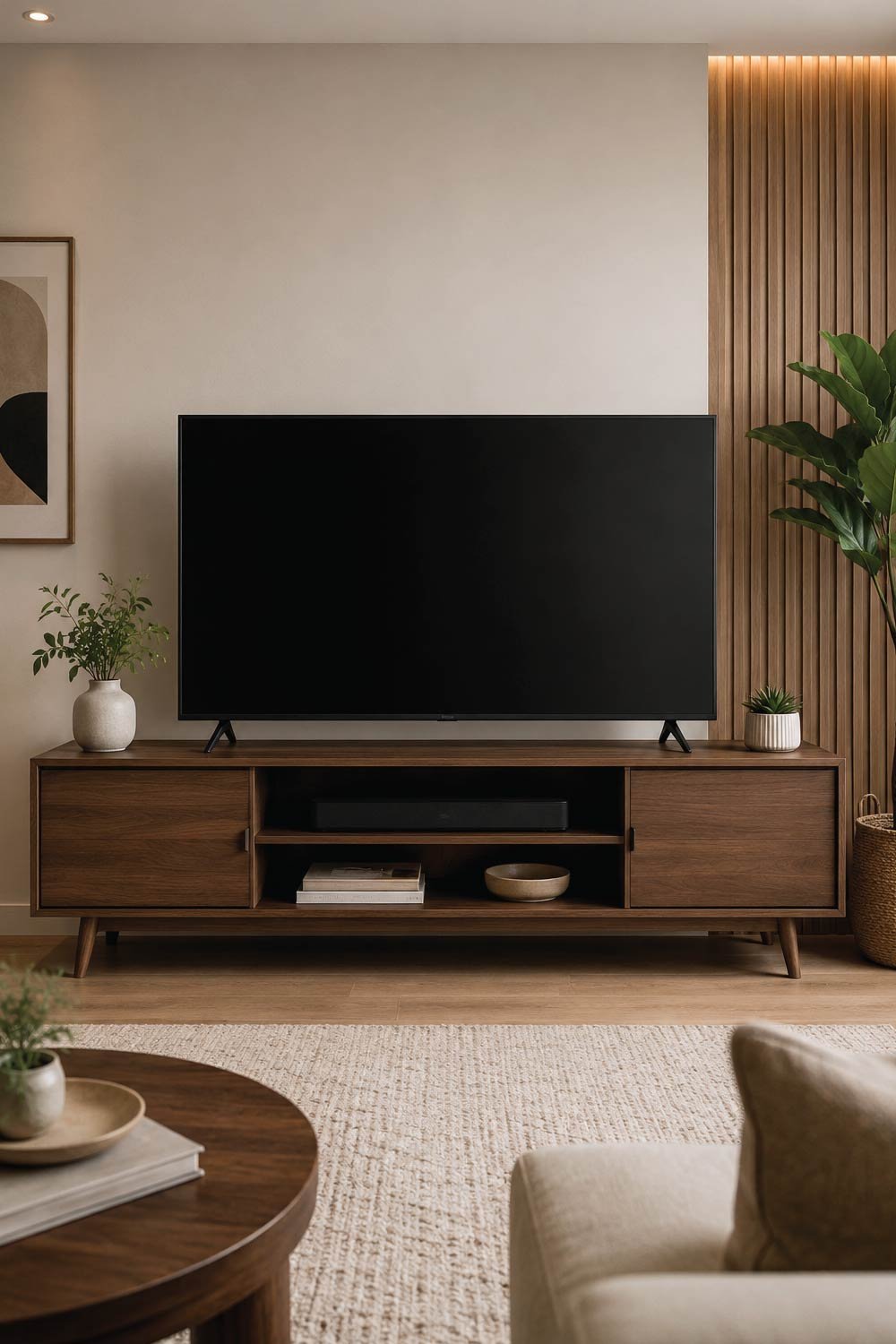
If you don’t want to memorize charts, use this universal formula:
Safe Fit Rule
This rule ensures your TV sits securely on the stand without risk.
- TV stand width = TV width + 4 to 12 inches total
Balanced Look Rule
This guideline improves the visual appeal by evenly framing your TV.
- TV stand should extend:
- 2–6 inches on the left
- 2–6 inches on the right
Minimum Safety Rule
This is a non-negotiable rule for stability and safety.
- Never choose a stand narrower than your TV width.
TV Stand Height Guidelines
Height is just as important as width. The correct height prevents neck strain and ensures a comfortable viewing experience.
Recommended TV Stand Height
Different stand heights suit different seating arrangements and room types.
- Low profile stands: 15–20 inches (modern, sofa-level viewing)
- Standard stands: 20–25 inches (most common)
- Tall stands: 25–30 inches (for bedrooms or elevated seating)
Ideal Viewing Rule
Proper TV placement improves comfort during long viewing sessions.
- The center of the TV screen should be at eye level when seated, usually 42–48 inches from the floor.
TV Stand Depth (Often Ignored but Important)
Depth affects both stability and functionality. It determines how well your stand can support devices and accessories.
Recommended Depth
Choose depth based on your TV size and equipment needs.
- Small TVs (32–43″): 12–16 inches
- Medium TVs (50–65″): 14–18 inches
- Large TVs (75–85″): 16–20 inches
Why Depth Matters
Proper depth ensures your setup is both practical and safe.
- If you use soundbars or gaming consoles, always choose a deeper stand.
TV Stand Weight Capacity (Critical Factor)
While size is important, weight capacity is equally critical for safety and durability. A properly rated TV stand prevents accidents, supports your equipment, and ensures long-term reliability.
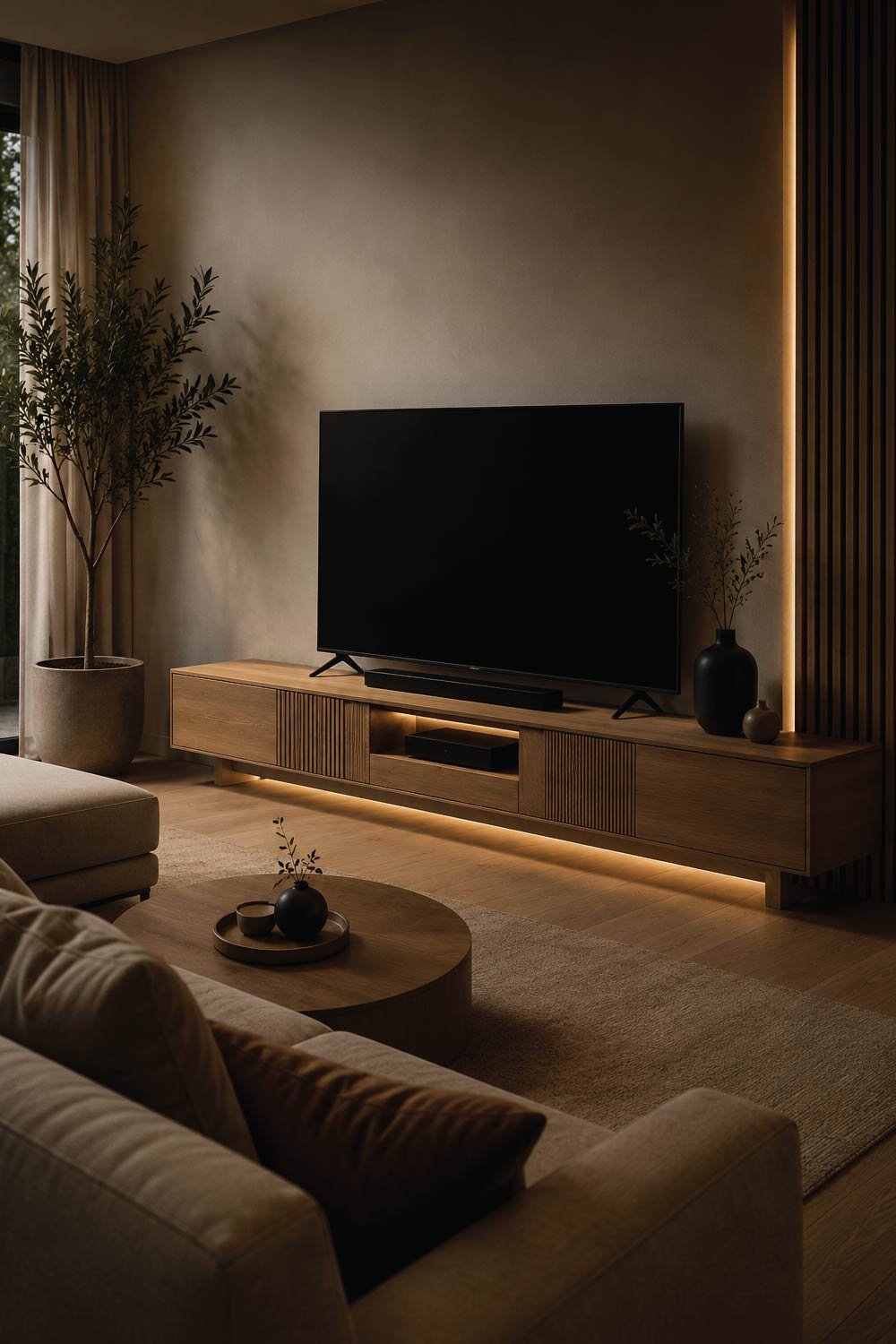
Typical TV Weight Ranges
These estimates help you match your TV with a stand that can safely support it.
- 32–43″ TVs → 10–20 kg
- 50–55″ TVs → 15–25 kg
- 65″ TVs → 20–35 kg
- 75–85″ TVs → 30–50+ kg
What to Always Check
Before purchasing, confirm that your TV stand meets these essential requirements.
- Maximum load capacity
- Material strength (wood, MDF, metal, tempered glass)
Also Read:
Full Size Mattress Dimensions : Complete Guide
Mistakes People Make When Choosing TV Stands
Avoiding these common mistakes will help you create a safe, comfortable, and visually balanced entertainment setup.
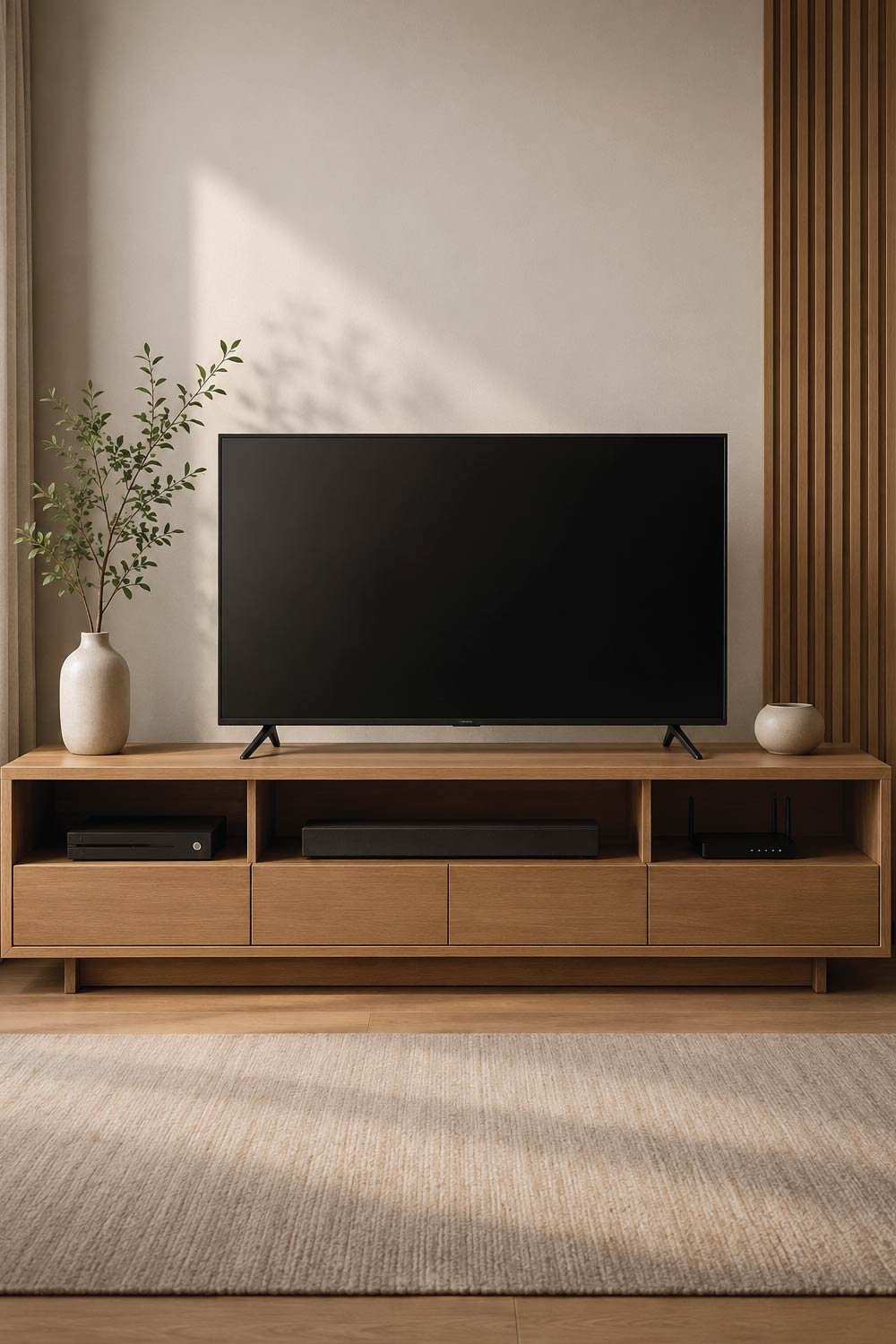
1. Buying a Stand Too Small
This is the most common mistake and can affect both safety and appearance. This is the most common mistake. It makes the setup look unbalanced and unsafe.
2. Ignoring TV Base Width
Some TVs have wide legs that require more surface space than expected. Some TVs have wide legs that require extra space.
3. Forgetting Accessories
Your TV is not the only device that needs space on the stand. Sound bars, consoles, routers, and speakers need room.
4. Wrong Height Selection
Incorrect height can lead to discomfort during viewing.
- Too high = neck strain
- Too low = awkward viewing angle
5. No Ventilation Space
Electronics generate heat and require proper airflow to function safely. Electronics need airflow to prevent overheating.
Also Read: Curtain Rod Size : Complete Guide for Perfect Window Fit
Final Thoughts
Choosing the right TV stand size is all about balance between TV width, room size, viewing comfort, and storage needs. The general rule remains simple: always go wider than your TV, never smaller.
If you follow the TV stand size chart in this guide, you’ll avoid common mistakes and get a setup that looks professional, stable, and visually pleasing.A well-chosen TV stand doesn’t just hold your television—it completes your entire entertainment space.
