

Choosing the right dining table is more than just picking a beautiful piece of furniture, it’s about functionality, comfort, and the flow of your living space. A dining table needs to accommodate your family, guests, and lifestyle while maintaining balance with your room’s size.
Whether you have a cozy apartment or a spacious dining room, understanding table dimensions, shapes, and seating capacities ensures meals are comfortable, stylish, and practical.
This guide will break down standard dining table sizes, shapes, and spacing tips for families and guests. We’ll also include practical charts to help you select the perfect table for your needs.
Understanding Standard Dining Table Sizes
Dining tables come in various sizes, and choosing the right one depends on the number of people you typically seat, the available room space, and the type of gatherings you host. Standard dining tables are generally classified by shape—rectangular, square, round, and oval—and each has recommended dimensions for optimal comfort.
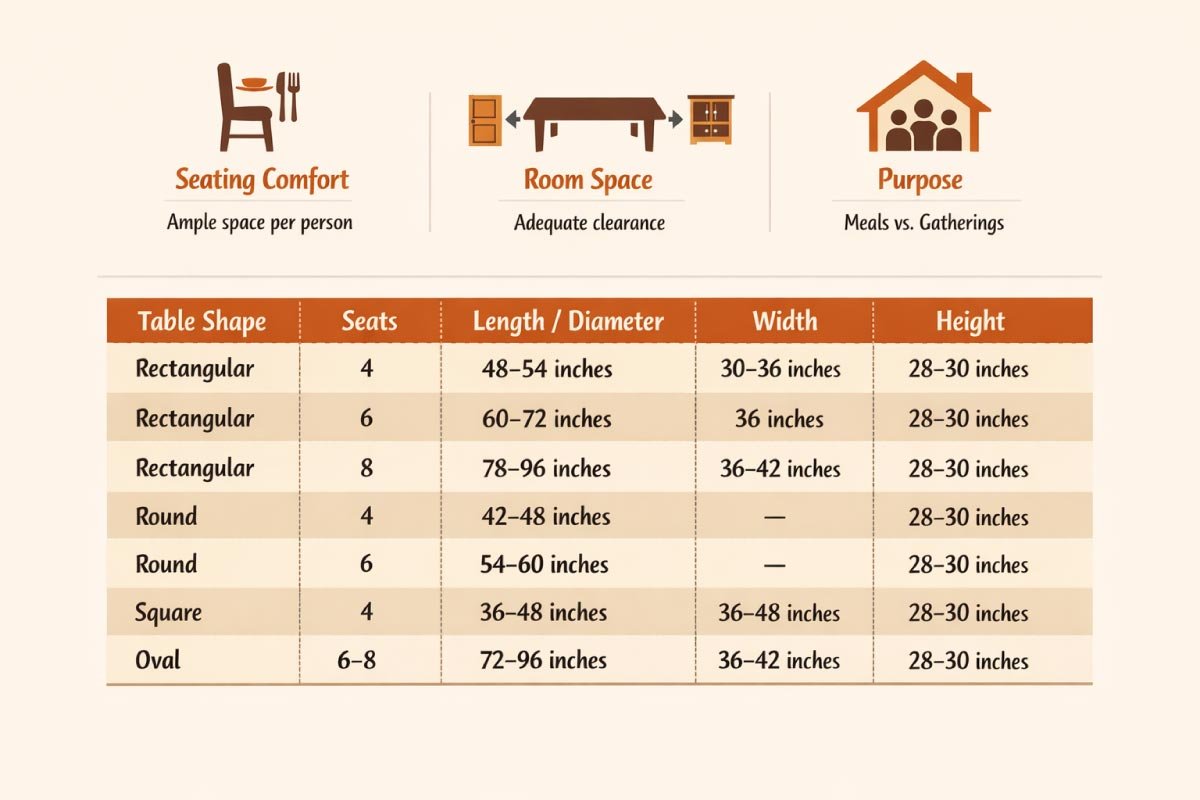
Key considerations when selecting table size:
-
Seating comfort: Each person needs enough space to eat and move comfortably.
-
Room space: Leave enough clearance around the table for chairs and movement.
-
Purpose: Daily family meals versus occasional large gatherings.
Standard Dining Table Sizes by Shape
Understanding standard dining table sizes is essential for creating a comfortable and functional dining space. Different shapes—rectangular, round, square, or oval—accommodate varying numbers of diners while maintaining proper proportions. This table provides a clear guide to typical dimensions, helping you choose the perfect fit for your room.
| Table Shape | Seats | Typical Length / Diameter | Width | Height |
|---|---|---|---|---|
| Rectangular | 4 | 48–54 inches | 30–36 inches | 28–30 inches |
| Rectangular | 6 | 60–72 inches | 36 inches | 28–30 inches |
| Rectangular | 8 | 78–96 inches | 36–42 inches | 28–30 inches |
| Round | 4 | 42–48 inches | N/A | 28–30 inches |
| Round | 6 | 54–60 inches | N/A | 28–30 inches |
| Square | 4 | 36–48 inches | 36–48 inches | 28–30 inches |
| Oval | 6–8 | 72–96 inches | 36–42 inches | 28–30 inches |
Choosing the Right Table for Family Meals
Selecting the perfect family table balances comfort, functionality, and style. It should accommodate everyone without feeling cramped and support daily activities like meals, homework, or crafts. The right dimensions ensure smooth movement around the table and create a welcoming space for family interaction.
Seating space tips:
-
Allow 24 inches per person at the table for elbow room.
-
Leave 36 inches of clearance around the table for chairs and walking space.
-
Consider extendable tables if your family size occasionally changes.
Dining Table Size for Families
Choosing the right dining table for your family ensures comfort and functionality during meals. Table shape and size should reflect the number of diners while fitting your space. This guide outlines recommended table dimensions for different family sizes, helping you create an inviting and practical dining area.
| Family Size | Recommended Table Shape | Table Dimensions | Notes |
|---|---|---|---|
| 2–4 | Round / Square | 42–48 inches diameter / width | Ideal for small kitchens or breakfast nooks |
| 4–6 | Rectangular / Oval | 60–72 inches long, 36 inches wide | Standard medium family size |
| 6–8 | Rectangular / Oval | 78–96 inches long, 36–42 inches wide | Ideal for larger family meals |
| 8–10 | Extendable Rectangular | 96 inches or extendable | Perfect for gatherings and special occasions |
Hosting Guests: Tables for Entertaining
If you entertain guests frequently, the table must accommodate extra seating comfortably. Consider the type of gatherings you host—formal dinners, casual lunches, or holiday feasts. Oval and rectangular tables are versatile for larger groups. Round tables promote conversation but may limit serving space for large parties.
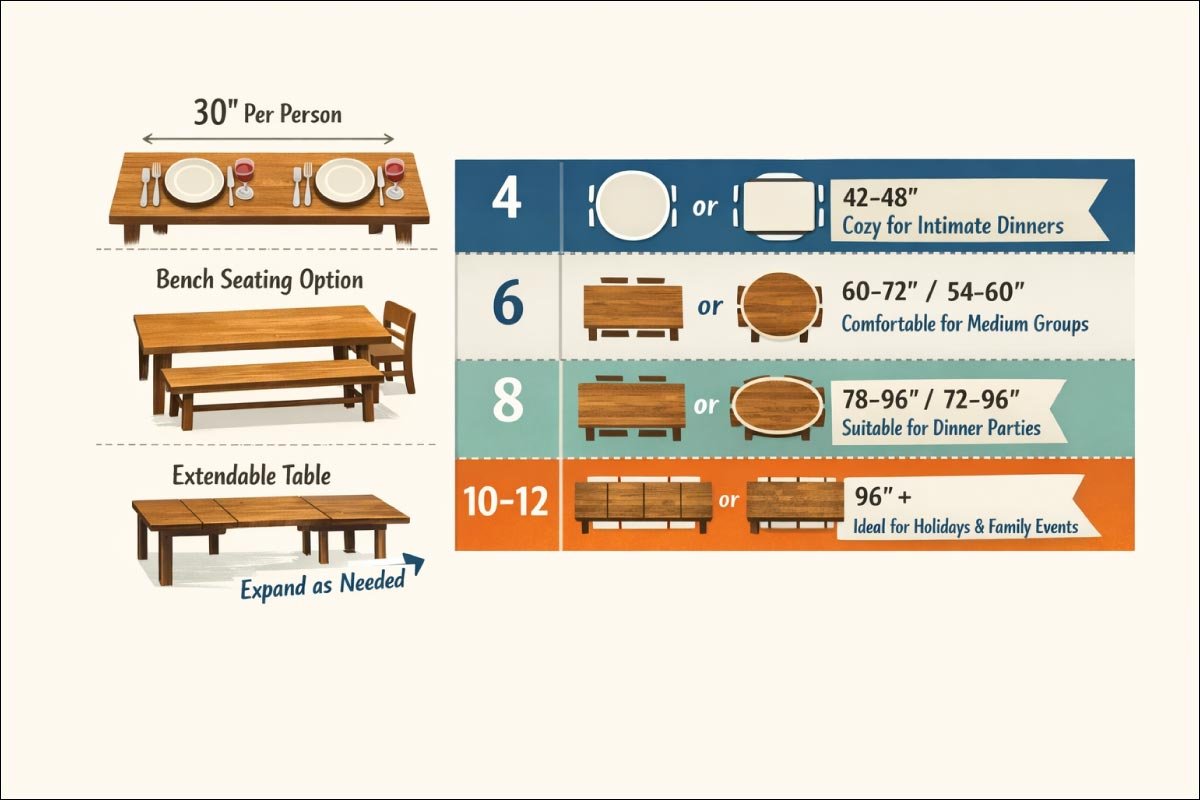
Seating recommendations for guests:
-
Allow 30 inches of table width per person for dinner plates and serving dishes.
-
Consider bench seating on one side to maximize flexibility.
-
Extendable tables allow you to scale up or down based on guest count.
Dining Table Size for Guests
Planning dining space for guests requires balancing comfort and style. The right table shape and size ensures everyone has enough room while promoting easy conversation. This table provides recommended dimensions based on guest count, helping you host intimate dinners, family gatherings, or larger celebrations with ease and elegance.
| Guest Count | Recommended Table Shape | Dimensions | Seating Notes |
|---|---|---|---|
| 4 | Round / Square | 42–48 inches | Cozy for intimate dinners |
| 6 | Rectangular / Round | 60–72 inches / 54–60 inches | Comfortable for medium groups |
| 8 | Rectangular / Oval | 78–96 inches / 72–96 inches | Suitable for dinner parties |
| 10–12 | Extendable Rectangular | 96 inches + | Ideal for holidays and family events |
Also Read:
10 Trending Living Room Lighting Ideas You will Love in 2026
Table Shape Considerations
The shape of a dining table influences both functionality and aesthetics. It affects how many people can sit comfortably, how the room feels, and how easily you move around it. Choosing the right shape ensures efficient seating, smooth traffic flow, and a stylish, balanced dining area.
Rectangular Tables:
Rectangular tables are a practical choice for families and long dining spaces. They maximize seating without crowding, provide ample surface area for meals or activities, and fit neatly against walls if needed. Their straightforward design makes them versatile, functional, and ideal for everyday family use.
-
Best for long rooms and families.
-
Allows for maximum seating with minimal rearrangement.
Round Tables:
Round tables create an inviting, social atmosphere, encouraging conversation and interaction among diners. They work well in smaller rooms by softening corners and improving flow. However, their circular design can limit surface area, making them less practical for larger groups or extensive meals.
-
Promote conversation, ideal for small spaces.
-
Limit serving space for larger groups.
Square Tables:
Square tables are ideal for intimate settings, comfortably seating 2–4 people. Their compact design fits well in small dining areas or cozy corners. For larger gatherings, multiple square tables can be arranged together, offering flexibility while maintaining a balanced and functional dining space.
-
Perfect for 2–4 people in compact spaces.
-
Can be joined together for larger gatherings.
Oval Tables:
Oval tables combine the benefits of rectangular and round designs, offering ample seating with smooth, rounded edges. Their shape improves flow in narrow spaces, reduces sharp corners, and allows flexible arrangements. They comfortably accommodate 6–8 people while maintaining an elegant and approachable dining environment.
-
Soft edges make movement easier in narrow rooms.
-
Comfortable for seating 6–8 people with flexible arrangements.
Pros and Cons of Table Shapes
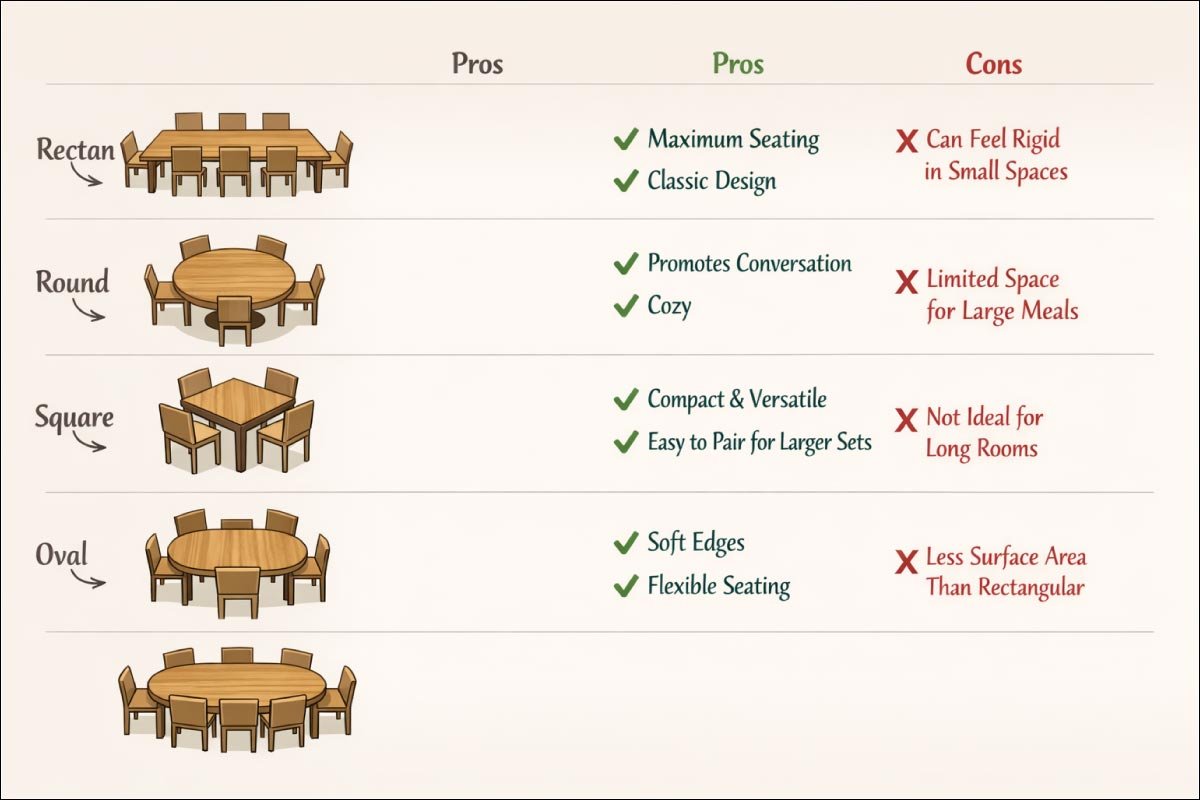
Different dining table shapes offer unique benefits and challenges. Choosing the right shape impacts seating capacity, room flow, and overall ambiance. This table outlines the pros and cons of rectangular, round, square, and oval tables, helping you select a design that balances functionality, style, and comfort for your space.
| Table Shape | Pros | Cons |
|---|---|---|
| Rectangular | Maximum seating, classic design | Can feel rigid in small spaces |
| Round | Promotes conversation, cozy | Limited space for serving large meals |
| Square | Compact, easy to pair for larger sets | Not ideal for long rooms |
| Oval | Soft edges, flexible seating | Less surface area than rectangular for same room size |
Room Clearance and Layout Tips
A dining table works best when the surrounding space supports easy movement and comfort. Proper clearance ensures chairs can be pulled out, people can walk around freely, and the room doesn’t feel cramped. Thoughtful layout planning creates a balanced, functional, and inviting dining environment.
Recommended clearances:
-
36 inches from the table edge to the wall or furniture.
-
18 inches from the chair seat to the table underside.
-
Ensure at least 48 inches if you want a more spacious dining area.
Room Clearance Guide
Proper room clearance around a dining table ensures comfort, safety, and easy movement. Adequate space allows chairs to be pulled out and guests to navigate without obstruction. This table provides a guide for recommended room dimensions based on table size, helping you plan a functional and inviting dining area.
| Table Size | Room Dimensions Needed | Clearance Notes |
|---|---|---|
| 4-person table | 7 × 7 feet | Adequate for compact kitchens |
| 6-person table | 8 × 10 feet | Enough space for chairs and movement |
| 8-person table | 10 × 12 feet | Comfortable for family meals and hosting |
| 10–12-person table | 12 × 16 feet | Ideal for larger gatherings and formal dining |
Additional Tips:
-
Use rugs slightly larger than the table to define the space.
-
Avoid overcrowding with large furniture pieces.
-
Consider extendable tables to optimize small spaces without sacrificing style.
Also Read:
Material and Style Considerations
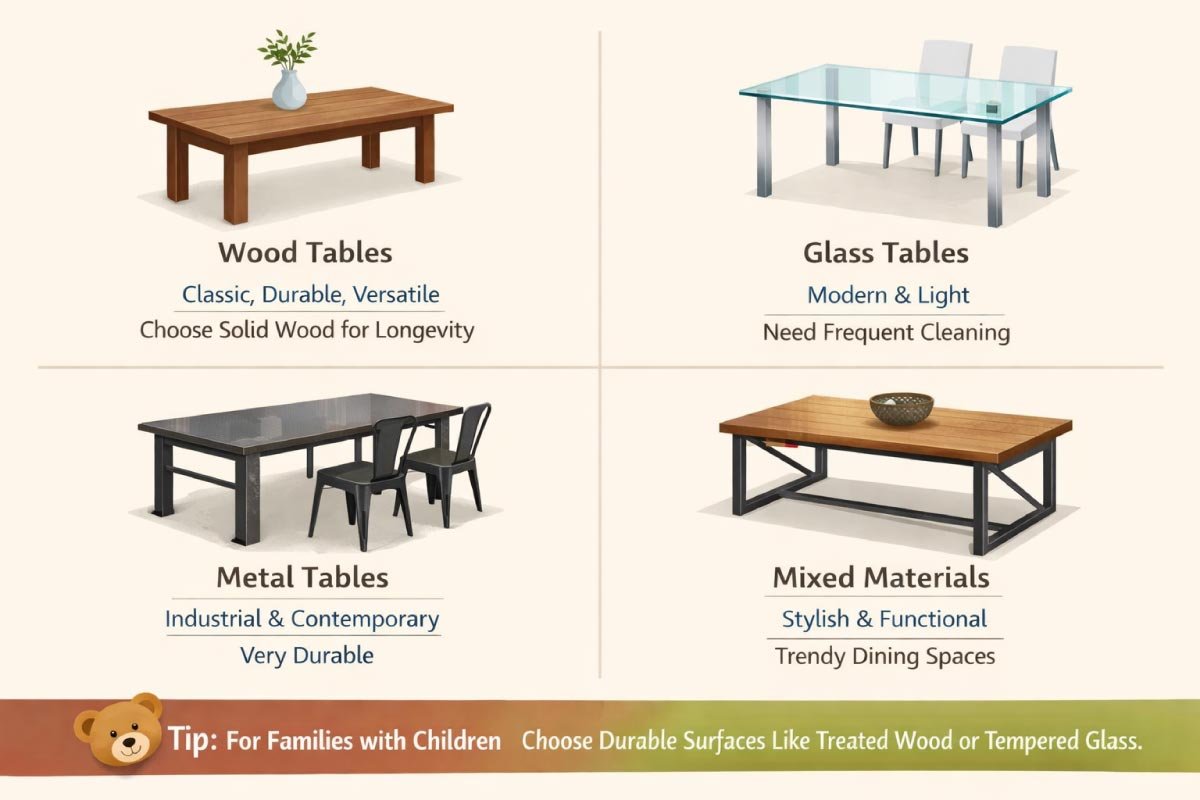
The material of a dining table shapes its durability, appearance, and how it complements your room’s style. From classic wood to modern glass or industrial metal, each option offers unique benefits. Choosing the right material balances practicality, aesthetics, and the demands of daily family use.
-
Wood tables: Classic, durable, versatile. Choose solid wood for longevity.
-
Glass tables: Modern, visually lighter; need frequent cleaning.
-
Metal tables: Industrial and contemporary, very durable.
-
Mixed materials: Combines style and functionality for trendy dining spaces.
Tip: For families with children, opt for durable surfaces like treated wood or tempered glass to withstand daily use.
Summary: Choosing the Right Dining Table
Choosing the perfect dining table combines practicality, comfort, and style. Consider size, shape, material, and room layout to create a space that suits both daily family meals and entertaining. Thoughtful selection ensures smooth flow, adequate seating, and a welcoming dining environment for all occasions.
-
Measure your space: Room clearance is as important as table size.
-
Think about daily use versus entertaining: Choose a table that accommodates your lifestyle.
-
Select a shape that fits your room flow: Rectangular and oval for large groups, round and square for intimacy.
-
Prioritize comfort: Leave enough seating space per person.
-
Plan for flexibility: Extendable tables adapt to changing needs.
By keeping these factors in mind, your dining area will be both functional and welcoming—perfect for family meals and entertaining guests alike.
Also Read:
