
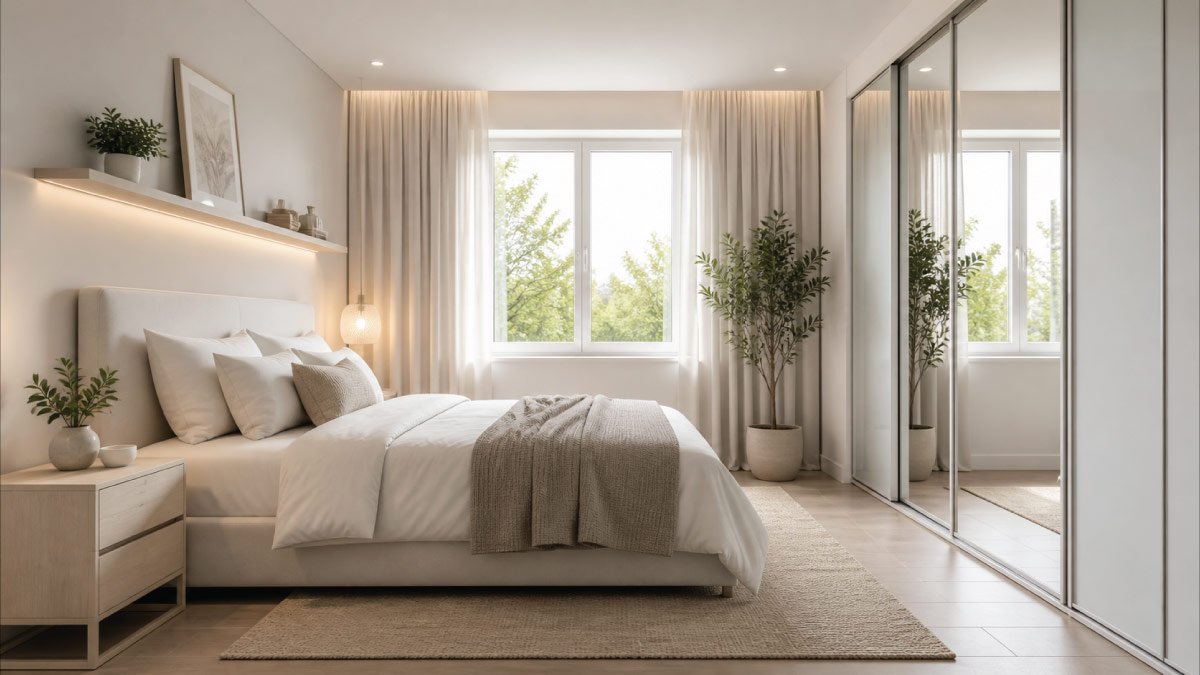
A small bedroom does not have to feel cramped, cluttered, or uncomfortable. In fact, with the right design choices, even the tiniest bedroom can feel open, airy, and inviting. The secret isn’t knocking down walls or spending a fortune it is using visual tricks, smart furniture, and intentional styling to create the illusion of space.
Whether you are working with a compact apartment bedroom, a guest room, or a child’s room, this guide will walk you through practical, proven ways to make a small bedroom look bigger without sacrificing comfort or personality.
1. Start With Light Colors
Choosing the right color palette sets the foundation for how spacious and comfortable a small bedroom feels. Light shades are especially effective because they enhance brightness and reduce visual clutter. However, using light colors doesn’t mean sacrificing personality; you can still create a stylish, inviting space while keeping the room open and airy.
Why light colors work
Light colors reflect more natural and artificial light, which makes walls appear farther away. Dark colors absorb light, making a room feel more enclosed.
Best color choices for small bedrooms:
- Soft whites and off-whites
- Light gray
- Beige and warm neutrals
- Pale blues and greens
- Blush or muted pastels
That said, boring is not required. You can:
- Use one darker accent wall behind the bed
- Add color through textiles like pillows and throws
- Introduce personality with art instead of paint
Pro tip:
Paint the walls, ceiling, and trim in similar tones to blur visual boundaries and create a seamless look.
2. Maximize Natural Light
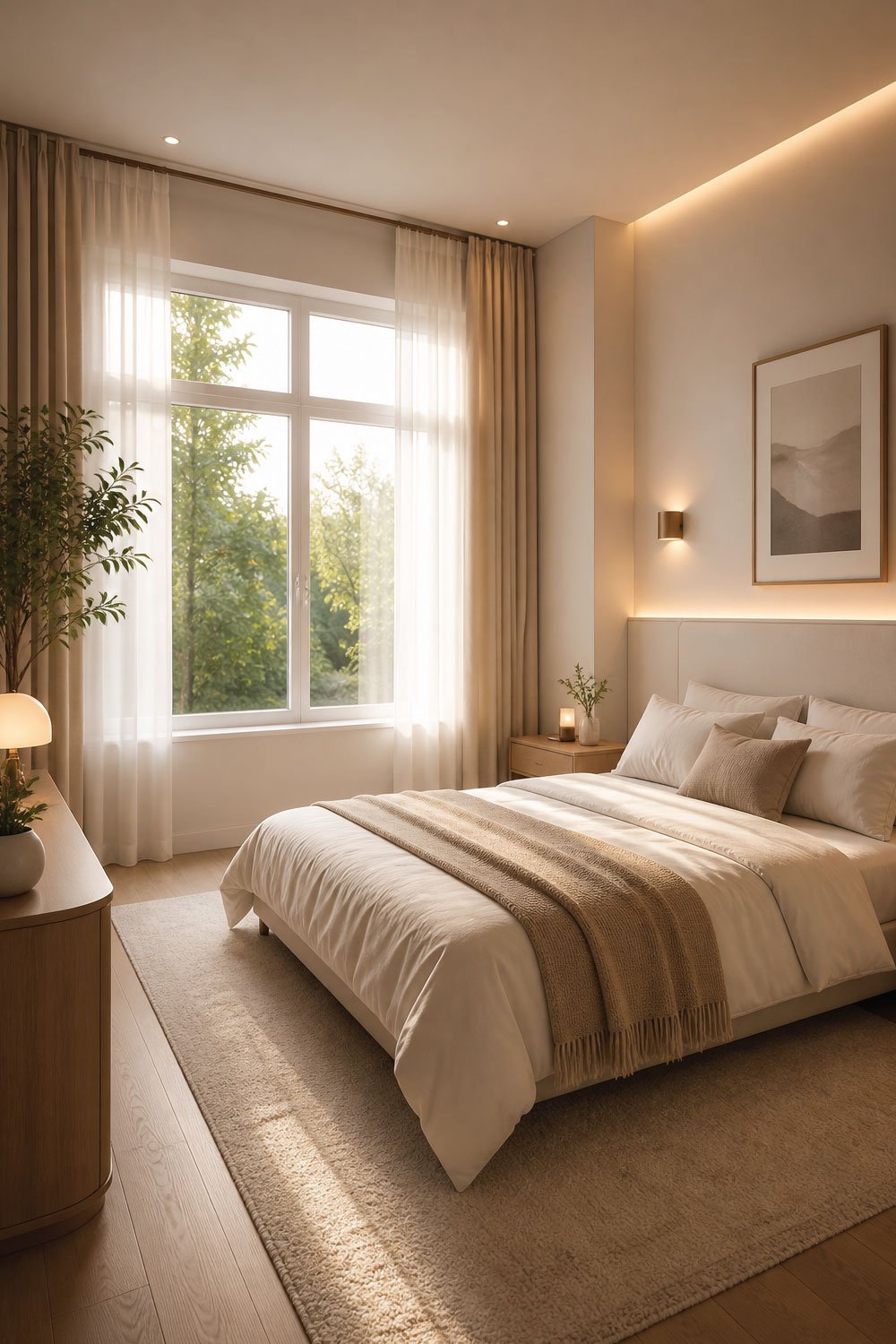
Nothing influences the perception of space more than lighting. A well-lit bedroom instantly feels more open, breathable, and welcoming, while poor lighting can make even a large room feel cramped. Maximizing natural light and layering artificial lighting helps eliminate shadows, adds depth, and visually expands the room in a subtle but powerful way.
Let the light in
- Avoid heavy, dark curtains
- Choose sheer or light-filtering window treatments
- Hang curtains close to the ceiling and let them fall to the floor
This trick elongates the walls and makes windows appear larger.
When natural light is limited:
- Use multiple light sources instead of one overhead light
- Add wall sconces, bedside lamps, or LED strip lighting
- Choose warm, soft bulbs to avoid harsh shadows
Good lighting adds depth and dimension, instantly opening up the room.
3. Choose the Right Furniture (Size Matters)
Furniture scale plays a major role in how spacious a bedroom feels. When pieces are too large, they dominate the room and limit movement, making the space feel cramped. Choosing appropriately sized furniture helps maintain balance, improves flow, and keeps the room feeling open and breathable.
Smart furniture choices:
- A bed that fits the room (not wall-to-wall)
- Slim nightstands instead of bulky bedside tables
- Low-profile beds that keep sightlines open
If possible, choose furniture with:
- Clean lines
- Visible legs (they create visual breathing room)
- Minimal ornamentation
Rule of thumb:
Fewer, well-chosen pieces always look better than cramming in too much furniture.
4. Embrace Multi Functional Furniture
In a small bedroom, every item needs to serve more than one purpose to avoid overcrowding the space. Multi-functional furniture helps you stay organized while reducing the number of individual pieces in the room. This not only saves space but also creates a cleaner, more intentional layout that feels larger and more efficient.
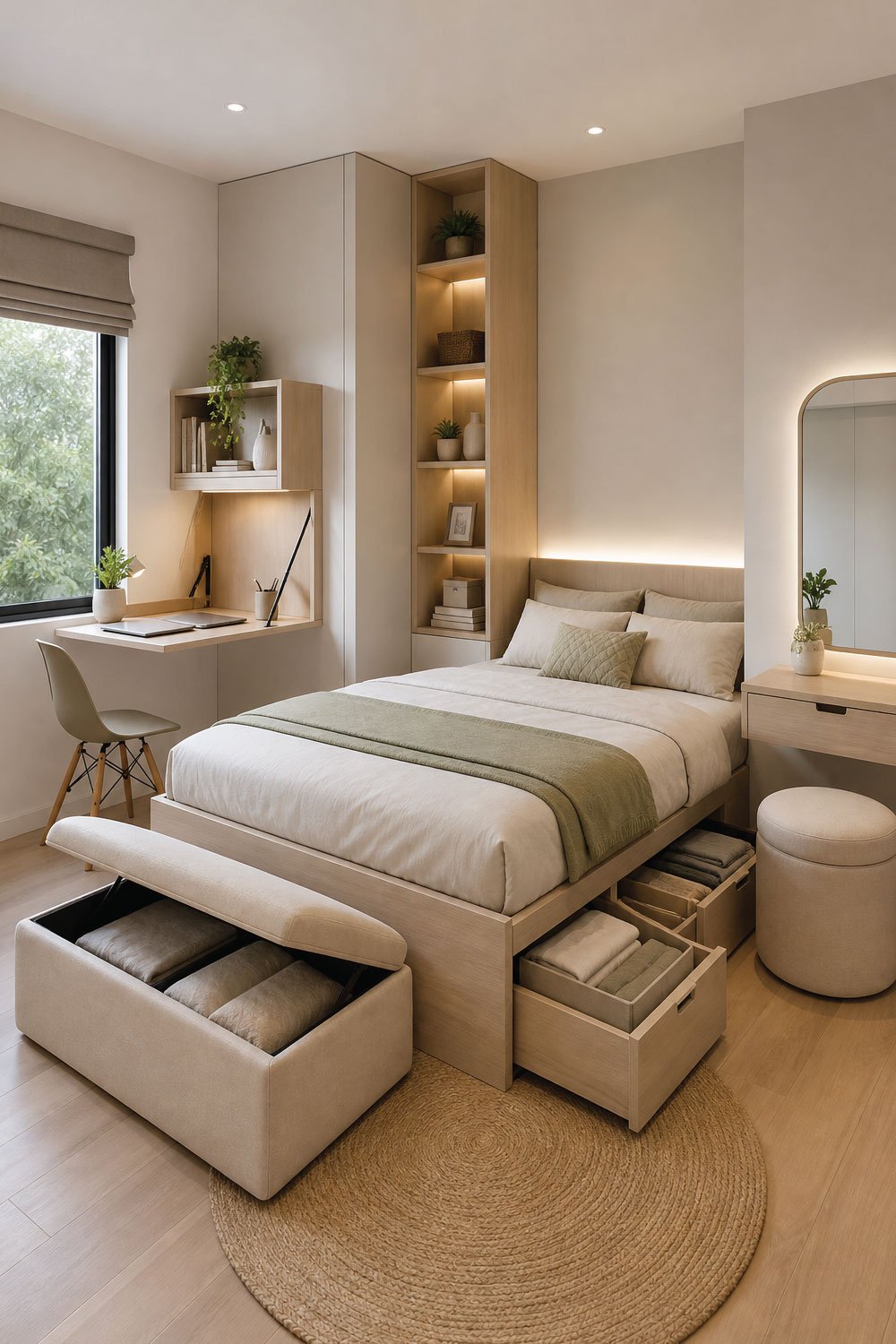
Space saving furniture ideas:
- Beds with built-in storage drawers
- Ottoman benches that open for storage
- Wall mounted desks or fold-down vanities
- Nightstands with shelves instead of cabinets
Multi-functional furniture reduces clutter while increasing functionality both essential for making a room feel larger.
5. Use Mirrors Strategically
Mirrors are a classic design tool for small bedrooms because they create an immediate sense of openness. By reflecting both light and surroundings, they double visual space and reduce the feeling of enclosure. When placed thoughtfully, mirrors can dramatically change how large and bright a room feels without any structural changes.
Also Read:
18 Trendy Simple Bedroom Design Ideas That Feel Cozy in 2026
How mirrors help:
- Reflect light around the room
- Create the illusion of depth
- Make walls appear farther away
Best mirror placements:
- Across from a window to reflect natural light
- Behind a nightstand or dresser
- A full length mirror leaning against the wall
Avoid placing mirrors where they reflect clutter it defeats the purpose.
6. Keep the Floor Visible
A visible floor area helps the brain perceive a room as larger and less crowded. When furniture blocks too much of the floor, the space feels tighter and more segmented. Keeping flooring open creates a smoother visual flow, making the bedroom feel airy, organized, and significantly more spacious.
Ways to open up floor space:
- Choose furniture with legs
- Mount shelves instead of using floor units
- Use wall mounted nightstands or lamps
If you are using a rug:
- Make sure it is large enough to extend beyond the bed
- Avoid tiny rugs that visually chop up the floor
A continuous floor surface helps the room feel uninterrupted and spacious.
7. Declutter Ruthlessly (Yes, Really)
Even the best interior design can’t compensate for excess clutter. In a small bedroom, too many items quickly overwhelm the space and make it feel chaotic and cramped. Decluttering is less about minimalism as a trend and more about creating breathing room so the space can function and feel calm.
Decluttering tips for small bedrooms:
- Keep only what you use and love
- Store seasonal items elsewhere
- Limit decorative objects to a few meaningful pieces
A clean, organized room instantly feels larger even without changing anything else.
Design mantra:
Empty space is not wasted space.
8. Think Vertical: Use Your Walls Wisely
When floor space is limited, the smartest move is to shift storage and design elements upward. Using vertical space effectively draws the eye higher, reduces floor congestion, and creates a sense of height and openness that makes even compact rooms feel more spacious and structured.
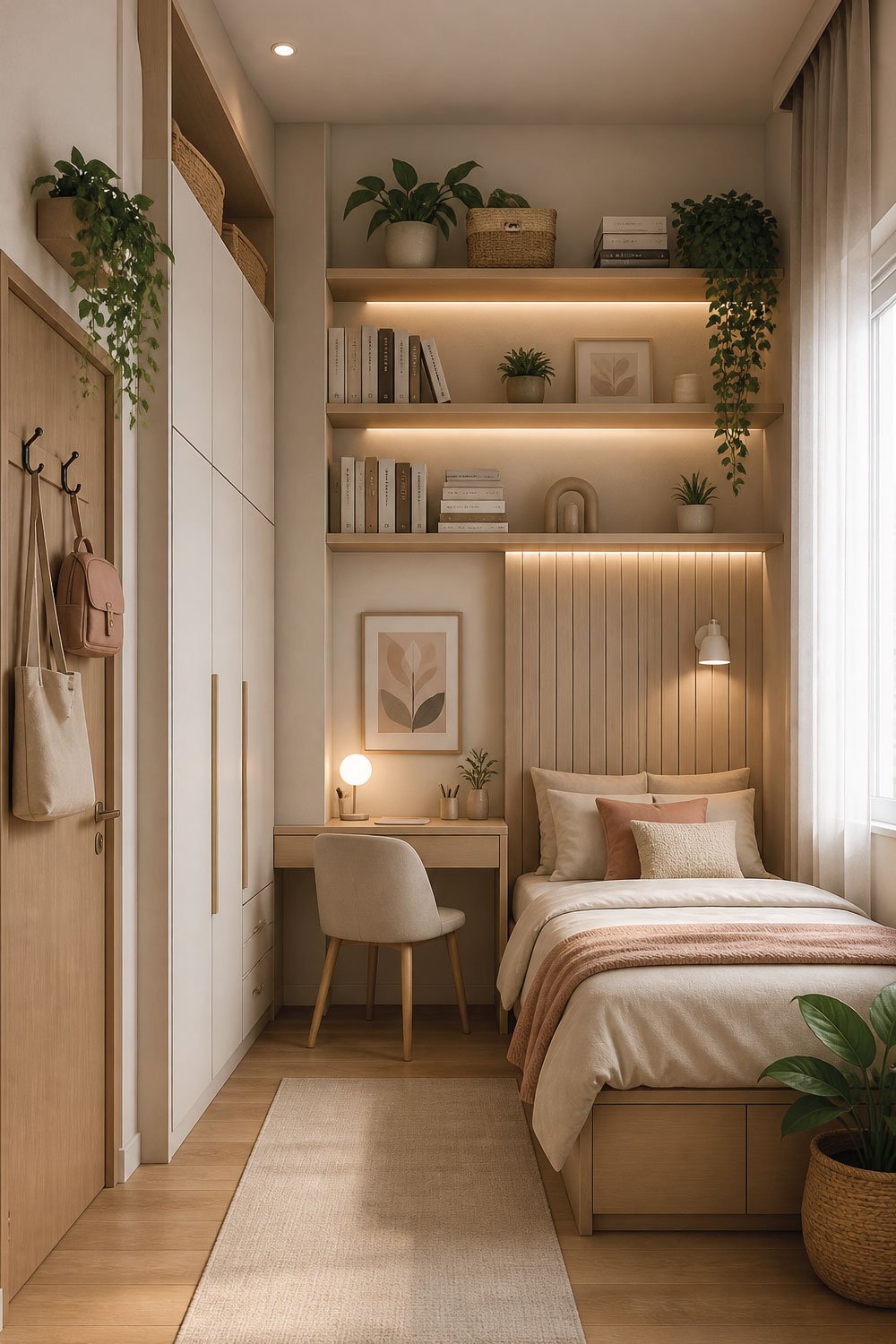
Vertical design strategies:
- Tall wardrobes instead of wide ones
- Shelves above the bed or desk
- Hooks on walls or doors for bags and accessories
Vertical lines draw the eye upward, making the ceiling feel higher and the room feel more expansive.
9. Choose Bedding That Feels Light and Cohesive
Bedding has a big impact on how visually heavy or light a bedroom feels because the bed is usually the largest focal point in the space. In a small room, cohesive and simple bedding helps reduce visual noise, creating a calm, open atmosphere that feels more spacious and organized.
Bedding tips for small bedrooms:
- Stick to light or neutral bedding
- Avoid overly busy patterns
- Use fewer pillows for a cleaner look
Layering textures like linen sheets, a soft quilt, or a lightweight throw adds interest without visual clutter.
10. Simplify Your Decor
Decor plays an important role in personality, but in a small bedroom, too much of it can quickly overwhelm the space. Simplifying your décor allows key pieces to stand out and prevents visual overcrowding. The goal is to create a balanced, intentional look where every item has purpose and space to breathe.
Also Read:
Instead of:
- Many small art pieces
- Excessive accessories
Try:
- One large statement artwork
- A simple gallery with matching frames
- Minimal, intentional décor
Large-scale décor actually makes a room feel bigger than lots of tiny items competing for attention.
11. Use Visual Continuity 4
A small bedroom feels larger when everything works together visually instead of competing for attention. Visual continuity reduces fragmentation in the space, allowing the eye to move smoothly across the room. This creates a sense of order and calm, which naturally makes the bedroom feel more open and less crowded.
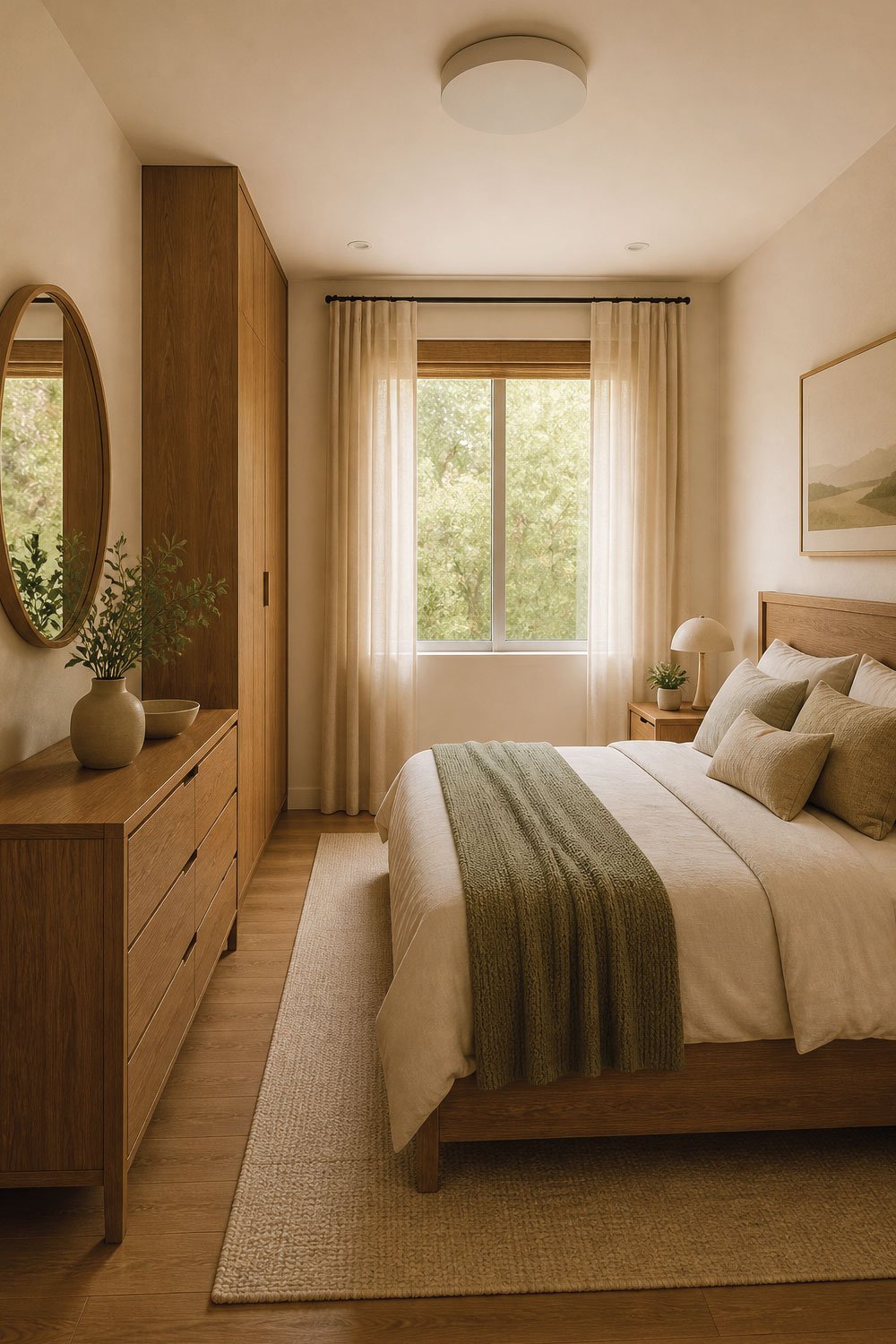
How to create visual flow:
- Match wood tones across furniture
- Keep a consistent color palette
- Use similar materials and finishes
When the eye doesn’t have to constantly adjust, the space feels more open and harmonious.
12. Do not Push Everything Against the Walls
It’s a common assumption that pushing furniture tightly against walls maximizes space, but it can actually make a room feel flatter and more cramped. Allowing a little breathing room between furniture and walls introduces depth and dimension, making the layout feel more intentional and visually layered.
Even a few inches can:
- Add dimension
- Improve airflow
- Make the room feel more thoughtfully designed
Just make sure there’s still enough walking space.
13. Hide Storage in Plain Sight
In small bedrooms, visible storage can easily turn into visual clutter, which makes the space feel tighter than it actually is. The key is to integrate storage into the room so it feels like part of the design rather than an extra element. When everything has a hidden or blended place, the room instantly feels cleaner, lighter, and more spacious.
Clever hidden storage ideas:
- Under bed bins
- Storage headboards
- Decorative baskets
- Closet organizers
When storage blends seamlessly into the room, the space feels lighter and more open.
14. Keep Technology Minimal
Technology is essential, but in a small bedroom it can quickly become visually overwhelming. Large screens, tangled wires, and multiple devices add unnecessary bulk to the space. Keeping tech simple and well-organized helps maintain a calm environment, allowing the room to feel more open, modern, and less distracted.
Also Read:
16 Trending Bedroom Ideas for Couples in 2026 (Romantic & Modern Designs)
Space friendly tech tips:
- Mount TVs on the wall
- Use cable management systems
- Opt for compact devices
A calmer visual environment always feels larger.
15. Add a Touch of Life (But Not Too Much)
Adding natural elements like plants can soften a small bedroom and make it feel more alive, balanced, and relaxing. However, in compact spaces, moderation is key too many plants or oversized arrangements can quickly add visual clutter and undo the sense of openness you’re trying to create.
Best plant choices:
- Small potted plants
- Hanging planters
- One medium statement plant
Avoid overcrowding surfaces with greenery. One or two well-placed plants are enough.
Final Thoughts: Small Bedrooms Can Feel Big
Making a small bedroom look bigger is not about following every trend it is about understanding how space, light, and balance work together. With thoughtful color choices, smart furniture, and intentional styling, even the smallest bedroom can feel open, calm, and beautifully designed.
Remember:
- Light colors expand
- Clutter shrinks
- Simplicity wins
Start with one or two changes, and you’ll be surprised how quickly your bedroom transforms into a space that feels bigger, brighter, and more comfortable than ever.
