
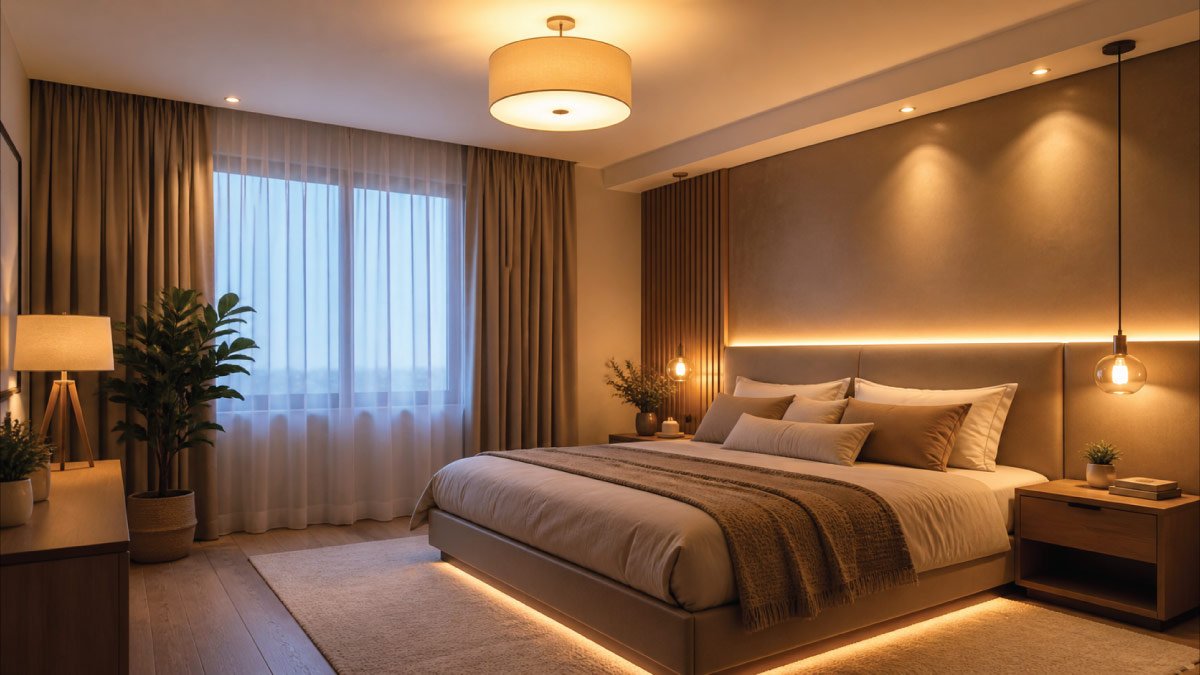
Bedroom lighting plays a far bigger role in your daily life than most people realize. It affects your mood, sleep quality, productivity, and even how spacious or cozy your room feels. Whether your bedroom is a peaceful retreat, a reading nook, or a multifunctional space that doubles as a home office, the right lighting can completely transform it.
If your bedroom feels too dark, harsh, flat, or uninviting, the solution is rarely just “add a brighter bulb.” Instead, great bedroom lighting is about layering, balance, and intention. In this guide, you’ll learn exactly how to improve bedroom lighting step by step covering everything from natural light and ambient lighting to task lights, accent lighting, bulb choices, and smart controls.
1. Understand the Three Layers of Bedroom Lighting
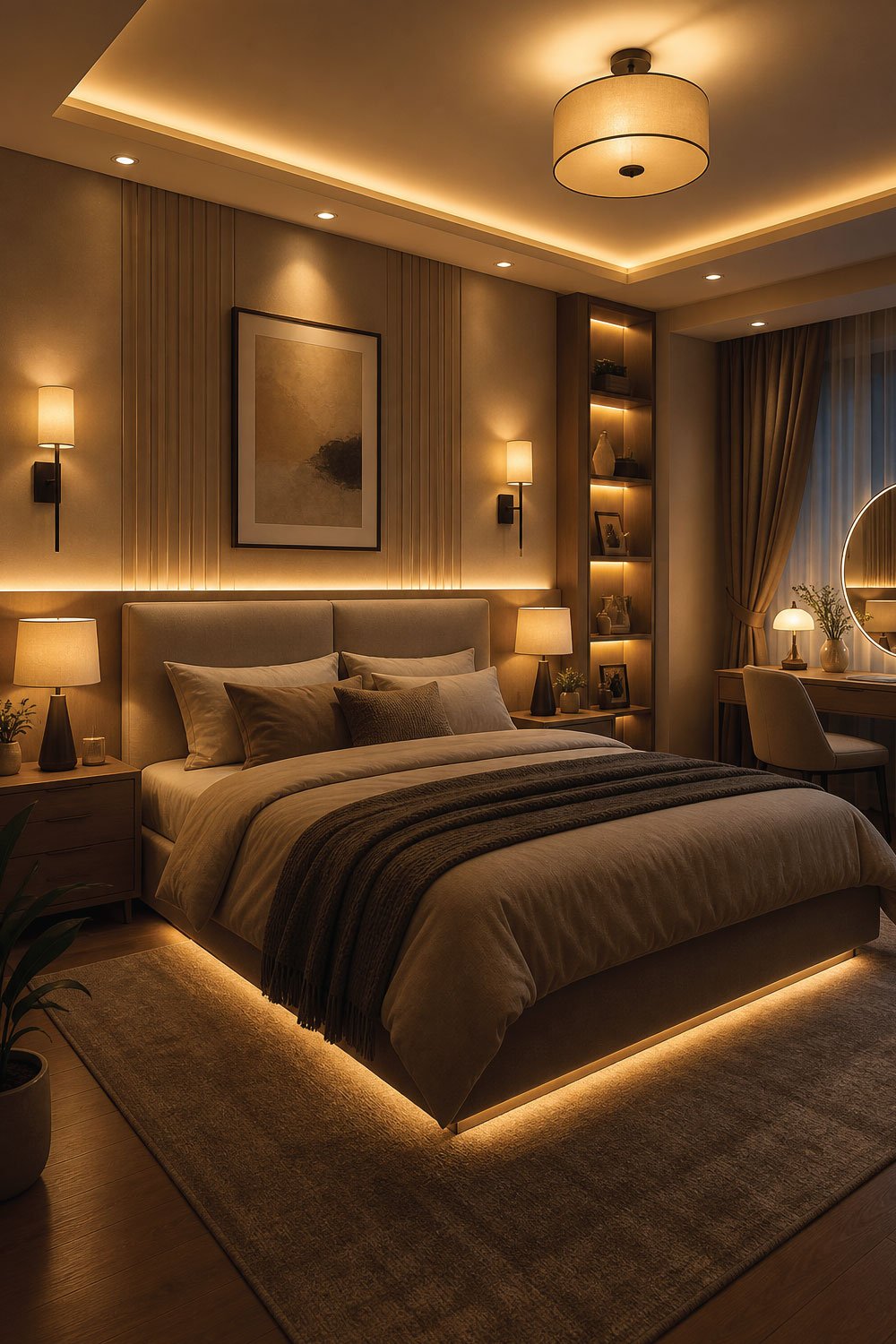
Good bedroom lighting design depends on understanding how different types of light work together in layers. Instead of relying on a single overhead source, combining multiple lighting layers helps create balance, comfort, and functionality. When properly planned, these layers improve visibility, enhance mood, and make the bedroom feel more inviting and visually appealing overall.
Ambient Lighting
Ambient lighting is the foundation of your bedroom’s lighting plan, providing the primary source of illumination for the entire space. It ensures the room is evenly lit so you can walk around safely and perform everyday activities without strain. This type of lighting sets the overall tone of the room and works as the base layer upon which other lighting types are added. Common ambient lighting includes:
- Ceiling fixtures
- Chandeliers
- Flush or semi-flush mounts
- Recessed lighting
Task Lighting
Task lighting is designed to provide focused, direct illumination for specific activities that require better visibility and concentration. Unlike ambient light, it is more targeted and helps reduce eye strain during detailed tasks. It is especially important in bedrooms where multiple functions take place such as reading, dressing, or working. Examples include bedside lamps, wall-mounted reading lights, desk lamps, and wardrobe lighting.
- Reading in bed
- Getting dressed
- Working at a desk or vanity
Examples include bedside lamps, wall-mounted reading lights, desk lamps, and wardrobe lighting.
Accent Lighting
Accent lighting is used to enhance the visual appeal of the bedroom by adding depth, warmth, and personality to the space. It is less about functionality and more about creating mood and highlighting design features. This type of lighting helps transform a plain room into a cozy and stylish environment. Accent lighting includes:
- LED strip lights
- Wall sconces
- Picture lights
- Floor lamps
- Soft decorative lamps
A bedroom with only one overhead light often feels flat and uninviting. Adding task and accent lighting instantly makes the space feel more comfortable and intentional.
2. Make the Most of Natural Light
Natural light is one of the most valuable elements in bedroom design because it enhances mood, reduces the need for artificial lighting, and makes the space feel more open and welcoming. Before focusing on lamps or fixtures, it’s important to maximize daylight as much as possible. A well-lit bedroom during the day feels fresher, more spacious, and naturally more comfortable to live in.
3. Choose the Right Overhead Lighting
Overhead lighting is the backbone of your bedroom’s illumination because it provides the main source of light for the entire space. The right fixture not only ensures proper brightness but also contributes to the room’s overall style and atmosphere. Choosing carefully helps avoid harsh glare and creates a balanced, comfortable environment that feels relaxing at any time of day.
AlsoRead:
16 Small Bedroom Ideas for Adults with Fairy Light Magic and Pink Decor
Pick the Right Fixture
Choosing the right overhead fixture is essential because it determines how evenly and comfortably light spreads throughout your bedroom. A well-designed fixture softens brightness, reduces harsh shadows, and enhances the overall aesthetic of the room. Instead of relying on bare bulbs, selecting diffused lighting options helps create a more soothing and visually balanced environment.
Instead of a harsh, exposed bulb, choose fixtures that diffuse light:
- Fabric or frosted glass shades
- Drum pendants
- Semi-flush mounts with warm diffusion
For low ceilings, flush mounts work best. For higher ceilings, pendants or chandeliers add character.
Avoid Cold, Harsh Light
The color temperature of your lighting significantly affects how your bedroom feels. Cold or overly bright white light can feel clinical and uncomfortable, especially in a space meant for rest and relaxation. Warm lighting tones are far more suitable as they promote calmness and help create a cozy atmosphere conducive to winding down.
Bedrooms should feel relaxing. Avoid cool white or daylight bulbs overhead. Warm light creates a softer, more inviting atmosphere.
Install a Dimmer Switch
Adding a dimmer switch is a simple yet highly effective way to improve lighting flexibility in your bedroom. It gives you full control over brightness levels, allowing the space to adapt to different activities and moods throughout the day. This small upgrade can dramatically enhance comfort and usability.
A dimmer is one of the easiest and most effective upgrades you can make. It allows you to:
- Brighten the room for cleaning
- Lower light levels in the evening
- Create a calming nighttime mood
4. Upgrade Your Bedside Lighting
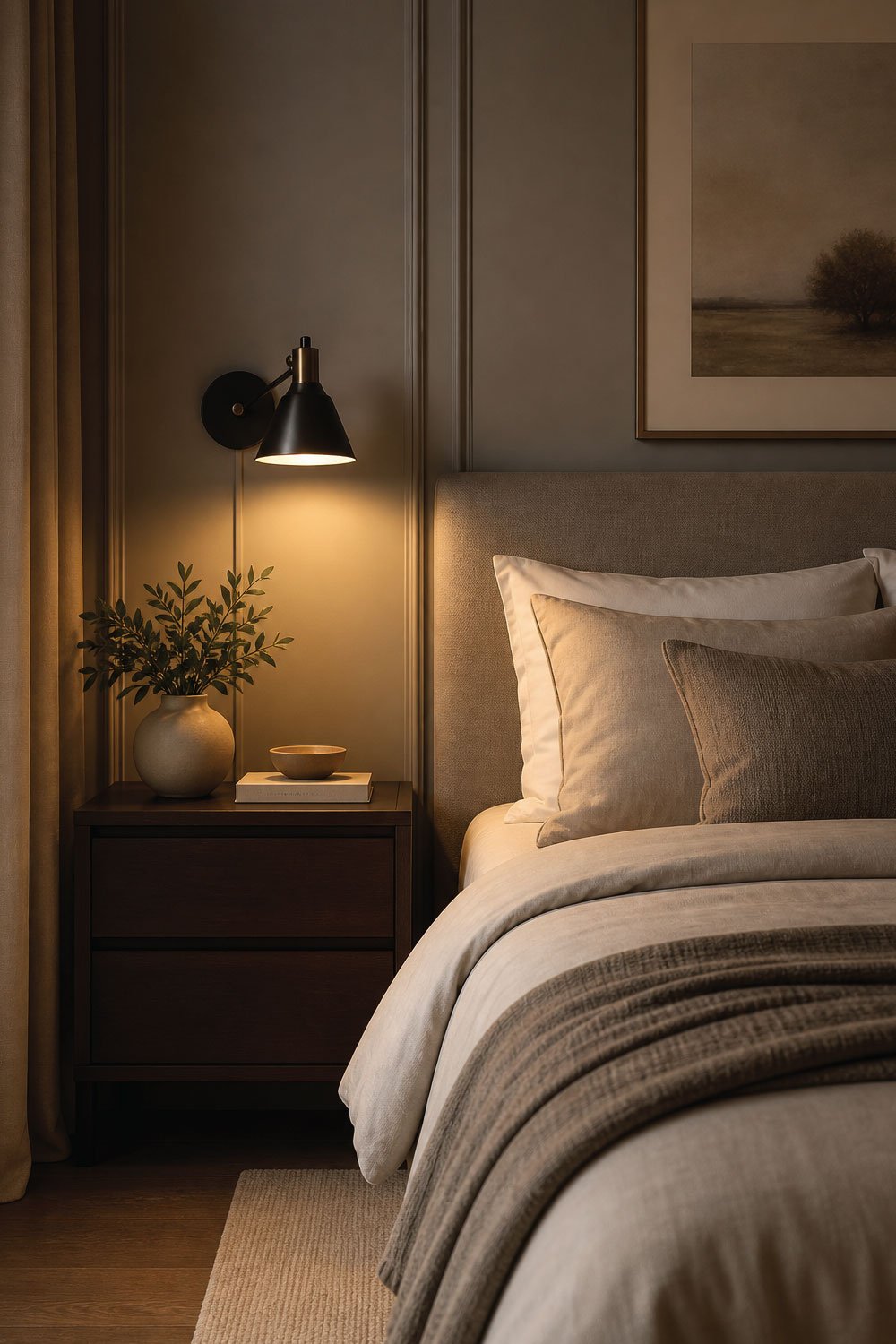
Bedside lighting plays a key role in both comfort and practicality, as it directly supports your nighttime routines such as reading, relaxing, or winding down before sleep. Unlike overhead lighting, bedside lights create a more intimate and controlled glow that improves usability without disturbing the rest of the room. Choosing the right setup also enhances the overall bedroom design and functionality.
5. Add Task Lighting Where You Need It
Task lighting is one of the most practical parts of a bedroom lighting plan because it supports your daily activities and makes routine tasks easier and more efficient. Instead of relying on a single light source, adding targeted lighting in key areas improves visibility where it matters most. This approach reduces strain, increases comfort, and helps your bedroom feel more functional and organized.
6. Use Accent Lighting to Create Atmosphere
Accent lighting is what gives your bedroom depth, warmth, and personality beyond basic illumination. It highlights design features, softens harsh edges, and creates a calming mood. By layering subtle light sources like LEDs and decorative lamps, you can transform a plain space into a cozy, inviting retreat.
LED Strip Lights
LED strips are versatile and affordable. Use them:
- Behind the headboard
- Under the bed
- Along shelves or wardrobes
Choose warm white or adjustable color temperatures for flexibility.
Floor Lamps
A floor lamp in a corner softens the room and adds height. Look for lamps with fabric shades for gentle diffusion.
Decorative Lamps
Small table lamps, salt lamps, or decorative lanterns add warmth and personality especially in minimalist bedrooms.
Accent lighting makes your bedroom feel layered, cozy, and thoughtfully designed.
7. Choose the Right Bulbs and Color Temperature
Lighting quality matters just as much as fixture style. The right bulb color temperature and brightness can influence how your bedroom feels and functions. Warm tones encourage relaxation, while overly bright or cool lighting can feel harsh. Thoughtful bulb selection ensures your space supports comfort, rest, and daily activities.
AlsoRead:
18 Stunning White Living Room Ideas That Feel Luxurious & Modern
Best Color Temperature for Bedrooms
- Warm white (2700K–3000K) is ideal for bedrooms
- Avoid cool white (4000K+) which feels clinical and energizing
Warm light supports relaxation and better sleep.
Pay Attention to Brightness (Lumens)
- Ambient lighting: moderate brightness
- Task lighting: higher brightness, focused
- Accent lighting: low brightness
Using multiple lower lumen lights is better than one overly bright fixture.
8. Use Smart Lighting for Flexibility
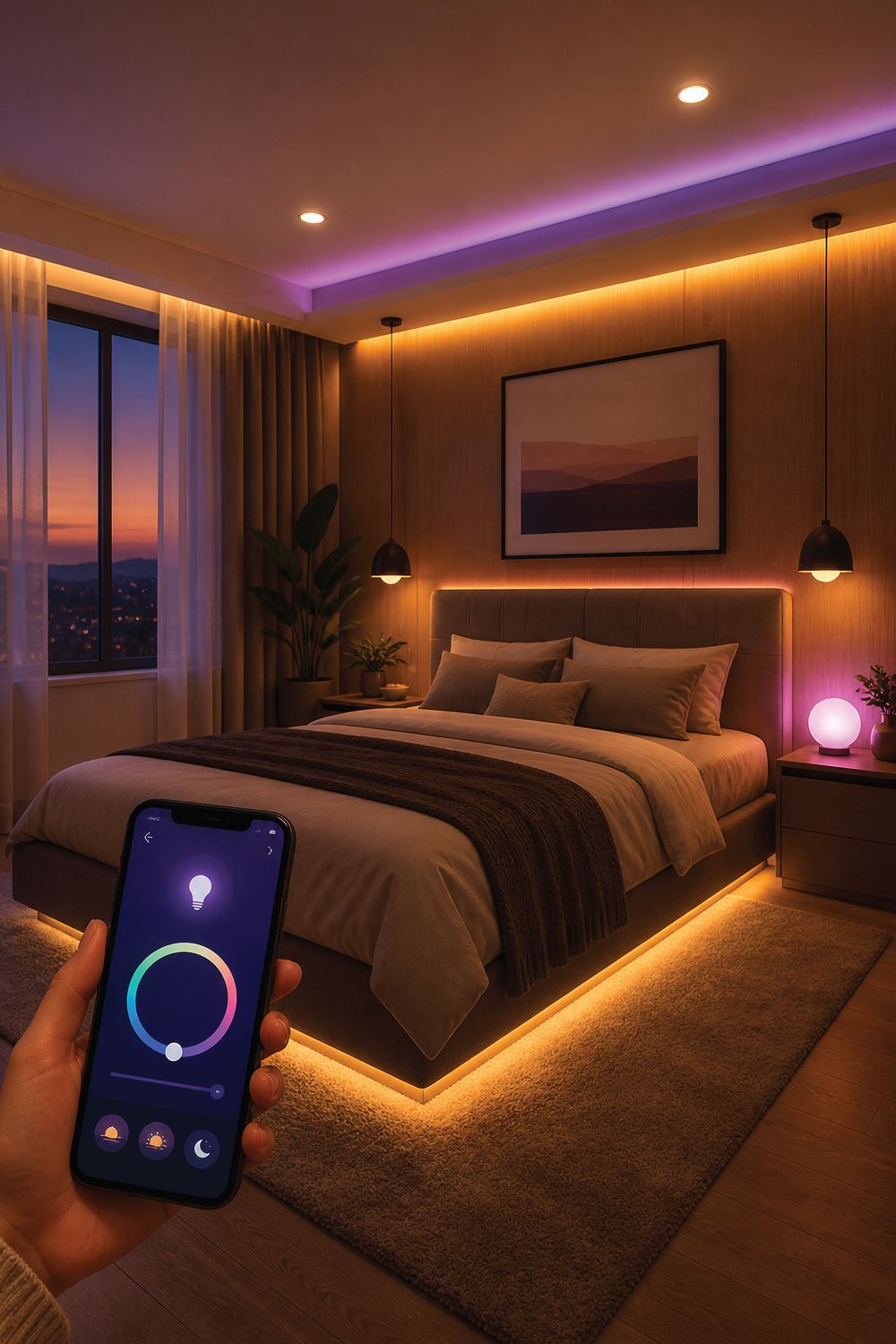
Smart lighting brings convenience and adaptability to your bedroom environment. It allows you to easily adjust brightness, color temperature, and ambiance throughout the day. With automation and remote control features, you can create personalized lighting scenes that match your routine, making your space more functional and effortlessly comfortable.
Benefits of Smart Lights
- Adjust brightness and color temperature
- Create preset scenes (Morning, Relax, Sleep)
- Control lights from your phone or voice assistant
- Automate lighting schedules
Smart Bulbs vs Smart Switches
- Smart bulbs are great for lamps and accent lights
- Smart switches work best for overhead fixtures
Smart lighting helps your bedroom adapt to different times of day without changing fixtures.
9. Match Lighting to Bedroom Size and Layout
Every bedroom has unique proportions, and lighting should complement its size and arrangement. Proper placement and fixture choice can make a small room feel open or a large room feel balanced. By tailoring lighting to your layout, you avoid dark corners, overcrowding, and uneven brightness.
Small Bedrooms
- Use wall mounted lights to save space
- Avoid oversized fixtures
- Use mirrors and light colored shades
Large Bedrooms
- Use multiple light sources to avoid dark corners
- Add floor lamps and accent lighting
- Consider zoning the room with different lighting areas
Balanced lighting prevents a room from feeling cramped or empty.
10. Coordinate Lighting With Bedroom Decor
Lighting should feel like a natural extension of your bedroom’s design style. The right fixtures enhance your decor, tying together colors, textures, and finishes. Whether your space is modern, traditional, or cozy, consistent lighting choices help create a cohesive look that feels intentional and visually pleasing.
AlsoRead:
- Modern bedrooms: sleek fixtures, hidden LEDs, minimal designs
- Traditional bedrooms: table lamps, warm shades, chandeliers
- Boho or cozy styles: fairy lights, fabric shades, layered lamps
- Minimalist spaces: fewer fixtures, warm light, clean lines
Consistency in finishes (black, brass, chrome, wood) helps lighting feel intentional.
11. Avoid Common Bedroom Lighting Mistakes
Even well designed bedrooms can feel uncomfortable due to simple lighting mistakes. Issues like poor placement, overly bright bulbs, or lack of layering can disrupt the atmosphere. Understanding these common errors helps you create a more balanced, functional, and relaxing environment with minimal adjustments and smarter lighting choices.
- Using only one overhead light
- Choosing bulbs that are too cool or too bright
- Ignoring task lighting needs
- Placing lamps at the wrong height
- Forgetting dimmers
Fixing even one of these mistakes can dramatically improve the space.
Final Thoughts:
Improving bedroom lighting isn’t about spending a fortune or replacing everything at once. It is about understanding how light works and using it intentionally. By layering ambient, task, and accent lighting, choosing warm bulbs, and tailoring light to your lifestyle, you can turn your bedroom into a space that feels calm, functional, and welcoming.
Start small add a bedside lamp, install a dimmer, or introduce soft accent lighting. Each change builds toward a bedroom that not only looks better but also supports rest, relaxation, and well-being.
The right lighting does not just illuminate your bedroom it transforms how you feel in it.
