
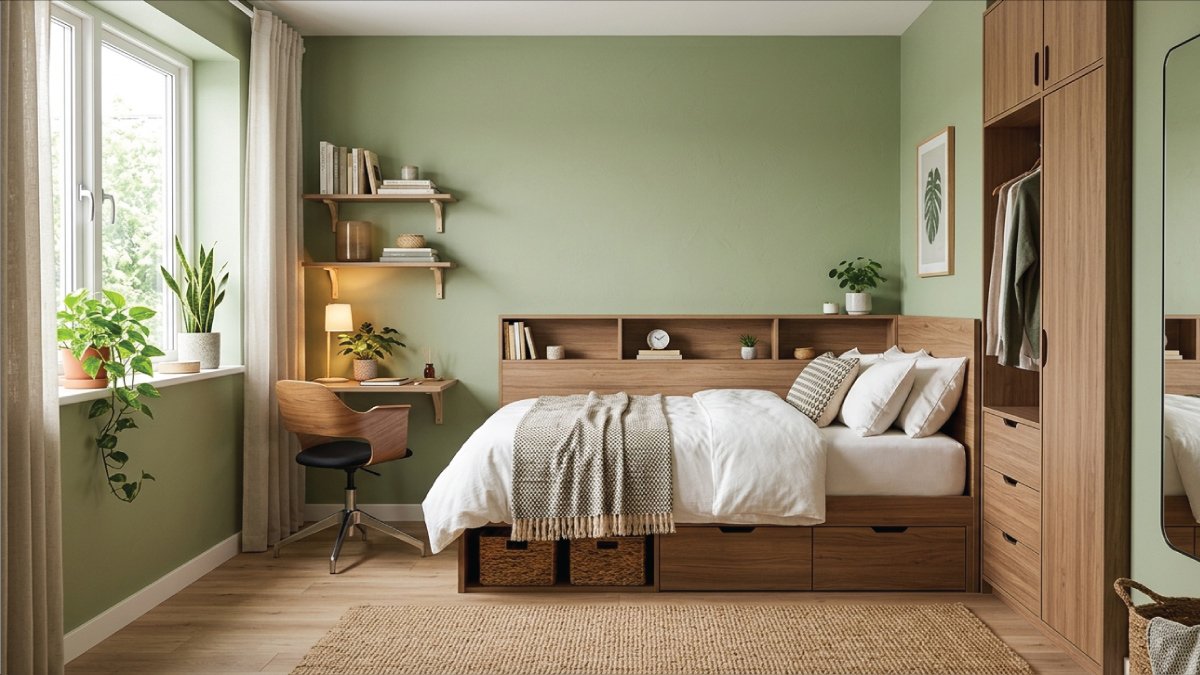
Designing a bedroom layout for small bedrooms can feel overwhelming. When space is limited, every decision bed placement, storage, lighting matters more than ever. I have lived in everything from a tiny city apartment to a compact guest room in my parents’ house, and I have learned (sometimes the hard way) that a smart layout can completely transform how a bedroom feels and functions.
In this guide, I will walk you through 16 smart bedroom layout ideas for small bedrooms, sharing practical tips, design strategies, and a few personal experiences that helped me make the most out of limited space.
Whether you are working with a tiny bedroom layout or simply want to optimize a small bedroom layout, these ideas will help you create a room that feels comfortable, stylish, and surprisingly spacious.
Table of Contents
ToggleWhy Bedroom Layout Matters in Small Spaces
A small bedroom does not just limit movement it affects sleep quality, mood, and even productivity. A poorly planned room layout small bedroom can feel cramped and chaotic, while a thoughtful one can feel calm and intentional.
From my own experience, rearranging furniture made a bigger difference than buying new décor. Once I focused on function first, style followed naturally.
1. Start with the Bed Placement
In any small bedroom floor plan, bed placement plays a crucial role because the bed is the largest furniture piece. Its position affects movement, comfort, and visual balance, so planning carefully helps avoid cramped spaces and ensures the room feels more open and functional overall for daily living use.
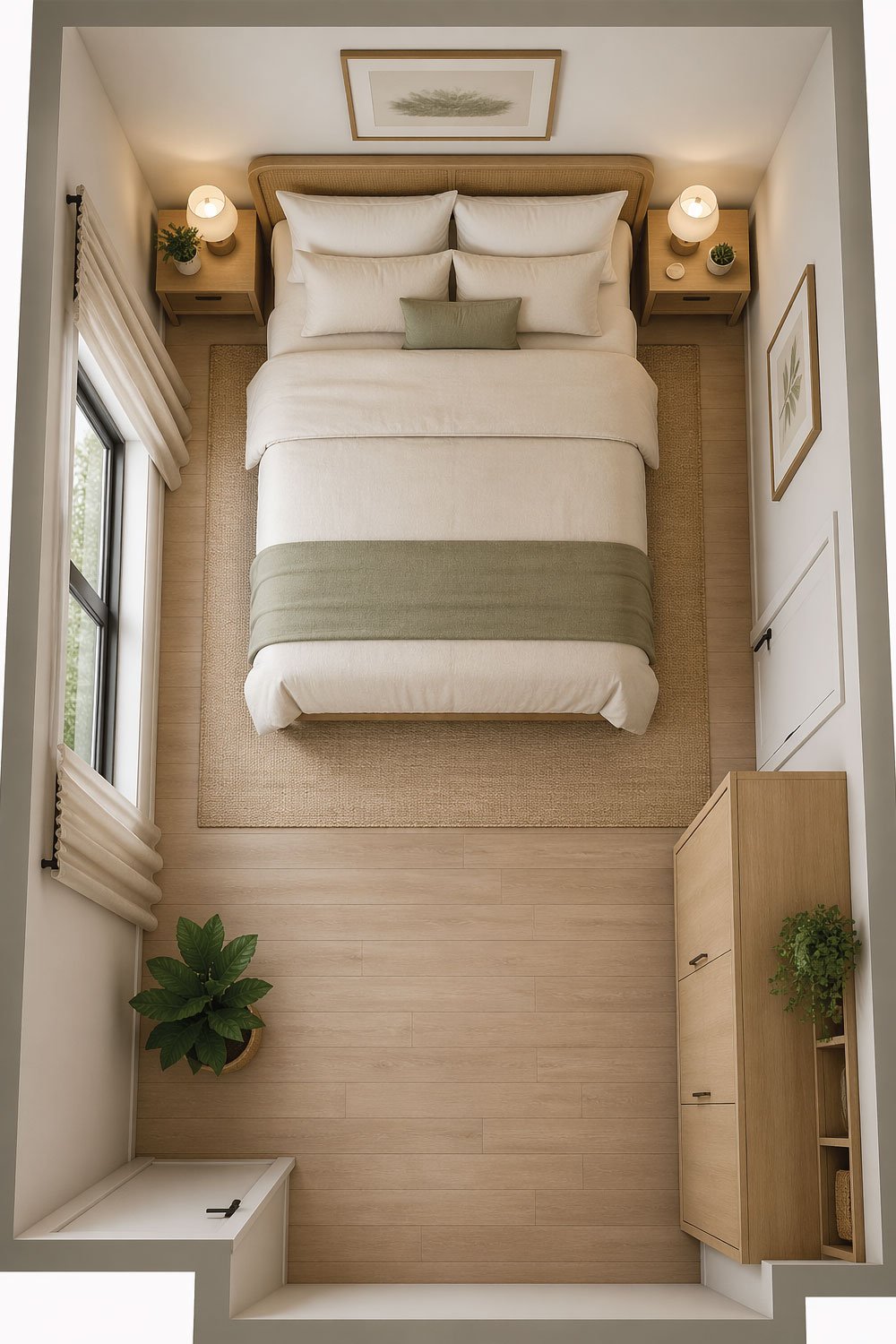
Placing the bed against the longest uninterrupted wall is a simple yet effective strategy to maximize walking space. This arrangement improves flow and creates a more organized layout. It also reduces obstruction making even a small room feel less crowded and more balanced in everyday use.
Tips for Bed Placement
- Place bed on the longest clear wall
- Avoid blocking windows or doors
- Keep walking paths open on both sides
- Maintain symmetry for a balanced look
- Leave space for bedside essentials
- Ensure easy access to storage areas
2. Choose the Right Bed Size
A small bedroom layout can quickly feel cramped when the bed size is not chosen wisely. Selecting the correct bed size is essential because it directly impacts movement space, storage options, and overall comfort, allowing the room to remain functional without sacrificing essential sleeping comfort for daily use.
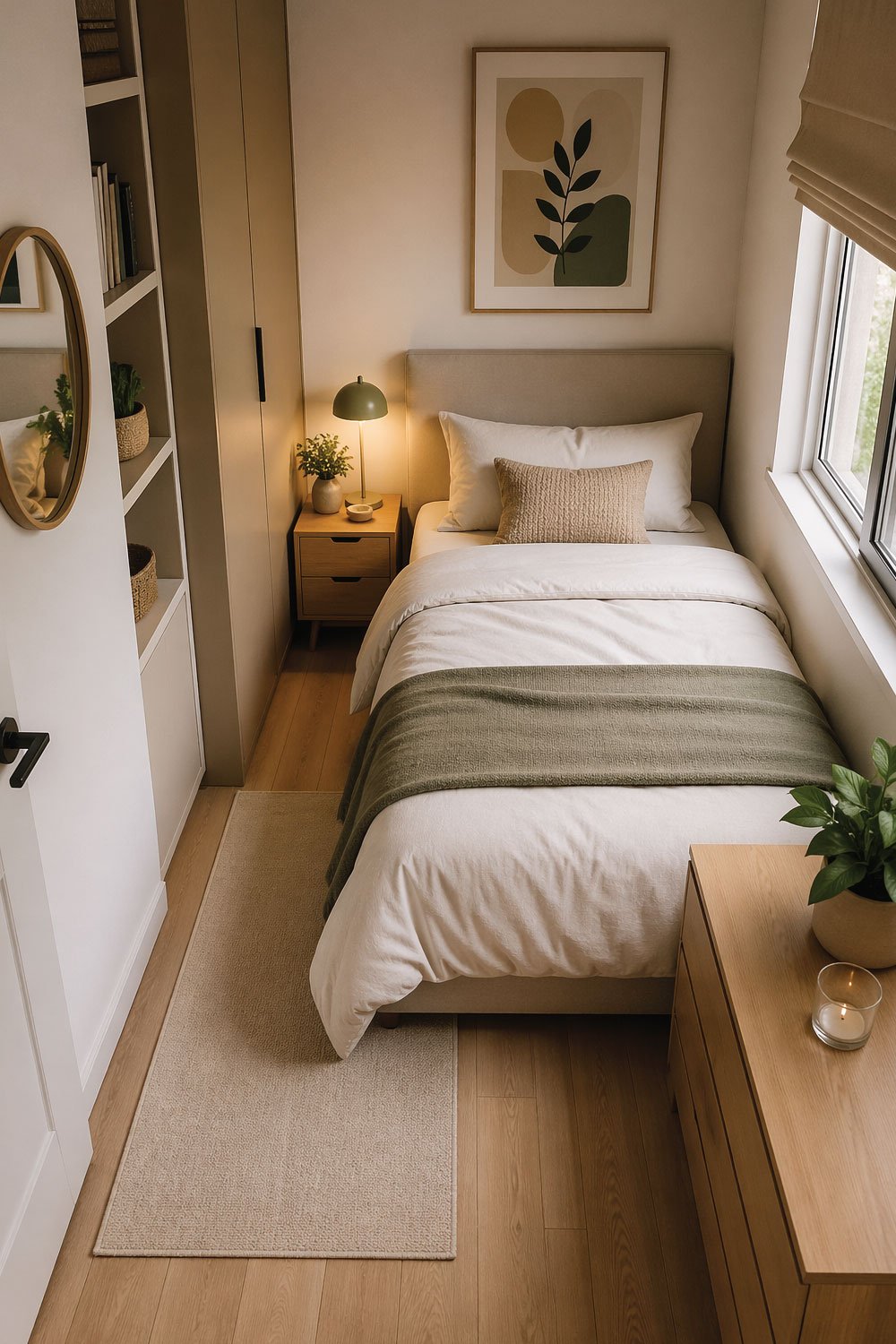
For very tight rooms, a twin or twin XL bed is often ideal, while a full-size bed balances comfort and space. A queen bed should only be used when the layout allows proper circulation, ensuring the room does not feel overcrowded or difficult to navigate.
Tips for Choosing Bed Size
- Use twin beds for very small rooms
- Choose full-size for balanced comfort
- Avoid oversized beds in narrow layouts
- Consider room circulation before selecting
- Leave space for storage and movement
- Prioritize functionality over luxury size
3. Go Vertical with Storage
One of the most effective space saving strategies in a small bedroom is using vertical storage instead of spreading items across the floor. By thinking upward, you can create additional storage capacity while keeping the room organized, open, and visually less cluttered for improved daily comfort and functionality.
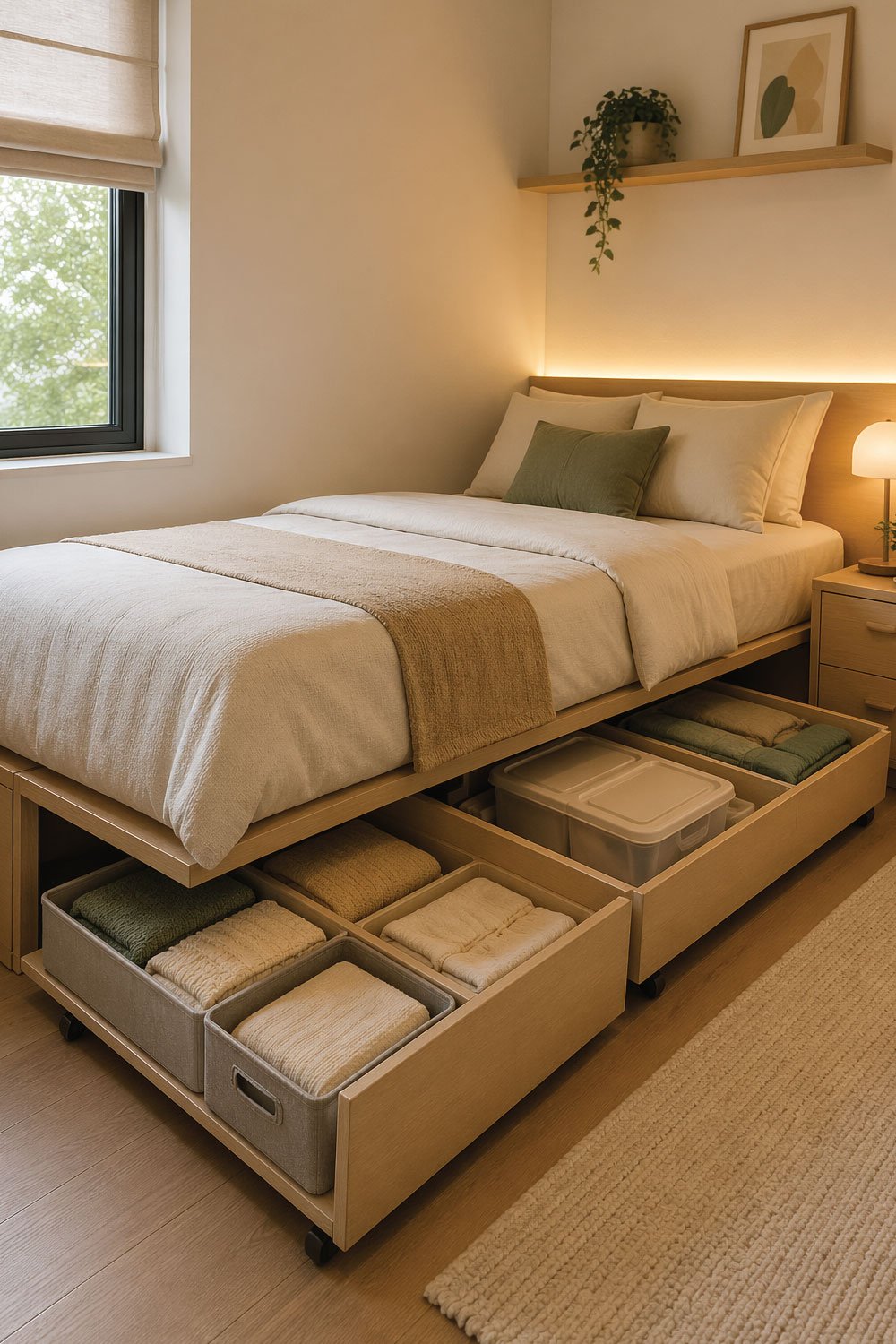
Using wall mounted shelves, tall wardrobes, and floating nightstands helps maximize unused wall space. This approach frees up floor area, making the bedroom easier to clean and more spacious. Vertical storage also improves organization and creates a modern, streamlined appearance even in very compact room layouts.
Tips for Vertical Storage
- Install wall mounted shelves for books and decor
- Use tall wardrobes instead of wide cabinets
- Add floating nightstands to save floor space
- Utilize wall hooks for accessories and bags
- Store seasonal items in upper shelves
- Keep frequently used items at eye level
Also Read:
4. Use Under-Bed Storage
In a tiny bedroom layout, under bed space is often wasted, even though it offers valuable hidden storage potential. Using this area effectively helps reduce clutter elsewhere in the room. It also allows you to keep essential items organized without overcrowding your visible furniture or taking up extra floor space.
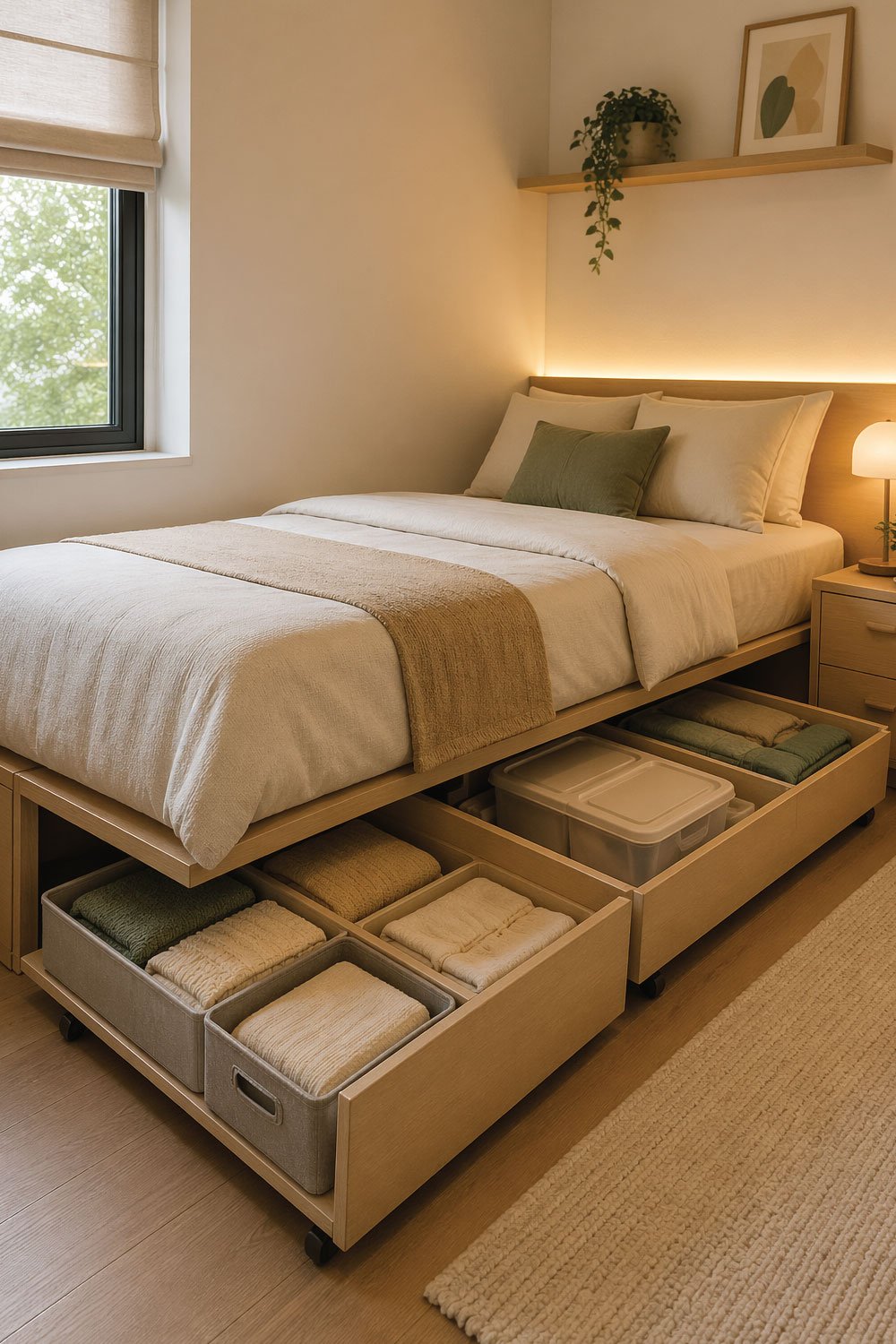
There are many practical options such as storage drawers, rolling bins, or lift up storage beds. These solutions keep belongings neatly tucked away yet easily accessible. Using this space wisely can eliminate the need for extra storage units, making your bedroom layout more efficient and visually clean.
Tips for Under-Bed Storage
- Use rolling bins for easy access
- Choose storage beds with lift up frames
- Store seasonal clothes and bedding
- Keep items in labeled containers
- Avoid overfilling to maintain airflow
- Use flat boxes for better organization
5. Opt for Multi Functional Furniture
Multi-functional furniture is essential for smart layout ideas in small rooms because it reduces the number of items needed. Instead of filling the space with single use pieces, you can combine storage, seating, and work areas into one compact design, improving both functionality and overall room efficiency.
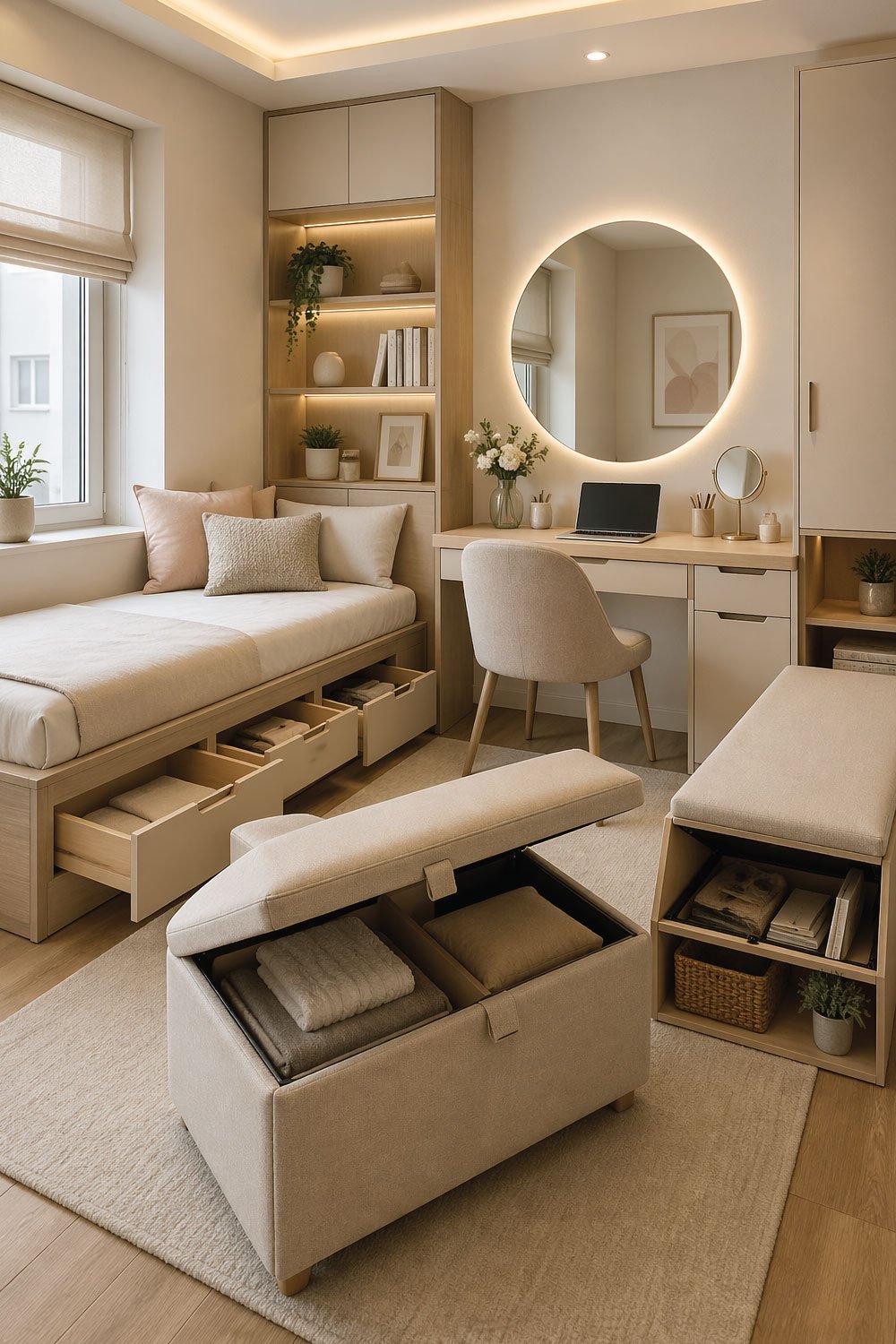
Examples include beds with built in drawers, desks that double as vanities, and ottomans with hidden storage. In small apartments, such furniture helps maximize usability without overcrowding the space. Each piece serves more than one purpose, making the room more practical and adaptable for daily routines.
Tips for Multi Functional Furniture
- Choose beds with built in storage
- Use ottomans with hidden compartments
- Select foldable or convertible desks
- Prefer benches with storage space
- Combine vanity and work desk if possible
- Reduce duplicate furniture items
Also Read:
6. Create a Minimal Furniture Layout
A minimal furniture layout is one of the most effective strategies when planning a small bedroom. Instead of filling every corner, focus on essential pieces that serve a clear purpose. This approach improves movement, reduces clutter, and makes the space feel more open and breathable.
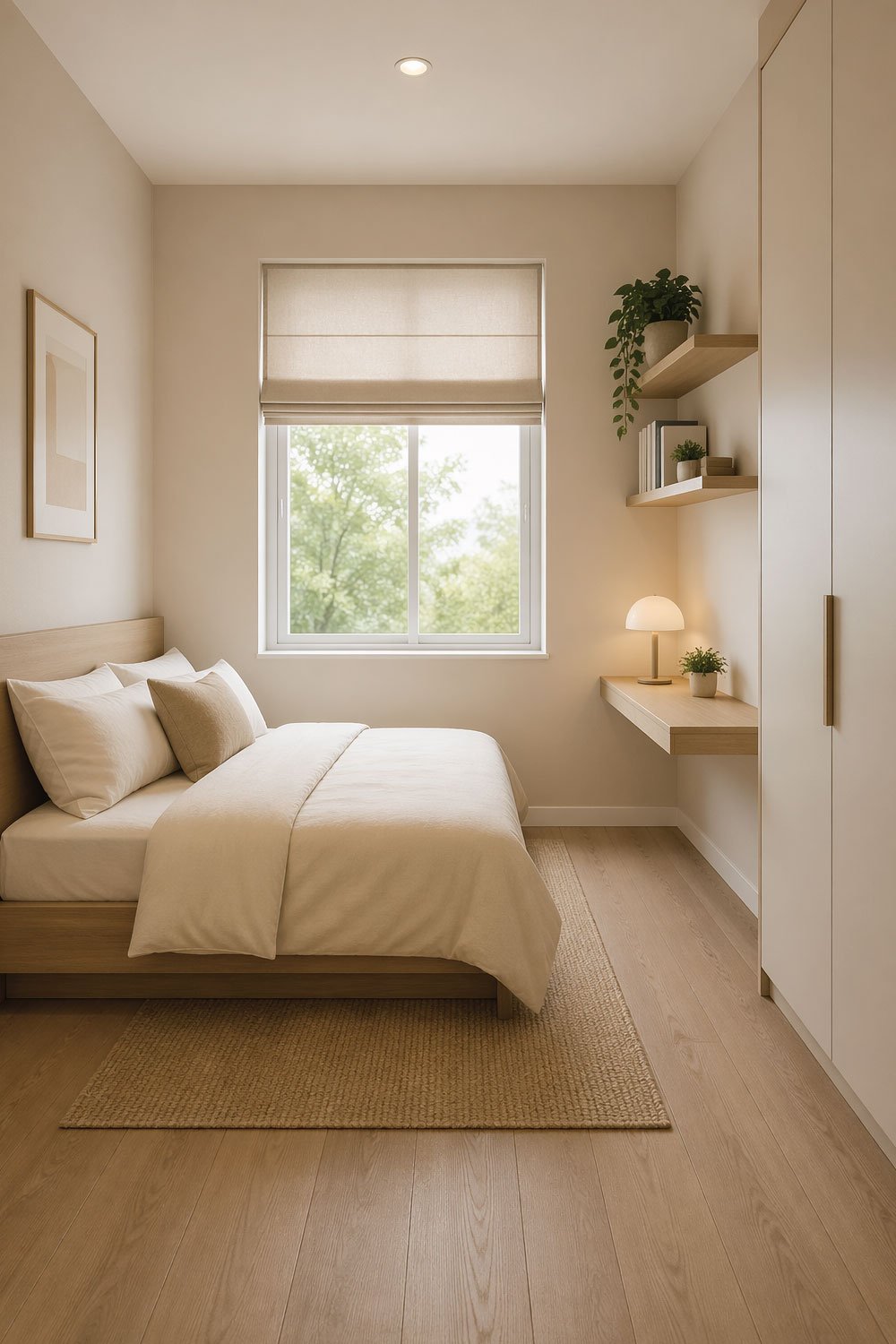
Removing unnecessary furniture can dramatically improve the room’s functionality. For example, eliminating extra nightstands or replacing a bulky dresser with shelves creates more floor space. A simplified layout also makes cleaning easier and helps maintain a calm, organized environment suitable for rest and relaxation.
Tips for Minimal Layout
- Keep only essential furniture pieces
- Remove duplicate storage units
- Replace bulky items with slim designs
- Prioritize open floor space
- Use wall storage instead of floor furniture
- Maintain clear walking paths
- Focus on functionality over decoration
7. Use Light Colors Strategically
Color has a powerful impact on how spacious a bedroom feels, especially in compact layouts. Light shades reflect more natural and artificial light, helping the room appear brighter and more open. This visual effect reduces heaviness and creates a calm, airy environment that feels less confined overall.
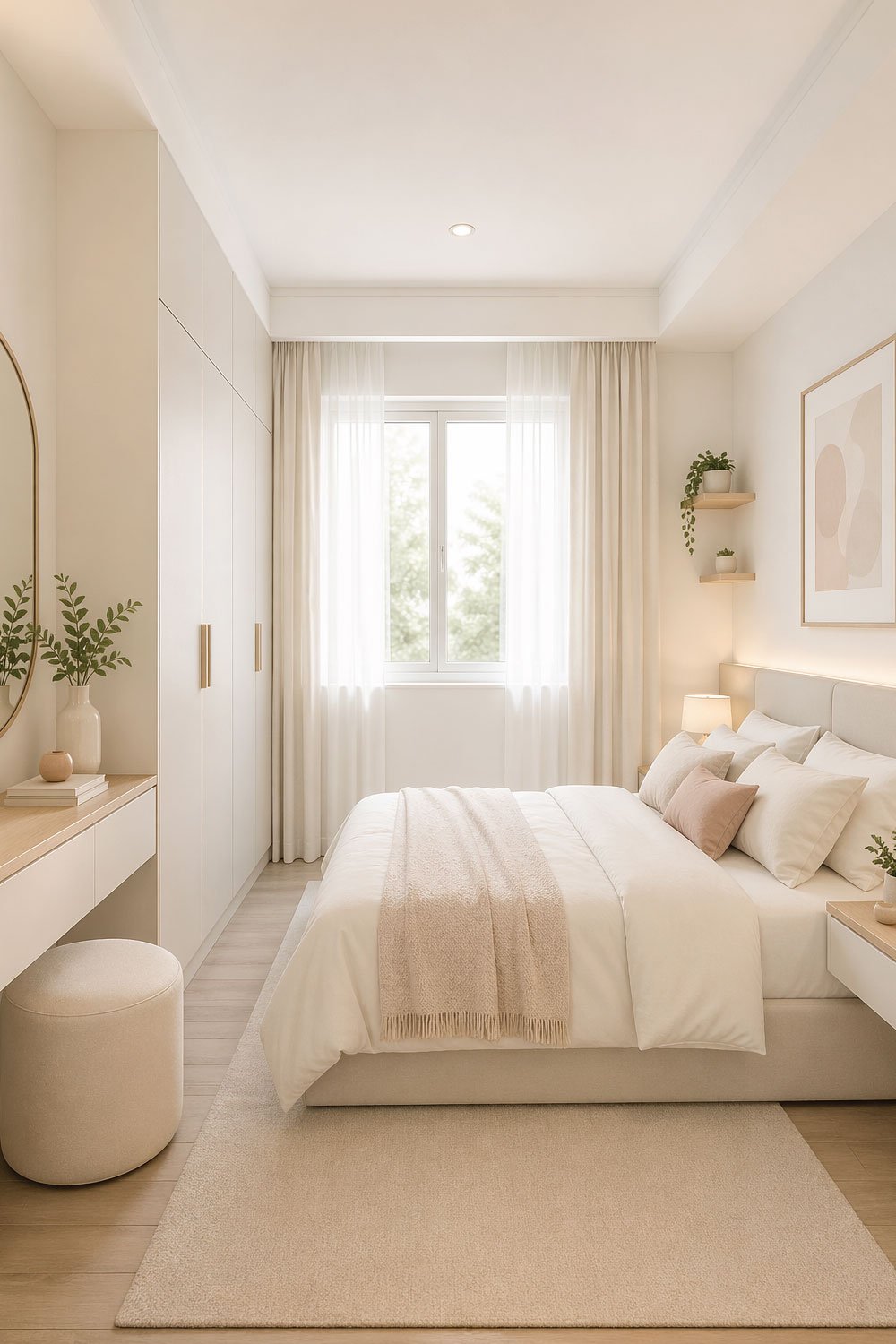
Neutral and soft tones such as white, beige, and pastel shades help minimize visual clutter. When paired with subtle contrasts, they add depth without overwhelming the space. A carefully chosen color palette can completely transform a small bedroom into a more balanced and visually larger-feeling area.
Tips for Light Colors
- Use light shades like white or beige
- Avoid overly dark or heavy wall colors
- Add soft contrast through decor accents
- Keep furniture tones consistent
- Use matte or soft finishes for calm effect
- Maintain a simple, unified color palette
Also Read:
8. Maximize Natural Light
Natural light is one of the most effective ways to improve any small bedroom arrangement. It instantly makes the space feel larger, fresher, and more inviting. Proper use of daylight reduces dependence on artificial lighting and enhances the overall mood and openness of the room.
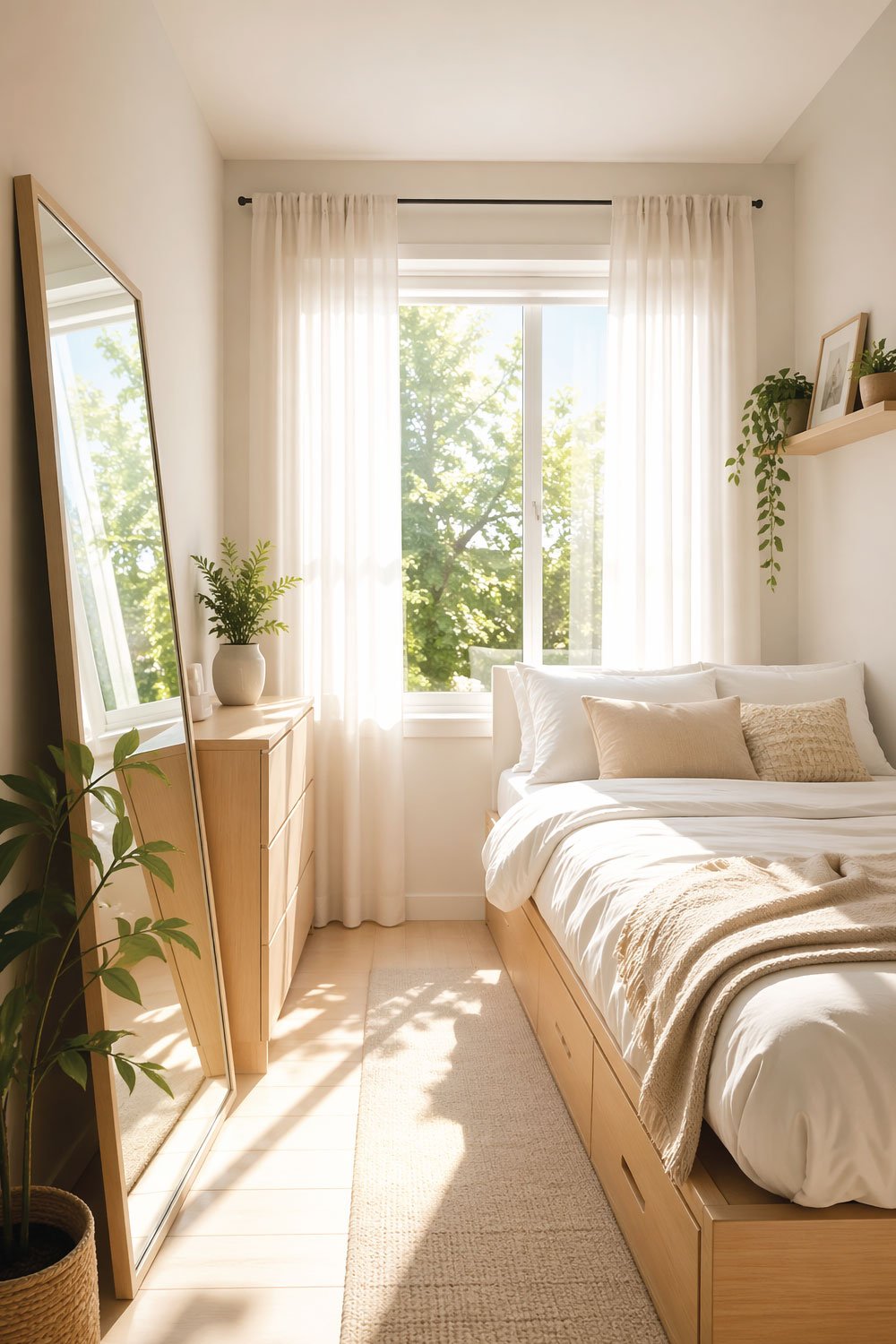
To maximize brightness, avoid blocking windows with bulky furniture. Use sheer curtains that allow light to pass through while maintaining privacy. Placing mirrors opposite windows is also highly effective, as it reflects light deeper into the room and visually expands the space.
Tips for Natural Light
- Keep windows clear of large furniture
- Use sheer or light-filtering curtains
- Place mirrors opposite light sources
- Avoid heavy drapes that block sunlight
- Keep window areas clean and open
- Use reflective surfaces to boost brightness
9. Try a Corner Bed Layout
A corner bed layout can be a practical solution for extremely small bedrooms where space is limited. By placing the bed against two walls, you free up additional floor area for movement, storage, or a small workspace. This setup prioritizes function over symmetry, making it highly efficient.
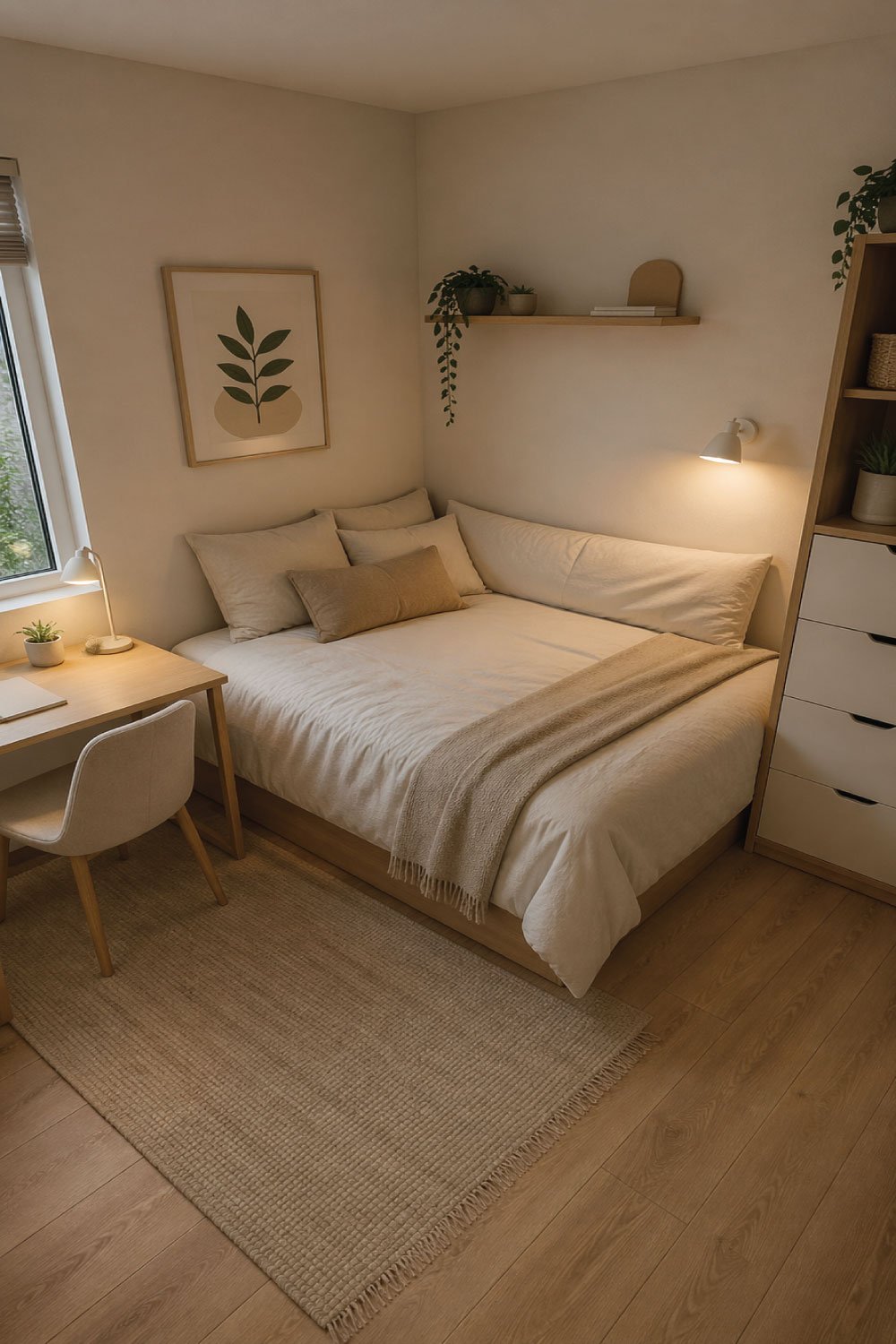
This arrangement works especially well in studio apartments, guest rooms, and children’s bedrooms. While it may not follow traditional design rules, it maximizes usable space. In tight layouts, a corner bed can significantly improve circulation and make the room feel more open and adaptable.
Tips for Corner Bed Layout
- Place bed tightly into a corner
- Use remaining space for storage or desk
- Ideal for studio or small guest rooms
- Keep bedding minimal for cleaner look
- Ensure easy access from one side
- Combine with vertical storage for efficiency
Also Read:
10. Floating Furniture for Visual Space
Floating furniture is a smart way to enhance a modern space-saving bedroom layout by freeing up visible floor area. When items are wall mounted instead of standing on legs, the room instantly feels lighter and less crowded. This creates a cleaner visual flow and improves overall openness in small spaces.
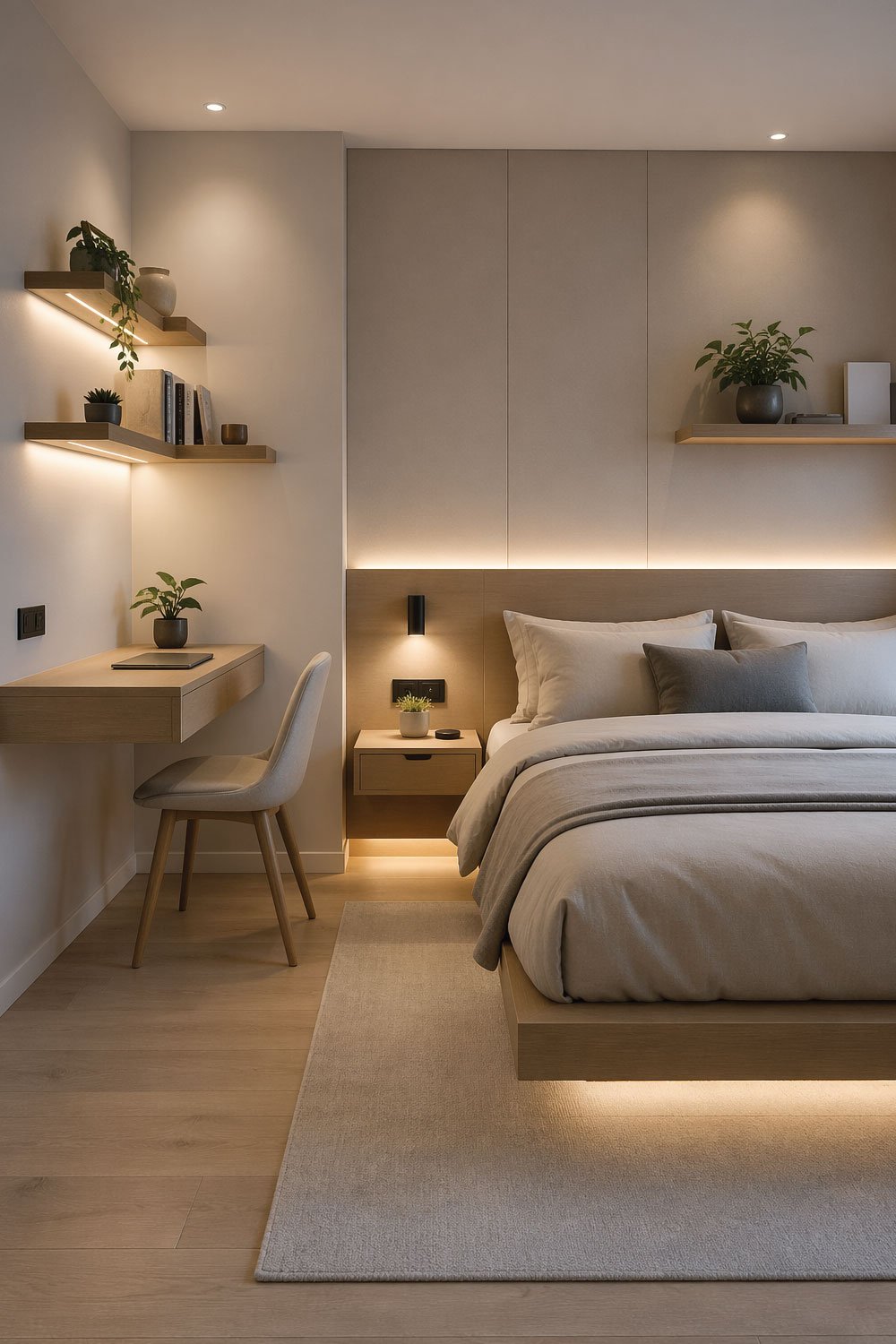
Floating desks, wall mounted nightstands, and floating shelves are excellent examples of this design approach. By reducing floor contact, the room appears larger and more organized. Even small changes like adding floating storage can significantly improve both functionality and visual spaciousness in compact bedrooms.
Tips for Floating Furniture
- Install wall mounted nightstands
- Use floating desks for workspaces
- Add floating shelves for storage
- Keep items aligned for a clean look
- Avoid overcrowding wall surfaces
- Combine with minimal furniture design
11. Zone the Bedroom Wisely
Zoning is an effective small bedroom layout idea that helps organize different functions within one compact space. Even in limited square footage, separating areas for sleeping, working, and storage improves structure and reduces visual chaos, making the room feel more intentional and easier to use daily.
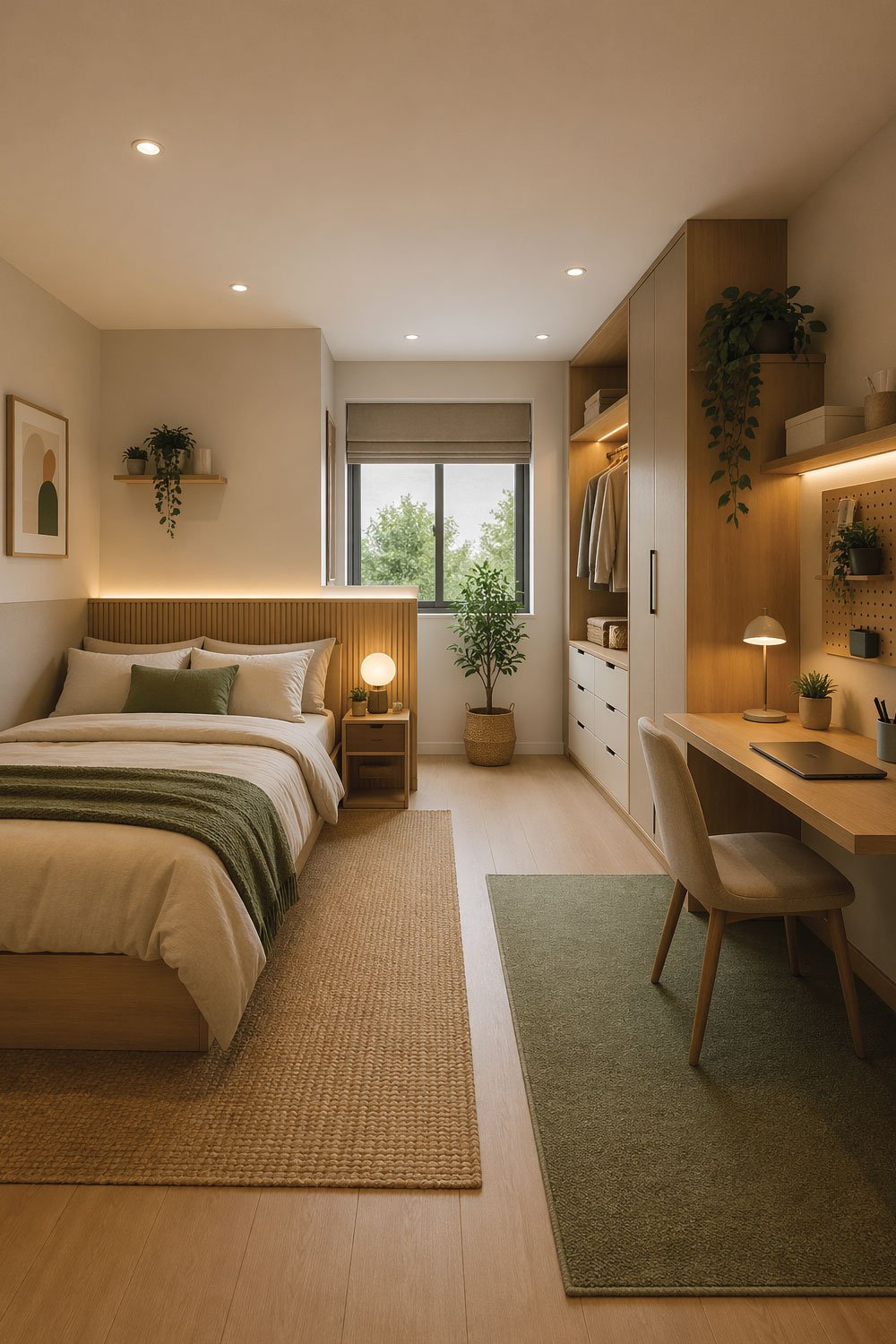
Simple elements like rugs, lighting, or furniture placement can define each zone. For example, a rug can mark the sleeping area while a wall-mounted desk creates a study corner. This subtle division improves functionality without needing physical walls, keeping the room open yet well-structured.
Tips for Zoning the Bedroom
- Use rugs to define sleeping areas
- Create a separate work nook with a desk
- Group storage in one dedicated zone
- Use lighting to highlight different areas
- Keep pathways clear between zones
- Avoid mixing unrelated functions together
Also Read:
12. Use Sliding Doors or Curtains
In a small bedroom layout, traditional swinging doors can take up valuable floor space that could be used more efficiently. Replacing them with sliding doors or curtains helps improve accessibility while freeing up usable area, making the room feel less restricted and more practical.
Sliding closet doors are especially useful because they eliminate the need for door clearance. Curtains can also be used as flexible, lightweight alternatives for wardrobes or storage areas. In compact rooms, these changes can noticeably improve movement and create a more open layout.
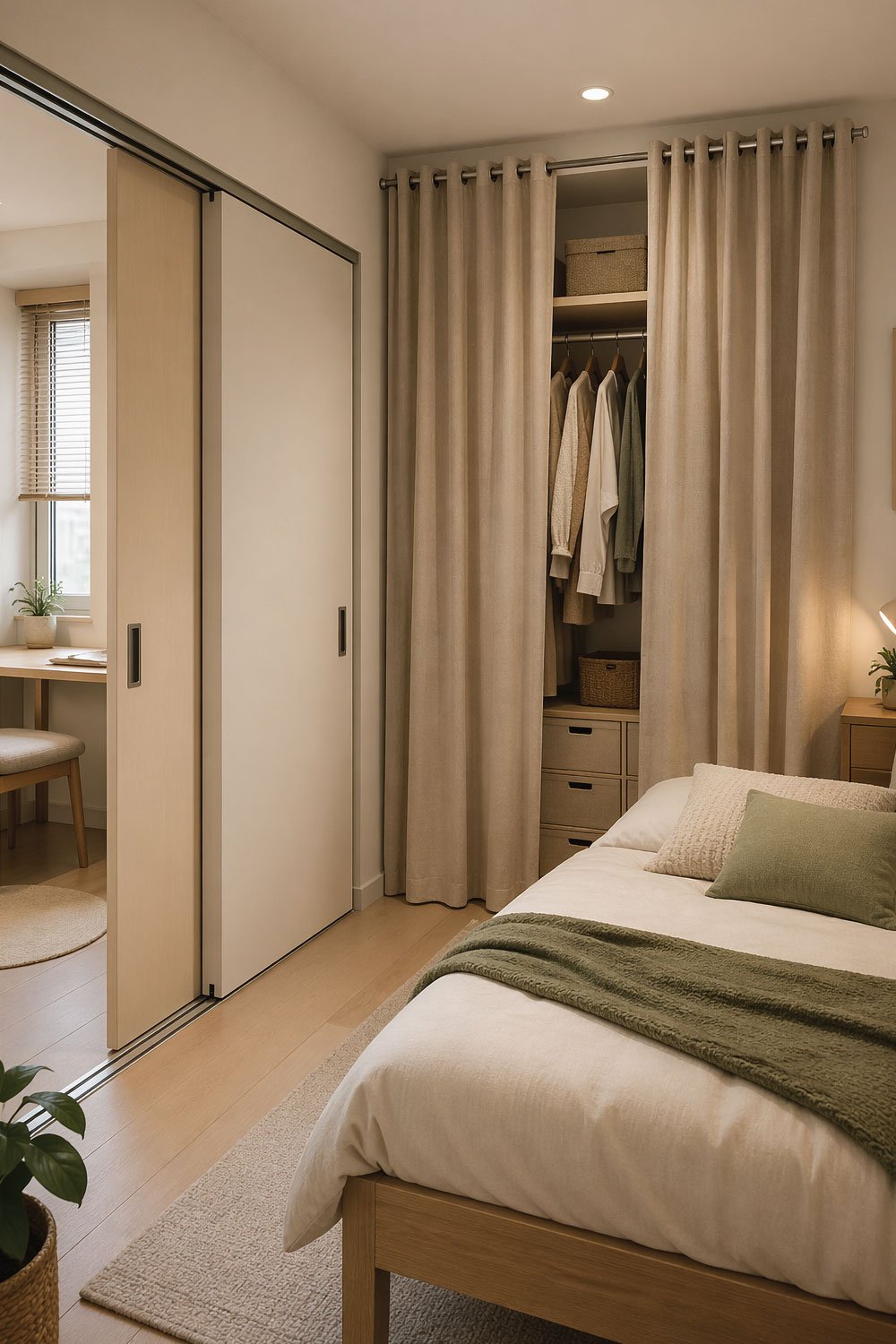
Tips for Sliding Doors or Curtains
- Replace swing doors with sliding versions
- Use curtains for wardrobes or storage areas
- Choose lightweight, easy to move materials
- Match door style with room design
- Ensure smooth sliding mechanisms
- Maximize clearance space for movement
13. Keep Decor Minimal but Meaningful
In a tiny bedroom layout, excessive decor can quickly make the space feel cluttered and visually heavy. A more intentional approach works better, where each decorative piece has purpose or emotional value. This keeps the room calm, organized, and easier on the eyes.
Instead of filling every surface, focus on a few carefully chosen items. One statement artwork, subtle textures, and meaningful personal objects are enough to add personality. This balance helps maintain a clean environment while still reflecting your style without overwhelming the space.
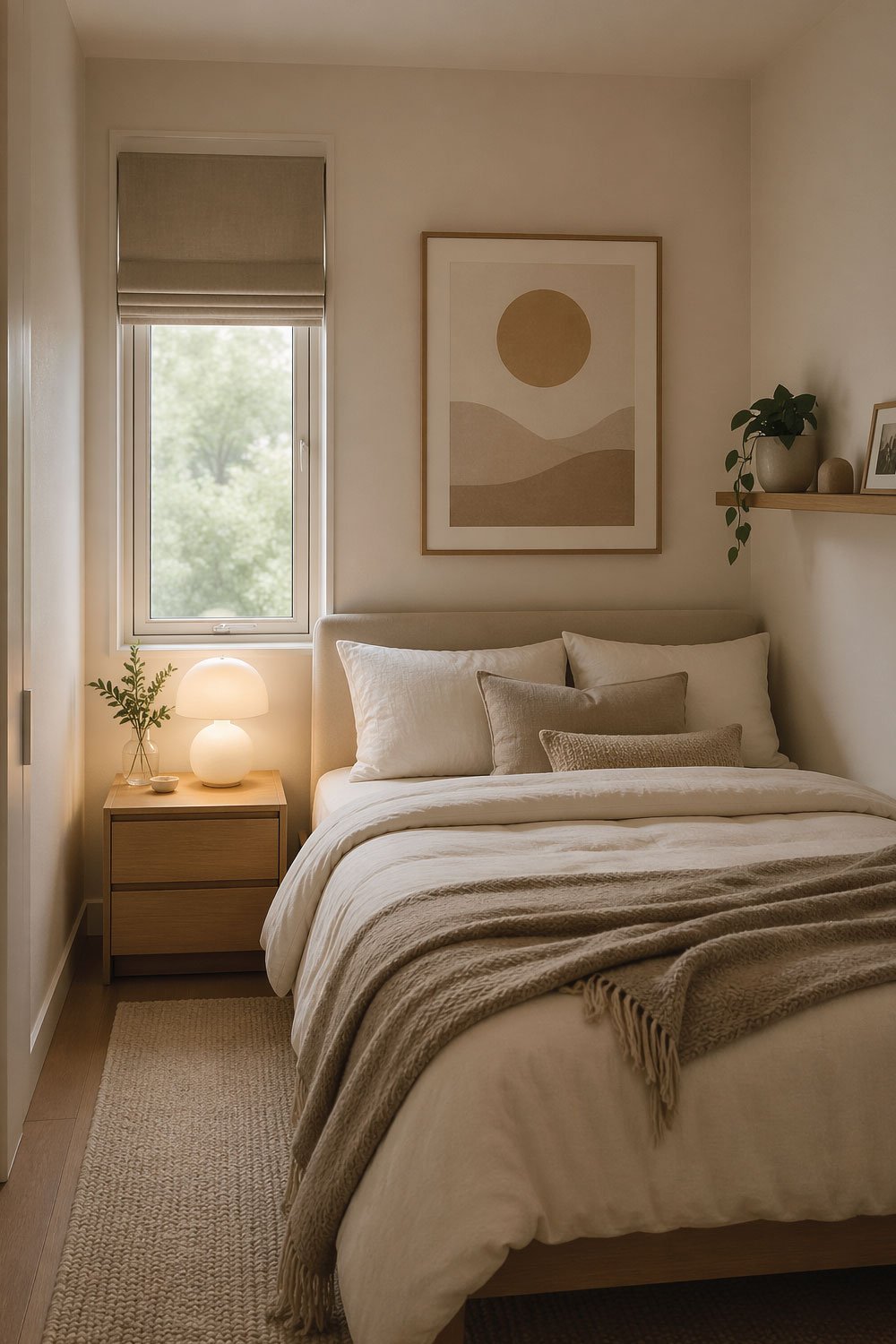
Tips for Minimal Decor
- Choose one statement artwork
- Limit decorative items on surfaces
- Use simple, soft textures
- Keep color palette consistent
- Avoid overcrowding walls and shelves
- Prioritize meaningful over decorative clutter
Also Read:
14. Optimize Walkways
Clear walkways are essential in a small bedroom floor plan because they directly affect comfort, movement, and safety. When pathways are blocked or too narrow, the room feels cramped and harder to use. Proper spacing ensures smooth movement and a more functional overall layout.
A good rule is to maintain at least 24 30 inches of clearance around the bed wherever possible. This allows easy access without constantly bumping into furniture. A well-planned walkway improves flow and makes even a compact bedroom feel more open and practical.
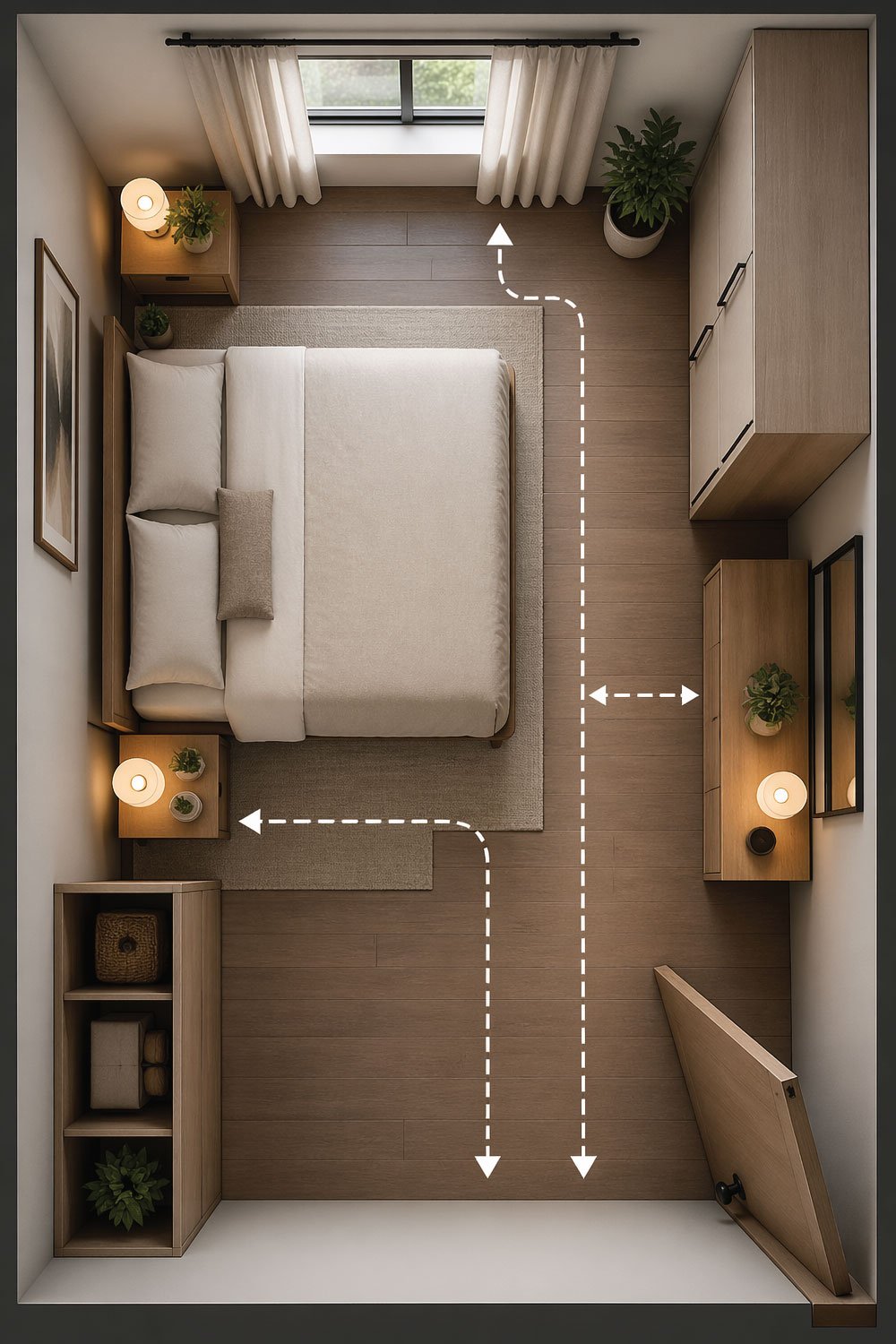
Tips for Walkway Optimization
- Maintain 24 30 inches around key furniture
- Avoid blocking natural movement paths
- Keep door access areas completely clear
- Position furniture away from tight corners
- Ensure easy access to storage zones
- Regularly adjust layout for better flow
15. Use Rugs to Define Space
Rugs are a simple yet effective tool for structuring a bedroom layout for small bedrooms without adding physical barriers. They help visually separate areas, making the room feel organized while still maintaining an open and uncluttered design.
Placing a rug partially under the bed helps anchor the sleeping area and adds warmth to the space. Light or neutral patterns work best because they enhance the sense of openness. A well-chosen rug can make a small bedroom feel cozy, balanced, and thoughtfully arranged.
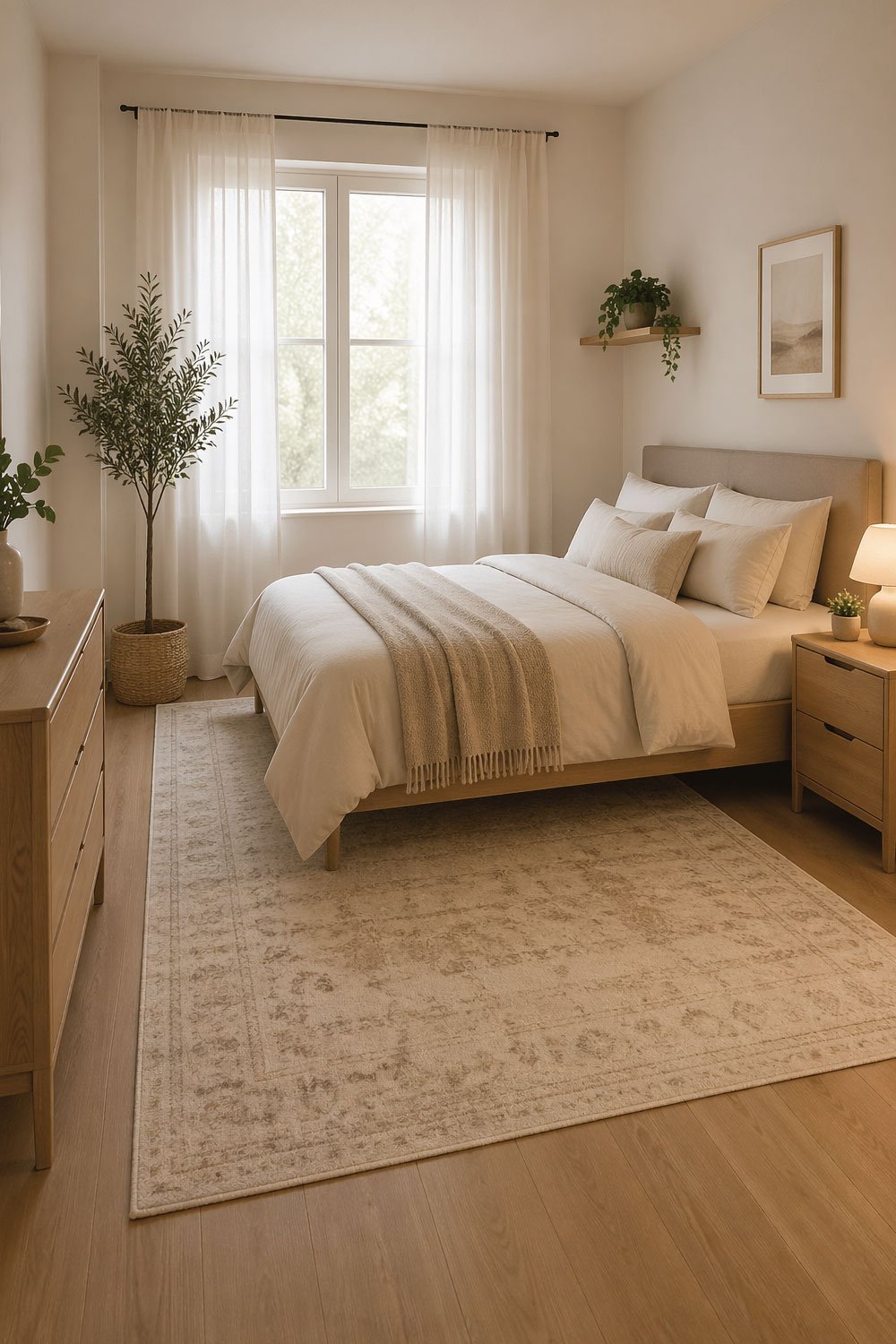
Tips for Using Rugs
- Place rug partially under the bed
- Use light or neutral color patterns
- Choose appropriately sized rugs for balance
- Avoid overly busy or dark designs
- Use rugs to define sleeping zones
- Keep rug placement centered and aligned
Also Read:
16. Personalize Without Overcrowding
Personalizing a small bedroom is important because it makes the space feel comfortable and truly yours. However, in a limited area, too many personal items can quickly lead to clutter. The key is to express your style in a controlled and intentional way that supports openness and simplicity.
Instead of filling every surface, choose a few meaningful elements that stand out. A single plant, a framed photo, or carefully selected textures can add warmth and character. This approach keeps the room visually clean while still reflecting personality in a subtle, balanced manner.
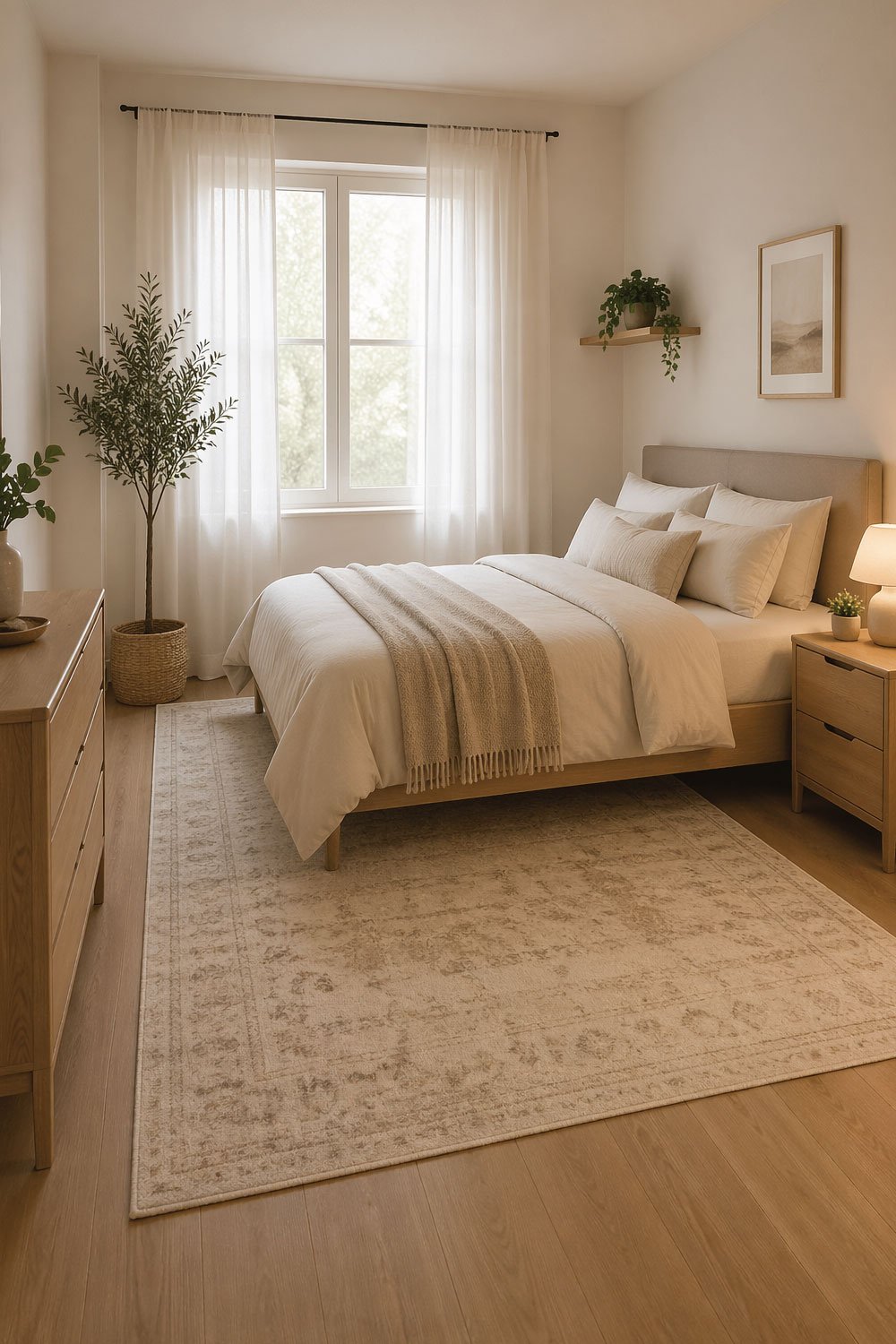
Tips for Personalization
- Use a few meaningful photos only
- Add small indoor plants if space allows
- Choose textures that reflect your style
- Avoid overcrowding shelves and walls
- Highlight one or two focal decor items
- Keep personal touches organized and simple
Final Thoughts:
After years of experimenting with small bedroom layout ideas, I have learned that functionality always comes first. You don’t need more space you need smarter choices. By focusing on flow, storage, and intentional design, it’s possible to optimize a small bedroom layout and create a space that feels both practical and peaceful.
No matter how limited your square footage is, the right bedroom arrangement ideas can turn even the tiniest room into a comfortable retreat. Start with one change, test what works, and build from there you might be surprised how much potential your small bedroom really has.
Also Read:
10 Trending Living Room Paint Color Ideas You will Love in 2026

I am Engineer Hassan, a professional engineer with over 15 years of experience in measurements, design accuracy, and furniture, appliance, and home product sizing. Through Size Helper, I provide research-based guides and trending 2026 home design ideas for living rooms, bedrooms, sofas, wall décor, fashion, and sports—helping users make confident, informed decisions. Every guide is written with real expertise, verified data, and a commitment to quality, usability, and style.